Your hardwood floors are showing their age. The scratches, the dullness, the finish that no longer reflects light the way it once did. You have already decided that refinishing is the right move and that you are going to hire a professional to do it. What you want to know now is what actually happens.
That is what this guide covers. The professional hardwood floor refinishing process follows a clear sequence of stages, from the initial assessment through the final walkthrough and post-project care. Understanding each stage helps you prepare your home, set realistic expectations for the timeline and disruption involved, and know what quality work looks like when you see it.
Here is what to expect from start to finish.
The Initial Assessment and Estimate
The refinishing process does not start with sanding. It starts with a conversation and a careful look at your floors.
Before any work is scheduled, a professional visits your home to evaluate the floors in person. This assessment determines the full scope of the project. The contractor looks at the wood species and thickness of your boards, inspects the extent of surface damage, checks whether any boards need repair or replacement before refinishing begins, and examines the condition of the subfloor underneath.
This visit is also when you discuss your goals — stain color, finish type, and timeline. These details affect how the project gets planned and scheduled. The professional also identifies anything that could complicate the work, including floors previously treated with a product incompatible with new finishes. That kind of issue is far better to know about before the crew arrives than after sanding has already begun.
The estimate you receive is built on what the professional actually saw in your home. That is what makes it reliable.
Preparing the Home Before the Crew Arrives
Preparation is the homeowner’s job, and doing it well sets the crew up to work efficiently from the moment they arrive. Two areas need attention before the first truck pulls up: the physical space and the logistics for everyone living in it.
Furniture, Rugs, and Room Access
Every room being refinished needs to be completely cleared before the crew arrives. That means all furniture, area rugs, floor lamps, and anything stored in closets if those floors are being done. Some contractors include furniture moving as part of their service — clarify this during the estimate so there are no surprises on day one.
Do not forget adjacent rooms. Sanding creates vibration that travels through walls, so breakables and wall art in neighboring rooms are worth moving as a precaution.
Family, Pets, and Planning Around the Work
Refinishing disrupts the home. Sanding is loud, and finish products produce fumes during application. The family and pets need to be out of the work area while each stage is active. The finish type you select affects how long that disruption lasts — worth discussing with the professional during the estimate so your family can plan accordingly.
Many homeowners in Peabody’s established neighborhoods choose to stage the project room by room rather than vacate the entire house. This approach works but requires clear coordination with the crew on sequencing and access. Regardless of how you stage it, plan to stay out of refinished areas for at least two to three days after the final coat goes down.
The Sanding Stages and What Each One Accomplishes
Sanding is the most labor-intensive part of the refinishing process. It happens in multiple passes, each using a different grit of sandpaper, and the quality of everything that comes after — the stain, the finish, the final look of the floor — depends on how carefully each stage is executed.
Coarse Sanding: Removing the Old Finish and Surface Damage
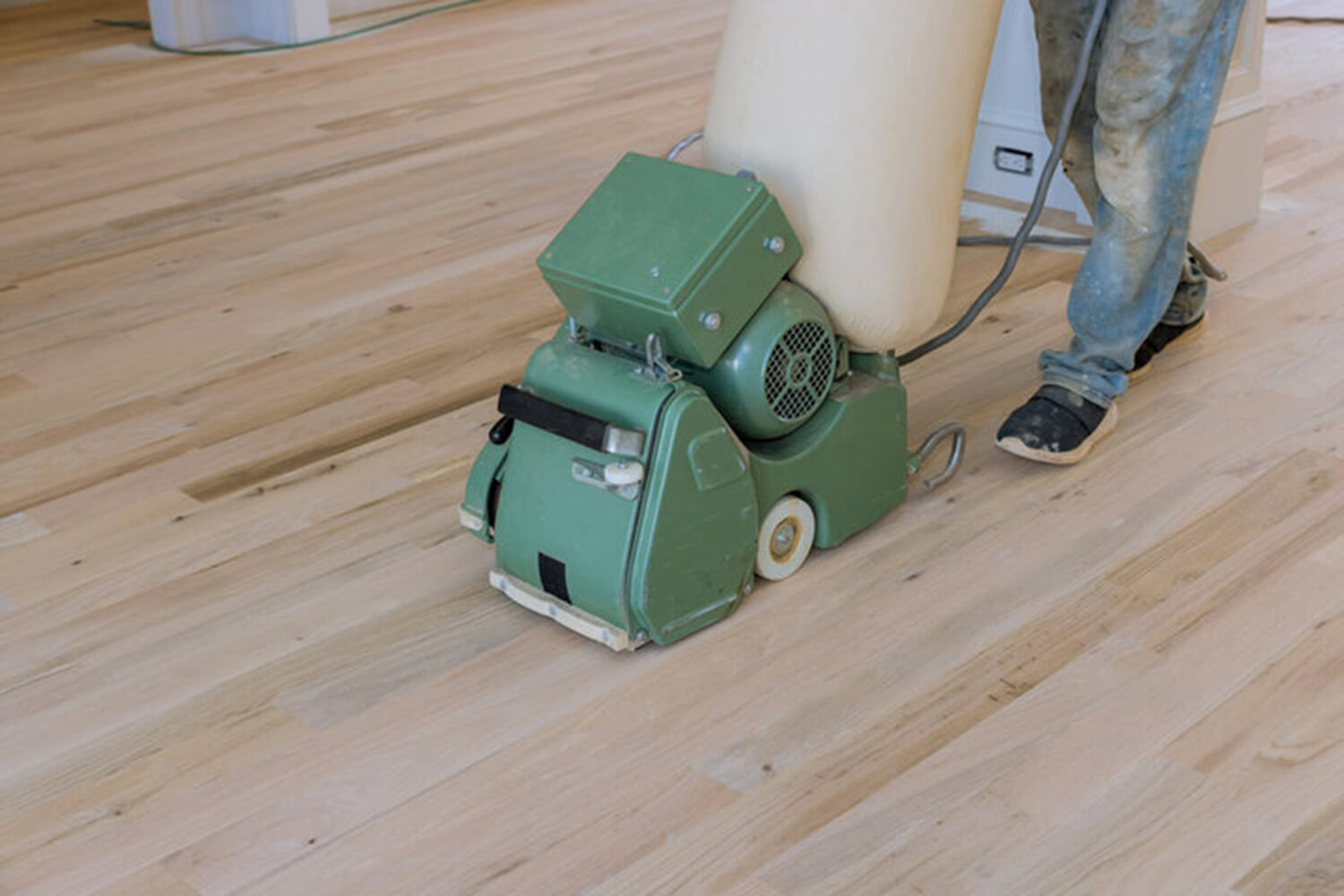
The first pass is the most aggressive. Coarse sanding strips the existing finish down to raw wood, removes deep scratches, and levels the surface so the floor is uniform before any subsequent work begins. A drum or belt sander handles the open floor area. After coarse sanding, the floor should look consistently raw with no patches of old finish remaining anywhere.
The edges and corners are a different story. The large sanding machine cannot reach them, so those areas are done by hand or with a smaller edge sander. This is where attention to detail separates a quality job from a rushed one. Uneven edge work shows clearly in the finished floor, particularly in raking light.
Medium and Fine Sanding: Smoothing the Wood and Opening the Grain
Once the old finish is gone, the professional works through progressively finer grits. Each pass removes the scratch pattern left by the previous grit — skipping a grit level leaves visible scratches that show through the stain and finish.
Fine sanding smooths the surface and opens the grain of the wood so stain absorbs evenly. Uneven absorption is one of the most common causes of blotchy stain results. Before any stain goes down, the floor is cleaned thoroughly to remove all sanding dust — dust left on the surface will show through the finish coats.
Dust Containment and How Dustless Sanding Systems Work
Modern dustless sanding systems attach containment equipment directly to the sanding machines, capturing dust at the source before it becomes airborne. Dustless does not mean dust-free — some dust is unavoidable — but the reduction compared to traditional equipment is significant. It keeps the rest of the home livable during the project, makes room-by-room staging practical, and protects finish quality by reducing the airborne particles that can settle into coats as they dry. For homeowners in Peabody who want to stay in the home during the project, dustless sanding is what makes that realistic.
Stain Selection, Finish Options, and Sheen
Once sanding is complete, the homeowner works through three choices before coat application begins: stain color, finish product, and sheen level. Each shapes what the finished floor looks and feels like for years to come.
Choosing a Stain Color and How On-Site Samples Work
Stain color is one of the most visible decisions in the project. The professional applies small test samples directly to your sanded floor so you can see exactly how each color looks on your specific wood — not on a catalog photo or a showroom display, but on your actual boards. Stain behaves differently depending on wood species and grain, and lighting conditions shift the way a color reads throughout the day. View samples in natural daylight, under overhead lighting, and in evening light before committing.
Some homeowners choose not to stain at all and let the natural wood color come through with a clear finish. Once you approve a color, the professional applies stain to the full floor and allows it to dry completely before any finish coats go down.
Water-Based vs. Oil-Based Polyurethane
Most residential refinishing projects use polyurethane. The choice is between water-based and oil-based formulations. Water-based dries faster — two to four hours between coats — produces lower VOC levels, and dries clear, preserving the stain color you selected. Oil-based takes eight hours or more between coats, produces stronger fumes, and adds a warm amber tone that deepens over time. Some homeowners specifically want that warmth. Others prefer the faster turnaround and lower fume exposure of water-based. The professional can help you decide based on your timeline, your wood, and the look you are after.
Choosing a Sheen Level
Sheen determines how much light the floor reflects and how visible everyday dust and wear will be between cleanings. Matte and satin sheens are more forgiving — better for high-traffic areas and homes with kids or pets. Semi-gloss and gloss create a more polished look but show footprints and dust more readily. The professional can apply samples directly to your floor so you can see the difference before committing.
Coat Application and Dry Times
Most refinishing projects involve two to three finish coats. The first seals the wood; subsequent coats build the protective layer. Between each coat, the professional lightly buffs the surface to remove dust nibs and small imperfections — this is what produces a finish that feels smooth and even rather than slightly rough underfoot.
Dry time between coats is not the same as cure time. A floor can feel dry to the touch within hours while the finish is still developing its hardness underneath. In Peabody during summer months, elevated humidity slows the process and can extend dry times between coats. Professionals working in Greater Boston and North Shore homes account for this when scheduling and may recommend running a dehumidifier in the work area. Rushing a coat before the previous one is fully dry risks adhesion problems and finish failure — if the timeline shifts by a day due to weather, that is the professional doing the job correctly.
The Final Walkthrough and What to Inspect
Before the crew leaves, walk through every refinished room with the contractor and inspect the work together. This is the right moment to catch anything that needs attention while the job is still open.
Here is what to look for:
- Even color and stain absorption across the full floor
- No visible sanding marks or scratches
- Consistent sheen with no dull patches
- Clean edges and corners where the finish meets the baseboard
- No bubbles or debris trapped in the finish coats
View the floor from multiple angles and use natural light from windows, not just overhead lighting. Imperfections that are invisible when you are standing directly above them often become obvious in raking light. A professional contractor expects this walkthrough and will have a clear process for addressing anything that needs a touch-up.
Post-Refinishing Care and Cure Time
The final coat is down, but the floor is not fully cured. The finish continues to harden after the crew leaves, and what you do during that period directly affects how well it holds up.
During the cure period:
- Keep area rugs off the floor for at least two to four weeks
- Place furniture back with felt pads on all legs — do not slide anything across the surface
- Clean with dry sweeping or a lightly damp mop only — no steam mops, no oil-based cleaners, no unapproved products
- Light foot traffic in socks is generally fine after the first twenty-four hours
Water-based polyurethane reaches full hardness in seven to fourteen days. Oil-based takes three to four weeks. Your contractor can give you a specific timeline based on the product used and the conditions in your home.
What a Realistic Refinishing Timeline Looks Like
The active work is only part of the project window. Understanding the full timeline — from estimate through cure period — helps you plan realistically, especially if you are scheduling around a fixed date.
Here is how it typically breaks down:
- One to three rooms — two to four days of active work
- Whole-house or complex layouts — five to seven days, sometimes longer
After the crew wraps, the cure period begins. Full cure takes one to four weeks depending on the finish type. Normal life — rugs back down, furniture fully in place, regular cleaning — resumes after that window closes.
Summer humidity in the Greater Boston area can add time between coats, so build buffer into your timeline if you are planning around a home sale, renovation handoff, or move-in. The most reliable estimate comes from your contractor after they have assessed your specific floors.
What to Expect When You Work With a Professional
Hardwood floor refinishing is not a single task — it is a sequence of stages, each one building on the one before it. The assessment determines the scope. The preparation sets the crew up to work. The sanding creates the surface. The stain and finish decisions shape the final look. The coats go down carefully, with proper dry time between each. The walkthrough confirms the work. And the cure period finishes what the crew started.
Understanding that sequence changes how you experience the project. You know what is happening and why, what to prepare for at each stage, and what to look for when the job is done. That is what separates a homeowner who feels like something is happening to their home from one who feels like they are running the project.
If your floors are ready for refinishing, the right next step is an in-home estimate. Romero Hardwood Floor’s floor sanding and refinishing service covers the full process — from assessing your specific floors to walking you through your stain and finish options and mapping out a realistic timeline for your home. Their dustless sanding systems keep the project manageable in occupied homes, and their eco-friendly, low-VOC finishing options give you performance without the disruption of heavy fumes.
Reach out today to schedule an estimate and know exactly what your floors need.