
Best floor stain with varnish for hardwood floors 2025
Your Ultimate Guide to Flawless Hardwood Floors
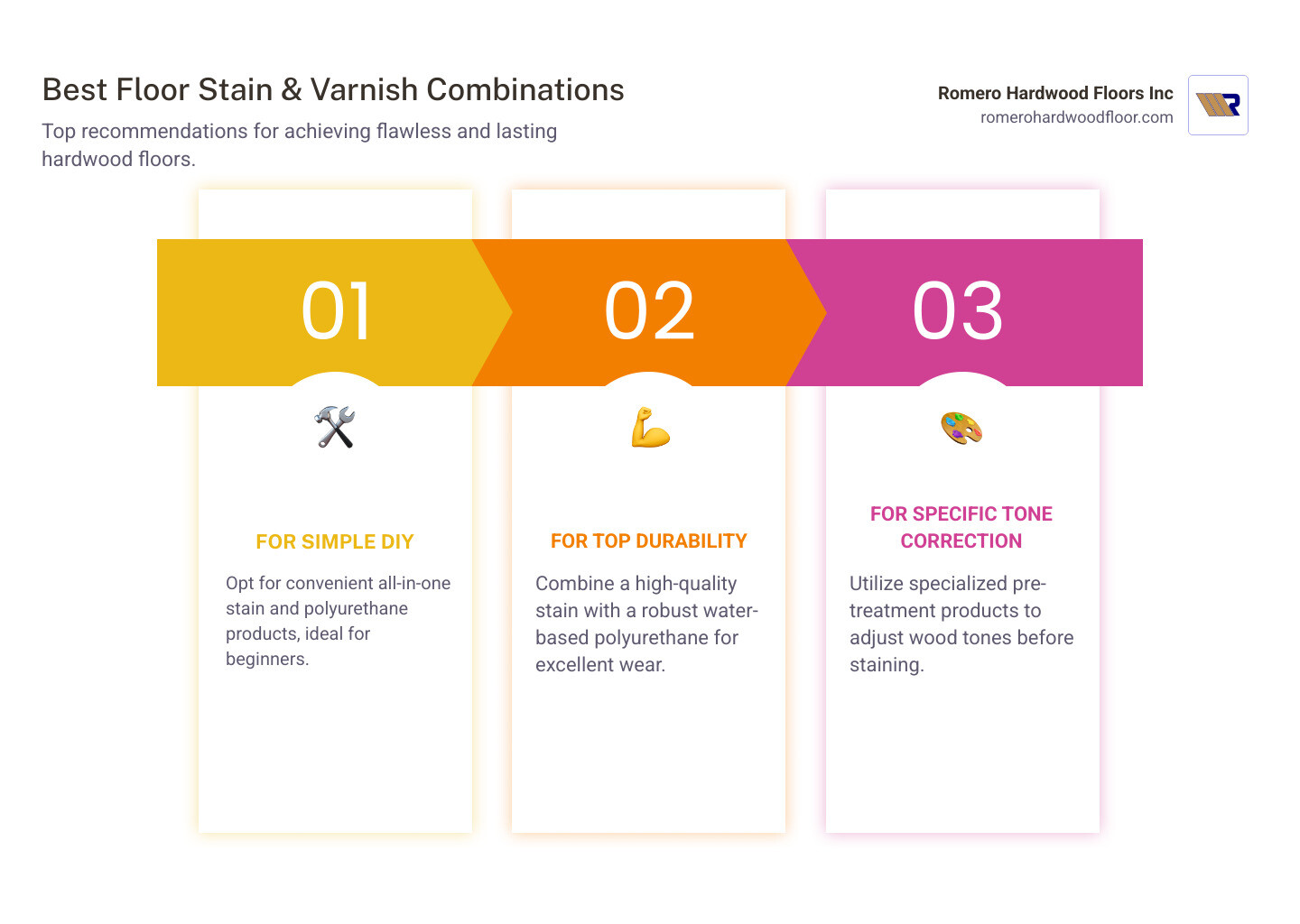
Finding the best floor stain with varnish for hardwood floors is a big decision for homeowners seeking the perfect look and lasting protection. Here are top choices for your needs:
- For Simple DIY: Minwax PolyShades offers a convenient all-in-one stain and polyurethane finish, making it easier for beginners.
- For Top Durability: Pair a quality stain like Bona DriFast or DuraSeal Quick Coat with a durable water-based polyurethane like Bona Traffic HD. This combo offers excellent wear.
- For Specific Issues: Products like Bona Red Out can correct red tones in wood before staining.
Choosing and applying the right products is key to your floor’s look and longevity. This guide covers everything you need to know.
As the owner of Romero Hardwood Floors Inc., I have over 15 years of experience with the best floor stain with varnish for hardwood floors. I’ll help you steer the choices to achieve beautiful, lasting floors.
Easy best floor stain with varnish for hardwood floors glossary:
Understanding the Essentials: Stain, Varnish, and All-in-One Products
Changing your hardwood floors starts with understanding two key players: stain (color) and varnish (protection, usually polyurethane). They can be applied separately or bundled in a 2-in-1 product. Knowing the difference is key to finding the best floor stain with varnish for hardwood floors for your project. For more details, explore our guides on finishing hardwood floors and floor staining.
What is a “Stain with Varnish” Product?
A “stain with varnish” product, or 2-in-1, combines color and a protective topcoat in one step. A popular example is Minwax PolyShades.
These products are convenient, time-saving, and simpler for beginners. However, they offer less control over the final color, can be tricky to apply evenly, and may not provide the same durability as a separate system. While great for small DIY projects, we recommend a separate stain and varnish system for high-traffic areas to ensure durability and a flawless look.
Decoding Finishes: Types of Varnish and Stain
For hardwood floors, we typically focus on specific types of stain and varnish (polyurethane).
Stain Types:
- Oil-Based Stains: Soak deep into the wood for rich color. They dry slower, giving you more working time. DuraSeal Quick Coat is a pro favorite.
- Water-Based Stains: Dry much faster with low odor and easy cleanup. They create a more translucent look. Bona DriFast is a popular system.
- Gel Stains: Thick and jelly-like, they sit on the wood’s surface. This makes them great for blotch-prone woods like maple or pine.
- Varnish Stains: These are the convenient 2-in-1 products where stain is pre-mixed with a clear finish.
Varnish (Clear Finish) Types:
- Oil-Based Polyurethane: A classic choice known for durability. It gives wood a warm, amber glow that deepens over time but has a strong smell and long dry time.
- Water-Based Polyurethane: Dries quickly with very low odor. It goes on clear and won’t yellow over time. Top products include Bona Traffic HD and Varathane Diamond Finish.
- Penetrating Oils (Hardwax Oils): These soak into the wood fibers, creating a natural, matte finish that is durable and easy to repair. Bona Craft Oil 2K is an excellent example.
The Great Debate: Oil-Based vs. Water-Based Formulas
When picking the best floor stain with varnish for hardwood floors, you’ll face the oil-based vs. water-based decision. Here’s a quick comparison:
| Feature | Oil-Based Finish (e.g., Polyurethane) | Water-Based Finish (e.g., Polyurethane) |
|---|---|---|
| Drying Time | Slow: Stains typically 24+ hours; Finishes 8-24 hours per coat. | Fast: Stains 2-4 hours; Finishes 2-4 hours per coat. |
| Odor & VOCs | Strong Odor: Higher VOC (Volatile Organic Compounds) content. | Low Odor: Lower VOC content, more environmentally friendly. |
| Durability | Traditionally known for superior hardness and scratch resistance. | Highly durable, especially 2-component formulas (e.g., Bona Traffic HD). |
| Color | Imparts a warm, amber tone that deepens over time. | Dries clear, preserving the wood’s natural color; non-yellowing. |
| Application | More forgiving, longer open time for brushing. | Dries quickly, requires faster application, can be less forgiving. |
| Cleanup | Requires mineral spirits or paint thinner. | Easy cleanup with soap and water. |
Drying time is a major factor. Water-based products dry in hours, while oil-based ones can take a day or more between coats, extending project timelines.
Odor and VOCs are another key difference. Water-based options have low odor and fewer VOCs, making them a healthier choice for indoor air quality.
Regarding durability, while oil-based was traditionally the champion, modern two-component water-based polyurethanes like Bona Traffic HD now meet or exceed that standard.
Aesthetically, oil-based finishes add a warm, amber tone that deepens over time. Water-based finishes dry clear, preserving the wood’s natural color, which is ideal for modern looks.
Your choice depends on your priorities: speed and low odor (water-based) or a traditional warm glow and a longer working time (oil-based).
How to Choose the Best Floor Stain with Varnish for Hardwood Floors
Choosing the best floor stain with varnish for hardwood floors is a major decision that impacts your home’s value and feel. Factors like room lighting, décor, and wood species are crucial. For more on color, see our guide on choosing hardwood floor color. Take your time to ensure you’ll love the result.
Selecting the Perfect Stain Colour and Sheen
The right color and sheen can make a room feel perfect. Color sets the mood, while sheen affects both looks and maintenance.
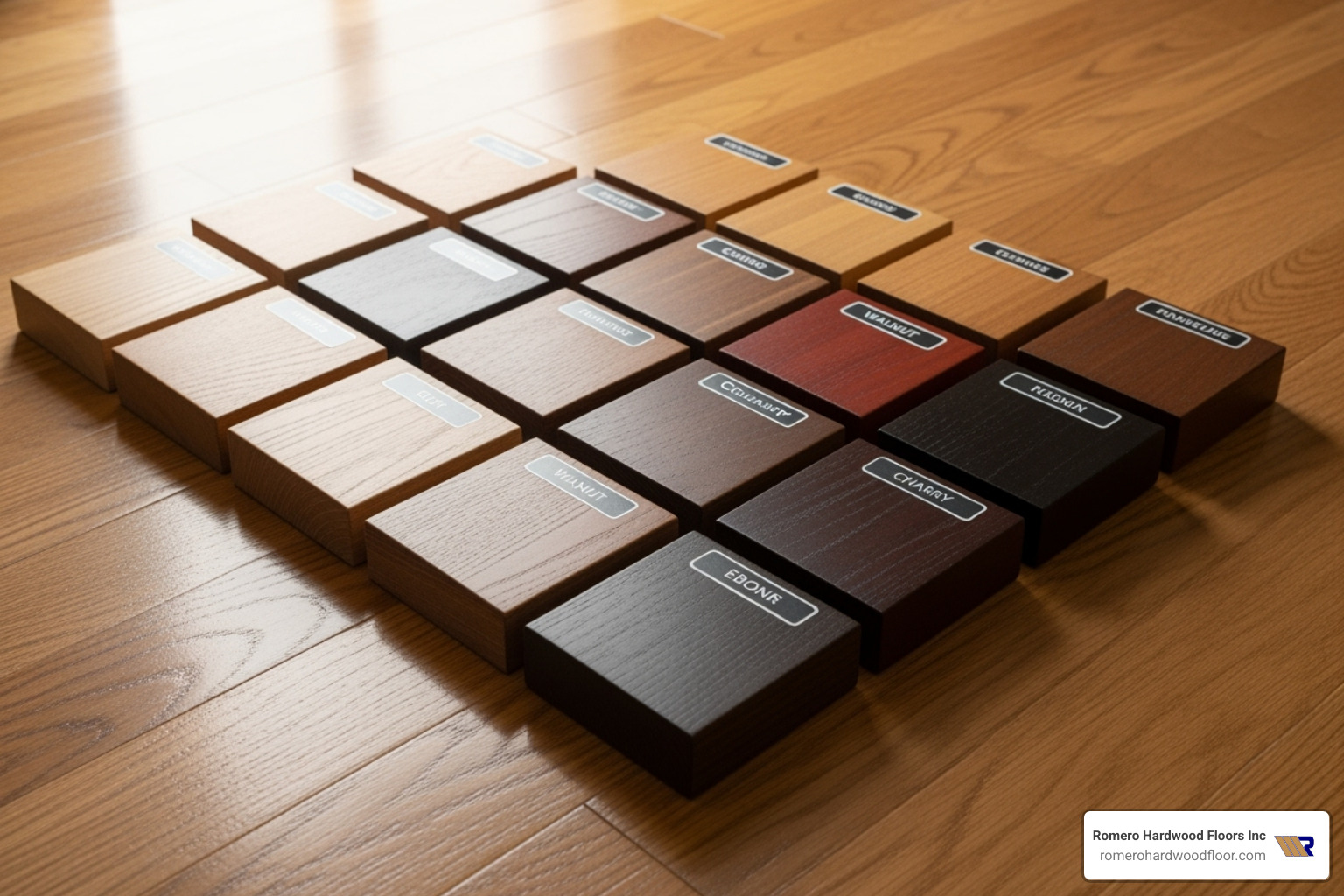
Lighting and room size are critical. Both natural and artificial light dramatically change how a stain color appears. Always test samples in your room at different times of day. Lighter stains can make small or dark rooms feel larger and more open, while darker stains create a cozy, sophisticated mood in large, well-lit spaces.
Sheen level is just as important:
- Matte: Offers a natural, raw-wood look. It’s excellent at hiding dust, minor scratches, and everyday wear, making it perfect for busy homes.
- Satin: The most popular choice. It has a subtle glow that balances elegance with practicality.
- Semi-gloss: Provides more shine for a traditional look but also shows imperfections more readily.
- High-gloss: Creates a dramatic, mirror-like surface. It’s stunning but highlights every speck of dust and scratch, so it’s best for low-traffic areas.
Exploring Colour Palettes and Finish Options
Understanding color options helps you make a choice you’ll love for years.
- Classic Warm Tones: Honey, golden oak, and rich medium browns offer a timeless, welcoming feel that works well in traditional or rustic designs.
- Modern Cool Shades: Grays, cool browns, and whitewashed effects provide a fresh, sophisticated backdrop for contemporary and minimalist décor.
- Bold Dark Hues: Deep ebony or dark chocolate create drama and luxury but show dust and scratches more easily than lighter tones.
- Custom Blends: We can mix stains to create a unique color that perfectly matches your vision.
Your floor is the foundation of your room’s design. It should complement your walls and furniture, not compete with them.
How Wood Type Affects Your Finish Choice
The type of wood you have dramatically affects how any stain will look. Each species has its own personality.
- Oak: As the most common US wood floor, its open grain accepts stain evenly, making it versatile for almost any color.
- Maple: Its tight, dense grain can cause stain to look blotchy. Lighter stains, natural finishes, or using a pre-stain conditioner are often recommended.
- Cherry: This wood naturally darkens over time (a process called patina) and can also be prone to blotching. Many prefer a natural finish to showcase its evolving beauty.
- Exotic Woods: Woods like Brazilian Cherry often have stunning natural colors that are best improved with a clear finish rather than a heavy stain.
Wood porosity varies by species, which is why testing stain on your actual floor is essential for achieving the best floor stain with varnish for hardwood floors and predicting the final look.
The Application Blueprint: From Prep to Perfection
Even the best floor stain with varnish for hardwood floors requires proper preparation and application. This is the secret to a professional, long-lasting finish. At Romero Hardwood Floors Inc., this is where our experience truly shines.
Essential Preparation Before You Begin
Proper prep is the foundation of a beautiful, durable finish. Skimping here will compromise the final result.
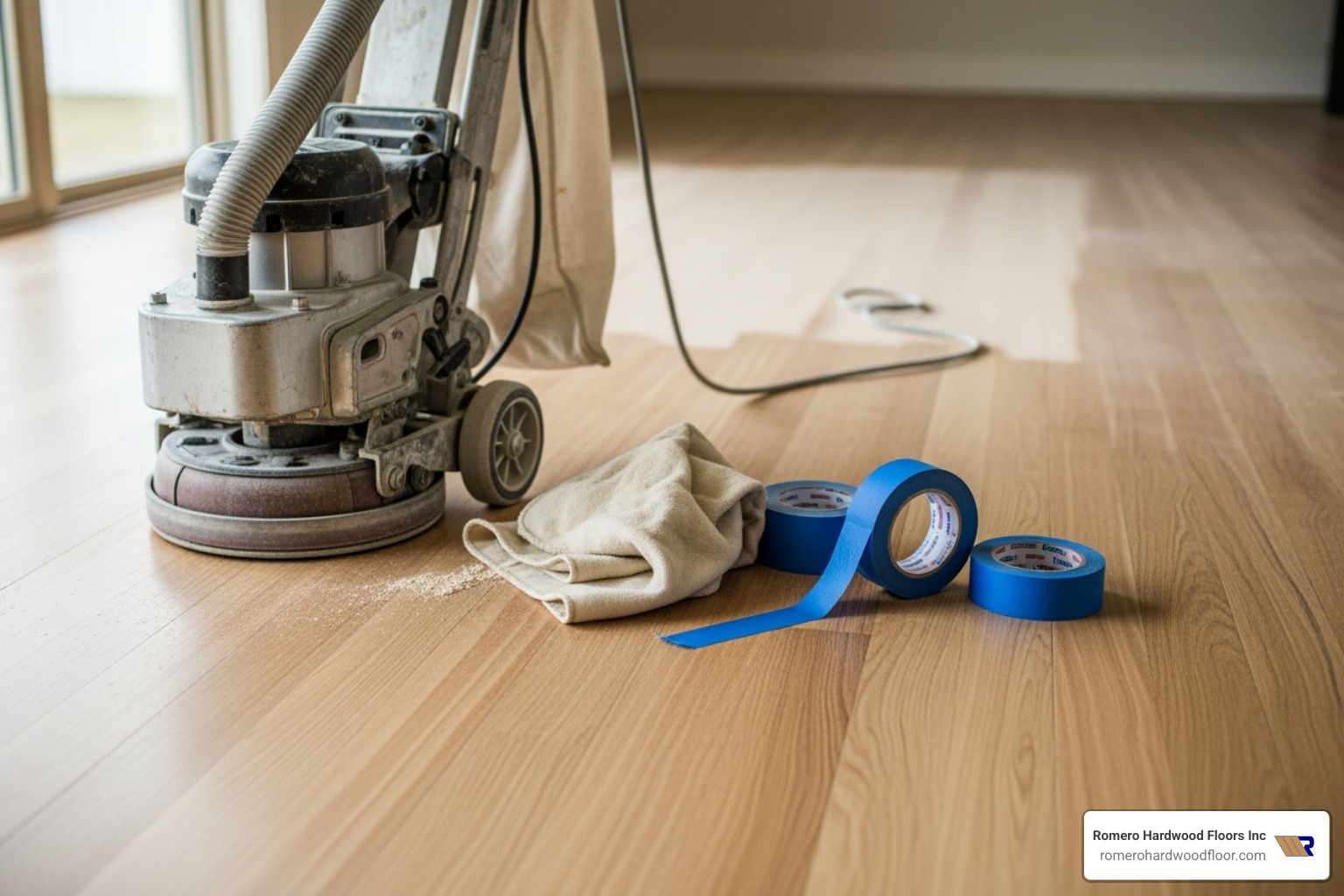
- Clear and Clean: Remove all furniture and vacuum the floor thoroughly to get rid of dirt and debris.
- Sand the Floor: Sanding removes the old finish and creates a smooth surface for the new coats. Use a progression of sandpaper grits, from coarse (e.g., 60-grit) to fine (e.g., 120-grit), to erase imperfections. For details, see our guide on how to sand hardwood floors.
- Remove All Dust: Vacuum carefully, then wipe the entire floor with a tack cloth. Dust is the enemy of a smooth finish.
- Fill and Tape: Fill any cracks or nail holes with a stainable wood filler. Use painter’s tape to protect baseboards and walls for a clean, professional edge.
A Step-by-Step Guide to Applying Your Stain and Varnish
With the floor prepped, it’s time for application. This guide focuses on a separate stain and varnish system for the highest quality finish.
First, gather your tools: applicator pads, quality brushes, lint-free rags, paint trays, a stir stick, and personal protective equipment (gloves, respirator).
- Stir, Don’t Shake: Gently stir your stain and varnish to mix pigments without creating bubbles.
- Apply Stain in Sections: Work in small, manageable areas, applying stain with the wood grain.
- Maintain a “Wet Edge”: Overlap sections slightly to avoid visible lap marks where sections meet.
- Wipe Off Excess Stain: Follow manufacturer directions. For most penetrating stains, wipe off all excess with a clean rag after a few minutes to ensure proper drying and adhesion.
- Let Stain Dry Completely: Be patient. Oil-based stains may need 24+ hours; water-based stains dry in 2-4 hours. Ensure good ventilation.
- Apply Varnish Coats: Once the stain is dry, apply the first coat of varnish thinly and evenly, maintaining a wet edge.
- Dry and Sand Between Coats: Allow each varnish coat to dry completely. After each coat (except the final one), lightly sand with fine-grit sandpaper (220-grit) to improve adhesion for the next coat. Always vacuum and tack cloth away all dust after sanding.
- Apply Multiple Coats: Most floors need at least two, and often three, coats of varnish for proper durability.
Common Mistakes to Avoid for a Professional Result
Avoid these common pitfalls for a flawless finish:
- Improper Prep: The most common error. Any dust or flaws will be trapped under the new finish.
- Thick Coats: This leads to improper curing, bubbles, and a soft finish. Always apply thin, even coats.
- Ignoring Drying Times: Rushing causes adhesion problems. Follow the manufacturer’s instructions.
- Not Testing the Stain: Always test on an inconspicuous area first. The final color varies by wood type.
- Lap Marks: These are caused by letting an edge dry before continuing. Always maintain a wet edge.
- Safety Warning: Properly dispose of oil-soaked rags by placing them in a sealed, water-filled metal container to prevent spontaneous combustion.
Long-Term Care and Professional Considerations
Once you’ve applied the best floor stain with varnish for hardwood floors, proper care is essential to protect your investment. Knowing when to DIY versus hiring a pro is also key.
Maintaining Your Newly Finished Floors
Protecting your new floors is easier than you think. A few simple habits will keep them looking great for years.
- Routine Cleaning: Sweep or vacuum (with a hardwood floor attachment) regularly to remove abrasive grit.
- Approved Cleaners: Use a damp mop with a pH-neutral hardwood floor cleaner. Avoid excessive water, harsh chemicals, and steam mops, which can damage the finish.
- Furniture Protection: Apply felt pads to furniture legs to prevent scratches and dents.
- Strategic Rugs: Use rugs in high-traffic areas like entryways and in front of sinks to protect the finish from constant wear.
- Sun Protection: Use curtains, blinds, or UV-blocking window film to prevent fading from direct sunlight.
For more tips, see our comprehensive hardwood floor care guide.
DIY vs. Hiring a Professional: Making the Right Call

DIY floor refinishing is a demanding project that requires time, skill, and specialized equipment like a drum sander, which can be difficult for beginners to control. The potential for costly errors—like uneven sanding, blotchy stain, or a peeling finish—is high.
Hiring a professional like Romero Hardwood Floors Inc. (established in 2006) guarantees access to expert knowledge, commercial-grade equipment, and guaranteed workmanship. This ensures a flawless result that improves your property value. For large or critical areas, hiring an expert is often the smartest, most stress-free decision.
Understanding the Costs of a Hardwood Floor Refinish
Cost is a major factor in any refinishing project. For a detailed breakdown, visit our page on the cost to sand and restain hardwood floors.
For a DIY project, your main expenses will be for materials and equipment rental. A gallon of quality stain can range from $30 to $60, while a gallon of polyurethane can cost $40 to $100+ for high-end, two-component products. Equipment rental can add several hundred dollars to your budget.
When hiring a professional, labor costs vary widely. Please note: these are average costs based on internet data, not actual costs for Romero Hardwood Floors. Prices can range from $2 to $8+ per square foot. This variation depends on the floor’s condition, wood type, number of coats, and geographic location. While the upfront cost is higher, it includes expertise, equipment, and a guaranteed finish, saving you from potential DIY mistakes.
Frequently Asked Questions about Floor Stains and Varnishes
We often get asked similar questions by homeowners looking to refresh their hardwood floors. Here are some of the most common ones.
How long does it take for varnish to fully cure on hardwood floors?
“Dry” and “cure” are not the same. Understanding the difference is crucial for protecting your new finish.
- Dry Time: This is the time until the surface is ready for another coat. For water-based polyurethanes, it’s typically 2-4 hours. For oil-based, it’s 8-24 hours.
- Light Traffic: Most floors are ready for socks-only walking within 24 hours.
- Heavy Traffic/Furniture: You can usually place furniture back after 3-7 days. Always lift, don’t drag, and use felt pads.
- Full Cure: This is when the varnish reaches maximum hardness, which can take 14-30 days. During this time, avoid placing rugs and cleaning with liquids to allow the finish to harden completely.
Cure time is affected by humidity, temperature, and ventilation. For more details, you can check this resource: More info on varnish dry times.
Can you apply a new coat of varnish over an old one?
Yes, in many cases. This process is called a “screen and recoat” and can refresh a floor without a full sanding.
The Process: The floor must be thoroughly cleaned, then lightly “scuffed” with a fine-grit screen to help the new coat adhere. We always recommend an adhesion test in a small, inconspicuous spot first.
When to Fully Sand Down: A full sand-down is necessary if the old finish is peeling or flaking, the wood itself is deeply scratched or damaged, or if you want to change the stain color of the floor.
For more information, explore our guide on hardwood floor clear coat repair.
Are there eco-friendly, low-VOC options available?
Absolutely. The flooring industry has made great strides in developing healthier, more environmentally friendly products.
- Water-Based Products: These have significantly lower VOCs (Volatile Organic Compounds) than oil-based options, resulting in less odor and better indoor air quality.
- Look for Labels: Choose products specifically marked as “low-VOC” or “zero-VOC” to ensure they meet stricter environmental regulations.
- Certifications: Some products carry certifications like GREENGUARD Gold (which certain Bona products have), indicating they meet stringent chemical emission standards for healthier indoor environments.
At Romero Hardwood Floors Inc., we are committed to using products that are safe for your home and can guide you to the best low-VOC options for your project.
Conclusion: Achieving Your Dream Floor
Selecting the best floor stain with varnish for hardwood floors is about creating a foundation that reflects your style and stands the test of time. We’ve covered the key steps to ensure a beautiful, durable result.
Here are the main takeaways:
- Preparation is everything. A perfectly clean and smooth surface is non-negotiable.
- Product selection matters. Choose between the convenience of a 2-in-1 product or the superior durability of a separate stain and varnish system.
- Technique is key. Thin, even coats and proper drying times are essential to avoid common mistakes.
- Maintenance preserves beauty. Simple habits like using felt pads and cleaning regularly will extend the life of your floors.
While a DIY approach can be rewarding, the complexity involved often makes professional refinishing the smarter choice for a guaranteed, stunning result.
At Romero Hardwood Floors Inc., we’ve been perfecting the art of hardwood floor refinishing since 2006. Serving communities throughout Eastern Massachusetts, from Medford to Peabody, we bring over 15 years of hands-on experience and guaranteed workmanship to every project. Our goal is to deliver results that truly improve your home’s value.
Ready to transform your space? Explore our hardwood floor refinishing services and let’s bring your vision to life.
