
Why Wide Plank Engineered Wood Flooring Transforms Modern Homes
Best wide plank engineered wood flooring combines the natural beauty of real hardwood with superior stability and installation versatility, making it an increasingly popular choice for both residential and commercial spaces.
Quick Answer: Top Features to Look for in the Best Wide Plank Engineered Wood Flooring:
- Plank Width: 7 inches or wider for a modern, spacious look
- Wear Layer Thickness: Minimum 3mm (ideally 4-6mm) for refinishing potential
- Core Construction: 9+ plies of cabinet-grade plywood for maximum stability
- Overall Thickness: 3/4 inch for premium quality and durability
- Finish Quality: Multi-layer lacquer or oil with scratch resistance
- Installation Versatility: Can be installed over concrete, in basements, or with radiant heating
Wide plank flooring—defined as any hardwood floor with individual plank widths greater than 5 inches—creates a striking visual impact with fewer seams and more visible wood grain character. When you combine this with engineered construction (a real hardwood veneer bonded to a stable multi-layer core), you get a flooring solution that’s both beautiful and practical.
Unlike solid hardwood, engineered wide plank flooring handles moisture and temperature changes far better. Its layered core provides dimensional stability that allows installation in places solid hardwood can’t go: basements, over concrete slabs, and even with radiant heating systems.
Key benefits include:
- More visual continuity and a sense of expanded space
- Greater resistance to humidity-related expansion and contraction
- Installation flexibility for any level of your home
- Real hardwood beauty at a more accessible price point
- Long-lasting durability when you choose quality construction
As Francisco Romero, owner of Romero Hardwood Floors Inc. with over 15 years of experience changing spaces in Revere, MA, I’ve seen how choosing the best wide plank engineered wood flooring dramatically improves both the beauty and value of properties. This guide draws on that extensive installation experience to help you make an informed decision.
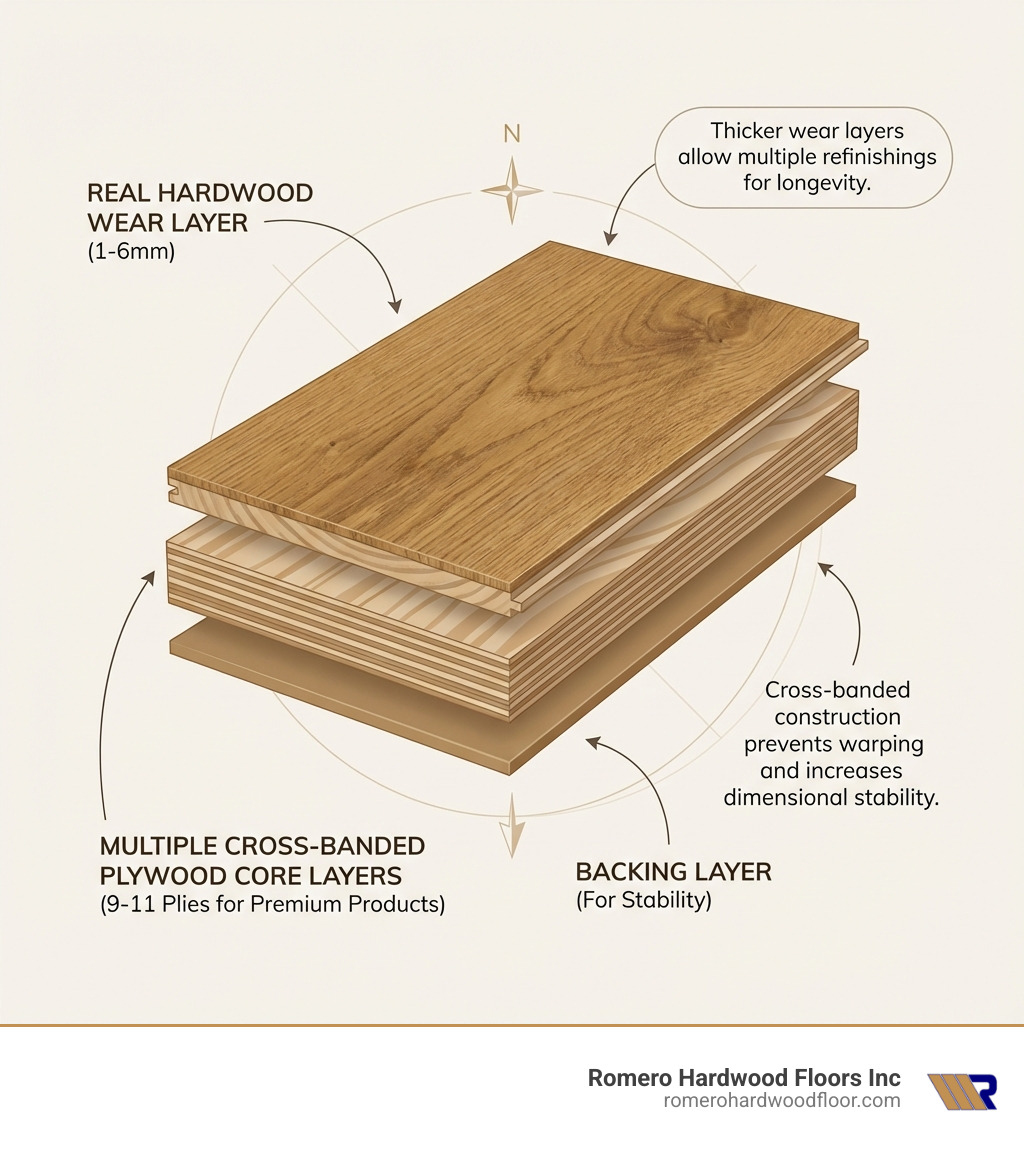
Best wide plank engineered wood flooring terms at a glance:
Understanding Wide Plank Engineered Wood: Beauty, Stability, and Value
Wide plank engineered wood flooring marries the grandeur of broad hardwood boards with the practical benefits of engineered construction, resulting in a floor that is both visually stunning and highly adaptable.
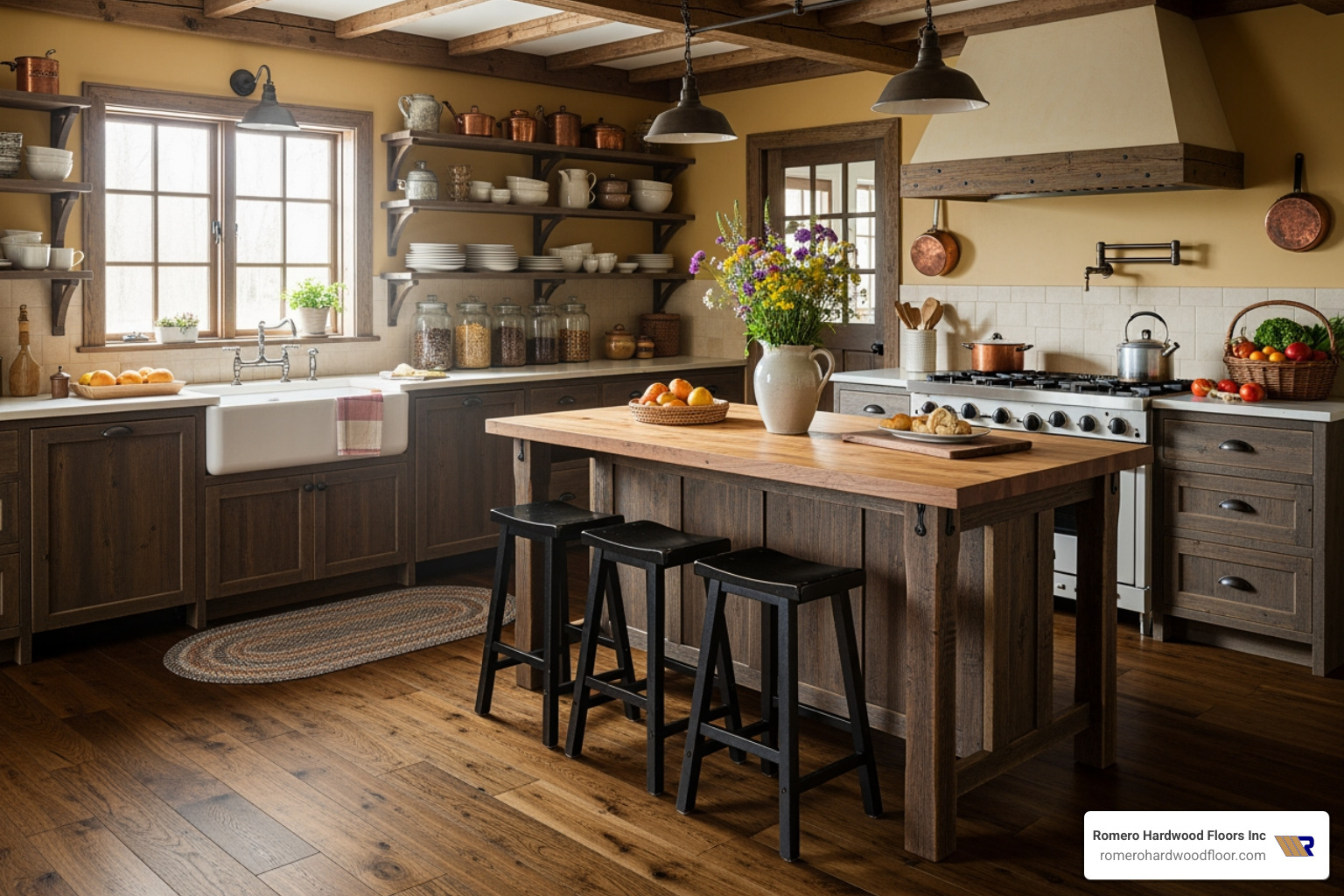
Wide plank flooring refers to planks wider than 5 inches. These boards create an expansive feel and showcase the wood’s natural grain with fewer seams, making rooms appear larger.
Engineered wood flooring consists of a real hardwood top layer (the wear layer) bonded to a stable core of multiple wood or plywood layers. This layered construction is the key to its superior performance.
One of its greatest advantages is dimensional stability. The cross-banded core counteracts the natural expansion and contraction of wood, making it far less susceptible to changes in temperature and humidity than solid hardwood. This makes it an excellent choice for homes in the Revere, MA area.
This stability also allows for remarkable installation versatility. It can be installed over concrete, in basements, and with radiant heating systems—areas often unsuitable for solid hardwood. For more on the advantages of hardwood, explore our hardwood flooring advantages guide.
Engineered vs. Solid Wide Plank Flooring
Choosing between engineered and solid wide plank flooring involves weighing differences in performance, maintenance, and installation.
| Feature | Engineered Wide Plank Flooring | Solid Wide Plank Flooring |
|---|---|---|
| Durability | Highly stable and moisture-resistant. Lifespan of 20-30 years, or 60-120 years for premium options. | Very durable in stable conditions, often lasting 50+ years. |
| Maintenance | Standard daily care. More moisture-resistant than solid wood but not waterproof. | Standard daily care. Prone to warping or gapping with humidity changes. |
| Installation Flex. | Very versatile: suitable for concrete, basements, and radiant heat. Can be glued, floated, or nailed. | Less versatile: typically nailed to a wood subfloor. Not for basements or concrete. |
| Refinishing Potential | Can be refinished 1-3 times. Premium products with thick wear layers allow 4-6 sandings. | Can be refinished many times (5+), lasting for generations. |
| Cost Comparison | Often more affordable than solid wood. Prices vary by quality. | Usually has a higher upfront cost. |
Potential Limitations to Consider
While offering numerous advantages, be aware of these limitations:
- Not Waterproof: Engineered wood is moisture-resistant, but not waterproof. Standing water can cause damage, so spills should be cleaned up immediately.
- Susceptible to Damage: The real wood top layer is susceptible to deep scratches and dents, similar to solid hardwood. Durable finishes offer protection, but heavy impacts can still leave a mark.
- Limited Refinishing: The refinishing potential is limited by the wear layer’s thickness. Thinner layers (1-2mm) may only allow one light sanding, while premium floors with thicker layers (3mm+) can be refinished multiple times. This is a key factor for long-term value. If you encounter any issues, we can assist with More about floor repairs.
The Anatomy of Quality: Construction, Materials, and Sustainability
Understanding the components of engineered wood flooring is crucial to selecting a product that performs well and lasts. The quality of best wide plank engineered wood flooring is built into its structure.
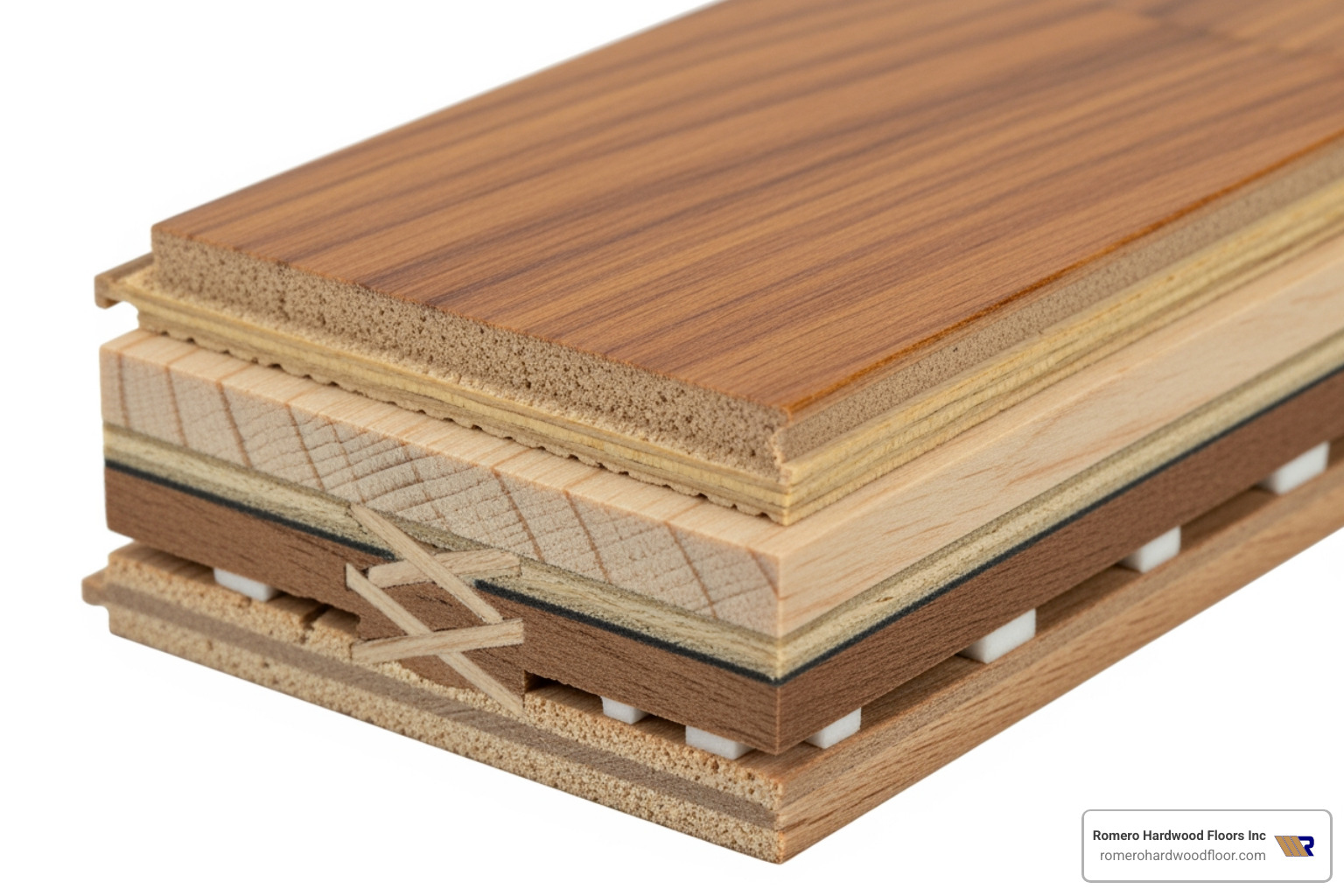
An engineered plank has a top wear layer of real hardwood and a multi-layer core. The quality of these components dictates the floor’s durability and longevity.
The core construction is key to stability. While some cores use MDF or HDF, the best floors feature a multi-ply plywood core (3-11 layers). This cross-banded construction minimizes expansion and contraction, making it more stable than solid wood. For those interested in environmentally friendly options, check out our insights on eco-friendly wood flooring.
The Critical Role of the Wear Layer and Finish
The wear layer’s thickness directly impacts the floor’s lifespan and refinishing capabilities. We recommend a wear layer of at least 3mm, and ideally 5mm or more.
A thicker wear layer allows for more refinishing. A 5mm layer can be sanded 4-6 times, extending the floor’s lifespan to 60-120 years. Thinner layers may only allow 1-2 light refinishings over a 20-30 year lifespan, impacting long-term value. To understand more about refreshing your floors, read about refinishing prefinished floors.
The finish protects the wood from wear, scratches, and spills. Common types include durable multi-layer lacquers, natural oiled finishes that can be spot-repaired, and highly scratch-resistant aluminum oxide finishes.
Common Wood Species and Their Properties
The wood species of the wear layer impacts appearance and durability. Popular choices in the Revere, MA area include:
- White Oak: Popular for its distinct grain, durability, and versatility with stains.
- Red Oak: A classic, durable choice with a prominent grain and warm, reddish undertones.
- Hickory: Extremely durable and dent-resistant, with a varied grain great for rustic styles.
- Maple: Durable with a fine, even grain and light color, known for a clean, modern look.
- Walnut: A softer wood prized for its rich, dark color and dramatic grain.
- French Oak: Typically White Oak, specially cut and finished for an “Old World” charm.
- Acacia: A very hard, durable wood known for its bold color variations and dramatic grain.
While the Janka hardness scale is a useful reference, the floor’s overall construction and finish are also critical to its performance. For more options, see our guide on best hardwood flooring options.
Sustainability in Engineered Wood Flooring
Engineered wood can be a highly sustainable option when sourced responsibly.
- Responsible Sourcing: Look for FSC (Forest Stewardship Council) certification, which ensures wood comes from sustainably managed forests.
- Efficient Material Use: Many products use fast-growing trees for the core, reducing demand on hardwoods.
- Healthier Adhesives: Using low-VOC and formaldehyde-free adhesives is critical for better indoor air quality.
- Longevity: The long lifespan of quality engineered flooring is eco-friendly, as a floor lasting 60-120 years reduces waste from replacements. For more information on non-toxic options, visit our page on non-toxic floor finishes.
A Buyer’s Guide to Choosing the Best Wide Plank Engineered Wood Flooring
Choosing the best wide plank engineered wood flooring involves balancing aesthetics, practical needs, and budget. When envisioning your new floors, room visualizer tools can help you virtually try different styles. Customization options in species, width, and finish can also create a unique look. For more inspiration, explore our hardwood floors design ideas.
Key Factors for Selecting the Best Wide Plank Engineered Wood Flooring
Pay close attention to these factors to ensure your floor meets your needs:
- Plank Width: For maximum visual impact, we recommend planks 7 inches or wider. This creates fewer seams and a more expansive look.
- Overall Plank Thickness: Premium floors are often thicker (around 3/4 inch), offering greater stability and a more substantial feel underfoot.
- Wear Layer Thickness: This is critical for longevity. We advise a minimum 3mm wear layer, with 4-6mm being ideal for floors you intend to refinish multiple times.
- Finish Durability: Look for scratch- and scuff-resistant finishes, such as those with aluminum oxide, for long-term beauty and protection.
Aesthetic Considerations: Color, Texture, and Style
The visual appeal of your floor will set the tone for your space:
- Color Trends: Current trends favor light, natural tones, but grays, classic browns, and rich dark hues remain popular for modern or traditional styles.
- Surface Textures: Various textures add character:
- Wire-brushed: Removes soft wood to highlight the grain for a natural, weathered texture.
- Hand-scraped: Creates an undulating surface for a rustic, old-world charm. Learn more about hand-scraped hardwood floors.
- Distressed: Uses various techniques to create an aged, worn look with intentional imperfections.
- Matching Flooring to Home Style:
- Modern: Light, smooth, wide planks in natural or grey tones.
- Rustic/Farmhouse: Wide, distressed or hand-scraped planks with visible character.
- Traditional: Classic species like Red Oak in medium to dark stains.
- Old World Elegance: French Oak with fumed or oiled finishes for a time-worn appeal.
Understanding and Budgeting for Cost
The cost of wide plank engineered flooring varies significantly. Understanding the factors will help you budget.
Based on internet data, average price ranges for engineered hardwood flooring can start from approximately $3 per square foot for basic options and extend upwards to $25+ per square foot for premium or custom selections. Please note: These are average costs based on internet data and not actual costs for Romero Hardwood Floors Inc. For precise pricing for your project in the Revere, MA area, please contact us for a personalized estimate.
Several factors influence the cost:
- Wood Species: Exotic or rare species cost more.
- Wear Layer Thickness: Thicker wear layers (3mm+) are more expensive.
- Core Construction Quality: High-quality plywood cores cost more than MDF/HDF.
- Finish Type and Durability: Advanced, durable finishes add to the cost.
- Plank Width and Length: Wider and longer planks cost more per square foot.
- Brand Quality and Origin: Reputable brands with high quality control have higher price points.
For more detailed information on engineered hardwood flooring costs, please refer to our engineered hardwood cost guide.
Installation and Long-Term Care for Your Investment
Proper installation and diligent maintenance are key to ensuring the beauty and longevity of your best wide plank engineered wood flooring.
Before installation, subfloor preparation is paramount. The subfloor must be clean, dry, and level. An acclimation period of 48-72 hours is also crucial, allowing planks to adjust to your home’s environment to prevent future expansion or contraction.
For comprehensive guidance on maintaining your beautiful floors, our hardwood floor care guide offers invaluable tips.
Installation Methods for the Best Wide Plank Engineered Wood Flooring
Engineered wood’s versatility allows for several installation methods:
- Floating (Click-Lock): A method where planks lock together over an underlayment. It’s fast and cost-effective.
- Glue-Down: Planks are glued directly to the subfloor for a solid feel and maximum stability. This is ideal for concrete subfloors.
- Nail-Down/Staple-Down: Planks are nailed or stapled to a wood subfloor, providing a very secure installation, typically for thicker engineered floors.
While some systems are designed for quick installation, we recommend professional installation for wide plank flooring. Our experienced installers in the Revere, MA area have the skill to ensure a flawless finish that performs beautifully for years. For an understanding of potential costs, review our engineered hardwood flooring installation cost information.
Cleaning and Maintenance Best Practices
Proper care will keep your floors looking pristine for decades.
- Routine Cleaning: Sweep or vacuum regularly (use a soft brush, no beater bar) to remove abrasive dirt and grit.
- Recommended Cleaning Solutions: Use a damp mop with a pH-neutral cleaner made for engineered wood. Avoid harsh chemicals, steam mops, and excessive water. For more details on what to use, consult what is best to clean hardwood floors.
- Handling Spills: Wipe up all spills immediately to prevent damage.
- Preventing Damage: Use felt pads under furniture and area rugs in high-traffic zones. Keep pet claws trimmed. Maintain indoor humidity between 30-55% to prevent gapping or buckling.
Frequently Asked Questions about Wide Plank Engineered Flooring
We often get questions about wide plank engineered wood flooring from homeowners in the Revere, MA area. Here are some of the most common ones:
How long does wide plank engineered flooring last?
The durability of wide plank engineered flooring largely depends on its quality and how well it’s maintained. With proper care, most engineered hardwood flooring can last 20–30 years. However, premium products featuring a thick wear layer (3mm or more) and a high-quality core can offer significantly longer lifespans, potentially lasting 60–100+ years. The ability to refinish these higher-quality floors contributes greatly to their extended longevity.
Can you refinish wide plank engineered wood flooring?
Yes, you can refinish wide plank engineered wood flooring, but the number of times is limited by the thickness of its real wood wear layer. Floors with a very thin wear layer (1-2mm) might only allow for one light sanding, if any, before the veneer is too thin. However, best wide plank engineered wood flooring with a substantial wear layer (4-6mm) can typically be refinished multiple times (4-6 times), much like solid hardwood. This means you can restore its original beauty and extend its life considerably. For more insights into refinishing, please visit our Learn more about refinishing page.
Is wide plank engineered flooring a good choice for kitchens and basements?
Absolutely! One of the standout benefits of engineered wood flooring is its excellent dimensional stability, which makes it a fantastic choice for areas where solid hardwood typically struggles, such as kitchens and basements. Its layered construction is less prone to expansion and contraction due to changes in humidity and temperature. This stability means it can be installed over concrete slabs and in below-grade environments like basements, providing the warmth and beauty of real wood where it might otherwise be impossible. While it’s more moisture-resistant, we still recommend prompt cleanup of spills in kitchens and ensuring proper moisture control in basements to protect your investment.
Conclusion: Making the Right Choice for Your Home
Choosing the best wide plank engineered wood flooring is an investment that improves the beauty, value, and functionality of your home. Its combination of striking aesthetics, superior dimensional stability, and installation versatility makes it a compelling option for almost any space, from living rooms to basements, especially in varied climates like ours in Massachusetts.
By understanding the critical components—like wear layer thickness and core construction—and carefully considering aesthetic factors such as wood species, color, and texture, you can select a floor that perfectly aligns with your vision and lifestyle. While engineered wood offers greater flexibility, opting for quality and ensuring professional installation and diligent maintenance are paramount to enjoying your floors for decades to come.
For expert guidance and flawless installation in the Revere, MA area, including Beverly, Chelsea, Danvers, East Boston, Gloucester, Lynnfield, Malden, Manchester by the Sea, Marblehead, Medford, Melrose, Nahant, Peabody, Reading, Rockport, Salem, Saugus, Somerville, Stoneham, Swampscott, Wakefield, Winchester, Winthrop, and Woburn, the professionals at Romero Hardwood Floors Inc. are here to help. We ensure your project improves your property’s beauty and value with our guaranteed workmanship.
Ready to transform your home with stunning wide plank engineered wood flooring? Contact us for professional hardwood flooring installation today.
Like us on Facebook!
