Why Hardwood Floor Corner Sanders Are Essential for Complete Refinishing
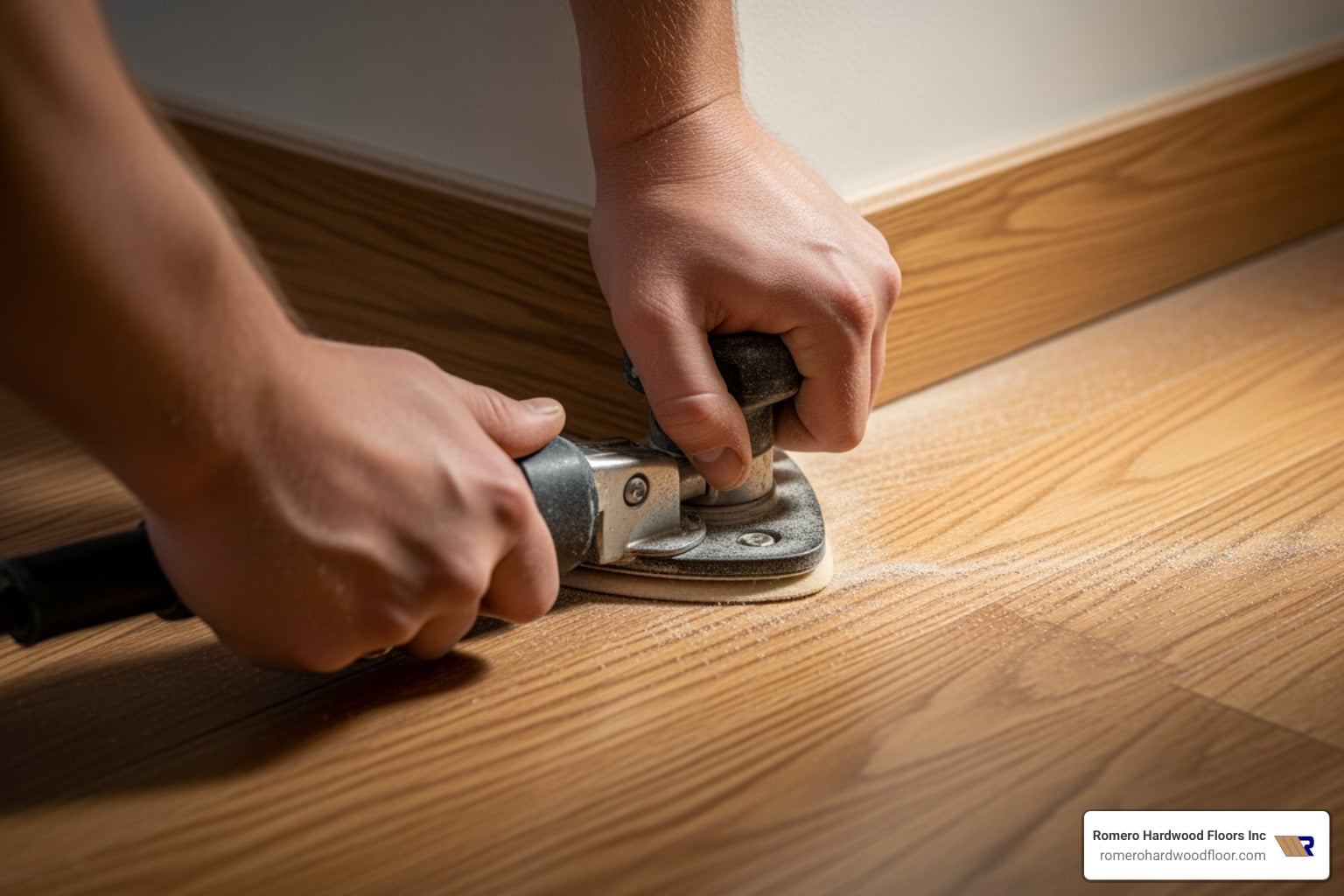
A hardwood floor corner sander is a specialized tool designed to sand edges, corners, and tight spaces that large drum sanders cannot reach. These machines typically include disc edgers for perimeter work, detail sanders for corners, and toe-kick edgers for under-cabinet areas.
Quick Answer: Best Tools for Floor Corners
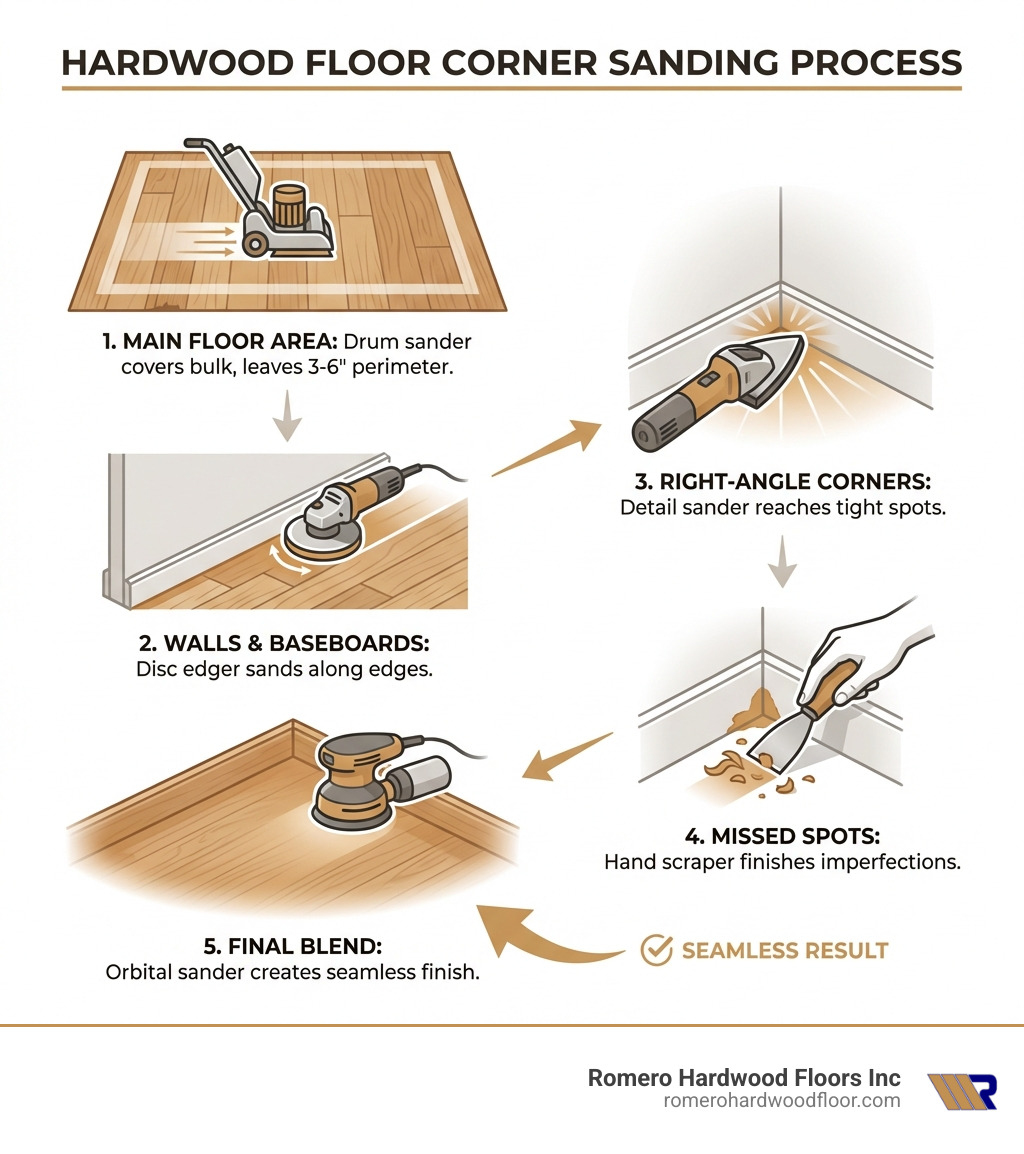
- Disc Edgers (professional-grade models) – For edges along walls and baseboards
- Detail Sanders (lightweight models at 21.6 lbs) – For right-angle corners and tight spots
- Toe-Kick Edgers – For sanding under cabinets and low-clearance areas
- Hand Scrapers (tungsten blades) – For spots power tools cannot access
- Palm Sanders – For final finishing and blending work
When you refinish hardwood floors, the drum sander covers about 80% of the surface area. But it leaves a 3-6 inch “dead zone” around the entire perimeter where the machine physically cannot reach. That’s where corner sanders become essential.
Without proper edge and corner work, your refinished floor will have ugly, unfinished borders that ruin an otherwise beautiful job. The round discs on edging sanders can’t reach into squared-off corners, and standard orbital sanders lack the power to remove old finishes efficiently. This creates a real challenge for homeowners and contractors alike.
I’m Francisco Romero, owner of Romero Hardwood Floors Inc. in Revere, MA. Over the past 15 years, I’ve used every type of hardwood floor corner sander available to deliver seamless refinishing results across thousands of residential and commercial projects throughout Massachusetts.
Relevant articles related to hardwood floor corner sander:
- Cost to Sand and Restain Hardwood Floors
- How Long Does it Take to Sand Hardwood Floors
- How to Sand Hardwood Floors
Essential Types of Hardwood Floor Corner Sander Equipment
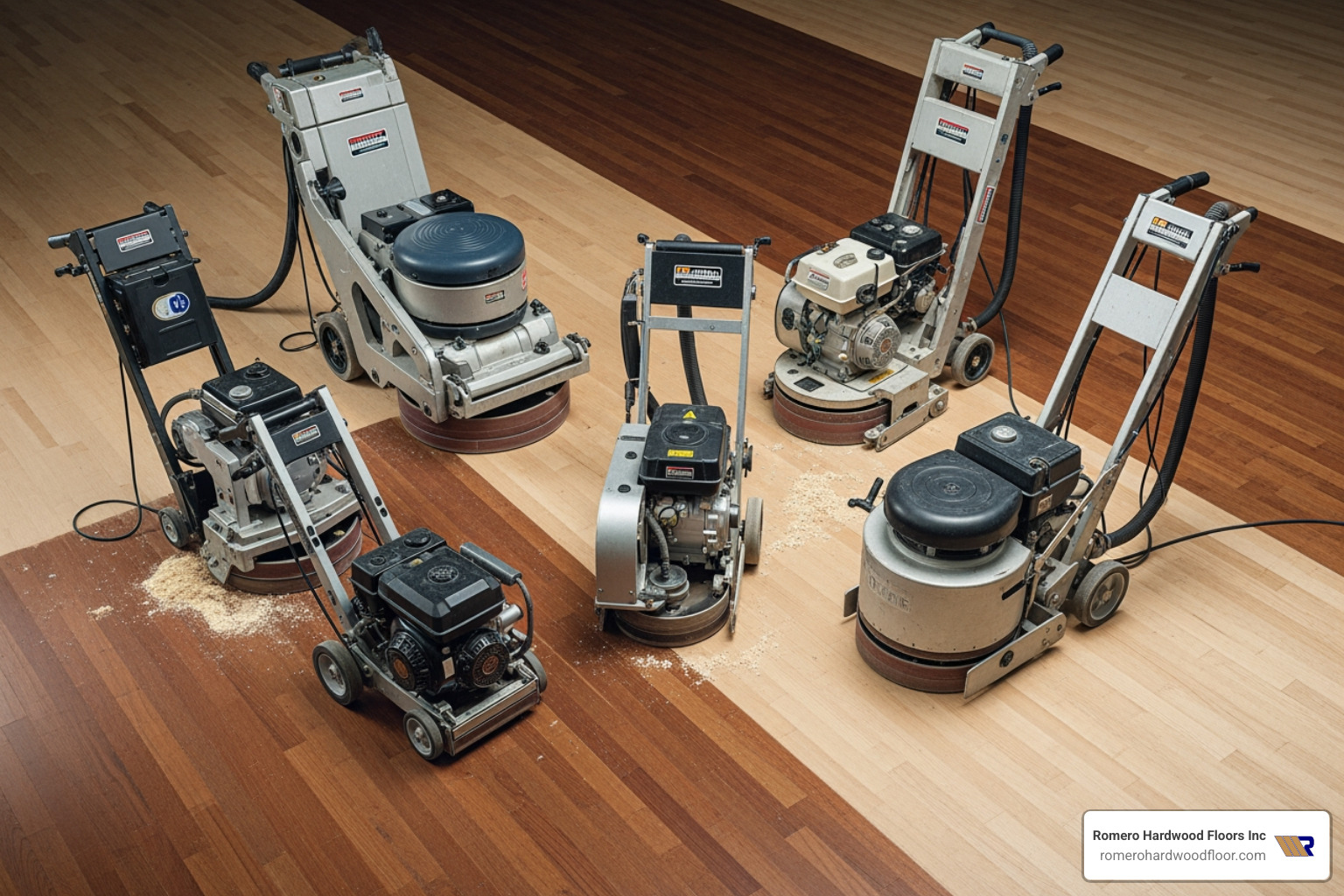
When we talk about a hardwood floor corner sander, we aren’t just talking about one tool. We are talking about a specialized arsenal designed to conquer the “Dead Zone.” In our experience serving areas from East Boston to Gloucester, we’ve found that using the right combination of these tools is the only way to avoid that “halo” effect where the edges of the room look different than the center.
Choosing Your Hardwood Floor Corner Sander
Selecting the right tool depends on several factors: the size of your room, the species of wood, and your comfort level with heavy machinery. For instance, a heavy-duty disc edger is a powerhouse but requires a steady hand to prevent gouging. If you are a DIYer in Salem or Marblehead tackling a single room, a lighter detail sander might be more manageable.
| Machine Type | Primary Use | Power/Aggression | Precision |
|---|---|---|---|
| Disc Edger | Room perimeters | Very High | Medium |
| Toe-Kick Edger | Under cabinets/radiators | High | High |
| Detail Sander | Right-angle corners | Medium | Very High |
| Palm Sander | Final blending/smoothing | Low | Excellent |
If you’re tackling this yourself, we recommend checking out our guide on how to sand hardwood floors to see how these tools fit into the larger workflow.
Specialized Tools for Low Clearances
One of the biggest headaches in Massachusetts homes—especially those beautiful older properties in Beverly and Manchester-by-the-Sea—is the low clearance under cast-iron radiators and kitchen cabinet toe-kicks.
Standard edgers simply won’t fit. This is where specialized equipment like the toe-kick edger or a professional corner sander comes into play. These specialized machines are favorites in the industry because they weigh only 21.6 lbs and offer attachments specifically for corners and toe-kicks. The corner attachment operates at a high RPM, allowing it to eat through old finish in seconds while remaining light enough to maneuver in tight spots.
Step-by-Step Guide: How to Use a Hardwood Floor Corner Sander
Using a hardwood floor corner sander is a physical task. You’ll be on your knees for a significant portion of the day, so we always tell our team to wear high-quality knee pads. The goal is to make the edges look exactly like the rest of the floor, which requires a systematic approach to grit progression and movement.
Mastering the Hardwood Floor Corner Sander Technique
The “trick” to successful edging is constant motion. If you stop moving for even a second while the disc is spinning, you will create a “moon” or a “divot”—a deep, circular gouge that is incredibly difficult to remove later.
- Start Coarse: Begin with 60-grit sandpaper to strip away the old finish and level the wood.
- The Pivot Point: Most edgers have two wheels and a sanding disc. You want to keep the machine balanced on its wheels while slightly “swinging” the disc in a semi-circular motion.
- Ease In and Out: When you start the motor, keep the disc off the floor. Lower it gently as you begin moving. When you’re done with a pass, lift it before the motor stops.
- Overlap: Always overlap your passes by about 50% to ensure no spots are missed.
For a deeper dive into the mechanics of the whole room, see our page on hardwood floor sanding.
Achieving a Seamless Blend with the Main Floor
The most common mistake we see in DIY projects from Chelsea to Winthrop is a visible line where the drum sander stopped and the edger began. To avoid this, you must “blend” the two areas.
After you’ve finished with your heavy edger, use a random orbit palm sander or a detail sander to go over the transition area. This softens the scratch patterns. Using a technique called “buffing” with a large floor buffer after all sanding is complete can also help unify the surface. If you’re struggling with the very inner points, refer to these tips on Sanding Inside Corners to ensure every inch is uniform.
Manual Tools for the Tightest Hardwood Floor Corners
Even the most advanced hardwood floor corner sander has a limitation: physics. A round disc cannot physically reach into a 90-degree corner. It’s like trying to put a square peg in a round hole—it just doesn’t work.
When to Put Down the Hardwood Floor Corner Sander
When you reach the very corner of a room, or the tight space around a door jamb or delicate Victorian trim, it’s time to switch to manual tools. This is where the artistry of floor restoration truly happens. If you run into damaged boards in these tight spots, you might also need to look into floor sanding and repair before finishing.
We rely on tungsten-bladed scrapers. These hand-held tools are essential for:
- Right-angle corners: Pulling the scraper toward you removes the finish that the round edger missed.
- Door jambs: Sanding around the intricate “feet” of door casings.
- Under-radiator pipes: Where even a toe-kick edger might be too bulky.
Removing Old Finishes and Adhesives
In many older homes in Peabody and Danvers, we find more than just old varnish. Sometimes there’s layers of paint, old carpet glue, or even black bitumen (asphalt-based adhesive).
These substances will instantly “load” or clog your sandpaper, making your hardwood floor corner sander useless. In these cases, a hand scraper is your best friend. You can use a heat gun to soften stubborn adhesives, then scrape them away manually before ever touching the wood with a power sander. It’s a slow process, but it saves you a fortune in wasted sandpaper and prevents you from burning out your sander’s motor.
Costs, Maintenance, and Safety Precautions
Refinishing floors is a dusty, noisy business. Safety isn’t just a suggestion; it’s a requirement for a healthy project. When we provide hardwood floor sanding services, dust containment is our top priority.
Rental vs. Buying Your Equipment
For most homeowners in the North Shore area, renting is the most logical path. A professional-grade edger can cost over $2,500 to buy, whereas renting it for a weekend is much more affordable.
However, if you are a property owner in Malden or Medford with multiple units to maintain, investing in a high-quality detail sander or a mid-range palm sander can be a great long-term investment. Just remember: professional machines require maintenance. You’ll need to check the carbon brushes, keep the dust bags clean, and ensure the drive belts are tight.
Average Pricing for Equipment and Services
Note: The following are average costs based on internet data and not actual costs for Romero Hardwood Floors.
To give you an idea of the market, here is what you might expect to pay for corner sanding tools and services:
- Tool Rentals: $35 to $120 per day (Professional edgers are on the high end).
- Tool Purchase: $20 for a manual tungsten scraper to $2,700+ for professional-grade edgers.
- Professional Refinishing: $3 to $12 per square foot. The price varies wildly based on the wood species, the number of corners, and the condition of the existing finish.
Frequently Asked Questions about Corner Sanding
What grit progression should I use for corners?
Consistency is key. You must follow the same grit progression in the corners that you used on the main floor. A typical progression looks like this:
- 60-grit: To remove the old finish and deep scratches.
- 80-grit: To remove the scratches left by the 60-grit.
- 100-120 grit: For a smooth surface ready for staining or sealing.
- 150-220 grit: Only for final hand-sanding or between coats of finish.
How do I avoid swirl marks in the corners?
Swirl marks (also called “pigtails”) are caused by a hardwood floor corner sander that has dust trapped under the disc or is being pressed too hard. To avoid them:
- Vacuum Constantly: Keep the area free of grit.
- Clean Paper: Change your sandpaper often. If it looks “glazed” with old finish, throw it away.
- Light Touch: Let the machine do the work. Don’t lean your body weight onto the sander.
- Final Hand Sand: Always do a quick pass with a sanding block in the direction of the grain as your final step.
Can I use a regular palm sander for floor corners?
Technically, yes, but with a caveat. A standard 1.1 Amp palm sander is great for final smoothing, but it lacks the torque to strip 50 years of hardened polyurethane. If you try to use a small detail sander for the entire perimeter, you will likely burn out the motor and spend three times as long on the job. Use the big edger for the heavy lifting and the palm sander for the “finesse” work.
Conclusion
Sanding the corners of your hardwood floor is the difference between a “DIY-looking” job and a professional-grade restoration. It requires patience, the right hardwood floor corner sander, and a bit of elbow grease. Whether you are tackling a historic home in Salem or a modern condo in Somerville, the attention you pay to those tight spots will define the beauty of your finished floor.
At Romero Hardwood Floors Inc., we take pride in the details. Based in Revere, MA, we’ve spent nearly two decades perfecting the art of the “seamless blend.” If the thought of spending a weekend on your knees with an edger feels overwhelming, we are here to help. We bring professional-grade dust containment and years of expertise to every job across the North Shore and Greater Boston area.
Ready to see your floors transformed? Request a floor sanding and refinishing estimate from us today, and let’s make your hardwood floors look like new again.