
Best Wood Floor for Kitchen: Top 5 Stunning Choices
The best wood floor for kitchen spaces combines timeless beauty with durability, offering an inviting and functional environment. Hardwood flooring stands out as a popular choice thanks to its warm, neat aesthetic and the comfort it provides underfoot. When choosing the best wood floor for kitchen use, consider options like engineered hardwood or durable species such as oak and maple.
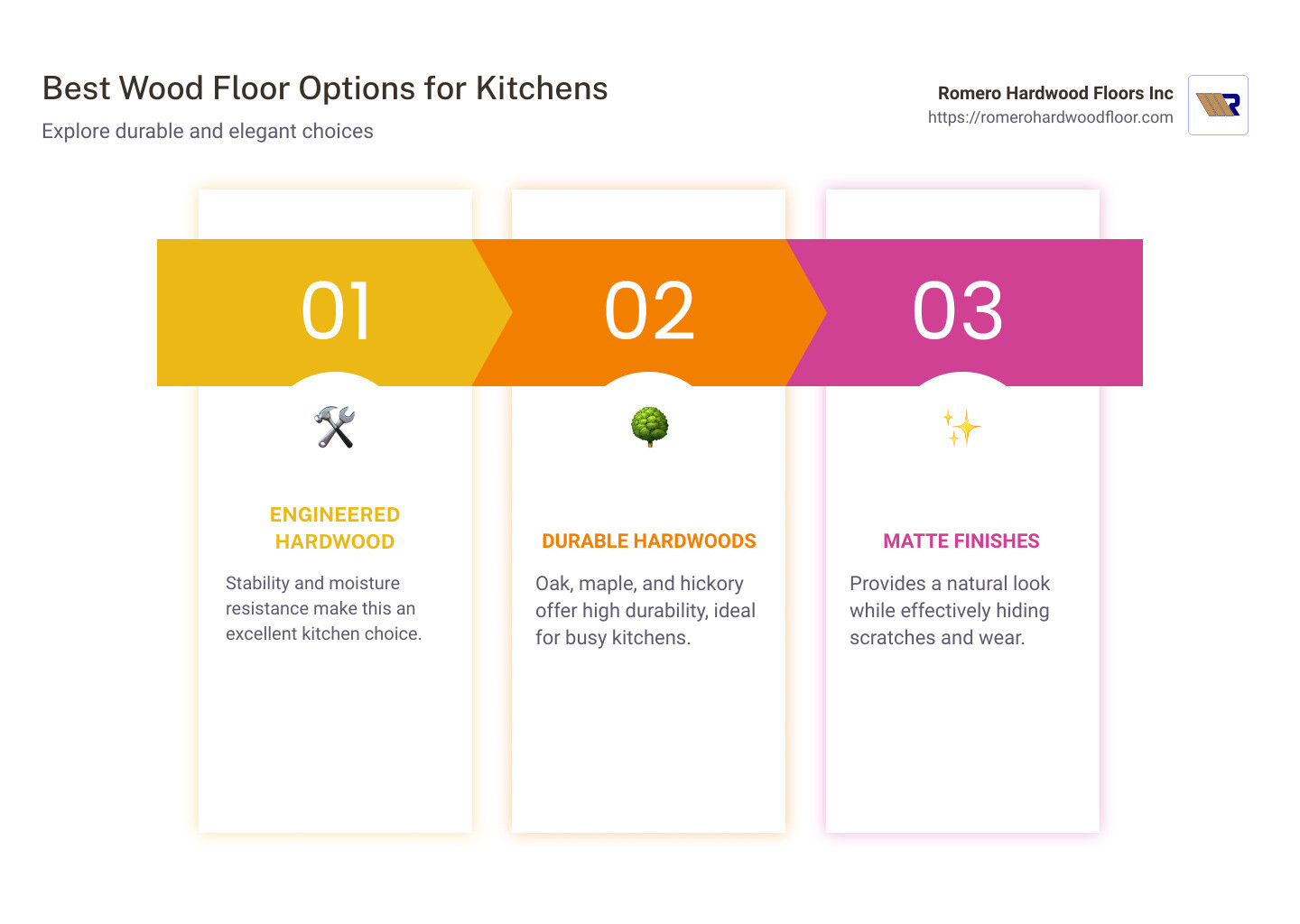
- Engineered hardwood: Offers stability and moisture resistance.
- Hard Woods: Oak, maple, and hickory are excellent for kitchens due to durability.
- Matte finishes: Hide scratches and wear effectively.
The kitchen truly is the heart of the home, where lasting memories are made over shared meals and conversations. Hardwood flooring not only amplifies this space with its charm but also endures the hustle and bustle of daily life.
I’m Francisco Romero, owner of Romero Hardwood Floors Inc., bringing over 15 years of expertise in flooring solutions. Specializing in the best wood floor for kitchen installations, we ensure that every floor we lay improves the beauty and function of your home.
Easy best wood floor for kitchen glossary:
– Engineered vs solid hardwood
– best solid hardwood flooring
Best Wood Floor for Kitchen
When it comes to selecting the best wood floor for kitchen areas, understanding the types of wood flooring available and their specific benefits is key. Here, we’ll explore the differences between hardwood flooring, engineered wood, and solid wood, as well as the importance of the Janka rating in your decision-making process.
Hardwood Flooring
Hardwood flooring is a classic choice that adds warmth and elegance to any kitchen. It’s known for its durability and timeless appeal. However, hardwood can be vulnerable to moisture and scratches, which is something to consider in a high-traffic area like a kitchen.
- Pros: Aesthetic appeal, can be refinished multiple times, increases home value.
- Cons: Susceptible to water damage, requires maintenance.
Engineered Wood
Engineered wood is a modern marvel in flooring technology. It consists of a real wood veneer on top of a stable core, which makes it more resistant to moisture and temperature changes than traditional hardwood. This makes engineered wood an excellent choice for kitchens, where spills and humidity fluctuations are common.
- Pros: Moisture-resistant, stable, versatile installation options.
- Cons: Cannot be refinished as many times as solid wood.
Solid Wood
Solid wood flooring offers best authenticity and can last for generations with proper care. It is crafted from a single piece of wood and can be sanded and refinished multiple times. While solid wood is a traditional choice, it is best suited for kitchens with controlled humidity levels to prevent warping.
- Pros: Authentic look, long-lasting, can be refinished numerous times.
- Cons: Sensitive to humidity, more prone to warping.
Janka Rating
The Janka rating is crucial when choosing wood flooring for your kitchen. It measures the hardness of the wood, indicating its ability to withstand wear and dents. For kitchen flooring, selecting a wood with a high Janka rating ensures durability and longevity.
- High Janka Rating Woods: Oak, maple, and hickory are popular choices for their resilience.

In conclusion, whether you opt for the stability of engineered wood or the timeless appeal of solid hardwood, understanding these options will help you select the best wood floor for kitchen spaces. This ensures your kitchen remains both beautiful and functional for years to come.
Types of Wood Flooring for Kitchens
When choosing the best wood floor for kitchen spaces, understand the different types of wood flooring and their unique benefits. Kitchens are semi-moist areas, so moisture resistance and structural integrity are key considerations.
Engineered Wood Flooring
Engineered wood flooring is an excellent choice for kitchens due to its superior moisture resistance and dimensional stability. It consists of multiple layers, with a top layer of real hardwood and a core made from high-density fiberboard or plywood. This structure allows engineered wood to withstand the common kitchen challenges of humidity and temperature changes without warping.
- Moisture Resistance: The layered construction of engineered wood makes it less prone to expansion and contraction, which is ideal for kitchens where spills and steam are common.
- Structural Integrity: Engineered wood’s stable base offers improved durability in high-traffic areas like kitchens.
- Aluminum Oxide Finish: Many engineered wood options come with a protective aluminum oxide finish, providing additional scratch and stain resistance.
Solid Hardwood Flooring
Solid hardwood flooring is a traditional choice that brings classic beauty and warmth to any kitchen. It is crafted from a single piece of wood, offering a rich, authentic look that can be refinished multiple times over its lifespan.
- Traditional Choice: Solid hardwood has been a go-to option for its timeless appeal and ability to improve home value.
- Refinishing: One of the significant advantages of solid wood is that it can be sanded and refinished numerous times, allowing homeowners to refresh the floor’s appearance as needed.
- Water Resistance: While solid hardwood is beautiful, it is more susceptible to moisture than engineered wood. Proper sealing and immediate spill cleanup are crucial to maintain its integrity.
Waterproof Wood Options
For those seeking extra protection against moisture, waterproof wood flooring options are available. These typically involve a special finish or treatment that improves water resistance, making them suitable for kitchen environments.
- Species Selection: Choosing the right wood species is vital. Hardwoods like oak, maple, and hickory offer high durability and are less prone to water damage when properly treated.
By understanding the characteristics of engineered wood and solid hardwood, along with considering waterproof options, you can make an informed decision on the best wood floor for kitchen areas. This ensures a balance of beauty, durability, and practicality in your culinary space.
Choosing the Right Wood Finish
Selecting the right finish for your kitchen floors is crucial for both aesthetics and durability. The finish not only improves the wood’s appearance but also protects it from the daily wear and tear typical in kitchen environments. Let’s explore some popular finishes and their benefits.
Water-Based Polyurethane
Water-based polyurethane is a top choice for kitchen floors due to its excellent water resistance and durability. It dries clear, allowing the natural beauty of the wood to shine through without yellowing over time. This finish is also a great option for those who prefer a low-VOC, environmentally friendly product.
Moisture-Cured Urethane
For kitchens that see a lot of action, moisture-cured urethane offers exceptional protection. It’s highly resistant to moisture and abrasion, making it ideal for high-traffic areas. This finish is more challenging to apply, often requiring professional installation, but the result is a robust, long-lasting surface.
UV Curing
UV curing is an advanced technique that significantly improves the durability of wood finishes. This process involves exposing the finish to ultraviolet light, which hardens it quickly and increases its scratch resistance. Floors cured with UV technology can withstand heavy foot traffic and are less prone to damage from spills and stains.
Gloss vs. Matte Finishes
When it comes to the sheen of your kitchen floor, the choice between gloss and matte finishes can impact both style and maintenance.
- High-Polished Look: Gloss finishes offer a shiny, reflective surface that can make a kitchen look sleek and modern. However, they tend to show scratches and footprints more easily. Regular maintenance is needed to keep them looking pristine.
- Natural Matte: Matte finishes provide a more subtle, natural appearance and are excellent at hiding scratches and imperfections. They give a warm, cozy feel to the kitchen and require less frequent upkeep compared to gloss finishes.
Choosing between gloss and matte largely depends on your lifestyle and aesthetic preferences. While gloss finishes can lift the elegance of a kitchen, matte finishes offer practicality and ease of maintenance.
In the next section, we’ll explore essential maintenance tips to keep your kitchen wood floors looking their best.
Maintenance Tips for Kitchen Wood Floors
Keeping your kitchen wood floors in top shape is all about regular care and smart prevention. Here are some simple yet effective tips to protect your investment and ensure your floors remain beautiful and durable for years to come.
Spill Management
Spills are inevitable in a kitchen, but how you handle them makes all the difference. Act quickly—wipe up any liquid spills immediately to prevent moisture from seeping into the wood. This helps maintain the integrity of the finish and prevents water damage. The faster you respond to spills, the better your floors will fare in the long run.
Protective Rugs
Rugs are more than just decorative elements; they are your first line of defense against wear and tear. Place protective rugs or mats in high-risk areas such as in front of the sink, stove, and refrigerator. These rugs catch spills and reduce the impact of foot traffic, keeping your floors safe from scratches and dents.
Regular Cleaning
Regular cleaning is crucial for maintaining the shine and lifespan of your wood floors. Use a soft-bristle broom or a vacuum with a hardwood setting to sweep away dirt and debris. When it’s time to mop, opt for a damp mop with a mild cleanser specifically designed for wood floors. Avoid using too much water, as excess moisture can damage the wood.
Bacteria Protection
Wood floors have a natural advantage over other materials like tile when it comes to bacteria. Unlike grout, which can harbor bacteria, wood doesn’t trap these harmful organisms as easily. However, to keep your kitchen sanitary, ensure regular cleaning and consider using products that protect against bacteria and allergens. This is particularly beneficial for allergy sufferers.
By following these maintenance tips, you can keep your kitchen wood floors looking pristine and extend their lifespan. Up next, we’ll tackle some frequently asked questions about wood floors in kitchens.
Frequently Asked Questions about Wood Floors in Kitchens
Is it a good idea to have wood floors in the kitchen?
Wood floors in the kitchen are a popular choice for many homeowners due to their durability and timeless appeal. They bring a warm and inviting feel to the space, unlike the cold, hard surfaces of tile or stone. While some worry about spills and scratches, choosing a wood species with a high Janka rating can alleviate these concerns. Hardwoods like hickory or maple offer excellent resistance to dents and scratches, making them ideal for high-traffic areas like kitchens.
What is the best wood finish for kitchen floors?
Selecting the right finish is crucial for enhancing the appearance and durability of your kitchen wood floors. Water-based polyurethane is a popular choice as it offers a clear finish that maintains the wood’s natural color and provides good water resistance. For those seeking even greater protection, moisture-cured urethane is a robust option, offering superior resistance to spills and scratches. The finish not only affects durability but also the overall look, with options ranging from high gloss to natural matte finishes.
How do I protect wood floors from kitchen spills?
Protecting wood floors from spills involves a few simple strategies. First, immediate cleaning is key. Wipe up spills as soon as they happen to prevent moisture from damaging the wood. Protective measures, like placing mats or rugs in high-risk areas—such as in front of the sink and stove—can catch spills and reduce wear. Regular maintenance is also crucial. This includes sweeping and mopping with a damp cloth to keep the floors clean and free from debris that could cause scratches.
By addressing these common questions, you can make informed decisions about installing and maintaining wood floors in your kitchen. With the right care and materials, wood flooring can be a beautiful and practical choice for your culinary space.
Conclusion
When it comes to enhancing your kitchen with the best wood floor, look no further than Romero Hardwood Floors Inc. Our expertise in hardwood flooring installation ensures that your kitchen not only looks stunning but also stands the test of time. Established in 2006, we have been changing homes with our quality craftsmanship and attention to detail.
Expert Installation
Choosing the right flooring is just the beginning. Proper installation is crucial for the longevity and performance of your wood floors. With our team of skilled professionals, we guarantee precision and care in every project. Our commitment to punctuality and guaranteed workmanship means you can trust us to deliver on our promises.
Property Value Improvement
Investing in quality wood flooring can significantly boost the value of your home. Kitchens are central to daily life and a well-designed kitchen with beautiful wood floors can make a lasting impression. It not only improves the aesthetic appeal of your home but also adds to its market value. Our expert installation services ensure that your investment is worthwhile, providing both immediate beauty and long-term benefits.
At Romero Hardwood Floors Inc, we take pride in helping homeowners create spaces that are both functional and beautiful. Whether you’re renovating your kitchen or building a new one, our team is here to guide you every step of the way.
Explore our hardwood flooring installation services to see how we can bring your vision to life. Let us help you make your kitchen a centerpiece of style and functionality.
