
Understanding the Natural Movement of Hardwood Floors: Caulk Wood Floor Gaps
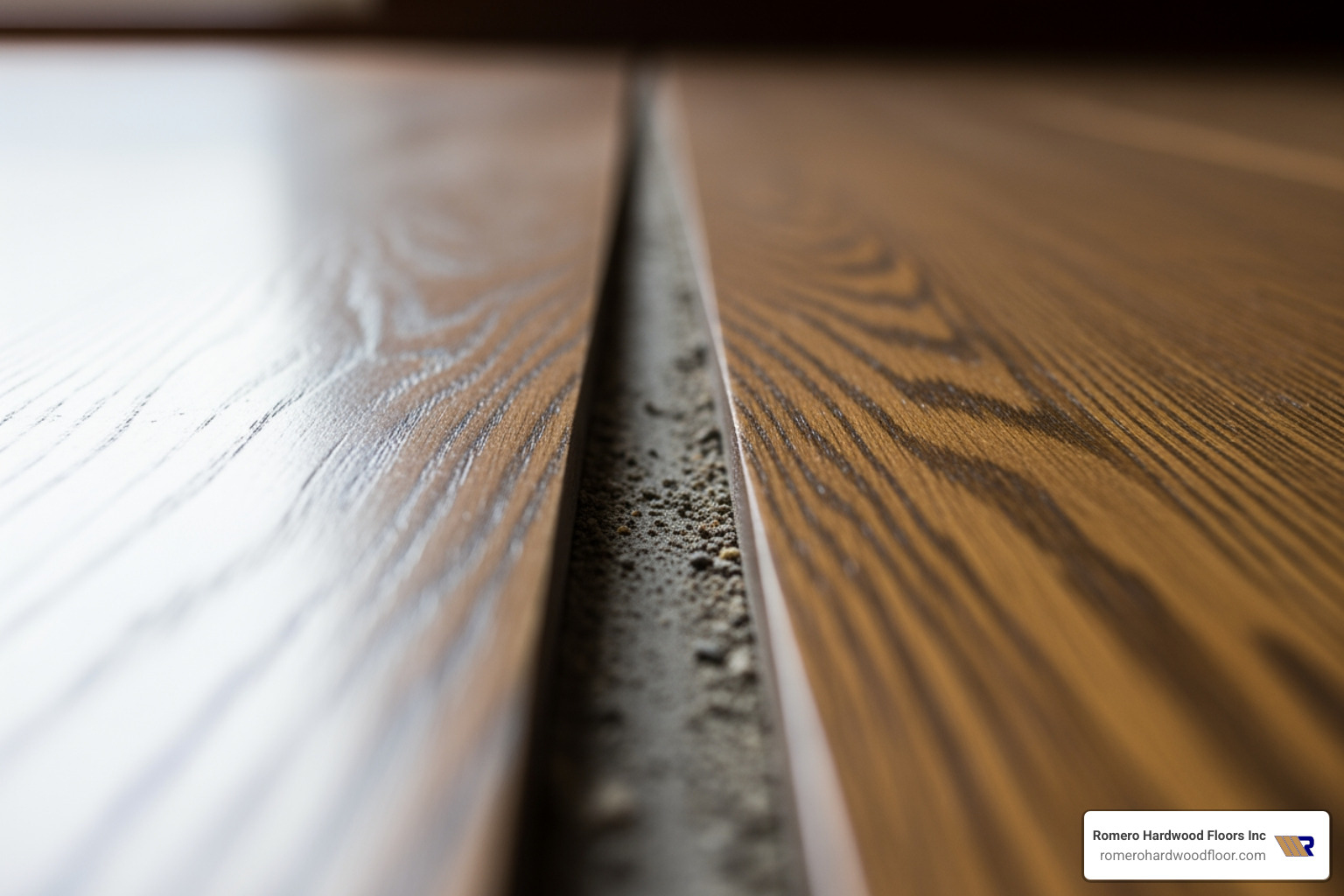
Wood is a natural material that expands and contracts with changes in humidity. This movement is normal and often results in small gaps between floorboards, especially during dry winter months. While this is a natural characteristic of wood, large or persistent gaps can trap dirt, create drafts, and detract from your floor’s appearance. For many of these situations, learning how to fill wood floor gaps is a simple and effective DIY solution.
When to fill gaps:
- Gaps are stable and less than 1/8 inch wide.
- You want to stop drafts or prevent debris from collecting.
When not to fill gaps:
- Gaps that open in winter and close in summer.
- Gaps wider than 1/4 inch, which may require professional repair.
As the owner of Romero Hardwood Floors, I’ve helped countless homeowners in the Revere area address these issues for over 15 years. Understanding when and how to fill gaps is key to a lasting repair.
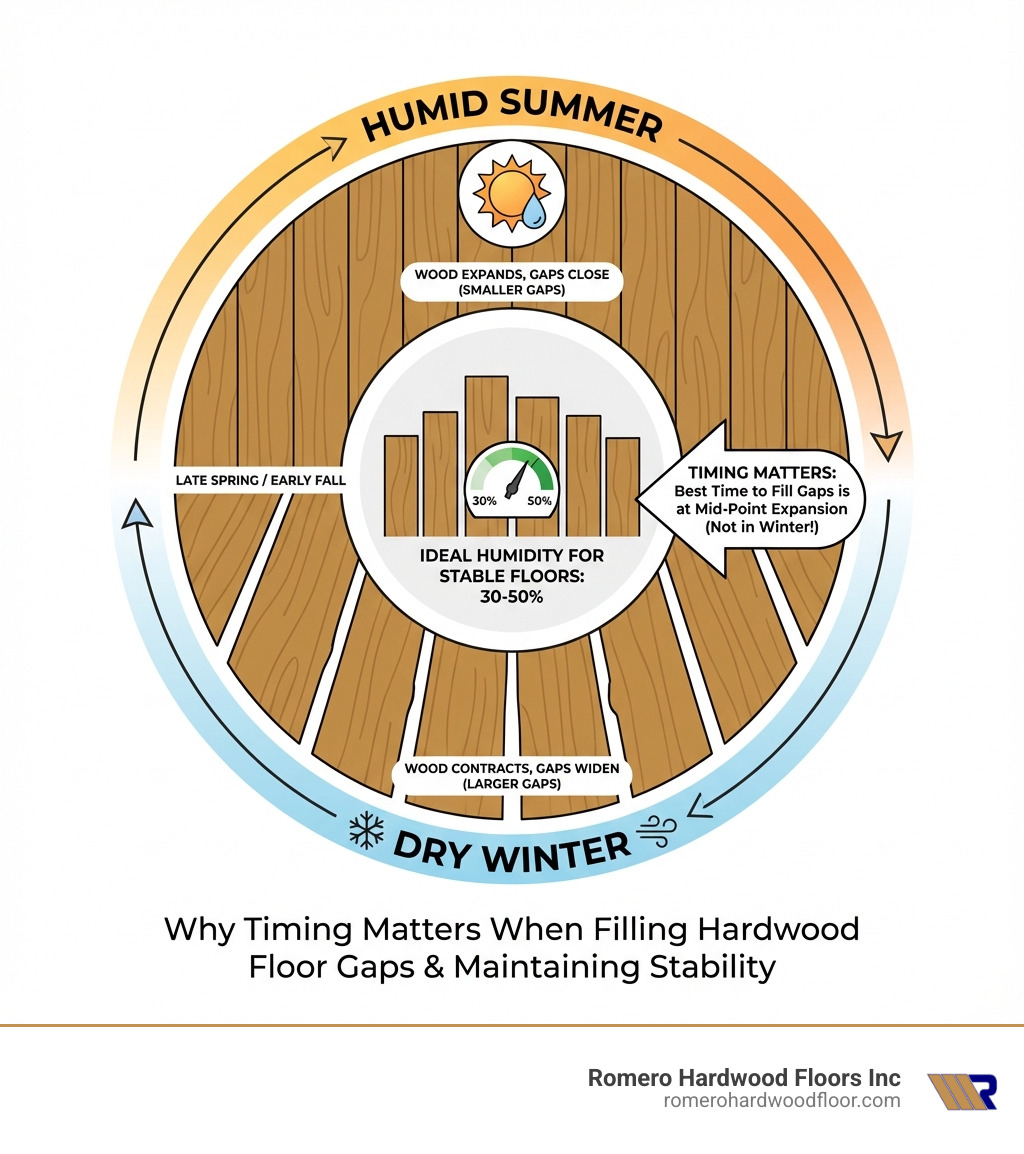
Explore more about filling wood floor gaps:
Why Do Gaps Appear in Wood Floors?
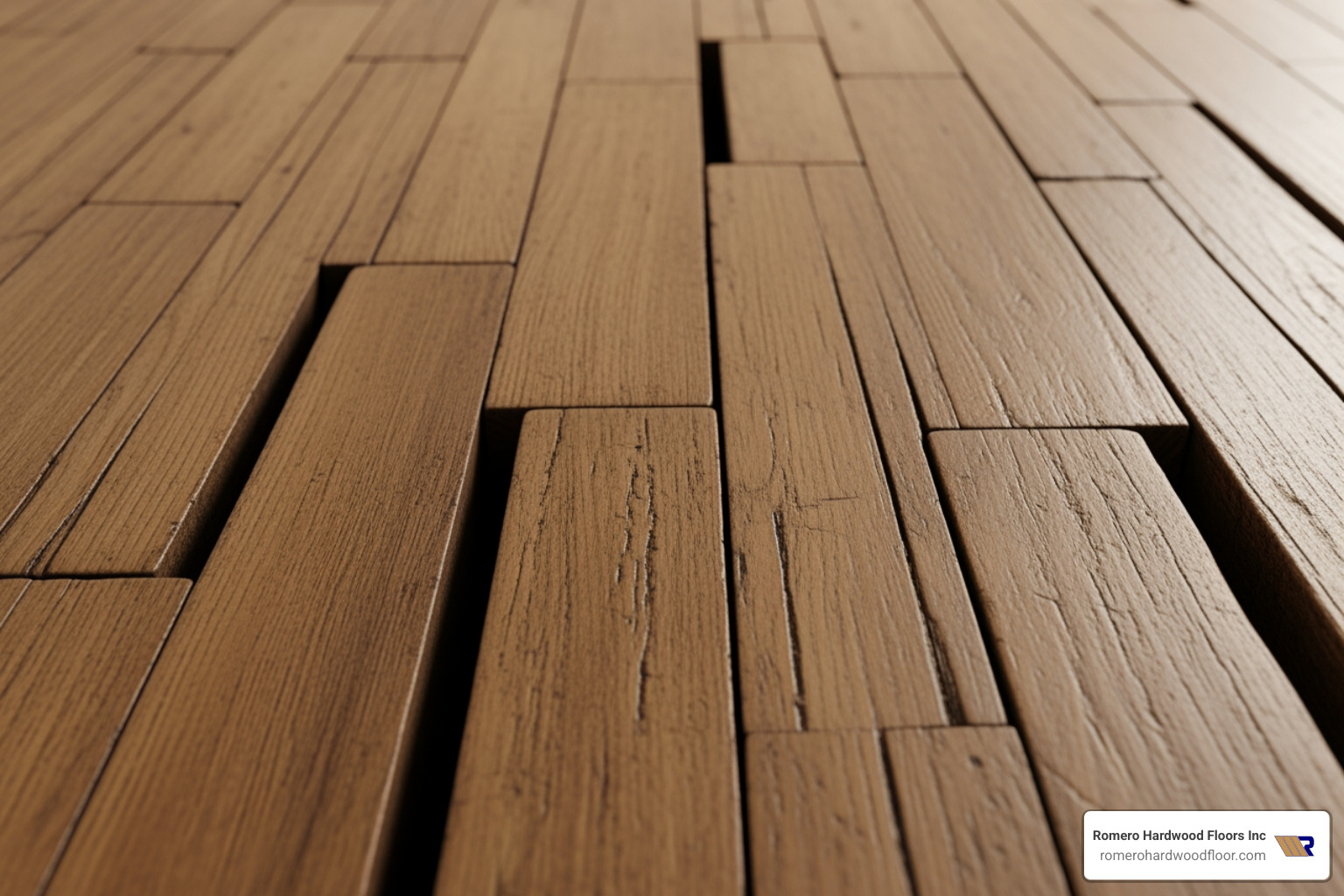
The primary reason for gaps in hardwood flooring is its natural response to environmental changes. Here are the main causes:
- Humidity Fluctuations: Wood is hygroscopic, meaning it absorbs and releases moisture from the air. In humid summer months, it expands. In dry winter months, it shrinks, causing gaps to appear or widen.
- Improper Acclimation: If wood flooring isn’t allowed to acclimate to the home’s specific temperature and humidity before installation, it can lead to excessive gapping later.
- Heat Sources: Areas near heating vents, radiators, or fireplaces tend to be drier, causing more pronounced shrinkage and gaps.
- Age and Wear: Over time, the original filler in older floors can degrade and fall out, revealing gaps.
When to Caulk Wood Floor Gaps (and When Not To)
Knowing when to fill gaps is crucial for a successful repair.
When it’s appropriate to fill gaps:
- Stable, Year-Round Gaps: If gaps remain consistent in size (ideally 1/8 inch or less) throughout the year, they are good candidates for filling.
- Aesthetic Improvement: Filling unsightly gaps can significantly improve the floor’s appearance.
- Stopping Drafts: Sealing gaps prevents cold air from seeping in from basements or crawl spaces, improving comfort and energy efficiency.
- Preventing Debris Buildup: Gaps trap dirt, food, and pet hair. Filling them makes cleaning easier and improves hygiene.
When they should be left alone (or addressed differently):
- Seasonal Gaps: If gaps appear in winter but close up in summer, do not fill them. Filling them when they are at their widest can cause the floorboards to buckle when they expand.
- Hairline Cracks: Very fine cracks are often best left alone, as filling them can be messy and the filler may not hold.
- Floors Needing Refinishing: If you plan to refinish your floors, it’s better to use a sandable wood filler during that process for a seamless result.
- Gaps Wider Than 1/4 Inch: Large gaps require more robust solutions, such as wood strips or professional repair.
The best time to fill gaps is during a moderate season like spring or fall, when the wood is neither fully expanded nor fully contracted.
The Benefit of Filling Gaps
Beyond aesthetics, filling gaps in your hardwood floors offers several practical advantages:
- Improved Insulation and Reduced Drafts: Sealing gaps stops cold air from entering your home, making it more comfortable and energy-efficient. This can lead to noticeable savings on heating bills.
- Easier Cleaning: A smooth, sealed floor is much easier to sweep and mop, as there are no crevices for dirt and dust to accumulate.
- Improved Appearance: A uniform, gap-free floor looks cleaner and more polished, improving the overall look of your room.
- Pest Prevention: Sealing gaps eliminates potential entry points for insects and other pests.
Choosing Your Filler: Flexible Filler vs. Wood Filler and Other Options
Selecting the right material is key to a lasting repair. The two most common choices are flexible filler and wood filler, each with specific uses.
Flexible Filler vs. Wood Filler: A Head-to-Head Comparison
| Feature | Flexible Filler | Wood Filler |
|---|---|---|
| Flexibility | High. Designed to expand and contract with wood. | Low. Most types dry hard and can crack with wood movement. |
| Durability | Good, especially flexible, siliconized acrylic latex. | Best for stable, non-moving gaps and holes. |
| Application | Applied with an applicator gun and smoothed. | Applied with a putty knife, requires sanding. |
| Stainability | Generally not stainable, but available in various colors. | Often stainable, allowing for a better color match. |
| Best Use | Small, active gaps (under 1/4 inch) and perimeter sealing. | Small, stable cracks or holes, especially before refinishing. |
Other Materials for Filling Gaps
- Wood Strips/Slivers: For gaps wider than 1/4 inch, custom-cut wood strips can be glued in, sanded, and finished for a permanent, seamless repair.
- Rope (Jute or Cotton): A traditional method for very wide gaps in old plank floors. The rope can be stained to match the wood.
- Sawdust and Glue Mixture: A DIY filler made by mixing sawdust with wood glue. The results can be inconsistent.
How to Choose the Right Color and Type
- For Flexible Filler: Choose a high-quality, paintable siliconized acrylic latex sealant. Select a color that closely matches your floor or the surrounding trim. The key is flexibility to accommodate wood movement.
- For Wood Filler: If you plan to sand and refinish, choose a stainable wood filler. You can even mix it with sawdust from your floor for a perfect color match. Always test the color in an inconspicuous area first.
- General Tip: Always test your chosen product in a small, hidden area to ensure the color and finish are what you expect before applying it to your entire floor.
A Step-by-Step Guide to Filling Wood Floor Gaps
Ready to tackle those gaps? This guide will walk you through the process for a clean, professional-looking result.
Tools and Supplies You’ll Need
- Applicator gun
- Paintable, flexible floor sealant (e.g., siliconized acrylic latex)
- Utility knife
- Putty knife or 5-in-1 tool
- Shop vacuum with a crevice tool
- Stiff brush or hook tool for cleaning gaps
- Painter’s tape (optional, for cleaner lines)
- Damp rags
- Foam backer rod (for gaps wider than 1/4 inch)
Step 1: Preparing the Gaps
Proper preparation is key to a lasting repair.
- Clean Out Debris: Use a vacuum with a crevice tool to remove all dust, dirt, and loose debris from the gaps. A putty knife or a small brush can help dislodge stubborn material.
- Remove Old Filler: If there’s any old, cracked filler, carefully scrape it out.
- Ensure a Dry Surface: The wood must be completely dry for the new filler to adhere properly.
- Insert Backer Rod (for wider gaps): For gaps 1/4 inch or wider, press a foam backer rod into the gap, just below the surface. This provides a base for the sealant and prevents it from sinking.
Step 2: How to Apply Filler for a Flawless Finish
With your gaps prepped, you’re ready to apply the filler.
- Cut the Sealant Tip: Cut the tip of the sealant tube at a 45-degree angle. The opening should be slightly smaller than the gap you’re filling.
- Apply Painter’s Tape (Optional): For crisp, clean lines, place painter’s tape along both edges of the gap.
- Apply a Steady Bead: Hold the applicator gun at a 45-degree angle and apply a continuous, even bead of sealant along the joint. Work in manageable sections of 2-3 feet at a time.
- Smooth the Bead: Immediately after applying, smooth the filler with a wet fingertip or a smoothing tool. This presses the filler into the gap and creates a clean finish.
- Wipe Away Excess: Use a damp rag to immediately clean any excess filler from the wood surface.
- Remove Tape: If you used painter’s tape, remove it right after smoothing, pulling it away at an angle before the filler starts to dry.
- Allow to Cure: Let the filler dry completely as per the manufacturer’s instructions before walking on the area.
Achieving a Professional, Long-Lasting Repair
A successful gap repair is about more than just filling a hole; it’s about ensuring the repair lasts. Here’s how to handle different situations and avoid common mistakes.
Addressing Larger Gaps (1/4 Inch or More)
While flexible filler is great for smaller gaps, wider ones require a different approach:
- Use Backer Rod: For any gap 1/4 inch or wider, always insert a foam backer rod before applying filler. This supports the filler and allows it to flex properly without failing.
- Consider Wood Strips or Rope: For very wide, stable gaps, gluing in custom-cut wood strips (slivers) is the best solution. They can be sanded and finished to match the floor perfectly. For a more rustic look on wide-plank floors, rope can also be used.
- Professional Consultation: If you have extensive or very large gaps, it may indicate a structural issue. We recommend consulting a professional to diagnose the problem and recommend the best solution.
Mistakes to Avoid When Filling Gaps
Avoid these common pitfalls to ensure your repair is successful:
- Ignoring Seasonal Timing: Filling gaps in winter when they are at their widest can cause the floorboards to buckle when they expand in the summer. The best time to fill is during moderate seasons like spring or fall.
- Choosing the Wrong Filler: Using a hard, inflexible filler (like wood putty) in a joint that needs to move will lead to cracking and failure. Always use a flexible sealant for gaps between floorboards.
- Messy Application: Uncleaned filler smears can be difficult to remove once dry. Always wipe away excess immediately with a damp cloth.
- Skipping Preparation: Failing to clean debris from the gaps will prevent the filler from adhering properly, causing it to fail prematurely.
- Ignoring Underlying Issues: Gaps can be a symptom of a larger problem, such as excess moisture or foundation issues. If you notice issues like warped or buckled floors, filling the gaps is not the solution. These require professional hardwood floor damage repair.
Frequently Asked Questions about Filling Floor Gaps
Can filling gaps in my hardwood floor really help with drafts and insulation?
Yes, absolutely. Gaps in flooring, especially over basements or crawl spaces, are common sources of drafts. Sealing them with a flexible filler creates an airtight barrier, which can make your home feel warmer and may even lower your heating bills by improving energy efficiency.
Will the filler crack or pull away as the seasons change?
If you use the right product, it shouldn’t. A high-quality, flexible sealant is designed to expand and contract with the natural movement of wood floors. Proper application, including cleaning the gaps and using a backer rod for wider joints, is also crucial for a long-lasting, crack-free seal.
Is it better to use flexible filler or wood filler before a full floor refinishing?
For a full refinishing project, wood filler is the better choice. Unlike a flexible filler, wood filler hardens and can be sanded perfectly flush with the surrounding wood. It also accepts stain and finish, allowing the repair to blend in seamlessly with the rest of the floor. A flexible filler, being flexible, cannot be sanded and will not take stain, leaving a visible line. For more information, see our guides on floor sanding and refinishing and how to sand hardwood floors.
Conclusion: A Smooth Finish for Your Floors
Filling gaps in your hardwood floors is a great way to improve your home’s appearance, comfort, and energy efficiency. By choosing the right material and applying it correctly, you can achieve a professional-looking, durable result.
Key Takeaways:
- Preparation is key: Always start with clean, dry gaps.
- Choose the right product: Use flexible sealant for small, active gaps and stainable wood filler for floors you plan to refinish.
- Timing matters: Fill gaps during moderate seasons (spring or fall) to avoid issues with wood movement.
- Know when to call a pro: For large gaps or signs of underlying issues, professional help is recommended.
While filling gaps can be a great DIY project, some jobs require an expert touch. At Romero Hardwood Floors Inc., we have provided homeowners and businesses throughout the Massachusetts North Shore—from Beverly to Woburn—with expert flooring solutions since 2006. Whether you need a hardwood floor installation or a full repair and refinishing, our team is ready to help.
For professional hardwood floor repair, contact us for an estimate.
