
Cheap Fake Wood Flooring: 7 Powerful Pros & Cons in 2025
Why Cheap Fake Wood Flooring Has Become a Game-Changer
Cheap fake wood flooring has revolutionized home renovation by offering the warm, neat look of hardwood at a fraction of the cost. Here’s what you need to know:
Top Budget-Friendly Fake Wood Options:
• Laminate – $0.64-$3.25/sq ft – Best for high-traffic areas
• Vinyl Plank (LVP) – $0.39-$2.99/sq ft – Waterproof, great for kitchens/bathrooms
• Engineered Wood – $0.49-$5.56/sq ft – Real wood veneer over composite core
• Bamboo/Cork – $1.59-$3.50/sq ft – Eco-friendly grass and bark alternatives
Key Benefits: Easy DIY installation, scratch/water resistance, pet-friendly, 5-20 year warranties
Main Drawbacks: Can’t be refinished like real hardwood, potential VOC emissions, limited resale value boost
As one industry expert notes, “Have you ever wandered through a home, admiring their beautiful wood flooring before realizing that in fact, it wasn’t really wood?” That’s the power of today’s fake wood technology.
I’m Francisco Romero, owner of Romero Hardwood Floors Inc. with over 15 years of flooring experience in Revere, MA. Throughout my career, I’ve helped countless homeowners steer the cheap fake wood flooring market to find solutions that balance beauty, durability, and budget constraints.
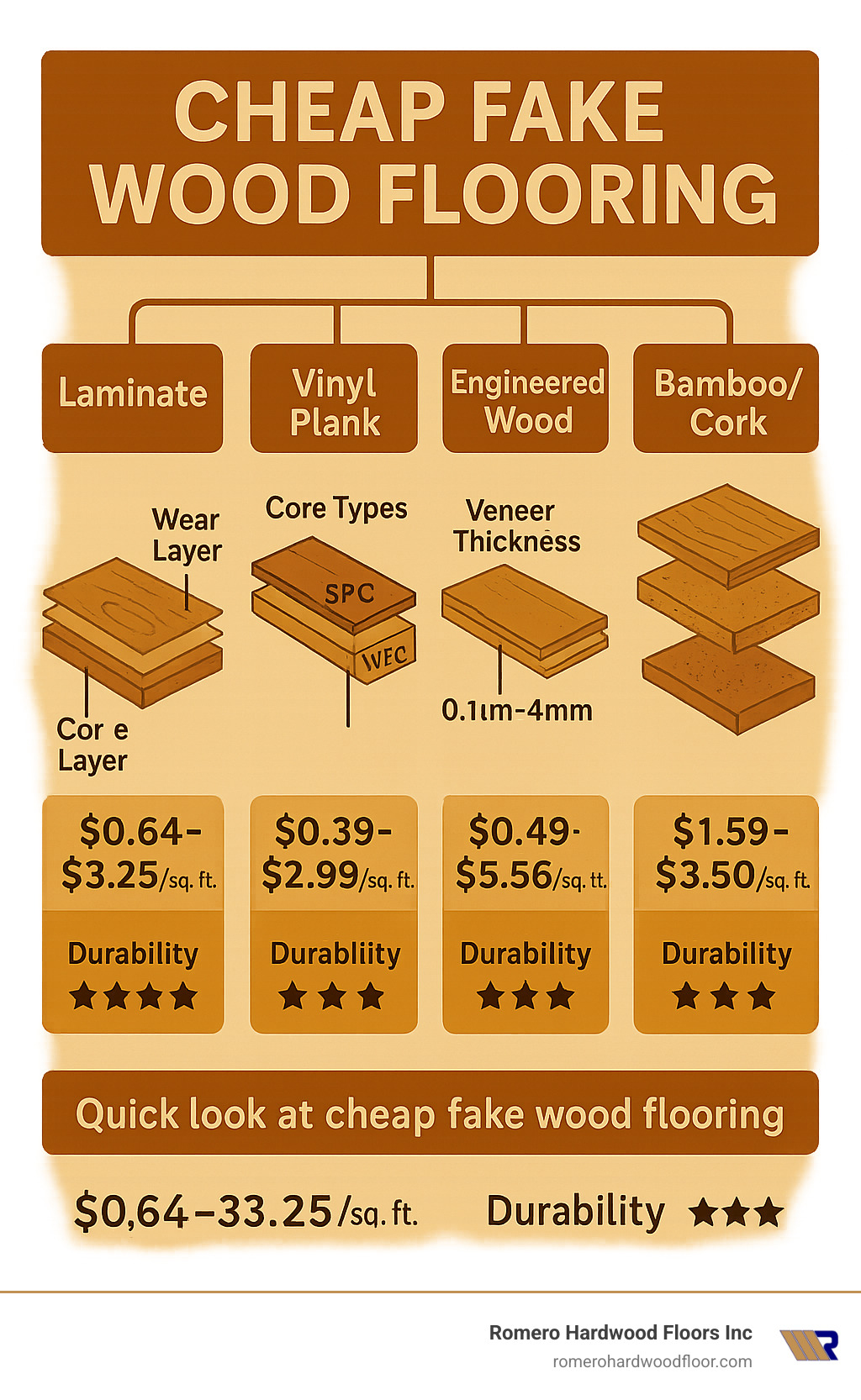
Quick look at cheap fake wood flooring:
– Laminate floor cleaning services
– Laminate floor installation tips
– Hardwood floor vs laminate
What Exactly Is Fake Wood Flooring?
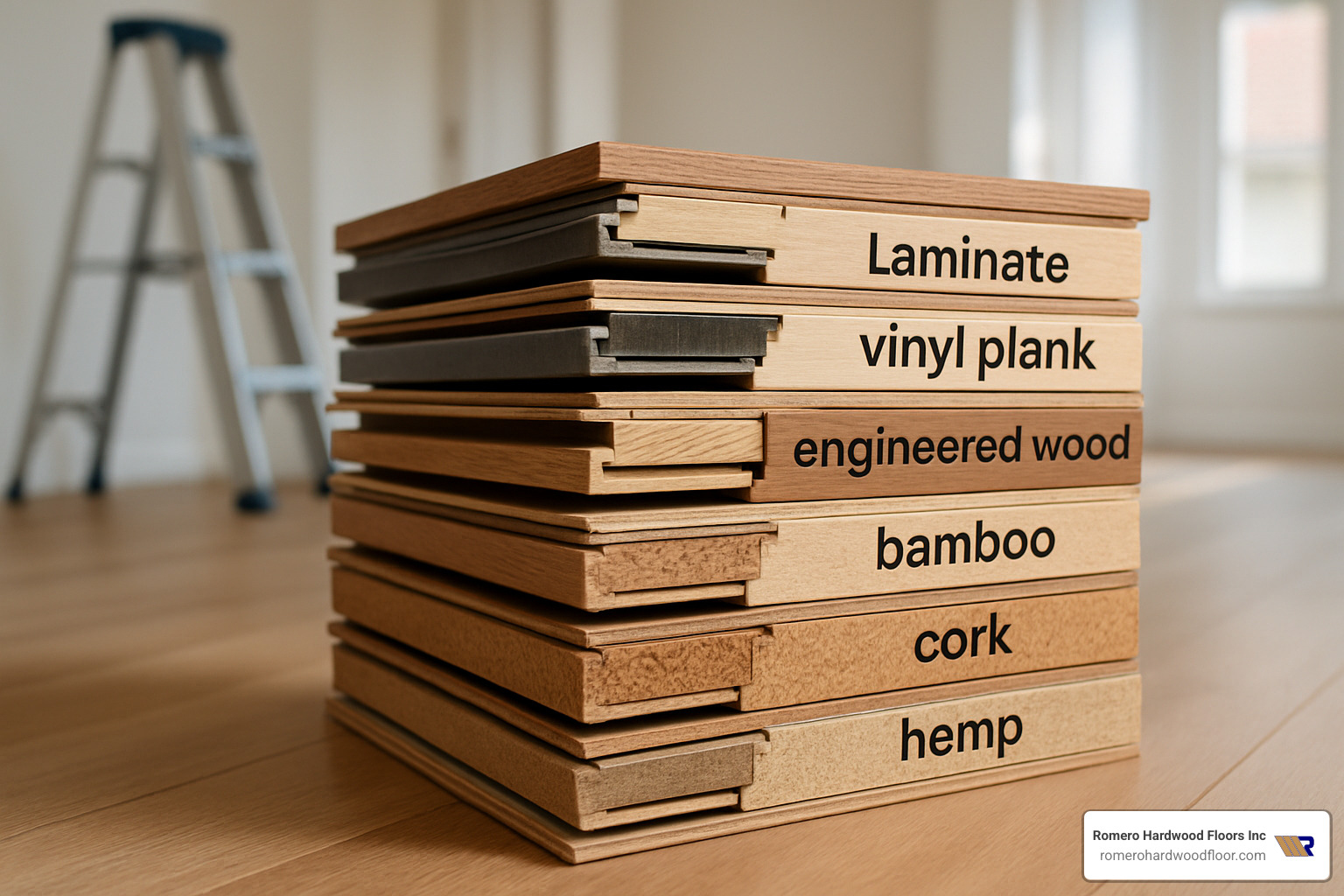
When customers ask me about cheap fake wood flooring, I love watching their faces light up as they realize just how many options exist beyond traditional hardwood. The world of wood-look flooring has exploded with innovation, giving homeowners incredible choices that look stunning without breaking the bank.
Think of fake wood flooring as a family tree with several distinct branches. You’ve got laminate with its photographic layers, luxury vinyl plank that’s completely waterproof, engineered wood with real wood veneers, and eco-friendly alternatives like bamboo and cork. Each uses different construction methods to nail that authentic wood-grain appearance we all love.
More info about Laminate Wood Flooring
Laminate Basics
Picture a sandwich made of super-tough materials, and you’ve got the basic idea behind laminate flooring. The HDF core (high-density fiberboard) forms the sturdy foundation, topped with a photo layer that captures every detail of real wood grain, then sealed with a crystal-clear protective coating that laughs in the face of scratches and scuffs.
The AC rating system takes the guesswork out of choosing the right durability level. AC3 ratings handle residential heavy traffic beautifully—perfect for busy family homes with kids running around. AC4 steps up to commercial medium traffic, though most homeowners find AC3 more than sufficient for their needs.
More info about Cheap Laminate Wood Flooring
What makes laminate so budget-friendly? Mass production keeps costs low, with quality options starting around $0.64 per square foot. I’ve seen homeowners score beautiful laminate at major retailers for under $0.99 per square foot, proving you don’t need to spend a fortune for floors that look fantastic.
Vinyl Plank Evolution
LVP (luxury vinyl plank) has come so far from those old vinyl floors your grandmother might have had. Today’s vinyl planks layer multiple components strategically: a sturdy PVC base, a photographic design layer with incredibly detailed wood grain images, and a protective wear layer that can handle whatever life throws at it.
The real magic happens in the core technology. SPC core (Stone Polymer Core) creates thinner planks that resist dents like champions, while WPC core (Wood Polymer Core) adds a cushioned feel that’s easier on your feet and joints. Both offer excellent durability, but SPC wins for pure toughness.
Here’s the game-changer: most vinyl plank flooring is completely waterproof. Spill your morning coffee, deal with a leaky dishwasher, or install it in the basement—vinyl plank just shrugs it off. The floating install system with click-lock connections means no messy adhesives and straightforward DIY installation.
Engineered Wood Explained
Now here’s where I get to blow minds—engineered wood technically isn’t “fake” at all. It features a real veneer of genuine hardwood (usually 2-4mm thick) bonded to a plywood core or composite base. Run your hand across it, and you’ll feel authentic wood grain because that’s exactly what it is.
This clever construction delivers the beauty of exotic hardwood species at a fraction of solid wood costs. The refinishing limits depend on veneer thickness—typically 1-3 sandings over the floor’s lifetime—giving it longevity that purely synthetic options can’t match.
Other Sustainable Pretenders
The sustainability movement has releaseed some fascinating alternatives that challenge everything we thought we knew about flooring. Bamboo flooring comes from grass that regenerates in just 3-5 years versus decades for traditional hardwood trees, yet delivers impressive hardness ratings that rival oak.
Cork flooring harvests tree bark without harming the tree itself, naturally resisting mold and mildew while providing a uniquely comfortable feel underfoot. The newest player, hemp flooring, boasts an incredible 2750 on the Janka hardness scale—more than twice oak’s 1300 rating.
Scientific research on sustainable flooring
What excites me most about hemp is its environmental impact. This super-plant grows ready for harvest in just 120 days and actually captures carbon from the atmosphere as it grows. Talk about carbon capture in action—your floors could literally help fight climate change.
Cheap Fake Wood Flooring Showdown: Looks, Durability & Price
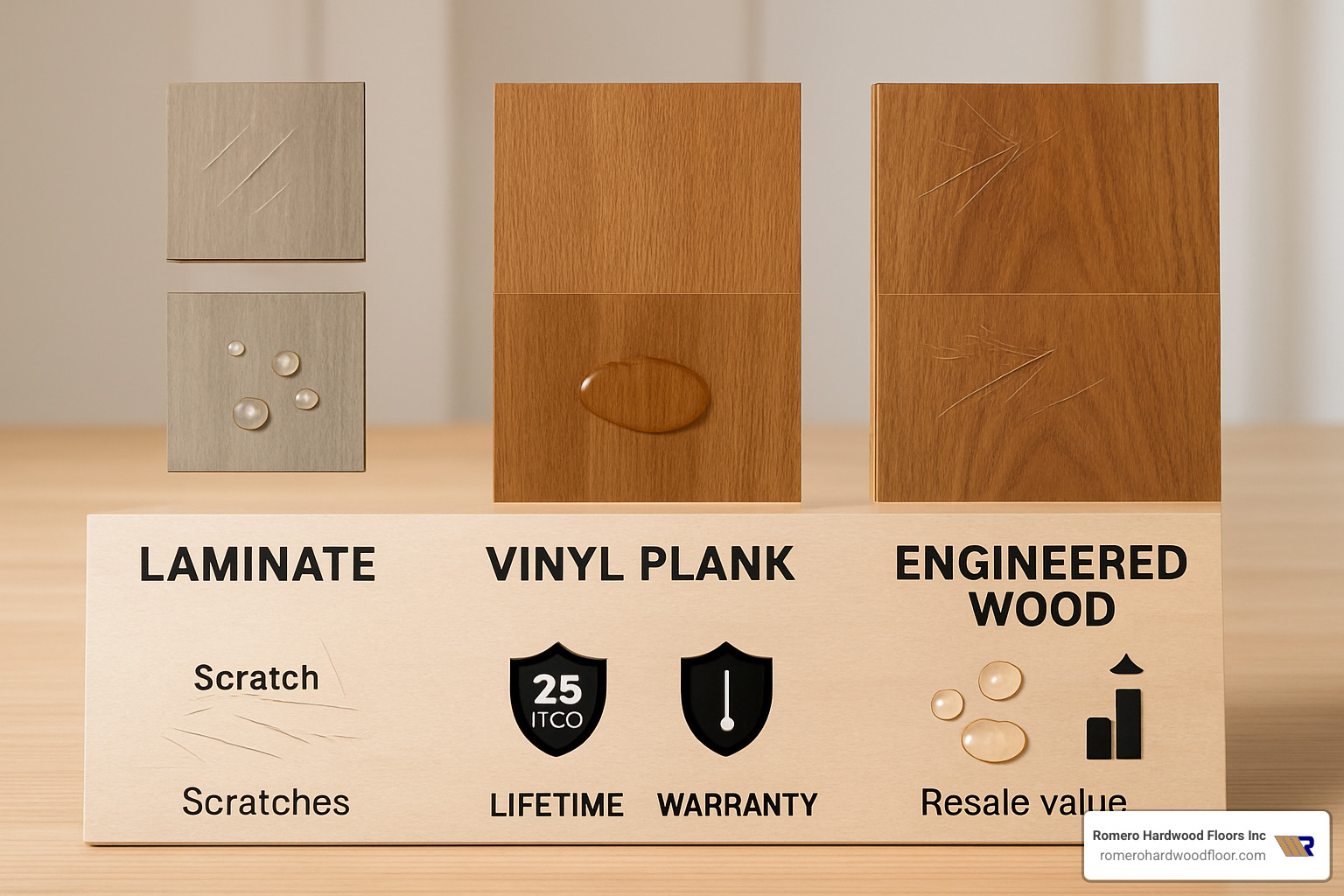
When I help homeowners choose between different types of cheap fake wood flooring, they’re often surprised by how dramatically the options vary in performance and appearance. Let me break down what you can realistically expect from each category.
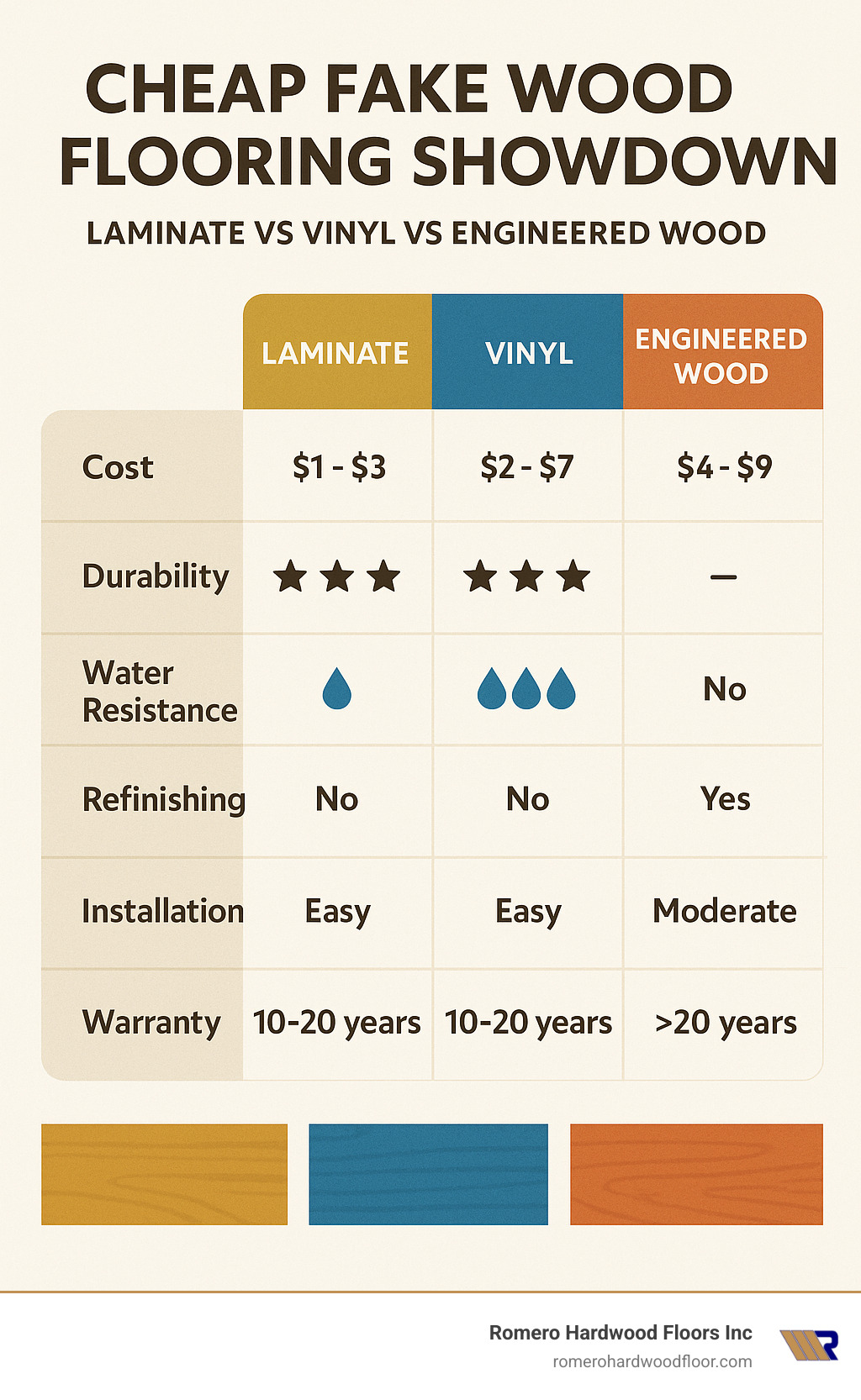
Laminate flooring offers the most convincing wood grain patterns thanks to high-resolution photography, but it’s also the least forgiving when it comes to moisture. One small leak can cause boards to swell and buckle. However, its scratch resistance is impressive—I’ve seen laminate floors in busy family homes that still look great after five years of kids and pets.
Luxury vinyl plank wins hands-down for water resistance. I’ve installed it in basements that occasionally flood, and the flooring comes through unscathed. The appearance has improved dramatically over the years, though it still can’t quite match laminate’s photorealistic wood grain detail.
Engineered wood delivers the most authentic look and feel since it’s topped with real wood veneer. The trade-off? It’s typically the most expensive option in the fake wood category, and you’ll need to be more careful about water exposure than with vinyl.
Is cheap fake wood flooring really worth it?
The cost range for materials spans from $0.39 to $3.50 per square foot, while installation typically adds another $1.50 to $6.00 per square foot based on internet data (actual project pricing may vary). Compare that to solid hardwood at $8 to $15 per square foot installed, and you’re looking at potential savings of thousands on a typical room.
But here’s what I tell every client: you get what you pay for. That bargain laminate at $0.39 per square foot will likely show wear much faster than a $2.50 option with a thicker wear layer and better AC rating. The sweet spot for most families falls between $1.00 and $2.00 per square foot for materials.
Installation add-ons can quickly inflate your budget. Underlayment, transition strips, and quarter round molding might add $0.50 to $1.00 per square foot. The good news? Most cheap fake wood flooring options are DIY-friendly, potentially saving you hundreds in labor costs.
When it comes to ROI, don’t expect fake wood flooring to add significant resale value. However, it absolutely improves your home’s marketability and livability. I’ve had clients tell me their new laminate floors made their entire home feel fresh and updated.
Health-conscious homeowners should research VOC emissions carefully. Scientific research on VOC emissions shows that some budget products can affect indoor air quality. Look for FloorScore certification or products labeled as low-VOC to minimize concerns, especially if family members have allergies or respiratory sensitivities.
How does cheap fake wood flooring affect home value?
Let’s be realistic about expectations. Cheap fake wood flooring rarely provides the same return on investment as genuine hardwood installation. However, it can significantly boost your home’s curb appeal and help it show better to potential buyers.
The key is choosing products that genuinely look like wood from a standing height. I’ve been in homes where guests assumed the laminate was real hardwood—that’s the level of quality you want to target. Buyer expectations have evolved too; many younger buyers actually prefer low-maintenance options like luxury vinyl over traditional hardwood.
Mid-range remodel ROI for flooring projects typically ranges from 70% to 80% of your investment, according to industry data. While cheap fake wood flooring might fall on the lower end of this range, the improved quality of life and reduced maintenance often make it worthwhile for homeowners planning to stay put for several years.
In my experience serving the greater Boston area, well-chosen fake wood flooring can be the difference between a home that sits on the market and one that sells quickly. It’s not about maximizing return—it’s about creating a move-in ready appearance that appeals to today’s busy buyers.
Smart Shopper’s Guide: Getting the Best Deal
Finding the best deals on cheap fake wood flooring is like hunting for treasure—you need to know where to look and when to strike. Over my years in the flooring business, I’ve watched smart homeowners save thousands by understanding the market’s rhythm.
More info about Laminate Floor Installation Tips
January and February are your golden months for flooring deals. Retailers clear out inventory after the holiday season, and that’s when you’ll find those jaw-dropping clearance prices. I’ve seen quality laminate marked down to $0.64 per square foot during these sales—that’s Saratoga Hickory Toffee with enough stock to floor an entire neighborhood.
Bulk purchasing often open ups additional discounts, especially if you’re doing multiple rooms. Many stores offer price-match guarantees, so don’t be shy about bringing in competitor ads. Seasonal sales around Memorial Day and Labor Day can also deliver significant savings on both materials and installation services.
Look for flooring with attached underlayment—it’s a game-changer for budget-conscious shoppers. This feature eliminates the need to purchase separate padding, saving you both money and installation time. The convenience factor alone makes it worth seeking out.
Features to Look For in Budget Boards
Thickness tells a story about quality, even in budget flooring. While you’ll find cheap fake wood flooring as thin as 6mm, aim for at least 8mm thickness for better durability and a more solid feel underfoot. Thicker planks also hide minor subfloor imperfections better, which can save you prep work.
The click-lock system quality varies dramatically between manufacturers. Test a sample if possible—the planks should connect smoothly without requiring excessive force. Poor locking systems create gaps that collect dirt and can separate over time, making your beautiful new floor look shabby quickly.
Low VOC certifications matter for your family’s health, especially in budget products where manufacturing shortcuts sometimes occur. Look for FloorScore or similar certifications that guarantee safer indoor air quality. It’s a small detail that makes a big difference in your home’s environment.
AC3 versus AC4 ratings indicate durability levels. AC3 handles residential heavy traffic perfectly fine for most homes, while AC4 is commercial-grade. Unless you’re running a daycare or have an unusually high-traffic situation, AC3 saves money without sacrificing performance.
Waterproof labeling has become increasingly common even in budget lines. This feature protects against spills and moisture damage that would ruin traditional laminate. For kitchens, bathrooms, or homes with pets, it’s worth seeking out waterproof options even if they cost slightly more upfront.
Warranty length reveals manufacturer confidence in their product. Budget flooring with 10-15 year warranties often performs better than options with only 5-year coverage. The warranty terms also matter—look for coverage that includes both wear and structural integrity.
Avoiding Common Pitfalls
Skipping acclimation is the most expensive mistake DIYers make with budget flooring. Even inexpensive laminate needs 48 hours to adjust to your home’s temperature and humidity. I’ve seen beautiful installations buckle and gap because homeowners rushed this crucial step.
Ignoring subfloor flatness will haunt you regardless of your flooring choice. An uneven subfloor creates squeaks, premature wear, and visible imperfections that make even expensive flooring look cheap. Budget an extra day for proper subfloor preparation—your floors will thank you for years.
Small waste allowance is penny-wise but pound-foolish. Purchase at least 10% extra material for cuts, mistakes, and future repairs. Budget flooring lines get discontinued frequently, making exact color matches impossible later. That extra box gathering dust in your garage will be worth its weight in gold when you need a repair.
Weak return policies can trap you with unsuitable flooring. Some discount retailers offer limited return windows or restocking fees. Read the fine print before purchasing, especially for large quantities. A generous return policy gives you peace of mind and flexibility if the flooring doesn’t work as expected in your space.
Installation & Maintenance: DIY or Call a Pro?
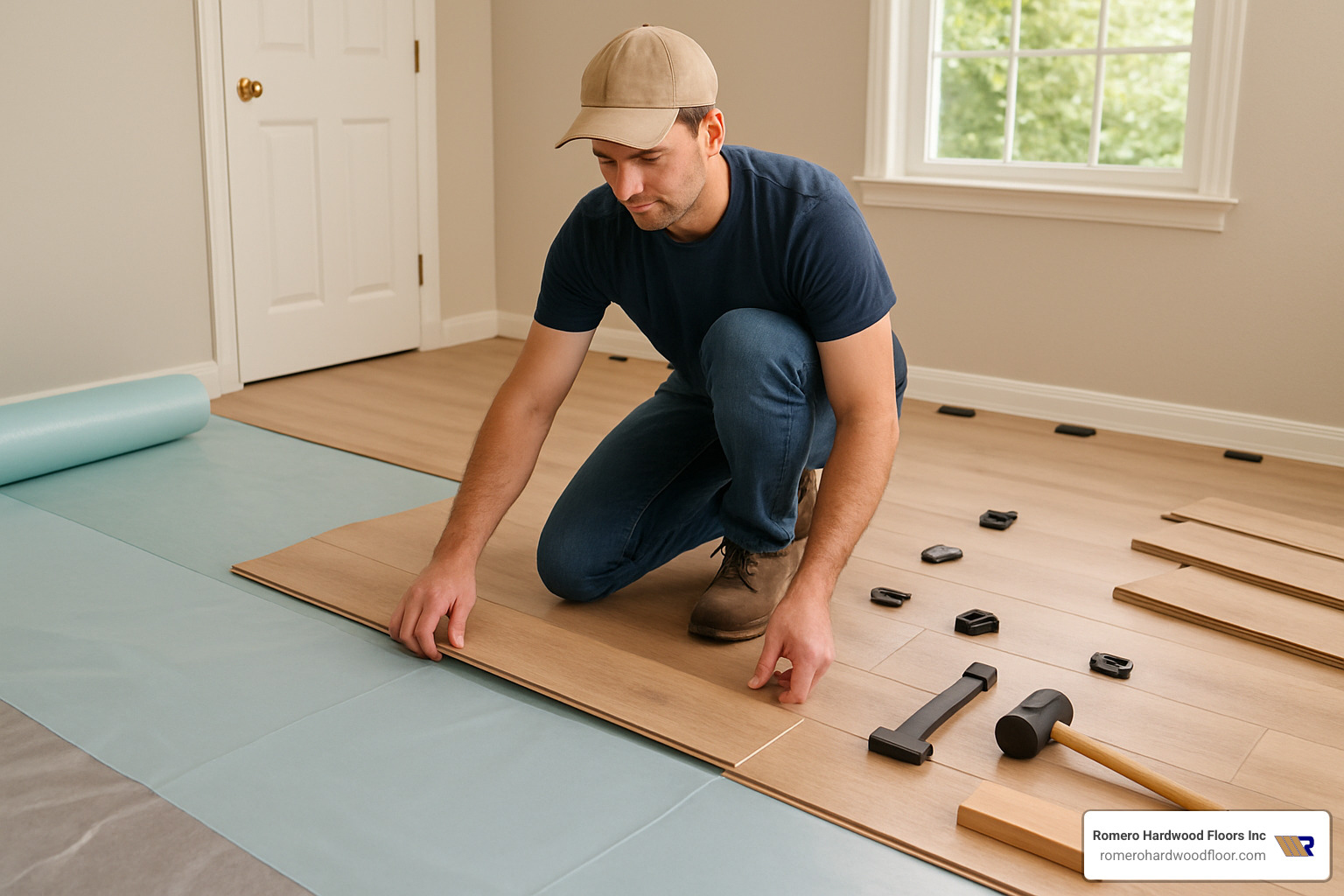
The DIY appeal of cheap fake wood flooring is undeniable. Most laminate and vinyl plank systems use click-lock technology designed for homeowner installation. But should you tackle it yourself?
More info about Affordable Laminate Flooring Installation Cost Breakdown and Savings Tips
Can cheap fake wood flooring be a weekend DIY?
Installation difficulty varies by product type. Laminate and luxury vinyl plank with click-lock systems are genuinely DIY-friendly. The planks snap together without adhesive, and you can cut them with a utility knife or jigsaw.
However, professional installation costs average $1.50-$6.00 per square foot based on publicly available internet data (actual project pricing may vary). For a 200-square-foot room, that’s $300-$1,200 in labor costs. If your material cost is $200-$600, professional installation might double your total investment.
The skills required include measuring accurately, cutting straight lines, and maintaining consistent expansion gaps. Most homeowners can master these basics with patience and the right tools.
Common DIY mistakes include inadequate subfloor preparation, incorrect expansion gaps, and poor transition strip installation. These errors can void warranties and create long-term problems.
Keeping Budget Floors Looking Their Best
Maintenance simplicity is a major selling point for fake wood flooring. Regular dry sweeping or vacuuming removes the grit that causes micro-scratches. Damp mopping with manufacturer-approved cleaners handles tougher stains.
Protect your investment with furniture pads and area rugs in high-traffic zones. Trim pets’ nails regularly, as even scratch-resistant surfaces have limits. Many budget floors carry 5-10 year warranties that require specific care products to remain valid.
Water-resistant doesn’t mean waterproof. Clean up spills promptly, even on moisture-resistant products. Standing water can still cause damage over time, especially at seams and edges.
Frequently Asked Questions about Cheap Fake Wood Flooring
What about health concerns like VOCs?
Let’s address the elephant in the room—nobody wants their beautiful new floors making their family sick. Volatile organic compounds (VOCs) can be a concern with some budget synthetic flooring, but the good news is that manufacturers have made huge strides in recent years.
Many cheap fake wood flooring options now come with low-VOC certifications from programs like FloorScore or GREENGUARD. These aren’t just marketing gimmicks—they’re legitimate third-party testing programs that ensure products meet strict indoor air quality standards.
When shopping, look for products with A+ low interior air emissions certification. These meet European standards that are actually stricter than most U.S. requirements. It’s like getting a health-conscious upgrade without paying premium prices.
Here’s a practical tip from our years of installation experience: proper acclimation and ventilation during installation help dissipate any off-gassing. Most emissions happen within the first 48-72 hours, so if you have family members with chemical sensitivities, plan a weekend getaway during installation.
Will cheap fake wood flooring survive pets and kids?
This question always makes me smile because modern cheap fake wood flooring often outperforms expensive real hardwood when it comes to surviving the chaos of family life. Your golden retriever’s claws and your toddler’s toy trucks are no match for today’s engineered surfaces.
Laminate’s wear layer is specifically designed to resist scratches from pet claws and scuff marks from wheeled toys. Many manufacturers now offer “pet-protect” features that go beyond basic scratch resistance to include antimicrobial treatments and improved stain protection.
Waterproof vinyl plank is a game-changer for pet owners. Unlike traditional hardwood that can stain and absorb odors from accidents, quality vinyl plank wipes clean without leaving any trace. The photographic wear layer also hides minor scratches better than real wood grain, where every nick shows clearly.
For maximum durability in active households, choose products with AC4 commercial ratings. Yes, it costs slightly more than AC3 residential grade, but the extra durability pays dividends when you’re dealing with the daily wear and tear of family life.
Can I use cheap fake wood flooring in bathrooms or basements?
The short answer is yes, but with some important caveats. Traditional laminate is definitely not recommended for full bathrooms due to moisture sensitivity—I’ve seen too many swollen, buckled floors from homeowners who learned this the hard way.
However, water-resistant laminate formulations can handle bathroom humidity and occasional splashing. The key word here is “occasional”—we’re talking about normal bathroom use, not standing water from overflowing tubs.
For basements, SPC (Stone Polymer Core) vinyl plank is your best friend. It performs excellently over concrete slabs, even below grade where moisture and temperature fluctuations challenge other materials. Its dimensional stability means it won’t expand and contract like traditional materials in changing humidity conditions.
Engineered wood can work in finished basements, but it requires careful moisture control and proper vapor barriers. If your basement has any history of moisture issues, stick with waterproof vinyl options—your future self will thank you.
The bottom line? Match your flooring choice to your specific moisture conditions, and don’t try to push any product beyond its intended capabilities. A little extra planning upfront saves major headaches later.
Conclusion
After fifteen years in the flooring business, I can confidently say that cheap fake wood flooring has completely transformed from a “settle for less” option into a smart choice that often outperforms traditional hardwood. The change has been remarkable—what started as obviously artificial products has evolved into flooring that regularly fools even my experienced installation crews.
The numbers tell a compelling story. With laminate starting at just $0.64 per square foot and luxury vinyl plank offering waterproof protection for under $3.00 per square foot, you can achieve stunning wood aesthetics for a fraction of hardwood’s cost. When you consider that genuine hardwood installation can run $8-$15 per square foot installed, the savings become life-changing for many families.
But it’s not just about the money. Modern cheap fake wood flooring delivers practical advantages that genuine hardwood simply can’t match. Your kids can spill juice without causing permanent damage. Your dog’s nails won’t leave scratches that require expensive refinishing. That basement family room can finally have beautiful “wood” floors without moisture worries.
Of course, honesty matters in this business. You won’t be able to sand and refinish these floors decades down the road like you would with solid oak. Some budget products do carry VOC concerns, though low-emission options are increasingly common. And while your floors will look fantastic, they probably won’t add the same resale value as premium hardwood installation.
Here in the greater Boston area, we’ve watched countless homeowners make this choice successfully. The young couple in Malden who wanted hardwood looks on a starter-home budget. The growing family in Medford who needed something bulletproof for three kids and two dogs. The environmentally conscious homeowners in Cambridge who chose bamboo for its sustainability benefits.
Each situation called for different solutions, but the common thread was finding quality products that matched their lifestyle and budget. Whether you’re drawn to the scratch resistance of AC4-rated laminate, the waterproof peace of mind of SPC vinyl, or the eco-friendly appeal of cork flooring, success comes down to choosing reputable products and ensuring proper installation.
More info about Laminate Flooring Installation
The beauty of today’s market is that cheap fake wood flooring no longer means compromising on style. With photorealistic printing technology and embossed textures that match the grain patterns, these floors deliver the warmth and elegance of wood without the traditional drawbacks.
Ready to explore what’s possible for your space? We’re here to help you steer the options and find the perfect balance of beauty, durability, and budget. Because at the end of the day, every home deserves floors that make you smile when you walk through the door—regardless of what you spent on them.
