Cost to Install Glue Down Engineered Flooring: Top 5 Secrets
Cost to install glue down engineered flooring is an important consideration for anyone looking to improve their home or commercial space with this stylish and durable option. To give you a quick snapshot, the average costs span from $6 to $24 per square foot, based on internet data. This wide range accounts for variables like materials and labor.
When you opt for glue down engineered flooring, you’re investing in an installation method that combines the beauty of hardwood with notable stability and a reduced likelihood of noise. It’s like getting the best of both worlds. Engineered hardwood can easily handle fluctuations in temperature and humidity, thanks to its multi-layer construction, making it an ideal choice for diverse environments.
I’m Francisco Romero, owner of Romero Hardwood Floors Inc., right here in Revere, MA. With over 15 years of expertise in hardwood flooring, particularly in the cost to install glue down engineered flooring, I’m dedicated to delivering top-notch service and craftsmanship custom to your specific needs. Let’s explore how this option can transform your space.

Understanding Glue Down Engineered Flooring
Installation Process
Glue down engineered flooring involves securing each plank directly to the subfloor with adhesive. This method requires precision. The adhesive must be spread evenly to ensure a firm bond, creating a stable and durable surface that won’t shift, even in high-traffic areas.
The process starts with a clean and level subfloor. A layer of adhesive is applied, and the planks are pressed into place. This method requires patience and skill, often best left to professionals. The end result is a seamless floor with minimal movement and reduced noise.
Moisture Resistance
One of the standout features of engineered wood flooring is its resistance to moisture. Unlike solid hardwood, engineered wood is less likely to warp or swell when exposed to humidity. This makes it suitable for rooms like kitchens or basements, where moisture can be an issue.
The construction of engineered wood involves multiple layers of wood veneer, each laid in different directions. This cross-layer design improves its stability and moisture resistance. So, if you’re worried about spills or humidity, glue down engineered flooring is a smart choice.
Durability
Durability is a key factor in choosing flooring, and glue down engineered wood excels here. Its layered construction not only provides moisture resistance but also improves its strength. This makes it a durable option that can withstand daily wear and tear.
The glue down method adds to this durability. By securing the planks to the subfloor, you reduce the risk of movement and damage. This means your floor will maintain its beauty and functionality for years to come, even in busy households or commercial settings.
In summary, glue down engineered flooring offers a reliable and attractive solution for many spaces. Its installation process, moisture resistance, and durability make it a popular choice for those seeking a long-lasting flooring option. When considering the cost to install glue down engineered flooring, it’s important to note that these are average costs based on internet data and not actual costs for Romero Hardwood Floors. Prices can vary widely, with the high end being at least 3x the average pricing. Next, we’ll dive into the costs associated with this method to help you make an informed decision.
Cost to Install Glue Down Engineered Flooring
When considering the cost to install glue down engineered flooring, several factors come into play. Let’s break down these costs to give you a clearer picture.
Average Costs
On average, the cost of glue down engineered flooring can range from $6 to $20 per square foot. This includes both materials and labor. However, costs can vary widely depending on several factors, such as the quality of materials and the complexity of the installation.
Labor Costs
Labor costs for installing glue down engineered flooring are influenced by location and the complexity of the job. In San Francisco, for instance, labor rates can range from $6 to $12 per square foot due to higher living costs. Conversely, in West Virginia, you might find rates as low as $3 to $5 per square foot.
Material Costs
The material costs for engineered wood flooring vary based on quality, thickness, and wood species. Low-end options might cost around $3 to $5 per square foot, while high-end, thicker planks can go up to $13 per square foot or more.
Factors Influencing Costs
- Quality of Materials: Higher-quality materials, which offer better durability and appearance, naturally come at a higher price.
- Thickness: Thicker planks (5/8″ to 3/4″) are more expensive due to their improved stability and ability to withstand refinishing.
- Wood Species: The type of wood used affects the price. Common species like oak or maple might be more affordable, while exotic woods like Brazilian cherry can significantly increase costs.
Regional Cost Variations
As mentioned, location plays a significant role in determining costs. For instance, labor rates are notably higher in urban areas like San Francisco compared to more rural locations like West Virginia. These regional differences can impact the overall budget for your project.
Understanding these cost elements helps in planning and budgeting for your glue down engineered flooring installation. Next, we’ll compare this method to other installation techniques to help you choose the best option for your needs.
Comparing Installation Methods
Glue-Down vs. Other Methods
When installing engineered hardwood flooring, choosing the right method is crucial. Let’s compare glue-down, nail-down, and floating installation methods to help you make an informed decision.
Glue-Down Installation
The glue-down method involves attaching the flooring planks directly to the subfloor using a strong adhesive. This method is known for its stability and is ideal for spaces where noise reduction is a priority, such as multi-story buildings or apartments.
- Preparation: Requires a clean, dry, and level subfloor. Any imperfections can affect the adhesive’s effectiveness.
- Complexity: This method is more complex due to the precise application of glue. It requires careful handling to ensure even coverage and a secure bond.
- Cost Differences: Generally, glue-down installation tends to be more expensive due to the cost of adhesive and the skilled labor required. Average costs can range from $6 to $20 per square foot, including materials and labor.
Nail-Down Installation
The nail-down method is traditionally used for solid hardwood but can be applied to engineered wood as well. This method involves nailing the planks directly to the subfloor, offering a secure fit.
- Preparation: A wooden subfloor is necessary, and it must be level to ensure proper installation.
- Complexity: Requires specialized tools and skills, making it less DIY-friendly. It’s a more labor-intensive process, which can drive up costs.
- Cost Differences: Costs can range from $8 to $15 per square foot, depending on the complexity and materials used.
Floating Installation
Floating installation involves interlocking planks that “float” over the subfloor without being glued or nailed down. This method is popular for its simplicity and flexibility.
- Preparation: Suitable for various subfloors, including concrete, as long as they are clean and level.
- Complexity: Easier to install, making it a favorite for DIY enthusiasts. It requires minimal tools and is less time-consuming.
- Cost Differences: Typically more affordable, with costs ranging from $5 to $10 per square foot. This method is cost-effective due to lower labor costs and quicker installation times.
Choosing between these methods depends on your specific needs, budget, and the characteristics of your space. Glue-down offers stability and noise reduction, nail-down provides a traditional and secure fit, while floating installation is flexible and budget-friendly. Each method has its unique advantages, so consider your priorities when deciding.
Next, we’ll explore additional costs and considerations to keep in mind when planning your flooring project.
Additional Costs and Considerations
Optional Improvements
When installing glue-down engineered flooring, it’s important to consider additional costs and optional improvements that can improve the performance and longevity of your floors.
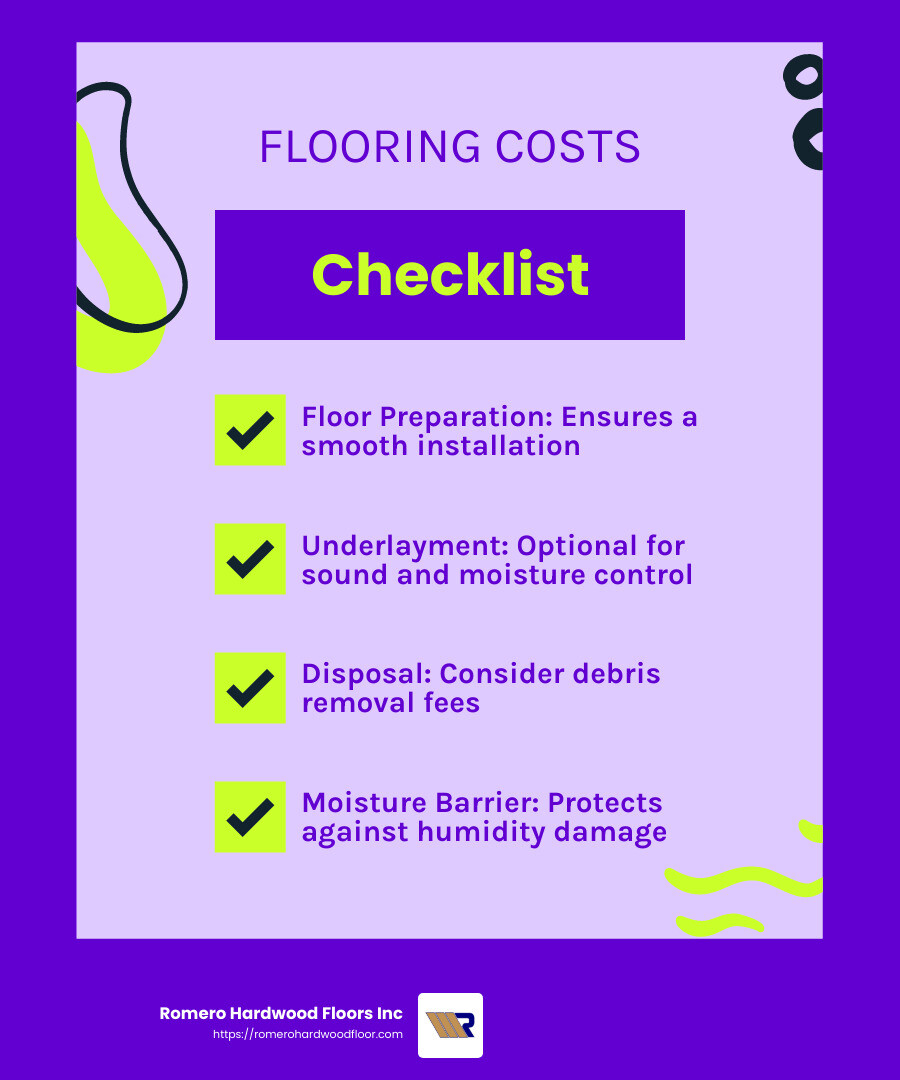
Floor Preparation
Proper floor preparation is crucial for a successful installation. The subfloor must be clean, dry, and level. Any imperfections can affect the adhesive’s effectiveness, leading to potential issues down the line. Preparing the subfloor might involve leveling or repairing it, which can add to the overall cost.
Underlayment
Although glue-down installations don’t always require underlayment, using one can offer benefits like added soundproofing and moisture resistance. This can be particularly useful in multi-story buildings or humid environments. The cost of underlayment varies, but it’s a worthy investment for improved comfort and longevity.
Disposal
Disposing of old flooring materials and installation waste is another consideration. Costs for debris removal can vary based on the size and weight of the materials, as well as local disposal fees. It’s wise to factor this into your budget to avoid surprises.
Moisture Barrier
A moisture barrier is an optional improvement that can protect your floors from moisture-related damage. This is especially important in areas prone to humidity or spills. The cost of a moisture barrier is relatively low compared to the potential cost of repairing moisture damage in the future.
Sound Control
Installing a sound control layer can significantly reduce noise transmission, making it ideal for apartments or homes with multiple levels. This layer can be integrated with the underlayment or added separately, depending on your needs and budget.
Hardwood Borders
For those looking to add a touch of elegance, hardwood borders can create a stunning visual contrast. While this is more of an aesthetic choice, it does add to the overall cost. However, it can increase the perceived value of your home, making it a worthwhile consideration.
These optional improvements can improve the functionality and beauty of your glue-down engineered flooring. While they do add to the initial investment, the long-term benefits often outweigh the costs. Always discuss these options with your flooring professional to determine what’s best for your specific situation.
Next, we’ll address frequently asked questions about glue-down engineered flooring to help you make an informed decision.
Frequently Asked Questions about Glue Down Engineered Flooring
What is the average cost per square foot?
The cost to install glue down engineered flooring can vary widely, but on average, you might expect to pay between $6 to $20 per square foot. This range includes both materials and labor and is based on internet data rather than specific quotes from Romero Hardwood Floors. That factors like the quality of materials and local labor rates can influence these costs significantly.
How does wood species affect pricing?
The species of wood used in engineered flooring plays a big role in the overall cost. For instance, more common species like oak or maple typically range from $3 to $6 per square foot, while exotic species like Brazilian walnut can cost between $8 and $14 per square foot. This variance is due to the rarity and durability of the wood, as well as its aesthetic appeal.
Are there additional costs for complex installations?
Yes, complex installations can incur additional costs. If your project involves stairs, multiple levels, or intricate patterns, expect to pay more. These complexities require more time and precision, increasing labor costs. Additionally, if your subfloor needs extensive preparation or repairs, this will add to the overall expense. Always factor in these potential extras when budgeting for your flooring project.
Understanding these aspects of glue down engineered flooring can help you plan your project more effectively. In the next section, we’ll compare glue-down installation with other methods to help you choose the best option for your needs.
Conclusion
At Romero Hardwood Floors Inc, we pride ourselves on delivering expert flooring solutions with competitive pricing. Our experience in the flooring industry ensures that each project is handled with precision and care, providing you with a beautiful and durable foundation for your home.
Why Choose Romero Hardwood Floors Inc?
- Expert Solutions: With over 15 years of experience, our team is well-versed in the nuances of glue down engineered flooring installation. We understand the importance of selecting the right materials and techniques to match your specific needs. Our commitment to quality means you can trust us to deliver results that not only meet but exceed your expectations.
- Competitive Pricing: We offer competitive pricing that reflects the quality of our work. While the average cost to install glue down engineered flooring can range from $6 to $20 per square foot, we ensure that our prices are fair, transparent, and aligned with your budget. These are average costs based on internet data, and actual costs may vary.
- Customer Satisfaction: Our customer-centric approach means we listen to your needs and tailor our services accordingly. Whether you’re renovating a single room or an entire home, we strive to make the process as smooth and stress-free as possible.
Choosing the right flooring installer is crucial for the success of your project. With Romero Hardwood Floors Inc, you’re choosing a partner dedicated to delivering excellence and value.
For more information on our services and to get started on your flooring project, visit our Engineered Hardwood Flooring page. Let us help you create a stunning and lasting foundation for your home.