
Cost to Replace Hardwood Floors: Top 5 Essential Tips
The cost to replace hardwood floors can range significantly depending on several factors. On average, you can expect to spend around $6 to $12 per square foot for materials and installation. However, complex site conditions or special requests could increase costs beyond this range. Ensuring durability and aesthetic appeal means this investment can add substantial value to your property over time.
When considering replacing hardwood floors, think of it not just as an expense but as a long-term investment in the beauty and functionality of your home. Properly installed hardwood floors offer a timeless look that improves your living space, improves resilience, and potentially boosts your home’s resale value.
My name is Francisco Romero, and I have over 15 years of experience with Romero Hardwood Floors Inc. I’ve helped countless homeowners successfully manage the cost to replace hardwood floors, ensuring quality results and satisfied clients every time. Let’s dig deeper into what impacts these costs and how you can make informed decisions for your flooring project.
Cost to replace hardwood floors vocab to learn:
– cost of hardwood floor installation
– hardwood floor refinishing near me
– professional hard wood floor contractor
Factors Influencing the Cost to Replace Hardwood Floors
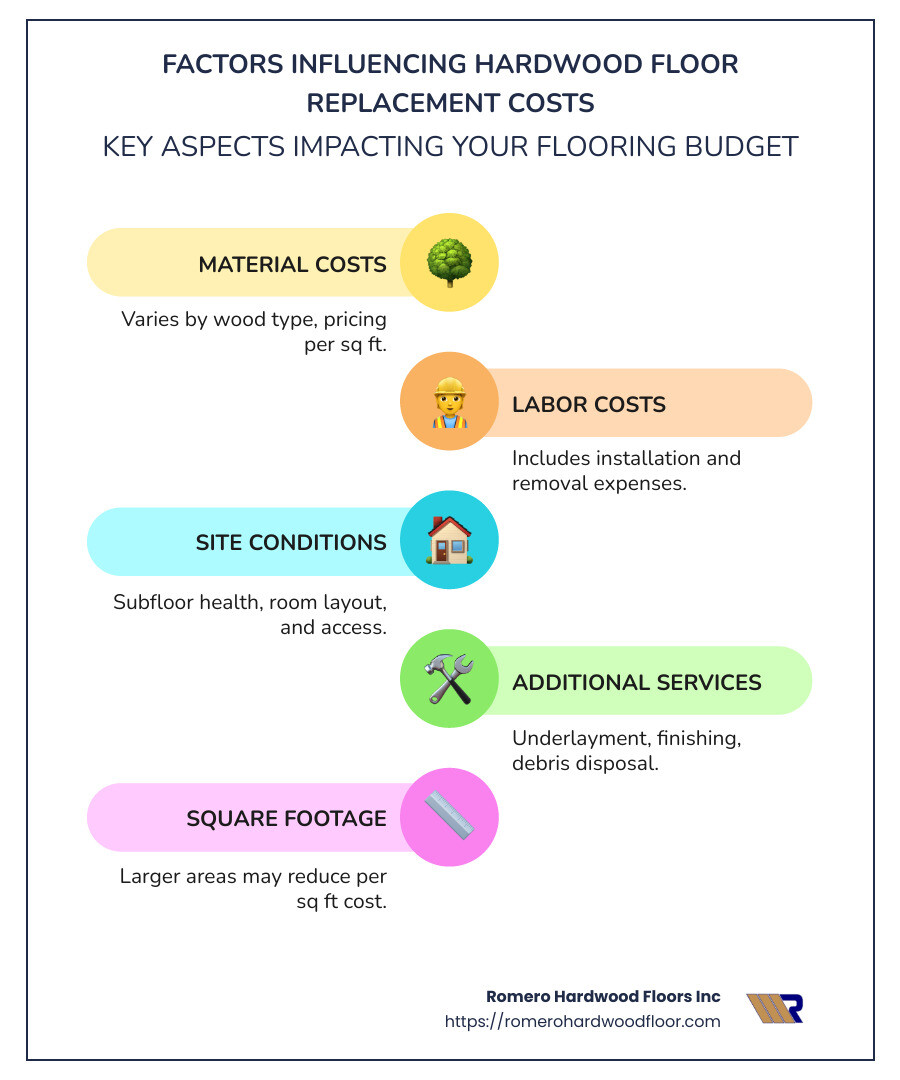
Replacing hardwood floors involves various elements that can affect the overall cost. Understanding these factors can help you budget more effectively and make informed decisions.
Material Costs
Hardwood Types and Engineered Wood
The type of hardwood you choose plays a significant role in the cost. Exotic woods like Brazilian walnut can be pricier, ranging from $8 to $14 per square foot, while domestic options like red oak are more affordable, typically between $5 and $9 per square foot. Engineered wood, which combines a hardwood veneer with a plywood base, can also be a cost-effective alternative, with prices varying based on the wood species and finish quality.
Pricing Per Square Foot
Material costs per square foot can vary widely based on the wood type and quality. For example, maple might cost $5 to $10 per square foot, while pine is generally cheaper, falling between $3 and $6 per square foot. That these costs are just for materials, and additional expenses will apply for installation.
Labor Costs
Installation, Removal, and Preparation
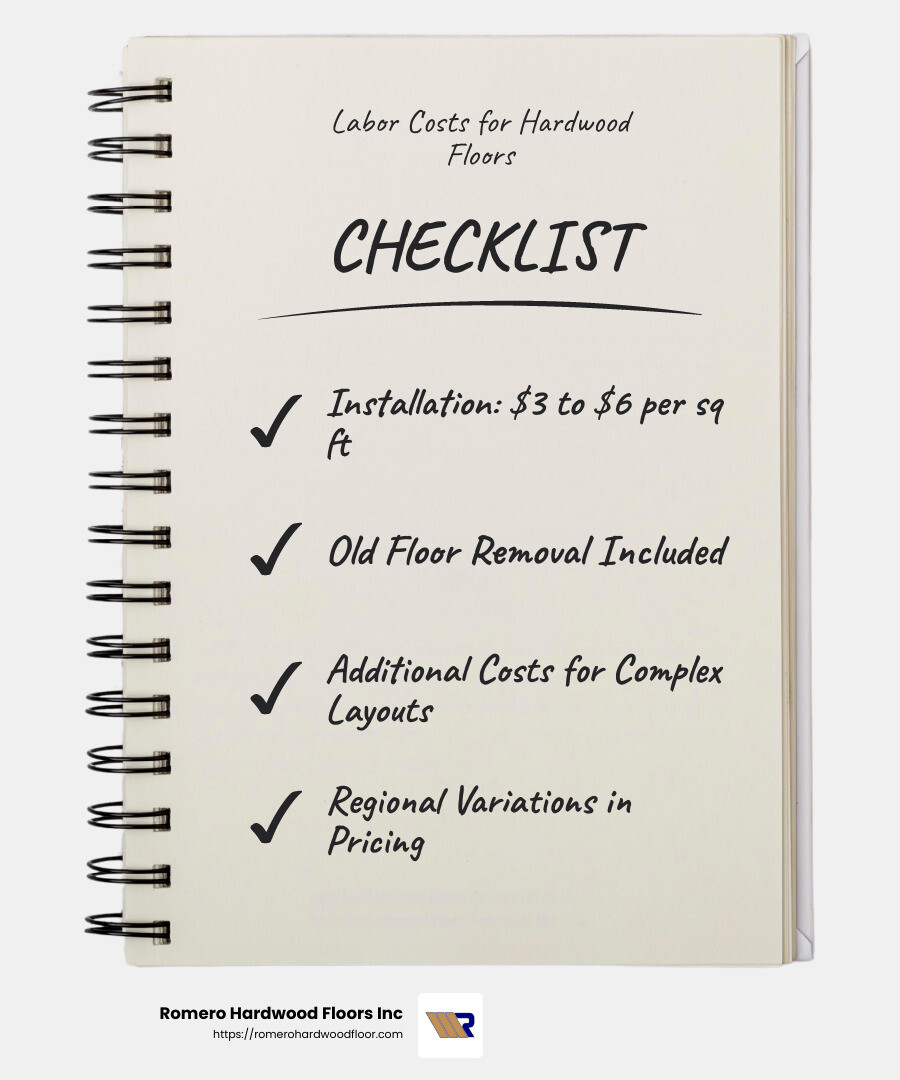
Labor costs are another significant factor. Installing new hardwood typically ranges from $3 to $6 per square foot. This includes the removal of old flooring and subfloor preparation, which are crucial for a successful installation. If your project involves complex layouts or requires additional prep work, such as leveling the subfloor, these costs can rise.
Regional Variations
Labor costs can also vary based on your location. For instance, urban areas with higher living costs may see increased labor rates compared to rural regions. It’s essential to get quotes from local contractors to understand the specific costs in your area.
Site Conditions
Subfloor Condition and Room Layout
The condition of your subfloor greatly impacts the cost. If the subfloor is uneven or damaged, it may need repairs or leveling, which can add to the expense. Additionally, the room’s layout matters; rooms with many angles or obstructions can increase labor time and complexity.
Accessibility
Accessibility is another consideration. If your home has limited access or requires special accommodations for moving materials and tools, this could further impact labor costs.
Additional Services
Underlayment and Finishing
Underlayment is often necessary for soundproofing and moisture control, adding to the overall cost. The finishing process, including applying polyurethane coats, is vital for protecting your floors and enhancing their appearance. Depending on the finish type, this can add $1 to $4 per square foot.
Debris Disposal
Finally, don’t overlook debris disposal. Removing old flooring and other materials generates waste that needs proper disposal, which might not be included in initial quotes. Discuss with your contractor to understand if this service is part of the package or an additional cost.
By considering these factors, you can better anticipate the cost to replace hardwood floors and plan your budget accordingly. Each element, from material choice to site conditions, plays a crucial role in determining the final expense.
Cost Breakdown by Square Footage
When planning to replace hardwood floors, understanding the cost by square footage is essential. Here’s a breakdown for various common project sizes to help you budget effectively.
1000 Square Feet
Replacing hardwood floors in a 1000-square-foot area can cost anywhere from $7,000 to $23,000. This range includes both materials and labor. For example, using domestic woods like red oak might cost around $7,000 to $15,000, while opting for more exotic species, such as Brazilian walnut, could push costs closer to the higher end of the range.
1500 Square Feet
For a 1500-square-foot space, the cost to replace hardwood floors typically ranges from $9,000 to $27,000. The choice of wood type greatly influences the overall cost. Engineered wood options might offer some savings, as they combine a hardwood veneer with a plywood core, reducing material costs without sacrificing appearance.
2000 Square Feet
If you’re tackling a larger area, such as 2000 square feet, expect to spend between $12,000 and $36,000. This estimate includes both material and labor costs. The complexity of the installation, such as intricate patterns or multiple room transitions, can also affect the final price.
2500 Square Feet
For expansive projects covering 2500 square feet, the cost can range from $15,000 to $45,000. Larger projects might benefit from economies of scale, where some contractors offer reduced rates per square foot. However, this can vary, so it’s wise to get multiple quotes to ensure competitive pricing.
By understanding these cost ranges, you can better plan for your hardwood floor replacement project. Each project is unique, and factors like wood type, labor, and site conditions will influence the final price tag.
Comparing Refinishing vs. Replacing Hardwood Floors
When deciding between refinishing and replacing hardwood floors, it’s important to weigh the costs, longevity, and benefits of each option. Both have their pros and cons, and the best choice depends on your specific needs and budget.
Refinishing Costs
Refinishing is often the more cost-effective option when compared to replacing. On average, refinishing hardwood floors costs $600 to $1,000 for a DIY project, but hiring a professional can raise the cost to $1,500 to $3,000 for a typical home. This process involves sanding down the existing finish, fixing any minor imperfections, and applying a new stain and protective coat.
Benefits of Refinishing:
- Cost-Effective: Refinishing is generally at least half the cost of replacing.
- Longevity: Can extend the life of your floors by 10 to 12 years.
- Aesthetic Appeal: Restores the original beauty of your hardwood floors without changing the style or type.
Cons of Refinishing:
- Limitations: Not suitable for floors with deep structural damage, such as warping or extensive water damage.
- Frequency: Floors may need to be refinished every 7 to 10 years, depending on wear and tear.
Replacing Costs
Replacing hardwood floors is a more extensive process and comes with a higher price tag. The cost to replace hardwood floors ranges from $7,000 to $45,000 depending on the size of the area and the type of wood chosen. This process involves removing the old flooring, preparing the subfloor, and installing new hardwood planks.
Benefits of Replacing:
- Customization: Allows for a complete change in style, wood type, or pattern.
- Long-Term Investment: New floors can last over 30 years with proper care, significantly boosting property value.
- Structural Integrity: Addresses any underlying issues with the subfloor or existing damage.
Cons of Replacing:
- Higher Initial Cost: More expensive than refinishing, especially if using exotic wood species.
- Disruption: Installation is more time-consuming and disruptive to daily life.
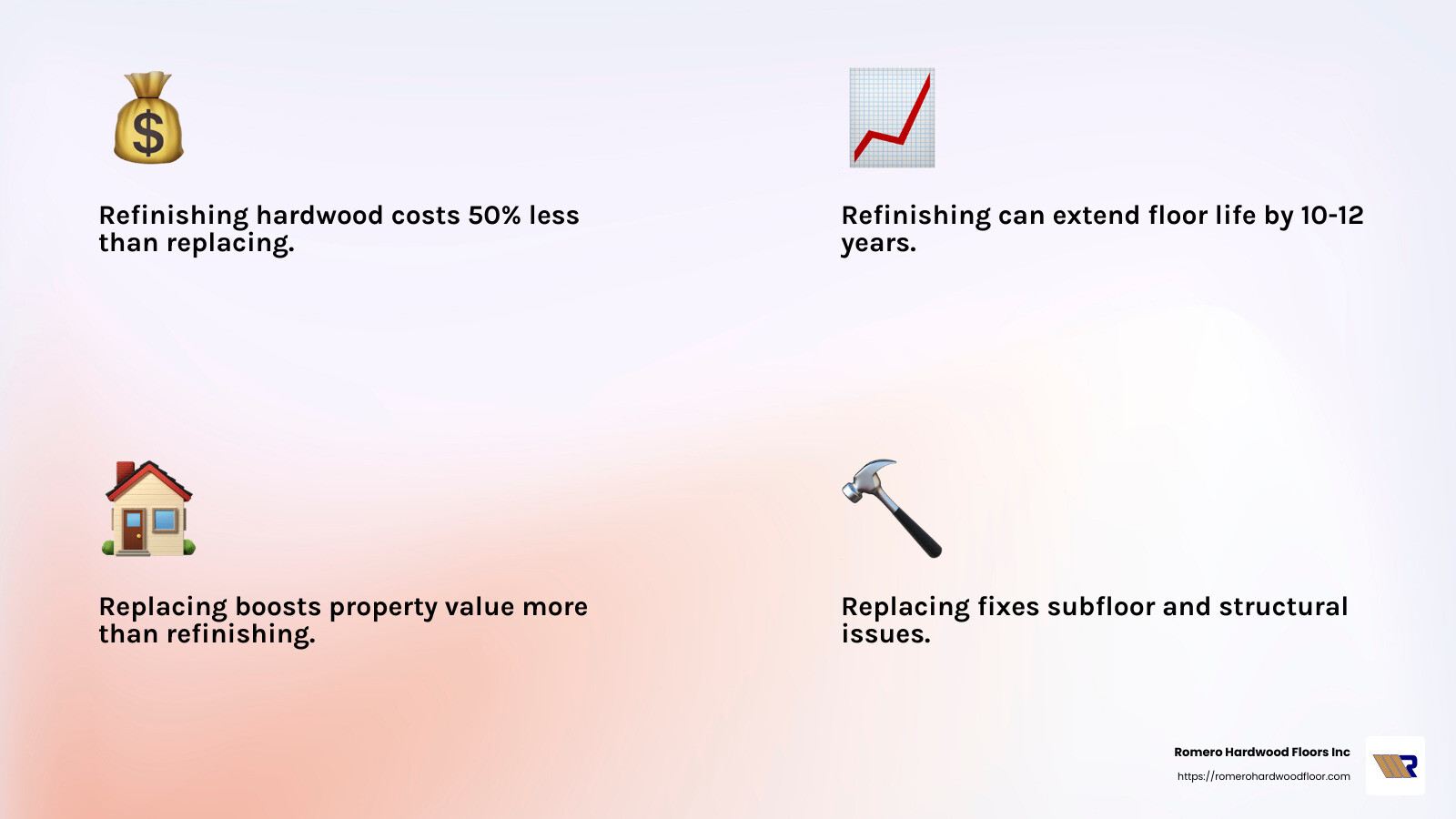
In summary, refinishing is ideal for floors that are still structurally sound but need a refresh. Replacing is necessary when floors are beyond repair or when a complete change is desired. Both options have their place, and understanding your needs will guide you to the right decision.
How to Save on Hardwood Floor Replacement
Replacing hardwood floors can be pricey, but there are smart ways to cut costs without sacrificing quality. Here’s how you can save money on your floor replacement project.
DIY Options
If you’re handy and ready for a challenge, consider doing some of the work yourself. Here’s what you need to know:
Tools Needed:
– Sander: Essential for prepping the subfloor.
– Nail Gun or Stapler: For securing the new planks.
– Measuring Tape and Square: Ensures precise cuts and layout.
– Saw: To cut planks to the right size.
– Safety Gear: Gloves, goggles, and masks for protection.
Step-by-Step Guide:
1. Remove Old Flooring: Carefully take out the old planks and dispose of them.
2. Prepare the Subfloor: Clean and level the subfloor to prevent future issues.
3. Lay Out New Planks: Allow the wood to acclimate to the room’s humidity for a few days.
4. Install the Planks: Begin installation, ensuring tight tongue-and-groove fits.
5. Finish the Floor: Apply a protective finish for durability.
Potential Savings: Doing it yourself can save you up to 50% on labor costs. However, ensure you’re confident in your skills to avoid costly mistakes.
Sourcing Materials
Finding the right materials at the right price is crucial. Here’s how to do it:
Buying Tips:
– Look for Sales: Keep an eye on seasonal sales at local hardware stores.
– Consider Engineered Wood: It’s often cheaper than solid hardwood and offers similar aesthetics.
– Check for Discounts: Ask suppliers if they have discounts on bulk purchases or discontinued styles.
Reputable Suppliers:
– Local Lumber Yards: Often have competitive prices and knowledgeable staff.
– Online Retailers: Websites like Homewyse offer pricing guides to help you budget effectively.
– Direct from Manufacturers: Buying directly can sometimes reduce costs and offer more options.
Cost-Effective Choices: Opt for wood with more “character,” like knots or varied colors, as these are usually less expensive.
Choosing Contractors
Hiring the right contractor is essential for a smooth installation. Here’s how to find the best one:
Getting Quotes:
– Request Multiple Estimates: Get quotes from at least three contractors to compare prices and services.
– Include Details: Ensure each quote includes all aspects of the job, from prep to cleanup.
Evaluating Contractors:
– Check Credentials: Look for certifications and insurance to protect your investment.
– Read Reviews: Sites like Yelp and Google Reviews can provide insights into past customer experiences.
– Ask for References: Speaking to previous clients can highlight the contractor’s reliability and quality of work.
Negotiation Tips:
– Discuss the Scope: Clearly outline what is included in the contract to avoid hidden fees.
– Bundle Services: See if you can get a discount by bundling services like installation and finishing.
– Flexible Scheduling: Contractors might offer a discount for scheduling during their slower periods.
By following these tips, you can effectively manage the cost to replace hardwood floors and ensure a beautiful, lasting result. A little planning goes a long way in saving money and achieving the look you desire.
Frequently Asked Questions about the Cost to Replace Hardwood Floors
How Much Does It Cost to Replace Hardwood Floors?
Replacing hardwood floors involves several variables that affect the overall cost. On average, homeowners can expect to spend anywhere from $6,000 to $12,000 for a 1,000-square-foot area. This range accounts for the type of wood, the quality of materials, and regional labor costs. For instance, exotic hardwoods can push the cost higher, while more common options like pine or red oak are typically less expensive.
Factors Influencing Costs:
– Material Choice: Opting for engineered wood or prefinished options can save money.
– Labor Rates: Vary by region and complexity of the installation.
– Site Conditions: Additional costs may arise if subfloor repairs are needed.
Is It Cheaper to Repair or Replace Hardwood Floors?
Deciding between repairing or replacing hardwood floors depends largely on the condition of your existing floors. Refinishing is generally more cost-effective, especially if the floors are structurally sound but just need a cosmetic refresh. On average, refinishing costs about $3 to $8 per square foot, which is significantly cheaper than replacement.
When to Repair:
– Minor scratches and surface wear.
– Fading due to sunlight exposure.
– No significant structural damage.
When to Replace:
– Deep gouges, warping, or extensive water damage.
– Boards with termite damage or severe mold growth.
– Floors that have been refinished multiple times and are too thin.
Do Hardwood Floors Increase Property Value?
Yes, hardwood floors are a proven way to boost property value. Many homebuyers prefer hardwood over carpet due to its durability and timeless appeal. In fact, homes with hardwood floors often sell faster and at higher prices. According to real estate experts, refinished or new hardwood floors can provide a 75% return on investment or more.
Benefits of Hardwood Floors:
– Longevity: Lasts for decades with proper care.
– Aesthetic Appeal: Offers a classic, versatile look.
– Hypoallergenic: Easier to clean and maintain compared to carpets.
Expert Opinions:
Real estate agents frequently highlight hardwood floors in listings, noting their ability to attract more buyers and potentially increase offers. This makes installing or replacing hardwood floors a strategic investment for homeowners looking to maximize their home’s market value.
By understanding these aspects, you can make informed decisions about whether to repair or replace your hardwood floors and how such choices might impact your home’s value.
Conclusion
In summary, replacing hardwood floors is a significant investment that can lift your home’s value and aesthetic appeal. While the cost to replace hardwood floors can vary widely based on factors like material choice, labor, and site conditions, the benefits often outweigh the expenses. Hardwood floors offer durability, elegance, and an excellent return on investment, making them a wise choice for homeowners.
At Romero Hardwood Floors Inc, we understand that every flooring project is unique. Our team in Revere, MA, is dedicated to providing expert guidance and high-quality installation services custom to your needs. With our competitive pricing and guaranteed workmanship, we ensure that your new hardwood floors not only improve your home’s beauty but also stand the test of time.
Whether you’re considering a full replacement or a simple refinishing, our experienced professionals are here to help. We invite you to explore our hardwood flooring services and find how we can transform your space with stunning and durable flooring solutions.
Thank you for considering Romero Hardwood Floors Inc for your hardwood flooring needs. We look forward to helping you create a beautiful, lasting foundation for your home.
