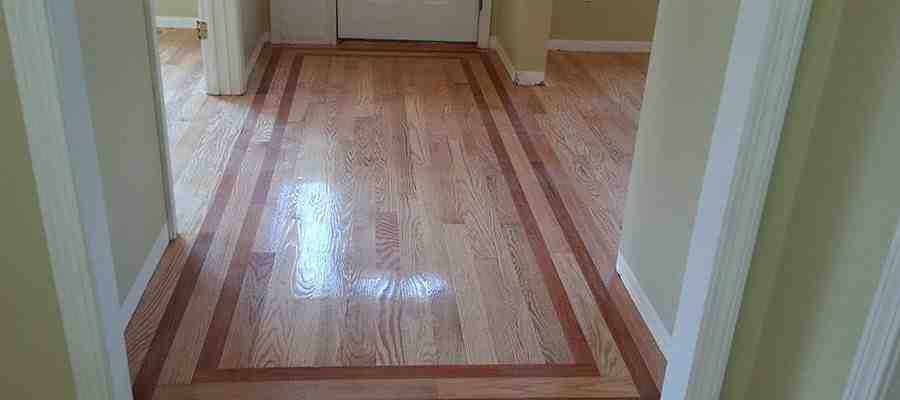
Cost to Sand and Restain Hardwood Floors: Top Factors 2024
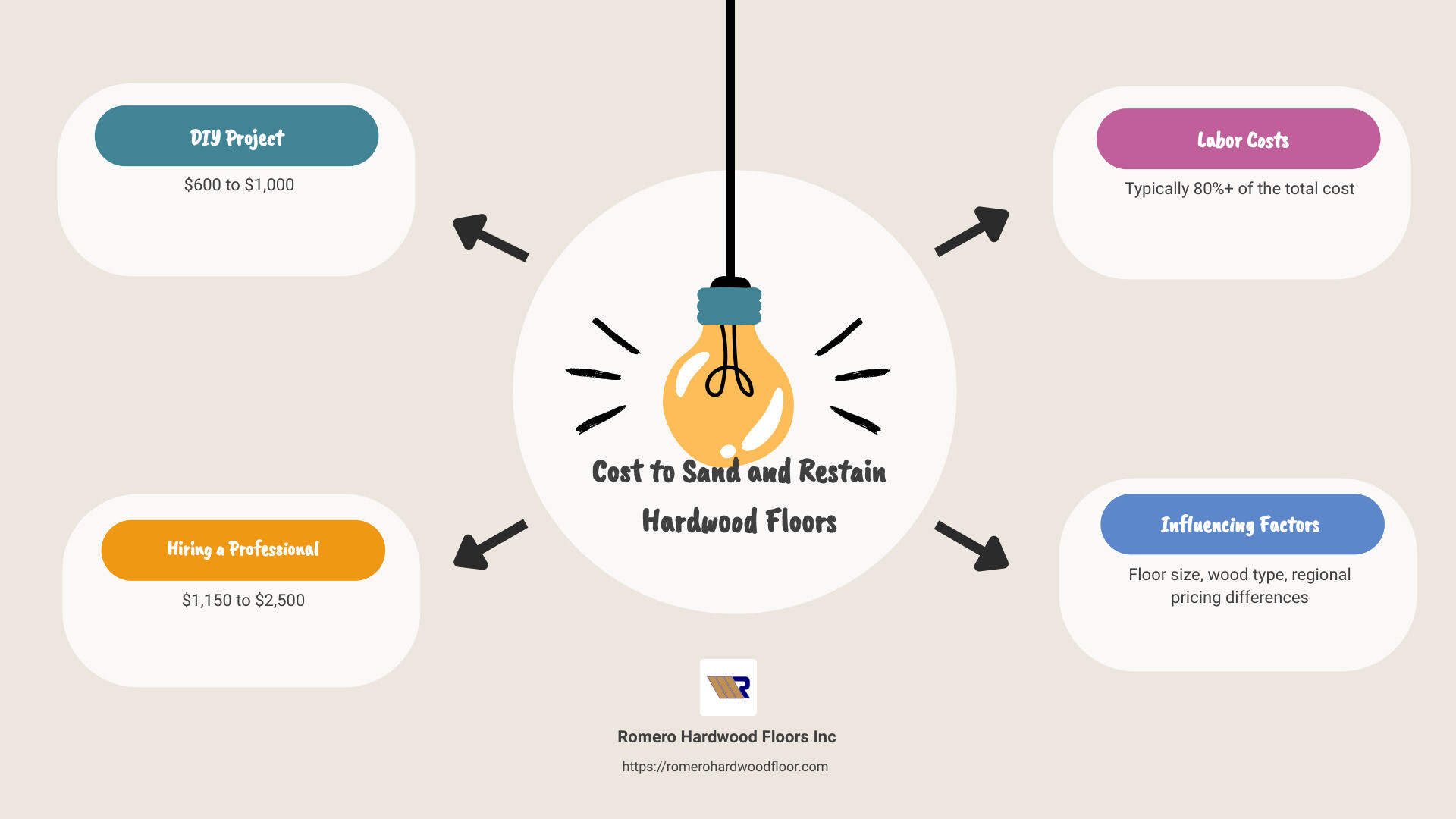
When considering the cost to sand and restain hardwood floors, you might be looking for a clear answer without diving through heaps of info. Let’s cut straight to the point:
- DIY Project: $600 to $1,000
- Hiring a Professional: $1,150 to $2,500
- Labor Costs: Typically 80%+ of the total cost
Refinishing your hardwood floors is not just about sprucing up your space—it’s a significant investment in your property’s value and aesthetic. While the process can indeed be pricey, understanding the cost breakdown and what influences these expenses helps you make informed decisions.
Expectations for costs can vary widely based on factors like floor size, wood type, and regional pricing differences. However, both DIY enthusiasts and those preferring professionals have multiple ways to manage and potentially trim these costs.
I’m Francisco Romero, the owner of Romero Hardwood Floors Inc., with over 15 years of experience in hardwood flooring. I have seen first-hand the varying factors that influence the cost to sand and restain hardwood floors, and I’m here to shed light on what you can expect.
Understanding the Cost to Sand and Restain Hardwood Floors
When considering the cost to sand and restain hardwood floors, various factors come into play. Let’s break down these elements to give you a clear picture of what influences the overall expense.
Factors Influencing Cost
- Floor Size:
- Larger Areas: Generally, the more square footage you have, the higher the total cost. However, contractors might offer a reduced rate per square foot for bigger projects.
- Smaller Spaces: Smaller rooms can sometimes cost more per square foot due to the difficulty of maneuvering equipment.
- Condition of the Floor:
- Minor Wear: Floors in good condition with only minor scratches and dents will cost less to refinish.
- Major Repairs: Floors needing extensive repairs, such as replacing boards or fixing water damage, will increase the cost significantly.
- Wood Type:
- Common Woods: Oak and cherry are among the more affordable options, costing around $3 to $5 per square foot.
- Exotic Woods: Woods like mahogany can be pricier, ranging from $6 to $8 per square foot.
Average Costs Across the U.S.
The national average cost to sand and restain hardwood floors is about $1,850, with most homeowners spending between $1,150 and $2,500.
| Room Size | Square Feet | Average Cost |
|---|---|---|
| 4×10 | 40 | $200 – $350 |
| 10×10 | 100 | $300 – $500 |
| 12×12 | 144 | $450 – $750 |
| 16×16 | 256 | $800 – $1,300 |
| 20×20 | 400 | $1,200 – $2,000 |
| 24×24 | 576 | $1,750 – $2,950 |
Note: These costs can vary depending on the specifics of your project and location.
Regional Cost Variations
- Urban vs. Rural:
- Urban Areas: Expect higher costs due to increased labor rates and demand.
- Rural Areas: Lower costs are common, but availability of skilled contractors might be limited.
- East Coast vs. West Coast:
- East Coast: Typically sees higher costs due to older homes needing more prep work.
- West Coast: Prices can vary widely; coastal regions might have higher costs compared to inland areas.
Understanding these factors can help you plan and budget more effectively. Whether you’re in a bustling city or a quiet rural area, knowing what influences the cost will help you make informed decisions for your hardwood floor refinishing project.
Detailed Breakdown of Expenses
When it comes to the cost to sand and restain hardwood floors, understanding the breakdown of expenses is crucial. Let’s dive into the key areas: labor, materials, and additional services.
Labor Costs
Labor is often the biggest expense in a hardwood floor refinishing project. It can account for up to 80% of the total cost. Here’s what you can expect:
- Per Square Foot: Labor costs typically range from $2 to $5 per square foot. This includes sanding, staining, and applying the finish.
- Per Hour: Alternatively, some contractors charge by the hour. Rates can vary from $60 to $160 per hour, depending on the complexity of the job and the contractor’s experience.
Material Costs
Materials are the next big chunk of the expense. Here’s a breakdown of the essential materials:
- Sanding Supplies: Sandpaper of various grits (40, 60, 80, and 220) is needed. The cost of sanding supplies averages between $0.50 to $3 per square foot.
- Stains: Stains add color and character to the wood. Expect to pay about $1 to $3 per square foot for quality wood stains.
- Finishes: The final protective layer can be water-based or oil-based polyurethane. This usually costs $1 to $2 per square foot.
Additional Services
Additional services can add to the overall cost but may be necessary for a successful project. Here are some common add-ons:
- Furniture Moving: Some contractors include this in their estimate, while others charge extra. This service can add $0.50 to $2 per square foot.
- Subfloor Repairs: If your subfloor needs leveling or repairs, this can increase costs. Subfloor preparation might add $1 to $3 per square foot.
- Carpet Removal: If there’s old carpet to remove, this can add $0.50 to $1 per square foot.
By understanding these costs, you can better prepare and budget for your hardwood floor refinishing project. This breakdown helps you see where your money goes, ensuring no surprises when you receive your final bill.
Benefits of Professional Sanding and Restaining
Why Choose Professional Services
Increased Home Value: Refinishing your hardwood floors can significantly boost your home’s market value. According to real estate experts, buyers often prefer homes with well-maintained or newly refinished hardwood floors. This can lead to a higher selling price and quicker sale.
Longevity: Professional sanding and restaining extend the life of your floors. Experts remove old finishes and surface damage, applying new protective coatings. This makes your floors more resistant to wear and tear, delaying the need for future restorative work.
Aesthetics: Professionally refinished floors look stunning. The even, smooth surface enhances the natural wood patterns, dramatically improving your home’s interior. Plus, you can customize the finish to match your desired look, whether you prefer a glossy or matte finish.
Expertise: Professionals have the skills and experience to handle any floor condition. They know how to deal with different types of wood and can address complexities like water damage or mold, ensuring a high-quality finish.
Equipment: Flooring technicians use industrial-grade equipment for sanding and restaining. This ensures a more refined outcome and helps contain sanding dust, keeping your home clean during the process.
Efficiency: Professionals complete the job faster and more efficiently. They work around your schedule, minimizing disruption to your daily life.
Comparing DIY vs. Professional Refinishing
Costs: DIY refinishing might save you money upfront, but the savings are not significant. The average cost to hire a professional is about $1,821, while a DIY project can cost between $500 to $1,000. The potential savings of $821 to $1,321 might not be worth the risk of mistakes that could lead to costlier fixes.
Time Investment: Refinishing floors yourself is time-consuming. Professionals can complete the job in a fraction of the time it would take you, allowing you to focus on other tasks.
Quality of Outcome: The results of a DIY project depend on your skill level. Incorrect sanding or staining can cause irreparable damage, leading to the need for a complete floor replacement. Professionals ensure a flawless finish, extending the life and beauty of your floors.
In summary, while DIY refinishing might seem appealing for cost savings and creative control, the benefits of professional services in terms of increased home value, longevity, aesthetics, expertise, equipment, and efficiency make it a worthwhile investment.
How to Prepare for Your Hardwood Floor Refinishing Project
Planning Your Project
Proper planning is crucial for a successful hardwood floor refinishing project. Start by determining the timeline. The entire process can take anywhere from two to seven days, depending on the size of the area and the number of coats of stain and finish needed.
Next, make your design choices. Decide on the stain color and type of finish you want. Consider the overall aesthetic of your home. Do you prefer a natural look, or are you aiming for a darker, more dramatic finish?
Logistics are key. Clear the area by removing all furniture, rugs, and valuables. If you have heavy items, consider hiring a moving service to avoid damage and injury. Secure or remove fragile items, especially those on walls or adjacent rooms, as the process can generate a lot of dust and vibrations.
Budgeting Tips
Budgeting for your project is essential to avoid unexpected expenses. Here are some cost-saving measures:
- Prep work: Save on labor costs by doing the prep work yourself. Remove furniture, sweep debris, and ensure the area is clean.
- Get multiple quotes: Shop around and get quotes from several contractors. This helps you find the best price without compromising quality.
- Material choices: Opt for high-quality materials that offer a longer lifespan. While they may cost more upfront, they save money in the long run by extending the time between refinishing.
When to splurge: Invest in a professional for complex repairs or if you’re unsure about your DIY skills. Professional services ensure a flawless finish and can handle issues like water damage or mold that might arise.
Choosing the Right Contractor
Selecting the right contractor is vital for a successful project. Start by researching local companies with strong reputations. Look for excellent customer reviews and solid work experience.
Reputation: Check online reviews and ask for references. A contractor with positive feedback and a history of satisfied customers is more likely to deliver quality work.
Certifications and insurance: Ensure the contractor is licensed and insured. This protects you in case of accidents or damage during the job. Ask about their certifications to verify their expertise.
Previous work: Request to see examples of previous projects similar to yours. This gives you an idea of their craftsmanship and attention to detail.
Questions to ask:
– Does the estimate include the cost of moving furniture and cleaning?
– How long will the job take?
– Do you offer a warranty?
– How will you protect my home from all the dust?
– What type of stain and coating is best for my flooring?
By following these tips, you can plan effectively, budget wisely, and choose a reliable contractor, ensuring your hardwood floor refinishing project is a success.
Frequently Asked Questions about Hardwood Floor Refinishing
Is it cheaper to refinish or replace hardwood floors?
In most cases, refinishing hardwood floors is cheaper than replacing them. Refinishing involves sanding down the existing surface and applying a new stain and finish. This process costs between $300 to $6,000, depending on factors like floor condition, type of finish, and square footage .
Replacing hardwood floors, on the other hand, involves removing the old flooring, purchasing new materials, and installing them. This can be significantly more expensive, especially if you choose high-end materials.
How long does it take to refinish hardwood floors?
Refinishing hardwood floors generally takes between two to five days. This timeline can vary based on the size of the area, the number of coats of stain and finish, and whether any repairs are needed.
Here’s a quick breakdown:
- Day 1: Preparation and sanding
- Day 2: Staining
- Day 3-5: Applying the finish and allowing it to dry
That each coat of finish needs several hours to a full day to dry properly. So, plan around this timeline .
Can all types of hardwood floors be sanded and restained?
Most solid hardwood floors can be sanded and restained multiple times over their lifespan. Woods like oak, maple, and cherry are particularly resilient.
However, engineered hardwood floors can also be sanded, but usually fewer times than solid hardwood. The number of times you can sand engineered floors depends on the thickness of the top hardwood layer. Very thin layers cannot be sanded at all.
Laminate flooring is not suitable for sanding and restaining, as it doesn’t have a real wood surface.
Always consult a professional to assess your specific flooring type before proceeding with refinishing .
Conclusion
Refinishing your hardwood floors is a fantastic way to bring new life to your home. It can enhance the beauty of your space, increase your home’s value, and extend the lifespan of your floors. Whether you choose to DIY or hire a professional, understanding the cost to sand and restain hardwood floors will help you make an informed decision.
At Romero Hardwood Floors Inc, we pride ourselves on delivering top-notch services. Our expertise ensures that your floors will look stunning and last for many years to come. We use high-quality, eco-friendly products and advanced techniques to give your floors the best finish possible.
Future Maintenance Tips
To keep your newly refinished floors looking their best:
- Clean regularly: Use a soft broom or vacuum with a floor-brush attachment to remove dirt and grit.
- Avoid water damage: Wipe up spills immediately and use a damp mop for cleaning.
- Use protective pads: Place felt pads under furniture legs to prevent scratches.
- Refinish periodically: Depending on traffic and wear, consider a maintenance coat every few years.
For more detailed information or to schedule a consultation, visit our floor sanding and refinishing service page. Let us help you keep your hardwood floors in top condition, enhancing the charm and value of your home for years to come.