
Why Choosing the Right Wood Floor Contractors Makes All the Difference

Wood floor contractors are professionals who install, refinish, and repair hardwood flooring in residential and commercial properties. Here’s what you need to know when hiring one:
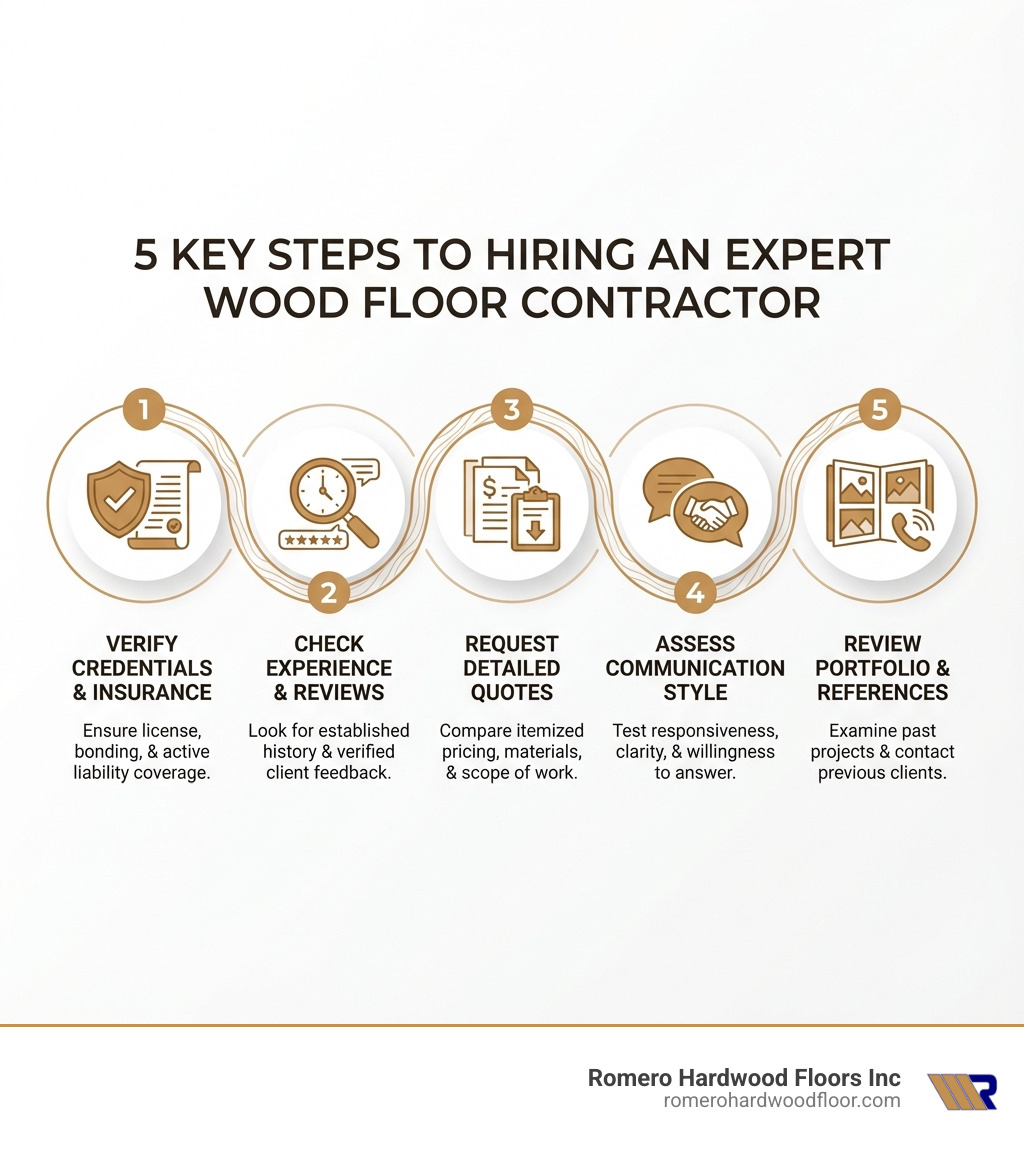
Key Steps to Hiring a Wood Floor Contractor:
- Check credentials – Verify licensing, insurance, and certifications (especially NWFA)
- Review experience – Look for contractors with 10+ years in business
- Read reviews – Check online testimonials and request local references
- Get detailed quotes – Compare pricing (typically $3-$30+ per sq ft installed)
- Assess communication – Ensure they’re responsive and answer all your questions
Hardwood floors remain one of the most popular flooring choices in America, with over 50% of homeowners preferring them for their aesthetic appeal and durability. The U.S. hardwood flooring market was valued at $12.5 billion in 2022 and is projected to reach $18.2 billion by 2030.
But here’s the reality: approximately 70% of homeowners consider the quality of installation to be as important as the quality of the flooring material itself. That means choosing the wrong contractor can turn your dream floors into a nightmare, no matter how beautiful the wood you selected.
The installation process involves critical steps like subfloor preparation, wood acclimation, precise installation techniques, and expert finishing. Skip any of these or do them poorly, and you’ll face problems like warping, buckling, squeaking, or uneven surfaces down the road.
This guide walks you through everything you need to know about hiring expert wood floor contractors—from understanding your flooring options to recognizing the signs of quality installation. You’ll learn what credentials matter, what questions to ask, and how to avoid common pitfalls that cost homeowners thousands in repairs.
I’m Francisco Romero, owner of Romero Hardwood Floors Inc., and I’ve been working with wood floor contractors and managing hardwood flooring projects in the Revere, MA area since 2006. Over the past 15+ years, I’ve seen what separates excellent contractors from those who cut corners, and I’m here to help you make the best choice for your home or business.
Learn more about wood floor contractors:
- contractor grade wood floor
- contractor price for engineered wood flooring
- contractor remove stain and smell from wood floors
Understanding Your Wood Flooring Options
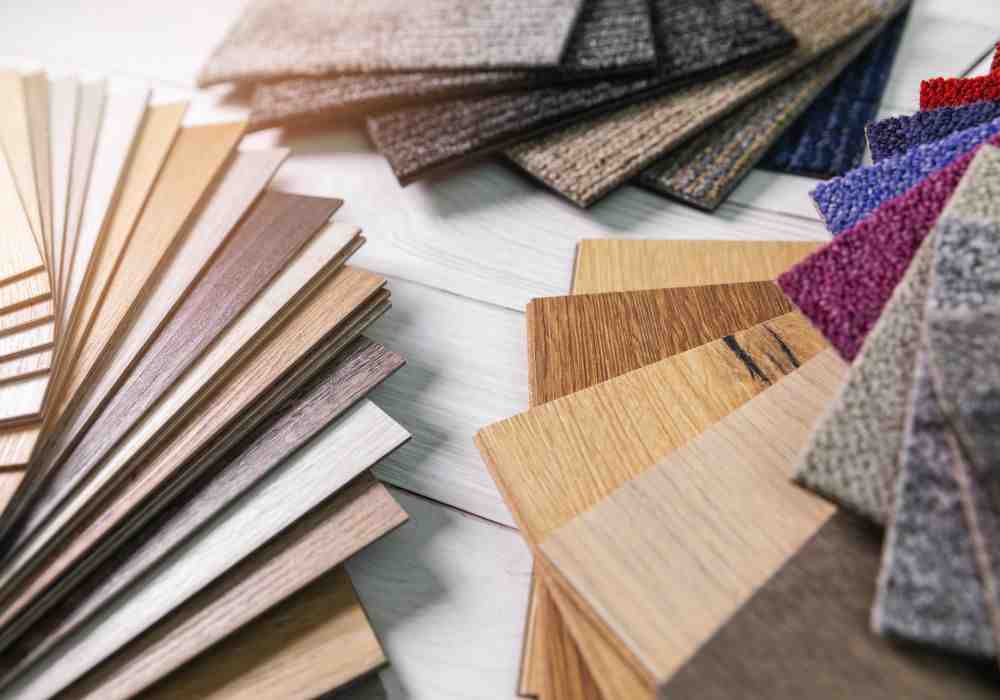
Before you even think about hiring wood floor contractors, understand the different types of wood flooring available. Each type has its unique characteristics, influencing its appearance, durability, and suitability for various spaces. Let’s explore the most common options: solid hardwood and engineered hardwood.
Solid Hardwood Flooring
Solid hardwood is precisely what it sounds like: a single piece of wood, typically ¾-inch thick. It’s renowned for its timeless beauty and exceptional longevity.
Pros:
- Durability and Longevity: With proper care, solid hardwood floors can last a lifetime, or even longer! We’ve seen 55-year-old floors restored to look amazing.
- Refinishing Potential: Its thick wear layer allows it to be sanded and refinished multiple times (every 10-15 years, typically). This means you can change its color or restore its original luster for decades.
- Increased Home Value: Hardwood floors are a significant investment that consistently improves property value, making them a wise choice for any homeowner.
- Aesthetic Appeal: The natural grain and warmth of solid wood are best, offering a classic and luxurious feel to any room.
Cons:
- Vulnerability to Moisture: Solid hardwood is sensitive to humidity changes. Excessive moisture can cause warping, buckling, or gapping. This makes it less suitable for basements or bathrooms.
- Installation Challenges: It often requires professional nail-down installation over a wooden subfloor.
- Cost: Generally more expensive upfront than engineered options.
Engineered Hardwood Flooring
Engineered hardwood flooring is constructed with multiple layers. The top layer is a slice of real hardwood, while the core layers are made of plywood or high-density fiberboard.
Pros:
- Stability: Its multi-layered construction makes it more stable and less susceptible to humidity fluctuations than solid hardwood. This is especially beneficial in areas like our service regions in Beverly, Chelsea, Danvers, and other MA towns where seasonal humidity changes can be noticeable.
- Versatile Installation: Can be installed in various ways—nail-down, glue-down, or floating—and is often suitable for installation over concrete subfloors (with proper preparation, of course!).
- Wider Application: Can be installed in areas where solid hardwood isn’t recommended, such as basements or over radiant heating systems.
- Cost-Effective: Can be more budget-friendly than solid hardwood while still offering the authentic look of real wood.
Cons:
- Limited Refinishing: The thickness of the real wood wear layer varies. Thinner layers may only allow for one or two refinishes, while some can’t be refinished at all.
- Durability of Core: The core material, while stable, isn’t as inherently durable as solid wood.
No matter which type of wood flooring you choose, the right material, combined with expert installation, is key to achieving your dream floors. For those looking for something truly unique, our team excels at creating Custom Hardwood Flooring Contractor solutions custom to your specific style.
[TABLE] Comparing Solid vs. Engineered Hardwood
| Feature | Solid Hardwood Flooring | Engineered Hardwood Flooring |
|---|---|---|
| Construction | Single piece of solid wood | Multiple layers with a real wood veneer |
| Thickness | Typically ¾-inch | Varies, often thinner than solid |
| Refinishing | Multiple times (3-5+) | Limited (0-3 times, depending on wear layer) |
| Moisture | Sensitive to humidity, not ideal for high-moisture areas | More stable, better for varying humidity and concrete subfloors |
| Installation | Nail-down, usually over wood subfloor | Nail-down, glue-down, or floating, can go over concrete |
| Cost | Generally higher upfront | Often more budget-friendly |
| Lifespan | 75-100+ years (with proper care) | 20-80 years (depending on quality and wear layer) |
How to Choose the Right Wood Floor Contractors
Choosing the right wood floor contractors is paramount to the success and longevity of your flooring project. With so many options out there, how do you sift through them all to find the perfect fit? We believe a thorough vetting process is crucial. It’s not just about finding someone to lay wood; it’s about finding a partner who understands your vision and can execute it flawlessly.

When we say “researching local companies,” we mean focusing on trusted professionals right here in our Massachusetts service areas like Beverly, Chelsea, Danvers, East Boston, Gloucester, Lynnfield, Malden, Manchester by the Sea, Marblehead, Medford, Melrose, Nahant, Peabody, Reading, Revere, Rockport, Salem, Saugus, Somerville, Stoneham, Swampscott, Wakefield, Winchester, Winthrop, and Woburn. We are proud to be a trusted local flooring contractor for these communities.
Key Credentials to Look for in Wood Floor Contractors
When entrusting your home or business to wood floor contractors, always look for these non-negotiable credentials:
- Experience and Years in Business: A contractor’s longevity in the industry speaks volumes. We, for example, have been serving the Revere, MA area since 2006, bringing over 15 years of dedicated experience to every project. This kind of experience means we’ve encountered and successfully resolved countless unique flooring challenges.
- Licensing and Insurance: This is crucial for your protection. Ensure your contractor is fully licensed to operate in Massachusetts and carries both general liability and worker’s compensation insurance. This protects you from financial responsibility in case of accidents or damage during the project. Don’t be shy about asking for proof!
- Certifications: Beyond basic licensing, professional certifications demonstrate a commitment to industry standards and ongoing education. The National Wood Flooring Association (NWFA) certification is a gold standard. An NWFA-certified professional has proven knowledge and skills in wood floor installation, sanding, and finishing, giving you peace of mind.
- Online Reviews and Testimonials: Online reviews are invaluable. Look for consistent positive feedback on platforms. Pay attention to how contractors respond to both positive and negative comments. What do customers say about their communication, punctuality, and the final quality of their work? High-quality contractors often have a strong track record of satisfied customers. We’re proud of the positive experiences our clients share, highlighting our professionalism, clear communication, and exceptional results.
These credentials are what distinguish a truly professional wood flooring contractor.
The Importance of Communication and Customer Service
A successful flooring project relies heavily on clear, consistent communication and excellent customer service. Think of it as a partnership where your contractor listens to your needs and keeps you informed every step of the way.
- Initial Consultation: A good contractor will start with a thorough consultation, actively listening to your vision and offering custom solutions. They should take the time to understand what you want and need, providing honest counsel throughout the design and installation process.
- Detailed and Transparent Quotes: Expect a comprehensive quote that breaks down all costs—materials, labor, and any additional services like subfloor preparation or old flooring removal. There should be no hidden fees. If a quote seems too good to be true, it probably is.
- Clear Project Timelines: From the initial estimate to project completion, a reputable contractor will provide a realistic timeline. While unexpected issues can arise, they should communicate any delays promptly. Some highly efficient teams can even complete jobs within a few days, depending on the scope!
- Responsiveness to Questions: You’ll likely have questions throughout the process. A truly professional contractor will be responsive, answering your calls and emails in a timely manner. We believe in being available to address any concerns, ensuring you feel supported and informed.
- Professionalism of the Crew: The team working in your home should be courteous, respectful, and tidy. They should arrive on time, work efficiently, and clean up the work area daily. This level of professionalism is a hallmark of a reliable Contractor for Hardwood Flooring.
Assessing Portfolios and Requesting References
Seeing is believing, especially when it comes to something as visual as hardwood flooring.
- Reviewing Photo Galleries of Past Work: Ask to see a portfolio or photo gallery of their completed projects. Look for examples that match your aesthetic preferences and the type of work you need done. Pay attention to the quality of the finish, the precision of the cuts, and how seamlessly the flooring integrates with existing structures. This is where you can truly assess craftsmanship.
- Asking for Local References: A reputable contractor should be able to provide references from past clients, ideally in your local area (like Revere, MA, or neighboring towns). Don’t hesitate to contact these references to ask about their experience. Inquire about the contractor’s reliability, communication, adherence to budget, and how they handled any challenges.
- Evaluating Craftsmanship in Photos: Look for tight seams, consistent color and grain matching, and clean transitions between rooms. A keen eye for detail in a contractor’s portfolio can tell you a lot about their commitment to quality. For homeowners looking for a local wood floor contractor, seeing examples of work in their own community is especially reassuring.
The Project Lifecycle: Installation, Costs, and Care
Starting on a hardwood flooring project is an exciting journey, changing your space with beauty and warmth. But what exactly does that journey entail? From the initial preparation to the final gleaming finish, understanding the typical process, cost considerations, and long-term care will help you feel confident every step of the way. Our team is expert in all aspects of Flooring Installations.
The Hardwood Installation Process Step-by-Step
A professional hardwood floor installation is a meticulous process that ensures durability and beauty. Here’s how it typically unfolds:
- Consultation and Measurement: This is where we discuss your vision, help you select the perfect wood type and finish, and take precise measurements of your space. We’ll assess your subfloor and discuss any necessary preparations.
- Subfloor Preparation and Leveling: The subfloor is the foundation of your new hardwood floor. It must be clean, dry, and perfectly level. Any imperfections here will show up in the finished floor. For concrete subfloors, special moisture barriers and leveling compounds may be necessary to prevent future issues. This is a critical step that professional wood floor contractors never skip.
- Acclimation of Wood Planks: Wood is a natural material that reacts to its environment. Before installation, the wood planks must be brought into your home and allowed to acclimate to its ambient temperature and humidity for several days. This prevents expansion or contraction after installation, which can lead to gapping or buckling.
- Installation Methods: Depending on the type of wood and subfloor, we might use nail-down (common for solid hardwood), glue-down (often used for engineered wood over concrete), or floating installation (where planks interlock without being directly fastened to the subfloor). Each method requires specific tools and expertise.
- Sanding and Finishing: For unfinished hardwood, this is where the magic happens! The floor is sanded multiple times with progressively finer grits to create a smooth surface. Modern dust containment systems significantly minimize dust, making the process much cleaner than in the past. After sanding, your chosen stain is applied, followed by several coats of protective finish. This improves the wood’s natural beauty and protects it for years to come.
- Final Inspection: Once the finish has cured, we conduct a thorough final inspection with you to ensure every detail meets our high standards and your complete satisfaction.
This detailed process is why professional Hardwood Floor Installation is so important.
Understanding Hardwood Flooring Costs
Cost is a major consideration for any home improvement project. The cost of hardwood floor installation and refinishing can vary widely, but understanding the factors involved will help you budget effectively.
- Material Costs per Square Foot: The type of wood (oak, maple, cherry, exotic species), whether it’s solid or engineered, and its grade all impact the price.
- Labor and Installation Costs: This covers the expertise and time of the wood floor contractors. It includes subfloor preparation, installation, sanding, and finishing.
- Average Cost Range: In 2023, the average cost of hardwood floor installation in the US ranged from $3 to $10 per square foot for materials and installation. However, depending on the wood type, complexity of the job, and local labor rates, this can easily go up to $30 or more per square foot. It’s important to note these are average costs based on internet data and not actual costs for Romero Hardwood Floors. We provide competitive and transparent pricing for all our projects in Revere, MA, and surrounding communities.
- Factors Affecting Price: These include the size and shape of the room, condition of the subfloor (requiring repairs or leveling), removal of old flooring, complexity of patterns (e.g., herringbone), and the type of finish chosen.
- Refinishing Costs: For existing hardwood floors, refinishing is a cost-effective way to revitalize them. An estimated 15% of homeowners opt to refinish their existing floors rather than replace them. Refinishing costs are generally lower than new installation, as they primarily involve labor, sanding equipment, and finishing materials.
While initial costs may seem significant, hardwood floors are a long-term investment that adds substantial value to your property. We are committed to providing excellent value, offering affordable wood flooring services without compromising on quality.
Long-Term Maintenance for Lasting Beauty
Once your beautiful new hardwood floors are installed, proper maintenance is key to ensuring their longevity and preserving their stunning appearance.
- Proper Cleaning Techniques: Dust and sweep your floors twice a week to remove dirt and grit that can scratch the surface. Use a vacuum with a hardwood floor attachment, not a beater bar. For deeper cleaning, use a damp (not wet) mop with a pH-neutral hardwood floor cleaner. Act fast on spills to prevent moisture damage.
- Using Furniture Pads: Place felt pads under the legs of all furniture to prevent scratches and dents when moving items.
- Humidity Control: Wood reacts to changes in humidity. In our Massachusetts climate, maintaining consistent indoor humidity levels (typically between 35-55%) using humidifiers in winter and dehumidifiers in summer can prevent issues like gapping, shrinking, or swelling. This also helps prevent squeaking floors and sticking doors caused by seasonal changes.
- Preventing Scratches: Use mats at doorways to trap dirt and grit, and place rugs in high-traffic areas. Avoid walking on hardwood floors with high heels or cleats. Keep pet nails trimmed.
- Knowing When to Refinish: As we mentioned, solid hardwood floors can be refinished multiple times. A good rule of thumb is to consider refinishing every 10-15 years, or when the finish starts to look dull, scratched, or worn down to the bare wood in high-traffic areas. For expert advice and service, consult Wood Floor Refinishing Contractors.
Professional vs. DIY: Why Expert Installation Matters
While the DIY spirit is admirable, installing hardwood floors is a complex endeavor that often requires specialized skills and tools. The benefits of professional hardwood floor installation far outweigh the perceived savings of a DIY approach, especially when considering the long-term value and potential pitfalls.
- Expertise and Specialized Tools: Professional wood floor contractors have years of training and experience in handling various wood types, subfloor conditions, and installation challenges. They possess specialized equipment for precise cuts, proper fastening, and dust-free sanding that most homeowners don’t have.
- Time and Efficiency: A professional team can complete the installation much faster and more efficiently than a DIYer. What might take a homeowner weeks could be completed by experts in a matter of days, allowing you to enjoy your new floors sooner. We’ve seen projects completed efficiently and on schedule.
- Avoiding Costly Mistakes: Installing wood floors on your own can be a difficult endeavor, especially without proper tools and materials. Improper subfloor preparation, incorrect acclimation, or poor installation techniques can lead to costly problems like warping, buckling, gaps, or an uneven surface. These mistakes can be far more expensive to fix than the initial cost of professional installation.
- Warranty and Guarantees: Reputable wood floor contractors offer warranties on their workmanship, providing you with peace of mind. If any issues arise due to the installation, you’re covered. This is a significant advantage over DIY, where you bear all the risk.
- Flawless Finish: Professionals deliver a flawless, beautiful finish that improves your home’s aesthetic and value. Their attention to detail ensures tight seams, consistent color, and a perfectly smooth surface. Choosing a Professional Hard Wood Floor Contractor is an investment in quality.
What to Expect from High-Quality Wood Floor Contractors
How do you know if you’ve received a high-quality wood floor installation? Here are the signs to look for, helping homeowners assess the work done:
- Tight Seams with No Gaps: The individual planks should fit together snugly, with no visible gaps between them. This indicates precise cutting and proper installation technique.
- Level and Smooth Surface: The entire floor should be even, without any noticeable bumps, dips, or uneven planks. Run your hand across the surface; it should feel smooth.
- Consistent Stain and Finish: If your floors were stained and finished on-site, the color should be uniform across all planks and rooms, without streaking or blotches. The finish should have a consistent sheen.
- Clean Transitions to Other Rooms: Where your hardwood meets other flooring types (e.g., tile, carpet), the transition pieces should be neatly installed and flush, creating a clean, professional look.
- Proper Cleanup Post-Project: A professional team will leave your home clean and tidy. All debris, sawdust, and leftover materials should be removed, and the work area should be spotless. This demonstrates respect for your home and attention to detail.
If you observe any issues with these points, don’t hesitate to contact your contractors. Even minor issues can sometimes be signs of underlying problems that require attention from Hardwood Floor Repair Contractors.
Frequently Asked Questions about Wood Floor Installation
We often hear similar questions from homeowners considering new hardwood floors. Let’s address some of the most common ones to help you feel even more prepared.
How long does hardwood floor installation take?
The timeline for hardwood floor installation depends on several factors, including the size of the area, the complexity of the layout, the type of wood, and whether any subfloor repairs are needed. For a standard room, installation can often be completed in a few days. However, a larger project covering multiple rooms might take a week or more. Don’t forget to factor in acclimation time for the wood (typically 3-7 days before installation) and curing time for the finish (which can be several days to a week, depending on the product) before heavy use. A good contractor will provide a clear estimate of the project timeline during your consultation.
Can you install hardwood over an existing floor?
Sometimes, yes, but it depends on the existing floor and the subfloor beneath it.
- Over existing wood or plywood: Often, hardwood can be installed directly over these, provided they are structurally sound, flat, and free of moisture issues.
- Over tile or vinyl: Engineered hardwood can sometimes be installed over these surfaces, but solid hardwood usually requires their removal. The key is a stable, level, and dry subfloor.
- When removal is necessary: If the existing floor is uneven, damaged, or has moisture problems, it must be removed. This adds to the project’s time and cost but is essential for a successful, long-lasting installation. Your wood floor contractors will assess your specific situation and recommend the best approach.
How dusty is the sanding and refinishing process?
In the past, sanding and refinishing hardwood floors was notoriously dusty. However, modern technology has made significant advancements! Reputable wood floor contractors today use advanced dust containment systems that connect directly to their sanding equipment. These systems capture most of the sawdust before it becomes airborne, dramatically minimizing dust spread throughout your home. While it’s impossible to eliminate 100% of the dust, modern methods make the process much cleaner and less disruptive. You can expect a professional team to take precautions like sealing off work areas and performing thorough cleanups.
Conclusion
Choosing the right wood floor contractors is more than just a transaction; it’s an investment in your home’s beauty, value, and comfort. We’ve explored the diverse world of wood flooring options, the critical factors in selecting expert contractors, the meticulous process of installation, and essential maintenance tips to ensure your floors look stunning for decades.
The quality of installation is as vital as the quality of the materials themselves. By prioritizing experienced, certified, and communicative professionals, you ensure a smooth project and a result that you’ll cherish.
For homeowners in the Revere, MA area, including Beverly, Chelsea, Danvers, East Boston, Gloucester, Lynnfield, Malden, Manchester by the Sea, Marblehead, Medford, Melrose, Nahant, Peabody, Reading, Rockport, Salem, Saugus, Somerville, Stoneham, Swampscott, Wakefield, Winchester, Winthrop, and Woburn, working with an established company like Romero Hardwood Floors Inc. ensures expertise, competitive pricing, punctuality, and guaranteed workmanship. Since 2006, we’ve been dedicated to enhancing property value with expert flooring solutions, and we’re passionate about bringing your vision to life.
The long-term benefits of a professional installation—from improved durability to effortless beauty—make it a decision you won’t regret.
Ready to transform your home with beautiful hardwood floors? Request an estimate today!