
Durable wood flooring: Ultimate Guide 2025
Why Durable Wood Flooring Matters for Your Investment
Durable wood flooring combines timeless beauty with long-lasting performance, protecting your investment for decades to come. When selecting hardwood floors, understanding durability helps you choose flooring that withstands daily wear while maintaining its appeal.
The Most Durable Wood Flooring Options:
- Hickory – Janka rating 1,820 (hardest domestic wood, ideal for high-traffic areas)
- Brazilian Cherry – Janka rating 2,350 (extremely durable exotic option)
- Hard Maple – Janka rating 1,450 (excellent wear resistance)
- White Oak – Janka rating 1,360 (naturally water-resistant and durable)
- Engineered Hardwood – Better moisture resistance and stability than solid wood
Key Durability Factors:
- Wood Species Hardness – Measured by the Janka scale
- Construction Type – Solid vs. engineered affects lifespan and refinishing potential
- Protective Finish – Aluminum oxide coatings provide superior scratch resistance
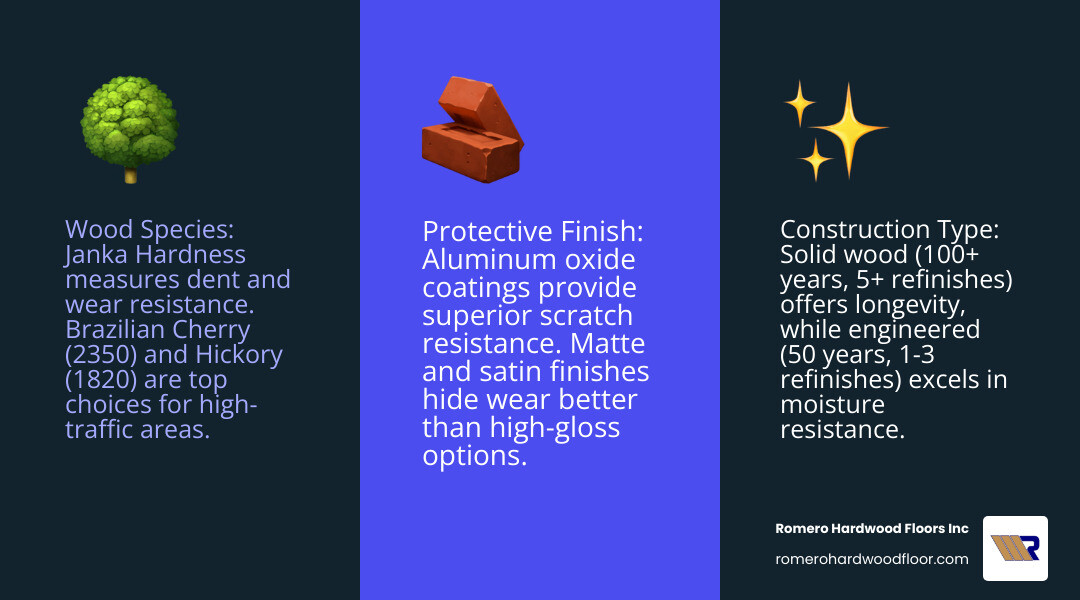
Durability isn’t just about hardness. The quest for perfect hardwood flooring leads homeowners to one crucial question: which options offer the best long-term durability? The answer depends on three main factors: the wood species you choose, how the flooring is constructed, and the protective finish applied to its surface.
Solid hardwood can last 100+ years and be refinished 5+ times, while engineered hardwood offers superior moisture resistance with a lifespan of up to 50 years. Tight-grain woods like maple and hickory resist scratches better than open-grain species, and matte or satin finishes show fewer scratches than high-gloss options.
Climate matters too. Engineered hardwood performs better in humid environments and over concrete subfloors, making it ideal for basements. Meanwhile, solid hardwood excels in climate-controlled upper levels where it can be maintained and refinished for generations.
As Francisco Romero, owner of Romero Hardwood Floors Inc., I’ve spent over 15 years helping homeowners and property managers in Revere, MA select and install durable wood flooring that stands the test of time. Whether you’re upgrading a high-traffic commercial space or creating a beautiful, long-lasting floor in your home, understanding durability factors ensures you make the right choice for your specific needs.
What Makes Hardwood Flooring Durable?
When we talk about durable wood flooring, we’re not just discussing how tough it is against a dropped can of soup. We’re considering a holistic picture of resistance to dents, scratches, moisture, and general wear and tear over decades. The inherent strength of the wood itself, the way it’s constructed, and the protective layers applied all play a crucial role in its longevity. It’s this combination that allows hardwood to offer timeless beauty and strength for your home.
Wood Species and the Janka Hardness Scale
The foundation of any hardwood floor’s durability starts with species selection. At the heart of this decision lies the Janka hardness scale, the industry standard for measuring wood’s resistance to wear. This measurement helps predict how well different species will handle the demands of daily use. The Janka rating measures a wood’s hardness and resistance to dents and wear. The higher the Janka rating, the more durable the wood.
Let’s look at some of the top contenders for durable wood flooring:
- Hickory (Janka rating: 1,820): This is one of the hardest domestic hardwoods available, making it an excellent choice for high-traffic areas in homes across Massachusetts. Its distinct grain also helps camouflage minor dents and scratches.
- Maple (Janka rating: 1,450): Known for its clean, uniform grain, Maple is incredibly resistant to wear and tear. It’s so tough, it’s often used for basketball courts!
- White Oak (Janka rating: 1,360): A popular choice for its natural beauty and versatility, White Oak is naturally water-resistant and highly durable. It’s a fantastic option for kitchens, living rooms, and hallways.
- Red Oak (Janka rating: 1,290): A classic American hardwood, Red Oak offers excellent durability and is known for being easy to refinish, extending its lifespan considerably.
- Brazilian Cherry (Janka rating: 2,350): For those seeking extreme durability, exotic hardwoods like Brazilian Cherry are a powerhouse. While generally more expensive, their hardness rating is significantly higher than domestic options.
Conversely, softer woods like Yellow Pine (Janka rating: 870) or Black Walnut (Janka rating: 1,010) might be beautiful, but they are more susceptible to dents and scratches, making them less ideal for very high-traffic areas. When considering your options, we can help you explore more about wood species to find the perfect balance of beauty and resilience.
Solid vs. Engineered Hardwood: A Durability Showdown
When it comes to durable wood flooring, the construction type is as important as the wood species. The choice between solid and engineered hardwood significantly impacts how the floor performs in various environments and its long-term lifespan.
Here’s a quick comparison:
| Feature | Solid Hardwood | Engineered Hardwood |
|---|---|---|
| Durability | Very high, especially with harder species | High, with improved stability against moisture |
| Lifespan | 100 years or more (can be restored many times) | Up to 50 years (depending on wear layer) |
| Refinishing | Can be sanded and refinished 5+ times | Can be sanded and refinished 1-3 times (depending on veneer thickness) |
| Moisture Stability | Less stable, prone to expansion/contraction with humidity changes | More stable, better resistance to moisture fluctuations |
| Installation Locations | Above-grade, climate-controlled areas (e.g., living rooms, bedrooms) | All levels, including basements, over concrete, radiant heat |
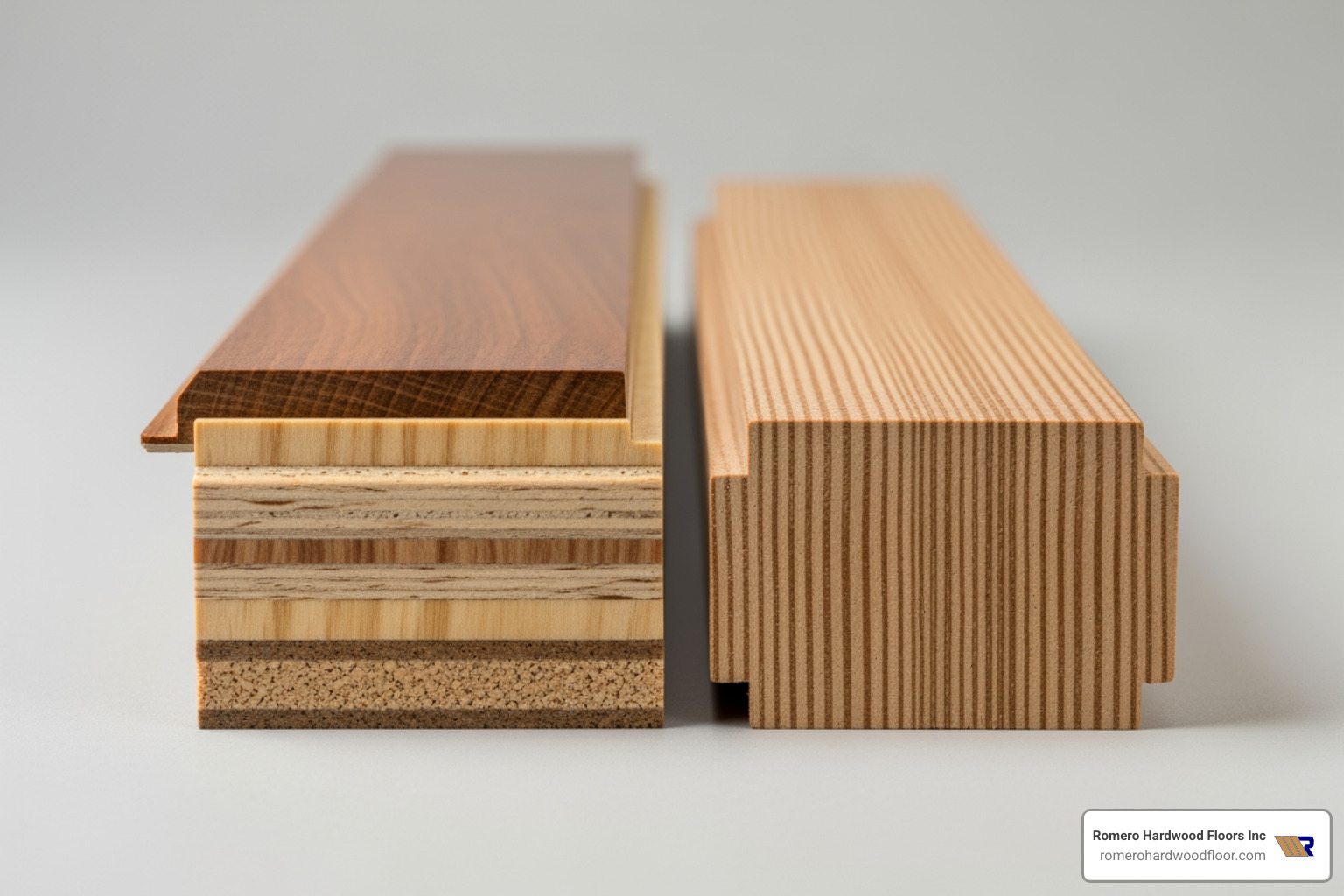
Solid hardwood flooring consists of planks milled from a single piece of wood. Its substantial thickness means it can be sanded and refinished multiple times throughout its life – often five or more – allowing it to last for over a century with proper care. This makes it an incredibly long-term investment, ideal for homes where generations will appreciate its enduring beauty. However, solid hardwood is more susceptible to moisture and humidity changes, which can cause it to expand, contract, or even warp. For this reason, we typically recommend it for above-grade installations in climate-controlled environments.
Engineered hardwood flooring, on the other hand, is constructed with multiple layers. It features a top layer (veneer) of real hardwood bonded to a core of plywood or high-density fiberboard. This layered structure provides superior dimensional stability, making engineered wood less prone to expanding or contracting with changes in humidity. This stability makes it an excellent choice for areas like basements, over concrete subfloors, or even with radiant heating systems – conditions where solid hardwood might struggle in our varied Massachusetts climate.
While it can be refinished, the number of times depends on the thickness of its top veneer layer, typically 1 to 3 times, giving it a lifespan of up to 50 years. For a deeper dive into this versatile option, explore our guide on Engineered Hardwood Floors.
The Critical Role of Protective Finishes
No matter how hard the wood species or how stable the construction, the protective finish is the frontline defender of your durable wood flooring. This finish shields the wood from daily wear, scratches, spills, and UV damage, preserving its beauty and extending its life.
There are two main categories of finishes:
- Factory-Applied Finishes (Prefinished): These floors are finished in a controlled factory environment before installation. They often feature multiple coats of highly durable finishes, such as those infused with aluminum oxide. Aluminum oxide is the second hardest substance in the world, next to diamond, offering exceptional resistance to scratches and wear. These finishes are typically UV-cured, creating a tough, long-lasting surface that requires no drying time after installation. This means you can walk on your new floors almost immediately!
- Site-Finished Floors: With site-finished floors, the raw wood is installed, and then the stain and protective coats are applied on-site. This offers maximum customization in color and sheen, but the finishes typically aren’t as hard or wear-resistant as factory-applied aluminum oxide coatings. They also require drying and curing time, meaning you’ll need to stay off your floors for a period.
Sheen Levels and Scratch Resistance: The gloss level of your finish also impacts how visible scratches and wear will be.
- Matte or Satin Finishes: These low-sheen options are excellent at hiding minor scratches, scuffs, and everyday dust. They create a more natural, understated look that many homeowners in Revere, MA appreciate for its practicality and elegance.
- High-Gloss Finishes: While offering a dramatic, polished appearance, high-gloss finishes tend to show scratches, dents, and dust more readily.
Choosing a durable wood flooring often involves considering premium finishes that offer superior protection from everyday wear. Some manufacturers, for example, offer “Lifetime Finish” options that provide exceptional durability. We can help you steer the various finish options to find one that suits your lifestyle and aesthetic preferences.
How to Choose the Most Durable Wood Flooring for Your Space
Selecting the right durable wood flooring isn’t a one-size-fits-all decision. It’s about matching the floor’s characteristics to your lifestyle, the specific use of each room, and the environmental conditions of your home in Massachusetts.
Matching Flooring to Room Usage
Different rooms in your home present different challenges, and your choice of durable wood flooring should reflect this.
- Entryways: These are ground zero for foot traffic, dirt, moisture from outside, and impact from dropped items. For entryways, we recommend species with high Janka ratings like Hickory or White Oak, combined with a tough, factory-applied finish. Consider a matte or satin finish to better hide scuffs.
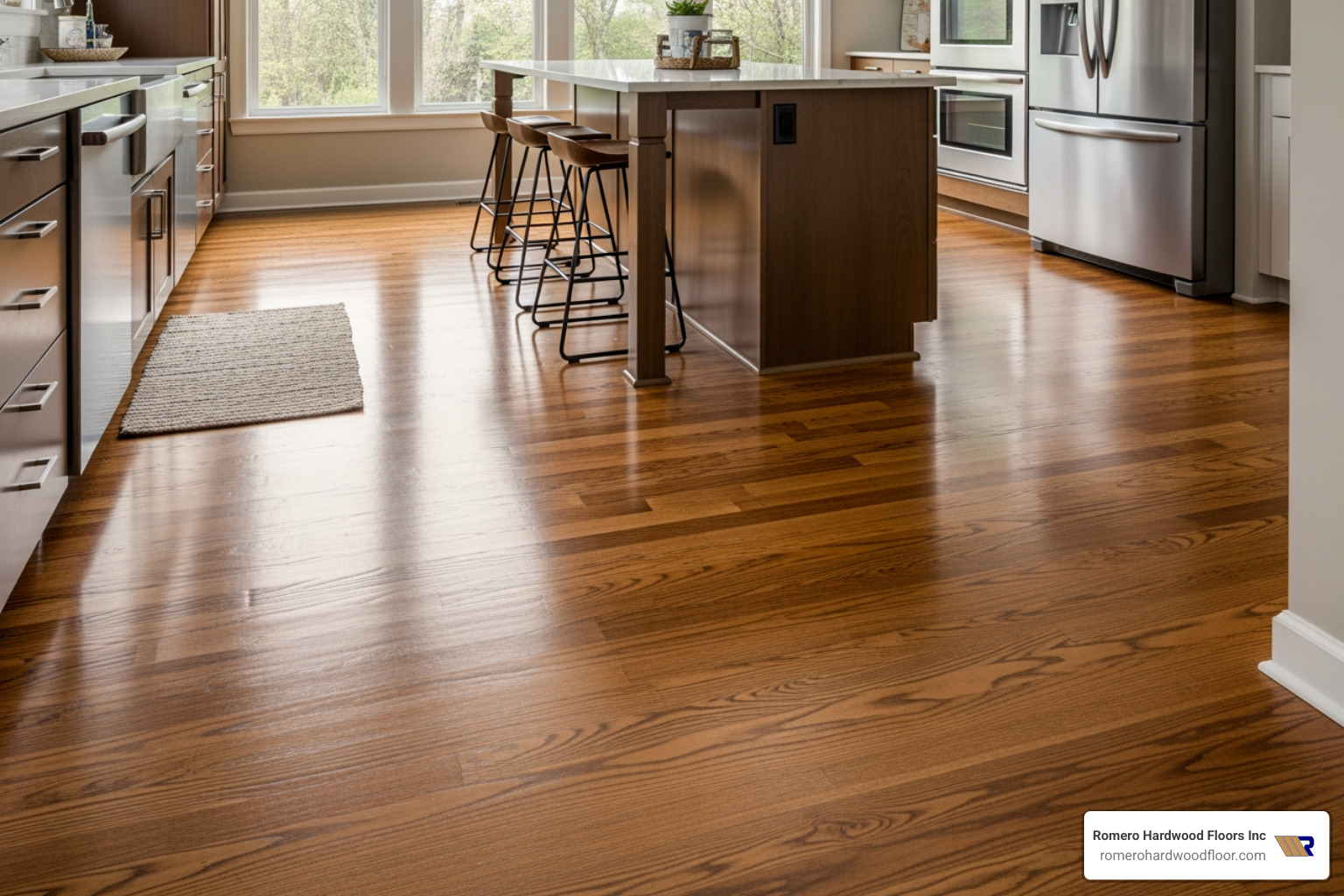
- Kitchens: Moisture and spills are the main concerns here, along with frequent foot traffic and dropped utensils. While traditional solid hardwood is generally not recommended for very wet areas, engineered hardwood with a water-resistant core and a highly protective finish can be a good option. Naturally water-resistant woods like White Oak are also excellent choices. Immediate cleanup of spills is always crucial.
- Living Spaces (Living Rooms, Dining Rooms, Bedrooms): These areas generally experience moderate to high traffic. Here, you have more flexibility with species, finishes, and construction. Solid hardwood is a classic choice for living rooms and dining rooms, offering generations of beauty, while engineered hardwood provides excellent stability and design versatility. We can help you find Best Hardwood Floors for these spaces.
- High-Traffic Areas (Hallways, Family Rooms): Similar to entryways, these areas demand exceptional durability. Again, harder wood species and robust finishes are key. Tight-grain woods like Maple or Hickory will stand up well to constant use.
Considering Climate, Pets, and Traffic Patterns
The unique climate of Massachusetts, with its humid summers and dry winters, can impact hardwood flooring. Solid hardwoods, being a natural product, will expand and contract with changes in humidity. To mitigate this, maintaining consistent indoor humidity levels (between 35-55%) with humidifiers or dehumidifiers is best practice. Engineered hardwood, with its layered construction, offers superior stability and performs better in environments with fluctuating humidity, such as basements or homes without strict climate control.
For homes with pets, especially in areas like Revere, MA where many families enjoy their furry companions, durable wood flooring needs extra consideration. Pets’ claws can scratch, and accidents can cause moisture damage.
- Species: Harder woods like Hickory, Maple, or White Oak are more resistant to scratches and dents from claws.
- Finish: Matte or satin finishes hide scratches better than high-gloss. Some finishes are formulated for improved scratch resistance.
- Grain: Woods with more prominent or busy grain patterns (like Oak or Hickory) tend to camouflage scratches better than very uniform, smooth grains (like Maple).
- Maintenance: Keep pet nails trimmed, use paw covers, and place mats under food and water bowls. Regular sweeping helps remove grit that can act like sandpaper under paws. Learn more about Best Hardwood for Pets.
Traffic patterns and furniture movement also contribute to wear. In areas with concentrated traffic, consider harder woods and more durable finishes. For furniture, always use felt pads under legs to prevent scratches and dents when moving items. Area rugs are also a great way to protect high-wear zones and add aesthetic appeal.
Understanding Wood Grades: Appearance vs. Durability
When selecting durable wood flooring, you’ll encounter different “grades” of wood. These grades primarily refer to the aesthetic appearance of the wood, not its inherent structural durability. A rustic grade floor is just as structurally sound as a prime grade floor; it simply has more natural character marks.
The grading system categorizes floors based on characteristics like knots, color variation, sapwood, and filler. Let’s break down the common grades in the industry:
- Prime Grade: This is the cleanest grade, boasting few, if any, knots and minimal color variation. It offers a uniform, sophisticated look with very little sapwood or filler. If you’re aiming for a sleek, contemporary aesthetic, this might be your choice.
- Select Grade: Allowing for slightly larger knots and a mix of prime boards with other planks, Select grade offers a bit more character than Prime. You’ll see expected heartwood and color variation, with potentially some minor checks (small cracks across the grain) or sapwood. It’s a popular choice for a classic, warm look.
- Character Grade: As the name suggests, this grade accepts the natural character of the wood. It includes both heartwood and sapwood, a wider range of color variation, and larger knots. You should expect checks and possibly “end shake” (cracks between growth rings, often at the end of a board), along with filler. This grade is perfect for those who love a floor with a story.
- Rustic Grade: This grade is all about embracing nature’s imperfections. It features limitless size and number of knots, significant color variation, abundant sapwood, and more pronounced checks and shakes. Filler is commonly used to ensure a smooth surface. Rustic grade creates a charming, antique, or farmhouse aesthetic that can be incredibly appealing.
While a rustic grade floor might show less visible damage due to its inherent “busy” appearance, all grades, when properly installed and finished, offer the same fundamental durability based on the wood species and protective coating. Your choice of grade is a personal one, driven by the aesthetic you want to achieve for your home in Massachusetts.
Maintenance and Technological Advances
Investing in durable wood flooring is a significant decision, and ensuring its longevity involves both diligent maintenance and staying abreast of exciting technological advancements. Protecting your investment means regular care coupled with innovative solutions that improve durability even further.
Best Practices for Long-Term Durability
Even the most durable wood floor needs a little love to maintain its beauty and performance over decades. Here are our best practices for ensuring the long-term durability of your hardwood floors:
- Regular Cleaning: Sweep or vacuum (with a hard floor attachment, no beater bar) regularly to remove grit and dirt. These tiny particles act like sandpaper underfoot, gradually dulling your finish and causing micro-scratches.
- Immediate Spill Cleanup: Hardwood and standing water are not friends. Clean up any spills immediately with a clean, dry cloth to prevent moisture penetration and potential damage.
- Manufacturer-Recommended Products: Always use cleaning products specifically designed for hardwood floors and, ideally, those recommended by your flooring manufacturer. Harsh chemicals or excessive water can strip finishes or damage the wood.
- Furniture Pads: Place felt pads under all furniture legs to prevent scratches and dents when moving items or from daily use.
- Area Rugs and Mats: Use area rugs in high-traffic zones like entryways, hallways, and under dining tables to provide an extra layer of protection against wear and impact. Ensure mats at exterior doors are effective at trapping dirt and moisture.
- Trim Pet Nails: Keep your pets’ nails trimmed short and blunt to minimize the risk of scratches.
By following these simple steps, you can significantly extend the life and appearance of your durable wood flooring. For more comprehensive guidance, check out our New Hardwood Floors Complete Guide.
The Future of Durability: Technological Advancements
The world of durable wood flooring is constantly evolving, with new technologies pushing the boundaries of what wood can withstand. These innovations are making hardwood more resilient than ever before, even in challenging environments.
- Densified Wood: This is a game-changer for durability. Densified wood involves a process where heat and pressure are applied to real wood, often combined with a proprietary resin, to significantly increase its density and hardness. The result is a floor that boasts dramatically improved scratch and dent resistance – some products claim up to 4x the scratch resistance and 6x the dent resistance of standard hardwoods. Many densified wood products also feature a moisture-resistant core, making them suitable for areas previously considered risky for wood.
- Acrylic-Impregnated Floors: In this process, liquid acrylic compounds are injected into the pores of the wood, then hardened. This creates an incredibly tough, impact-resistant surface that is much more durable than surface finishes alone. Acrylic-impregnated floors are often used in commercial settings due to their extreme durability but are also available for residential use.
- Advanced Core Materials: Engineered hardwood continues to innovate with core materials that offer improved stability and water resistance. These cores are designed to prevent expansion and warping due to moisture changes, allowing engineered wood to perform exceptionally well in humid environments or over concrete subfloors.
- Antimicrobial Treatments: Some modern hardwood floors now incorporate antimicrobial treatments into their finishes or core layers. These treatments help inhibit the growth of mold, mildew, and bacteria, contributing to a healthier indoor environment and further protecting the floor from moisture-related issues.
These advancements mean that homeowners in Massachusetts have more options than ever to achieve the timeless beauty of hardwood with unparalleled durability, even in the busiest of homes.
Frequently Asked Questions about Durable Wood Flooring
We often hear similar questions from homeowners and property managers in our service areas like Chelsea, MA, and Lynnfield, MA, when they’re considering durable wood flooring. Here are some of the most common ones:
What is the best durable wood flooring for a home with active kids and pets?
For homes buzzing with active kids and furry friends, we consistently recommend species known for their exceptional hardness and ability to mask wear. Hickory (Janka 1,820), White Oak (Janka 1,360), and Hard Maple (Janka 1,450) are top contenders. These woods are naturally resistant to scratches and dents.
Beyond the species, consider these factors:
- Finish: Opt for a matte or satin finish. These low-sheen options are much better at camouflaging minor scratches and scuffs than high-gloss finishes.
- Grain Pattern: Woods with a more pronounced or “busy” grain, like Oak or Hickory, naturally hide imperfections better than smooth, uniform grains.
- Engineered Hardwood: For added stability against moisture from spills or pet accidents, and for installation in basements or over concrete, engineered hardwood with a durable top layer is an excellent choice.
- Maintenance: Regular cleaning, quick spill cleanup, and keeping pet nails trimmed are crucial for any floor’s longevity.
Choosing the right durable wood flooring for your family’s dynamic lifestyle ensures beauty that lasts. Explore the Benefits of Hardwood Floors for more insights.
How much does durable hardwood flooring cost?
The cost of durable wood flooring can vary significantly based on several factors, including the wood species, whether it’s solid or engineered, the type of finish, and the complexity of the installation.
Based on average internet data, you can expect:
- Material Costs: For durable hardwood species, materials generally range from $4 to $25+ per square foot. Exotic hardwoods or specialty densified wood products will typically fall on the higher end of this range.
- Installation Costs: Professional installation, which we always recommend for optimal durability and appearance, can add $3 to $12+ per square foot to the overall project cost, depending on factors like subfloor preparation, chosen installation method (nail-down, glue-down, floating), and plank width/length.
Please note that these are average costs based on internet data and not actual costs for Romero Hardwood Floors Inc. We encourage you to request a personalized quote for your specific project in the greater Boston area to get an accurate estimate custom to your needs. For more details on budgeting, see our guide on Hardwood Flooring Cost.
Can engineered hardwood be refinished as many times as solid hardwood?
This is a common and important question! The short answer is no, engineered hardwood typically cannot be refinished as many times as solid hardwood.
- Solid Hardwood: Because solid hardwood is a single, thick piece of wood throughout, it has a substantial wear layer above the tongue and groove. This allows it to be sanded and refinished many times – often 5 or more times – over its lifespan of 100+ years. Each refinishing removes a thin layer of wood, revealing fresh wood beneath.
- Engineered Hardwood: Engineered hardwood has a top veneer layer of real wood. The number of times it can be refinished depends directly on the thickness of this veneer.
- Veneers less than 2mm thick generally cannot be sanded or refinished.
- Veneers between 2mm and 2.5mm might be refinished once, and it’s best left to a professional.
- Thicker veneers (3mm to 6mm) can typically be sanded and refinished 1 to 3 times during the floor’s lifespan of up to 50 years.
While engineered hardwood offers excellent stability and moisture resistance, its refinishing capacity is more limited than solid hardwood. We can assess your specific engineered hardwood and advise on its refinishing potential. Understanding these differences is key when choosing the right flooring for your home.
Conclusion: A Foundation Built to Last
Choosing durable wood flooring is an investment in the beauty, value, and longevity of your home or commercial property. We’ve seen how durability hinges on a triumvirate of factors: the innate hardness of the wood species, the structural integrity of its construction (solid or engineered), and the protective power of its finish. From the impressive Janka ratings of Hickory and Brazilian Cherry to the moisture-resistant stability of engineered options, and the scratch-defying strength of aluminum oxide finishes, every element plays a part.
Understanding these factors allows you to make informed decisions that align with your lifestyle, room usage, and the unique climate of our Massachusetts communities. By combining smart selection with proper maintenance and embracing technological advancements like densified wood, you can ensure your hardwood floors remain a source of pride for decades to come.
At Romero Hardwood Floors Inc., we’re passionate about helping our clients in Revere, MA, and surrounding towns like Salem, Peabody, and Woburn, find the perfect durable wood flooring solutions. With our expertise in professional installation and commitment to guaranteed workmanship since 2006, we ensure your flooring is not just beautiful, but truly built to last. Let us help you lay a foundation that stands the test of time and improves your property’s value.
Ready to explore your options for beautiful, long-lasting floors? Request an estimate for your flooring project today!
