Engineered Hardwood Floors: Top 10 Stunning Benefits
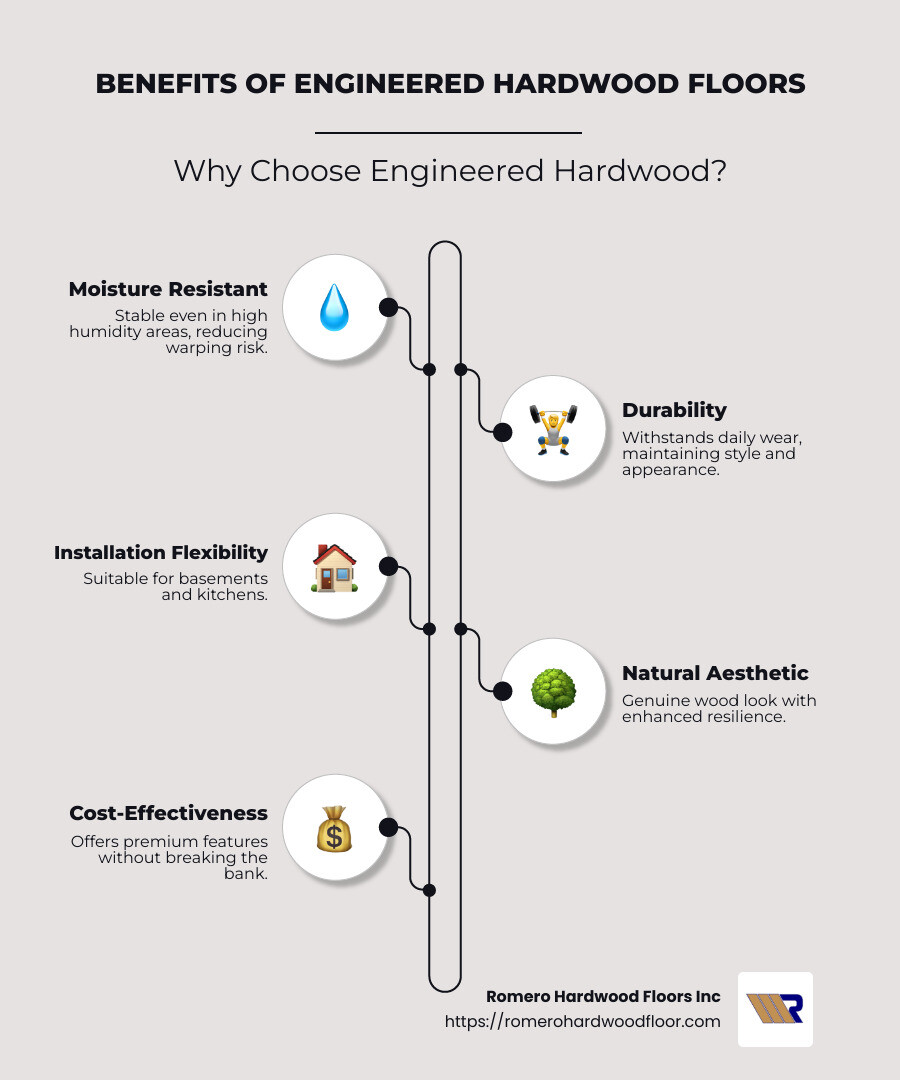
Engineered hardwood floors offer the elegance of natural wood combined with improved durability, making them an excellent choice for both residential and commercial spaces. Homeowners and property managers seeking a reliable flooring solution will appreciate these floors for their moisture resistance, timeless appearance, and cost-effectiveness. Here’s a quick overview of their main benefits:
- Moisture Resistant: More stable than solid wood, reducing the risk of warping.
- Durability: Withstands daily wear without compromising on style.
- Installation Flexibility: Suitable for a variety of spaces, including basements and kitchens.
- Natural Aesthetic: Offers the genuine look of hardwood with added resilience.
Engineered hardwood floors consist of a top layer of natural wood and a core made of high-density fiberboard, plywood, or hardwood, providing structure and strength. This construction ensures these floors remain beautiful and durable even in challenging environments.
My name is Francisco Romero, and with over 15 years of experience in the hardwood flooring industry, I lead Romero Hardwood Floors Inc. Our commitment to quality ensures that every installation of engineered hardwood floors improves the value and beauty of the spaces we serve.
Must-know engineered hardwood floors terms:
– engineered wood floor acclimation
– engineered wood floor adhesive
– engineered wood with underfloor heating
Understanding Engineered Hardwood Floors
Engineered hardwood floors are a popular choice for those seeking the beauty of wood with added durability. Let’s explore their unique construction and benefits.
Construction
At the heart of engineered hardwood flooring is a multi-layer construction. The top layer is a thin slice of natural wood, which gives the floor its authentic look. Beneath this is the rigid core, typically made from high-density fiberboard, plywood, or hardwood. This core provides stability and strength, ensuring the floor can withstand various conditions.
Natural Wood Layer
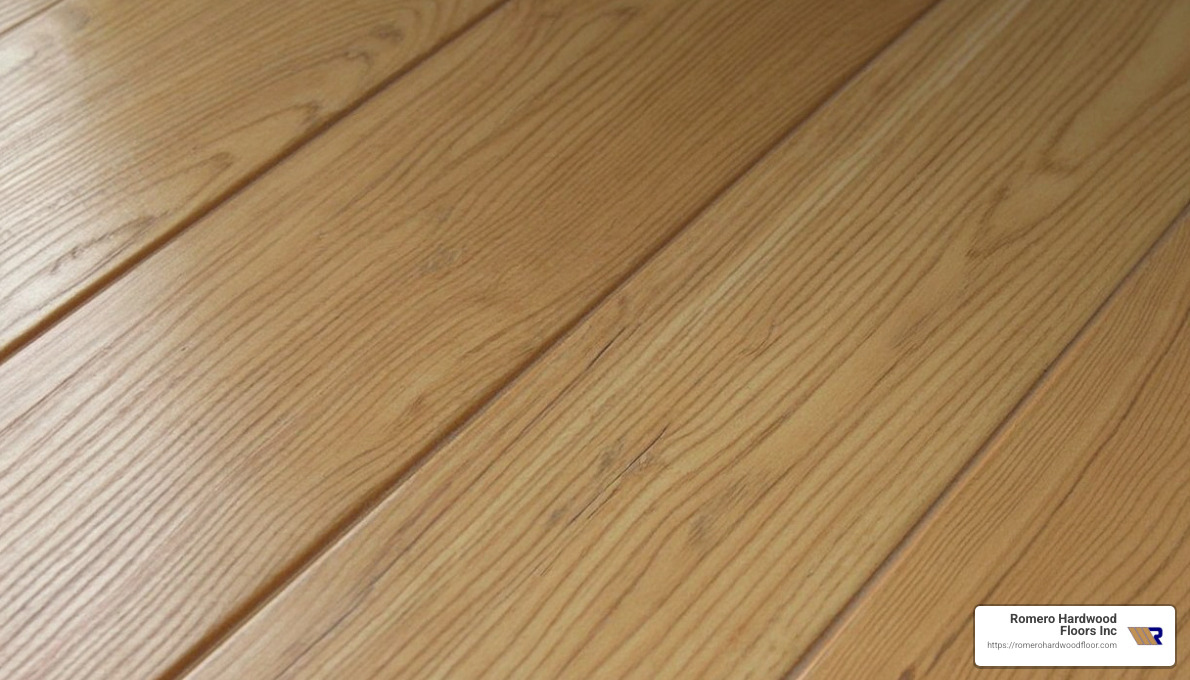
The natural wood layer is what sets engineered hardwood apart. It offers the same rich textures and grains found in solid hardwood, making it visually appealing. This layer can be crafted from a range of wood species, allowing for customization to match your interior design.
Rigid Core
The rigid core is crucial for the durability of engineered hardwood floors. It improves the floor’s ability to resist warping and buckling, which can occur with solid wood in humid conditions. This core structure allows for installation in areas where traditional hardwood might struggle, such as basements and kitchens.
Moisture Resistance
One of the standout features of engineered hardwood is its moisture resistance. The layered construction helps it handle changes in humidity better than solid hardwood. This makes it an excellent choice for environments prone to moisture, providing peace of mind without sacrificing style.
With their innovative design, engineered hardwood floors offer a practical and stylish option for any home or office. They combine the timeless charm of wood with modern technology to deliver a flooring solution that stands the test of time.
In the next section, we’ll compare engineered hardwood to solid hardwood to help you decide which is best for your needs.
Comparing Engineered Hardwood to Solid Hardwood
When choosing between engineered hardwood floors and solid hardwood, understand their differences. Both types offer the timeless beauty of wood, but they vary in several key aspects such as refinishing, stability, and moisture resistance.
Solid Hardwood
Solid hardwood is made from a single piece of wood. It’s known for its durability and the ability to be refinished multiple times. This makes it a classic choice for many homeowners who want a floor that can last for decades.
However, solid hardwood is more susceptible to environmental changes. It can expand or contract with humidity, which may lead to warping or gaps over time.
Refinishing
Both engineered and solid hardwood can be refinished, but there are limits. Solid hardwood can be sanded and refinished many times due to its thickness. This is ideal if you want to refresh or change the look of your floors over the years.
In contrast, engineered hardwood has a thinner top layer. This means it can only be refinished a few times, depending on the thickness of the veneer. If frequent refinishing is a priority, solid hardwood might be the better choice.
Stability
Engineered hardwood offers superior stability compared to solid hardwood. Its multi-layer construction reduces the risk of warping and buckling. This makes it an excellent choice for areas with fluctuating temperatures or humidity levels, such as basements or kitchens.
Moisture Resistance
Moisture resistance is a significant advantage of engineered hardwood. The layered structure provides better resistance to water than solid hardwood, which can be prone to damage in damp environments. This makes engineered hardwood a more versatile option for areas where moisture might be a concern.
In summary, both engineered and solid hardwood have their unique benefits. If you value stability and moisture resistance, engineered hardwood floors might be the right choice. However, if the ability to refinish multiple times is crucial, solid hardwood could be more suitable.
Next, we’ll dive into the installation and maintenance aspects of engineered hardwood to help you understand what to expect during and after installation.
Installation and Maintenance
When it comes to engineered hardwood floors, installation and maintenance are key to maximizing their longevity and beauty. Let’s break down the essential elements of the process.
Installation Cost
Installing engineered hardwood floors is generally more affordable than solid hardwood, primarily due to the simpler installation process. Since engineered hardwood can often be installed as a floating floor, it reduces labor costs. However, costs can vary based on the complexity of the job and the quality of the flooring chosen. It’s always advisable to get a detailed quote from a professional to avoid surprises.
Acclimation
Before installation, acclimation is crucial. This step involves letting the engineered hardwood sit in the room where it will be installed. This process, which can take several days, allows the wood to adjust to the room’s temperature and humidity. Proper acclimation helps prevent warping or buckling after installation.
Specific Care
Maintaining engineered hardwood floors involves regular cleaning and care. Here are some simple tips:
- Sweep or vacuum regularly to remove dirt and debris.
- Use a damp mop for cleaning, but avoid excess water, as it can seep into the seams.
- Avoid harsh chemicals; instead, use cleaners specifically designed for hardwood floors.
By following these guidelines, you can keep your floors looking beautiful for years to come.
Scratch Resistance
One of the benefits of engineered hardwood is its scratch resistance. While no wood floor is completely immune to scratches, the top layer of engineered hardwood is often treated with a protective coating. This makes it more resistant to everyday wear and tear compared to untreated floors.
To further protect your floors:
- Use felt pads under furniture legs.
- Avoid dragging heavy objects across the floor.
- Trim pet nails regularly to prevent scratches.
These simple measures can go a long way in preserving the pristine look of your floors.
By understanding the installation and maintenance requirements, you can ensure that your engineered hardwood floors remain a stunning feature of your home.
In the next section, we’ll explore the pros and cons of engineered hardwood floors to help you make an informed decision.
Pros and Cons of Engineered Hardwood Floors
When considering engineered hardwood floors, it’s important to weigh the pros and cons. This will help you decide if they’re the right choice for your home. Here’s a quick breakdown:
Durability
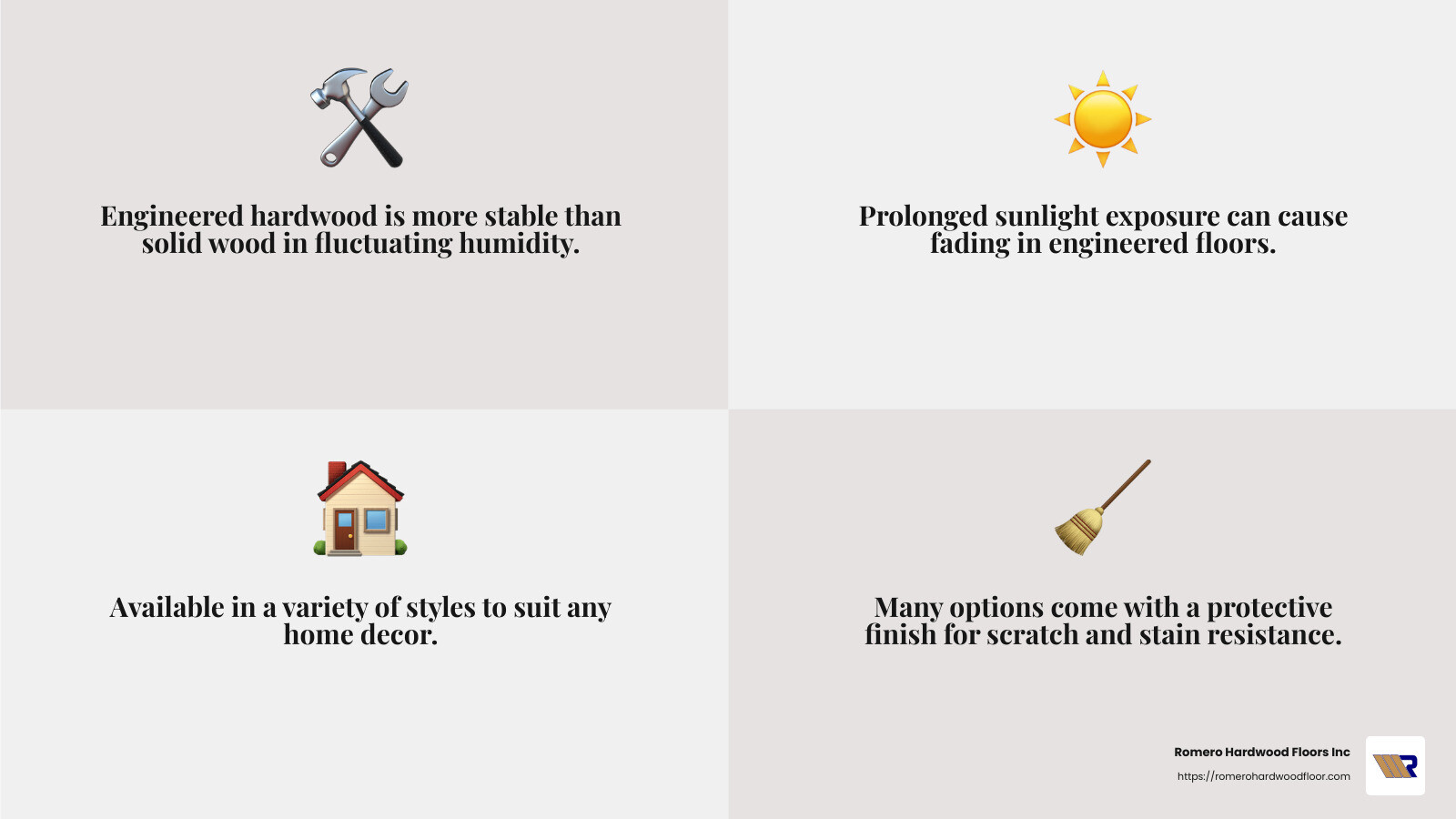
Engineered hardwood floors are known for their durability. The top layer of real wood provides a classic look, while the underlying layers add strength. This multi-layer construction makes them more stable than solid hardwood, especially in areas with fluctuating humidity.
- Resistant to Warping: The engineered core helps prevent warping and bowing, common issues with solid hardwood in humid areas.
- Protective Coating: Many engineered floors come with a protective finish that resists scratches and stains.
Versatility
These floors offer great versatility in both style and installation:
- Variety of Styles: You can choose from a wide range of wood species, colors, and finishes to match any decor.
- Installation Options: Suitable for basements and over concrete slabs, where traditional hardwood might not be ideal.
Fading
One downside to note is that engineered hardwood floors can fade over time:
- Sunlight Exposure: Prolonged exposure to direct sunlight can cause the wood to fade. Consider using curtains or UV-protective window films to minimize this effect.
- Color Changes: Some wood species are more prone to color changes than others, so choose accordingly if fading is a concern.
Refinishing Limits
While refinishing is possible, there are limits:
- Thin Veneer: Engineered floors have a thinner top layer than solid hardwood, which limits the number of times they can be refinished. Generally, they can be refinished once or twice, depending on the thickness of the veneer.
- Professional Assessment: Before attempting to refinish, consult a professional to assess whether your floor can withstand the process.
In summary, engineered hardwood floors offer a blend of durability and versatility, making them a popular choice for many homeowners. However, consider potential fading and refinishing limits when making your decision.
Next, we’ll address some frequently asked questions to further clarify what you need to know about engineered hardwood floors.
Frequently Asked Questions about Engineered Hardwood Floors
What are the disadvantages of engineered hardwood?
While engineered hardwood floors offer many benefits, they do come with some drawbacks:
- Pricey: Although often more affordable than solid hardwood, high-quality engineered options can still be expensive. Prices typically range from $4–$10 per square foot, depending on the thickness and wood species.
- Low-Quality Core: Some lower-end engineered floors have cores made from inferior materials, which can affect durability and stability. It’s important to choose a product with a strong, high-quality core for better performance.
- Fading: Like all wood floors, engineered hardwood can fade over time, especially with prolonged exposure to sunlight. Using curtains or UV-protective window films can help reduce fading.
- Chemical Emissions: Some engineered hardwoods may emit volatile organic compounds (VOCs) due to the adhesives used in their construction. Look for products with low VOC emissions to ensure better indoor air quality.
Which is better: hardwood floors or engineered hardwood?
Choosing between hardwood floors and engineered hardwood depends on your needs and environment:
- Classic Option: Solid hardwood offers a timeless appeal and can be refinished multiple times, making it a classic choice for many homeowners.
- Versatility: Engineered hardwood is more versatile, especially in terms of installation. It can be installed in basements and over concrete slabs, where solid hardwood might not be suitable.
- Moisture Resistance: Engineered hardwood is better suited for areas with high moisture, such as kitchens and bathrooms, due to its moisture-resistant core. This makes it a more practical choice in certain environments.
Do engineered wood floors scratch easily?
Engineered hardwood floors can be susceptible to scratches, especially if they have an untreated surface:
- Protective Finish: Many engineered floors come with a protective coating that helps resist scratches and stains. However, it’s still important to take precautions, such as using furniture pads and area rugs in high-traffic areas.
- Untreated Floors: If your engineered floor lacks a protective finish, it may be more prone to scratches. Regular maintenance, like sweeping and using a damp mop, can help keep your floors looking their best.
In conclusion, while engineered hardwood floors offer many advantages, it’s crucial to consider the potential disadvantages and maintenance needs to ensure they meet your expectations. Next, we’ll wrap up with expert solutions from Romero Hardwood Floors Inc to improve your property’s value.
Conclusion
Choosing the right flooring is a crucial decision for any homeowner. Engineered hardwood floors offer a blend of beauty and practicality that can lift the look and function of your space. At Romero Hardwood Floors Inc, we understand that this choice is more than just a design decision—it’s an investment in your home’s future.
Expert Solutions
With over a decade of experience, we at Romero Hardwood Floors Inc pride ourselves on providing expert solutions custom to your unique needs. Our team of skilled professionals ensures that every project, whether big or small, is handled with precision and care. From selecting the perfect flooring to installation and maintenance, we guide you every step of the way.
Property Value Improvement
Investing in engineered hardwood floors not only improves your home’s aesthetic appeal but also boosts its market value. These floors are known for their durability and timeless style, making them a smart choice for those looking to improve their property’s long-term worth. Our commitment to quality craftsmanship ensures that your floors will stand the test of time, providing beauty and function for years to come.
In summary, choosing Romero Hardwood Floors Inc means partnering with a team that values quality, reliability, and your complete satisfaction. We’re here to help you transform your space with flooring solutions that are not only beautiful but also practical and enduring. Let us help you make the most of your investment with our expert flooring services.