
Easiest way to clean wood floors: Ultimate 2025 Shine
Why the Easiest Wood Floor Cleaning Method Matters
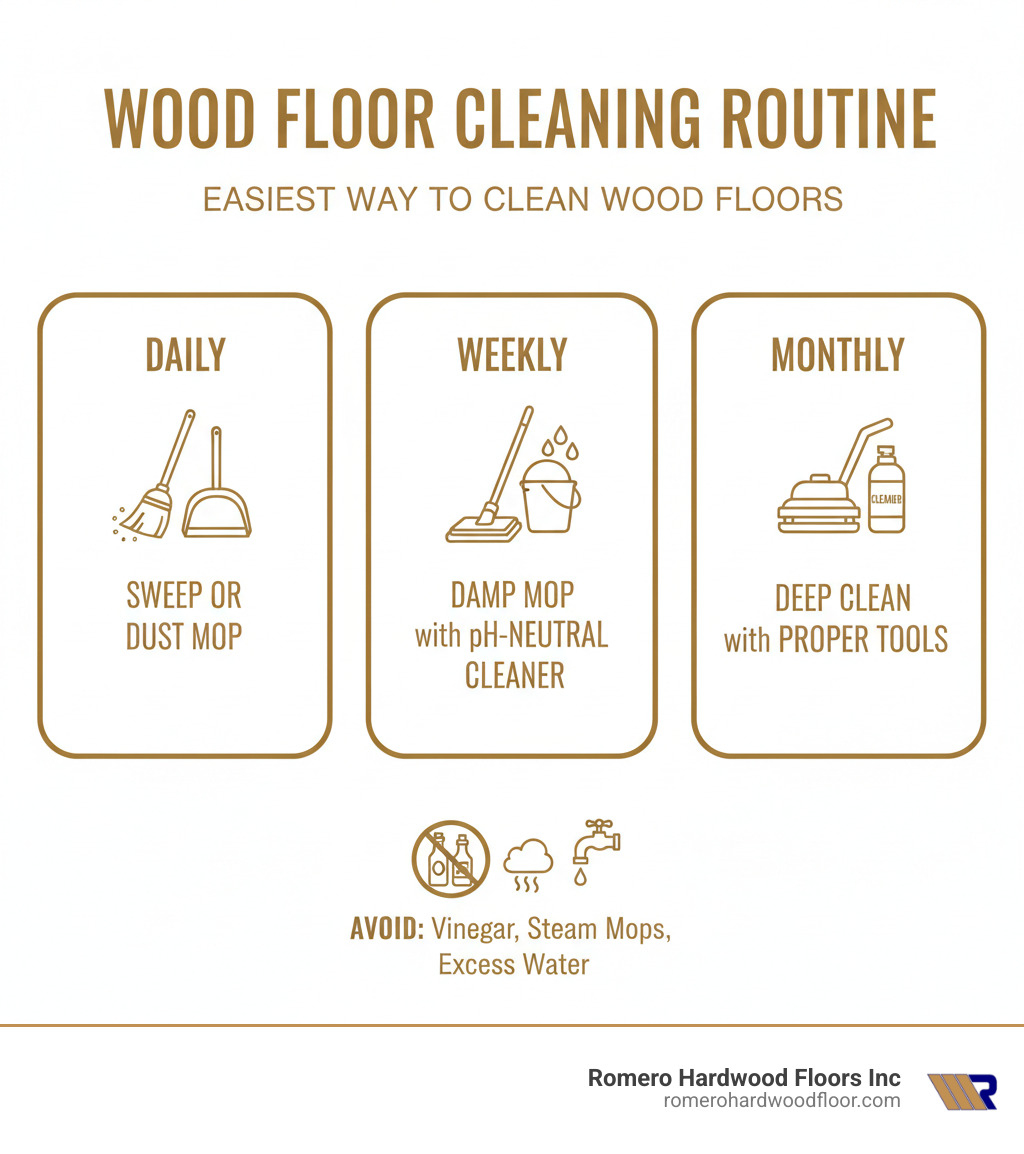
The easiest way to clean wood floors involves just three simple steps: daily sweeping or dust mopping, weekly damp mopping with a pH-neutral cleaner, and immediate spill cleanup. This straightforward approach keeps your floors beautiful while protecting your investment.
Quick Answer: The Easiest Wood Floor Cleaning Method
- Daily: Sweep or dust mop to remove dirt and debris
- Weekly: Damp mop with a microfiber mop and pH-neutral cleaner
- As needed: Wipe up spills immediately with a dry cloth
- Avoid: Vinegar, steam mops, and excess water
Your hardwood floors endure a lot, from falling food and pet hair to daily foot traffic. But keeping them clean doesn’t have to be complicated.
The secret lies in understanding that consistency beats intensity. A simple daily routine prevents dirt from acting as sandpaper on your floor’s protective finish. Regular maintenance also means you’ll rarely need harsh scrubbing or expensive deep cleaning services.
Most homeowners make cleaning harder than it needs to be. They either use the wrong products that damage the wood or skip daily maintenance until dirt builds up. The research shows that regular cleaning with a vacuum and microfiber mop is essential for maintaining the appearance and longevity of hardwood floors.
I’m Francisco Romero, owner of Romero Hardwood Floors Inc. With 15 years of experience installing and refinishing hardwood, I’ve seen how proper cleaning makes floors last for decades while neglect leads to costly repairs. This guide shares the easiest way to clean wood floors I recommend to all my clients.
Getting Started: Essential Tools and Supplies
Think of cleaning your hardwood floors like cooking a great meal – having the right tools makes all the difference between a frustrating chore and a quick, satisfying task. The good news? You don’t need a garage full of equipment or expensive gadgets. Just a few quality tools will set you up for success.
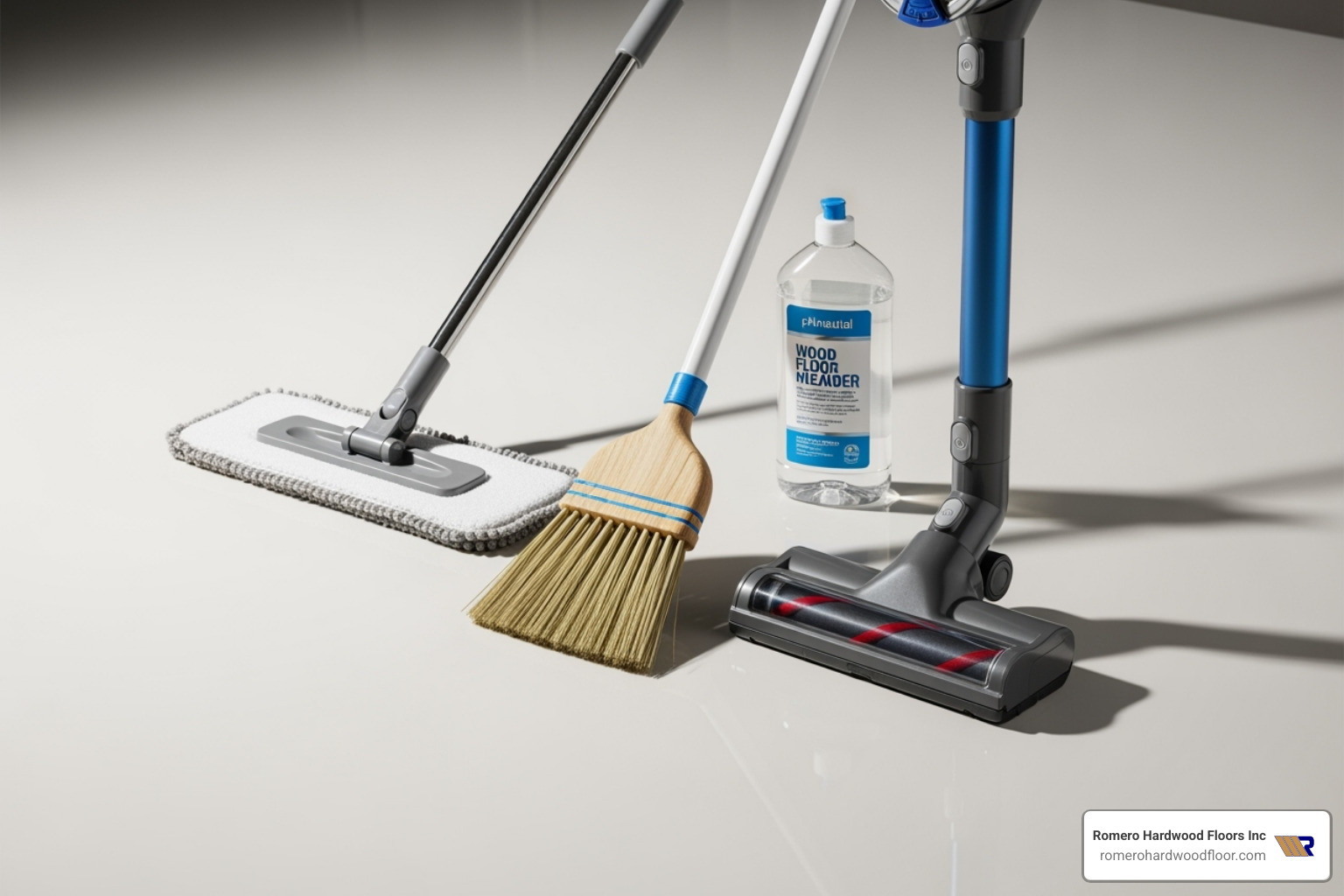
Your microfiber mop is the star of the show. This isn’t your grandmother’s string mop that left puddles everywhere. A quality microfiber mop will neatly trap away dirt, allergens and other particles to protect against scratches. It works beautifully for both dry dusting and damp mopping, making it incredibly versatile.
A soft-bristled broom handles your daily maintenance perfectly. Look for one with soft nylon or rubber bristles that won’t scratch your floors. For those quick morning sweeps in high-traffic areas, nothing beats the simplicity of a good broom.
Your vacuum with a soft brush attachment takes cleaning to the next level. While brooms work well, vacuums capture fine dust and debris that brooms might miss. Here’s the key: make sure you turn the brush roll off when vacuuming hardwood floors. Those spinning brushes can scratch your beautiful finish.
Don’t forget microfiber cloths for spot cleaning and wiping up spills. They’re gentle on your floors and won’t leave lint behind. A simple bucket rounds out your toolkit for mixing cleaning solutions and rinsing your mop.
The most important item? A pH-neutral wood floor cleaner. This specialized cleaner protects your floor’s finish while removing dirt and grime. We’ll dive deeper into why this matters so much in just a bit.
Understanding Your Floor’s Finish
Before you start cleaning, take a moment to understand what you’re working with. Not all hardwood floors are the same, and using the wrong approach can turn your good intentions into expensive mistakes.
Most modern hardwood floors – especially those we install here at Romero Hardwood Floors Inc. throughout Revere and the surrounding areas – have sealed floors with a protective polyurethane finish. This durable barrier shields your wood from moisture and daily wear, making cleaning straightforward. These floors love pH-neutral cleaners and respond well to regular damp mopping.
Older homes often feature waxed or oiled finishes that require a gentler touch. These traditional finishes need special care and specific cleaning products. Waxed floors might need occasional buffing to maintain their warm glow, while oil-finished floors benefit from cleaners that nourish rather than strip the wood.
Unsealed wood floors are rare in homes today, but if you have them, treat them like precious antiques. They’re extremely sensitive to moisture and can warp or stain easily.
Here’s my professional advice: if you’re not sure what finish you have, test any cleaning solution in a hidden corner first. This simple step can save you from costly repairs and heartache.
The importance of testing cleaners cannot be overstated. I’ve seen homeowners cause thousands of dollars in damage by assuming their floors could handle whatever cleaner they had under the sink.
For more detailed guidance on identifying and caring for your specific floor type, check out our comprehensive guide on What is the Best Way to Clean Hardwood Floors?. When it comes to the easiest way to clean wood floors, understanding your starting point makes everything else simple and safe.
The Easiest Way to Clean Wood Floors: A Step-by-Step Guide
Now that we’ve gathered our tools and understood our floor’s finish, let’s get to cleaning. The easiest way to clean wood floors is a consistent, gentle routine that prevents buildup and preserves your floor’s beauty. We’ll break it down into daily and weekly tasks.
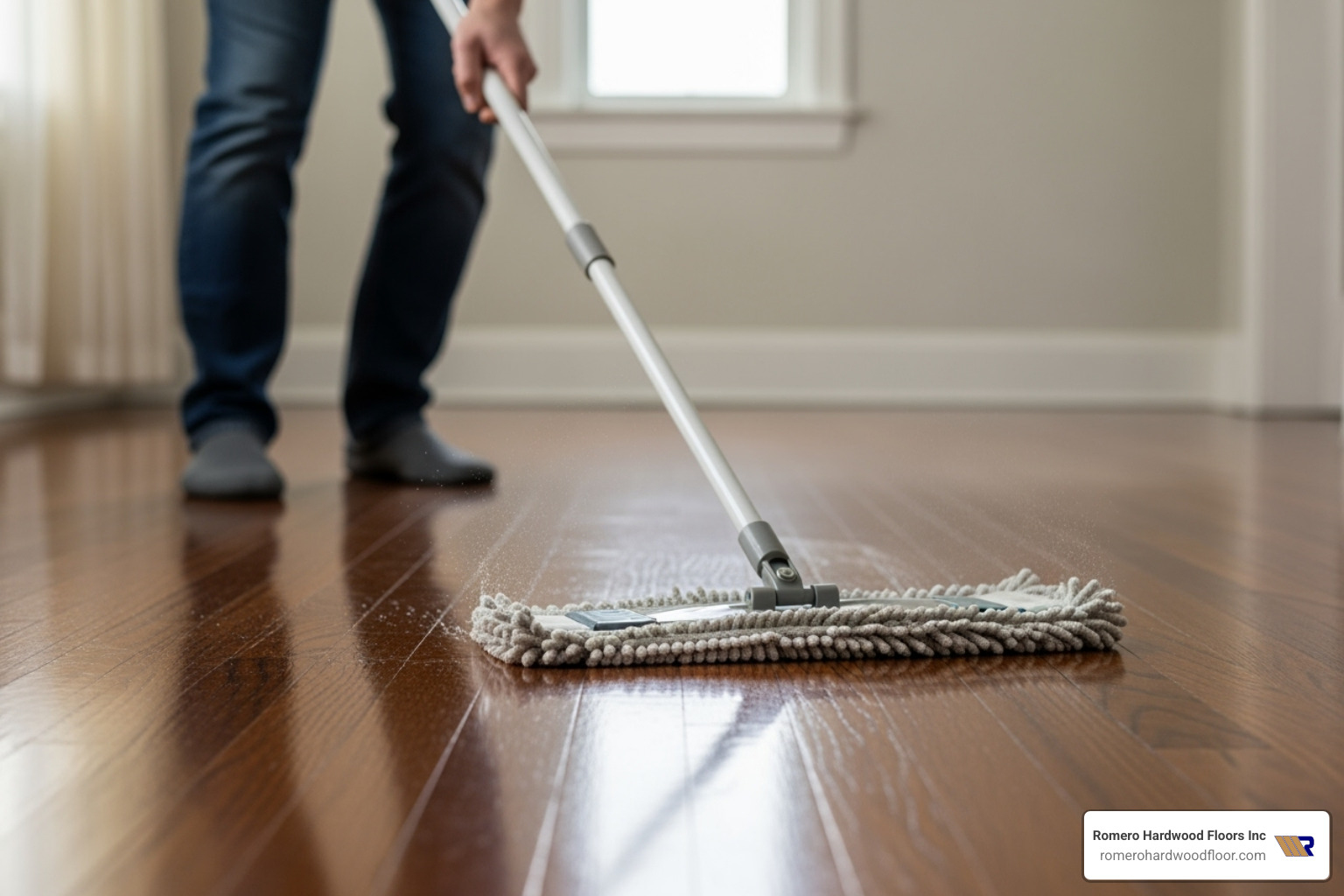
Think of daily maintenance as a protective shield for your floors. A few minutes of daily floor care prevents the dirt buildup that leads to scratches and dullness. This simple routine is easy to adopt and becomes second nature.
Your weekly cleaning builds on this foundation, giving your floors that deeper clean they need to maintain their gorgeous shine. High-traffic areas like kitchens and entryways might need attention twice a week, but for most homes, this schedule works perfectly.
Your Daily Dust-Up: The Easiest Way to Clean Wood Floors of Debris
Here’s where we tackle dirt and debris that act like sandpaper on your floors. Dust bunnies and crumbs are your floor’s worst nightmare when left to accumulate.
Sweeping is your quickest defense, especially for gathering up those obvious culprits like pet hair, food crumbs, and tracked-in dirt. A soft-bristled broom works great for this job – just remember that soft bristles are key to preventing scratches on your beautiful hardwood.
Dust mopping takes things up a notch and is honestly the star of daily maintenance. Your microfiber dust mop will pick up the fine particles that sweeping might miss. The microfiber traps dust instead of just pushing it around, which makes all the difference in preventing those microscopic scratches that dull your floor’s finish over time.
Don’t forget about vacuuming – it’s fantastic for getting into corners and picking up embedded grit that even the best broom might leave behind. Just remember the golden rule: always turn off that brush roll and use a soft brush attachment. I’ve seen too many beautiful floors scratched by well-meaning homeowners who forgot this crucial step.
Pay special attention to high-traffic areas like your front door, kitchen, and hallways. These spots collect dirt faster than you might realize, so a quick daily sweep here can save you from bigger problems down the road.
Weekly Wet Cleaning: The Easiest Way to Clean Wood Floors for a Deeper Shine
Once a week, it’s time to bring out the big guns – your damp mop and pH-neutral cleaner. This is where the magic happens, changing your clean-but-dusty floors into those gleaming surfaces that make your whole home feel fresh and welcoming.
The damp mopping technique is absolutely critical here. I cannot stress this enough: your mop should be damp, not wet. Standing water is wood’s worst enemy, causing warping, shrinking, and those dreaded squeaks that no homeowner wants to hear. Wring that mop out like your floor’s life depends on it – because it does!
Using a pH-neutral cleaner protects your floor’s finish while still getting it thoroughly clean. These cleaners are specifically formulated for hardwood, unlike harsh household cleaners that can strip away protective coatings. Mix according to the bottle’s directions, and never think “more is better” when it comes to cleaning solution.
Here’s a pro tip from my years in the flooring business: mop with the wood grain, not against it. This helps distribute the cleaning solution evenly and prevents those annoying streaks that make your hard work look sloppy. Work in small sections, rinsing your mop frequently to avoid spreading dirty water around.
Preventing streaks is all about not letting your floors get too wet and following up with proper drying. After mopping each section, I recommend going over it with a clean, dry microfiber cloth. This extra step might seem fussy, but it’s what separates okay-looking floors from showroom-quality results.
Avoiding excess water cannot be overstated. If you see puddles or your floors are taking more than a few minutes to air dry, you’re using too much water. We’re cleaning, not giving your floors a bath!
This weekly routine works beautifully for all types of wood floors, including engineered varieties. For more specific guidance on engineered flooring, our Engineered Wood Floor Cleaning guide has additional tips custom to those specific needs.
Choosing the Right Cleaner (and What to Absolutely Avoid)
Here’s the truth: picking the wrong cleaner for your hardwood floors is like using dish soap to wash your car. It might get things clean, but you’re setting yourself up for problems down the road. After 15 years in the flooring business, I’ve seen gorgeous floors ruined by well-meaning homeowners who grabbed whatever was under their kitchen sink.
The easiest way to clean wood floors starts with choosing the right products. Your floors have a protective finish that cost good money to apply, and using harsh cleaners is like taking sandpaper to that investment.
Safe Solutions for a Lasting Shine
The golden rule is simple: pH-neutral cleaners only. These products are specially made to clean your floors without attacking the protective finish that keeps your wood looking beautiful.
Water-based cleaners designed specifically for hardwood floors are your best bet. They’re formulated to be tough on dirt but gentle on your floor’s finish. When I install floors for clients around Revere and the surrounding areas, I always recommend sticking with these specialized products.
Before you buy anything, check your manufacturer recommendations first. This isn’t just good advice – it’s warranty protection. Using unapproved cleaners can void your warranty faster than you can say “expensive mistake.”
In a pinch, you can use a mild dish soap solution, but I mean really mild. We’re talking a few drops of castile soap or gentle dish soap mixed with warm water in a bucket. The key word here is “sparingly” – too much soap leaves a film that builds up over time and can interfere with future refinishing work.
For more detailed guidance on safe cleaning practices, check out our Hardwood Floors Cleaning Tips.
Cleaners That Can Damage Your Hardwood Floors
Now for the scary stuff – the products that can turn your beautiful floors into an expensive repair job. I’ve walked into homes where owners used these thinking they were being thorough, only to find dull, damaged floors that needed complete refinishing.
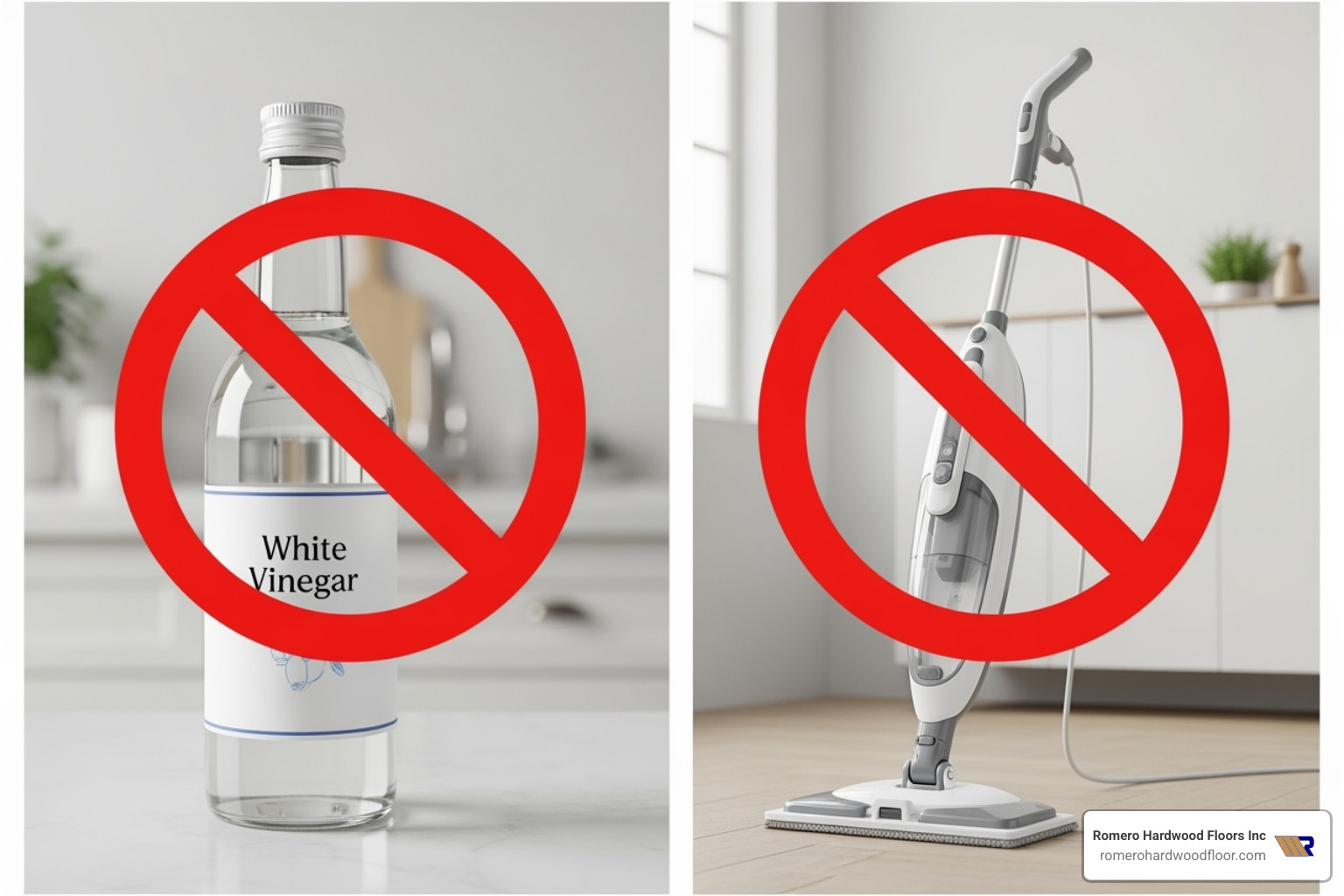
Vinegar and lemon juice top the danger list, despite what Pinterest might tell you. These acidic cleaners literally eat away at your floor’s protective finish. Vinegar is particularly nasty – it’s acidic enough to etch and dull the polyurethane coating that protects your wood. What starts as a “natural cleaning solution” ends up as a very unnatural repair bill.
Ammonia and chlorine bleach are floor killers. These harsh chemicals don’t just clean – they strip, discolor, and damage both the wood and its finish. I’ve seen floors that looked like they aged 20 years after just a few cleanings with ammonia-based products.
Abrasive cleaners containing scouring powder or requiring steel wool will scratch your floors. Once those scratches are there, they’re permanent unless you sand and refinish the entire floor.
Here’s something that surprises many homeowners: oil-based soaps and wax products might make your floors look shiny temporarily, but they create serious problems. Oil soaps leave a residue that prevents future finishes from sticking properly. When it comes time to refinish your floors, that residue has to be completely stripped away – adding time and cost to the project.
Steam mops deserve special mention because they seem so appealing. Don’t be fooled – steam cleaning combines your floor’s two biggest enemies: excessive heat and moisture. This combination can cause warping, buckling, and swelling. Even worse, most flooring manufacturers will void your warranty if you use steam cleaning. The temporary convenience isn’t worth the permanent damage.
The bottom line? When in doubt, less is more. Stick to products specifically designed for hardwood floors, and your investment will thank you for years to come.
Proactive Protection: Maintaining Your Floor’s Beauty
The easiest way to clean wood floors isn’t just about cleaning—it’s about preventing damage before it happens. At Romero Hardwood Floors Inc., after installing beautiful hardwood in homes across Beverly, MA, Chelsea, MA, and our other service areas, we’ve learned that a little prevention saves homeowners thousands in repairs.
Your floors face daily challenges, from sandy shoes to furniture being dragged across the surface. But with smart protective habits, you can keep your investment looking stunning for decades.
Everyday Habits for Damage Prevention
Small changes in your daily routine make a huge difference in your floor’s longevity. These aren’t complicated rules, just simple habits that become second nature.
Entryway doormats are your floor’s best friend. Place them inside and outside your entrance doors to trap dirt, grit, and moisture. “Dirt and debris on the floor can act as abrasives,” essentially turning every footstep into sandpaper against your floor’s finish.
Consider adopting a shoes-off policy to dramatically reduce tracked-in dirt. A worn high heel can exert over 8,000 pounds per square inch of pressure—enough to dent even the hardest wood species.
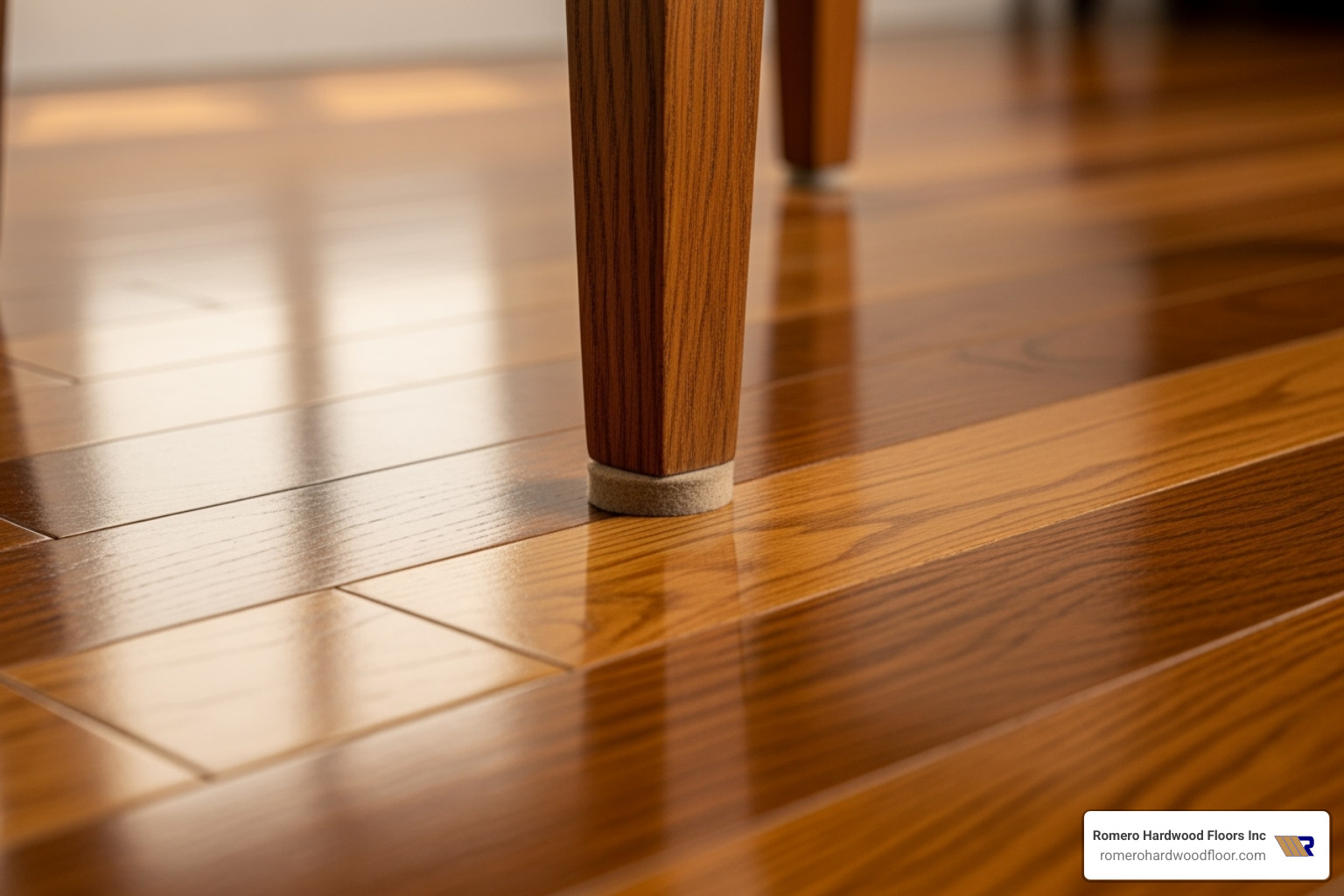
Furniture pads are tiny investments with massive returns. Attach felt pads to the legs of chairs, tables, and other furniture to prevent scratches when pieces get moved. Your dining room chairs alone get pulled in and out multiple times daily, creating a lot of potential scratching without pads.
If you have pets, keep their toenails trimmed and filed. Their claws can be surprisingly tough on hardwood floors. Regular nail maintenance prevents those telltale scratch marks that pet owners know all too well.
Protecting against direct sunlight prevents fading and discoloration. Wood is a natural material that reacts to UV rays. Use curtains, blinds, or UV-blocking window films where sunlight hits your floors directly.
Don’t forget about humidity control—wood expands and contracts with moisture changes. Too much humidity causes swelling, while too little leads to shrinking and gaps. Keeping indoor humidity between 35-55% helps your floors stay stable.
For more comprehensive guidance on protecting your investment, check out our detailed Wooden Floor Maintenance Tips.
Handling Spills, Scuffs, and Scratches
Even with the best prevention, life happens. The key is knowing how to handle these situations quickly and correctly.
Speed is everything with spills. Wipe up any liquid immediately to prevent stains from setting into the wood grain. Water rings, wine stains, and pet accidents can all be prevented with quick action but become permanent if left to soak in.
Use the blotting technique for liquid spills—press a clean, dry cloth straight down and lift up repeatedly. Never rub, as this can spread the spill. Keep blotting with fresh sections of cloth until the area is dry.
Scuff marks from shoes are common. Most can be removed with a dry microfiber cloth and a little elbow grease. For stubborn marks, use a small amount of your pH-neutral cleaner on the cloth, then immediately dry the area.
Minor scratches don’t have to be permanent. Liquid scratch concealers for wood floors can camouflage surface-level damage. High-quality wood floor polish can also help fill small scratches while adding a protective layer.
Restoring dullness may require more attention. If floors look lackluster despite regular cleaning, it might be residue buildup or normal wear. Routine cleaning combined with occasional polishing can help restore the shine.
When scratches run deep or dullness persists, it’s time to call in the professionals. Sometimes floors need expert restoration. For comprehensive solutions like Floor Sanding and Repair, trust experienced professionals to bring your floors back to their original glory.
Frequently Asked Questions about Wood Floor Cleaning
After working with homeowners across Revere, Malden, and Medford for over 15 years, I’ve heard just about every wood floor cleaning question imaginable. Here are the ones that come up most often, along with practical answers that reinforce the easiest way to clean wood floors.
How often should I clean my hardwood floors?
The honest answer? It depends on your lifestyle, but don’t overthink it. A busy family with kids and pets will need more frequent cleaning than empty nesters who rarely wear shoes indoors.
Daily sweeping or dust mopping is your best friend, especially in high-traffic areas like kitchens and entryways. “Sweep or vacuum the floors at least once a day to remove loose dirt and debris.” Think of it as brushing your teeth – a quick daily habit that prevents bigger problems down the road.
For most homes, weekly damp mopping hits the sweet spot. “Hardwood floors usually require a once-a-week cleaning” with your trusty microfiber mop and pH-neutral cleaner. However, if you’ve got muddy boots tracking through or pets racing around, you might find yourself mopping high-traffic zones every few days.
Spills don’t wait for cleaning day. Always wipe up spills immediately – this isn’t negotiable if you want to avoid permanent stains or water damage.
The key insight here is simple: “The more foot traffic, the faster dirt, grime, and pet hair build up on your floors.” Adjust your routine based on your household’s reality, but consistency will always trump intensity.
What is the best type of mop for hardwood floors?
Here’s where many homeowners go wrong – they grab whatever mop is handy without considering what’s best for wood. The clear winner is a microfiber mop, and here’s why it makes cleaning so much easier.
Microfiber mops are game-changers because they trap dust and dirt instead of just pushing it around. “A microfiber mop with a microfiber dusting mop pad are the ideal tools for the task.” They also give you perfect control over moisture levels, which is crucial for wood floors.
Spray mops designed specifically for hardwood floors are another excellent choice. They dispense just the right amount of cleaner directly onto the floor, eliminating guesswork about how much solution to use.
What should you absolutely avoid? Traditional string mops or sponge mops that you dunk in a bucket. “The word mop here does not imply a string mop or mop you place in a bucket of water. Water and wood are not a good combination and standing water will damage your hardwood floors.”
The golden rule for any mop you choose: it should be damp, not sopping wet. Your floors should never have puddles or standing water after mopping.
Can I use a steam cleaner on my hardwood floors?
This question makes me cringe every time I hear it, because the answer is an emphatic no. I’ve seen too many beautiful floors ruined by well-meaning homeowners who thought steam cleaning was a good idea.
“Steam cleaning is not advised for hardwood floors” – full stop. Steam mops combine your floor’s two biggest enemies: excessive heat and moisture. This dangerous combination can cause warping, shrinking, cracking, and will definitely dull your floor’s protective finish over time.
Here’s something that might surprise you: using a steam cleaner can void your flooring warranty. Most manufacturers explicitly state this in their care instructions, and for good reason. The risk of permanent damage is simply too high.
Instead of reaching for that steam mop, stick with the easiest way to clean wood floors: your pH-neutral cleaner and a damp microfiber mop. It’s gentler, safer, and just as effective at getting your floors clean and beautiful.
Trust me on this one – “Please don’t use a steam mop or any acidic or harsh chemicals – they can seriously damage your floor.” Your floors will thank you for taking the gentle approach.
Conclusion
The easiest way to clean wood floors really comes down to one simple truth: consistency beats complexity every single time. You don’t need a cabinet full of fancy products or hours of back-breaking scrubbing. Just a daily sweep to catch the debris, a weekly damp mop with pH-neutral cleaner, and the discipline to wipe up spills right when they happen.
Think of it this way – your hardwood floors are like a good friendship. They don’t need grand gestures, just regular attention and care. A few minutes each day prevents hours of deep cleaning later, and more importantly, it prevents the kind of damage that can turn your beautiful investment into an expensive repair project.
After 15 years in this business, I’ve seen floors that look brand new after decades of proper care, and I’ve also seen relatively new floors that needed complete refinishing because of neglect or harsh cleaning methods. The difference? Simple, consistent habits and knowing what products to avoid (looking at you, vinegar and steam mops!).
At Romero Hardwood Floors Inc., we’ve been helping homeowners across the North Shore of Massachusetts since 2006, from our home base in Revere to communities like Beverly, Chelsea, and beyond. We believe your floors should be a source of joy, not stress. That’s why we’re committed to not just installing beautiful hardwood but also helping you maintain it properly.
Our approach has always been straightforward – competitive pricing, showing up when we say we will, and standing behind our work with a guarantee. That same philosophy applies to floor care: keep it simple, keep it consistent, and your floors will reward you with years of beauty.
When your floors do need professional attention – whether it’s deep restoration or services like floor sanding and refinishing – we’re here to bring them back to life. Because at the end of the day, protecting your investment is what matters most, and beautiful hardwood floors never go out of style.
Like us on Facebook!
