Eco Friendly Wood Flooring: 5 Best Durable Options
Eco friendly wood flooring is quickly becoming a favored choice among homeowners and commercial property managers seeking sustainable solutions. Why? Because it offers durable, beautiful surfaces while being kinder to our planet. Options included in eco friendly wood flooring range from reclaimed wood and FSC-certified hardwood to rapidly renewable resources like bamboo and cork. Here’s what you need to know:
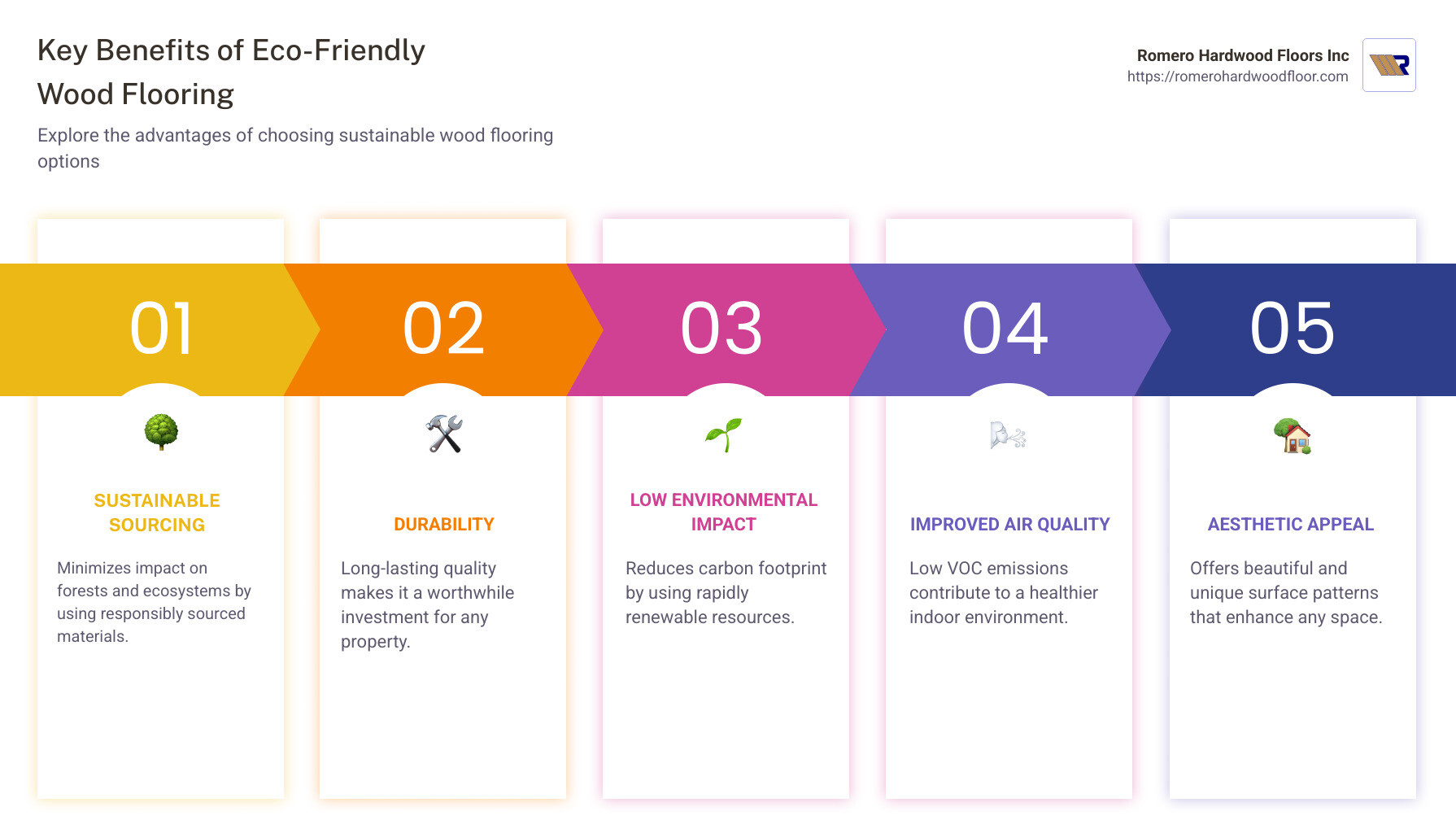
- Sustainable Sourcing: Eco friendly wood flooring is harvested with minimal impact on forests and ecosystems.
- Durability and Quality: These floors are designed to last, making them a sound investment for any property.
- Low Environmental Impact: By choosing responsibly managed or naturally fast-growing materials, you reduce your carbon footprint.
I’m Francisco Romero, a seasoned expert in eco friendly wood flooring solutions, with over 15 years changing spaces through premium quality installations. Let’s explore how you can improve your property with environmentally conscious options.
Understanding Eco-Friendly Wood Flooring
Eco-friendly wood flooring is more than just a trend; it’s a commitment to sustainability and environmental responsibility. Let’s explore the various types of eco-friendly wood flooring and what makes them stand out.
Sustainable Hardwood
Sustainable hardwood comes from forests that are carefully managed to preserve ecosystems and support local communities. This type of hardwood is harvested under strict guidelines to ensure that the forest can regenerate. FSC-certified wood is a prime example, meeting rigorous standards for environmental and social responsibility. American cherry and white oak are popular choices, offering both beauty and durability.
Reclaimed Wood
Reclaimed wood breathes new life into old timber. This wood is salvaged from old buildings, barns, or even riverbeds, providing a unique, rustic appearance. By using reclaimed wood, you’re not only reducing waste but also preserving history. It’s a perfect option for those looking to add character and warmth to their space.
Bamboo
Bamboo is not technically wood—it’s a grass. But its rapid growth rate, reaching maturity in just seven years, makes it a highly sustainable option. Bamboo flooring is incredibly strong, with a higher compressive strength than concrete. It offers a sleek, modern look while being lightweight and easy to transport, reducing its carbon footprint.
Cork
Cork flooring is made from the bark of the cork oak tree. What’s fascinating is that harvesting the bark doesn’t harm the tree, allowing it to regenerate and be harvested again. Cork is naturally resilient, making it comfortable underfoot and an excellent insulator. Plus, it’s naturally resistant to mold and mildew, promoting better indoor air quality.
By choosing eco-friendly wood flooring, you’re not just enhancing the aesthetic appeal of your home—you’re making a positive impact on the environment. Whether it’s the timeless charm of reclaimed wood or the modern elegance of bamboo, there’s an option for every style and preference.
Top Eco-Friendly Wood Flooring Options
When it comes to eco-friendly wood flooring, there are several standout options that marry style with sustainability. Let’s explore some of the top choices that can transform your space while caring for the planet.
Reclaimed Wood
Reclaimed wood is the ultimate choice for those who love a story behind their flooring. This wood is salvaged from old structures like barns and warehouses, giving it a unique, rustic charm that can’t be replicated. By using reclaimed wood, you’re choosing a material that’s already had a long life, reducing the need for new resources. Plus, each plank carries its own history, adding character to your home.
FSC-Certified Wood
FSC-certified wood ensures that your flooring comes from responsibly managed forests. This certification guarantees that the wood is harvested sustainably, protecting forest ecosystems and supporting local communities. With popular options like American cherry and white oak available, you don’t have to sacrifice style for sustainability.
Bamboo
Bamboo flooring is gaining popularity for its modern look and impressive durability. Although it’s technically a grass, bamboo matures quickly—within just seven years—making it a highly renewable resource. Its high strength-to-weight ratio means it can withstand heavy use, and its lightweight nature reduces transportation emissions. Bamboo is a great choice for those seeking a sleek and sustainable flooring option.
Cork
Cork flooring is harvested from the bark of cork oak trees, a process that doesn’t harm the tree and allows it to regenerate. This makes cork a renewable material that can be harvested repeatedly. Cork is naturally resilient and comfortable underfoot, offering excellent insulation properties. Its resistance to mold and mildew also helps improve indoor air quality.
Palm Wood
Palm wood, particularly from coconut palms, is another eco-friendly choice. These palms are often felled when they no longer produce fruit, providing a sustainable source of wood. Palm wood offers a distinctive grain and rich color, adding a tropical touch to interiors. By choosing palm wood, you’re making use of a resource that would otherwise go to waste.
Each of these options not only improves the beauty of your home but also supports a healthier planet. Whether you prefer the vintage allure of reclaimed wood or the contemporary flair of bamboo, there’s an eco-friendly flooring option to suit every taste and lifestyle.
Benefits of Eco-Friendly Wood Flooring
Choosing eco-friendly wood flooring isn’t just about making a style statement. It’s about embracing a host of benefits that contribute to a healthier home and a healthier planet.
Durability
Eco-friendly flooring options like bamboo and reclaimed wood are known for their durability. Bamboo, despite being a grass, boasts a strength-to-weight ratio that rivals steel, making it a robust choice for high-traffic areas. Reclaimed wood has already stood the test of time, offering a second life filled with character and resilience. These materials ensure your floors remain beautiful and functional for years.
Low VOC Emissions
Volatile organic compounds (VOCs) are chemicals that can be harmful to indoor air quality. Many traditional flooring options release VOCs from adhesives and finishes. Eco-friendly wood flooring, on the other hand, often uses low-VOC glues and finishes, minimizing these emissions. This means a healthier living environment for you and your family.
Improved Indoor Air Quality
With low VOC emissions, eco-friendly flooring significantly improves indoor air quality. Materials like cork are naturally resistant to mold and mildew, further enhancing air purity. By choosing these sustainable options, you’re promoting a cleaner, healthier home environment.
Sustainability
The sustainability of eco-friendly wood flooring is its standout feature. Products like FSC-certified wood come from responsibly managed forests, ensuring that the wood is harvested in a way that maintains ecological balance. Bamboo’s rapid growth rate makes it a highly renewable resource, while cork is harvested without harming the tree. These practices help preserve forest ecosystems and reduce environmental impact.
Incorporating eco-friendly wood flooring into your home is a decision that supports both your lifestyle and the planet. With options that offer durability, health benefits, and sustainable sourcing, you can enjoy the beauty of wood floors without compromising on your values.
Next, let’s explore how to choose the right eco-friendly wood flooring for your specific needs and preferences.
How to Choose the Right Eco-Friendly Wood Flooring
Choosing the right eco-friendly wood flooring can be overwhelming with so many options available. Here’s a simple guide to help you make an informed decision.
Certifications
When selecting eco-friendly wood flooring, look for certifications that guarantee sustainable practices. The Forest Stewardship Council (FSC) is a well-known certification ensuring that the wood comes from responsibly managed forests. Products with this label meet strict environmental and social standards.
Another certification to consider is the Sustainable Forestry Initiative (SFI). This program promotes responsible forest management in North America. The American Tree Farm System (ATFS) is also an option, focusing on family-owned forests and their sustainable practices.
These certifications help you choose products that support forest conservation and responsible resource use.
Installation Methods
The installation method can impact the environmental footprint of your flooring project. Here are some popular methods:
- Floating Installation: This involves locking planks together without attaching them to the subfloor. It’s ideal for engineered wood and is less invasive, making it a good choice for DIY projects.
- Staple or Nail Down Installation: This traditional method secures planks directly to the subfloor. It’s best for solid hardwood and provides a stable, long-lasting floor.
- Glue Down Installation: Here, planks are glued to the subfloor. This method is great for noise reduction and works well in large, open spaces.
Each method has its advantages, so consider your specific needs, such as noise reduction or ease of installation, when choosing.
By focusing on certifications and installation methods, you can select the right eco-friendly wood flooring that aligns with your environmental values and practical needs. Next, we’ll answer some common questions about eco-friendly wood flooring to further guide your decision-making process.
Frequently Asked Questions about Eco-Friendly Wood Flooring
What is the most eco-friendly hardwood flooring?
The most eco-friendly hardwood flooring is often FSC-certified wood. This certification ensures that the wood comes from forests managed responsibly, focusing on environmental, social, and economic factors. Reclaimed wood is another excellent eco-friendly option. It involves repurposing wood from old structures, reducing the need for new logging and preserving natural resources.
Bamboo is also a popular choice. Although technically a grass, bamboo grows rapidly and regenerates quickly after harvesting, making it a sustainable alternative to traditional hardwood.
What is sustainable hardwood flooring?
Sustainable hardwood flooring refers to wood sourced from forests that are managed to maintain their biodiversity, productivity, and ecological processes. Oak is a common example of sustainable hardwood, as it is durable and can be sourced from sustainably managed forests.
Effective forest management practices are crucial for sustainability. These include selective logging, which minimizes environmental impact, and ensuring that harvested areas are replanted. By choosing sustainable hardwood, you help reduce the carbon footprint associated with deforestation.
What is the healthiest wood floor?
The healthiest wood floor is one that is solid hardwood and non-toxic. Solid hardwood floors are made from a single piece of wood, which can be sanded and refinished multiple times, extending their lifespan. Look for floors finished with natural oils or water-based finishes that do not release harmful volatile organic compounds (VOCs) into your home.
Choosing wood flooring that is free from formaldehyde and other toxic chemicals ensures better indoor air quality, making it a healthier option for your family. Prioritizing non-toxic materials also supports a safer environment for everyone involved in the production process.
Conclusion
At Romero Hardwood Floors Inc, we are committed to providing top-notch eco-friendly flooring solutions that not only improve the beauty of your home but also contribute to a healthier planet. Our expertise in installing sustainable hardwood floors ensures that your investment brings long-term value to your property.
Choosing eco-friendly wood flooring is not just a trend; it’s a responsible choice that reflects your commitment to the environment. By opting for options like FSC-certified wood, bamboo, or reclaimed wood, you are supporting sustainable practices and contributing to the preservation of our natural resources.
Moreover, eco-friendly flooring can significantly improve your property’s value. Sustainable materials are increasingly sought after by homeowners and buyers who recognize the benefits of lower maintenance costs, durability, and improved indoor air quality. A well-installed eco-friendly floor can last for decades, providing a timeless elegance that improves your living space.
We take pride in our work and strive to deliver satisfaction with every project. Our team is dedicated to helping you select the best eco-friendly options custom to your needs and preferences. Whether you’re renovating or building new, we ensure that your flooring choice aligns with your values and improves your home’s appeal.
For more information and to explore our eco-friendly hardwood flooring options, visit our Eco-Friendly Hardwood Flooring page. Let us help you create a beautiful and sustainable foundation for your home.