Why Engineered Wood Flooring Benefits Matter for Your Home
Engineered wood flooring benefits make it one of today’s most popular flooring choices. If you’re considering new floors, here’s a quick overview:
Top Engineered Wood Flooring Benefits:
- Superior Stability – Resists warping and cupping from moisture and temperature changes
- Installation Versatility – Can be installed in basements, over concrete, and near radiant heat
- Cost-Effective – Generally less expensive than solid hardwood
- Authentic Wood Look – Real hardwood veneer provides genuine wood appearance
- Easy Maintenance – Simple cleaning with sweeping and occasional damp mopping
- Eco-Friendly – Uses less solid timber and faster-growing core materials
- Long Lifespan – Lasts 20-30+ years with proper care
Shopping for new floors can be overwhelming. While natural materials like wood are a top home design trend for 2024, traditional solid hardwood has limitations: it’s expensive, moisture-sensitive, and not suitable for every room.
That’s where engineered wood flooring steps in. It combines a real hardwood surface with a stable core of multiple wood layers, giving you the beauty of authentic wood while solving many of the problems associated with solid hardwood.
I’m Francisco Romero, owner of Romero Hardwood Floors Inc. With over 15 years of experience serving the Revere, MA area, I’ve seen how engineered wood flooring benefits countless homes. Understanding these advantages will help you decide if it’s the right choice for your renovation.
Engineered wood flooring benefits terms at a glance:
- engineered flooring for kitchens
- engineered hardwood floor refinishing
- engineered wood with underfloor heating
The Core Engineered Wood Flooring Benefits: Stability, Versatility, and Cost

The fundamental reasons homeowners across Massachusetts choose engineered wood boil down to three key areas: stability, versatility, and cost-effectiveness. These advantages can save you headaches, broaden your design options, and protect your budget.
Superior Stability in Changing Environments
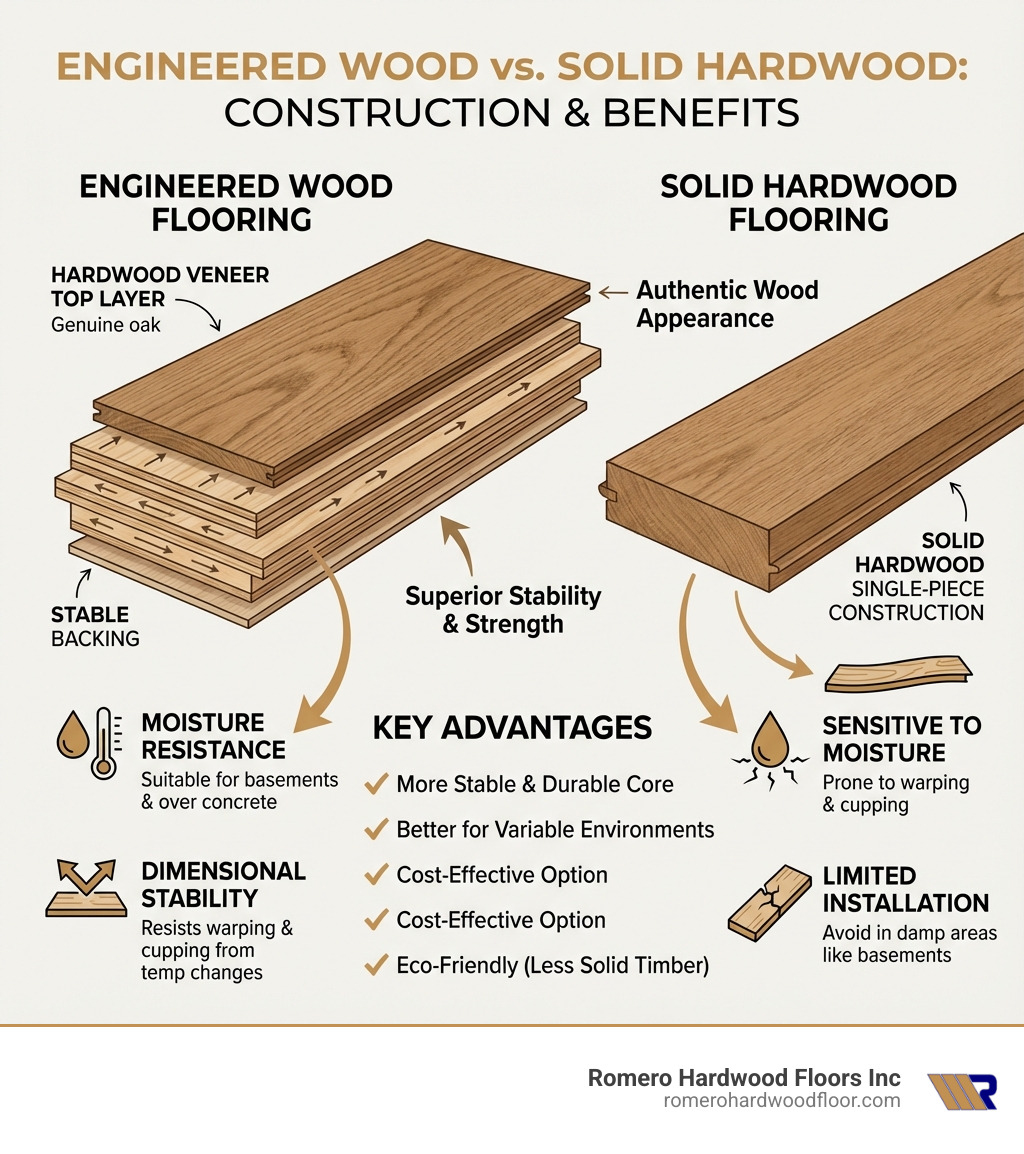
One of the standout engineered wood flooring benefits is its stability. Solid hardwood is a single piece of timber that can warp, gap, or cup with changes in moisture and temperature, especially in humid areas like our coastal Massachusetts towns.
Engineered wood’s magic is in its core. Below the real hardwood veneer, multiple layers of wood (often plywood or high-density fiberboard) are cross-layered and bonded together. This construction counteracts wood’s natural tendency to expand and contract, giving it superior dimensional stability. This means engineered wood is significantly more resistant to warping and gapping.
This improved stability makes it an ideal choice for areas where solid hardwood isn’t recommended:
- Basements and Below-Grade Installations: Unlike solid hardwood, engineered wood can be installed in basements and over concrete subfloors, handling the higher moisture content often found in these spaces.
- Kitchens and Entryways: These areas see more moisture from spills or wet weather, and engineered wood’s stability makes it a more forgiving option.
- Radiant Heat Systems: Engineered wood performs beautifully over radiant floor heating systems, a feat that can be challenging for solid hardwood.
As flooring experts for over 15 years, we’ve seen how engineered wood allows you to enjoy the beauty of wood in virtually any room of your home.
Best Versatility for Any Room
Beyond stability, the versatility of engineered wood opens up a world of design possibilities. Many homeowners in places like Lynnfield or Marblehead want wood in their kitchens but worry about moisture. Engineered wood is an excellent solution. While no wood floor is waterproof, many engineered options are water-resistant and handle minor spills better than solid hardwood. For bathrooms, we advise caution and recommend checking manufacturer specifications for waterproof varieties.
Its construction allows for:
- Below-Grade Installations: Finishing your basement with beautiful engineered wood floors can dramatically increase your usable living space and property value.
- Wide Plank Options: The layered construction allows for much wider and longer planks than solid hardwood, creating the expansive, modern look that’s highly sought after.
- Diverse Wood Species and Finishes: Engineered wood comes in an astonishing array of species and finishes to match any decor. We’ve noticed that natural materials are a leading home design trend for 2024, and engineered wood fits right in.
This versatility means we can bring the warmth of wood flooring to almost any space in your home, from your living room in Saugus to your bedroom in Medford.
Unpacking the Financial Benefits of Engineered Wood Flooring
For many homeowners, cost is a significant factor. Here, engineered wood flooring benefits truly shine, presenting a budget-friendly alternative to solid hardwood without sacrificing quality.
While costs vary widely based on wood species, wear layer thickness, and finish, engineered wood is generally less expensive than solid hardwood. Based on data from home improvement sources, material costs can range from $3 to over $18 per square foot, compared to $6 to $25 for solid hardwood.
Please note: These are average costs based on internet data and not actual costs for Romero Hardwood Floors Inc. Our pricing is competitive and custom to your specific project.
Installation can also be more affordable. According to industry data, professional installation ranges from approximately $1 to $4 per square foot. Many click-lock systems are quicker to install than traditional hardwood, which can lower labor costs or make it a feasible DIY project for handy homeowners.
While some high-end engineered flooring can be pricier than standard solid oak, the overall project cost often remains lower, making it a smart choice for your home and budget.
Aesthetics, Value, and Sustainability

Flooring is a cornerstone of your home’s style, a contributor to its market value, and a chance to make eco-conscious choices. Engineered wood excels in all these areas, offering a blend of beauty, investment potential, and eco-friendliness.
Elevating Your Home’s Aesthetic
A compelling engineered wood flooring benefit is its authentic hardwood appearance. The top layer is real wood, giving it the same natural grain, texture, and warmth as solid hardwood. This provides the classic finish of wood, a timeless favorite in home design.
The aesthetic possibilities are virtually limitless:
- Wide Range of Finishes: From matte to high-gloss and distressed to smooth, engineered wood allows for extensive customization.
- Variety of Species: Whether you prefer the rich tones of oak, the light feel of maple, or the character of hickory, engineered wood offers these and more.
- Modern Design Trends: Wider planks are a popular trend, and engineered wood delivers, creating an expansive, contemporary look for homes in Beverly, Danvers, and Gloucester.
The result is a floor that looks beautiful and adds a luxurious feel, enhancing the ambiance of any room. We invite you to View our project gallery to see stunning examples of how engineered wood can transform a space.
Boosting Your Property’s Value
Investing in new flooring should add value to your home, and engineered wood contributes positively to your property’s appeal and worth. While solid hardwood is a top choice for resale value, engineered wood is also a highly desirable feature that boosts your home’s worth. Its durability and aesthetic appeal make it a smart long-term investment that potential buyers appreciate, signaling quality and care.
According to the National Association of Realtors®, new hardwood floors can yield an impressive return on investment. The aesthetic and practical benefits of engineered wood translate into a strong value proposition, making your home more attractive and functional, which directly impacts its marketability.
The Eco-Friendly Choice
For environmentally conscious homeowners, the sustainability of engineered wood is another compelling benefit. Here’s why it’s often a greener choice:
- Efficient Use of Hardwood: Engineered wood uses a thin veneer of real hardwood, meaning significantly less slow-growing timber is required compared to solid hardwood planks.
- Faster-Growing Core Materials: The core layers are often made from faster-growing wood species or recycled wood products, reducing the demand for old-growth timber.
- Reduced Timber Waste: The manufacturing process is generally more efficient, producing less waste compared to milling solid hardwood.
By choosing engineered wood, you’re getting a beautiful floor while supporting more sustainable forestry practices.
Practical Considerations: Installation, Lifespan, and Maintenance
Beyond aesthetics and cost, the day-to-day realities of your floor are crucial. Engineered wood offers practical advantages in installation, longevity, and maintenance, making it a homeowner-friendly choice.
Installation Methods Explained
Significant engineered wood flooring benefits include installation ease and flexibility. Unlike solid hardwood, which usually requires nailing, engineered wood offers multiple methods adaptable to nearly any subfloor. This versatility can save time and money. Learn about professional installation from our experts.
The primary installation methods include:
- Click-Lock (Floating): This is the most DIY-friendly option. Planks interlock without adhesives or nails, “floating” over the subfloor. This method is quick and allows for easy plank replacement.
- Glue-Down: Planks are adhered directly to the subfloor, creating a very stable and solid-feeling floor. This is ideal for concrete subfloors.
- Nail-Down/Staple-Down: Similar to solid hardwood, engineered planks can be nailed or stapled to a wood subfloor for a very secure installation.
Proper subfloor preparation is key before any installation. The subfloor must be clean, dry, and level. Depending on its condition, preparation costs can range from $3 to $10 per square foot. The availability of these methods means engineered wood can be installed over concrete, in basements, or over radiant heating, offering great flexibility for your home in Melrose or Stoneham.
Lifespan and Refinishing Potential
Engineered wood flooring offers an impressive lifespan of 20 to 30 years or more with proper care. Many manufacturers provide warranties ranging from 10 to 30 years.
A common question is whether engineered wood can be refinished. The answer is yes, but it depends on the thickness of the top hardwood veneer (the wear layer).
- Thin Wear Layers (1-2mm): These may only allow for a light buffing or no refinishing at all.
- Mid-Range Wear Layers (2-3mm): These floors may allow for one or two refinishes over their lifetime.
- Thick Wear Layers (3mm+): High-quality engineered wood with a thick wear layer can often be sanded and refinished two or three times, extending its life significantly.
While solid hardwood can be refinished more times, the potential for one to three refinishes is more than sufficient for most homeowners. For more details, you can explore Details on floor refinishing with our experts.
Maintenance and Care: Another Key Engineered Wood Flooring Benefit
The low-maintenance nature of engineered wood is a welcome benefit for any busy home. It’s designed for easy care, so you can spend less time cleaning and more time enjoying your floors.
The daily maintenance routine is simple:
- Regular Sweeping or Vacuuming: To prevent scratches, sweep or vacuum (hard floor setting, no beater bar) regularly.
- Occasional Damp Mopping: Use a microfiber mop with a cleaner designed for engineered wood. Use water sparingly and never leave standing liquid on the floor.
- Immediate Spill Cleanup: Wipe up spills immediately to prevent water damage or staining.
- Avoid Harsh Cleaners and Steam Mops: These can damage the finish and weaken the adhesive bonds. Stick to manufacturer-approved products.
- Protect from Sunlight: Use curtains or blinds to prevent fading from prolonged exposure to direct sunlight.
- Maintain Humidity: Try to maintain indoor humidity levels between 35% and 55% to minimize wood movement.
This straightforward care routine ensures your floors in Rockport, Salem, or Swampscott will maintain their beauty for decades.
Potential Drawbacks to Consider
While the engineered wood flooring benefits are compelling, it’s important to have a balanced perspective. To make an informed choice, you should also be aware of its potential drawbacks.
Limited Refinishing and Durability Concerns
As mentioned, refinishing potential depends on the wear layer’s thickness. High-quality options can be sanded multiple times, but entry-level products with thin veneers may not be refinishable at all. This means deep scratches could require replacement rather than restoration.
Additionally, the top layer is still real wood and can be susceptible to dents and scratches, especially softer species like pine or cherry. Heavy furniture, pet claws, and dropped objects can leave marks. We advise using felt pads under furniture and keeping pet nails trimmed. This limited refinishing potential is a key difference compared to the long-term durability of solid hardwood.
Quality and Chemical Concerns
Quality varies significantly between manufacturers, which can lead to potential issues.
- Low-Quality Cores: Cheaper varieties might use inferior fiberboard cores that are less stable and durable than high-quality plywood cores, compromising the floor’s longevity.
- Hollow Sound: Depending on the installation method (especially floating), some floors can produce a slightly hollow sound when walked upon, unlike the solid feel of traditional hardwood.
- Potential for VOCs: Adhesives used in some products can emit volatile organic compounds (VOCs), such as formaldehyde, which can impact air quality. Many reputable manufacturers now offer low- or no-VOC options. As Consumer Reports advises, “Well-known distributors and manufacturers are more likely to sell safe engineered wood products you can count on.” To breathe easier about your flooring, some homeowners may prefer solid hardwood.
It’s crucial to choose products from reputable sources and inquire about core material and VOC certifications. We prioritize offering high-quality products that meet stringent standards for our clients in Winthrop and Woburn.
Frequently Asked Questions about Engineered Wood Flooring Benefits
It’s natural to have questions about engineered wood flooring. Let’s tackle some of the most common ones.
Can you install engineered wood flooring in a bathroom or kitchen?
Yes, this is a key benefit over solid hardwood. Engineered wood’s construction makes it more moisture-resistant, so it’s a great choice for kitchens. Just be sure to wipe up spills promptly.
For bathrooms, use extra caution. While more resistant than solid wood, it is not fully waterproof. Look for waterproof or lacquered varieties, ensure proper installation, and check manufacturer guidelines, as excessive moisture can still cause damage. In very high-moisture bathrooms, tile or stone may be a better choice.
How many times can engineered wood flooring be refinished?
This depends entirely on the thickness of the top hardwood veneer (wear layer).
- Thin Wear Layers (1-2mm): Cannot be sanded. May allow for a light buffing or no refinishing.
- Mid-Range Wear Layers (2-3mm): Can usually be sanded and refinished once or twice.
- Thick Wear Layers (3mm+): High-quality floors can often be sanded and refinished two to three times.
If refinishing is a priority, invest in a product with a thicker wear layer.
Is engineered wood flooring cheaper than solid hardwood?
Generally, yes. Engineered wood is often more affordable than solid hardwood in both material and installation costs.
- Material Costs: While high-end engineered wood can be as expensive as some solid hardwoods, the average cost is typically lower.
- Installation Savings: Installation is often quicker and easier, especially with click-lock systems. This can reduce labor costs or make it a manageable DIY project.
For homeowners in Chelsea, East Boston, or Peabody, engineered wood offers the look of real wood in a cost-effective package.
Conclusion: Is Engineered Wood Flooring Right for You?
We’ve explored the many engineered wood flooring benefits that make it a popular, practical choice. From stability and versatility to cost-effectiveness, it’s a standout option for modern homes.
Let’s quickly recap the key advantages:
- Improved Stability: Its layered construction resists warping and cupping, making it suitable for basements, concrete subfloors, and use with radiant heat.
- Best Versatility: It opens up design possibilities for kitchens, offers wide plank options, and comes in a vast array of species and finishes.
- Smart Financial Investment: Generally more affordable in material and installation costs, it boosts your home’s appeal.
- Sustainable Choice: It uses less old-growth timber and is an eco-friendlier option.
- Durable and Manageable: With a lifespan of 20-30+ years and a simple maintenance routine, it’s built to last.
While it’s important to consider drawbacks like limited refinishing on some products, the advantages make engineered wood a top contender for many homeowners.
Since 2006, Romero Hardwood Floors Inc. has proudly served communities across Massachusetts, including Malden, Manchester by the Sea, and Nahant. Our commitment is to competitive pricing, punctuality, and guaranteed workmanship. We empower you with knowledge to make the best choice for your home and lifestyle.
If you’re ready to explore how engineered wood flooring can transform your space, we’re here to help. Our team can guide you through the options and provide the professional installation you deserve. Don’t hesitate to request a professional estimate for your project today.