
Engineered Wood with Underfloor Heating: Top 5 Amazing Tips
Engineered wood with underfloor heating is a fantastic combination that promises both beauty and comfort in your home. If you’re exploring flooring options that can efficiently pair with a modern heating system, engineered wood with underfloor heating stands out for several reasons:
- Compatibility: Engineered wood is more stable and compatible with underfloor heating than solid wood.
- Durability: It offers strength and longevity, making it ideal for homes and commercial spaces.
- Aesthetic Appeal: It provides the timeless appearance of solid wood flooring, suitable for any decor.
- Comfort: Feel the warmth underfoot, making cold floors a thing of the past.
Engineered wood flooring is carefully designed to withstand the contractions and expansions caused by the heat from underfloor systems, ensuring a long-lasting and stable floor.
I’m Francisco Romero, owner of Romero Hardwood Floors Inc., where we have mastered the art of installing beautiful and durable engineered wood with underfloor heating systems. With over 15 years of expertise, we strive to offer top-quality flooring solutions, ensuring your investment not only improves your property’s value but also lifts your home’s comfort and style.
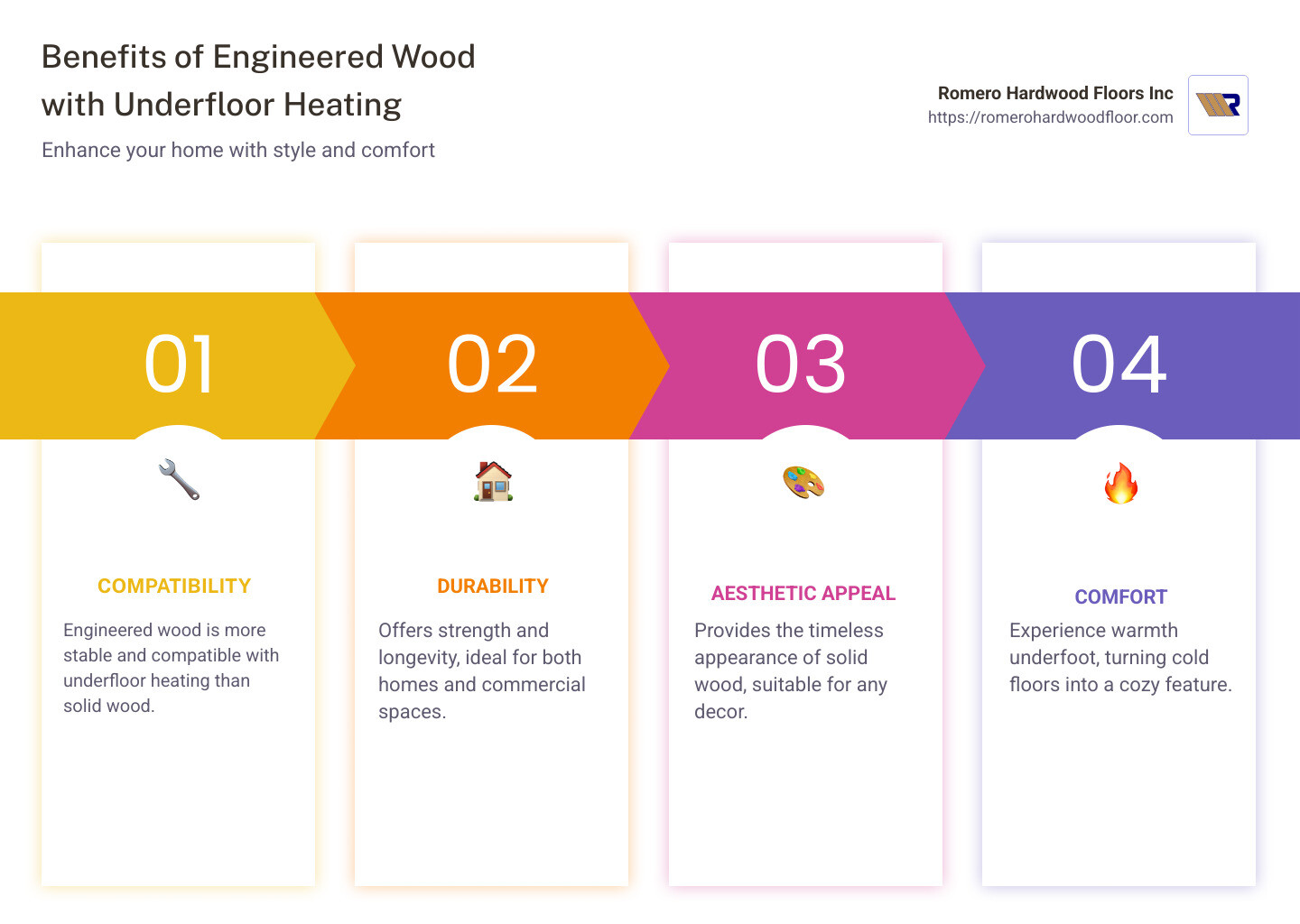
Benefits of Engineered Wood with Underfloor Heating
Engineered wood with underfloor heating is a perfect match for those seeking both functionality and style in their homes. Here’s why this combination is a popular choice:
Compatibility
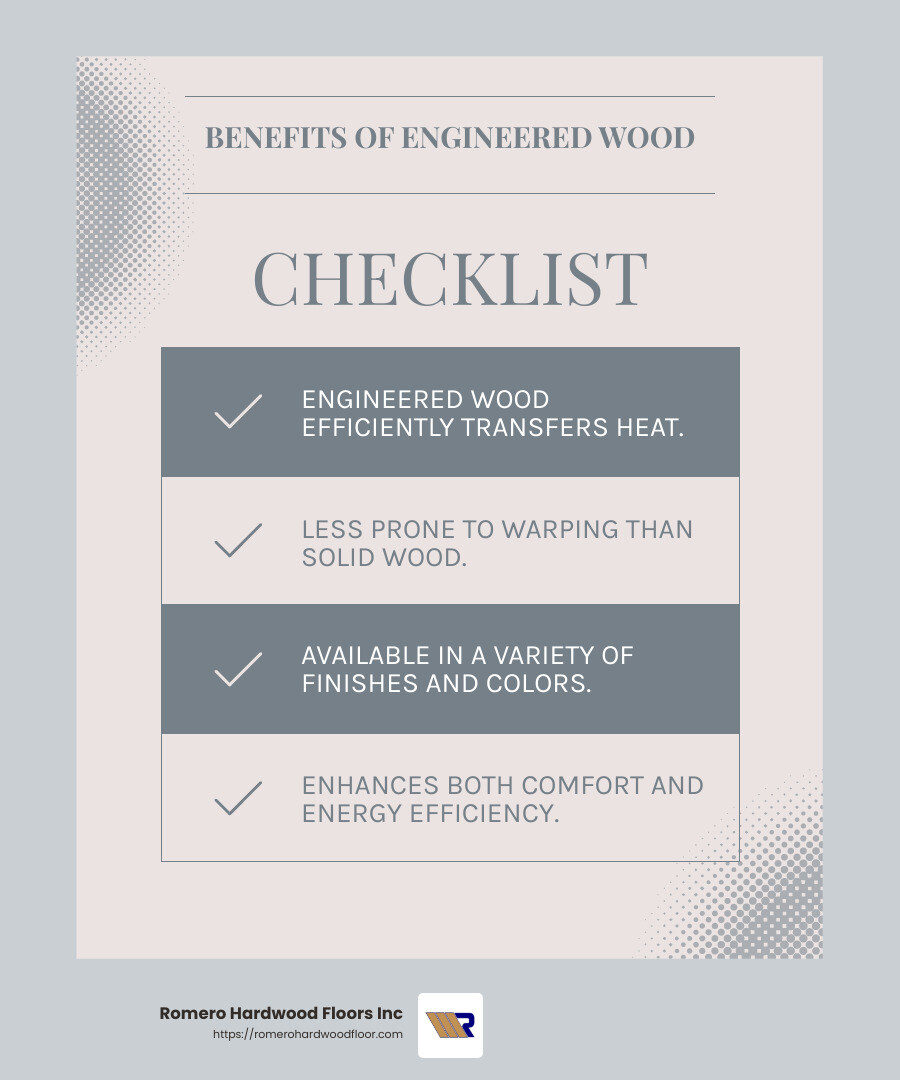
Engineered wood is specifically designed to work well with underfloor heating systems. Unlike solid wood, engineered wood is less prone to warping and movement due to temperature changes. This makes it a reliable choice for maintaining a stable and even surface.
Stability
The structure of engineered wood includes layers bonded together, which improves its stability. This unique construction allows the floor to expand and contract without causing damage, even as the temperature fluctuates. This stability is crucial for ensuring that your flooring remains intact and beautiful over time.
Aesthetic Appeal
One of the most attractive aspects of engineered wood is its ability to mimic the look of solid hardwood. With a wide variety of finishes, grain patterns, and colors, you can easily find an option that complements your home’s decor. Whether you’re aiming for a classic or contemporary look, engineered wood provides the aesthetic warmth and elegance you desire.
Comfort
With underfloor heating, you can enjoy a cozy and warm environment throughout your home. Engineered wood efficiently transfers heat, ensuring that your floors remain pleasantly warm underfoot. This combination not only improves comfort but also contributes to energy efficiency by distributing heat evenly.
In summary, engineered wood with underfloor heating offers a blend of compatibility, stability, and aesthetic appeal that makes it a standout choice for modern homes. Whether you’re renovating or building anew, this flooring option promises to deliver both style and comfort.
Choosing the Right Engineered Wood Flooring
When installing engineered wood with underfloor heating, selecting the right flooring is crucial for both performance and longevity. Here are key factors to consider:
Thickness
The thickness of the engineered wood plays a vital role in how well it works with underfloor heating. For optimal energy efficiency, choose flooring with an overall thickness between 14mm and 16mm. This ensures effective heat transfer without compromising the floor’s stability. The top hardwood layer should ideally be between 3mm and 4mm thick. This balance helps maintain the floor’s appearance while allowing heat to pass through efficiently.
Moisture Content
Moisture content is another critical consideration. Engineered wood is less prone to moisture-related issues compared to solid wood, but it’s still important to select boards with a suitable moisture level. This helps prevent warping or swelling that can occur due to humidity changes. Always verify that the moisture content is appropriate for your home’s environment and the specific underfloor heating system you plan to use.
Board Width
Board width affects both the aesthetic and performance of your engineered wood flooring. For underfloor heating, it’s recommended to use boards that are no wider than 150mm. Narrower boards tend to be more stable and less susceptible to movement caused by heat fluctuations. This ensures a smooth, uniform surface that complements the warmth provided by the underfloor heating.
By carefully considering these factors—thickness, moisture content, and board width—you can select the ideal engineered wood flooring for your underfloor heating system. This thoughtful selection process will help ensure that your flooring not only looks great but also performs well over time.
Installation Methods for Engineered Wood Over Underfloor Heating
When it comes to installing engineered wood with underfloor heating, choosing the right method is just as important as selecting the right flooring. Let’s explore three popular installation methods: floating, adhesive, and battening.
Floating Installation
Floating installation is a popular choice for engineered wood. The planks are designed to click and lock together, creating a stable surface that “floats” over the subfloor without being directly attached. This method is ideal for underfloor heating systems because it allows the floor to expand and contract with temperature changes, reducing the risk of warping.
Advantages:
– Fast and easy to install
– Allows for natural expansion and contraction
– Suitable for uneven subfloors
Adhesive Installation
In adhesive installation, each plank is glued directly to the subfloor using a strong adhesive. This method provides a firm and stable flooring surface, which is beneficial for heat transfer in underfloor heating systems. Engineered wood with underfloor heating benefits from this method as it minimizes vertical movement and improves noise reduction.
Advantages:
– Reduces noise, ideal for multi-story buildings
– Provides a stable and secure bond
– Suitable for high-traffic areas
Battening Installation
Battening involves fixing timber battens across the floor before laying the engineered wood. Once the battens are secured, the flooring can be attached using nails or screws. This method requires careful handling to avoid damaging the heating pipes. Battening is less common than floating or adhesive methods but can be useful in certain situations.
Advantages:
– Provides a traditional, stable installation
– Can be used to level uneven subfloors
– Allows for airflow beneath the floor
Each installation method has its own set of benefits, and the choice will depend on your specific needs and the conditions of your home. By understanding these methods, you can ensure that your engineered wood with underfloor heating is installed effectively, maximizing both comfort and durability.
Best Practices for Installation
When installing engineered wood with underfloor heating, following best practices ensures a successful and long-lasting setup. Let’s explore three crucial aspects: expansion gap, acclimatization, and temperature control.
Expansion Gap
Always leave an expansion gap around the edges of the room, typically about 15mm. This gap allows the floor to naturally expand and contract with changes in temperature and humidity. Without this gap, the flooring could buckle or warp. The gap is usually hidden by skirting boards, so it’s both functional and discreet.
Acclimatization
Acclimatization is the process of allowing the engineered wood to adjust to the room’s temperature and humidity before installation. This step is vital to prevent future warping or gaps. Store the wood in the room where it will be installed for at least 48 hours. Ensure the room is at normal living conditions, with a stable temperature and humidity level.
Temperature Control
Proper temperature control is critical when combining wood flooring with underfloor heating. A wooden floor should never be heated above 81°F (approximately 27°C) to avoid damaging the wood. When turning on your underfloor heating for the first time, increase the temperature gradually. Start at 40˚C and raise it by 5˚C per day until you reach the desired setting. This slow increase helps prevent shocking the wood, which could cause cracking or warping.
By adhering to these best practices, you’ll ensure that your engineered wood with underfloor heating system performs optimally, providing comfort and elegance for years to come.
Frequently Asked Questions about Engineered Wood with Underfloor Heating
Is engineered wood suitable for underfloor heating?
Yes, engineered wood is highly suitable for underfloor heating. Its unique construction, which includes a top layer of real wood and a core of synthetic materials like MDF or Ply, gives it superior stability. This design allows it to withstand temperature changes without warping, unlike solid wood. The layered structure helps the floor expand and contract minimally, making it an excellent choice for homes with underfloor heating systems.
What thickness is recommended for engineered wood flooring?
When considering engineered wood with underfloor heating, thickness is crucial for both efficiency and performance. To maximize energy efficiency, choose engineered wood flooring with an overall thickness of 14mm to 16mm. The top layer of real wood should ideally be between 3mm and 4mm thick. This specific range ensures that the flooring efficiently transfers heat from the underfloor system to the surface, providing warmth and comfort without compromising stability.
Can solid wood be used with underfloor heating?
Unfortunately, solid wood is not recommended for use with underfloor heating. Solid wood floors are prone to expanding and contracting with temperature and humidity changes, much like a tree in its natural environment. These fluctuations can lead to issues such as warping, cupping, and gaps, which can ruin the appearance and functionality of the floor. For those seeking the aesthetic of solid wood, engineered wood serves as an ideal alternative, offering the same look with added benefits of compatibility and stability when paired with underfloor heating.
By understanding these key aspects, you can make informed decisions about incorporating engineered wood with underfloor heating into your home, ensuring a beautiful and efficient flooring solution.
Conclusion
At Romero Hardwood Floors Inc, we pride ourselves on being experts in the installation of engineered wood with underfloor heating. Our experience and dedication make us a trusted partner for homeowners looking to improve their space with this innovative flooring solution.
Expert Advice
Choosing the right flooring can be daunting, but we’re here to help. Our team offers personalized guidance to ensure you select the best materials for your needs. With our deep understanding of how engineered wood interacts with underfloor heating, we provide custom advice that considers your home’s unique conditions and your personal preferences.
Professional Installation Services
Our installation process is thorough and precise. We focus on every detail, from selecting the right thickness of engineered wood to using the best installation methods, such as the glue-down technique. This approach ensures your floor is not only beautiful but also durable and efficient in heating your space.
Commitment to Quality
With locations across Massachusetts, including Revere, Beverly, and Salem, we are committed to delivering high-quality workmanship and customer satisfaction. Our services are backed by a satisfaction guarantee, ensuring that your new flooring adds lasting value and comfort to your home.
Ready to improve your home with the perfect blend of beauty and efficiency? Contact us today to explore our engineered hardwood flooring services and find how we can transform your living space.
