
Why Choosing the Right Commercial Flooring Contractor Matters
Flooring contractor commercial services are essential for businesses looking to install durable, professional-grade flooring that meets safety standards and withstands heavy foot traffic. When searching for a commercial flooring contractor, you need a specialist who understands:
- Material expertise – Knowledge of resilient flooring, hardwood, engineered wood, and laminate options suitable for commercial environments
- Project management – Ability to minimize business disruption with flexible scheduling, including after-hours and weekend installations
- Code compliance – Understanding of ADA standards, slip resistance requirements, and fire ratings
- Professional installation – Proper subfloor preparation, moisture mitigation, and quality workmanship with warranty protection
Your floor is often the first thing customers see when they walk through your door. A worn, outdated, or poorly maintained floor can undermine your brand before you ever speak to a potential client. On the other hand, a well-chosen, professionally installed floor creates a lasting impression, boosts employee morale, and can even improve safety and accessibility.
The commercial flooring industry is experiencing significant growth. The market was valued at $12.5 billion in 2022 and is projected to reach $19.8 billion by 2030, growing at a CAGR of 5.9%. This expansion reflects increasing demand for durable, sustainable, and aesthetically pleasing flooring solutions across offices, retail spaces, healthcare facilities, and restaurants.
This guide will walk you through everything you need to know about choosing the right commercial flooring material, vetting contractors, understanding the installation process, and making smart decisions that protect your investment. Whether you’re renovating an existing space or building from the ground up, you’ll learn how to steer the commercial flooring landscape with confidence.
I’m Francisco Romero, owner of Romero Hardwood Floors Inc., and I’ve spent over 15 years helping businesses throughout Revere, MA, and beyond select and install the perfect flooring for their commercial spaces. My team specializes in working with flooring contractor commercial projects that require minimal disruption, professional craftsmanship, and lasting results that improve property value.
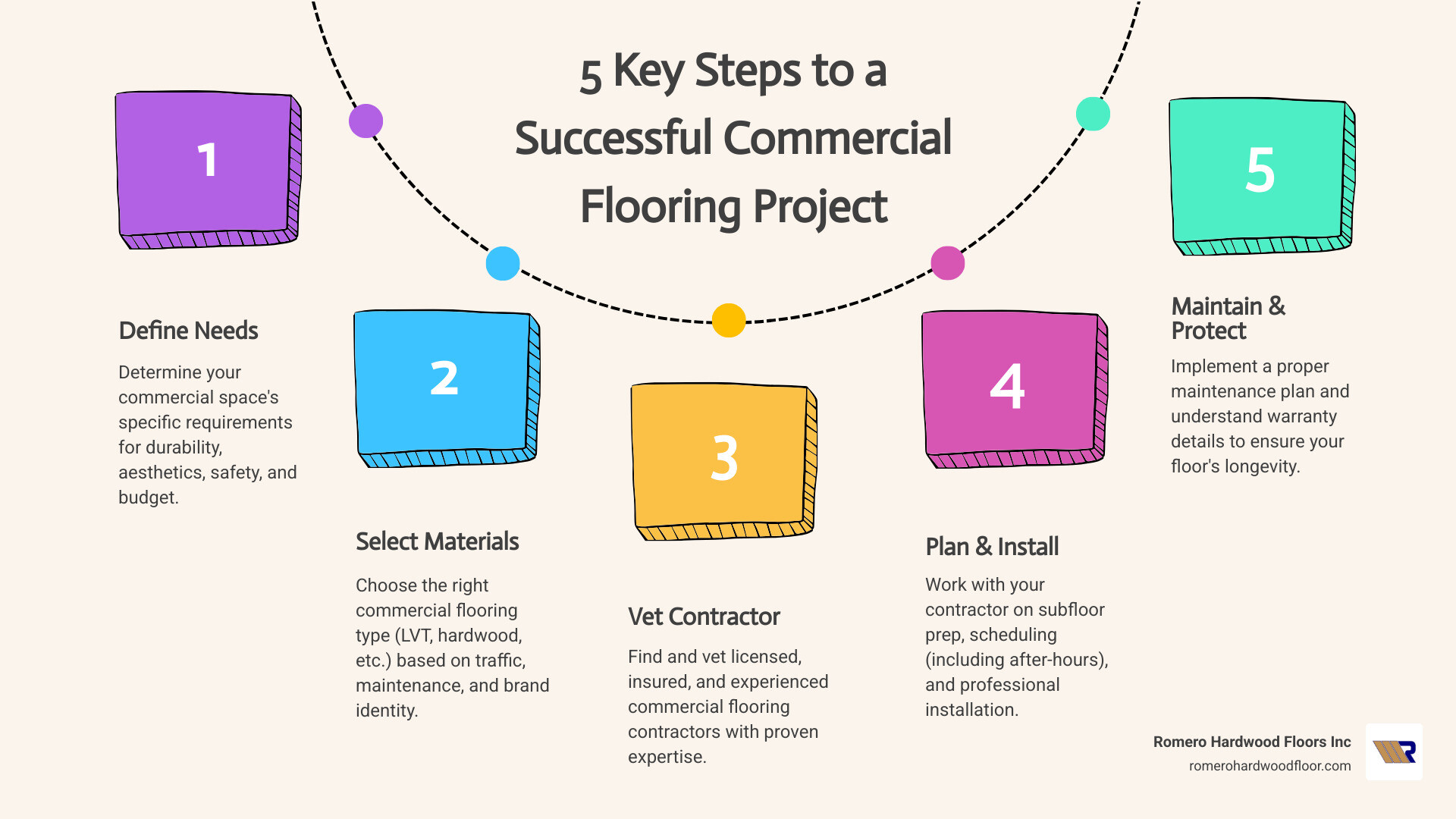
Flooring contractor commercial terms you need:
Understanding Your Commercial Flooring Options

When it comes to commercial flooring, the stakes are simply higher than in a residential setting. While your home floor needs to withstand daily life, a commercial floor faces constant foot traffic, heavy equipment, potential spills, and often, stringent safety regulations. This means the choices we make for your business’s flooring need to prioritize durability, maintenance, and compliance.
Commercial vs. Residential Flooring
The differences between commercial and residential flooring are vast, primarily revolving around:
- Higher Durability: Commercial spaces endure significantly more wear and tear. This requires materials engineered for extreme resilience, impact resistance, and abrasion resistance.
- Stringent Safety Codes: Commercial environments, especially those open to the public, must adhere to strict building codes for fire safety, slip resistance, and accessibility (ADA standards).
- Maintenance Demands: Commercial flooring needs to be easy to clean, often requiring industrial-grade cleaning products and procedures. In sectors like healthcare or food service, antimicrobial properties are crucial.
- Installation Scale: Commercial projects are typically larger, requiring specialized equipment, efficient project management, and often, the ability to install during off-hours to minimize business disruption.
Primary Material Types
The commercial flooring market offers a diverse range of materials, each with its own set of advantages and disadvantages. Resilient flooring, which includes Luxury Vinyl Tile (LVT) and Vinyl Composition Tile (VCT), currently dominates the market, accounting for over 40% of the market share. Carpet and carpet tile follow as the second-largest segment.
Here’s a closer look at some popular options:
- Resilient Flooring (LVT, Vinyl Plank, Linoleum, VCT): These materials are engineered for comfort, flexibility, and design versatility.
- Luxury Vinyl Tile (LVT) and Vinyl Plank: LVT is a perfect choice for many commercial buildings, including offices, retail, and hotels, because it’s comfortable, can withstand heavy foot traffic, and maintains a professional appearance. It’s durable, economical, and resistant to fading, stains, and scratches. Vinyl plank flooring offers the aesthetic of wood or stone at a lower cost, with excellent water resistance.
- Linoleum: A cost-effective and durable option, linoleum is made from natural materials and is suitable for offices, restaurants, hotels, and medical centers.
- Vinyl Composition Tile (VCT): Made from a mixture of natural limestone, fillers, and vinyl, VCT is a highly durable and cost-effective solution for high-traffic areas like educational facilities, retail stores, and healthcare buildings.
- Hardwood: While often associated with residential elegance, engineered hardwood is also a viable commercial option. It offers resistance to cupping, a beautiful aesthetic, and can be more affordable than solid hardwood. We at Romero Hardwood Floors Inc. have extensive experience installing and refinishing hardwood floors that bring warmth and sophistication to commercial spaces.
- Laminate: Providing the look of hardwood at a more affordable price, laminate is extremely durable, scratch-resistant, stain-resistant, and less susceptible to fading, making it ideal for high-traffic commercial spaces.
- Carpet and Carpet Tile: Carpet tiles are a popular choice for offices due to their comfort, ease of installation, durability, and stain resistance. Broadloom carpet also offers durability and comfort underfoot for areas with heavy traffic.
- Tile (Porcelain and Ceramic): Porcelain tile is extremely durable, handling high foot traffic and spills without damage. It’s resistant to moisture, stains, and wear, making it a low-maintenance choice for areas like restaurants and healthcare facilities. Ceramic tile offers similar benefits, providing a timeless and neat touch.
- Rubber Flooring: Best suited for gyms and weight rooms due to its versatility, shock absorption, and extreme durability.
Comparing Pros and Cons of LVT, Hardwood, and Engineered Wood for Commercial Spaces
| Feature | Luxury Vinyl Tile (LVT) | Hardwood Flooring (Solid or Engineered) | Engineered Wood Flooring |
|---|---|---|---|
| Pros | – Highly durable, water-resistant, easy to clean | – Classic, high-end aesthetic | – More stable than solid wood, less prone to warping |
| – Wide range of styles, mimics natural materials | – Adds significant property value | – Can be installed in more environments (e.g., below grade) | |
| – Cost-effective, comfortable underfoot | – Can be refinished multiple times | – Wide variety of wood species and finishes | |
| – Good for high-traffic areas, offices, retail, healthcare | – Excellent for high-end retail, executive offices | – Good for corporate offices, restaurants (with proper finish) | |
| Cons | – Can be difficult to repair individual planks/tiles | – Susceptible to scratches, dents, and moisture damage | – Limited number of refinishes compared to solid wood |
| – May not add significant property value compared to natural materials | – Higher initial cost, requires more maintenance | – Still susceptible to moisture if not properly sealed | |
| – Less eco-friendly if not made from recycled content | – Can be noisy, requires careful subfloor preparation | – Can be more expensive than LVT or laminate | |
| Best Use | Offices, retail, healthcare, hospitality, education | Executive offices, high-end boutiques, galleries, restaurants | Corporate offices, upscale retail, dining areas, common spaces |
Key Factors in Your Flooring Decision
Choosing the right commercial flooring is a strategic decision that impacts not just aesthetics but also functionality, budget, and long-term operational costs. We consider several crucial factors when guiding our clients in the greater Boston area.
Durability & Foot Traffic
This is paramount in commercial settings. We assess:
- High-traffic vs. low-traffic zones: Areas like entrances, hallways, and reception areas require flooring with superior wear layers and impact resistance. The healthcare and retail sectors, for example, are significant drivers of the commercial flooring market due precisely to their demand for durable solutions.
- Wear layer thickness: For resilient flooring like LVT, a thicker wear layer translates to greater longevity.
- Scratch and scuff resistance: Essential for maintaining a professional appearance, especially in retail or office environments where rolling chairs are common.
Maintenance & Lifecycle Cost
The true cost of flooring extends far beyond its initial purchase and installation. We help you consider:
- Daily cleaning procedures: How easy is it to sweep, mop, or vacuum? Materials like porcelain tile and LVT are prized for their ease of cleaning.
- Long-term maintenance needs: Does the floor require stripping, waxing, or periodic refinishing?
- Repair vs. replacement cost: Modular options like carpet tile or LVT planks can often be repaired by replacing individual sections, saving significant costs over full replacement.
Aesthetics & Brand Identity
Your floor is a powerful design element that can reinforce your brand. We explore:
- Color and pattern: Used to define spaces, guide traffic, or create a specific mood.
- Texture: Can add warmth, sophistication, or even improve slip resistance.
- Customization with logos: Logo matting and custom inlay designs can personalize your space and improve brand recognition.
- Creating a welcoming atmosphere: The right flooring can make a space feel inviting, luxurious, or modern, directly influencing customer experience.
Safety & Compliance
Protecting your employees and customers is non-negotiable. We ensure your flooring meets all necessary standards:
- Slip resistance (Coefficient of Friction): Crucial for preventing accidents, especially in commercial kitchens, bathrooms, and high-traffic public areas. Retail settings, in particular, emphasize safety features like slip resistance.
- ADA standards: Ensuring accessibility for all, including transitions between different flooring types.
- Fire rating requirements: Different commercial spaces have varying fire safety standards that flooring materials must meet.
Sustainability Trends
Modern businesses are increasingly prioritizing eco-friendly solutions. We can help you choose:
- Low-VOC products: Minimize off-gassing and improve indoor air quality.
- Recycled materials: Many resilient and carpet tile options incorporate recycled content. The demand for sustainable and eco-friendly flooring is increasing, with a growing preference for recycled content and low-VOC products.
- LEED certification points: Selecting sustainable flooring can contribute to your building’s LEED certification.
For more detailed guidance on selecting the perfect floor for your business, you can find More info about commercial flooring.
Why You Need a Specialist Flooring Contractor Commercial
Choosing a flooring contractor commercial expert is not just about getting the job done; it’s about safeguarding your business operations, ensuring compliance, and securing a long-lasting investment. When you partner with a seasoned professional like Romero Hardwood Floors Inc., you gain access to invaluable expertise and a streamlined process.
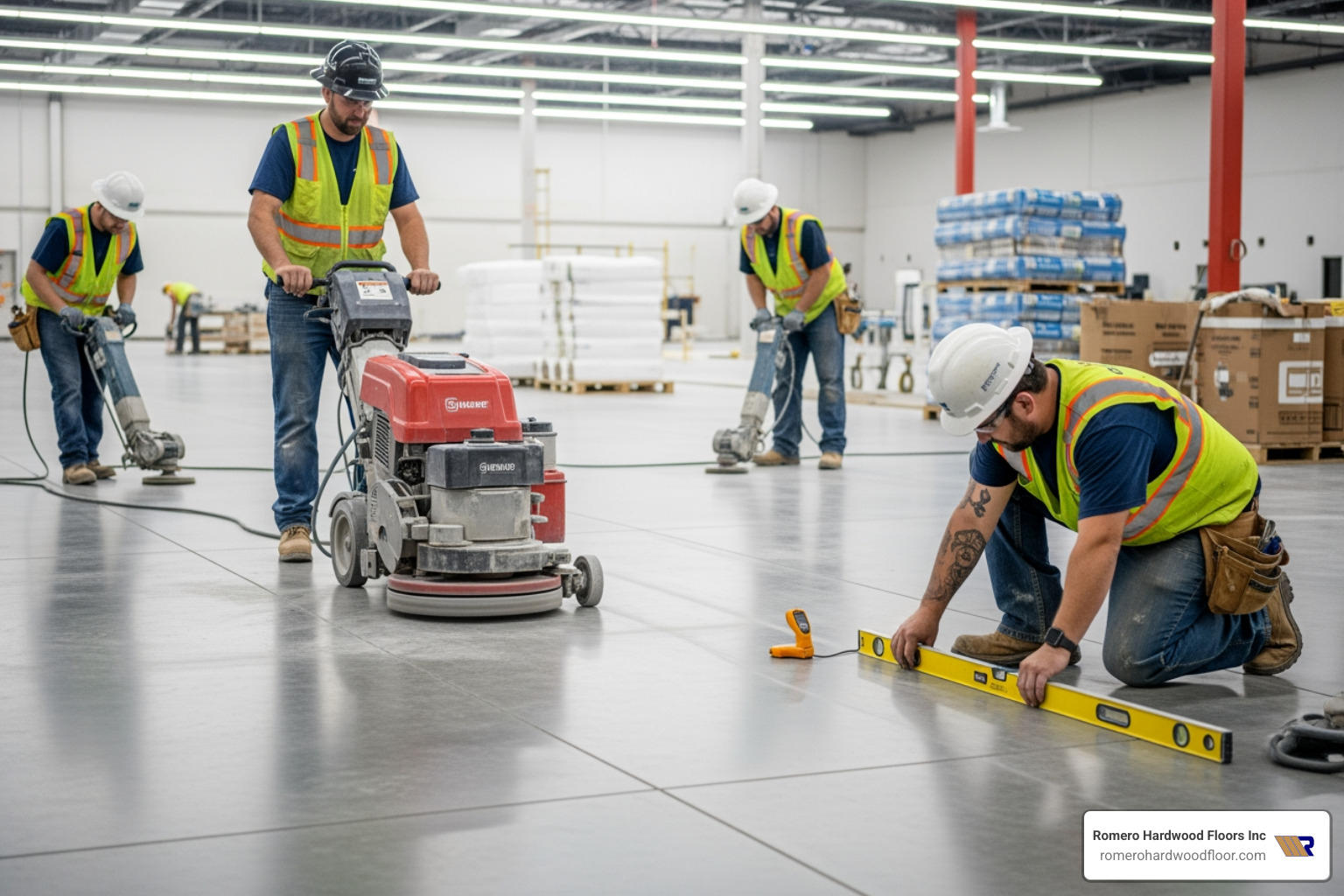
The Value of Professional Expertise
A specialist commercial flooring contractor offers comprehensive knowledge that goes beyond simply laying down material:
- Subfloor assessment: The foundation of any great floor is a properly prepared subfloor. Professionals conduct thorough assessments, identifying issues like unevenness, cracks, or moisture.
- Moisture mitigation: Moisture is the enemy of many flooring types. Experts employ techniques like moisture vapor barriers to prevent future problems, a critical step often overlooked by less experienced installers.
- Material knowledge: With countless commercial flooring options available, a contractor can guide you through the pros and cons of each, ensuring you select the best material for your specific needs and budget. We understand the nuances of LVT, hardwood, and other materials for various commercial environments.
- Project management: Commercial projects require meticulous planning. Our team manages timing, budget, and the overall scope from start to finish, ensuring timely and proactive execution while offering minimal disruption. We often invest in technology to add value, save time, and minimize disruption.
The Installation Process Explained
A well-executed commercial flooring installation follows a structured process to ensure quality and efficiency:
- Consultation and measurement: It all starts with understanding your vision and needs. We provide free design consultations and precise measurements to avoid material waste.
- Material sourcing: Leveraging our relationships with top manufacturers, we source high-quality materials, ensuring availability and competitive pricing. For specific floors not in stock, we can often use quick-ship programs.
- Site preparation: This crucial step includes removing old flooring, performing necessary subfloor repairs (new pours, grinding, moisture mitigation), and ensuring the surface is clean, dry, and level. This is where expertise truly shines, as proper prep prevents future issues.
- Installation: Our professional, certified installers carefully lay the new flooring, adhering to manufacturer specifications and industry best practices.
- Finishing and cleanup: The final touches include installing trim and moldings, a thorough cleanup of the site, and a final walkthrough to ensure your complete satisfaction.
For more details on how we approach commercial installations, you can explore Details on the commercial floor install process.
Benefits of a Professional vs. DIY
While a DIY approach might seem appealing for cost savings, the complexities and scale of commercial flooring projects often lead to costly mistakes and significant business disruption. Hiring a professional flooring contractor commercial offers distinct advantages:
- Minimized business disruption: We understand that downtime costs you money. Many commercial contractors, including our team, offer after-hours, night, and weekend installations to work around your operating schedule. We can even coordinate furniture moves and cubicle lifts.
- Guaranteed workmanship: Professionals stand by their work. We provide guarantees on our installation, ensuring the job is done correctly and to your specifications.
- Warranty protection: Beyond installation guarantees, professional contractors work with reputable manufacturers, ensuring your materials are covered by warranties. Should an issue arise, you have recourse.
How to Find and Hire the Right Contractor
Finding the ideal flooring contractor commercial for your business is a critical step towards a successful project. We believe in transparency and empowering our clients to make informed decisions.
Where to Find Reputable Contractors
In Massachusetts, there are several avenues to find qualified commercial flooring professionals:
- Referrals from designers or general contractors: If you’re working with an interior designer or a general contractor on a larger renovation, they often have established relationships with trusted flooring specialists.
- Online directories and review sites: Reputable online platforms can provide listings of contractors in your specific area (e.g., Revere, Chelsea, Peabody, Gloucester, Medford, Woburn, etc.), often with customer reviews and project portfolios.
- Local suppliers: Flooring material suppliers can often recommend installers they trust who are familiar with their products.
- Direct search: A simple online search for “commercial flooring contractor [your town, MA]” will yield local results.
Vetting Your Potential Flooring Contractor Commercial
Once you have a list of potential contractors, it’s time to dig deeper. This vetting process is crucial to ensure you partner with a reliable and capable team:
- Licensing and insurance verification: Always confirm that the contractor is properly licensed and insured in Massachusetts. This protects your business from liability in case of accidents or damage during the project.
- Reviewing a portfolio of similar projects: Look for contractors who have experience with commercial projects similar in scope and industry to yours. Ask to see examples of their work, especially in environments like offices, retail spaces, or healthcare facilities. A strong portfolio demonstrates proven expertise.
- Asking about team experience and certifications: Inquire about the experience level of their installers and any specialized certifications they hold for specific flooring types (e.g., resilient flooring, hardwood installation).
- Inquiring about project timelines and flexibility: Discuss their ability to meet your project deadlines and their flexibility regarding installation schedules (e.g., after-hours, weekends) to minimize disruption to your business operations.
To simplify your search for qualified installers, you can Find commercial flooring installation companies that meet these rigorous standards.
Evaluating Quotes and Contracts
When comparing bids, don’t just look at the bottom line. A comprehensive quote and contract are hallmarks of a professional contractor:
- Itemized costs for materials and labor: The quote should clearly break down the costs for materials, installation labor, subfloor preparation, and any other services.
- Clear material specifications: Ensure the quote specifies the exact type, brand, and grade of flooring material to be used.
- Defined payment schedule: A professional contract will outline a clear payment schedule, often with an initial deposit, progress payments, and a final payment upon satisfactory completion.
- Written warranty details: The contract should clearly state the warranty coverage for both materials and installation workmanship.
Flooring Solutions for Specific Industries
Different commercial environments have unique demands that dictate the most suitable flooring choices. Our expertise helps tailor solutions to your specific industry needs.
Healthcare Facilities
For hospitals, clinics, and dental offices in areas like Chelsea or Salem, hygiene and durability are paramount:
- Hygiene: Flooring must be non-porous and easy to sanitize to prevent bacterial growth.
- Easy-to-clean surfaces: Materials like sheet vinyl, LVT, and porcelain tile allow for rigorous cleaning protocols.
- Seam-sealed resilient flooring: Minimizes crevices where dirt and germs can accumulate. Flash coving, which creates a seamless floor-to-wall transition, is essential in these environments for optimal hygiene.
- Chemical resistance: Important for areas exposed to medical-grade disinfectants and spills.
- Antimicrobial properties are highly sought after in this sector.
Retail & Hospitality
In busy retail stores in Peabody or inviting hotels in Rockport, the flooring needs to be both visually appealing and incredibly robust:
- Visual impact: Flooring contributes significantly to brand image and customer experience. Options that mimic high-end materials can lift the space.
- Durability for heavy traffic: LVT, vinyl plank, porcelain tile, and durable carpet tiles can withstand constant foot traffic and rolling carts.
- Easy to clean: Spills and dirt are common, so materials that clean up quickly are essential.
- Brand consistency: Flooring can tie into your brand’s color scheme and aesthetic, creating a cohesive environment.
Corporate Offices
For offices in Woburn or Melrose, comfort, acoustics, and a professional look are key:
- Acoustic performance: Carpet and carpet tile help absorb sound, reducing noise levels in open-plan offices. LVT with sound-absorbing underlayment can also contribute.
- Durability for rolling chairs: Materials like LVT, laminate, and engineered wood can withstand the constant movement of office chairs without premature wear.
- Modular design for flexibility: Carpet tiles and LVT planks allow for easy replacement of damaged sections and reconfigurations for office layouts.
Restaurants & Commercial Kitchens
In the demanding environments of restaurants and commercial kitchens in Gloucester or East Boston, safety and extreme durability are critical:
- Slip resistance: Absolutely essential to prevent accidents in areas prone to spills. Porcelain tile, specific LVT, and epoxy coatings are often used.
- Stain proofing: Materials must resist stains from food, grease, and beverages.
- Thermal shock resistance: Important for areas exposed to extreme temperature changes, such as near ovens or freezers.
If you’re specifically looking for a contractor with expertise in the unique challenges of kitchen environments, we can help. Find a commercial kitchen flooring contractor that understands these specialized needs.
Frequently Asked Questions about Commercial Flooring
We often get asked similar questions by business owners throughout our service areas, from Beverly to Winchester. Here are some of the most common ones:
What should I look for in a flooring contractor commercial?
When seeking a flooring contractor commercial, prioritize those with a strong track record and clear credentials. Look for a contractor with valid licensing and insurance, a robust portfolio of commercial projects similar to yours (e.g., retail, office, healthcare), positive client references or testimonials, and the proven ability to work within your timeline and budget. They should be able to provide a detailed, written contract that outlines all aspects of the project and offers a clear warranty on their workmanship and materials. Transparency, communication, and a commitment to minimizing business disruption are key indicators of a reliable partner.
How long does commercial flooring installation take and can it be done after hours?
The duration of commercial flooring installation can vary significantly based on several factors, including the total area size, the specific type of material being installed, and the condition of the subfloor. A small office might take a day or two, while a large retail space could span several days or even weeks. Fortunately, many professional flooring contractor commercial teams, including ours, understand the critical need to minimize operational downtime for businesses. We frequently offer flexible scheduling options, such as after-hours, weekend, and phased installations, to ensure your business can continue operating with minimal interruption.
How do I maintain my new commercial floor to ensure its longevity?
Proper maintenance is crucial for extending the life and preserving the appearance of your commercial flooring investment. The most important step is to follow the manufacturer’s specific cleaning and maintenance guidelines for your chosen material. Generally, this includes regular sweeping or vacuuming to remove abrasive dirt and debris, prompt cleanup of any spills to prevent staining or damage, and using only appropriate, manufacturer-recommended cleaning solutions. Your flooring contractor commercial should provide you with a detailed maintenance plan upon project completion, offering best practices and product recommendations to keep your floor looking its best for years to come.
Commercial Flooring Pricing Overview
Understanding the cost of commercial flooring is, naturally, a major concern for businesses. Average commercial flooring installation costs can range widely based on the material chosen, the complexity of the installation, and the size of the project. According to internet sources, average prices for commercial flooring installation typically range from $4 to $12 per square foot, with more specialized or high-end projects, or those requiring extensive subfloor preparation, potentially reaching $36 per square foot or more.
These are average costs based on internet data and not actual costs for Romero Hardwood Floors Inc. Our pricing is custom to each unique project, considering the specific materials, labor, and any necessary preparatory work. For an accurate assessment and a personalized quote for your commercial flooring needs in the greater Boston area, we always recommend a direct consultation.
Conclusion
Choosing the right commercial flooring is an investment in your business’s future – an investment in aesthetics, durability, safety, and ultimately, your bottom line. It involves carefully selecting the appropriate materials that can withstand the unique demands of your commercial environment and then partnering with a skilled flooring contractor commercial who can execute the vision flawlessly.
We hope this guide has illuminated the complex world of commercial flooring, from understanding the diverse material options to the critical factors influencing your decisions, and the immense benefits of working with a professional team. Your floor is a critical asset that impacts safety, branding, and profitability. Investing wisely ensures it serves your business well for years to come.
At Romero Hardwood Floors Inc., we pride ourselves on being experienced professionals in the commercial flooring space, offering quality workmanship, competitive pricing, and guaranteed results for businesses across Revere, MA, and surrounding communities like Danvers, Lynnfield, and Stoneham. We’re here to help improve your property value and ensure your commercial space makes the best possible impression.
Request a professional estimate for your commercial flooring project today.