
Why Professional Hardwood Floor Installers Are Essential
Hardwood floors installers bring expertise that can make or break your flooring investment. Whether you’re upgrading a single room or tackling a full home renovation, choosing the right professional is crucial.
What to Look for When Hiring Hardwood Floor Installers:
- Proven Experience – Look for installers with at least 5+ years in the business.
- Proper Licensing and Insurance – Verify worker’s compensation and general liability coverage.
- Clear Cost Estimates – Expect itemized quotes covering materials, labor, and subfloor prep.
- Industry Certification – Adherence to National Wood Flooring Association (NWFA) guidelines.
- Portfolio and Reviews – Request photos of past work and verified customer testimonials.
- Comprehensive Services – From subfloor preparation to finishing and cleanup.
- Written Warranties – Reputable installers offer at least a one-year warranty on workmanship.
Average National Installation Costs (based on internet data, not Romero Hardwood Floors pricing):
- Standard range: $6 to $12 per square foot
- Total project range: $1,000 to $12,000+
- High-end installations: $13 to $25+ per square foot
Installing hardwood floors is a complex project requiring precision. From ensuring your subfloor is perfectly flat and dry to allowing proper acclimation time (at least 72 hours), professional installers understand the technical requirements that prevent future problems like gaps, squeaking, or buckling.
The stakes are high. New hardwood flooring delivers a 118% return on investment, according to the National Association of Realtors. But that value only holds if the installation is done correctly.
I’m Francisco Romero, owner of Romero Hardwood Floors Inc., and I’ve spent over 15 years helping homeowners and commercial property managers in the Revere, MA area steer the hardwood flooring process. My experience managing hundreds of projects has taught me what separates exceptional work from disappointing results.
Choosing Your Perfect Hardwood: Materials and Benefits
When starting a hardwood flooring project, selecting the right material is an exciting first step. This decision impacts your home’s aesthetic, durability, and overall value. Our team at Romero Hardwood Floors Inc. can guide you through this crucial choice.
Solid vs. Engineered Hardwood: What’s the Difference?
The fundamental choice is between solid and engineered hardwood. While both offer the beauty of real wood, their construction and performance differ. Understanding these distinctions is key to making an informed decision for your home in Massachusetts.
| Feature | Solid Hardwood | Engineered Hardwood |
|---|---|---|
| Construction | Milled from a single, solid piece of wood. | Multiple layers, with a top veneer of real wood and a core of plywood or high-density fiberboard (HDF). |
| Thickness | Typically 3/4 inch, but can vary. | Varies widely, from 1/4 inch to 3/4 inch. |
| Refinishing Capability | Can be sanded and refinished multiple times (5-7+). | Can be refinished a limited number of times (1-3), depending on wear layer thickness. |
| Moisture Resistance | Susceptible to humidity changes; not ideal for basements. | More stable and resistant to moisture and temperature fluctuations. |
| Best Installation Areas | Above-grade rooms (living rooms, bedrooms). | Versatile; suitable for all levels, including basements and over concrete. |
| Lifespan | Can last 100+ years with proper care. | Typically 30-80 years, depending on quality. |
Solid hardwood offers the ability to be sanded and refinished many times. Engineered hardwood provides greater stability in environments with fluctuating humidity, making it a practical choice for many homes in our region.
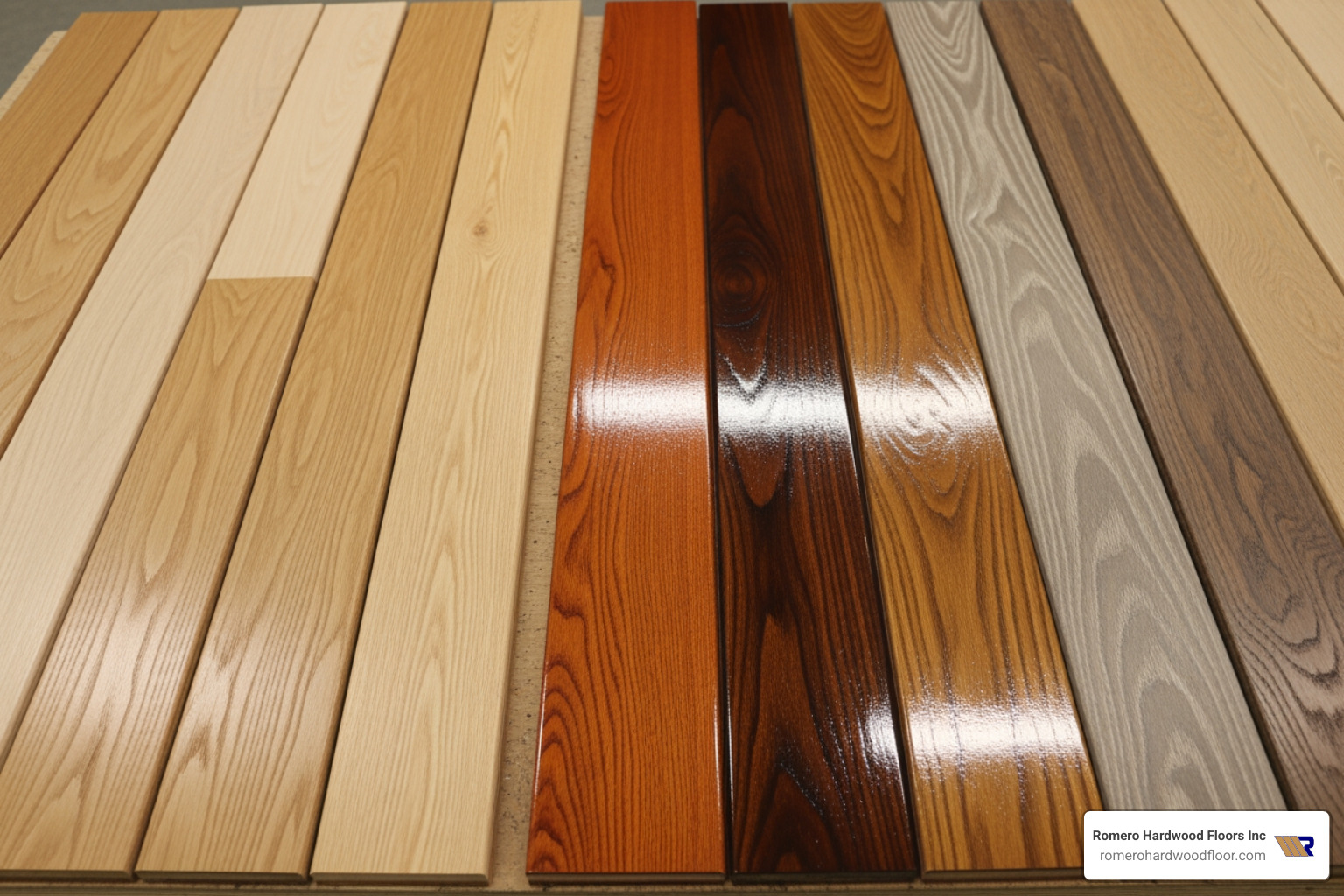
Popular Hardwood Species and Their Characteristics
The wood species you choose influences the look, feel, and durability of your floors. We work with a variety of popular options:
- Red Oak: A classic American choice known for its distinctive grain and reddish hue. It’s durable and versatile. Average national cost is about $8–$13 per square foot.
- White Oak: Slightly harder than red oak, with a more muted, natural brown tone and a straighter grain. It’s excellent for modern and traditional aesthetics. Average national cost is about $8–$15 per square foot.
- Maple: A very dense and durable wood with a fine, uniform grain and light, creamy color, making it great for high-traffic areas. Average national cost is about $7–$11 per square foot.
- Brazilian Walnut (Ipe): An incredibly hard and exotic wood with rich, dark brown tones. It’s one of the most durable options available for a dramatic look. Average national cost is about $11–$20 per square foot.
When selecting a species, consider its Janka hardness rating, grain, and color. Our team can help you find the perfect match for your home’s interior.
Key Benefits of Investing in Hardwood Flooring
Choosing hardwood is an investment in your home’s future. Here are some compelling benefits:
- Exceptional Durability: With proper care, hardwood floors can last for decades, often outliving other flooring types.
- Increased Home Value: Hardwood flooring can significantly boost a home’s value. New hardwood flooring delivers a 118% return on investment, according to a report by the National Association of Realtors. Many homebuyers see it as a luxurious and desirable feature.
- Easy Maintenance and Improved Air Quality: Unlike carpet, hardwood floors don’t trap dust, dirt, or allergens. Simple cleaning is usually all it takes, which contributes to better indoor air quality.
- Timeless Style: Hardwood floors offer a natural beauty that transcends trends, providing a versatile backdrop that improves any decor.
For more information about our hardwood flooring services and to explore the options available for your home, visit our page on More info about our hardwood floor services.
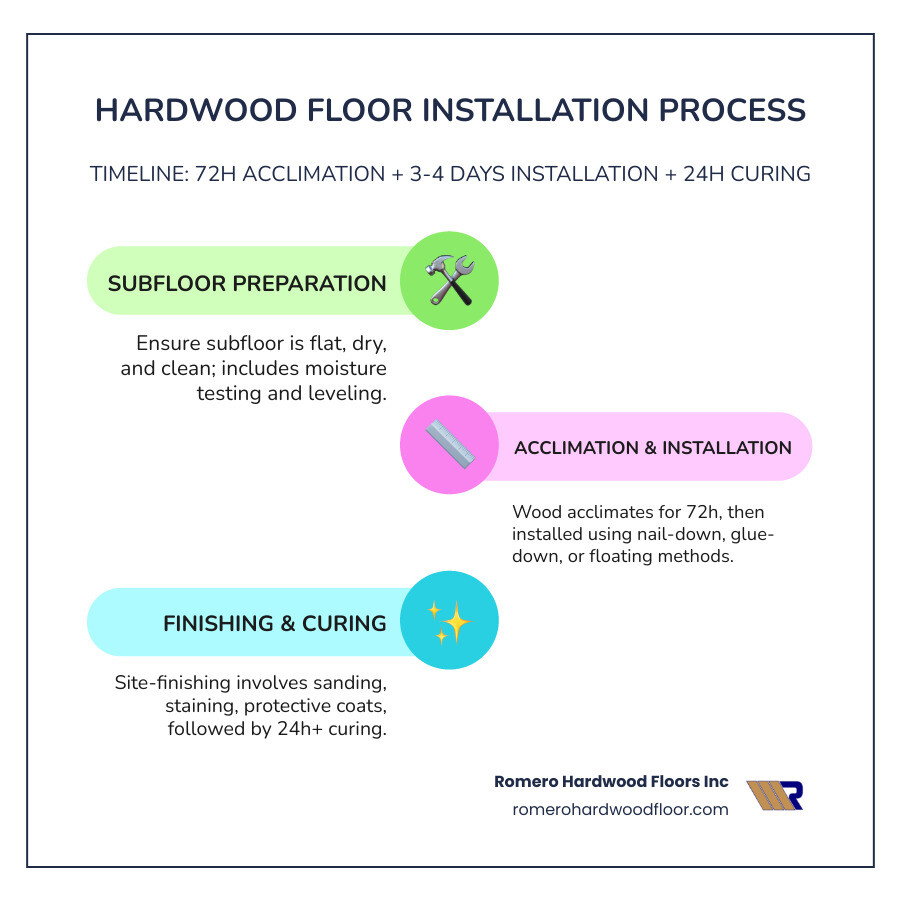
The Professional Installation Journey: A Step-by-Step Guide
Installing a new hardwood floor is a construction project that demands precision and careful planning. As experienced hardwood floor installers, we manage each phase to deliver quality craftsmanship.
Step 1: Crucial Subfloor Preparation
The foundation of any successful installation is the subfloor. A poorly prepared subfloor can lead to squeaks, gaps, or an uneven surface. Our team adheres strictly to National Wood Flooring Association guidelines to ensure your subfloor is ready. The general requirement is that it must be flat, dry, and structurally sound.
- Flatness: We grind down high spots and fill depressions with leveling compounds to meet tight industry tolerances. This is paramount to prevent future issues.
- Dryness: Moisture is the enemy of hardwood. We conduct moisture tests before starting work to ensure the subfloor and flooring are compatible. This prevents warping or cupping. If moisture levels are high, we may recommend solutions like moisture barriers.
- Structural Soundness: The subfloor must be solid. We refasten any loose sections and repair or replace damaged areas to create a stable base.
Whether your subfloor is wood or concrete, we take the necessary steps to prepare it correctly, ensuring proper adhesive bonding and a long-lasting result.
Step 2: Acclimation and On-Site Work
Once the subfloor is ready, the hardwood itself needs to get comfortable in its new home.
- Wood Acclimation Period: This is a non-negotiable step. Wood flooring must acclimate to the temperature and humidity of the installation environment for at least 72 hours before installation. This prevents the wood from expanding or contracting excessively later, which can cause buckling or gapping.
- Removal of Old Flooring: Our service typically includes removing existing flooring like carpet or tile. We also handle baseboards and trim for a seamless finish.
- Installation Timeline: After acclimation, the actual installation usually takes three to four days, depending on the project’s size and complexity.
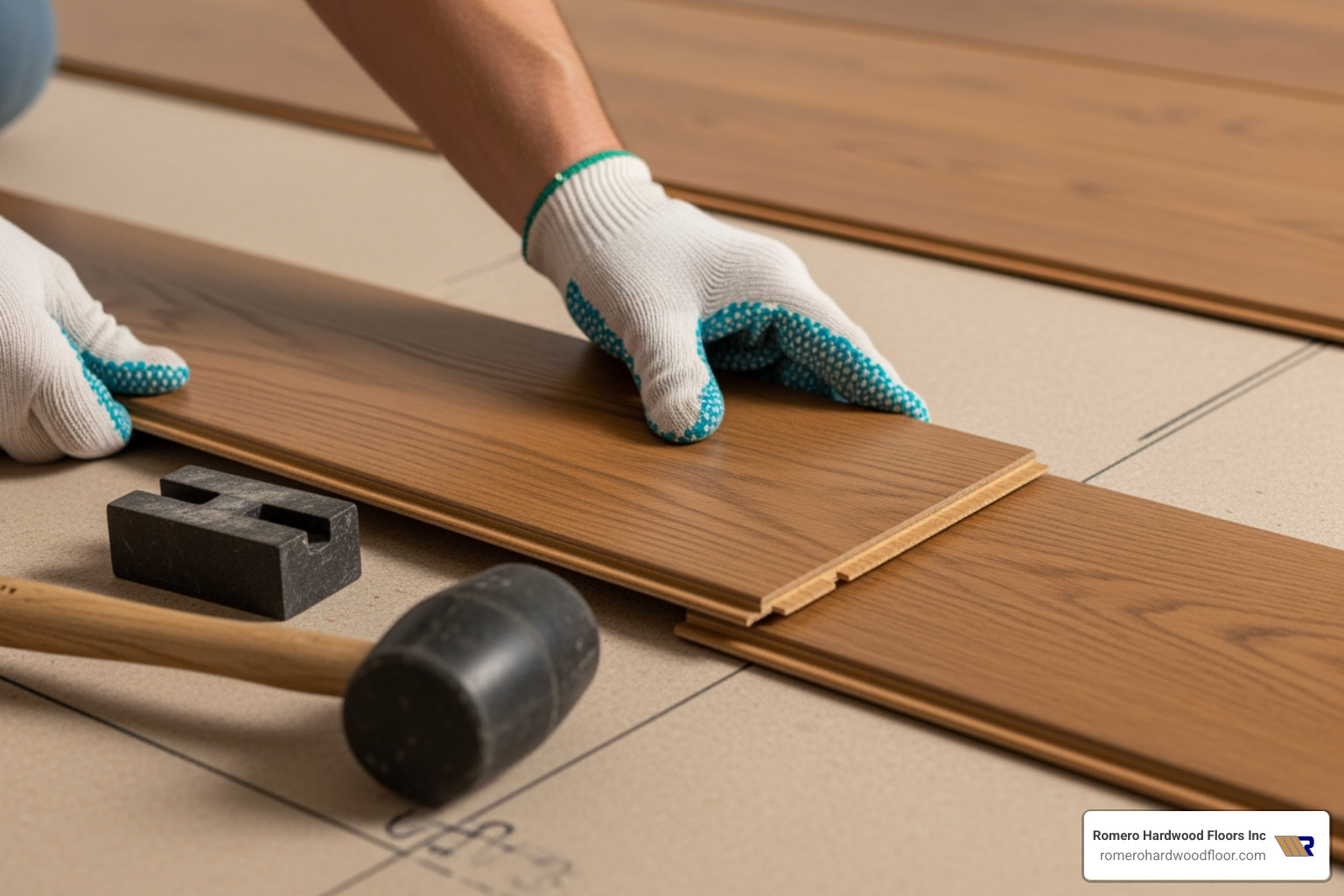
- Installation Methods: We use the appropriate method based on your hardwood and subfloor, including nail-down, glue-down, or floating installations.
Step 3: Finishing Touches and Unexpected Issues
The final stages bring your new floors to life.
- Site-Finishing Process: If you choose unfinished hardwood, we sand the raw wood to a smooth finish, apply your chosen stain, and add multiple coats of a protective finish (like polyurethane) to seal the wood.
- Curing Time: Patience is key. After the final coat of finish is applied, the floor needs at least 24 hours to cure before you can walk on it. This ensures maximum durability.
- Unexpected Issues: Despite thorough preparation, unforeseen challenges like hidden subfloor damage can arise. Our experienced estimators are skilled at spotting potential problems early. If they occur, we communicate transparently about the necessary steps and any potential adjustments to the cost and schedule.
For more information about various staining options to personalize your hardwood floors, please visit our page on More info about floor staining options.
Understanding the Costs: Installation vs. Refinishing
Investing in hardwood floors is a significant decision, and understanding the financial aspects is crucial. We often help homeowners weigh the costs of new installation against refinishing existing floors.
How Much Does Professional Hardwood Floor Installation Cost?
Pricing Disclaimer: The costs provided here are national averages based on internet data and are not actual costs for Romero Hardwood Floors Inc. For an accurate estimate for your project in the Revere, MA area, please contact us directly.
Nationally, the average cost to install hardwood floors ranges from $6 to $12 per square foot. However, high-end woods, complex patterns, and large spaces can increase the cost to $13 to $25 or more per square foot. The total project cost can range from $1,000 to over $12,000.
Several factors influence the final price:
- Type of Wood: Exotic species are more expensive than common options like oak or maple.
- Area Size and Complexity: Larger areas, intricate patterns (like herringbone), and stairs increase labor costs.
- Subfloor Condition: Extensive repairs or leveling will add to the overall expense.
- Geographic Location: Local labor rates impact pricing.
- Old Flooring Removal: Removing and disposing of existing flooring is an additional cost.
Our trained estimators assess all these factors to provide a fair and transparent price upfront. For a detailed quote, connect with us on More info about hardwood floor installation.
Refinishing Your Floors: When and What to Expect
Sometimes, your existing hardwood floors just need some professional attention. Refinishing can restore their beauty and extend their life significantly.
Signs for Refinishing: It’s time to refinish if you notice deep scratches, discoloration from sun or water, a worn finish that looks dull, or soft spots in the wood.
Refinishing vs. Replacing: If your floors are structurally sound but show surface wear, refinishing is almost always the more cost-effective and environmentally friendly option. Solid hardwood can be refinished multiple times.
The Refinishing Process: This involves sanding the old finish away, applying a new stain if desired, and sealing the wood with multiple coats of a durable protective finish.
Average National Costs for Refinishing: The cost to refinish hardwood floors averages $3 to $8 per square foot nationally, with total project costs typically ranging from $600 to over $4,500. The final price depends on the floor’s condition, area size, and finish choices.
To learn more about our floor refinishing services, visit More info about floor refinishing services.
Vetting and Hiring Professional Hardwood Floor Installers
Choosing the right hardwood floor installers is as important as selecting the right flooring material. A professional installation ensures the longevity and value of your investment. At Romero Hardwood Floors Inc., we pride ourselves on our expertise and commitment to quality for homeowners in cities like Salem, Peabody, and Winchester, MA.
What to Look for in a Hardwood Floor Installer
When entrusting your home to an installer, here’s what to look for:
- Years of Experience: Look for a long track record. Our company was established in 2006, bringing over 15 years of dedicated experience to every project.
- Proper Licensing and Insurance: This is non-negotiable. Ensure the installer carries comprehensive insurance, including worker’s compensation and general liability, to protect you from liability.
- A Portfolio of Past Work: A reputable installer should be proud to showcase their work. Reviewing a gallery helps you assess their craftsmanship. You can View our project gallery to see examples of our work.
- Positive Customer Reviews: Look for consistent feedback regarding professionalism, punctuality, and quality of work.
- Clear Communication: Your installer should be responsive, transparent, and willing to answer all your questions.
- Adherence to Industry Standards: The best installers follow guidelines from organizations like the National Wood Flooring Association (NWFA).
Asking the Right Questions: Quotes, Timelines, and Warranties
Before committing, ask these essential questions:
- Can you provide a detailed, itemized quote? The quote should clearly break down all costs for materials, labor, and preparation.
- What is the project timeline? Understand the duration for each phase, including acclimation, installation, and curing.
- What are your payment terms and warranty? Clarify the payment schedule and the scope of their workmanship guarantee.
- How do you handle unexpected issues and cleanup? Discuss how they resolve unforeseen problems and if they leave the site clean.
Why Certified Hardwood Floor Installers Matter
Choosing experienced hardwood floor installers is about investing in a durable, long-lasting surface.
- Adherence to Best Practices: Certified professionals are trained in the latest standards, ensuring every aspect of the installation is done correctly.
- Expertise in Preventing Problems: Inexperienced installers often overlook critical details that lead to gaps, squeaks, and buckling. Our experts know how to prevent these costly issues by following NWFA guidelines.
- Proper Tools and Techniques: Professionals use specialized tools and knowledge for a precise, efficient installation.
- Peace of Mind: Knowing your investment is in qualified hands is invaluable. Our trained hardwood floor installation service estimators spot potential issues early, minimizing surprises and ensuring you get a fair price upfront.
Frequently Asked Questions about Hardwood Floor Installation
We understand that you might have many questions when planning a hardwood floor installation. Here, we address some of the most common inquiries we receive from homeowners in the Greater Boston area.
How long does hardwood floor installation typically take?
The installation process itself often takes three to four days after the acclimation period. However, this does not include the crucial acclimation period, where the wood must sit in your home for at least 72 hours prior to installation to adjust to the temperature and humidity of your home. This acclimation is vital to prevent issues like warping or gapping after installation. So, from the moment the wood arrives until the project is fully complete and ready for light use, you should generally expect about a week.
Can you install hardwood flooring over an existing floor?
In some cases, yes. Hardwood can be installed over certain existing floors like vinyl, linoleum, or even tile, provided the surface is flat, level, structurally sound, and in good condition. However, it cannot be installed over carpet. A professional installer must assess the existing floor and subfloor to determine the best course of action. For instance, existing resilient flooring may need to be thoroughly cleaned and de-glossed, and any loose tiles or broken corners in ceramic/tile floors must be repaired and filled. Sometimes, it’s necessary to remove the existing floor to ensure the best possible outcome for your new hardwood. We always recommend a thorough evaluation before making this decision.
What’s the difference between pre-finished and site-finished hardwood?
The main difference lies in where the final protective coats are applied.
- Pre-finished hardwood comes from the factory with stain and sealant already applied. This means a faster, less messy installation process in your home, as there’s no sanding, staining, or sealing required on-site. You can typically walk on these floors immediately after installation. However, the finish may be so hard that it cannot be easily refinished later.
- Site-finished hardwood is raw wood that is installed, then sanded, stained, and sealed in your home. This option offers a more customized and seamless final look, as the entire floor is finished at once, and you have complete control over the stain color and finish sheen. The trade-off is a longer installation process, more dust (though modern sanding equipment significantly reduces this), and a curing period before the floor can be used.
Conclusion
Choosing expert hardwood floor installers is the cornerstone of a successful flooring project. From selecting the right material to meticulous subfloor preparation and flawless finishing, every detail contributes to the enduring beauty and value of your home. We’ve explored the diverse types of hardwood, the critical steps of installation, the costs involved, and the essential qualities to seek in a professional.
Your hardwood floor is a long-term investment, delivering a significant return and enhancing your living space for decades to come. Don’t compromise on quality or expertise. For guaranteed workmanship and expert service from a team with decades of experience, consider Romero Hardwood Floors Inc. for your next project. We are proud to serve homeowners and businesses across Beverly, Chelsea, Danvers, East Boston, Gloucester, Lynnfield, Malden, Manchester by the Sea, Marblehead, Medford, Melrose, Nahant, Peabody, Reading, Revere, Rockport, Salem, Saugus, Somerville, Stoneham, Swampscott, Wakefield, Winchester, Winthrop, and Woburn, MA. Contact our expert hardwood floor contractors today to get an estimate!
