
Floor Refinishing Resurfacing: Top 5 Stunning Choices
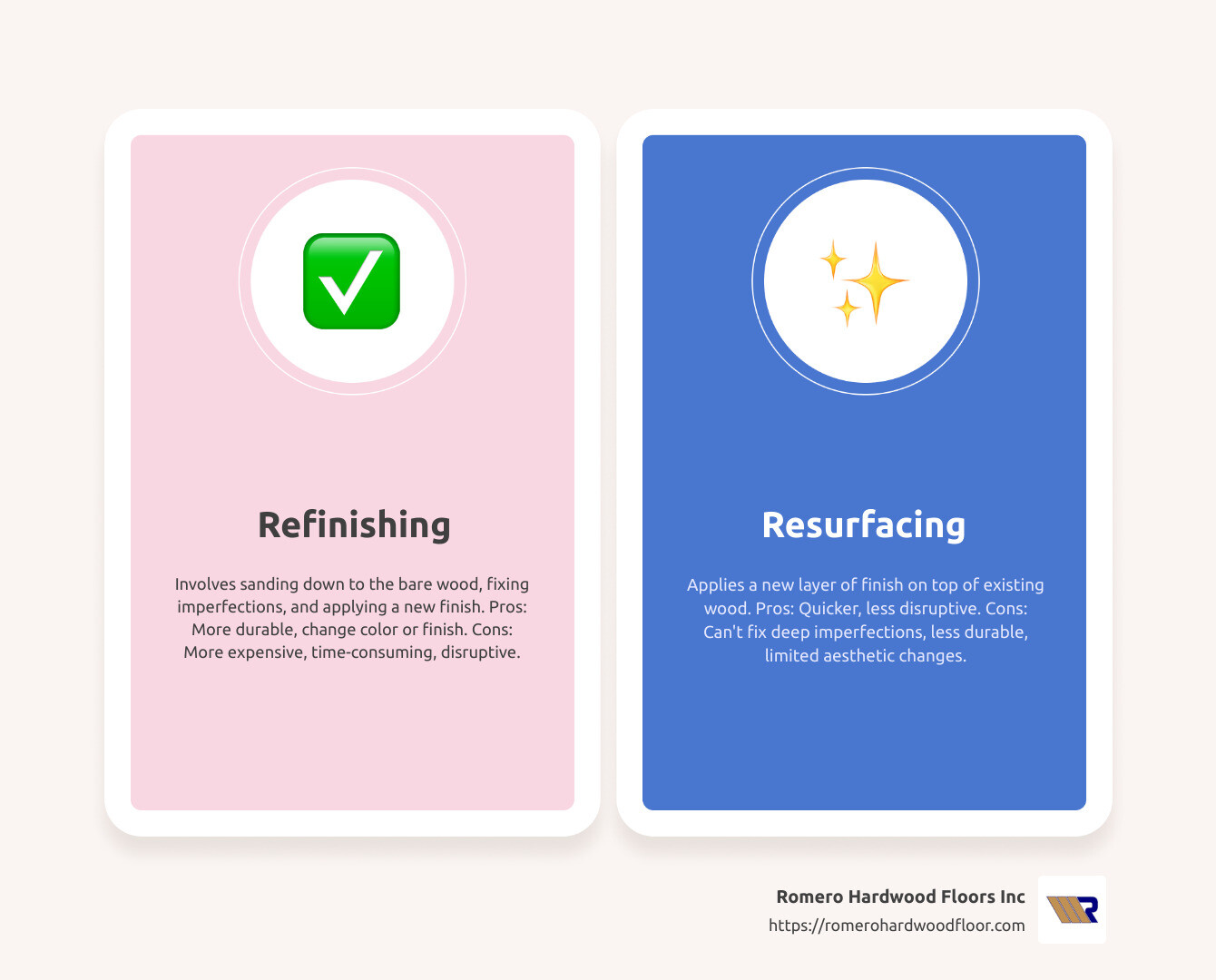
Floor refinishing resurfacing are two popular methods to breathe new life into old wooden floors. But which one is right for you? Here’s a quick glance at the key differences to help you decide:
- Refinishing: Involves sanding down to the bare wood, fixing imperfections, and applying a new finish.
- Pros: More durable, can change color or finish.
- Cons: More expensive, time-consuming, disruptive.
- Resurfacing: Applies a new layer of finish on top of existing wood.
- Pros: Quicker, less disruptive.
- Cons: Can’t fix deep imperfections, less durable, limited aesthetic changes.
Whether you’re a homeowner or managing commercial properties, choosing between refinishing and resurfacing depends on the condition of your floors, the desired durability and aesthetics, and budget constraints.
Hello! I’m Francisco Romero, the owner of Romero Hardwood Floors Inc., with over 15 years of expertise in floor refinishing resurfacing. My team and I are committed to delivering quality hardwood flooring solutions throughout Revere, MA, and beyond. Let’s explore how these flooring techniques can transform your space and improve your property’s value.
Understanding Floor Refinishing Resurfacing
When it comes to floor refinishing resurfacing, it’s crucial to understand the distinct processes involved in each method. Both aim to renew your hardwood floors, but they achieve this in different ways and are suitable for varying conditions.
Refinishing Process
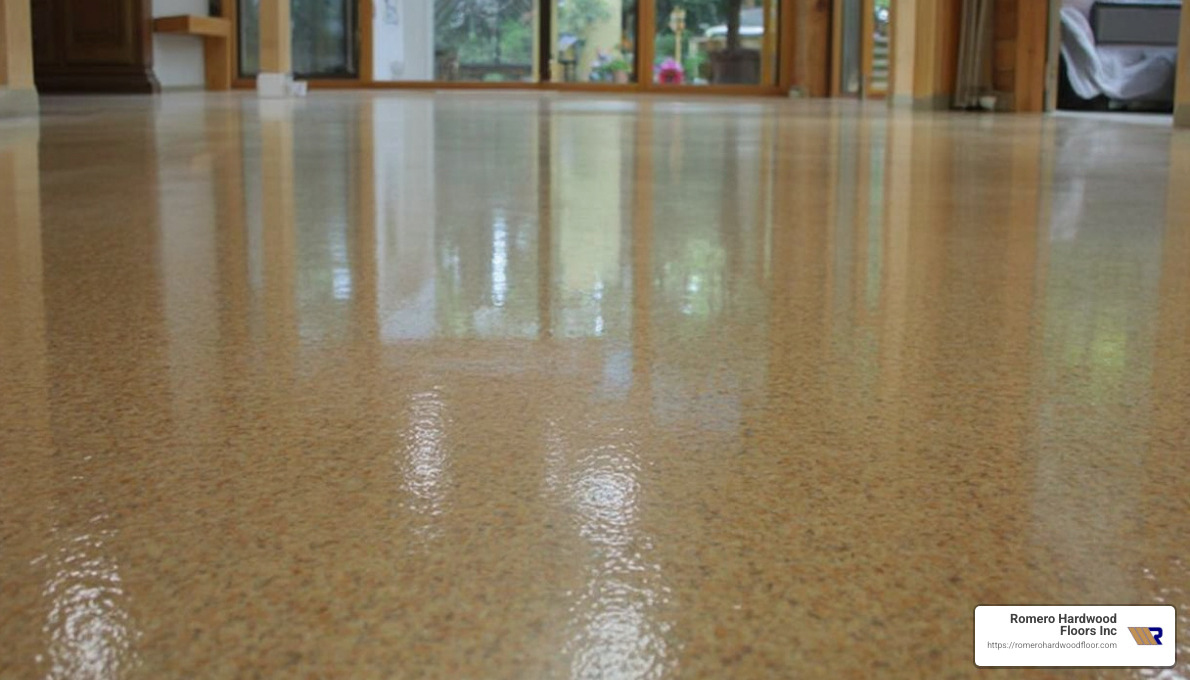
Refinishing is a comprehensive method that starts by sanding down the floor to the bare wood. This step is vital because it removes deep scratches, stains, and any old finish. Once the surface is smooth, a new stain can be applied, allowing homeowners to change the color or finish completely. After staining, a protective sealant or polyurethane is added for durability.
Key Benefits of Refinishing:
- Durability: The sanding process ensures that the new finish bonds effectively with the wood, providing a more robust, long-lasting surface.
- Aesthetic Flexibility: You can choose new colors or finishes, offering a chance to transform your space entirely.
However, refinishing can be more time-consuming and disruptive, often requiring the use of heavy machinery and several days to complete. It’s also more costly than resurfacing but offers a significant upgrade for floors with deep imperfections.
Resurfacing Process
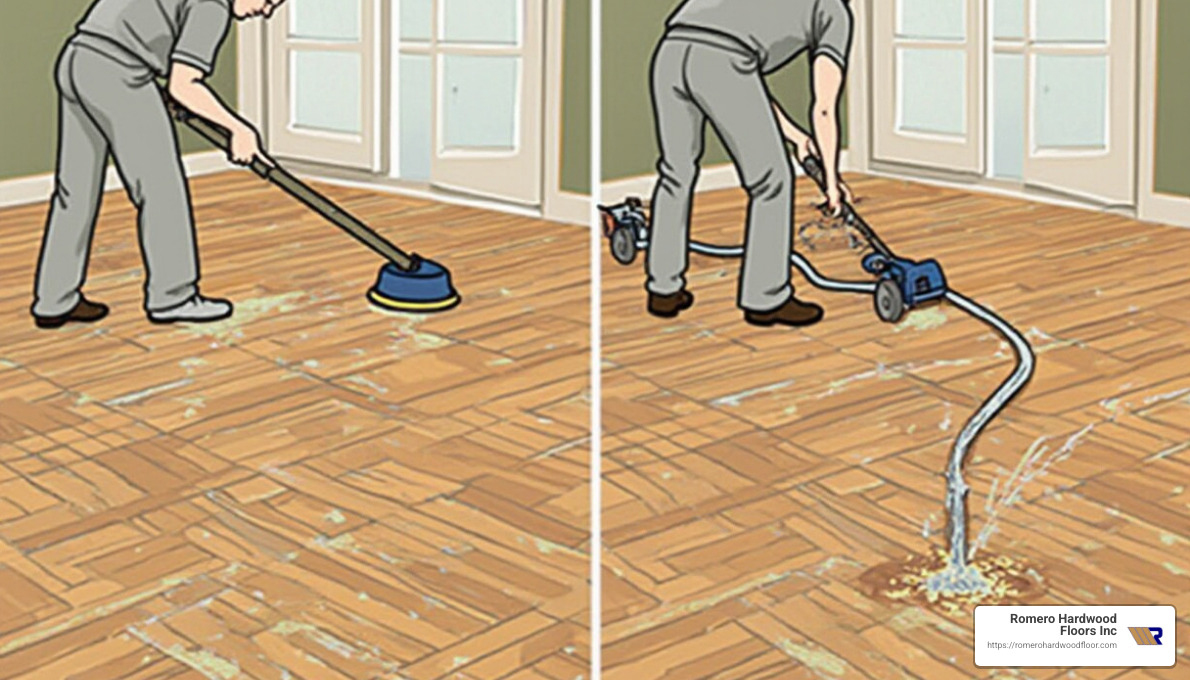
Resurfacing, on the other hand, is less invasive. It involves cleaning the existing surface and applying a new layer of finish. This method is ideal for floors with light wear, such as minor scratches or scuff marks.
Advantages of Resurfacing:
- Speed and Convenience: Resurfacing is quicker and less disruptive, often completed in just a few hours.
- Cost-Effective: At about 99¢ per square foot, it’s a budget-friendly option compared to refinishing.
However, resurfacing does not address deeper scratches or structural issues. It’s less durable and offers limited options for changing the floor’s appearance.
Differences at a Glance
| Aspect | Refinishing | Resurfacing |
|---|---|---|
| Process | Sand down to bare wood | Apply new finish on existing wood |
| Durability | More durable | Less durable |
| Aesthetics | Can change color/finish | Limited changes |
| Cost | More expensive | More affordable |
| Time and Disruption | Longer and more disruptive | Quicker and less disruptive |
Understanding these differences can help you decide which method suits your needs. Whether you need the comprehensive overhaul of refinishing or the quick refresh of resurfacing, both options have their place in maintaining and enhancing your hardwood floors.
Now that we’ve covered the processes and differences, let’s dive into the costs associated with each option.
Cost Considerations
When it comes to floor refinishing resurfacing, understanding the costs involved is crucial. Here’s a breakdown to help you make an informed decision.
Cost Comparison
The cost difference between refinishing and resurfacing is significant. Refinishing is more expensive due to the labor-intensive process of sanding and applying multiple coats of finish. Resurfacing, however, is quicker and less costly, making it an attractive option for those on a tighter budget.
Refinishing Costs
Refinishing hardwood floors involves sanding down to the bare wood, applying a new stain, and sealing the floor with a protective finish. This process is comprehensive and can handle deeper imperfections like scratches and warped boards.
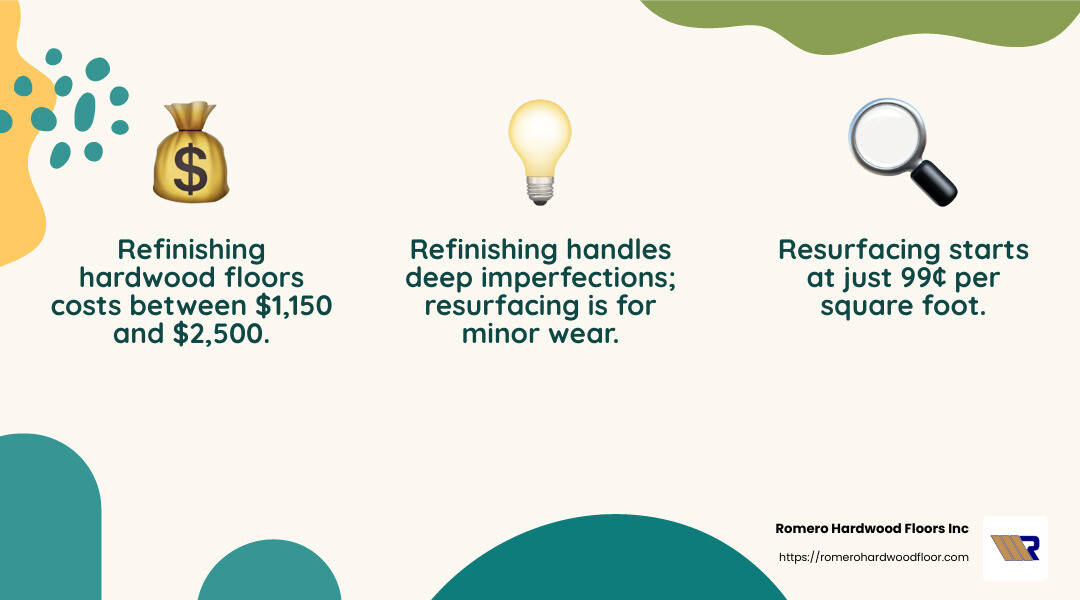
- Average Cost: Homeowners typically spend between $1,150 and $2,500 to refinish their floors.
- Factors Influencing Cost:
- Square Footage: Larger areas will naturally cost more.
- Condition of Floors: Floors with significant damage may require more work and thus increase the cost.
- Location: Prices can vary based on geographic location and local market rates.
Resurfacing Costs
Resurfacing is a less invasive process that involves cleaning the existing surface and applying a new layer of finish. This option is ideal for floors with minor wear and tear.
- Average Cost: Resurfacing starts at just 99¢ per square foot, making it a budget-friendly choice.
- Factors Influencing Cost:
- Floor Condition: While resurfacing is cheaper, it won’t fix deep scratches or structural issues.
- Finish Type: The type of finish applied can affect the cost, with some specialty finishes costing more.
Making the Right Choice
Choosing between refinishing and resurfacing depends largely on your budget and the condition of your floors. If you’re dealing with significant damage, refinishing is the way to go despite the higher cost. However, for a quick refresh with minimal disruption, resurfacing offers a wallet-friendly alternative.
Understanding these cost considerations will help you plan your project effectively and choose the option that aligns with your budget and needs.
Durability and Aesthetics
When deciding between floor refinishing resurfacing, it’s important to consider how each option affects durability and aesthetics.
Durability
Refinishing provides a more durable finish than resurfacing. This is because refinishing involves sanding down to the bare wood, which allows the new finish to bond deeply. This process results in a stronger, longer-lasting floor.
- Refinishing: Ideal for floors with deep scratches or damage. It creates a sturdy, protective layer.
- Resurfacing: Best for floors with light wear. It adds a new finish layer but doesn’t address deep imperfections.
Appearance
The appearance of your floors can greatly impact the feel of your home. Refinishing gives you the flexibility to change the color or finish of your wood floors. This allows for a complete change of your space.
- Refinishing: Offers a wide range of stain colors and finishes. Perfect for those looking to update or change their floor’s look.
- Resurfacing: Limited to enhancing the existing color and finish. It won’t hide significant imperfections.
Finish Options
Choosing the right finish is key to achieving the look and durability you desire. Options include natural oils like tung oil, which improve the wood’s grain, and synthetic finishes like polyurethane, known for their durability.
- Tung Oil: Eco-friendly and water-resistant. Offers a natural look but requires more maintenance.
- Polyurethane: Available in oil-based and water-based forms. Highly durable and ideal for high-traffic areas.
Deciding between refinishing and resurfacing involves weighing the importance of durability and aesthetics for your specific needs. Whether you want to completely change the look of your floors or simply refresh them, understanding these aspects will guide you in making the best choice for your home.
Level of Disruption
When considering floor refinishing resurfacing, it’s crucial to think about how disruptive each process can be to your daily life. Let’s break it down by time, disruption, and convenience.
Time
Both refinishing and resurfacing involve some downtime, but the extent varies.
- Refinishing: This process is more time-consuming. It typically takes about three to seven days. The timeline depends on the size of the area and the condition of the floors. After the sanding and application of the finish, drying times add to the wait. Furniture should not be moved back for at least 48 hours to ensure the finish cures properly.
- Resurfacing: Generally quicker. Since it involves adding a new finish layer without sanding down to the bare wood, it can often be completed in one to two days.
Disruption
The level of disruption to your home life is an important factor.
- Refinishing: More disruptive. Heavy machinery is used to sand down the floors, creating noise and dust. You might need to vacate the area or even the home during the process, especially if you have children or pets.
- Resurfacing: Less disruptive. Since it skips the intensive sanding process, there’s minimal dust and noise. You can often stay in your home during the work.
Convenience
Convenience is about how easily you can fit the process into your schedule.
- Refinishing: Requires more planning. You might need to move furniture out of the rooms and arrange for alternative accommodations if the work spans several days.
- Resurfacing: More convenient. With a shorter timeframe and less mess, it’s easier to work around your daily routine.
In summary, if minimizing disruption is a priority, resurfacing might be the more convenient option. However, for long-term durability and aesthetic flexibility, refinishing may be worth the temporary inconvenience. Understanding these factors can help you decide which process aligns best with your lifestyle and needs.
Frequently Asked Questions about Floor Refinishing Resurfacing
What is the difference between resurfacing and refinishing floors?
Refinishing and resurfacing may sound similar, but they involve different processes and outcomes.
- Refinishing: This is like giving your floors a makeover. It involves sanding down the top layer to remove scratches and blemishes, then applying a fresh stain and finish. This process can transform your floor’s appearance and improve its durability. However, it requires more time and is more disruptive due to the heavy sanding involved.
- Resurfacing: This is less intensive. It involves applying a new layer of finish without sanding down to the bare wood. It’s quicker and less disruptive, but it can’t fix deep imperfections or change the color of the wood.
In short, refinishing is a deeper, more transformative process, while resurfacing is quicker and less disruptive.
Is it cheaper to refinish floors or replace them?
Refinishing floors is generally more cost-effective than replacing them. Here’s why:
- Cost-effectiveness: Refinishing costs range from $3 to $8 per square foot, depending on the method. Replacing floors can be much more expensive, often exceeding $10 per square foot for materials and installation.
- Preservation: Refinishing maintains the character and warmth of your original hardwood floors, which many homeowners value.
- Environmental Impact: Refinishing is more environmentally friendly. It reduces waste since you’re not discarding old materials.
Refinishing is often the better choice for cost savings and preserving the unique charm of your existing floors.
How much does it cost to sand down and refinish wood floors?
The cost to sand and refinish wood floors depends on several factors:
- Average Cost: Nationally, the average cost for refinishing is between $1,099 to $2,659. This translates to roughly $3 to $8 per square foot.
- Square Footage: The total cost will depend on the size of the area being refinished. Larger spaces will naturally cost more.
- Pricing Factors: Costs can vary based on the condition of the floors, the type of wood, and local labor rates. The choice between traditional sanding and the newer “dustless” method also affects the price, with dustless being on the higher end.
Understanding these factors can help you budget effectively for your floor refinishing project.
Conclusion
Choosing between floor refinishing resurfacing can feel overwhelming. But with the right guidance, it becomes a manageable decision. At Romero Hardwood Floors Inc, we pride ourselves on helping homeowners make informed choices that suit their needs and budget.
Romero Hardwood Floors Inc has been a trusted name in the hardwood flooring industry since 2006. Our team specializes in both residential and commercial flooring services, providing competitive pricing and guaranteed workmanship. We understand that your floors are an integral part of your home’s character and value.
When it comes to making the right decision, consider the specific needs of your floors. If they have deep scratches or need a new look, refinishing might be the best option. If your floors just need a little freshening up, resurfacing could be perfect.
Our experts are here to help you steer these options. We offer personalized consultations to assess your floors and discuss your goals. Our aim is to ensure you get the best value and satisfaction from your flooring project.
To learn more about our services or to schedule a consultation, visit our hardwood floor refinishing page. Let us help you transform your space with floors that are not only beautiful but also durable and timeless.
With Romero Hardwood Floors Inc, you’re not just improving your floors—you’re making a long-term investment in your home’s comfort and style.
