Hardwood Floor Cost Estimator: Top 5 Smart Savings 2024
Hardwood floor cost estimator tools offer quick insights for anyone calculating flooring expenses, helping to plan budgets effortlessly. As a premier choice for home and commercial spaces, hardwood floors combine elegance and durability.
Let’s explore the basics:
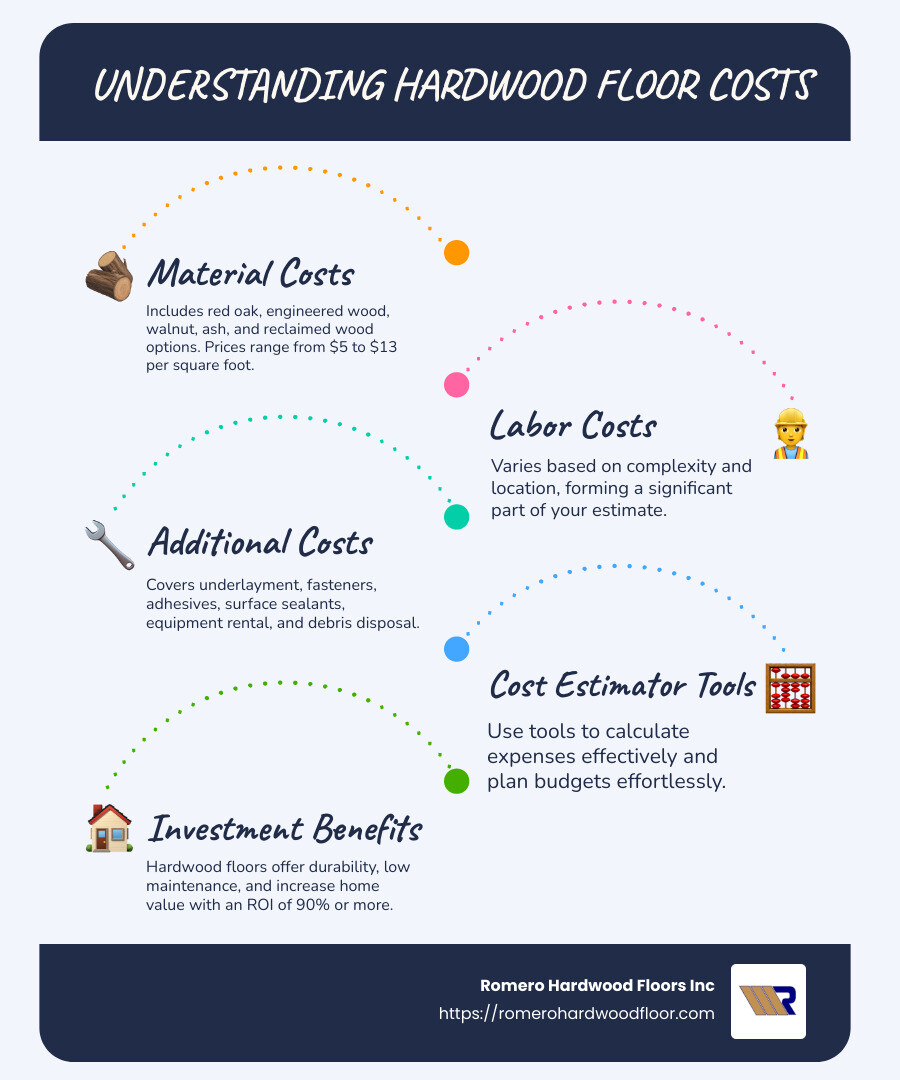
- Material Costs: From red oak’s affordability to engineered wood’s versatility, prices can vary. Expect $5 to $13 per square foot for different wood types like ash, walnut, and reclaimed options.
- Labor Costs: Depending on complexity and location, expenses range widely but typically sum up a substantial part of your estimate.
- Why Hardwood: It’s strong, long-lasting, low maintenance, and increases home value. Real hardwood can yield an ROI of 90% or more, proving a wise investment.
As Francisco Romero, owner of Romero Hardwood Floors Inc., I bring over 15 years of expertise in providing homeowners top-tier hardwood flooring solutions. Using a hardwood floor cost estimator, I focus on delivering precise, cost-effective installations ensuring quality and satisfaction.
Hardwood floor cost estimator terms explained:
– Best hardwood floor brands
– Hardwood floor underlayment types
– Wide plank hardwood floors
Factors Influencing Hardwood Floor Installation Costs
When planning for hardwood floor installation, several key factors will determine the overall costs. Understanding these can help you use a hardwood floor cost estimator more effectively.
Material Costs
Material costs form a significant portion of your flooring budget. The type of hardwood you choose will greatly influence the price. Common options include:
- Red Oak: A popular choice due to its affordability and availability, usually priced between $5 to $10 per square foot.
- Engineered Wood: Offers versatility and is often less expensive than solid hardwood, ranging from $4 to $8 per square foot.
- Exotic Woods: Options like Brazilian walnut or teak can cost upwards of $15 per square foot due to their rarity and high demand.
Labor Costs
Labor costs can vary significantly based on the complexity of the installation and the region you’re in. For instance, intricate patterns or layouts with many angles may increase labor time and costs. On average, labor costs can range from $3 to $10 per square foot.
- Site Preparation: This includes tasks like removing old flooring and preparing the subfloor, which could add $1.50 to $3.50 per square foot.
- Regional Variations: Labor rates can differ based on your location. Urban areas may have higher rates compared to rural locations due to higher living costs.
Underlayment and Equipment
Underlayment is essential for soundproofing and moisture protection. This adds an extra $0.50 to $1.50 per square foot.
- Fasteners and Adhesives: Necessary for securing the flooring, these materials can add up to $1 per square foot.
- Equipment Rental: If you need specialized tools, rental costs could range from $50 to $100 per day.
Debris Disposal
Removing and disposing of old flooring materials is another cost factor. Disposal fees can vary but typically range from $0.70 to $1.60 per square foot for carpeting and $1.50 to $3.50 for hardwood.
Site Conditions
The condition of the installation site can impact costs. Uneven or damaged subfloors may require repairs or replacements, adding $2.20 to $4.75 per square foot for subfloor replacement.
Proper planning and understanding these factors can help you manage your hardwood floor installation budget effectively. By considering these elements, you can make informed decisions and ensure a smooth installation process.
Hardwood Floor Cost Estimator
Estimating the cost of hardwood floor installation can feel overwhelming, but a hardwood floor cost estimator simplifies the process. This tool considers several factors to provide a clear estimate, helping you plan your budget effectively.
Material Costs
Choosing the right type of hardwood is crucial as it impacts your overall expenses. Here’s a breakdown of common hardwood options:
- Red Oak: Known for its durability and classic look, this popular choice costs between $5 and $10 per square foot.
- Engineered Wood: A budget-friendly alternative, priced from $4 to $8 per square foot, offering flexibility in installation over various subfloors.
- Waterproof Hardwood: Ideal for moisture-prone areas, combining hardwood with bamboo and a protective coating, usually costing more than standard options.
Using a hardwood floor cost estimator, you can input your desired wood type and get a custom cost estimate based on current market prices.
Labor Costs
Labor is another significant cost factor. The complexity of the installation and your location can influence labor rates. Here are some considerations:
- Basic Installation: Expect to pay between $3 and $10 per square foot for straightforward installations.
- Site Preparation: Tasks like removing old flooring and leveling the subfloor can add $1.50 to $3.50 per square foot.
- Regional Variations: Labor costs can vary by region, with urban areas typically charging more due to higher living costs.
Additional Costs
Beyond materials and labor, several other costs can affect your budget:
- Underlayment: Essential for soundproofing and moisture protection, adding $0.50 to $1.50 per square foot.
- Fasteners and Adhesives: Necessary materials for installation can add up to $1 per square foot.
- Equipment Rental: If you’re handling the installation yourself, renting specialized tools can cost $50 to $100 per day.
- Debris Disposal: Removing old flooring and installation waste typically ranges from $0.70 to $1.60 per square foot for carpeting and $1.50 to $3.50 for hardwood.
Understanding these elements helps you use a hardwood floor cost estimator accurately, ensuring you plan for all potential expenses. By considering material choices, labor requirements, and additional costs, you can create a comprehensive budget for your hardwood flooring project.
How to Use a Hardwood Floor Cost Estimator
Using a hardwood floor cost estimator can simplify the process of budgeting for your flooring project. Here’s a step-by-step guide to help you steer this tool effectively.
Step-by-Step Guide
- Inputting Dimensions: Start by measuring the length and width of each room where you plan to install hardwood flooring. Enter these measurements into the estimator. It’s important to round up any fractions of an inch to the nearest whole number to ensure accuracy.
- Calculating Materials: Once you’ve entered the dimensions, select the type of hardwood you plan to use. The estimator will calculate the cost based on the price per square foot of your chosen wood type. For instance, opting for red oak can range between $5 and $10 per square foot.
- Estimating Labor Hours: The estimator will also account for labor costs. Basic installations might cost between $3 and $10 per square foot. If your project involves additional tasks like removing old flooring or leveling the subfloor, expect to add $1.50 to $3.50 per square foot.
Example Calculation
Let’s walk through a sample project to illustrate how the estimator works:
Project Details:
– Room Size: 15 feet by 20 feet (300 square feet)
– Wood Type: Engineered Wood, $4 to $8 per square foot
– Basic Installation: $3 per square foot
– Site Preparation: $1.50 per square foot
Cost Breakdown:
– Material Cost: 300 sq. ft. x $6 (average price) = $1,800
– Labor Cost: 300 sq. ft. x $3 = $900
– Site Preparation: 300 sq. ft. x $1.50 = $450
Total Estimate: $1,800 (materials) + $900 (labor) + $450 (site preparation) = $3,150
This example provides a clear idea of what to expect when planning your hardwood flooring project. By using a hardwood floor cost estimator, you can adjust variables like wood type and labor costs to see how they impact your total budget.
Tips to Save on Hardwood Floor Installation
Installing hardwood floors can be a significant investment, but there are ways to manage costs without sacrificing quality. Here are some practical tips to help you save money on your hardwood floor installation.
Buying in Bulk
When it comes to purchasing hardwood, buying in bulk can lead to substantial savings. Retailers often offer discounts for larger orders. If you’re planning to floor multiple rooms, consider buying all the materials at once. This not only reduces the cost per square foot but also ensures consistency in wood grain and color across different areas.
Choosing Cost-Effective Materials
Selecting the right type of hardwood can make a big difference in your budget. Engineered wood, for example, is typically less expensive than solid hardwood and offers excellent durability. It’s also more resistant to moisture, making it a great choice for areas like basements or kitchens. Waterproof hardwood is another option that combines the aesthetics of wood with the resilience needed for moisture-prone spaces.
DIY Options
If you’re handy and have some experience, consider tackling parts of the installation yourself. Tasks like removing old flooring or preparing the subfloor can be done without professional help, saving on labor costs. However, be cautious with the actual installation of the hardwood. Mistakes can be costly, and a poor installation might void any warranties. For those unsure, hiring a professional for the more technical aspects is advisable.
Financing Options
Financing can make hardwood flooring more accessible. Many suppliers offer special financing plans, allowing you to spread the cost over several months. This can be particularly helpful if you’re on a tight budget but don’t want to compromise on quality. Be sure to check the terms and interest rates to ensure it’s a cost-effective solution for your situation.
By strategically planning your purchase and installation, you can enjoy beautiful hardwood floors without breaking the bank. These tips are just a starting point; using a hardwood floor cost estimator can further refine your budget and help you make informed decisions.
Frequently Asked Questions about Hardwood Floor Cost Estimator
How much does it cost to install hardwood floors per square foot?
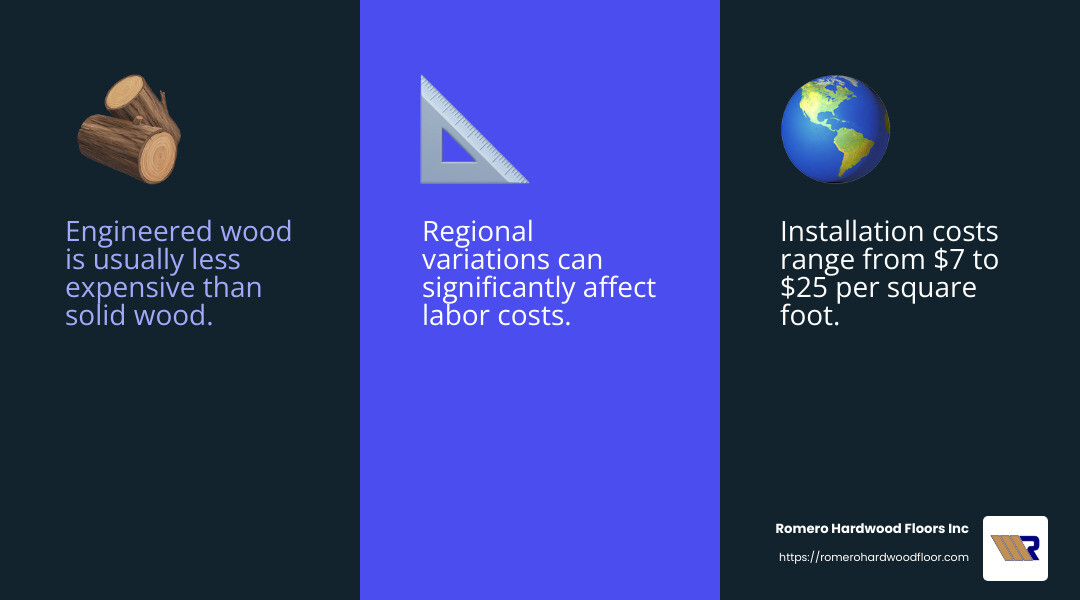
The cost to install hardwood floors varies widely. On average, you can expect to pay between $7 to $25 per square foot. This range includes both materials and labor. The type of hardwood you choose has a big impact on cost. For instance, engineered wood is usually less expensive than traditional solid wood.
What factors affect the total cost of hardwood floor installation?
Several factors can influence the overall cost of installing hardwood floors:
- Type of Wood: Exotic woods like Brazilian walnut are pricier than domestic options such as red oak or pine.
- Project Size: Larger projects may offer a lower cost per square foot but will increase the total cost.
- Labor Costs: These can vary based on the complexity of the installation and the region you live in. Labor typically ranges from $3 to $10 per square foot.
- Subfloor Preparation: Additional costs may arise if the subfloor requires leveling or moisture testing.
- Additional Materials: Items like underlayment, fasteners, and adhesives can add to the total cost.
Can I reduce costs by doing some of the work myself?
Yes, you can save money by handling certain tasks yourself. Here are some areas where DIY can be effective:
- Removing Old Flooring: This is often labor-intensive but straightforward and can save on labor costs.
- Preparing the Subfloor: Tasks such as cleaning and leveling can be done by homeowners with some DIY experience.
However, the actual installation of hardwood should be approached with caution. Mistakes can lead to costly repairs and may void warranties. If unsure, consider hiring a professional for the installation while handling the prep work yourself. This approach balances cost savings with professional quality.
Conclusion
Estimating hardwood floor installation costs accurately is crucial for successful budgeting and planning. By understanding the various factors that influence costs, such as material choice, labor, and additional expenses like underlayment and debris disposal, you can make informed decisions. A hardwood floor cost estimator can be an invaluable tool in this process, helping you to calculate potential expenses and avoid unexpected surprises.
Accurate cost estimation not only ensures that your project stays within budget but also allows you to explore different options to maximize value. For example, you might choose cost-effective materials or decide to handle some tasks yourself to save on labor costs. Understanding these elements can help you achieve a beautiful, long-lasting hardwood floor without breaking the bank.
At Romero Hardwood Floors Inc, we specialize in providing expert hardwood flooring solutions custom to your needs. With our competitive pricing and guaranteed workmanship, we aim to improve your property’s value while ensuring a seamless installation experience. Our team is committed to transparency and customer satisfaction, guiding you through every step of your flooring project.
For more insights and assistance with your hardwood flooring needs, visit our hardwood flooring contractors service page. Let us help you transform your space with quality and precision.