
Hardwood Floor Cost Per Square Foot: Top 5 Essential Facts
Hardwood floor cost per square foot is an essential consideration for anyone looking to upgrade their living space. The price can significantly vary depending on the type of hardwood, the quality of materials, and the complexity of the installation. Here’s a quick overview of what you might expect:
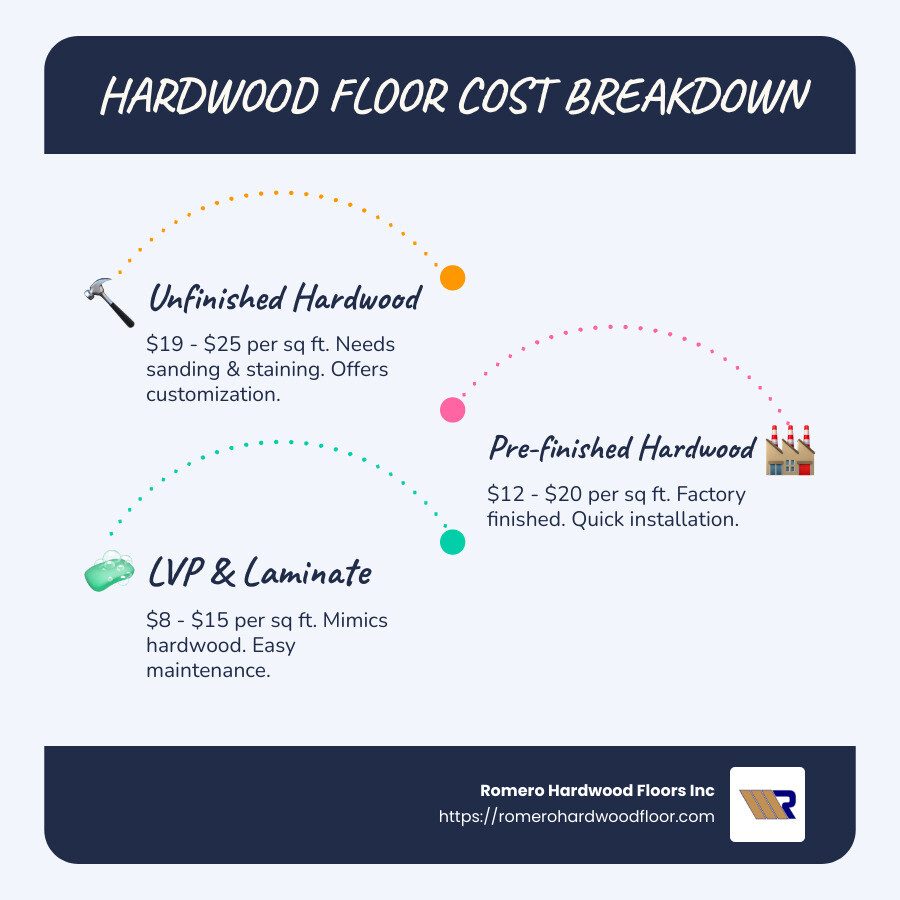
- Unfinished Hardwood Flooring: $19 – $25 per square foot
- Pre-finished Hardwood Flooring: $12 – $20 per square foot
- LVP & Laminate Flooring: $8 – $15 per square foot
When selecting hardwood flooring, understanding these costs can help you plan a budget that fits your personal or commercial needs. Each type of flooring offers its unique advantages, and mastering this knowledge ensures that you make an informed decision, optimized for both value and visual appeal.
Introducing myself, I am Francisco Romero. With over 15 years of expertise at Romero Hardwood Floors Inc., I specialize in hardwood flooring solutions. My extensive experience helps me provide accurate insights into hardwood floor cost per square foot, ensuring you get the best value for your investment. Now, let’s explore the specific elements that contribute to these costs.
Understanding Hardwood Floor Cost Per Square Foot
Unfinished Hardwood Flooring
Unfinished hardwood is the real deal. It arrives at your home as raw lumber, which means it needs sanding, staining, and finishing on-site. This process allows for customization, but it also means more labor.
Material Costs: For unfinished hardwood, you’re looking at a range of $19 to $25 per square foot. This price includes the wood itself and the labor required to install, sand, and finish it. The type of wood you choose can affect this cost significantly. For example, red oak is more affordable than exotic species like Brazilian cherry.
Labor Costs: The labor for unfinished hardwood involves more than just laying down planks. It includes preparing the subfloor, sanding the wood, applying stains, and finishing with protective coatings. This extra work can add to the overall cost.
Installation Methods: Installing unfinished hardwood is a meticulous process. It requires precision to ensure each plank fits perfectly. The floor is nailed down, sanded to a smooth finish, and then stained. Finally, several coats of finish are applied to protect the wood.
Pre-finished Hardwood Flooring
Pre-finished hardwood comes factory-finished, which means it’s ready to install right away. This option is less labor-intensive than unfinished hardwood.
Material Costs: The cost for pre-finished hardwood ranges from $12 to $20 per square foot. Prices vary based on factors like the wood species and the quality of the factory finish. High-end finishes, such as those applied with hard wax oil, tend to be more expensive.
Labor Costs: Labor costs for pre-finished hardwood are generally lower because the boards don’t need additional sanding or staining. They are ready to be installed immediately after delivery.
Installation Methods: Pre-finished hardwood is installed similarly to unfinished hardwood but without the need for on-site finishing. This means less mess and a quicker installation process, which can be a big advantage for busy households.
LVP & Laminate Flooring
LVP (Luxury Vinyl Plank) and laminate flooring are popular for those on a budget. They offer the look of wood without the high cost.
Material Costs: Expect to pay between $8 and $15 per square foot for LVP and laminate. These materials are not real wood but are designed to mimic the appearance of hardwood.
Labor Costs: Labor costs for LVP and laminate are typically lower than for hardwood. These floors are often installed as “floating floors,” meaning they rest on top of the subfloor without being nailed down. This can make installation quicker and easier.
Installation Methods: Floating floors use a click-and-lock system, which allows the planks to snap together seamlessly. This method is DIY-friendly, but hiring a professional ensures a flawless finish, especially in rooms with complex layouts.
Understanding the hardwood floor cost per square foot is crucial for making an informed decision. Whether you’re opting for the authentic feel of unfinished hardwood, the convenience of pre-finished options, or the affordability of LVP and laminate, knowing the costs involved will help you choose the best flooring for your needs.
Factors Influencing Hardwood Flooring Costs
When it comes to hardwood floor cost per square foot, several factors can significantly impact the overall price. Let’s explore the key elements like the species of wood, plank width, and subfloor condition, as well as the installation complexity.
Species of Wood
The type of wood you choose can greatly affect your flooring costs. Here’s a quick breakdown of popular options:
- Red Oak: This is the most common and affordable choice, with narrow planks costing between $3-6 per square foot. It’s widely available and easy to work with.
- White Oak: A bit pricier due to its popularity and limited availability. Narrow planks range from $5.50-8 per square foot, while wide planks can go up to $15.
- Maple: Known for its durability, maple costs $4.50-7 per square foot for narrow planks. Wide planks are more expensive, often made to order, costing $8-12 per square foot.
- Exotic Hardwoods: Woods like Brazilian cherry or teak can cost significantly more due to their rarity and unique appearance.
Each wood type brings its own charm and durability, impacting not just the cost but also the aesthetic and longevity of your floors.
Installation Complexity
The complexity of your installation can also influence costs. Here are some factors to consider:
- Layout: An open layout might be easier and cheaper to install than a smaller, closed-off space. Complex patterns like herringbone can double the installation cost due to the precision required.
- Demolition: Removing old flooring adds to the cost. For example, carpet removal might add about $1 per square foot, while tile can add $2-5 per square foot.
- Subfloor Preparation: A flat and clean subfloor is crucial. If your subfloor needs leveling or repair, this can increase costs. Moisture barriers may also be necessary, especially for concrete subfloors.
Each of these factors plays a role in determining your total cost. By understanding these elements, you can better plan your budget and make informed decisions about your hardwood flooring project.
DIY vs. Professional Installation
When considering hardwood floor installation, a key question is whether to go the DIY route or hire professionals. Let’s explore the tools, skills, and costs involved in both options.
DIY Installation
Tools Needed
Installing hardwood floors yourself requires a specific set of tools. Essential equipment includes:
- Miter Saw: For precise end cuts.
- Table Saw: To make long, straight cuts.
- Floor Nailer: To secure the planks.
- Oscillating Saw: For cutting around door jambs.
Most of these tools can be rented, but rental costs can add up quickly. While DIY can save you on labor costs, you should factor in tool rental fees.
Carpentry Skills
DIY installation demands a good understanding of carpentry. You’ll need to:
- Set a straight starting line.
- Close gaps between wall rows.
- Handle tricky areas like door jambs.
If you have the skills and patience, DIY might be a rewarding challenge. However, be prepared for a significant time investment. Installing more than 150 square feet per day can be tough for beginners.
Professional Installation
Labor Costs
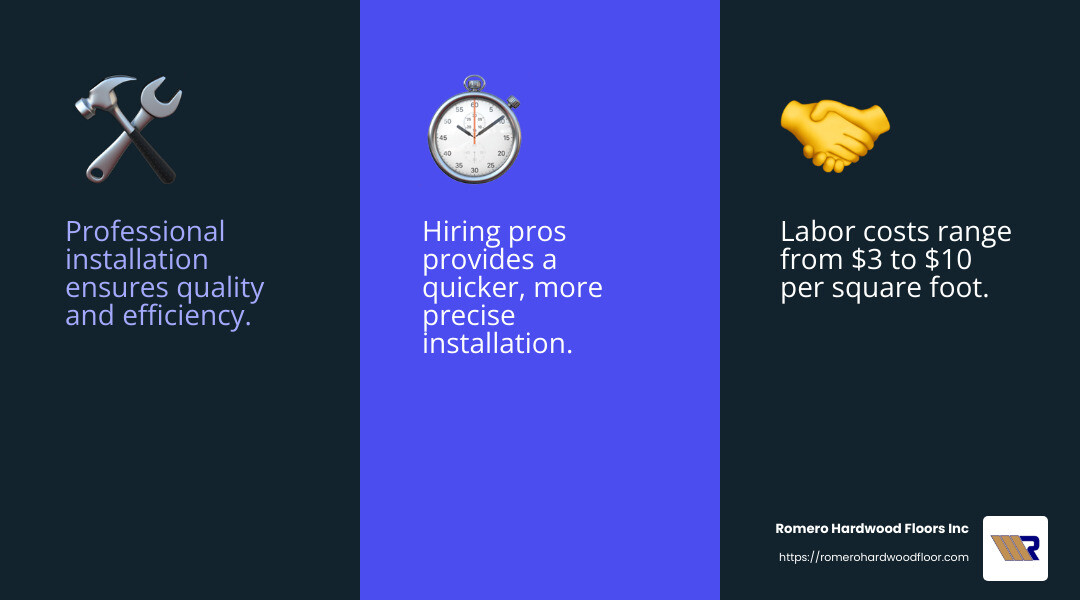
Hiring professionals ensures a quicker, more precise installation. Labor costs typically range from $3 to $10 per square foot, depending on the complexity of the job and your location.
Benefits of Hiring Pros
- Expertise: Professionals bring experience and skill to the job, reducing the risk of costly mistakes.
- Time Efficiency: An experienced crew can complete the installation much faster than a DIY approach.
- Warranty Protection: Many manufacturers require professional installation to maintain product warranties.
Choosing the Right Professionals
When hiring installers, it’s crucial to get multiple quotes and check credentials. Look for reviews and ask for references to ensure you’re hiring a reputable company.
In deciding between DIY and professional installation, consider your budget, time, and skill level. While DIY can be cost-effective, professional installation offers peace of mind and a polished finish.
Frequently Asked Questions about Hardwood Flooring Costs
How much does it cost to install 1000 square feet of hardwood?
Installing hardwood flooring in a 1,000-square-foot space can vary widely in cost. On average, homeowners spend between $7,000 and $25,000. This range is due to factors like the type of hardwood, labor costs, and installation complexity. For a more detailed breakdown:
- Material Costs: Hardwood prices range from $3 to $15 per square foot. Exotic woods will be on the higher end.
- Labor Costs: Professional fees can be $3 to $10 per square foot. This includes preparation, installation, and finishing.
Choosing high-quality hardwood may increase upfront costs but can save money in the long run due to its durability and less frequent need for replacement.
Is hardwood flooring cheaper than carpet?
When comparing hardwood flooring to carpet, it’s important to consider both initial and long-term costs.
- Initial Costs: Carpet is generally cheaper upfront, with installation costs ranging from $3 to $7 per square foot. Hardwood typically costs more initially.
- Investment Value: Hardwood floors can last 40 years or more with proper care, whereas carpet may need replacement every 10 to 15 years. Hardwood also adds value to your home, making it a wise investment.
If you’re looking for a long-lasting flooring solution, hardwood may provide better value over time despite its higher initial cost.
What are the hidden costs of installing hardwood floors?
Several hidden costs can arise when installing hardwood floors, which can impact your budget:
- Subfloor Issues: A stable subfloor is crucial for hardwood installation. If your subfloor is uneven or damaged, repairs can add significant costs.
- Waste Factor: Contractors typically order about 10% extra material to account for cuts and waste. This ensures there’s enough flooring to complete the project without delays.
- Extra Materials: You may need additional materials like underlayment, fasteners, and adhesives, which can add to the overall cost.
It’s essential to plan for these potential expenses to avoid surprises during your hardwood flooring project.
Conclusion
Choosing Romero Hardwood Floors Inc for your hardwood flooring needs is an investment in quality and long-term value. With over a decade of experience, we provide expert solutions custom to improve your home’s beauty and worth.
Expert Solutions
Our team specializes in delivering top-notch craftsmanship in every project. We understand that hardwood floor cost per square foot can be a significant consideration. That’s why we offer competitive pricing without compromising on quality. Our detailed approach ensures that your floors are not only beautiful but also durable and long-lasting.
Property Value Improvement
Installing hardwood floors is more than just an aesthetic upgrade—it’s a smart financial decision. High-quality hardwood flooring can significantly boost your property value. It’s an investment that pays off, especially when installed correctly. Our skilled professionals ensure that every installation improves both the structural integrity and visual appeal of your home.
Why Choose Us?
By choosing Romero Hardwood Floors Inc, you are partnering with a team that values your satisfaction and strives for excellence in every project. We are committed to providing a seamless and rewarding experience, from the initial consultation to the final installation. Our dedication to quality craftsmanship and customer service makes us the trusted choice for homeowners looking to transform their spaces.
For a flooring solution that combines style, durability, and expert installation, contact us today for a FREE estimate. Let us help you create a home that reflects your taste and improves your investment.
