
Why Your Cleaner Choice Matters for Hardwood Floors
Can i use all purpose cleaner on wood floor is a question many homeowners ask when reaching for their go-to spray bottle. The short answer is: most all-purpose cleaners are not recommended for hardwood floors. Here’s what you need to know:
Quick Answer:
- No – Most all-purpose cleaners contain harsh chemicals, additives, and are not pH-neutral
- Risk of Damage – They can dull the finish, cause streaking, and lead to warping over time
- Better Option – Use wood-specific, pH-neutral cleaners designed for hardwood floors
- Water Control – Even “safe” cleaners require minimal water application (damp, not wet)
Your hardwood floors represent a significant investment in your home. Whether you installed them years ago or they came with your property, proper cleaning is essential to maintaining their beauty and longevity. The problem? There’s widespread confusion about what’s actually safe to use on wood.
Many popular household multi-surface products are marketed as “good for everything” – but hardwood floors are the exception. These cleaners often contain concentrated formulas that require precise dilution, additives like fragrance and dyes that leave residue, and pH levels that can break down your floor’s protective finish. As one cleaning expert noted, clients consistently report “detergent streaking after cleaning their hardwood floors, no matter how hard they try” when using the wrong products.
The real danger isn’t just cosmetic. Excess water from improper cleaning can penetrate your floor’s finish and damage the wood beneath, leading to warping, cupping, and costly repairs. Traditional string mops can trap dirt that scratches your floors like sandpaper. Even natural solutions like vinegar – often touted in DIY cleaning blogs – can be acidic enough to dull and damage your finish over time.
As Francisco Romero, with over 15 years of experience in hardwood flooring installation and restoration, I’ve seen countless floors damaged by well-meaning homeowners who didn’t know whether they can i use all purpose cleaner on wood floor. Understanding the right products and techniques can save you thousands in repair costs.
Simple guide to can i use all purpose cleaner on wood floor:
The Big Question: Can I Use All-Purpose Cleaner on a Wood Floor?
The direct answer to “can i use all purpose cleaner on wood floor” is generally no. While the convenience is tempting, hardwood floors demand a specialized approach because most all-purpose cleaners are not formulated for wood finishes.
Cleaning professionals and wood flooring experts advise against these products. For example, some popular cleaners are concentrated, and incorrect dilution can harm your floor. The imprecise nature of “filling a bucket” doesn’t allow for the precise water control hardwood requires. Furthermore, additives like fragrance and coloring can leave behind unsightly residues. It’s also often unclear if these cleaners are pH-neutral, a critical factor for wood.
Other multi-surface cleaners often specify use on “polished or non-porous hardwood floors.” This distinction is crucial, as many older or unsealed wood floors would be severely damaged. Even when used as directed, their chemical composition can pose risks.
The Risks of Using All-Purpose Cleaners
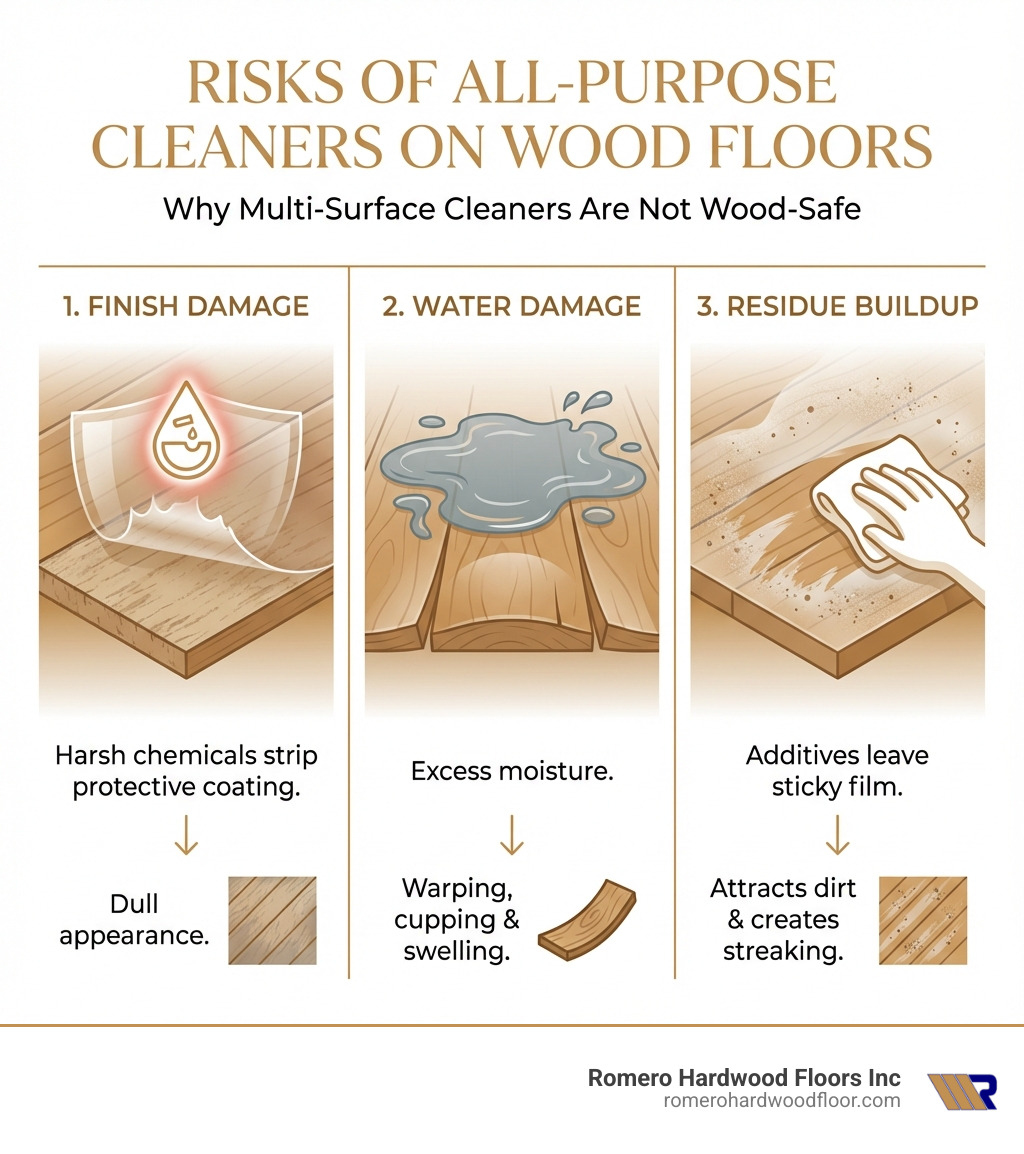
Using all-purpose cleaners on hardwood can lead to immediate and long-term problems, from cosmetic imperfections to structural damage:
- Finish Erosion: Many all-purpose cleaners contain harsh chemicals or acids that can strip or damage your floor’s protective finish. Bleach, for instance, is far too harsh; it can strip the finish, cause discoloration, and lead to warping. This leaves your wood vulnerable to moisture and wear.
- Streaking and Residue Buildup: Additives like fragrances and colorings can leave a sticky or cloudy residue. This residue dulls the floor’s luster, creates streaks, and attracts more dirt, making cleaning counterproductive. Many homeowners report persistent “detergent streaking” with the wrong products. Soap and water can also leave a dulling film and make the floor slippery.
- Water Damage (Warping, Cupping, Swelling): This is the most significant risk. Hardwood and water don’t mix. All-purpose cleaners often require dilution, and traditional cleaning methods can involve excessive moisture. A slightly too-wet mop can let water penetrate the finish and damage the wood, causing swelling, cupping (where board edges are higher than the center), and warping, which are costly to repair. Cold water also slows drying, increasing the risk of moisture seeping into seams and encouraging mold growth.
As experts highlighted in 5 Cleaning Products You Should Never Use on Hardwood Floors, According to Experts, common items like vinegar, bleach, and even plain soap and water can be detrimental. The luxury of a hardwood floor demands thoughtful care, and knowing what not to use is key to proper maintenance.
For more information on keeping your floors in top condition, refer to our hardwood-floor-care-guide.
Why pH-Neutral Matters for Wood
Understanding pH levels is vital for maintaining hardwood floors. The pH scale measures how acidic or alkaline a substance is; 7 is neutral. For hardwood, a pH-neutral cleaner is always preferred.
- Acidic Cleaners: Substances like vinegar (which is acidic) can damage your floor’s protective finish over time, leading to dulling, swelling, and discoloration. While some suggest highly diluted vinegar for occasional deep cleaning, experts agree it should be avoided for routine use as it breaks down the finish.
- Alkaline Cleaners: Highly alkaline cleaners can also be detrimental, as they can be too harsh for the wood’s finish and strip it away.
- Protective Finish Breakdown: Your floor’s finish (such as polyurethane) protects the wood from wear and moisture. Cleaners that are too acidic or alkaline break down this protective layer.
- Wood Vulnerability and Long-Term Damage: Once the finish is compromised, the wood beneath is exposed. This leads to accelerated wear, staining, and increased susceptibility to moisture damage like warping or buckling. Over time, this can require costly repairs or a complete refinishing.
Choosing a pH-neutral cleaner ensures the solution won’t harm your floor’s finish, preserving its protective qualities and beauty for years.
To learn more about the best cleaning practices, check out what is best to clean hardwood floors.
Identifying Your Floor Finish: The Key to Safe Cleaning
Before you even think about cleaning products, knowing your hardwood floor’s finish type is half the battle. This crucial information dictates what cleaners and methods are safe to use. Applying the wrong product to the wrong finish can lead to irreversible damage.
Hardwood floors typically come with one of two main types of finishes:
- Surface Finishes: These are the most common modern finishes, forming a protective layer on top of the wood.
- Polyurethane: The overwhelming majority of wood floors, especially in homes across Beverly, Chelsea, Danvers, and other communities we serve in Massachusetts, are protected with polyurethane. This durable finish is resistant to moisture and wear. Other surface finishes include Swedish Finish (acid-curing urethane) and Moisture-Cure Urethanes, known for their toughness, and Water-Based Finishes, which are fast-drying and resist yellowing.
- Penetrating Finishes: These finishes soak into the wood fibers rather than sitting on top, providing protection from within.
- Wax Finish: Often found on older homes or specific aesthetic choices, wax finishes require very different care. They are not as resistant to moisture as surface finishes.
- Oil Finish: Similar to wax, oil finishes penetrate the wood, enhancing its natural grain and providing a matte look.
The importance of compatibility cannot be overstated. For instance, you should never clean or maintain wax-coated finishes with water, not even a damp mop, as water can leave stains and damage the wax. Conversely, applying wax to a polyurethane-finished floor can make it excessively slippery and complicates future re-coating without extensive sanding. Always remember, the finish dictates the cleaning method.
How to Test Your Floor’s Finish
Unsure what kind of finish your beautiful hardwood floors have? Don’t worry, there are a couple of simple tests you can perform to determine this crucial information. Always perform these tests in an inconspicuous area, like a closet corner or under a rug, to avoid any visible damage.
- Water Test Method:
- Find a small, hidden spot on your floor.
- Pour a small amount of water (about a tablespoon) directly onto the wood.
- Observe the results:
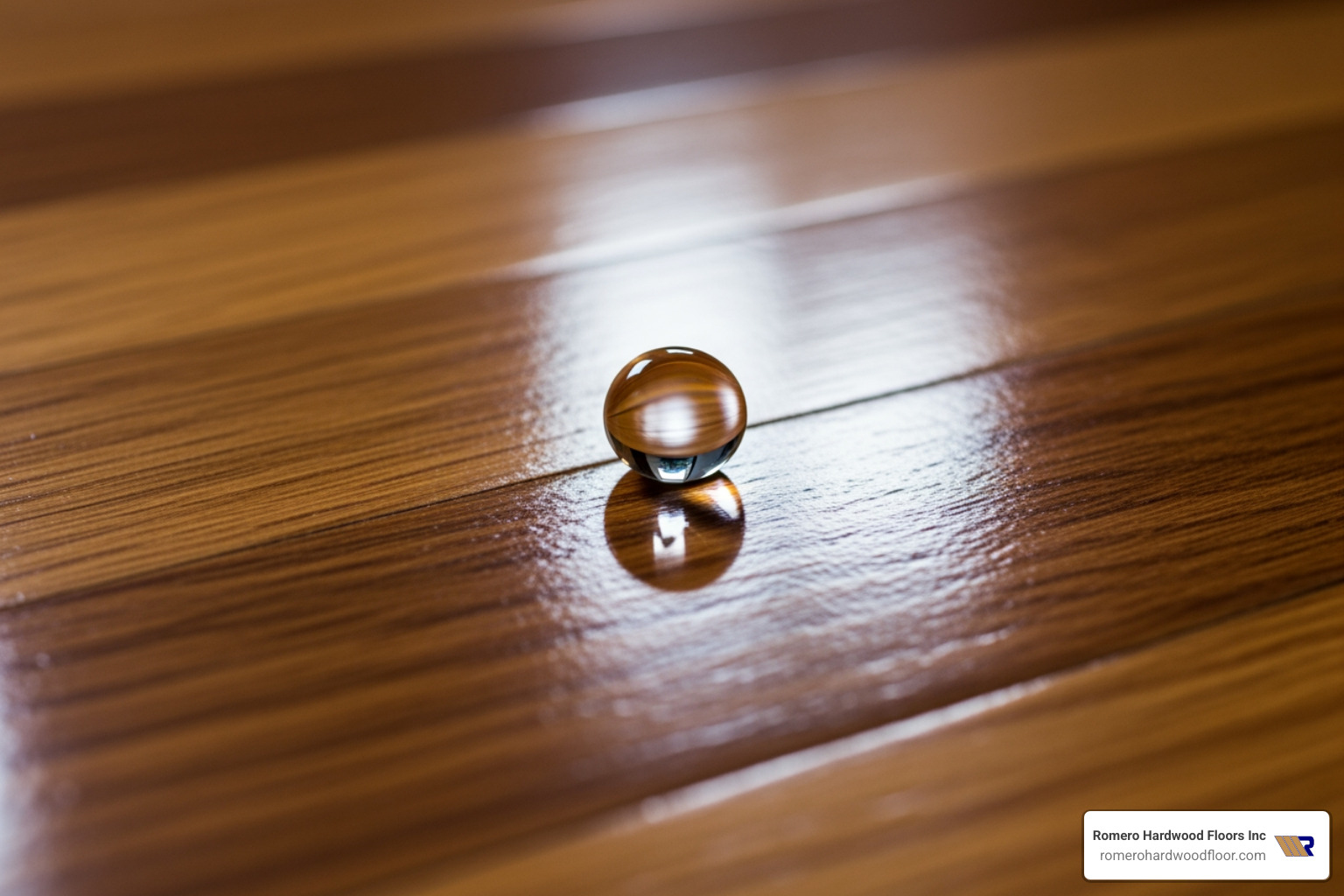
- If the water beads up and pools on the surface, your floor likely has a surface finish (like polyurethane). This indicates the finish is creating a barrier on top of the wood.
- If the water soaks into the wood within a few minutes, your floor likely has a penetrating finish (such as wax or oil). This means the finish has absorbed into the wood fibers.
- Scrape Test Alternative:
- Again, choose an inconspicuous area.
- Gently try to scrape a small amount of the finish with your fingernail or the dull edge of a putty knife.
- Observe the results:
- If a clear material scrapes off, and no smudge is evident, you have a surface finish.
- If the finish smudges or you can’t scrape anything off cleanly, you likely have a penetrating sealer with wax.
Knowing your finish type is the first step towards proper care, ensuring that you use compatible cleaning products and techniques. This knowledge helps us protect the integrity of your floors, whether they’re in Revere, Medford, Salem, or any other community we serve.
For more detailed maintenance tips custom to your specific finish, explore our wooden-floor-maintenance-tips.
Safe Alternatives and Best Practices for Cleaning Wood Floors
Now that we’ve established why most all-purpose cleaners are a no-go, let’s talk about what is safe and effective for your hardwood floors. The goal is to clean without damaging the finish or the wood itself.
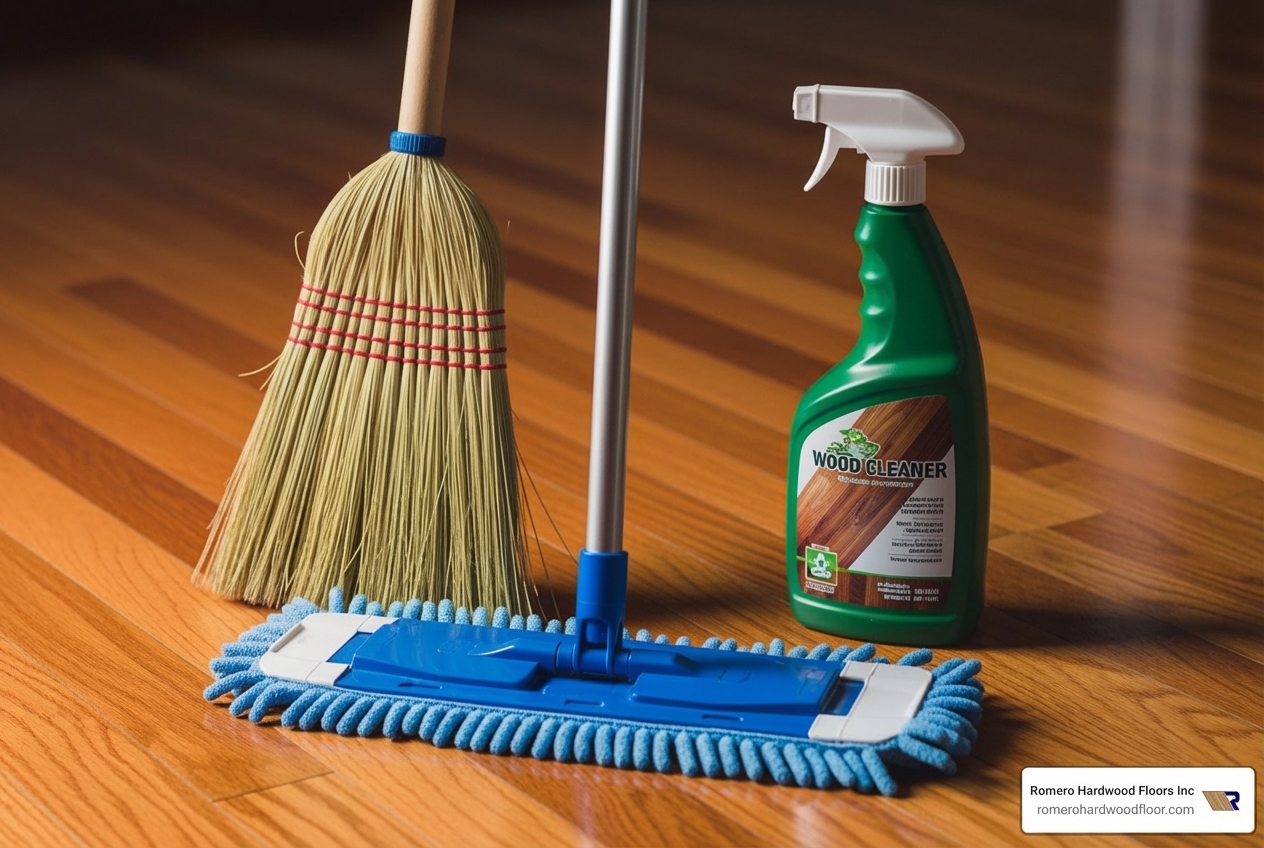
- Wood-Specific Cleaners: The golden rule is to use products specifically formulated for hardwood floors. These cleaners are designed to be gentle on finishes, pH-neutral, and won’t leave behind residues. Some well-known brands are often mentioned as suitable commercial options, but always check their labels for compatibility with your specific floor finish.
- Water-Based Formulas: Opt for water-based cleaning solutions, as these are generally safer for most modern hardwood finishes. They are often residue-free and dry quickly, minimizing moisture exposure.
Here’s a list of our recommended cleaning tools to keep your floors pristine:
- Microfiber Mops: Ditch the traditional string mops! They tend to trap dirt and bacteria, which can scratch your wood floors, and they often leave too much water behind. Microfiber mops, on the other hand, effectively lift dirt and grime without scratching and allow for minimal water usage. A spray mop that provides an even, controlled mist is also an excellent option.
- Soft-Bristle Brooms: For daily sweeping, a soft-bristle broom is essential for gathering loose dirt and debris without scratching the surface.
- Vacuums Without Beater Bars: Regular vacuuming is crucial for removing grit that acts like sandpaper on your floors. However, always use a vacuum with a floor-brush attachment and ensure the beater bar is turned off or disengaged. Beater bars can severely damage and scratch hardwood finishes.
For a comprehensive guide on cleaning techniques, refer to How to Clean Hardwood Floors.
DIY Natural Cleaners: Use With Extreme Caution
While the appeal of natural, homemade cleaning solutions is strong, we urge extreme caution when considering them for hardwood floors. Some popular DIY remedies can do more harm than good.
- Diluted White Vinegar Risks: Vinegar is often touted as a natural cleaning marvel, but for hardwood floors, it’s a double-edged sword. Being an acid, vinegar can cause significant damage to your floor’s protective finish over time, leaving floors dull and vulnerable. Even diluted solutions can cause swelling and discoloration due to excess moisture if not applied correctly. While some sources suggest highly diluted vinegar (e.g., one capful per gallon of warm water) for occasional deep cleaning, frequent or concentrated use will undoubtedly break down the finish. Our professional advice is to avoid vinegar for routine cleaning to preserve your floor’s integrity.
- Castile Soap Solution: A safer DIY alternative, if your floors are sealed with polyurethane or wax, can be a mild, pH-neutral soap solution. Some experts suggest mixing a few drops of liquid Castile soap with warm water. Another DIY neutral cleaner recipe involves one-fourth cup of liquid soap with one gallon of hot water. The key here is “mild” and “pH-neutral” to ensure it doesn’t harm your finish.
- Importance of Minimal Water: Regardless of the cleaner you choose, whether commercial or DIY, the cardinal rule for hardwood floors is minimal water. Excess water is the enemy. Always wring your mop thoroughly until it is just damp, not dripping wet. Any standing water should be wiped up immediately with a clean, dry towel. Cold water can also slow down drying, increasing the risk of moisture seeping into floor seams.
- Dangers of Acidic Solutions: Beyond vinegar, any acidic solution (e.g., lemon juice-based cleaners) should be avoided. These can etch, dull, and degrade the finish, leading to costly repairs.
When in doubt, always stick to cleaners specifically designed for hardwood floors. If you opt for a DIY solution, test it first in an inconspicuous area and use it sparingly.
For more information on suitable products, explore our hardwood-floor-cleaning-products.
Your Hardwood Floor Cleaning Schedule and Deep Cleaning Guide
A consistent cleaning routine is the best defense against dirt and grime, helping to preserve your hardwood floors for decades. Think of it as preventative care for one of your home’s most beautiful features.
The National Wood Flooring Association (NWFA) provides excellent guidelines that we endorse:
- Daily Sweeping: For high-traffic areas or homes with pets and children, a quick daily sweep with a soft-bristle broom or an untreated dust mop is ideal. This removes loose dirt, dust, and pet hair that can act like sandpaper, scratching your floor’s finish over time.
- Weekly Vacuuming: At least once a week, follow up with a vacuum cleaner. Remember to use a floor-brush attachment and ensure the beater bar is turned off. This step is crucial for picking up finer debris and accumulated dust from the grooves of your floorboards.
- Monthly Deep Cleaning: Once a month, your hardwood floors benefit from a deep clean using a wood floor solution. This tackles the dirt and grime that daily and weekly cleaning might miss.
Signs of damage from improper cleaning or neglect include a dull or cloudy finish, persistent streaks, warping, cupping, or discoloration of the wood. If you notice these signs, it’s a clear indication that your cleaning routine or products need adjustment.
How to Properly Deep Clean Hardwood Floors
Deep cleaning your hardwood floors doesn’t have to be a daunting task. By following these steps, you can ensure a thorough clean without risking damage:
- Removing Debris: Start by clearing the area. Move furniture and rugs out of the way. Then, thoroughly sweep the floor with a soft-bristle broom or dust mop to remove all loose dirt, dust, and pet hair. Follow up with a vacuum cleaner, using a soft-head attachment and with the beater bar turned off, to pick up any remaining fine particles. This crucial first step prevents scratching during the wet cleaning process.
- Preparing Solution: Prepare your cleaning solution. This should be a wood-specific, pH-neutral cleaner. Follow the manufacturer’s dilution instructions carefully. If opting for a mild DIY solution (like a few drops of Castile soap in warm water), ensure it’s well-mixed.
- Damp Mop Technique: Dip your microfiber mop into the solution. This is the most critical step: wring it out thoroughly until it is just damp, not wet. There should be no drips. Excess water is the enemy of hardwood floors.
- Working in Sections: Mop your floor in small sections, working backward from the farthest point in the room towards the exit. This ensures you’re always walking on clean, damp-drying areas. For tough or sticky spots, apply gentle downward pressure with the mop or use a clean, damp cloth by hand.
- Drying Thoroughly: After mopping a section, use a clean, dry microfiber towel to buff the area dry. Do not allow water to stand on your floors, as this can lead to permanent damage like warping or swelling. Ensuring the floor dries completely is vital for preventing moisture-related issues.
By following this deep cleaning guide, you can maintain the beauty and integrity of your hardwood floors across our service areas, from Woburn to Gloucester.
For more detailed tips, visit our page on hardwood-floors-cleaning-tips.
Frequently Asked Questions About Cleaning Wood Floors
What happens if I use the wrong cleaner on my hardwood floor?
Using the wrong cleaner on your hardwood floor can lead to issues ranging from minor aesthetic problems to significant, costly damage.
- Immediate Effects: You might notice streaks, a cloudy appearance, or a sticky residue. Products with strong fragrances or colorings, like some all-purpose cleaners, can leave a yellow film.
- Long-Term Damage: Over time, the damage becomes more severe. Harsh chemicals or acidic solutions can erode the protective finish, leaving the wood vulnerable. This can lead to discoloration, fading, and a permanent dullness that proper cleaning cannot fix.
- Warping and Finish Peeling: Excessive moisture from inappropriate cleaners can cause the wood to absorb water, leading to swelling, cupping (where board edges rise), and warping. In severe cases, the finish might peel or crack, exposing the raw wood. This type of damage often requires professional intervention, such as sanding and refinishing, which can be a significant investment.
If you’re dealing with damage from improper cleaning, our floor refinishing services can help restore your floors to their original beauty.
Why can’t I use a steam mop on my wood floors?
Steam mops are unequivocally not recommended for hardwood floors. The combination of high heat and pressurized moisture is damaging to both wood and its finish.
- High Heat & Pressurized Steam: The intense heat can cause the floor’s finish to delaminate, bubble, or dull. The vaporized water can penetrate wood cells, causing the wood to swell, leading to warping, cupping, and buckling. It can also damage the subfloor.
- Finish and Wood Damage: The moisture and heat can weaken the adhesive bond in engineered wood or cause solid wood to expand and contract excessively, leading to permanent damage.
- Voiding Warranties: Many hardwood flooring manufacturers explicitly state that using a steam mop will void your floor’s warranty. This alone is a strong deterrent.
In short, steam mops are too aggressive for wood. To avoid costly repairs and maintain your warranty, always opt for cleaning methods that use minimal, controlled moisture.
For alternatives and more information, see our guide on Is a steam cleaner right for your floor?.
When deciding if I can use an all-purpose cleaner on a wood floor, what is the most important factor?
When asking, “can i use all purpose cleaner on wood floor,” the single most important factor is your floor’s finish type. This dictates all safe cleaning methods.
- Floor Finish Type: As discussed, surface finishes (like polyurethane) behave differently from penetrating finishes (like wax or oil). A cleaner safe for one could be disastrous for another. For instance, water-based cleaners are generally fine for polyurethane, but any water on a waxed floor is a strict no-go.
- Cleaner’s pH Level: The cleaner’s pH level is critical. pH-neutral cleaners are the safest bet as they won’t react negatively with most finishes. Acidic or alkaline cleaners can erode or strip the protective layer.
- Water Usage Control: Controlling the amount of water is paramount. Hardwood is highly susceptible to moisture damage. A cleaner that requires excessive water is a risk, even if it’s technically “wood-safe.”
- Reading Product Labels: Always read the product label. Look for cleaners specifically marked “for hardwood floors” and check for disclaimers about finish types. If a cleaner doesn’t explicitly state it’s safe for your type of hardwood finish, avoid it.
Understanding these factors will guide you toward the easiest and safest way to clean your wood floors.
Find the easiest way to clean wood floors with our expert tips.
Protect Your Investment: The Final Word on Cleaning
Your hardwood floors are more than just a surface; they’re an integral part of your home’s character and value, especially in the historic and vibrant communities we serve across Eastern Massachusetts. Understanding whether can i use all purpose cleaner on wood floor is a crucial step in safeguarding this investment. As we’ve explored, the risks associated with general all-purpose cleaners—from dulling finishes and streaking to severe water damage like warping and cupping—far outweigh the perceived convenience.
Proper care is not just about cleaning; it’s about preservation. By opting for wood-specific, pH-neutral cleaners, employing minimal moisture, and using the right tools like microfiber mops and vacuums without beater bars, you actively contribute to the longevity and beauty of your floors. Knowing your floor’s finish type is your first line of defense, guiding every cleaning decision.
We at Romero Hardwood Floors Inc. are committed to helping homeowners in Beverly, Chelsea, Danvers, East Boston, Gloucester, Lynnfield, Malden, Manchester by the Sea, Marblehead, Medford, Melrose, Nahant, Peabody, Reading, Revere, Rockport, Salem, Saugus, Somerville, Stoneham, Swampscott, Wakefield, Winchester, Winthrop, and Woburn, MA, maintain the elegance and durability of their hardwood flooring. Don’t let common cleaning misconceptions diminish the value and appeal of your home.
For expert advice on maintaining or restoring your floors, trust the professionals at Romero Hardwood Floors Inc. We have been enhancing property value with expert flooring solutions since 2006, known for our competitive pricing, punctuality, and guaranteed workmanship.
Explore our full range of hardwood floor cleaning products and services to ensure your floors receive the specialized care they deserve.
