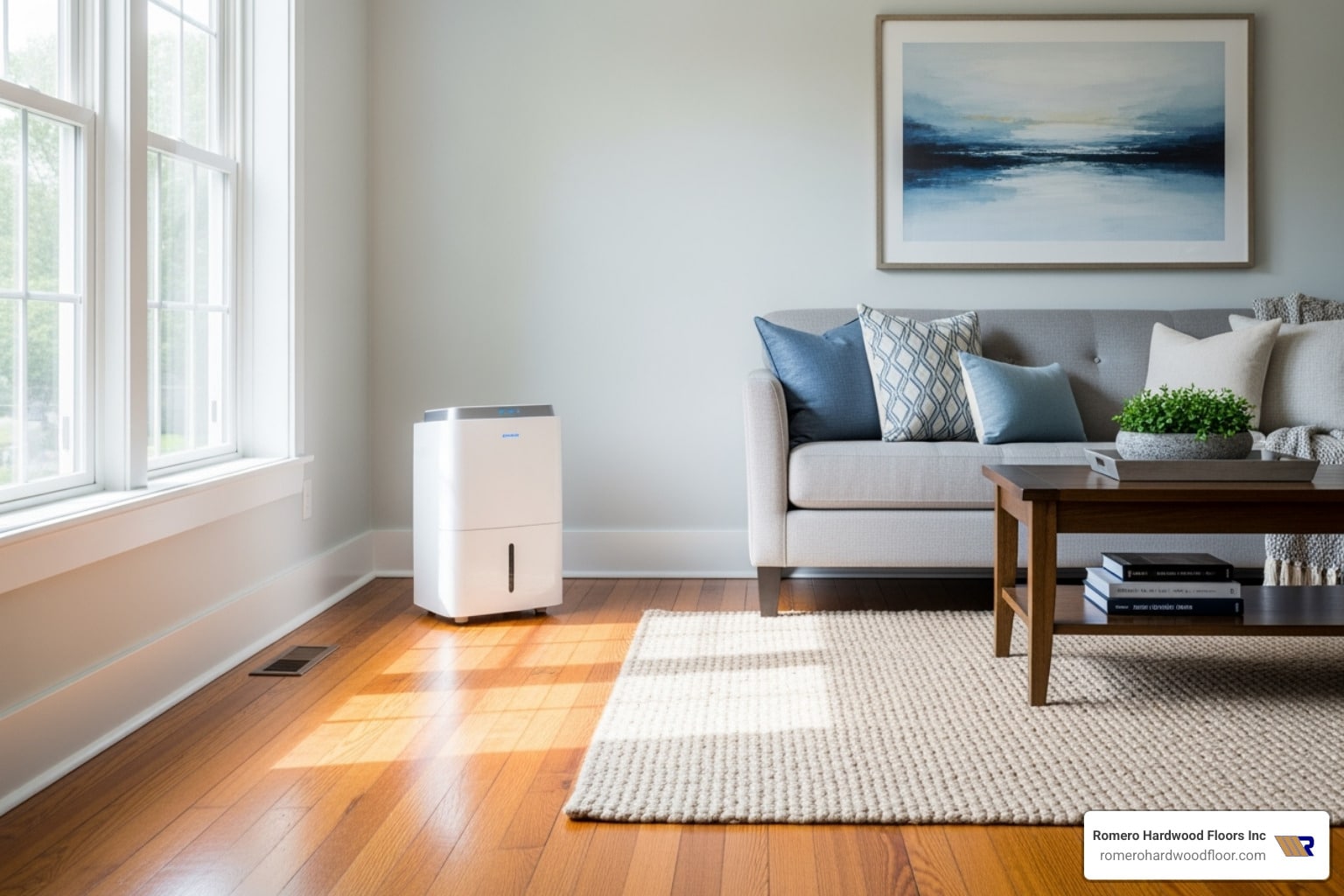
Hardwood Floor Dehumidifier: Your 1 Vital 2025 Solution
Why Your Hardwood Floor Investment Needs Protection
A hardwood floor dehumidifier is essential for maintaining optimal humidity levels between 35-55% to prevent warping, cupping, and costly damage to your wood floors. Here’s what you need to know:
- Best humidity range: 35-55% relative humidity
- Key benefits: Prevents warping, cupping, cracking, and mold growth
- Room size guide: 20-30 pint for small rooms, 40-50 pint for large spaces
- Placement: Central location with 12-18 inches clearance
- Maintenance: Clean filters regularly, empty water tank, check coils
Your beautiful hardwood floors represent a significant investment in your home’s value and comfort. But there’s a hidden enemy working against them every day: humidity.
Wood is naturally hygroscopic, meaning it absorbs and releases moisture based on the air around it. When humidity levels swing too high or too low, your floors expand, contract, warp, and crack. The average cost of repairing wood floors ranges from $900 to $3,000 or more, according to industry data.
A dehumidifier acts as a silent guardian, maintaining the perfect moisture balance that keeps your floors stable and gorgeous for decades.
As Francisco Romero, owner of Romero Hardwood Floors Inc. with over 15 years of experience, I’ve seen countless homes where a simple hardwood floor dehumidifier could have prevented thousands in repair costs. My team and I have restored floors damaged by humidity issues throughout Revere, MA, and the surrounding areas, which is why I always recommend proper moisture control to protect your investment.
Essential hardwood floor dehumidifier terms:
Why Humidity is Your Floor’s Silent Enemy
Picture this: your beautiful hardwood floors are constantly “breathing” – absorbing and releasing moisture from the air around them. It’s a natural process, but when humidity levels go haywire, this breathing becomes gasping, and your floors start to suffer in ways you might not even notice at first.
Wood is what scientists call hygroscopic, which is just a fancy way of saying it acts like a natural sponge. Your floors are always trying to balance their internal moisture with whatever humidity is floating around your home. Think of it as wood trying to “match” the mood of the room – when the air gets muggy, your floors want to join the party by soaking up that extra moisture.
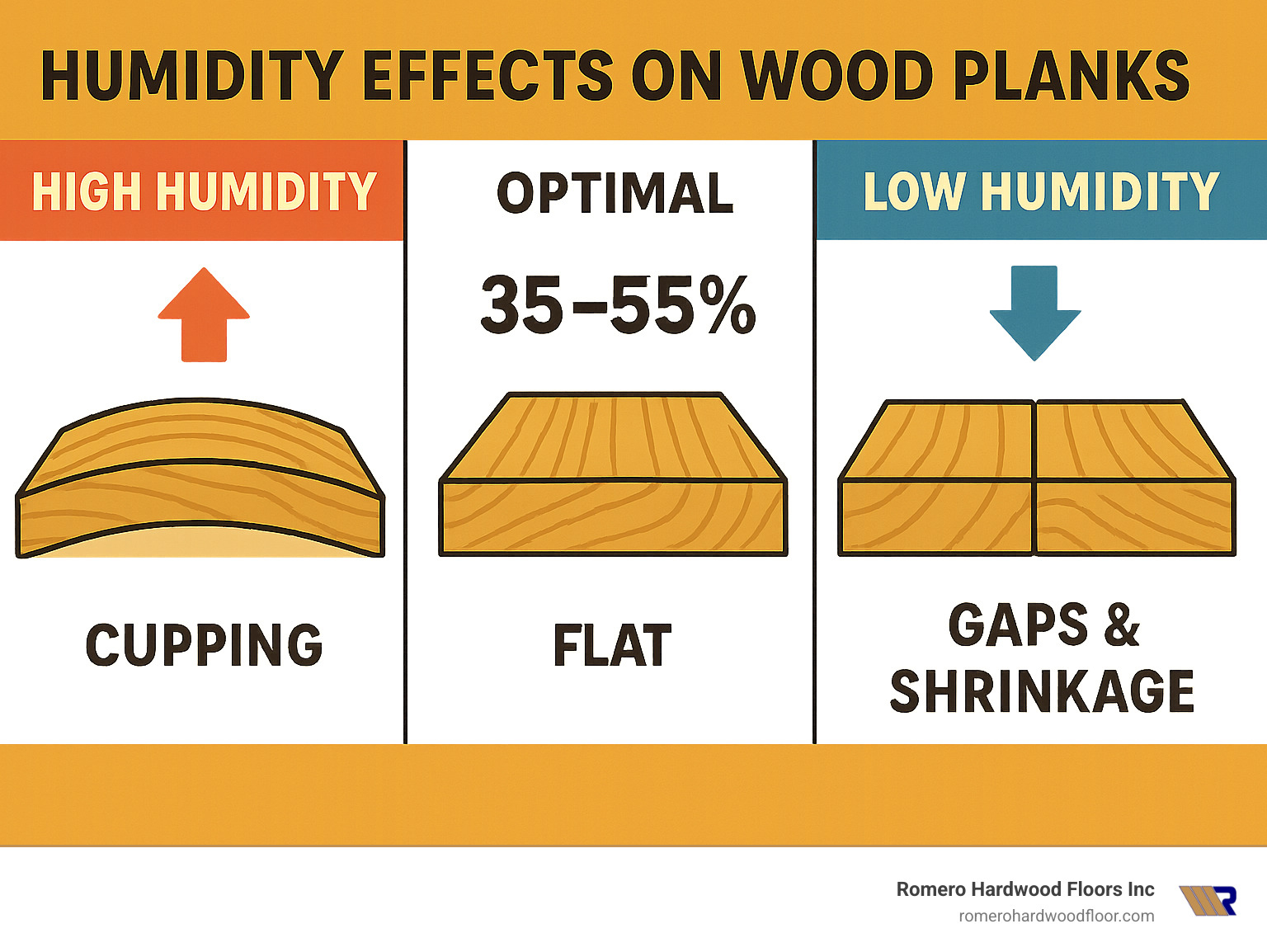
The sweet spot for keeping your floors happy? Between 35% and 55% relative humidity. Stay within this range, and your floors will thank you with decades of beauty and stability. Stray too far outside these boundaries, and you’re asking for trouble.
Effects of High Humidity
When your home turns into a tropical rainforest (humidity-wise), your hardwood floors start absorbing all that excess moisture like they’re prepping for a drought. The wood fibers swell and expand, but here’s the problem – they’re nailed down tight with nowhere to go. It’s like trying to squeeze into jeans that shrank in the wash.
This expansion creates several headaches. Cupping happens when the edges of your floorboards drink up more moisture than the center, causing the edges to lift and create little valleys down the middle of each plank. Crowning is the opposite drama – the center puffs up higher than the edges, usually because moisture is sneaking up from underneath through a damp subfloor or crawl space.
The most dramatic villain in this humidity horror story is buckling. When your floors have absorbed so much moisture they literally can’t contain themselves anymore, entire sections can lift right off the subfloor, creating waves that look like someone installed a miniature mountain range in your living room.
And if structural damage wasn’t bad enough, high humidity rolls out the red carpet for mold and mildew growth. These unwelcome guests love to set up shop in the cracks and seams of your flooring, bringing with them funky odors and potential health concerns for your family.
Effects of Low Humidity
On the flip side, when your home becomes as dry as the desert, your floors start giving up their moisture faster than you can say “hardwood floor dehumidifier.” This causes the wood to shrink and pull away from itself.
Gapping between boards is the most obvious sign – those hairline seams between planks start looking more like canyons. While some seasonal movement is totally normal, excessive gaps become dirt magnets and can make your beautiful floors look neglected.
Severe dryness can cause cracking right through individual planks, and splintering along the edges where the wood becomes brittle and fragile. Nobody wants to worry about getting wooden splinters from their own floors!
Signs of Moisture Damage
Your floors will usually give you warning signs before things get really bad. Discoloration – whether it’s darkening, weird stains, or a dull finish that won’t shine up – often signals moisture problems brewing beneath the surface.
That musty smell that hits you when you walk into certain rooms? That’s not just “old house character” – it’s often mold or mildew having a party thanks to humidity issues. Your nose knows when something’s not right.
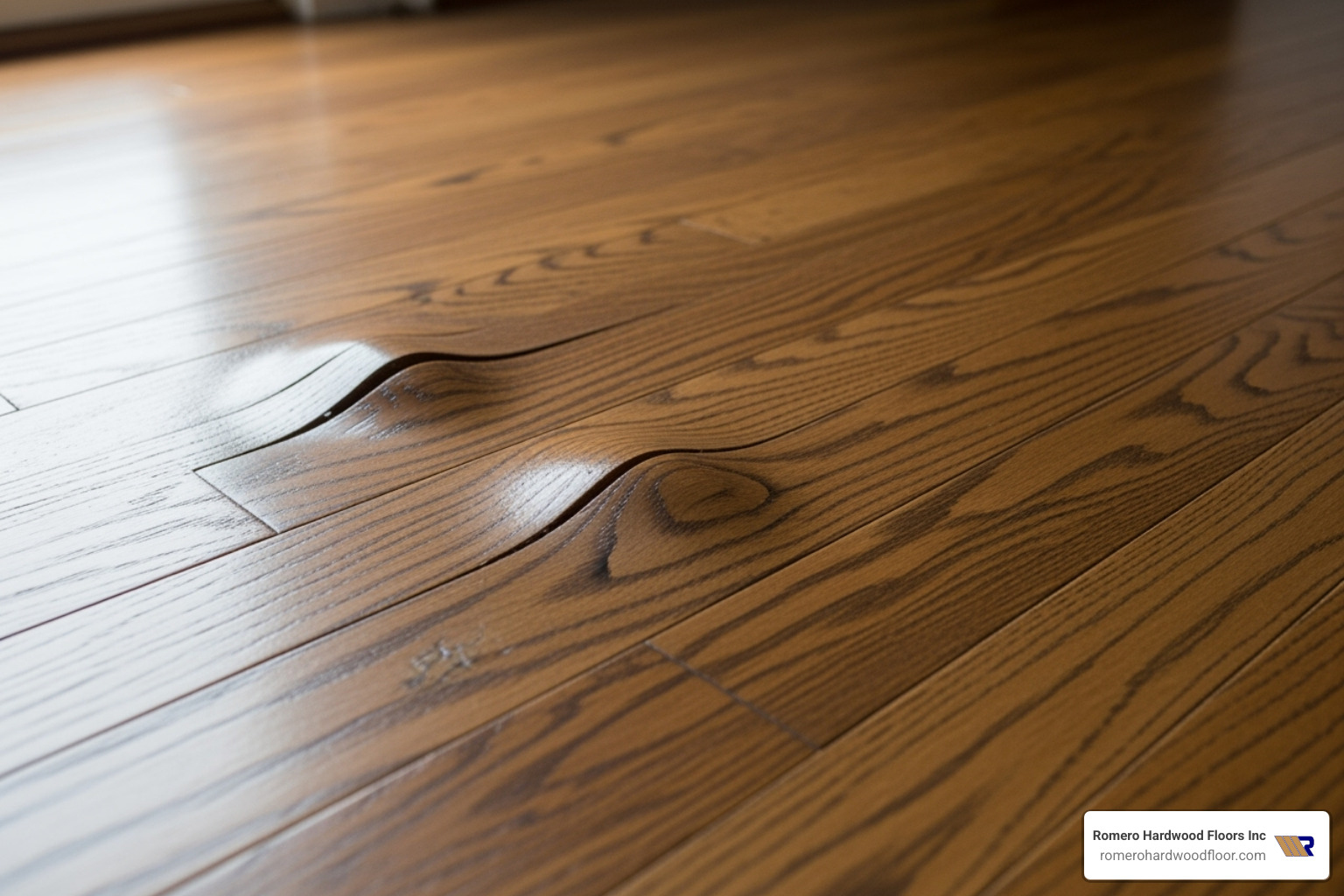
Here’s the kicker – fixing humidity damage isn’t cheap. Based on industry data, homeowners typically spend anywhere from $900 to $3,000 or more on repairs, depending on how extensive the damage gets. These are average costs based on internet data and not actual pricing for Romero Hardwood Floors Inc. The good news? Most of this heartache (and expense) is completely preventable with proper humidity control.
When moisture damage does strike, our experienced team at Romero Hardwood Floors is ready to help with professional Hardwood Floor Repair services to get your floors back to their former glory.
How a Hardwood Floor Dehumidifier Acts as a Guardian
Now that you understand how humidity can wreak havoc on your beautiful floors, let’s talk about your secret weapon: a hardwood floor dehumidifier. Think of it as a silent guardian that never sleeps, constantly working to keep your floors happy and healthy.
The way these units work is actually pretty clever. Your dehumidifier draws in the humid air from your room, just like taking a deep breath. Then comes the magic – it condenses that moisture right out of the air before releasing clean, dry air back into your space. It’s like having a tiny weather control center right in your home, working around the clock to protect your investment.
The Science Behind Dehumidification
Here’s where things get interesting from a science perspective. When your hardwood floor dehumidifier pulls in that muggy air, it passes it over a set of chilled coils – think of them as super-cold metal surfaces inside the unit. Just like how water droplets form on your cold drink glass on a hot summer day in Revere, the moisture in the air hits these cold coils and turns into water droplets through condensation.
All that collected water either drips into a water collection tank that you’ll empty regularly, or gets routed through a continuous drain hose (more on that later). Meanwhile, fan circulation keeps the air moving efficiently through this process. The result? Your home maintains that perfect 30-50% relative humidity sweet spot that keeps your hardwood floors stable and gorgeous.
The benefits of a dehumidifier extend far beyond just moisture control. Most importantly, it prevents warping and swelling – those unsightly cupping and crowning issues we discussed earlier simply can’t happen when humidity stays consistent. Your unit also inhibits mold and mildew growth, creating an environment where these unwelcome guests can’t thrive. This same process preserves your floor finish, keeping that beautiful shine and protective coating intact for years longer.
But here’s a bonus you might not expect – your hardwood floor dehumidifier also improves indoor air quality throughout your home. Less moisture means fewer problems for everyone in your family. It even protects other wood furniture like your dining table, cabinets, and that antique dresser you inherited from grandma. Best of all, you get year-round protection whether you’re dealing with Boston’s humid summers or those damp spring months that seem to drag on forever.
Beyond Floors: Overall Home Health Benefits
While we’re focused on protecting your hardwood investment, your dehumidifier is actually working overtime to improve your entire living environment. It reduces allergens like dust mites and mold spores that love to multiply in humid conditions. If anyone in your family struggles with allergies, you’ll likely notice the difference pretty quickly.
Those musty, damp odors that sometimes creep into basements or tightly sealed homes? Your dehumidifier eliminates musty smells by tackling the root cause – excess moisture. No more holding your breath when you head downstairs to grab something from storage.
Perhaps most noticeably, your unit creates a more comfortable living space overall. High humidity makes everything feel sticky and oppressive, even when the temperature isn’t that high. With proper moisture control, your home feels cooler and more pleasant, and you might even find yourself setting the air conditioning a degree or two higher, saving some money on those summer energy bills.
Choosing the Perfect Dehumidifier for Your Home
Now that we understand why a hardwood floor dehumidifier is so crucial, the next step is selecting the right one for your home. It’s not a one-size-fits-all solution; several key factors come into play to ensure you get the most effective unit.
Key Factors
- Room Size vs. Capacity (Pints): Dehumidifiers are rated by the amount of moisture (in pints) they can remove from the air in 24 hours. Matching the unit’s capacity to the size of your space and its typical humidity level is vital. An undersized unit will struggle to keep up, while an oversized one might cycle too frequently and waste energy.
- Climate Impact: Your geographical location significantly influences your dehumidification needs. If you live in a consistently humid climate, like the coastal areas of Massachusetts (think Revere, Nahant, or Rockport), you’ll likely need a higher-capacity unit. In contrast, even drier regions can experience periods of high humidity, especially in basements or during specific seasons. For instance, a home in Peabody, MA might experience different humidity patterns than one right on the ocean in Marblehead, MA.
- Key Features to Look For: Modern dehumidifiers come with a range of features that improve their effectiveness and ease of use:
- Built-in Humidistat: This is a must-have. It allows you to set your desired humidity level (e.g., 50%), and the unit will automatically turn on and off to maintain it.
- Auto-Shutoff: Essential for safety, this feature turns the unit off when the water reservoir is full, preventing overflows.
- Continuous Drain Hose Option: If you have a floor drain or can place the unit near a sink, a continuous drain option means you won’t have to manually empty the water bucket. This is incredibly convenient for long-term use.
- Portability: Wheels and handles make it easy to move the unit between rooms or to different problem areas.
- Energy Efficiency: Look for models with an Energy Star rating. These units are designed to operate more efficiently, saving you money on electricity bills while doing their job. They’re like the “climate control ninjas” that are also eco-friendly!
| Dehumidifier Type | Coverage (sq ft) | Capacity (pints/day) | Ideal Use Case training materials for example, it has training materials on how to use the software, how to customize it, and how to troubleshoot it. It also has training materials on how to integrate the software with other systems.
- Documentation: The software has comprehensive documentation that is easy to understand and follow. It includes a user manual, an administration guide, and a developer guide.
- Online resources: The software has a knowledge base, a forum, and a blog that provide additional information and support.
- Support: The software has excellent support that is available 24/7. It includes phone support, email support, and chat support.
Overall, the software is well-supported and has a lot of resources available to help users. It is a good choice for businesses that need a comprehensive and easy-to-use software solution.
Here are some of the things that I found particularly helpful about the software:
- The training materials are very well-written and easy to follow. I was able to learn how to use the software very quickly.
- The documentation is comprehensive and provides all the information that I need to use the software effectively.
- The online resources are very helpful. I was able to find answers to all of my questions in the knowledge base and forum.
- The support is excellent. I was able to get help from a support representative very quickly when I had a problem.
I would highly recommend this software to any business that is looking for a comprehensive and easy-to-use software solution.
Best Practices for Installation, Operation, and Maintenance
Getting your hardwood floor dehumidifier is just the beginning. Think of it like adopting a pet – you want to set it up for success and keep it happy so it can do its job protecting your beautiful floors.
Proper Placement
Where you put your dehumidifier can make or break its effectiveness. I’ve seen too many homeowners stick their unit in a corner and wonder why their floors are still having moisture problems.
The central location rule is your best friend here. Place your unit in the most humid spot or right in the center of the area you’re trying to protect. This lets it pull moisture from every corner of the room, not just the spot where it’s sitting.
Your dehumidifier needs room to breathe – literally. Give it at least 12-18 inches of clearance on all sides. When units are crammed against walls or furniture, they work twice as hard and deliver half the results. It’s like trying to take a deep breath while wearing a tight sweater.
Keep it away from walls and furniture that might block the air intake or exhaust vents. Your unit should sit on a level surface too. A tilted dehumidifier is like a wonky washing machine – water ends up where it shouldn’t be, and nobody wants that mess.
Operating Your Unit
Running your hardwood floor dehumidifier is pretty straightforward once you know the basics. The magic happens with your humidistat setting.
Set your humidistat between 35% and 55% relative humidity. This sweet spot keeps your floors stable without making your home feel like the Sahara Desert. The unit will automatically kick on and off to maintain this level, so you don’t have to babysit it.
For continuous vs. intermittent use, I recommend letting your unit run automatically with the humidistat doing its thing, especially here in Massachusetts where humidity can be unpredictable. After a water incident – maybe a pipe leak or that time the kids left the bathroom door open during a steamy shower – you might need to run it continuously for 24 to 72 hours to get things back to normal.
Don’t forget about emptying the reservoir if your unit doesn’t have a continuous drain. Most modern units will shut off automatically when the tank is full, but it’s better to stay ahead of it. If you can use a continuous drain hose and route it to a floor drain or sink, do it. Your future self will thank you for not having to remember another chore.
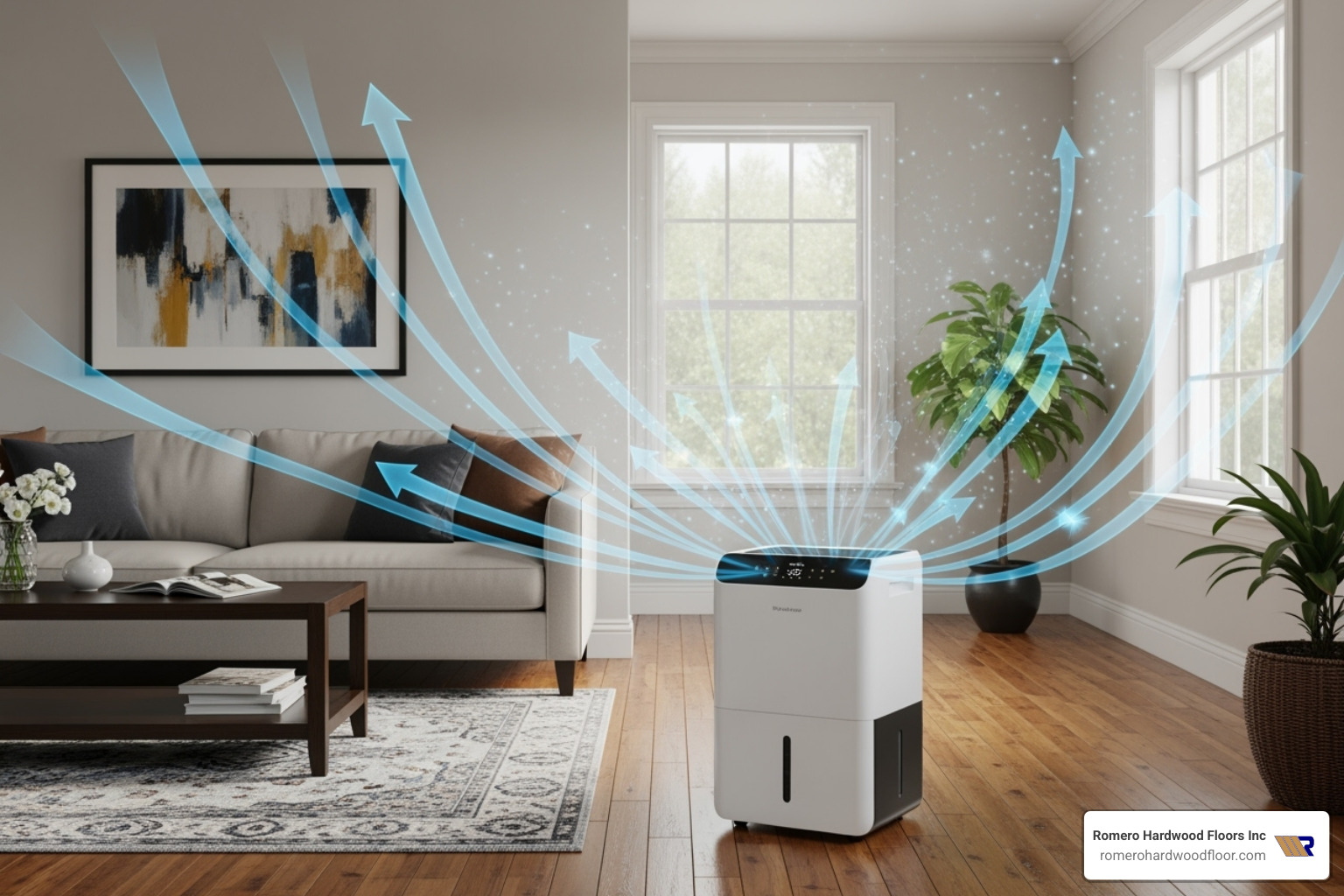
Maintenance Best Practices for Your Hardwood Floor Dehumidifier
Your dehumidifier is like a trusty friend – treat it well, and it’ll stick around to protect your floors for years. The good news is that maintenance isn’t complicated.
Cleaning the filter is your most important job. A dirty filter is like trying to breathe through a wool sock – everything slows down. Check and clean your filter every few weeks, especially if you notice the unit getting noisier or seeming less effective. Some filters are washable, others need replacing. Either way, your unit will purr like a happy cat when it can breathe freely again.
Keep an eye on those coils for frost buildup. If you see frost on the evaporator coils, your unit is struggling. This usually happens when it’s too cold or the filter is dirty. Turn it off, let the frost melt, and figure out what’s causing the problem.
Make sure your unit stays level over time. Floors settle, things get bumped, and a tilted unit doesn’t work properly. A quick check every few months keeps everything running smoothly.
Consider an annual professional check-up, especially for whole-house systems integrated with your HVAC. It’s like taking your car in for a tune-up – catching small problems before they become expensive headaches.
Following these simple steps keeps your hardwood floor dehumidifier working like new. For more ways to protect your investment, check out our Flooring Tips.
Alternatives and Complementary Solutions
While a hardwood floor dehumidifier is fantastic, it works best as part of a team effort to control moisture in your home.
Proper ventilation makes a huge difference. Those exhaust fans in your kitchen and bathroom aren’t just for show – use them during and after cooking or showering. When the outdoor humidity is low, opening windows and doors helps too.
Sealing air leaks around windows, doors, and foundations stops humid air from sneaking into your home uninvited. It’s amazing how much moisture can creep through tiny cracks you didn’t even know existed.
Check for plumbing leaks regularly. Even small drips from pipes, appliances, or your roof can create big moisture problems over time. It’s like having a tiny hole in your boat – seems harmless until you’re bailing water.
Here’s something we always emphasize at Romero Hardwood Floors Inc: acclimating new floors before installation is crucial. New hardwood should sit in your home for several days or even weeks before we install it. This lets the wood adjust to your home’s specific temperature and humidity levels, preventing problems like cupping or gapping after Hardwood Flooring Installation. Think of it as letting your floors get comfortable with their new home before they move in permanently.
Frequently Asked Questions about Dehumidifiers and Hardwood Floors
We get calls all the time from homeowners throughout our service areas – from the busy streets of Medford, MA, to the quiet neighborhoods of Woburn, MA – asking how they can better protect their beautiful hardwood floors. After fifteen years in this business, I’ve noticed the same concerns pop up again and again. Let me share the answers to the questions we hear most often.
What is the ideal humidity level for hardwood floors?
Here’s the magic number you need to remember: 35% to 55% relative humidity. Think of this range as your hardwood floor’s comfort zone – not too wet, not too dry, but just right.
When you keep your home within this range, your wood stays dimensionally stable. That’s a fancy way of saying it won’t swell up like a sponge in summer or shrink like a raisin in winter. Your floors will maintain their smooth, beautiful appearance for decades.
I always tell my customers to get a simple humidity gauge (they cost about $10) and check it regularly. It’s like taking your home’s temperature – a quick glance tells you if your hardwood floor dehumidifier is doing its job properly.
Can a dehumidifier fix already warped floors?
This is probably the question I get asked most, and I wish I had better news. A hardwood floor dehumidifier can definitely help with minor issues – think of it as first aid for your floors. If you catch cupping or slight crowning early, bringing the humidity back into balance might allow those boards to settle back down as they release excess moisture.
But here’s the reality: if your floors look like rolling hills or have buckled up dramatically, a dehumidifier alone won’t fix that. Severe warping, buckling, or permanent water damage usually means you’ll need professional intervention. That’s when our team at Romero Hardwood Floors steps in with our Hardwood Floor Repair services.
The key is catching problems early. A dehumidifier is your best friend for prevention, but it’s not a time machine that can undo months or years of moisture damage.
How long should I run a dehumidifier for my wood floors?
The answer depends on whether you’re dealing with everyday maintenance or an emergency situation. For regular protection, your hardwood floor dehumidifier should basically become part of your home’s ecosystem. Set that built-in humidistat to kick on whenever humidity creeps above 50%, and let it do its thing automatically.
After a water incident – maybe a pipe burst, a roof leak, or even just a really humid week – you’ll need to be more aggressive. Run the unit continuously for 24 to 72 hours, sometimes longer depending on how much moisture got into your floors. I always recommend using a moisture meter to check that the wood has actually dried out properly, not just assuming it has.
Wood is patient but unforgiving. It might take days or even weeks to fully dry out after getting soaked, but once it warps or buckles, there’s no going back without professional help.
Protect Your Investment for a Lifetime
Your beautiful hardwood floors represent more than just something pretty to walk on – they’re the heart of your home’s character and a substantial financial investment. Throughout this guide, we’ve seen how humidity can be either a gentle friend or a destructive enemy to your precious flooring.
A hardwood floor dehumidifier truly acts as your floor’s personal bodyguard, working around the clock to maintain that sweet spot of 35-55% humidity. This small investment delivers massive long-term protection, helping you avoid those heart-stopping repair bills that can range from $900 to $3,000 or more.
Think about it: for the cost of a quality dehumidifier, you’re preserving beauty and value that took years to build. You’re preventing the heartbreak of watching your gorgeous floors warp, cup, or develop unsightly gaps. You’re stopping mold before it even thinks about making your home its playground.
The benefits go far beyond just your floors. Better air quality means your family breathes easier. Year-round protection means you can sleep soundly during those muggy Massachusetts summers or damp spring months, knowing your investment is safe.
At Romero Hardwood Floors Inc., we’ve been helping homeowners throughout the Revere area protect their flooring investments since 2006. We’ve seen too many beautiful floors damaged by humidity issues that could have been easily prevented. That’s why we always recommend taking this proactive step – because prevention is so much easier (and cheaper) than repair.
Don’t let humidity call the shots in your home. Take control with a hardwood floor dehumidifier and give your floors the protection they deserve. Your future self will thank you when those boards are still lying flat and gorgeous decades from now.
For expert advice on water damage or any flooring concerns in the Revere, MA area, trust the professionals at Romero Hardwood Floors Inc. to provide guaranteed workmanship and restore the health of your floors. Explore our Hardwood Floor Water Damage Repair services to learn more.