Hardwood Floor Flooring: 10 Powerful Benefits in 2025
The Timeless Appeal of Hardwood Floor Flooring
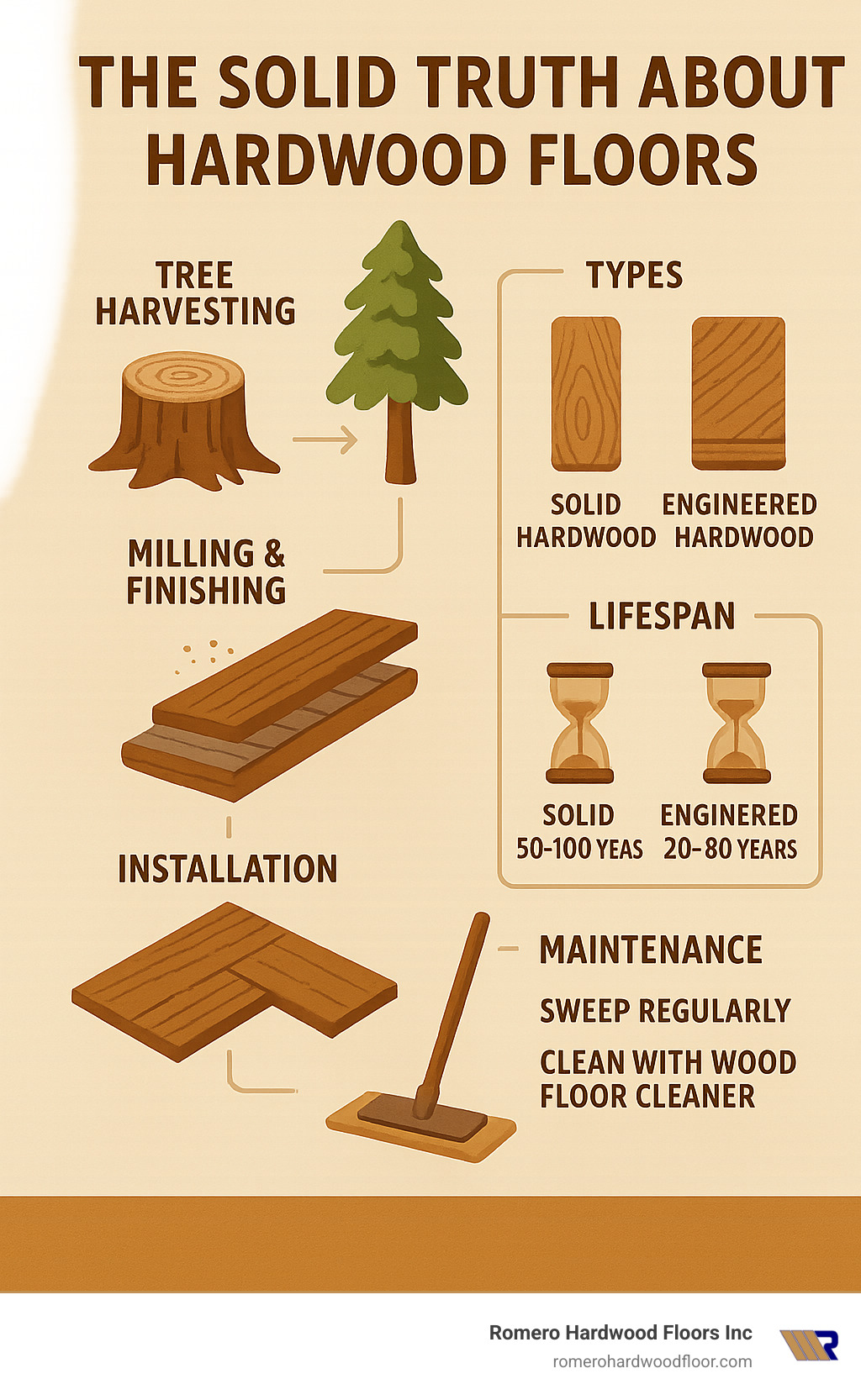
Hardwood floor flooring is a classic flooring option made from solid wood planks or engineered wood with a real wood veneer that can last up to 100 years with proper care. Here’s what you need to know:
- Types: Solid hardwood (single piece of wood) and engineered hardwood (wood veneer over plywood core)
- Cost: $8-$14 per square foot installed for standard options, up to $20+ for premium varieties
- Lifespan: 50-100+ years for solid hardwood, 20-80 years for engineered
- ROI: 118% return on investment according to the National Association of Realtors
- Best for: Living rooms, dining rooms, bedrooms, hallways
- Avoid in: High-moisture areas like bathrooms or below-grade basements (for solid hardwood)
When you walk across a hardwood floor, you’re experiencing more than just a surface beneath your feet—you’re feeling the warmth, character, and timeless elegance that only real wood can provide. Unlike other flooring options that come and go with passing trends, hardwood floor flooring has remained a symbol of quality and craftsmanship for centuries.
The appeal of hardwood is multifaceted: its natural beauty adds warmth to any space, its durability withstands decades of daily use, and its ability to be refinished multiple times means it can be restored rather than replaced. This combination of aesthetics and longevity makes hardwood flooring one of the most valuable home improvements you can make—delivering that impressive 118% return on investment.
My name is Francisco Romero, owner of Romero Hardwood Floors Inc. with over 15 years of experience changing homes and businesses with premium hardwood floor flooring installations and services throughout Revere, MA and surrounding areas. My team and I have dedicated ourselves to mastering every aspect of hardwood flooring, from selection and installation to maintenance and refinishing.
Hardwood floor flooring word list:
– different kinds of flooring
– different types of wood
– what is best to clean hardwood floors
Hardwood Floor Flooring 101: What It Is & Why It Endures
When you hear “hardwood floor flooring,” we’re talking about the real deal—authentic wood harvested from trees like oak, maple, and walnut that brings a slice of nature right into your home. Unlike imitation products that try to capture wood’s essence, genuine hardwood offers something special: unique grain patterns, natural color variations, and a warmth that simply can’t be replicated.
In hardwood floor flooring, you’ll encounter two main types:
Solid hardwood comes from a single piece of timber, typically 3/4″ thick. This traditional option can be sanded and refinished multiple times throughout its life, allowing you to refresh your floors rather than replace them when they show signs of wear.
Engineered hardwood features a real wood veneer bonded to layers of plywood or high-density fiberboard. This clever construction offers better stability when humidity fluctuates, making it more versatile in challenging environments.
The enduring popularity of hardwood isn’t just about good looks. Many historic homes in Massachusetts still showcase their original wood floors after 100+ years—a testament to hardwood’s incredible durability. The investment value speaks for itself too. The National Association of Realtors reports that new hardwood flooring delivers an average 118% return on investment, making it one of the rare home improvements that can actually pay for itself.
Beyond aesthetics and durability, hardwood floor flooring creates superior acoustics compared to harder surfaces like tile, reducing echo and creating a more comfortable sound environment. And let’s be honest—when you’re browsing real estate listings, seeing “hardwood floors throughout” immediately signals quality and lifts a property’s perceived value.
For environmentally-conscious homeowners, responsibly harvested hardwood is a renewable resource. Today’s leading suppliers offer FSC-certified products, ensuring your beautiful floors come from forests managed according to strict environmental, social, and economic standards.
Advantages of Hardwood Floor Flooring
There’s a reason hardwood floor flooring has stood the test of time in New England homes. The benefits go far beyond surface-level beauty:
Walking barefoot on hardwood gives you that natural warmth that tile or stone simply can’t match. Wood naturally insulates, maintaining a comfortable temperature underfoot year-round—a welcome feature during those harsh Massachusetts winters.
With proper care, solid hardwood delivers exceptional longevity—often 100+ years—making it a true lifetime investment rather than a temporary solution. At Romero Hardwood Floors, we’ve seen plenty of century-old floors that still look magnificent with proper maintenance.
The refinishing potential of hardwood sets it apart from almost every other flooring option. Instead of replacing worn or dated floors, hardwood can be sanded and refinished multiple times, restoring its original beauty or updating its look with new stains and finishes.
For families concerned about improved indoor air quality, hardwood doesn’t trap allergens, dust mites, or pet dander like carpet does. This makes it an excellent choice for allergy sufferers and anyone wanting a healthier home environment.
The timeless appeal of hardwood means your investment won’t look dated in a decade. While other flooring trends come and go, hardwood has remained consistently desirable for centuries in homes throughout Revere and beyond.
Busy homeowners appreciate the easy cleaning hardwood offers—regular sweeping and occasional mopping is all that’s needed, without the deep cleaning requirements of carpet or grout lines.
For more detailed information about these and other benefits, visit our comprehensive guide: Benefits of Hardwood Floors.
Where Hardwood Floor Flooring Shines—and Where It Doesn’t
While we love hardwood floor flooring, it’s important to be honest about where it performs best—and where you might want to consider alternatives:
Hardwood floor flooring creates a warm, inviting foundation in living rooms and family rooms where people gather. Its durability handles the traffic while creating a space that feels both neat and comfortable.
In dining rooms, hardwood stands up to chair movement and occasional spills better than carpet, while creating a more formal atmosphere than vinyl or laminate.
The natural warmth and hypoallergenic properties of hardwood make bedrooms more comfortable and healthy sleeping environments. Many of our Revere customers report sleeping better after replacing old carpet with hardwood.
High-traffic areas like hallways and entryways benefit from hardwood’s durability, though we often recommend strategically placed area rugs to protect these zones from excessive wear.
For home offices, hardwood provides a professional aesthetic while accommodating office chairs (with proper protection mats).
However, there are some spaces where caution is warranted:
In kitchens, hardwood can work beautifully, but requires extra vigilance against water damage. Engineered hardwood is generally a better choice here due to its improved moisture resistance.
The high humidity and potential for standing water make full bathrooms challenging for any wood flooring. If you’re determined to have wood in a bathroom, engineered hardwood with proper sealing is the safer option.
Below-grade basements are not suitable for solid hardwood due to moisture concerns and concrete subfloors. Engineered hardwood can work if the basement is properly waterproofed and has a moisture barrier installed.
No matter where you install hardwood, maintaining proper indoor humidity levels (35-55%) is essential for its longevity. Excessive dryness can cause shrinkage and cracking, while high humidity can lead to expansion and cupping—issues we’ve helped many homeowners resolve over our years of service.

Choosing the Right Type: Solid vs. Engineered & Beyond
Selecting the perfect hardwood floor flooring is a bit like choosing a life partner—it’s a long-term commitment that deserves careful consideration. After all, the right hardwood floor will be with you for decades, perhaps even outlasting your mortgage!
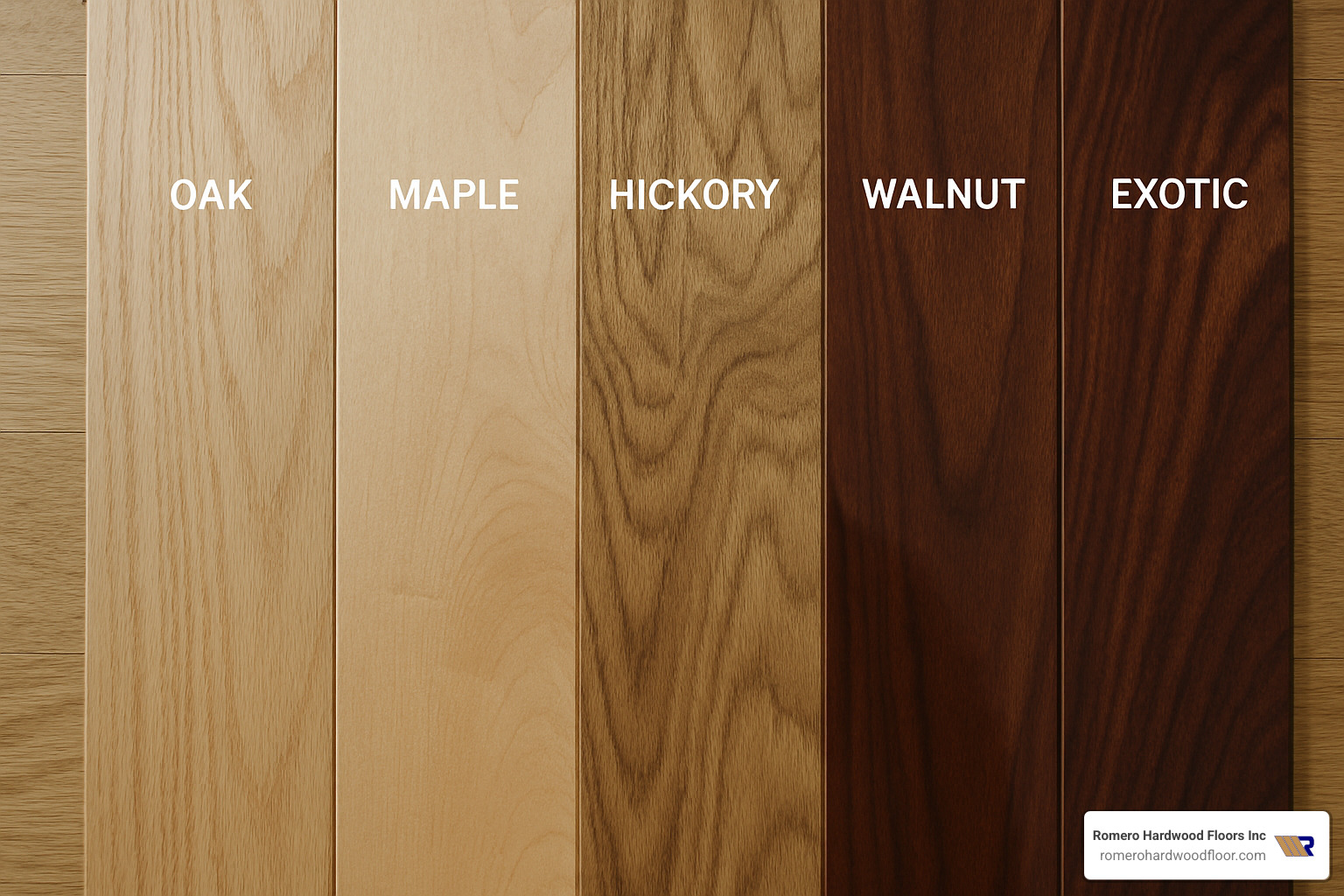
Wood species is your first big decision, and each brings its own personality to your home. Oak remains America’s sweetheart—both red oak with its warm, reddish undertones and white oak with its more neutral, grayish tones offer exceptional durability and take stain beautifully. If you’re looking for something incredibly hard-wearing, maple might be your match with its clean appearance and minimal grain, though it can be a bit stubborn when it comes to accepting stain evenly.
For homes that need extra durability (hello, active families!), hickory stands out with its remarkable hardness and dramatic character. Its distinctive grain patterns and color variations create a statement floor that can handle whatever life throws at it. If luxury is what you’re after, walnut delivers rich, chocolate-brown tones that actually improve with age, like a fine wine. And for a touch of warmth that deepens beautifully over time, cherry offers that coveted reddish glow, though it is softer than some other options.
The width of your planks dramatically influences how your space feels. Traditional narrow strips (under 3″ wide) can make rooms appear larger and feel more formal. Mid-width planks (3-5″) offer versatility that works in almost any setting. If you’re leaning toward contemporary design, wider planks (5-7″) showcase more of the wood’s natural character and create a more relaxed vibe. For true statement flooring, extra-wide planks (8″+) deliver dramatic luxury that anchors a room.
Your finish choice affects both appearance and livability. Matte or satin finishes have become increasingly popular because they hide scratches and footprints better than their shinier cousins. Semi-gloss strikes a balance between subtle and shiny, while high-gloss creates a formal, reflective surface that, while beautiful, will show every speck of dust and paw print.
Solid Hardwood Basics
There’s something wonderfully straightforward about solid hardwood floor flooring—what you see is what you get. Each plank is milled from a single piece of timber, typically 3/4″ thick, creating flooring that’s authentic through and through. Cut it in half, and you’ll find the same beautiful wood from top to bottom.
This authenticity comes with incredible longevity. When your great-grandchildren are redecorating your home someday, they’ll likely be working with the same floors you installed. That’s because solid hardwood’s generous thickness allows for multiple refinishing cycles—every 7-10 years if needed—essentially giving you a brand-new floor surface whenever you want one.
Beyond its impressive lifespan, solid hardwood provides excellent sound absorption, creating a quieter, more peaceful home environment. The density of real wood dampens footsteps and reduces echo in ways that harder surfaces simply can’t match.
Of course, solid hardwood does have its limitations. It’s not the best choice for moisture-prone areas like basements or extremely humid environments, as natural wood can expand, contract, or warp with significant moisture fluctuations. Installation typically requires a plywood subfloor for nail-down application, making it less versatile for concrete slab foundations.
While solid hardwood generally commands a higher price tag—typically $8-$14 per square foot installed for standard species, and potentially $20+ for exotic varieties—its exceptional lifespan makes it surprisingly economical in the long run. When amortized over a century or more, that premium price becomes pennies per year.
Engineered Construction Explained
Engineered hardwood floor flooring represents the perfect marriage of traditional craftsmanship and modern innovation. Think of it as hardwood with a college education—all the beauty of real wood, plus some clever engineering to overcome traditional limitations.
Each engineered plank features a genuine hardwood veneer on top—the same beautiful wood you love—bonded to multiple layers of plywood or high-density fiberboard beneath. These underlying layers are arranged with the grain running in alternating directions, creating remarkable stability against the expansion and contraction that affects solid wood when humidity changes.
This smart construction makes engineered hardwood an excellent choice for areas where solid wood might struggle, including kitchens, properly waterproofed basements, and regions with higher humidity levels. It’s also the go-to option if you want wood flooring over concrete slabs or with radiant heating systems, as it can be installed using various methods including nail-down, glue-down, or floating installations.
When shopping for engineered hardwood, pay close attention to the thickness of the wear layer—that’s the actual hardwood on top. Premium products with thicker wear layers (3mm or more) can be refinished multiple times, though not as many as solid hardwood. More budget-friendly options with thinner wear layers (1mm or less) might support only one light refinishing or none at all.
Price-wise, engineered hardwood typically ranges from $7-$15 per square foot installed, with the cost reflecting the quality of the veneer, core construction, and finish. The sweet spot for many homeowners is a middle-tier engineered product with a wear layer thick enough to allow at least one refinishing.
Prefinished vs. Unfinished Planks
The “when and where” of finishing your hardwood floor flooring presents another important choice, with each approach offering distinct advantages.
Prefinished hardwood arrives at your home ready for its close-up, with factory-applied finishes that often include aluminum oxide or similar compounds for improved durability. The benefits are substantial: installation is quicker, there’s no drying time, and you can move furniture back immediately. The factory-controlled environment also ensures a consistent, uniform appearance from plank to plank.
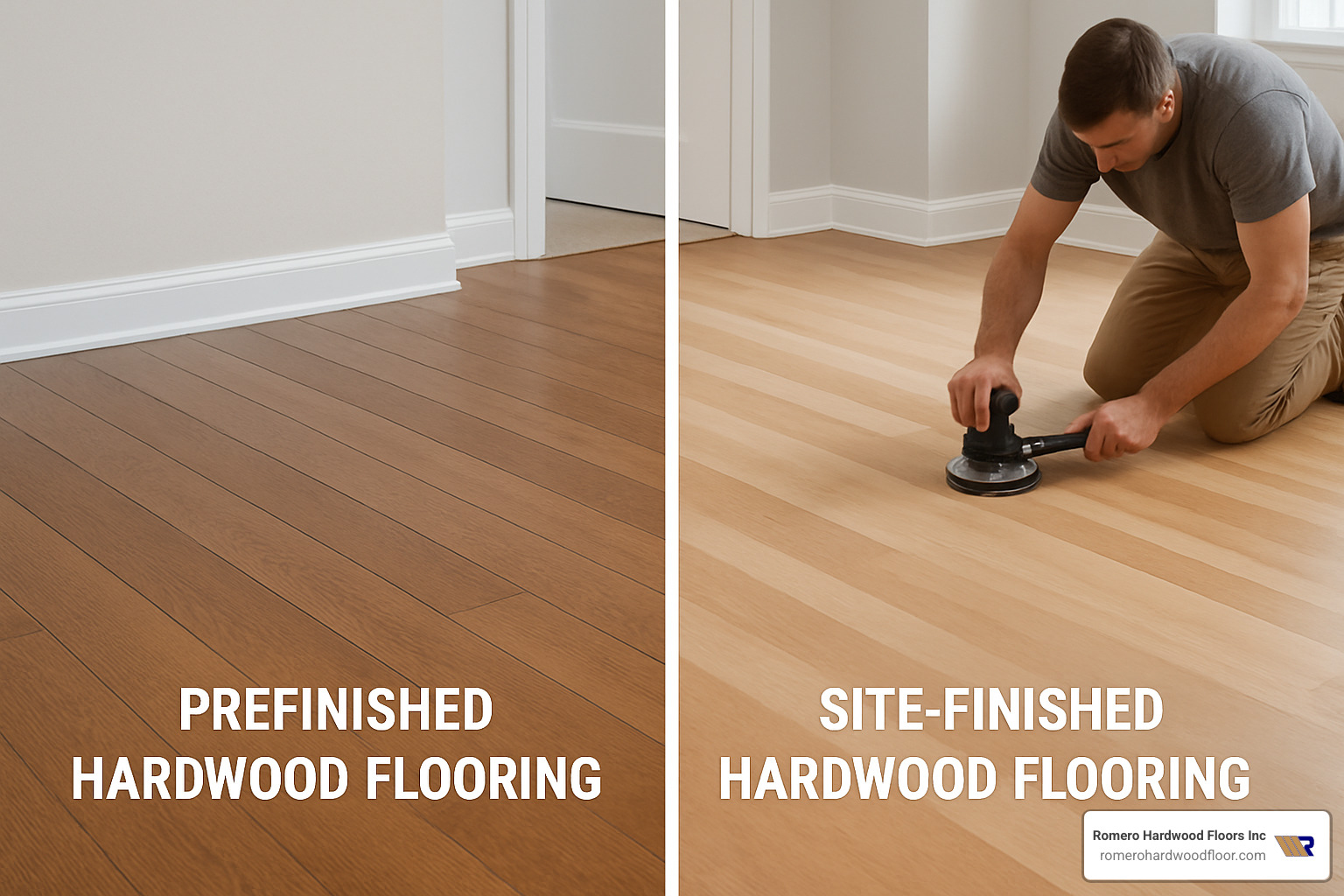
Most prefinished planks feature slightly beveled edges to accommodate minor height variations between boards. While some homeowners love how these micro-bevels define each plank, others prefer the perfectly smooth surface that comes with site-finished floors. Generally, prefinished hardwood carries a higher initial cost but lower installation expense, and the convenience factor is significant.
Unfinished hardwood takes a different route—it’s installed raw, then sanded and finished in your home. This approach allows for true customization: you can match existing woodwork exactly, create custom stain colors, or select specialized finishes that aren’t available in prefinished options. The result is a completely level surface without bevels between boards, creating a seamless, traditional look.
The trade-offs include a more involved installation process, with sanding dust to manage and finishing fumes to ventilate. You’ll also need to vacate the space during finishing and allow 2-4 days of drying time before returning furniture. While unfinished materials cost less initially, the additional labor makes the overall project cost comparable to or slightly higher than prefinished options.
At Romero Hardwood Floors Inc., we’ve installed both prefinished and site-finished floors throughout Revere and beyond, and we’re happy to help you weigh the pros and cons for your specific situation. Most homeowners today opt for prefinished for its convenience, but there are still many scenarios where site-finishing makes perfect sense—particularly in historic homes or when matching existing woodwork is important.
Cost, Installation & Home Value
When you’re considering hardwood floor flooring, understanding the financial picture helps you plan properly and appreciate what you’re really getting for your investment.
Let’s talk real numbers. For most homeowners, hardwood floor flooring typically costs between $8-$14 per square foot installed for standard solid hardwood. If you’re eyeing those gorgeous exotic woods or premium options, expect to invest $12-$25+ per square foot. Engineered hardwood offers a slightly more budget-friendly alternative at $7-$15 per square foot installed, while those stunning wide planks that are trending right now generally run $15-$20+ per square foot.
What’s behind these numbers? Your total project cost typically breaks down to about 50-70% for materials and 30-50% for skilled labor. Don’t forget the extras that complete the job properly: underlayment, trim pieces, transitions, and stair materials all factor into the final price.
The size of your project naturally has a major impact on your budget. A modest 500 square foot space might cost $3,000–$10,000, while a whole-house installation of 2,500 square feet could range from $15,000–$50,000. These are average costs based on internet data and not actual costs for Romero Hardwood Floors. For pricing specific to your project, we recommend scheduling a free consultation.
That initial investment might seem substantial, but here’s the exciting part: according to the National Association of Realtors’ 2022 Remodeling Impact Report, new hardwood flooring delivers an impressive 118% return on investment. That makes hardwood floor flooring one of the rare home improvements that can actually pay for itself when you sell your home. For more detailed cost information from independent sources, you can check CostHelper’s hardwood flooring price statistics. For detailed cost information custom to your specific situation, visit our Hardwood Floor Installation Cost page.
Installing Hardwood Floor Flooring
The quality of installation directly affects how your hardwood floor flooring performs and how long it lasts. This isn’t a place to cut corners.
The process begins with a thorough assessment of your space. We evaluate your subfloor condition, take important moisture readings (excessive moisture is hardwood’s enemy), and determine which installation method will work best for your specific situation.
Before a single plank is laid, your hardwood needs to acclimate to your home’s environment for 3-7 days. This critical step allows the wood to adjust to your indoor humidity levels, preventing problems down the road.
Proper subfloor preparation is non-negotiable. Whether we’re working with plywood or concrete, the surface must be clean, dry, level, and structurally sound. This might involve removing old flooring, addressing those annoying squeaks, fixing uneven areas, or installing appropriate underlayment.
The installation method we choose depends on your flooring type and subfloor:
* Nail-down is the traditional approach for solid hardwood over wood subfloors
* Glue-down works well for engineered hardwood over concrete
* Floating systems allow engineered planks to lock together and “float” over the subfloor
After the main flooring is installed, we add the finishing touches: trim, transitions between rooms, and stair nosing as needed. For unfinished hardwood, we then complete the site finishing process – sanding, staining, and applying multiple protective finish coats.
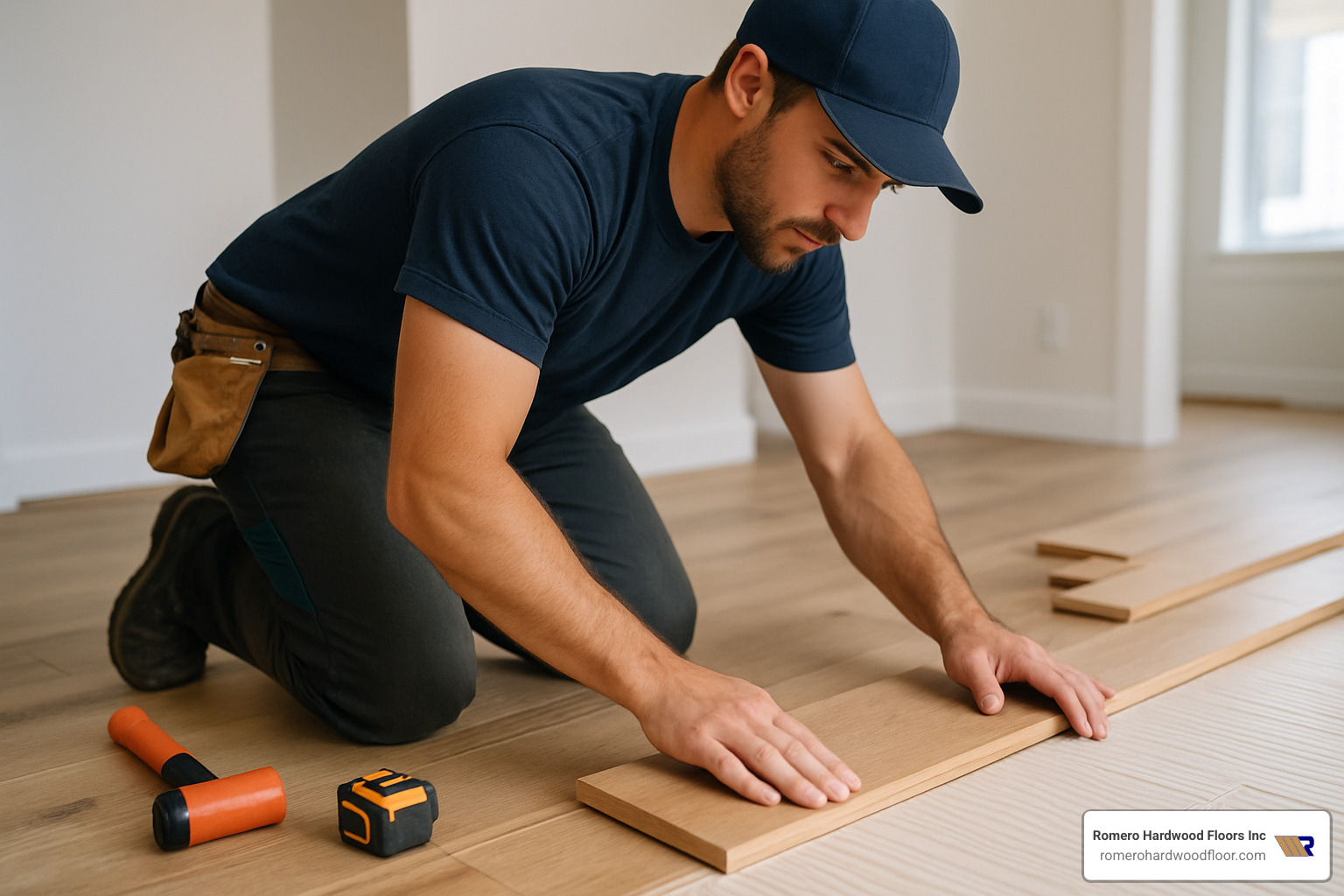
While the DIY route is tempting for some handy homeowners (especially with click-lock engineered products), professional installation ensures proper technique and typically includes workmanship warranties. Our installation teams at Romero Hardwood Floors Inc. are factory-trained and certified, with years of experience handling both straightforward and complex installations throughout Revere, MA and surrounding communities.
For a deeper dive into what proper installation involves, check out our comprehensive Hardwood Floor Installation Guide.
Budget Factors to Watch
Several key factors can significantly impact your final hardwood floor flooring costs:
Wood species and grade make a substantial difference. Clear grade with minimal knots and color variation costs more than character grade, which features more natural variation. Board width also affects pricing – those stunning wide planks generally command higher prices because they require larger timber to produce.
Your choice between prefinished or site-finished floors affects both material and labor costs. Prefinished boards typically cost more upfront but save on installation labor, while site-finished floors have lower material costs but higher labor expenses.
Don’t overlook floor preparation costs. Removing existing flooring, addressing subfloor issues, or leveling concrete can add significantly to your budget. Layout complexity matters too – rooms with numerous corners, islands, or custom patterns require more material (to account for waste) and more labor time.
Stair installation adds approximately $100-$200 per step on average, while furniture moving for large or heavy pieces may require additional labor or specialized equipment. Regional labor rates vary based on local markets and cost of living, affecting the labor portion of your quote.
To maximize value while maintaining quality, consider getting multiple detailed estimates from reputable installers. Look at mid-range species like oak and maple, which offer excellent durability at more moderate price points than exotic options. Some suppliers offer seasonal sales, particularly during slower winter months, and installing hardwood throughout multiple rooms at once often results in better pricing than separate projects.
Above all, maintain perspective: quality hardwood floor flooring is a long-term investment that will outlast most other flooring options many times over. When you amortize the cost over its decades of service, hardwood often becomes the most economical choice you can make.
Care, Maintenance & Lifespan
There’s something magical about hardwood floor flooring that’s been loved and cared for over decades—the way it develops character while maintaining its timeless beauty. With proper care, your hardwood investment isn’t just a floor; it’s a legacy that can last generations—potentially 100+ years for solid hardwood and several decades for quality engineered products.
Think of maintaining your hardwood floor flooring like caring for a fine piece of furniture. Daily sweeping or dust-mopping with a soft-bristle broom or microfiber mop prevents tiny particles from scratching your finish—especially important in high-traffic areas where family life happens most. When vacuuming, always use the bare floor setting or a soft brush attachment to protect that beautiful surface.
Even with today’s durable finishes, it’s wise to wipe spills immediately. That glass of red wine or splash of pasta sauce won’t wait patiently while you finish dinner! Prompt cleanup prevents moisture from sneaking between boards where it can cause long-term damage.
For deeper cleaning, less is definitely more. A slightly damp (never wet) mop with a manufacturer-approved hardwood cleaner is all you need for weekly or monthly maintenance. Skip those tempting steam mops, oil soaps, and vinegar solutions—they might seem like good ideas, but they can actually damage your finish and void warranties.
One often-overlooked aspect of hardwood care is humidity control. Maintaining indoor humidity between 35-55% year-round is crucial for preventing seasonal wood movement. This might mean running humidifiers during dry winter months and dehumidifiers or air conditioning when summer humidity spikes. Your floors will thank you by staying flat and gap-free.
Prevention truly is the best medicine for hardwood floor flooring. Felt pads under furniture legs, strategically placed area rugs (with breathable, non-rubber backing) in high-traffic zones, and a simple no-shoes policy can dramatically extend the time between refinishing cycles. If you have four-legged family members, regular nail trims prevent those telltale pet scratches that accumulate over time.
For more detailed information about keeping your floors looking their best, visit our guide on Hardwood Floor Cleaning Products.
Refinishing & Repairs
One of the greatest joys of owning hardwood floor flooring is knowing that when signs of wear appear, renewal—not replacement—is the answer. Depending on your floor’s condition, several restoration options exist:
A screen and recoat is like a facial for your floor—a refresh rather than a complete makeover. This process gently abrades the existing finish without removing it, then applies a fresh coat of polyurethane. It’s ideal every 3-5 years, costs significantly less than full refinishing, and can be completed in just 1-2 days with minimal household disruption. It’s perfect for floors showing light wear before damage reaches the wood itself.
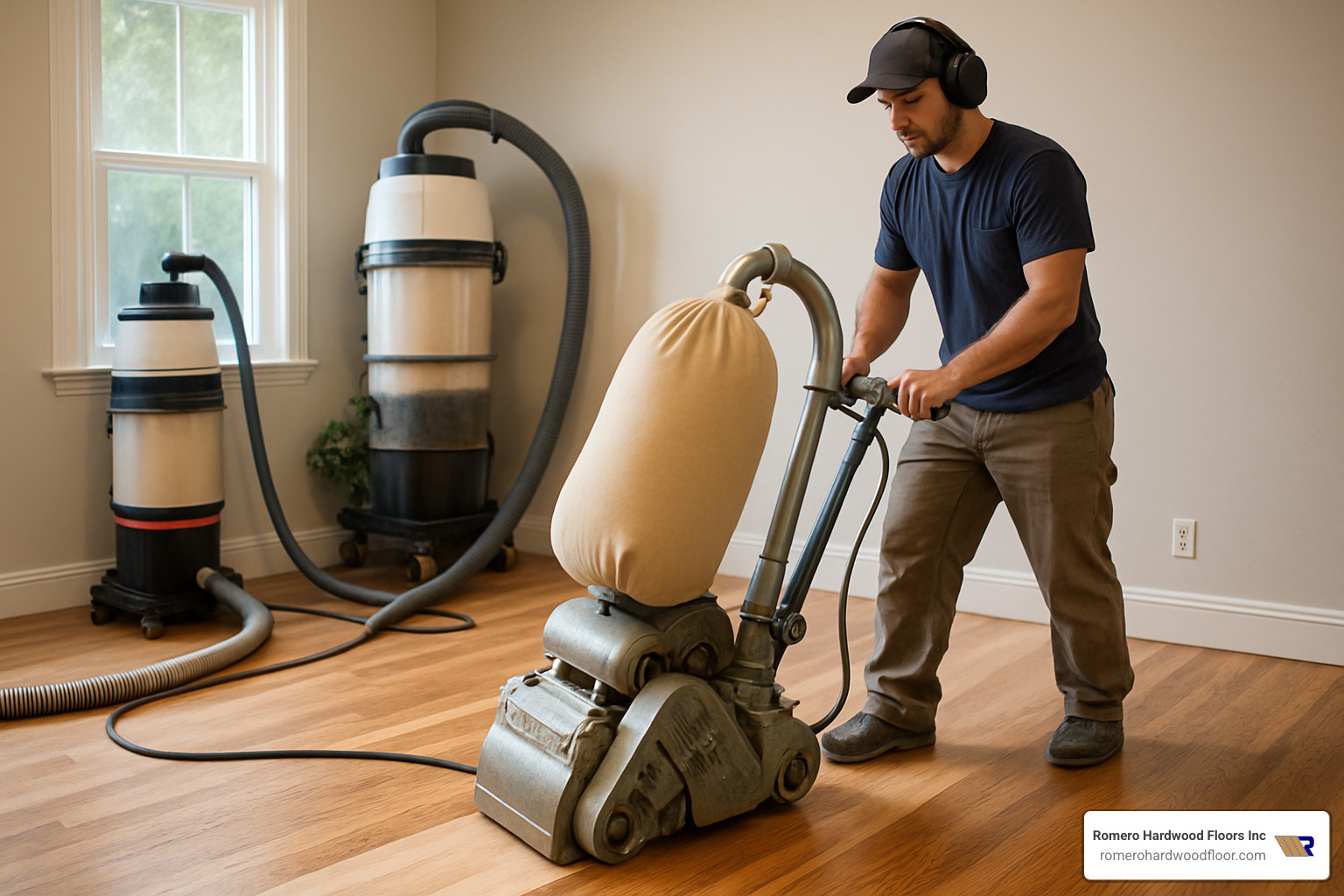
When deeper scratches, stubborn stains, or more significant wear appears, full refinishing becomes the answer. This more intensive process sands down to bare wood, removing the existing finish and a thin layer of wood itself. While it requires 3-5 days to complete, it offers the chance to start fresh—even changing your stain color if you’re ready for a new look. Solid hardwood can be refinished numerous times over its lifetime, while engineered hardwood’s refinishing potential depends on the thickness of its wear layer.
Sometimes, damage affects only specific areas—perhaps water damage from a leaking refrigerator or a deep gouge where furniture was dragged. In these cases, board replacement offers a targeted solution. Skilled professionals can carefully remove and replace individual damaged planks, then blend the finish to match surrounding areas—a far more economical approach than replacing an entire floor.
At Romero Hardwood Floors Inc., we specialize in all levels of hardwood restoration, from simple screen-and-recoat services to complete refinishing and complex repairs. Our skilled technicians have developed an eye for matching existing stains and finishes, ensuring seamless results even when replacing individual boards.
For more information about our refinishing services, visit Hardwood Floor Refinishing Contractors or learn about our specialized sanding techniques at Hardwood Floor Sanding.
Common Issues & Fixes
Even the most well-maintained hardwood floor flooring may occasionally develop issues. Understanding what you’re seeing helps address concerns before they become serious problems:
Cupping—where board edges rise higher than centers—typically signals moisture problems from below or excessive humidity. The solution starts with identifying and eliminating the moisture source, then allowing floors to naturally acclimate. Patience is key; rushing to sand cupped floors before they’ve fully dried can create new problems.
The opposite issue, crowning (where centers rise higher than edges), often results from improper drying after cupping or too much surface moisture. Once humidity levels stabilize, sanding and refinishing can restore the flat surface you love.
Those gaps between boards that appear during winter? They’re usually normal seasonal movement as wood naturally contracts in drier conditions. Minor seasonal gaps typically close when humidity rises in summer. If gaps persist year-round or seem excessive, your home might benefit from humidity control or, in extreme cases, board replacement.
Every hardwood floor flooring eventually acquires some scratches and dents—they’re part of life’s story written on your floors. Minor scratches often respond well to touch-up kits matched to your finish. Deeper issues might require screen-and-recoat or refinishing, depending on severity.
Water stains vary in severity from light surface spots (which specialized cleaners might address) to dark stains penetrating the wood itself. The latter typically require sanding and refinishing to completely remove.
Nothing announces itself quite like squeaky floors when you’re trying to tiptoe past sleeping children! These noises typically stem from loose boards, subfloor issues, or wood rubbing against fasteners. Professional reattachment of loose boards or specialized screws designed for eliminating squeaks can restore peaceful midnight walks.
Finally, finish wear in high-traffic pathways is inevitable over time. The key is addressing it before it reaches the wood beneath. A screen-and-recoat can renew protection when caught early; once wear penetrates to bare wood, full refinishing becomes necessary.
For most of these issues, early intervention prevents more extensive damage. Our team at Romero Hardwood Floors Inc. provides comprehensive diagnostic services to identify the root cause of flooring problems and recommend the most appropriate, cost-effective solutions.
Design Trends & Eco-Friendly Choices
The world of hardwood floor flooring evolves at its own deliberate pace—never rushing to follow fleeting fads, but gradually embracing new aesthetics that complement its timeless nature. Today’s trends honor the wood’s natural beauty while adapting to contemporary design sensibilities.
Walk into stylish homes today and you’ll likely notice the growing popularity of wide and extra-wide planks. These impressive boards, often 7-10 inches across, create fewer seam lines while showcasing more of the wood’s natural character. The effect is both bold and spacious, making rooms feel larger and more open than traditional narrow strips.
You’ll also spot a significant shift toward matte and satin finishes that have largely replaced the mirror-like high-gloss looks of decades past. These low-luster options not only create a more sophisticated, understated appearance but also offer practical benefits—they hide small scratches, dust, and footprints far better than their glossy counterparts.
When it comes to color, we’re seeing a beautiful return to authenticity. Hardwood floor flooring in natural and light stains that celebrate the wood’s inherent color and grain patterns are increasingly sought-after, particularly in homes embracing Scandinavian-inspired design. For those seeking something truly unique, reactive staining techniques—which interact with the wood’s natural tannins—create one-of-a-kind color effects with remarkable depth and character.
Creative installation patterns are making a comeback too. Mixed-width installations combine different plank widths for visual interest, while traditional parquet patterns like herringbone and chevron are experiencing a renaissance in formal spaces. These geometric designs bring architectural interest to floors that can transform an ordinary room into something extraordinary.
Matching Species to Style
The type of wood you choose should harmonize with your overall design vision. Each species brings its own personality to your home:
Red oak welcomes you with warm undertones and prominent grain patterns that beautifully complement traditional, craftsman, and rustic interiors. Its reliable ability to accept stain predictably makes it wonderfully versatile, adapting to various color preferences while maintaining its distinctive character.
White oak speaks a more contemporary language with its subtle gray undertones and straighter grain. This makes it the darling of modern and transitional spaces where clean lines and neutral palettes reign supreme. Its natural color creates an ideal foundation for today’s popular understated design schemes.
Walnut whispers luxury with every step. The rich, chocolate-brown tones and striking grain patterns create a sense of sophistication that lifts both contemporary and traditional designs. In formal spaces, walnut hardwood floor flooring doesn’t just cover the floor—it makes a statement.
Maple brings brightness and subtlety with its light color and gentle grain. This clean-lined character makes it perfect for minimalist, Scandinavian, and contemporary designs where a bright, airy foundation supports the overall aesthetic without competing for attention.
Hickory tells stories with its dramatic color variations and distinctive grain. These natural features create visual interest perfect for rustic, farmhouse, and country-inspired spaces where character and authenticity are celebrated rather than minimized.
Cherry ages like fine wine, with warm, reddish tones that develop a rich patina over time. This natural evolution makes cherry ideal for traditional, colonial, and Federal-style interiors where timeless elegance and natural warmth create inviting, sophisticated spaces.
Sustainability Checklist
Today’s homeowners increasingly consider environmental impact alongside aesthetics when choosing hardwood floor flooring. Here’s what to look for if sustainability matters to you:
Look for respected certification labels like FSC (Forest Stewardship Council), which ensures your wood comes from responsibly managed forests balancing environmental protection with social benefits and economic viability. Other reputable certifications include SFI (Sustainable Forestry Initiative) and PEFC (Programme for the Endorsement of Forest Certification).
Ask questions about harvesting practices, preferring suppliers who use selective harvesting rather than clear-cutting approaches that devastate forest ecosystems. Consider the transportation distance involved—exotic woods shipped from distant continents carry a larger carbon footprint than domestically sourced alternatives.
The manufacturing process itself matters too. Forward-thinking producers implement energy-efficient operations, responsible waste management, and water conservation techniques. When it comes to finishes, low-VOC or zero-VOC options minimize indoor air pollution while providing the same beautiful protection.
Reclaimed wood offers perhaps the most sustainable option of all—salvaged from old barns, factories, and other structures, these materials bring unique character and history while giving existing timber a second life. The patina and weathering achieved naturally over decades simply can’t be replicated in new wood.
At Romero Hardwood Floors Inc., we’re passionate about helping our clients in Revere, MA and surrounding communities steer these choices. We believe beautiful floors and environmental responsibility can go hand-in-hand, and we’re always ready to discuss options that align with both your design vision and your values.
Frequently Asked Questions about Hardwood Floors
How long does hardwood last with proper care?
When it comes to longevity, few flooring options can compete with hardwood floor flooring. With proper care, solid hardwood can truly become a once-in-a-lifetime purchase, lasting 100+ years and serving generations of your family. It’s not uncommon to walk into historic homes and find you’re stepping on the original floors installed a century ago!
Engineered hardwood offers impressive durability too, typically lasting between 20-80 years depending on the quality and thickness of its wear layer. The difference is significant between budget options with thin veneers and premium products with substantial real wood surfaces.
What’s the secret to this remarkable longevity? It’s actually quite simple: regular sweeping to prevent scratchy grit buildup, maintaining indoor humidity between 35-55%, promptly addressing any water spills, using furniture pads, and refreshing the protective finish before it wears through to the bare wood.
The beautiful thing about hardwood floor flooring is that the wood itself rarely “wears out” – it’s typically just the protective finish that needs periodic renewal through refinishing processes. This renewable quality is what makes hardwood such a sustainable and economical choice over the decades.
Can engineered floors be refinished?
Yes, engineered floors can absolutely be refinished – but there’s an important “it depends” attached to that answer. The refinishing potential directly relates to the thickness of the real wood wear layer on top:
Premium engineered products with generous 3mm+ wear layers can usually handle 2-5 complete refinishing cycles, approaching solid hardwood’s renewability. These higher-end options represent the best long-term value for many homeowners.
Mid-range options with approximately 2mm wear layers typically support 1-2 full refinishing processes – enough to refresh your floors at least once during their lifetime.
Budget-friendly engineered products with thin 1mm or less wear layers are more limited, usually supporting only screen-and-recoat processes (which don’t remove significant wood) or perhaps one very gentle sanding.
Before attempting any refinishing on engineered floors, it’s crucial to determine what you’re working with. At Romero Hardwood Floors Inc., we can examine your specific product – often by looking at a spare plank or removing a vent cover to view a cross-section – and recommend the appropriate refinishing approach to maximize your floor’s lifespan.
Does hardwood really increase resale value?
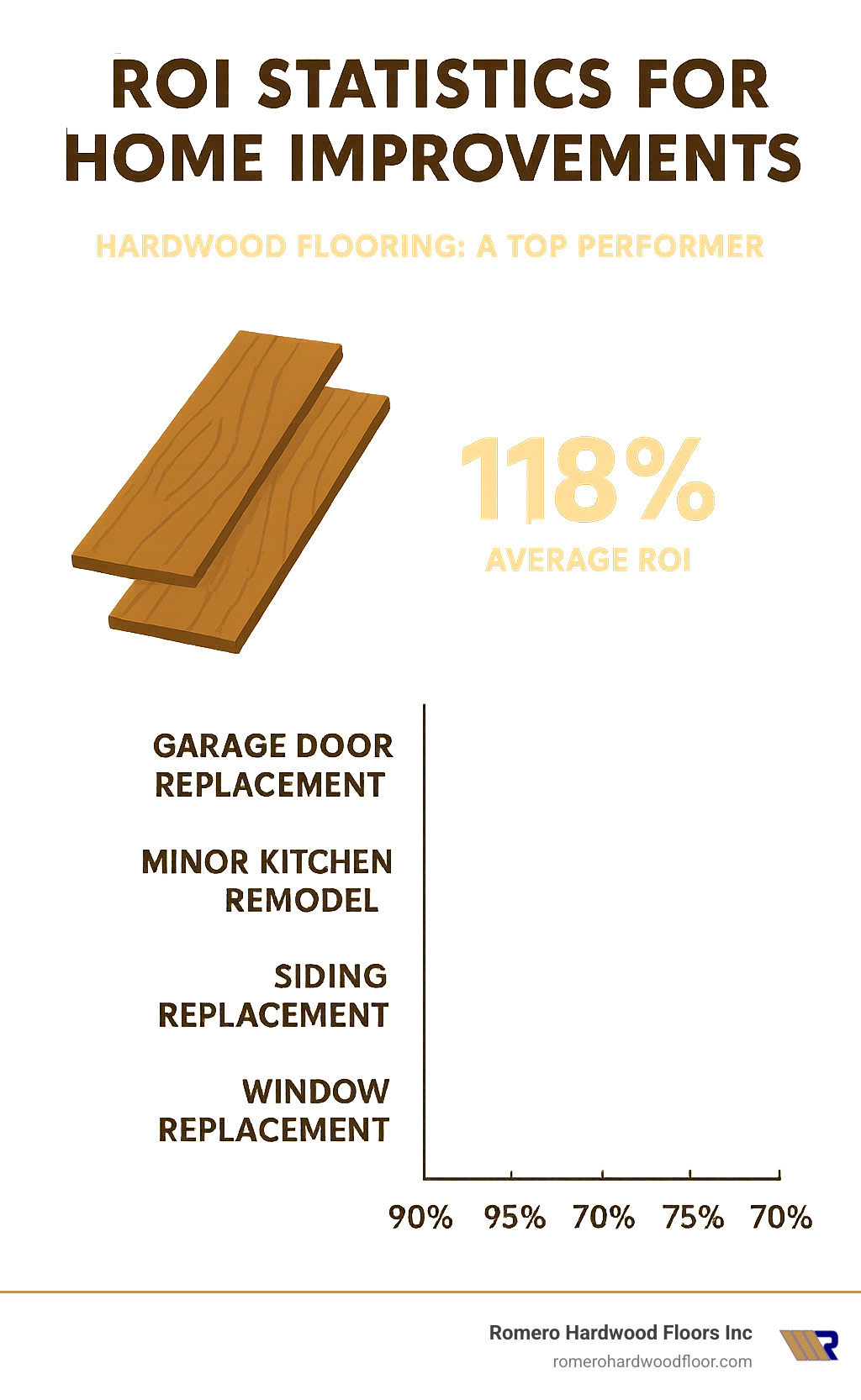
If you’re wondering whether hardwood floor flooring is worth the investment, the numbers speak for themselves. According to the National Association of Realtors’ 2022 Remodeling Impact Report, new hardwood flooring delivers an average 118% return on investment – meaning you typically recoup more than you spend when selling your home. It’s one of the few home improvements that can actually pay for itself!
Real estate professionals consistently report that homes with hardwood sell faster and command higher prices than comparable properties with other flooring types. This value boost is particularly noticeable when hardwood is installed in main living areas, dining rooms, master bedrooms, and open-concept spaces.
Why do buyers place such a premium on hardwood? It comes down to several factors: the perceived quality and luxury, exceptional durability, reduction in allergens compared to carpet, broad appeal across different buyer demographics, and the ability to complement virtually any décor style. Hardwood provides a blank canvas that new homeowners can easily make their own, whether their taste runs traditional, contemporary, or somewhere in between.
Even in market conditions where you might not recoup the full installation cost, hardwood floor flooring typically helps your home sell faster by significantly increasing its appeal to prospective buyers. When people walk through an open house and see those gleaming hardwood floors, they’re not just seeing flooring – they’re envisioning their future in that space.
Conclusion
When you invest in hardwood floor flooring, you’re not just choosing a surface to walk on—you’re making a statement about your home that will stand the test of time. Unlike trendy flooring options that come and go, hardwood floors become part of your home’s character, often outlasting the very owners who install them.
Think about it: the floors you install today might welcome your grandchildren’s first steps decades from now. That’s the remarkable longevity and enduring value of quality hardwood. With that impressive 118% return on investment reported by the National Association of Realtors, hardwood flooring is that rare home improvement that actually pays you back—and then some.
The beauty of hardwood is how it evolves with your home. As design preferences change over the years, there’s no need to tear everything out and start over. A simple refinishing can transform those same boards with new stain colors or finish types, adapting to whatever style is currently speaking to you.
Here at Romero Hardwood Floors Inc., nothing makes us prouder than seeing the change that quality hardwood brings to homes throughout Revere and our neighboring communities. For over 15 years, we’ve been privileged to help homeowners make this significant investment with confidence, knowing they’re working with specialists who truly understand the craft.
Whether your home is a historic treasure in Salem with original details to complement, a brand-new build in Beverly needing warmth and character, or a modern condo in East Boston seeking an upgrade, our team brings the same dedication to craftsmanship and attention to detail. From the moment we measure your space until the final coat of finish dries, we treat your home with the respect it deserves.
The floors we install aren’t just products—they’re the foundation upon which your daily life unfolds. They’ll support holiday gatherings, quiet Sunday mornings, children’s play, and countless moments that make a house truly feel like home. That’s why we never cut corners or rush the process. Hardwood floor flooring deserves to be done right, once, by professionals who understand its true value.
Ready to transform your home with the timeless beauty of hardwood? We’d love to help bring your vision to life. For more information about our professional installation services or to schedule a free, no-obligation consultation, visit our Hardwood Floor Installation page or reach out directly. We proudly serve communities throughout the Greater Boston area, including Beverly, Chelsea, Danvers, East Boston, Gloucester, Lynnfield, Malden, Manchester by the Sea, Marblehead, Medford, Melrose, Nahant, Peabody, Reading, Revere, Rockport, Salem, Saugus, Somerville, Stoneham, Swampscott, Wakefield, Winchester, Winthrop, and Woburn.