
Hardwood Floor Gouge Repairs: Flawless 2025
Why Hardwood Floor Gouge Repairs Matter for Your Home’s Beauty
Hardwood Floor Gouge Repairs can restore your floors from damaged to stunning without the massive cost of full replacement. Here’s what you need to know:
Quick Repair Guide:
- Minor scratches: Use walnut or paste wax, buff gently
- Deep scratches: Sand lightly, apply wood filler, stain to match
- Gouges: Fill with wood putty, sand flush, stain and seal
- Multiple gouges: Consider professional repair or board replacement
Average Repair Costs (based on internet data, not Romero Hardwood Floors pricing):
- Minor repairs: $500-$1,500
- Water damage: $500-$4,500
- Board replacement: $100-$900 per board
- Full refinishing: $4-$18 per square foot
Nothing ruins the elegance of beautiful hardwood floors quite like an ugly gouge staring back at you. Whether it’s from dropping a heavy appliance, sliding furniture, or your dog’s enthusiastic scratching, these deep marks can make your entire room look damaged and neglected.
The good news? Most gouges are completely repairable with the right approach and materials. You don’t need to replace your entire floor or live with the eyesore forever.
I’m Francisco Romero, owner of Romero Hardwood Floors Inc. with over 15 years of experience in hardwood flooring. Throughout my career, I’ve helped countless homeowners master Hardwood Floor Gouge Repair techniques and restored floors that seemed beyond saving.
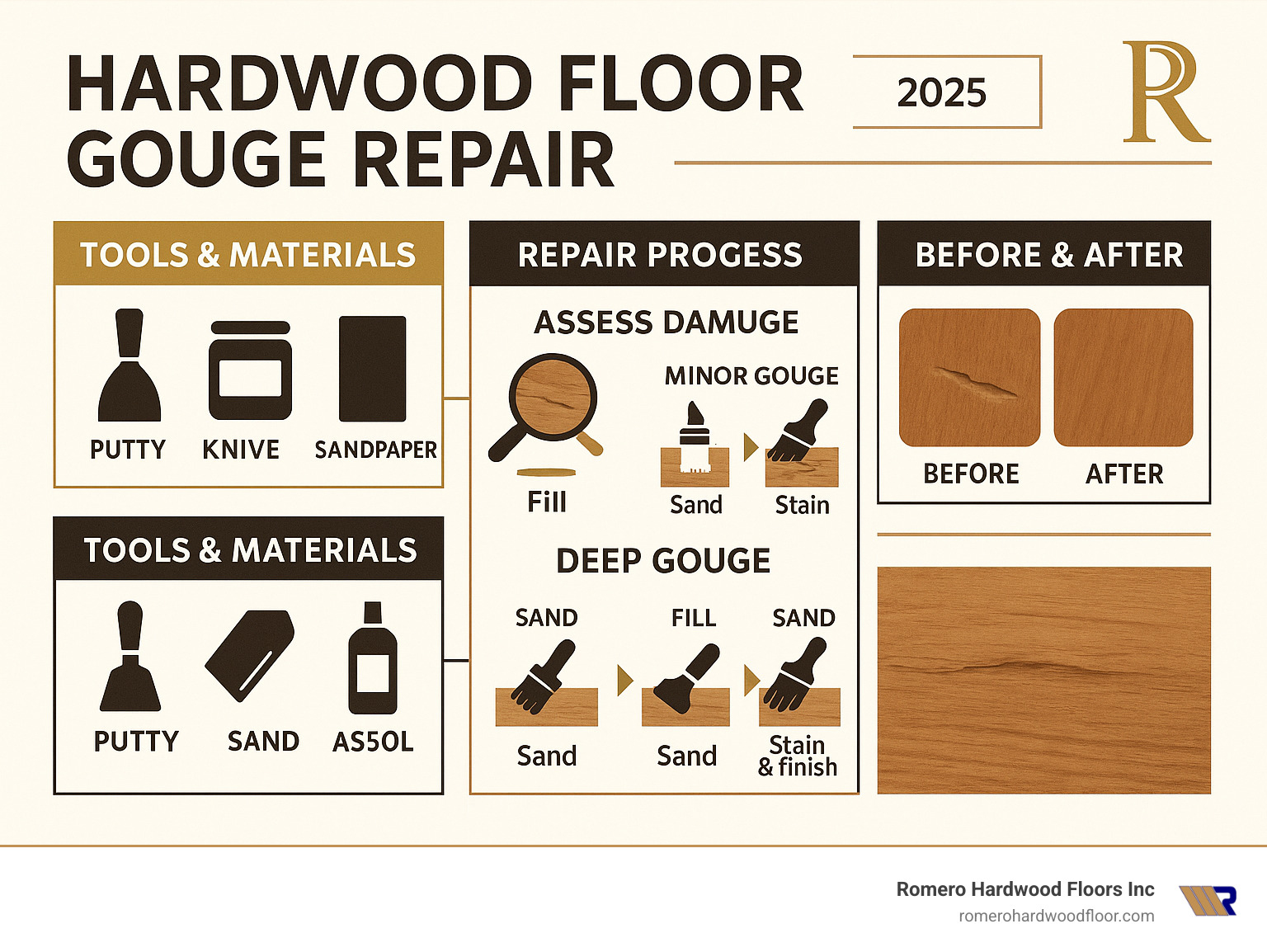
Glossary for Hardwood Floor Gouge Repair:
Understanding the Damage: From Minor Scuffs to Major Gouges
Before you grab your tools and dive into Hardwood Floor Gouge Repair, you need to play detective. Not all floor damage is the same, and trust me – using the wrong repair method can make things worse instead of better.
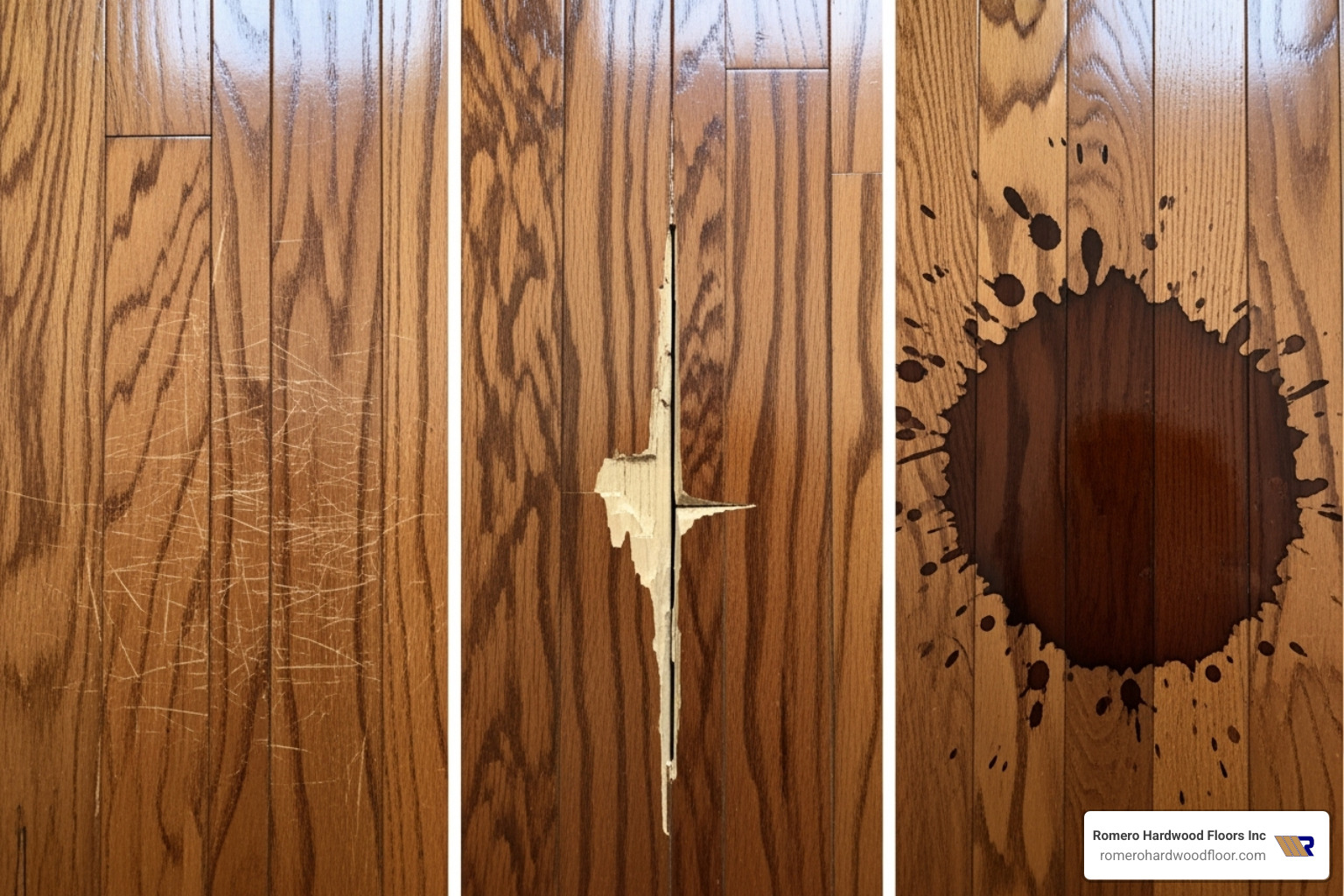
Think of your hardwood floor like your skin. A paper cut needs different treatment than a deep wound. The same logic applies here – surface scratches barely touch the finish layer, like a light scuff from sliding a chair. You can often buff these out with just some elbow grease and the right product.
Shallow scratches go a bit deeper, cutting through the protective finish but barely nicking the actual wood. These are more stubborn but still manageable with basic techniques.
Dents happen when something heavy drops and compresses the wood fibers without actually breaking them. Picture dropping a can of soup – it pushes the wood down rather than cutting through it. The good news? Sometimes you can actually steam these back to life.
Now we get to the real troublemakers: gouges. These bad boys actually remove or break wood fibers, creating visible grooves that expose raw wood. They’re deeper, more noticeable, and often come with splinters that can snag socks or scratch bare feet.
Deep gouges are the worst-case scenario – we’re talking damage over 1/16-inch deep where significant wood is missing. These require serious Hardwood Floor Gouge Repair techniques and sometimes even board replacement.
Identifying the Severity of Damage
Here’s my simple test: run your fingernail across the damage. If your nail doesn’t catch, it’s probably just a finish-level scratch. If it catches slightly, you’re dealing with a wood-level scratch. If your nail drops into the damage noticeably, you’ve got a dent or gouge on your hands.
Water damage signs are different entirely. Look for dark spots, blackening, or boards that seem to be cupping (edges curling up) or crowning (centers rising). Water damage can compromise your floor’s structural integrity, so don’t ignore these warning signs.
The key question is always: does this go through just the finish, into the wood, or all the way through? This determines everything about your repair approach. For more detailed information about assessing different types of damage, check out our comprehensive guide on hardwood floor damage repair.
Common Causes and How to Spot Them
Let’s talk about the usual suspects behind floor damage. Daily wear and tear from foot traffic is inevitable – those tiny bits of dirt and debris act like sandpaper on your finish over time.
Moving heavy appliances without proper protection is a classic mistake. I’ve seen beautiful floors destroyed by someone dragging a refrigerator across them. The weight plus friction equals instant deep scratches or gouges.
Pet activity keeps me in business more than you’d think. Those adorable paws can create dozens of small scratches, especially from larger dogs who love to run and play indoors. Regular nail trims are your friend here.
Dropped objects cause the most dramatic damage. Kitchen accidents with heavy pots, dropped tools in the garage, or even a ceramic mug hitting just wrong can create significant dents or gouges.
High heels might look great, but they concentrate tremendous pressure into tiny points. Softer wood species are especially vulnerable to these pinpoint dents.
Environmental factors like humidity changes cause wood to expand and contract naturally. Extreme fluctuations can lead to gaps, warping, or buckling. Maintaining consistent humidity levels prevents most of these issues.
Understanding what caused your damage helps prevent future problems and guides your repair strategy. For expert advice on preventing cracks and maintaining stable conditions, resources like Forbes offer valuable insights on proper floor maintenance.
Your DIY Toolkit: Essential Tools and Materials for Gouge Repair
Before diving into the repair process, having the right tools and materials is essential. A well-prepared toolkit makes the job smoother and ensures a more professional-looking result.
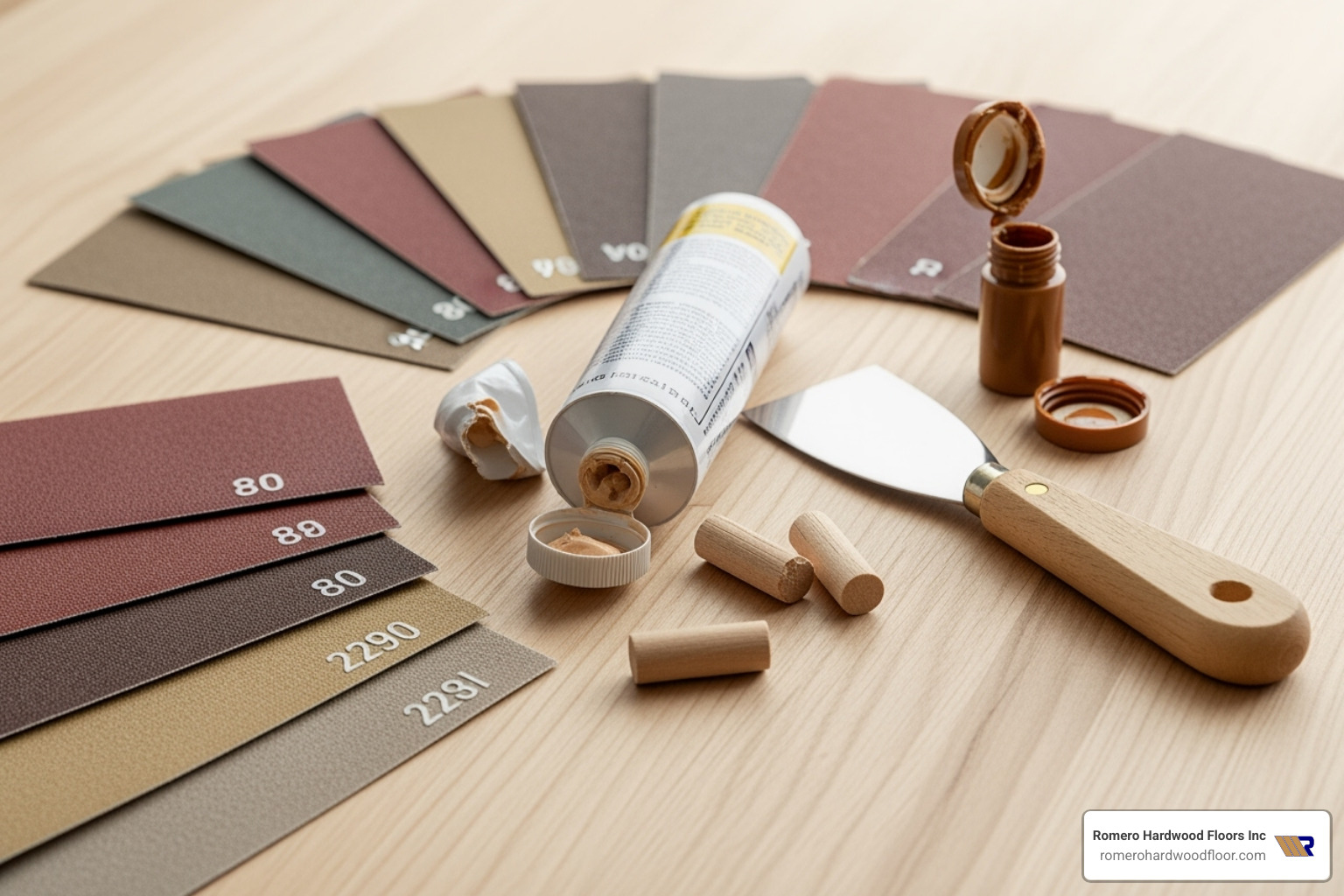
For most Hardwood Floor Gouge Repair projects, you’ll want to gather:
- Wood filler or wood putty: This is the primary material for filling gouges.
- Putty knife or plastic spatula: For applying and smoothing filler.
- Sandpaper (multiple grits): Fine-grit (120-220 for initial smoothing, 320-400 for final buffing) is essential. Coarser grits might be needed for very deep gouges or if you need to remove existing finish around the repair.
- Tack cloth: For removing fine dust after sanding.
- Mineral spirits (optional): For cleaning tools and sometimes for wiping excess filler.
- Stain pens or matching wood stain: For coloring the repaired area to blend with your floor.
- Polyurethane finish or clear coat: To seal and protect the repair.
- Soft cloths: For cleaning, applying stain, and buffing.
- Painter’s tape: To protect the surrounding undamaged area.
- Safety gear: Gloves and eye protection are always a good idea, especially when working with chemicals or sanding.
Choosing the Right Filler
The type of filler you choose depends on the severity of the gouge and the type of finish on your floor.
- Wax Sticks: Best for very minor scratches and shallow gouges. They are easy to apply and come in various colors. Simply rub them into the scratch.
- Solvent-Based Wood Filler: A versatile option for deeper scratches and small gouges. These dry hard and can be sanded, stained, and sealed. They are resistant to shrinkage, making them ideal for repairs that need to withstand seasonal expansion and contraction of wood.
- Epoxy Fillers: Ideal for deep gouges, cracks, and structural repairs. Epoxy provides a very strong and durable bond. It can be mixed with sawdust (from your own floor for a perfect color match) or universal colorants to achieve the desired shade. High-grade epoxies are suitable for significant repairs.
- Color-Matching Putty: Available in various wood tones, these putties offer a good balance for moderate gouges. They can be sanded and finished. According to a Reddit expert, using oak-colored filler is advisable as it blends well and can be easily stained to match various shades.
For a comprehensive guide on using putty and filler for repairs, see our DIY guide to putty and filler repair and hardwood floor filler repair.
Prepping the Area for a Flawless Fix
Proper preparation is often the most overlooked, yet critical, step in any successful Hardwood Floor Gouge Repair.
- Clean the Gouge: Start by thoroughly cleaning the damaged area. Use a soft-bristled broom or a vacuum with a hardwood setting to remove any loose dirt, dust, and debris. Then, wipe the area with a damp cloth and a suitable hardwood floor cleaner. Ensure the area is completely dry before proceeding.
- Remove Loose Splinters: Carefully inspect the gouge for any loose or protruding wood splinters. Gently remove them using tweezers or a sharp utility knife. If a splinter is still attached but lifted, you might try to reattach it with a small amount of carpenter’s glue and tape it down while it dries.
- Tape Off the Surrounding Area: To protect the undamaged finish and prevent accidental spills or sanding marks, apply painter’s tape neatly around the perimeter of the gouge. This creates a clean boundary for your work.
- Ensure a Dry Surface: Any moisture in or around the gouge can compromise the filler’s adhesion and the finish’s effectiveness. Ensure the area is completely dry before applying any repair materials.
Taking the time to prep properly will save you headaches down the road and lead to a much better outcome for your Hardwood Floor Gouge Repair.
The Step-by-Step Guide to Hardwood Floor Gouge Repair
This section provides a detailed walkthrough for fixing everything from minor imperfections to deep gashes, ensuring a seamless result.
How to Repair Minor Scratches and Dents
Sometimes the simplest solutions work best. Before diving into complex repairs, let’s explore some surprisingly effective techniques for those everyday scratches and dents that make your beautiful floors look worn.
The walnut trick might sound like an old wives’ tale, but it genuinely works wonders on light scratches. Simply rub a shelled walnut vigorously along the scratch, and the natural oils will fill and darken the mark, making it nearly invisible. After applying the walnut, buff the area with a soft cloth to blend it in. If you don’t have walnuts handy, coconut oil works similarly.
For superficial scrapes that only touch the finish, paste wax becomes your best friend. Apply a small amount with a soft cloth, rubbing gently along the wood grain. The wax fills the tiny void left by the scrape, then buffing restores the natural shine.
Blending pencils and stain pens offer another clever solution for shallow scratches. Choose one that matches your floor color and apply it directly to the scratch. The pigment fills and darkens the mark beautifully. Here’s a pro tip: if you’re using a stain pen on filled areas, apply your clear finish first, then use the pen. This prevents the stain from appearing too dark on raw filler. Always test in an inconspicuous area first.
The steam and iron method works like magic for small dents where wood fibers are compressed but not broken. Place a slightly damp cloth over the dent, then press a medium-heat iron (no steam setting) onto the cloth for just a few seconds. The steam causes the compressed wood fibers to expand back into place. Check your progress and repeat if needed, but be careful not to over-saturate or burn the wood. For more detailed guidance on this technique, visit our fixing dents in wood page.
After any minor repair, gentle buffing with a soft cloth blends the repair with surrounding areas and restores that natural sheen we all love.
How to Effectively Repair Deep Hardwood Floor Gouges
When scratches become gouges, we move beyond simple tricks to actual restoration. This is where Hardwood Floor Gouge Repair becomes both an art and a science.
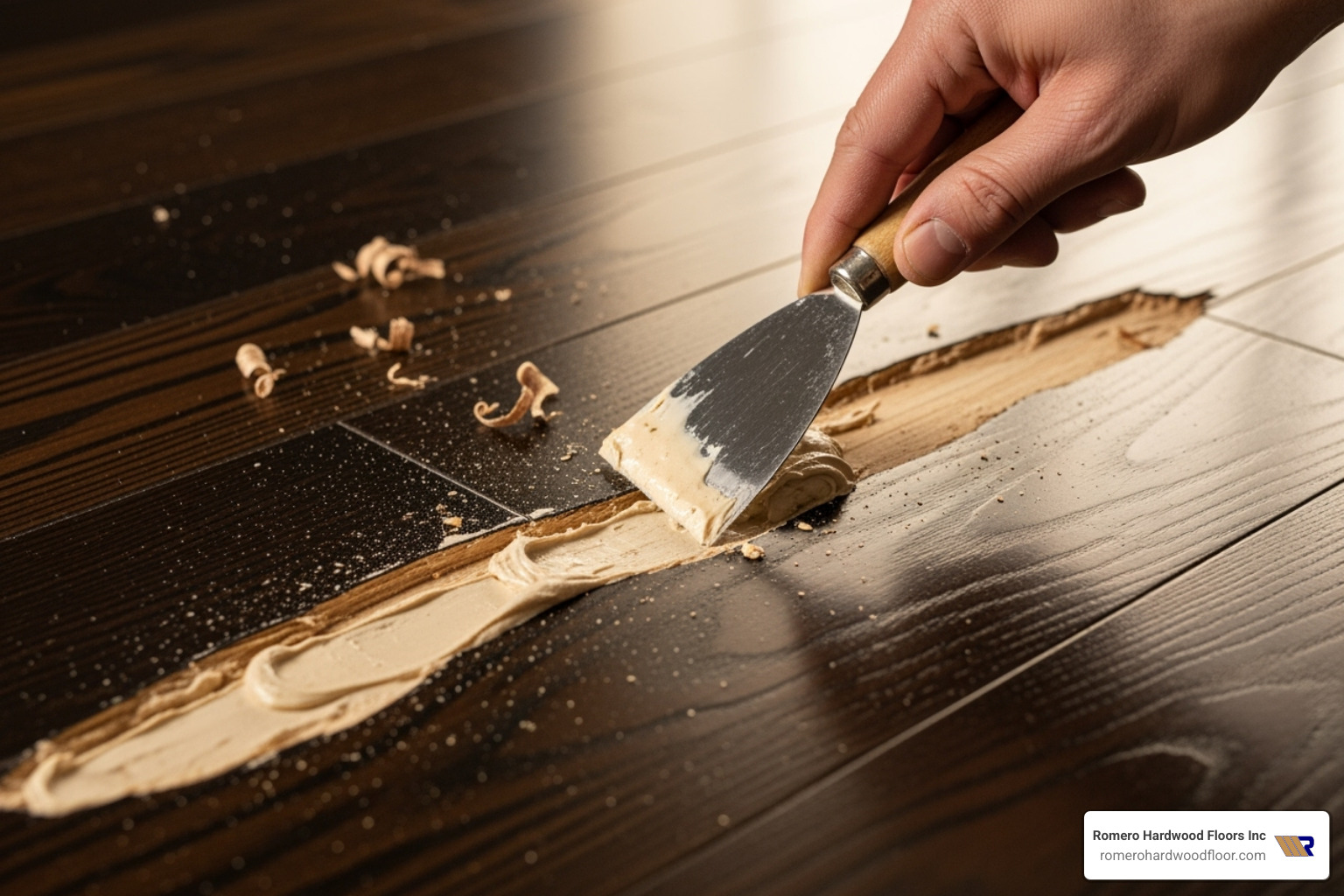
Applying wood filler requires patience and the right technique. With your area properly prepped (cleaned, splinter-free, and taped off), select either solvent-based wood filler or epoxy for deep gouges. Using a plastic putty knife, press the filler firmly into the gouge, ensuring it reaches every corner and crevice of the damage.
For particularly deep gouges, layering becomes essential. Apply thin layers rather than trying to fill everything at once. Allow each layer to dry completely according to manufacturer instructions before adding the next. This prevents the dreaded shrinkage and cracking that can ruin your repair.
Scraping excess filler immediately after application ensures a flush repair. Use your putty knife to carefully remove any filler that sits above the floor surface. Work gently to avoid damaging the existing finish around your repair area.
Proper drying time can’t be rushed. Depending on your filler type and gouge depth, this might take several hours or even overnight. Trust the manufacturer’s guidelines here – patience now saves frustration later.
Sanding flush brings everything together. Once your filler is completely hard, start with 120-grit sandpaper if needed to level the repair, then progress through finer grits (220-grit, then 320-grit) for a smooth finish. Always sand with the wood grain direction to avoid cross-grain scratches that create new problems. Clean away all sanding dust with a tack cloth before moving to finishing.
As one Reddit expert suggests, oak-colored filler works exceptionally well because it blends naturally and accepts stain easily to match various wood tones. For comprehensive information on filler selection and application, check out our hardwood floor filler repair guide.
The Finishing Touches: Staining and Sealing Your Repair
This final stage transforms your repair from obvious patch work to invisible restoration. Getting the color match right makes all the difference between amateur and professional results.
Color matching starts with smart testing. Always test your stain in a hidden area first – inside a closet or under furniture works perfectly. Starting lighter gives you control; it’s much easier to darken a stain than lighten it. Build up color gradually in thin layers.
Using wood dust from your own floor creates the most perfect match possible. Collect fine sanding dust and mix it with clear epoxy for a custom-colored filler that blends almost invisibly. This technique often produces better results than any store-bought color.
When applying stain, use cotton swabs or small soft brushes for precision. Apply thin coats and wipe away excess immediately. Multiple light coats give you better color control than one heavy application. Allow proper drying time between coats.
Sealing with polyurethane protects your repair and matches the existing floor’s protection level. Choose a sheen that matches your current floor – satin, semi-gloss, or gloss. Apply thin, even coats, allowing complete drying between applications.
Feathering the finish creates seamless blending with existing flooring. After your first coat dries, lightly sand the edges where new finish meets old using very fine-grit sanding sponge or #0000 steel wool. This creates a gradual transition rather than a hard line.
The final buffing for shine brings back that beautiful luster. Once your final coat is completely dry, buff with a soft cloth to match the surrounding floor’s appearance perfectly.
For detailed guidance on maintaining and repairing your floor’s protective finish, explore our hardwood floor clear coat repair resource.
DIY vs. Professional Repair: Making the Right Call
Deciding whether to tackle a Hardwood Floor Gouge Repair yourself or call in the professionals depends on several key factors. Let me help you make the right choice for your situation.
| Feature | DIY Repair | Professional Repair |
|---|---|---|
| Cost | $50-200 in materials | $300-1,500+ depending on scope |
| Time | 2-8 hours over several days | 1-2 days including drying time |
| Skill Level | Basic to intermediate | Expert level with specialized tools |
| Result Quality | Good for minor damage | Flawless, guaranteed results |
The damage extent plays the biggest role in this decision. A single small gouge from dropping a can? That’s perfect DIY territory. Multiple deep gouges across your living room? Time to call the pros.
Your homeowner skill level matters too. If you’ve successfully completed other home improvement projects and feel confident with tools, minor Hardwood Floor Gouge Repair can be very rewarding. But if you’re all thumbs with a putty knife, even small repairs might not turn out as expected.
Consider your desire for a perfect match. Professional repairs blend seamlessly because we have access to exact stain matches and professional-grade finishing equipment. DIY repairs, while effective, might show slight color variations under certain lighting.
Watch for structural damage signs like warping, buckling, or boards that feel loose underfoot. These issues require professional assessment and often indicate problems beyond simple surface repair.
Cost Considerations: Repairing vs. Replacing
Understanding the financial side helps you make smart decisions about your floors.
Average repair costs vary widely based on damage severity and location. Please note: The following costs are national averages based on online data and do not reflect the pricing of Romero Hardwood Floors. Costs can range from $500 to over $5,000 depending on the project’s scope and location.
Minor scratch repair typically runs $500-$1,500 for professional work, while DIY materials cost under $100. Water damage repair can range from $500-$4,500 depending on how many boards are affected and whether subfloor damage exists.
Board replacement costs average $100-$900 per board professionally installed, including matching stain and finish work. Full refinishing runs $4-$18 per square foot, making it cost-effective when you have widespread damage across the entire floor.
Sometimes repair makes perfect sense financially. Other times, especially with extensive damage, full refinishing or even replacement becomes the smarter long-term investment.
When to Call a Professional for Hardwood Floor Gouge Repair
Certain situations definitely call for professional expertise rather than DIY attempts.
Multiple deep gouges across your floor require consistent color matching and finishing techniques that take years to master. We have the tools and experience to make repairs blend perfectly with your existing floor.
Extensive water damage often involves more than meets the eye. What looks like surface staining might indicate subfloor problems, mold issues, or structural concerns that need professional assessment.
Loose or warped boards signal potential moisture problems or installation issues. These repairs require removing and reinstalling boards, which involves specialized tools and techniques.
Lack of confidence in DIY skills is a perfectly valid reason to call professionals. A botched repair often costs more to fix than hiring experts from the start.
Need for board replacement definitely requires professional help. Matching wood species, grain patterns, and existing finishes takes expertise and access to specialty materials.
If you’re dealing with any of these situations, consider reaching out to experienced professionals. You can find a wood floor repair contractor who can assess your specific situation and provide expert solutions.
The bottom line? Small, isolated gouges make great DIY projects. Extensive damage, structural issues, or situations where you need guaranteed perfect results call for professional expertise.
