
Why Your Hardwood Floor Deserves a True Specialist
Hardwood floor repair specialist services are essential when your floors show signs of damage that go beyond simple cleaning. Here’s what you need to know:
When to Call a Hardwood Floor Repair Specialist:
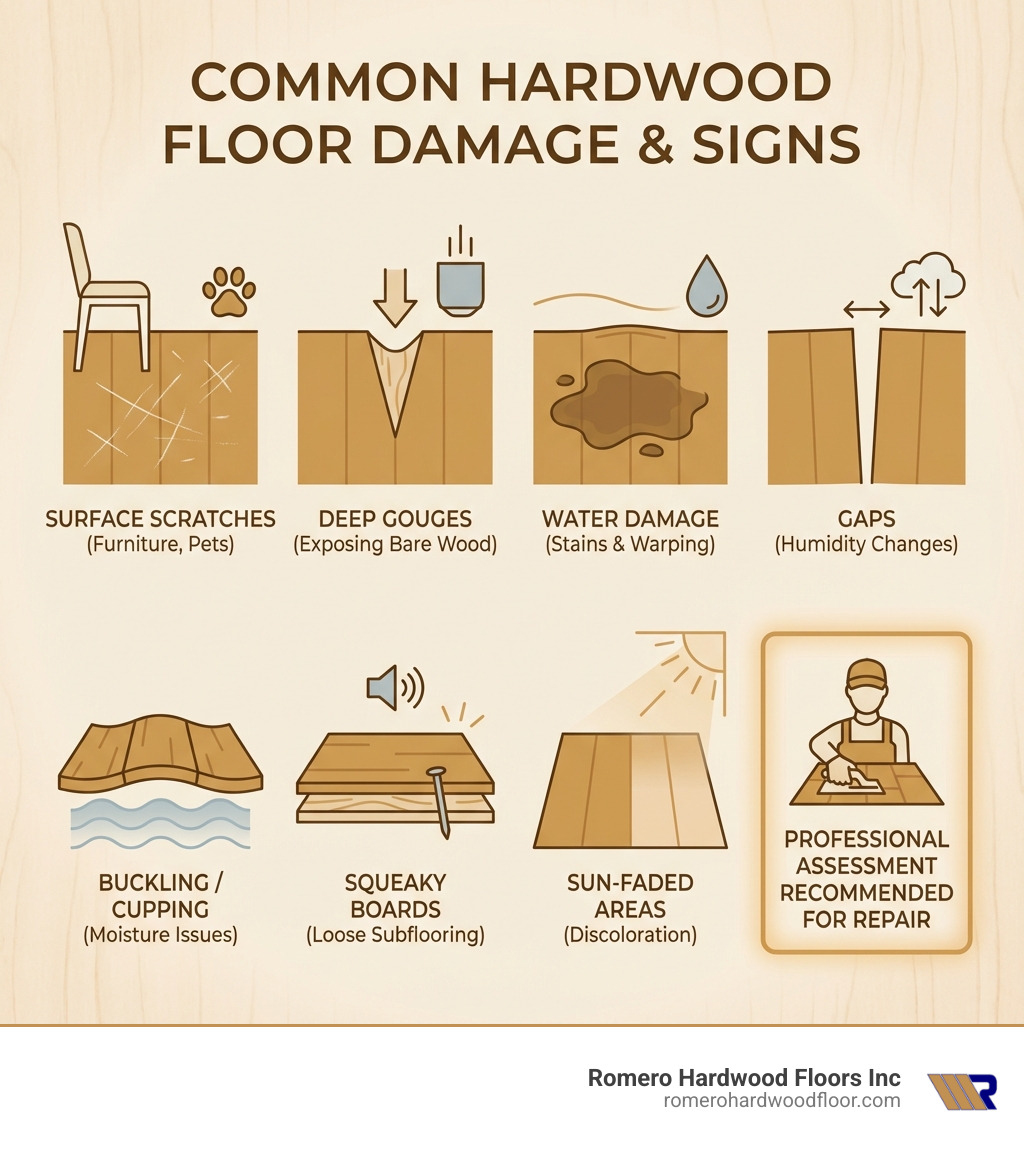
- Deep scratches or gouges that penetrate the finish and expose bare wood
- Water damage causing warping, cupping, or dark staining
- Gaps between planks wider than the thickness of a credit card
- Buckled or loose boards that create tripping hazards
- Squeaky floors that indicate structural issues below the surface
- Significant discoloration that cleaning cannot remove
What a Specialist Provides:
- Expert assessment of damage severity and root causes
- Seamless board replacement using matching wood species
- Professional sanding and refinishing with dustless equipment
- Custom stain mixing for invisible repairs
- Long-term solutions that preserve your floor’s value
Your hardwood floors represent a significant investment in your home’s beauty and value. According to industry data, the hardwood flooring market is valued at over $15 billion and growing, with approximately 70% of homeowners considering hardwood floors a desirable feature. Yet when damage occurs—whether from water, heavy furniture, pet claws, or simple wear—many homeowners make the costly mistake of choosing a non-specialized service instead of a true specialist.
A non-specialized repair might patch a visible problem temporarily, but a hardwood floor repair specialist understands wood species, moisture dynamics, structural integrity, and the precise techniques needed to restore your floor’s original beauty. The difference isn’t just cosmetic—it’s about preserving your investment and avoiding repairs that fail within months.
I’m Francisco Romero, owner of Romero Hardwood Floors Inc., and I’ve spent over 15 years helping homeowners and commercial property managers in Revere, MA restore damaged hardwood floors to perfection. As a dedicated hardwood floor repair specialist, I’ve seen how proper repair techniques can save thousands of dollars compared to premature replacement while maintaining the character and value of your original flooring.
Hardwood floor repair specialist terms simplified:
- Hardwood Floor Gouge Repair
- hardwood floor scratch repair
- how to get rid of scratches on hardwood floors
Recognizing the Need: When to Call a Specialist
Hardwood floors are renowned for their durability and timeless appeal, but they are not immune to the wear and tear of daily life. Over time, even the most well-maintained floors can suffer damage that detracts from their beauty and structural integrity. Knowing when to call a hardwood floor repair specialist is crucial to maintaining your home’s value and aesthetic.
Signs Your Floor Needs Repair, Not Replacement
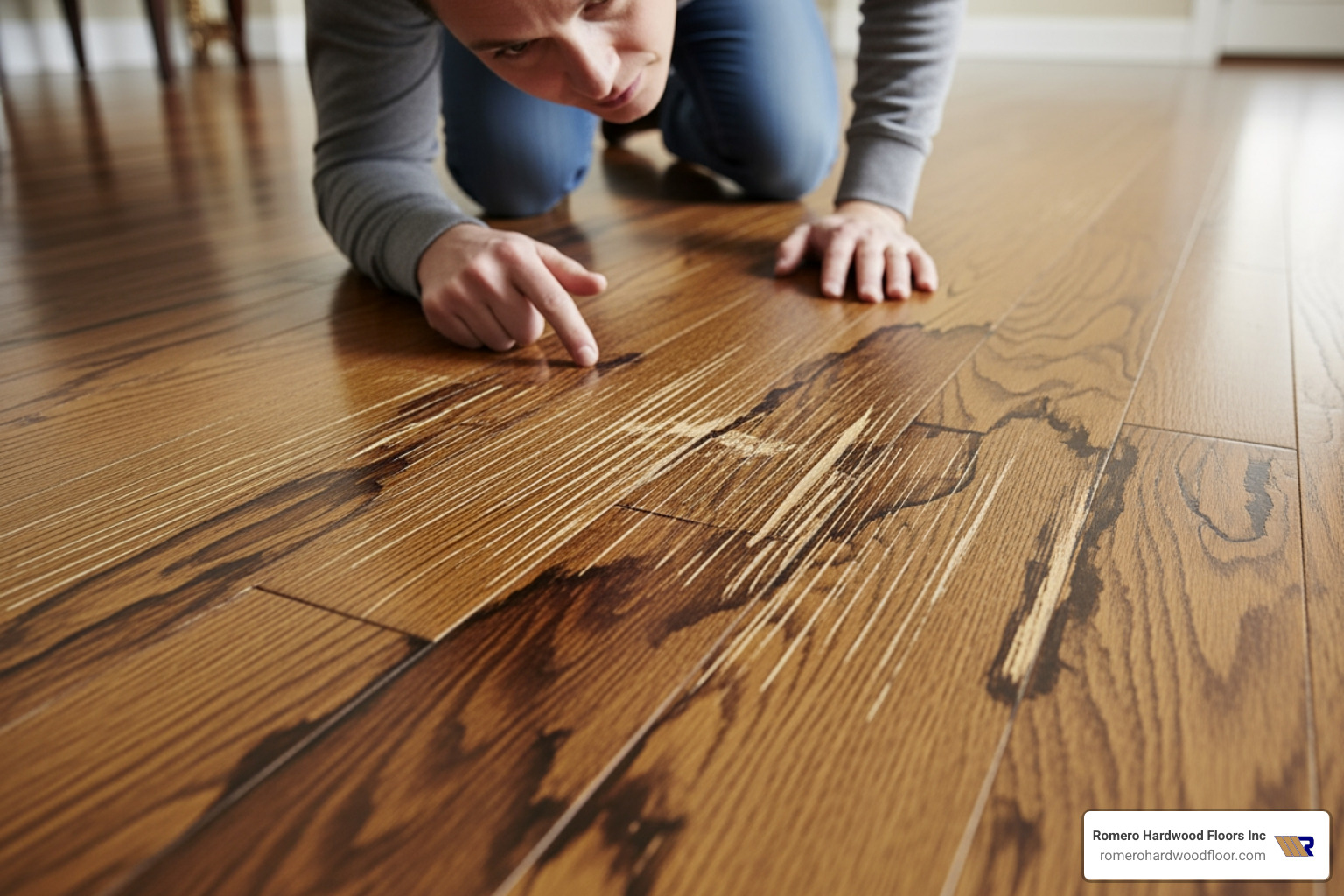
One of the most common questions we hear is, “Do my hardwood floors need repair or a complete replacement?” While a full replacement might seem like the only option for heavily damaged floors, a hardwood floor repair specialist can often restore them, saving you time and money. Here are the key indicators that your floors are prime candidates for repair:
- Minor Cosmetic Issues: Surface scratches, small dents, or scuffs that haven’t penetrated deep into the wood are often easily remedied through sanding and refinishing, or even spot treatments.
- Localized Damage: If the damage is confined to a specific area – perhaps a section affected by a leaky appliance or pet stains – individual board replacement and blending can make the floor look new again. This is far less invasive and costly than replacing an entire room.
- Solid Hardwood Thickness: Solid hardwood floors can be sanded and refinished multiple times throughout their lifespan. If your floors have enough “meat” left above the tongue and groove, they are excellent candidates for restoration, even if they appear severely worn.
- Structural Integrity: If the subfloor is sound and only the top layer of hardwood is damaged, repair is almost always the answer. A specialist can address issues like loose planks or minor buckling without disturbing the underlying structure.
- Preserving Original Character: For historical homes or floors with unique wood species, repairing maintains the authentic charm and value that replacement would erase. We understand the sentimental and architectural value of original flooring.
- Cost-Effectiveness: In most cases, repairing hardwood floors is significantly more economical than replacing them. We help homeowners make smart, budget-conscious choices while preserving the character and value of their original hardwood.
Common Culprits of Hardwood Floor Damage
Understanding what causes damage can also help you identify the need for a hardwood floor repair specialist and implement preventative measures.
- High Foot Traffic: Over time, constant walking, running, and shuffling can wear down the protective finish, leading to dullness, scuffs, and surface scratches.
- Pet Claws: Our furry friends, while beloved, can be notorious for leaving scratches and gouges on hardwood surfaces, especially if their nails aren’t regularly trimmed. Pet accidents can also cause deep stains and odors that require specialized treatment.
- Moving Furniture: Dragging heavy furniture without proper protection is a common cause of deep scratches, dents, and gouges. Even small chair legs can leave marks if they lack felt pads.
- Spills and Moisture: Water is hardwood’s arch-nemesis. Unattended spills, leaky appliances, overflowing potted plants, or even excessive mopping can lead to water damage, causing dark stains, warping (cupping or crowning), and even mold growth.
- Humidity Changes: Wood is a natural material that expands and contracts with changes in humidity. Extreme fluctuations can lead to gaps between planks in dry seasons or cupping/buckling in very humid conditions.
- Sun Exposure: Prolonged exposure to direct sunlight can cause hardwood floors to fade and discolor unevenly, especially in areas not covered by rugs.
- Improper Cleaning: Using harsh chemicals, abrasive cleaners, or excessive water during cleaning can strip the finish, leaving floors dull, sticky, or even damaged.
The Specialist’s Process: From Assessment to Perfection
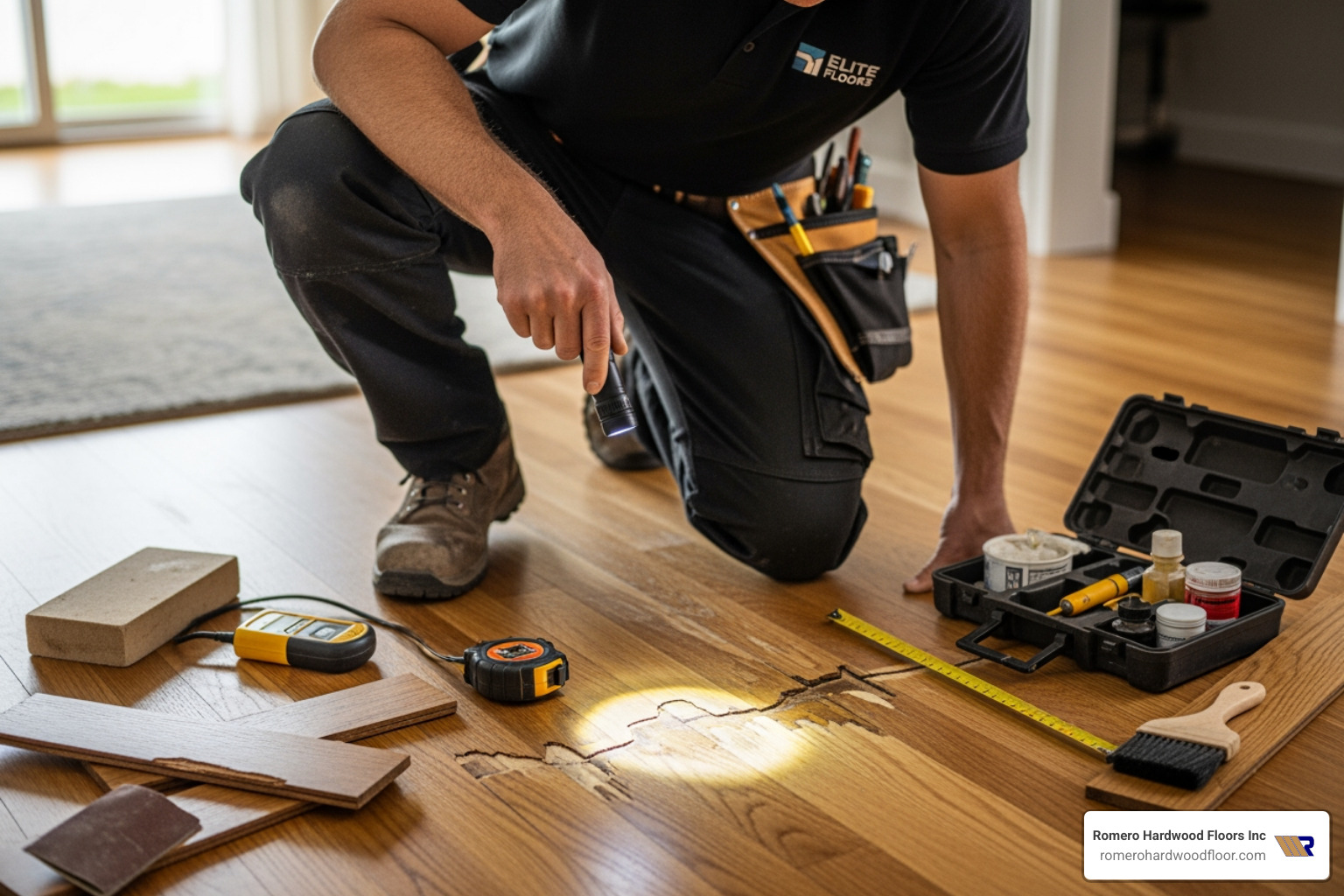
When you entrust your hardwood floors to a hardwood floor repair specialist, you’re not just getting a quick fix; you’re investing in a meticulous process designed to restore your floors to their former glory. Our approach is thorough, transparent, and custom to the unique needs of your home in areas like Chelsea, Lynnfield, and Medford.
The Critical Role of Sanding and Refinishing
Sanding and refinishing are often the heart of the hardwood floor repair process, especially for floors with widespread surface damage, discoloration, or an outdated finish. Even if only a section is repaired, the entire room may need refinishing to ensure a seamless look.
- Sanding Process: This crucial step involves removing the old finish and a thin layer of the damaged wood to expose fresh, clean wood beneath. We use state-of-the-art sanding equipment to ensure an even surface.
- Dustless Sanding Technology: A significant advancement in our industry is dustless sanding. This technology minimizes airborne dust particles, creating a cleaner and healthier environment for your home and family. It also reduces cleanup time and allows for a more precise application of new finishes.
- Removing Old Finish and Smoothing Imperfections: Sanding effectively eliminates scratches, dents, stains, and other imperfections that have accumulated over years of wear.
- The sanding and refinishing process: After sanding, the floor is ready for the next steps.
- Staining and Color Matching: If you desire a new look or need to blend repaired sections with existing wood, custom staining is applied. Our specialists are experts at mixing stains to achieve the perfect match or to create an entirely new aesthetic.
- Protective Finishes: The final and most critical step is applying several coats of a durable protective finish. This layer seals the wood, protects it from future wear, and improves its natural beauty.
- Oil-based Polyurethane: Known for its ambering effect and extreme durability, offering a rich, warm look.
- Water-based Polyurethane: A popular choice for its quicker drying time, lower VOCs (Volatile Organic Compounds), and clear finish that doesn’t yellow over time.
- We use high-quality finishes, often eco-friendly products, to ensure safe and long-lasting results for your family and pets.
Specialized Techniques of a Hardwood Floor Repair Specialist
Beyond general sanding and refinishing, a true hardwood floor repair specialist employs specialized techniques to tackle complex damage, ensuring that repairs are not just functional but virtually invisible.
- Seamless Plank Replacement: For severely damaged boards (e.g., from deep gouges, extensive water damage, or pet stains), individual planks are surgically removed. We carefully select new boards that match the existing wood species, grain, and cut.
- Weaving in New Boards: This advanced technique involves carefully cutting and integrating new boards into the existing floor pattern, often without disturbing adjacent planks. This creates a seamless transition that’s nearly impossible to detect once stained and finished.
- Custom Stain Mixing: Achieving a perfect color match is an art. We custom blend stains on-site to ensure that new or repaired wood blends indistinguishably with the older, aged sections of your floor.
- Wood Fillers and Epoxies: For smaller imperfections like minor cracks, knot holes, or small dents, specialized wood fillers and epoxies are used. These are carefully selected to match the wood’s color and can be sanded smooth for a flawless surface.
- Guidelines from the National Wood Flooring Association: We adhere to industry best practices and guidelines, such as those set by the NWFA, to ensure that all our repair work meets the highest standards of quality and durability.
- Feathering Finishes: When spot repairs are made, or new finishes are applied to a repaired section, our specialists use a “feathering” technique. This involves blending the new finish into the old finish gradually, eliminating harsh lines and creating a uniform sheen across the entire floor.
Repair vs. Replacement: A Cost and Value Analysis
Deciding whether to repair or replace your hardwood floors is a significant decision. While the allure of brand-new flooring can be strong, repairing often presents a more intelligent, cost-effective, and sustainable solution.
| Factor | Hardwood Floor Repair | Hardwood Floor Replacement |
|---|---|---|
| Cost | Lower, especially for localized damage | Significantly higher for materials and labor |
| Time | Faster, less disruptive | Longer, requires removal of old floor and new installation |
| Disruption | Minimal, often confined to specific areas | Extensive, may require vacating the entire space |
| Value Preservation | Maintains original character, extends lifespan | New look, but loses historical value if applicable |
| Environmental Impact | More eco-friendly, less waste | Higher, involves new material production and waste |
When is it More Economical to Repair?
Repairing hardwood floors is almost always more economical than full replacement, especially when the damage is localized or the original flooring is of high quality.
- Localized Damage: If only a section of your floor is affected by water damage, pet stains, or deep gouges, a hardwood floor repair specialist can seamlessly replace those specific boards. This saves you the significant expense and inconvenience of tearing out and installing an entire new floor.
- High-Quality Original Flooring: Many older homes in the Boston area, including places like Salem, Marblehead, and Rockport, boast beautiful, solid hardwood floors that were built to last. These floors often have a thicker wear layer, allowing for multiple sandings and refinishings. Repairing these floors preserves their inherent quality and character.
- Budget Constraints: Repair offers a more budget-friendly option when a complete overhaul isn’t feasible. It allows you to address immediate issues and restore your floors’ functionality and appearance without breaking the bank.
- Historical Homes: For homes with historical significance, preserving the original hardwood is often a priority. Repairing these floors maintains their architectural integrity and contributes to the home’s unique story.
- More info about new floor installation: While we excel at repairs, we also provide expert installation services when replacement is truly the best course of action.
Understanding the Cost of a Hardwood Floor Repair Specialist
The cost of hardwood floor repair services can vary widely depending on several factors. All price ranges below are average costs based on internet data and are not actual costs for Romero Hardwood Floors Inc. We recommend requesting a personalized estimate for precise pricing.
- Average Repair Costs (Internet-Based Ranges): Based on online sources, the average cost to repair hardwood floors can range from $150 to $3,000 or more, depending on the extent of the damage and the type of repair needed. Minor repairs like filling scratches or dents might fall near the lower end of that range, while more severe damage, such as extensive water damage or deep gouges requiring board replacement, can move toward the higher end.
- Refinishing Costs Per Square Foot (Internet-Based Ranges): Internet data typically shows refinishing hardwood floors ranging from $2 to $24 per square foot or more. This broad range reflects differences in regional labor rates, project complexity, and finish choices, and usually includes sanding, staining (if desired), and applying a new protective finish. Dustless refinishing is often on the higher end of these ranges but offers a cleaner process.
- Installation Costs Per Square Foot (Internet-Based Ranges): For a complete new installation, internet sources often cite ranges from $4 to $36 per square foot or more, depending on the wood species, installation method, and regional labor costs. This may or may not include removal of existing flooring, depending on the specific project and contractor.
- Factors Influencing Quotes: When we provide an estimate, we consider:
- Square footage of the area needing repair or refinishing.
- Severity and type of damage (e.g., surface scratches are less intensive than structural water damage).
- Wood type and rarity (matching exotic wood species can be more challenging and costly).
- Labor rates in our service areas of Greater Boston, including towns like Wakefield, Woburn, and Winchester.
- Type of finish desired (oil-based vs. water-based, matte vs. glossy).
- Subfloor condition if it also requires repair.
The Lasting Impact of a Professional Hardwood Floor Repair Specialist
How Hardwood Floor Repair Contributes to Overall Value and Aesthetics
Hardwood floors are a major selling point for any home. When they are well-maintained and free of damage, they significantly improve your property’s appeal.
- Increased Property Value: A beautifully restored hardwood floor can significantly boost your home’s market value. Homebuyers consistently rank hardwood floors as a desirable feature, and a pristine floor signals a well-cared-for home. Repairing your floors can be a smart investment, especially if you’re preparing to sell your home in a competitive market like East Boston or Gloucester.
- Improved Home Aesthetics: Damaged floors can make an entire room look neglected and dated. Repairing and refinishing them restores their original beauty, bringing warmth, character, and sophistication back to your living space. We believe that restoring a hardwood floor is like bringing a cherished piece of art back to life.
- Safety Improvement: Buckled, warped, or cracked boards aren’t just unsightly; they can be tripping hazards. Repairing these issues makes your home safer for everyone, from children to the elderly.
- Long-Term Durability: Professional repairs aren’t just cosmetic. They address the root cause of the damage, reinforcing the floor’s structural integrity and extending its lifespan. With proper care, your repaired hardwood floors can last for decades, sometimes even a lifetime.
- View our project gallery: See for yourself the transformative power of expert hardwood floor repair and refinishing in our gallery.
How to Prevent Future Damage to Your Floors
While a hardwood floor repair specialist can work wonders, preventing damage in the first place is always the best approach. Here are some best practices to keep your floors looking pristine:
- Regular Cleaning: Dust and sweep your hardwood floors at least twice a week to remove dirt, grit, and debris that can act like sandpaper underfoot.
- Using Correct Cleaning Products: Opt for cleaners specifically designed for hardwood floors. Avoid harsh chemicals, abrasive cleaners, and excessive water, which can strip the finish or cause water damage.
- Furniture Pads: Place felt pads under the legs of all furniture, especially chairs and tables that are frequently moved. This simple step can prevent countless scratches and dents.
- Area Rugs in High-Traffic Zones: Use welcome mats at all entryways and place area rugs in high-traffic areas like hallways, living rooms, and under dining tables. This provides an extra layer of protection against wear and tear.
- Maintaining Stable Humidity: Wood expands and contracts with changes in humidity. Use a humidifier in dry winter months and a dehumidifier in humid summer months to maintain a stable indoor humidity level (ideally between 35-55%). This helps prevent gapping, cupping, and buckling.
- Immediate Spill Cleanup: Clean up spills immediately. Even a small amount of liquid left on the floor can seep into the wood and cause staining or warping over time.
- Pet Care: Trim pet nails regularly to minimize scratches.
- Proper Footwear: Avoid walking on hardwood floors with high heels or cleats.
- Safe Furniture Handling: Lift furniture when moving it, rather than dragging.
- Sunlight Management: Rotate area rugs periodically to prevent uneven fading from sunlight.
- Professional Upkeep: Consider professional cleaning or refinishing services once a year for longevity, as recommended by some specialists.
Frequently Asked Questions about Hardwood Floor Repair
We frequently encounter common questions from homeowners in our service areas like Peabody, Reading, and Saugus. Here are some of the most asked questions and our expert answers:
Can repaired sections of a hardwood floor perfectly match the existing floor?
Yes, a skilled hardwood floor repair specialist uses techniques like sourcing matching wood, custom stain blending, and feathering the finish to create a seamless, often imperceptible, repair. Our goal is to make the repaired section blend indistinguishably with the rest of your floor, matching the original floor’s essence and character. While achieving an “exact” match can be challenging due to the natural aging of wood and finishes, our expertise allows us to get remarkably close, making repairs virtually invisible.
How long does the hardwood floor repair process typically take?
The duration of hardwood floor repair varies significantly based on the extent and type of damage. Minor repairs like filling a few scratches or dents can often take just a few hours. More extensive work, such as replacing several damaged boards, addressing subfloor issues, and then sanding and refinishing a larger section or an entire room, can take anywhere from 2-5 days. This includes crucial drying time for stains and protective finishes. We always provide a detailed timeline during our initial assessment so you know what to expect.
Is it cheaper to repair or replace hardwood floors?
In most cases, repairing hardwood floors is more cost-effective than full replacement, especially for localized damage. Replacement costs for new materials and extensive labor are significantly higher. For instance, while minor repairs might cost a few hundred dollars, complete installation can range from $6 to $12 per square foot or more, not including the cost of removing the old flooring. Repairing preserves the existing structure and materials, making it a budget-conscious choice that still restores the beauty and functionality of your floors.
Restore Your Floor’s Timeless Beauty
Your hardwood floors are more than just a surface to walk on; they are a significant investment in your home’s beauty and value, a testament to timeless elegance. When they show signs of wear and tear, don’t settle for a temporary fix or assume a costly replacement is your only option. A professional hardwood floor repair specialist possesses the knowledge, tools, and techniques to carefully restore your floors, ensuring they continue to improve your home for years to come.
We, at Romero Hardwood Floors Inc., are committed to delivering exceptional craftsmanship and unparalleled customer satisfaction. Established in 2006, we bring over 15 years of competitive pricing, punctuality, and guaranteed workmanship to residential and commercial properties throughout Massachusetts, including Danvers, Malden, and Nahant. We believe in fixing floors the right way, the first time, helping you preserve the character and value of your original hardwood.
Let us help you revive the soul of your floor. Request your free estimate today and find the lasting impact of expert hardwood floor repair.
