
Hardwood floor scuff remover: Flawless Floors 2025
Why Your Hardwood Floors Deserve Better Than Ugly Scuff Marks
A hardwood floor scuff remover doesn’t have to be complicated or expensive. Most scuffs are surface-level blemishes from rubber-soled shoes, furniture, or pet nails rubbing against the floor’s finish. The good news is you can often remove them with simple household items.
Quick Solutions for Scuff Marks:
- Tennis Ball Method – Rub a clean tennis ball over the scuff with firm pressure.
- Pencil Eraser – Use a standard eraser for small marks.
- Baking Soda Paste – Mix baking soda and water, then scrub gently with a soft cloth.
- Shoe Sole Friction – Buff marks with the rubber heel of a clean tennis shoe.
- Commercial Cleaner – Use a pH-neutral hardwood cleaner for stubborn marks.
Scuff marks appear as black or brown smudges on your hardwood floors. If left untreated, they collect dirt and grime, discoloring the floor. While prevention isn’t always possible, removal is easy if you act promptly. Start with the gentlest method first and only use stronger solutions if necessary.
I’m Francisco Romero, owner of Romero Hardwood Floors Inc. With over 15 years of experience helping homeowners in Revere, MA, I know that using the right hardwood floor scuff remover is key to keeping floors flawless without damaging the finish.
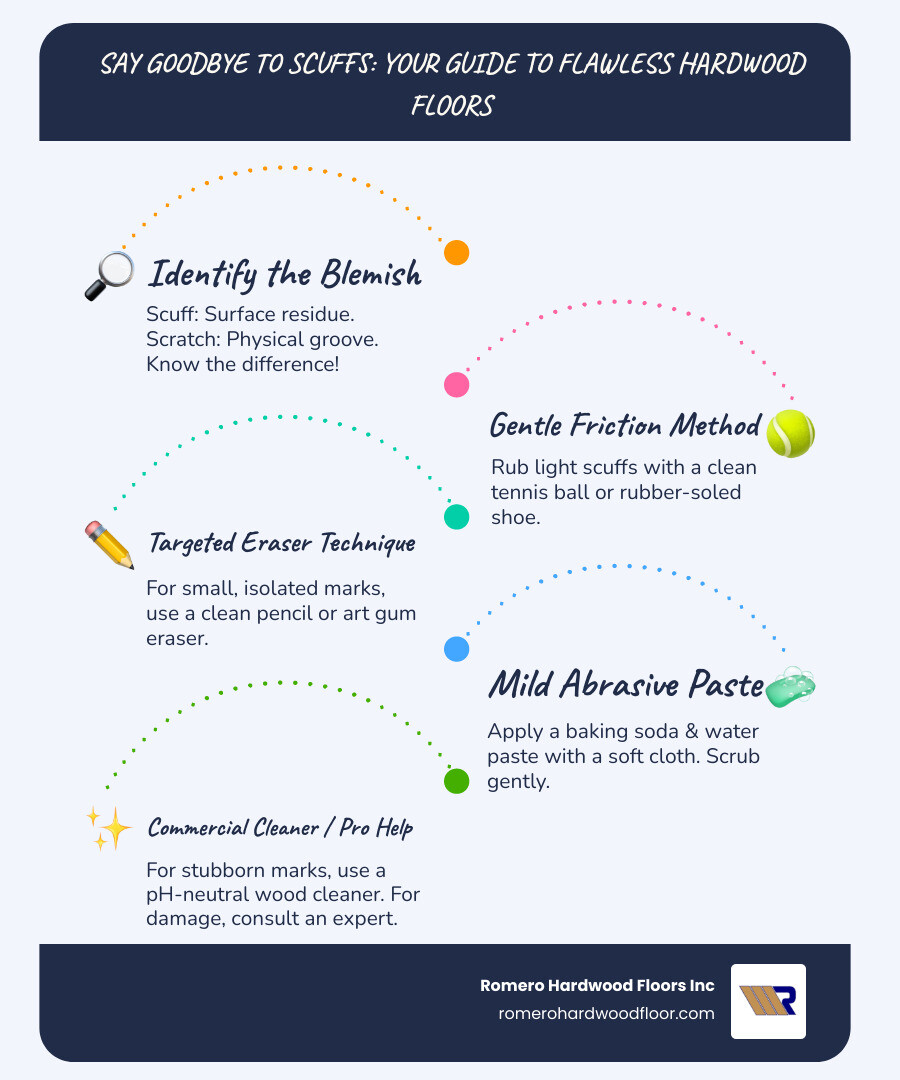
First, Identify the Blemish: Scuff Mark vs. Scratch
Before grabbing a hardwood floor scuff remover, you must identify the mark. Is it a scuff or a scratch? The difference is crucial, as they require different solutions.
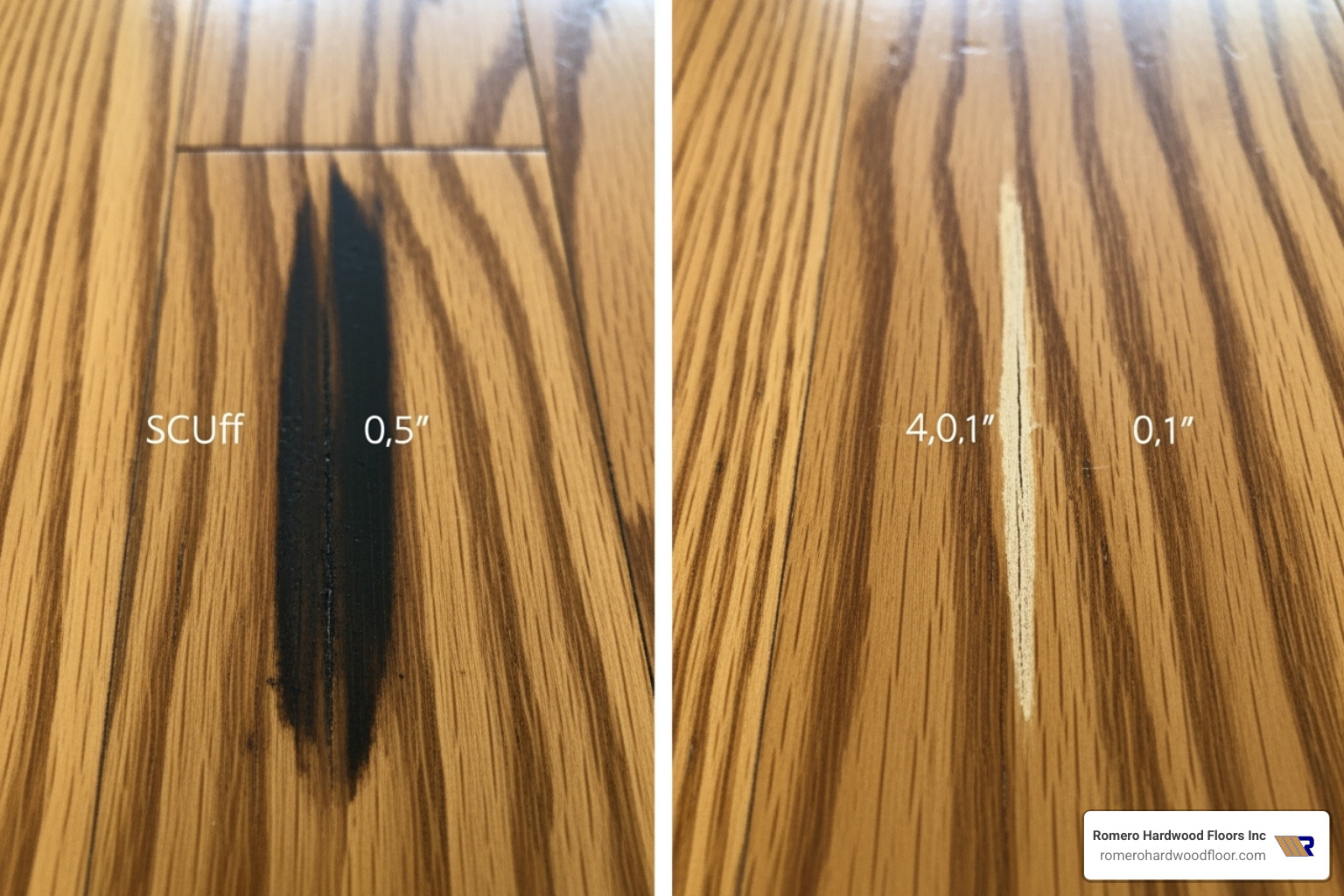
What is a Scuff Mark?
A scuff mark is material transferred onto your floor’s finish without damaging the wood. Think of black streaks from sneakers or smudges from dragged furniture. Rubber, plastic, or other residues rub onto the protective finish, creating these marks. While they start as surface transfers, ignored scuffs attract dirt and grime, making them darker over time.
What is a Scratch?
A scratch is a physical gouge into your floor, cutting through the finish or into the wood itself. Material is removed, leaving a groove. Scratches range from light abrasions in the topcoat to deep gouges exposing bare wood. They are caused by sharp objects, dropped items, or grit ground underfoot. Scratches require more intensive repair, such as wood filler or even professional refinishing. For more details, see our guide on Hardwood Floor Scratch Repair.
How Floor Finishes Affect Removal
The type of finish on your hardwood floors dictates the best removal method.
- Surface Finishes (Polyurethane/Polycrylic): These common finishes form a hard, protective layer over the wood. Scuffs sit on top of this “shield,” making them easier to remove with gentle methods. However, aggressive scrubbing can still dull or damage the finish.
- Penetrating Finishes (Oil/Wax): These finishes soak into the wood fibers for a natural look. Scuffs may be more integrated into the finish. Oil-finished floors might need light re-oiling after scuff removal. Wax finishes are more delicate and often require gentle buffing and a fresh coat of wax.
Always start with the gentlest hardwood floor scuff remover and test it in a hidden spot first. This simple step can prevent turning a minor scuff into a major project. To learn more about finishes, read our guide on the Best Hardwood Floor Finish.
Gentle DIY Methods for Everyday Scuffs
Most scuff marks can be removed with simple household items. The key is to start with the gentlest method and always test any hardwood floor scuff remover in an inconspicuous area first to avoid damaging your floor’s finish.
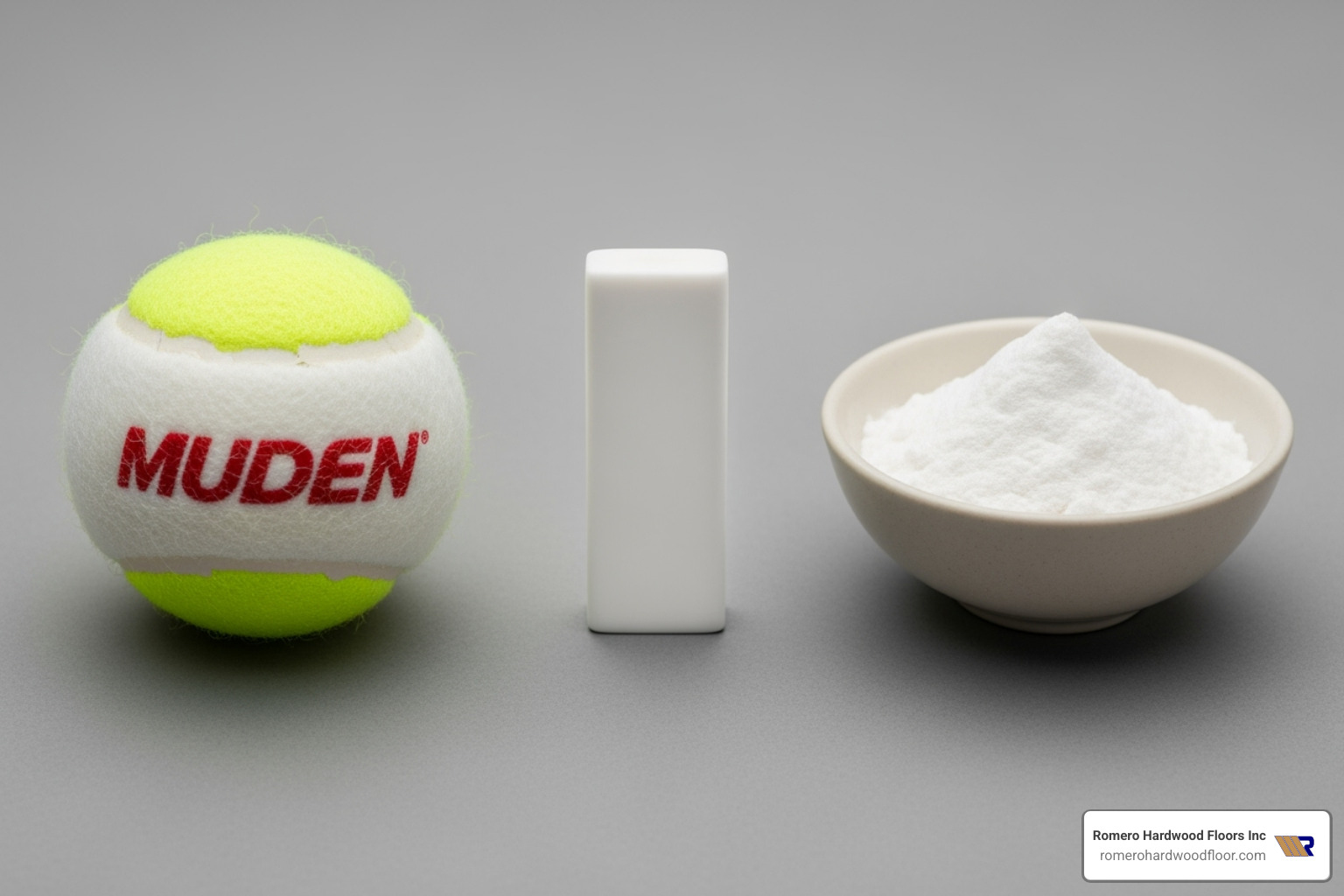
The Friction Method: Tennis Balls and Shoe Soles
The texture of a clean, dry tennis ball can lift scuffs without harming the finish. Rub it over the mark with firm, circular pressure. Alternatively, use the heel of a clean rubber-soled shoe, ensuring it’s free of any debris that could scratch the floor.
The Eraser Method for Small Marks
A standard pencil eraser offers precision for small scuffs. Use a clean, white art gum eraser to avoid color transfer. Gently rub the eraser over the mark until it disappears, then sweep up any shavings immediately.
Using a Baking Soda Paste as a Hardwood Floor Scuff Remover
For tougher marks, baking soda is a mild abrasive that’s surprisingly effective, one of its more than 50 uses.
- Mix two tablespoons of baking soda with warm water to form a thick paste.
- Apply the paste to the scuff with a soft cloth and gently scrub in a circular motion.
- Wipe away all paste residue with a clean, damp cloth.
- Dry the area thoroughly with another clean cloth, as moisture can damage hardwood.
This method works well for older scuffs that have collected grime.
Tackling Tough Marks: Heavy-Duty Solutions
When gentle DIY methods fail, it’s time for heavy-duty solutions. These techniques require a cautious approach, so always test in an inconspicuous area and follow instructions precisely to avoid damaging your floors.
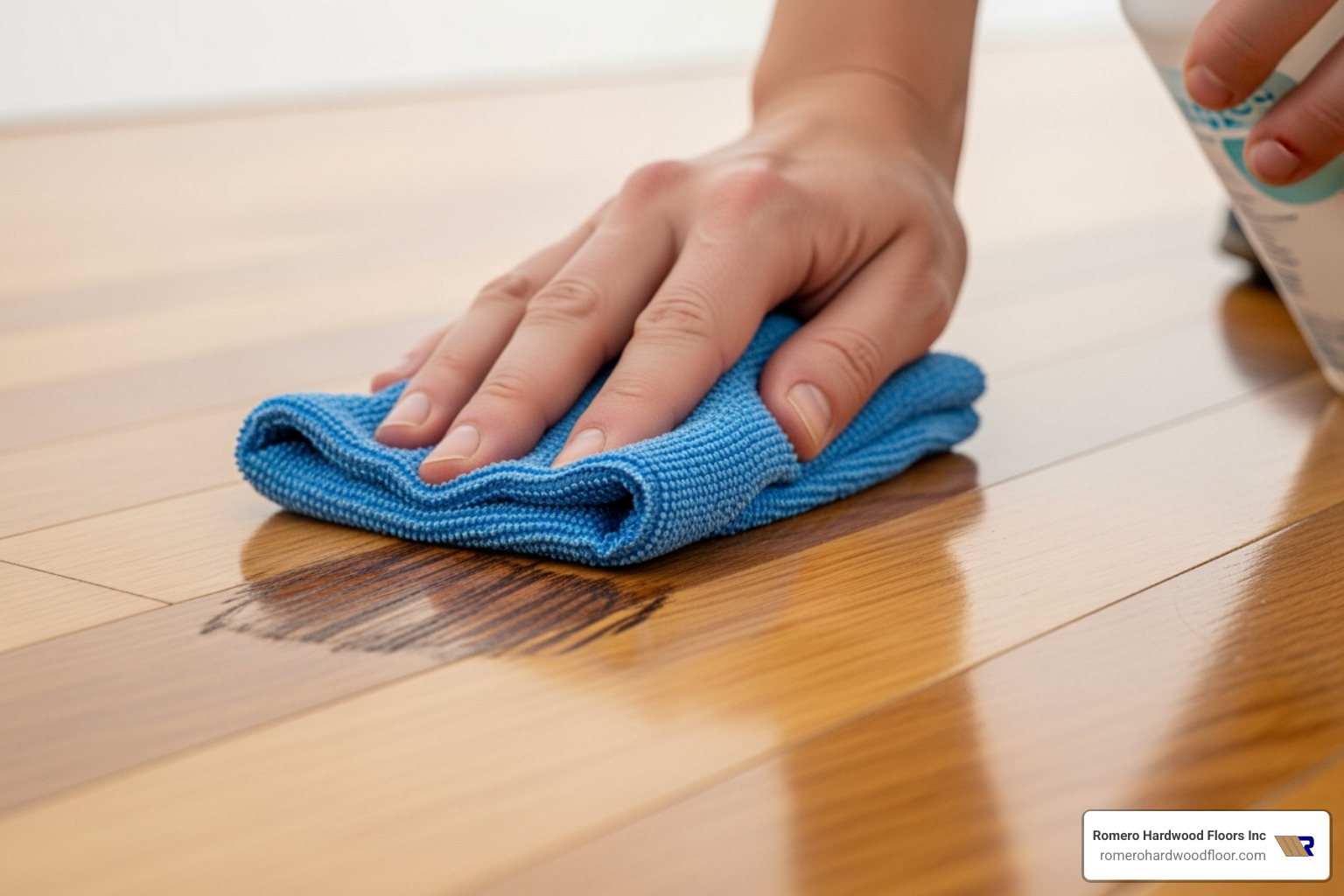
Using a Commercial Hardwood Floor Scuff Remover Safely
A specialized commercial hardwood floor scuff remover can work wonders on stubborn marks.
- Choose Wisely: Select a pH-neutral cleaner specifically labeled for hardwood floors. Avoid all-purpose cleaners, ammonia, or strong detergents.
- Follow Instructions: Always read and follow the manufacturer’s directions for application and dilution.
- Spot Test: Before full use, test the product in a hidden corner to check for discoloration or dulling.
- Apply Correctly: Apply the cleaner to a microfiber cloth, not directly to the floor. Gently wipe the scuff, then clean the area with a damp cloth and dry it immediately.
Look for a cleaner that is residue-free, non-abrasive, designed for wood, and streak-free.
Advanced Techniques for Deep Scuffs
For deeply embedded scuffs, you can try using fine #0000 steel wool with mineral spirits. This method is effective on oil or wax finishes but can dull polyurethane, so use extreme caution.
Lightly dampen a piece of #0000 steel wool with mineral spirits and gently rub the scuff with the grain of the wood. Use very light pressure. Once the scuff is gone, wipe the area with a clean, dry cloth, then a damp one to remove residue, and dry thoroughly. This is an advanced technique; if you’re unsure, call a professional.
What to Avoid When Removing Scuffs
Knowing what not to use is as important as knowing what to use. Avoid these common mistakes:
- Abrasive Scrubbers: Coarse steel wool, scouring pads, and green-backed sponges will scratch and dull your finish.
- Harsh Chemicals: Ammonia-based products, bleach, and general-purpose cleaners can strip the finish and cause discoloration.
- Excessive Water: Too much moisture can cause wood to swell, warp, or buckle. Always use a damp cloth and dry the area immediately.
- Steam Mops: The combination of heat and moisture can damage both the finish and the wood itself.
- Oil Soaps and Wax Cleaners (on Polyurethane): These can leave a dull, sticky film that is difficult to remove.
The Ultimate Hardwood Floor Scuff Remover Guide: Prevention is Key
The best hardwood floor scuff remover is prevention. Proactive steps will save you time and effort by minimizing scuffs before they happen. Smart, consistent maintenance is the foundation of beautiful, long-lasting floors.
- Use Furniture Pads: Attach felt pads or protectors to the bottom of all furniture legs—chairs, tables, sofas, and cabinets. Check them regularly and replace them when they become worn.
- Sweep and Vacuum Often: Remove abrasive grit and dust by sweeping or vacuuming high-traffic areas 2-3 times a week. Use a soft-bristled broom or a vacuum with a hard floor attachment (no beater bar).
- Place Doormats at Entryways: Use high-quality mats both inside and outside every entrance to trap dirt, moisture, and debris from shoes.
- Use Area Rugs: Protect high-traffic zones like hallways and living rooms with area rugs. Ensure they have a non-slip backing to prevent sliding.
- Implement a No-Shoes Policy: Shoes, especially those with rubber soles, are a primary cause of scuff marks. They also track in dirt that can scratch your finish.
- Trim Pet Nails: Keep your pet’s nails trimmed to prevent them from scuffing or scratching the floor.
- Lift, Don’t Drag: Always lift furniture when moving it. For heavy items, use furniture sliders designed for hardwood floors.
Incorporating these habits will dramatically reduce the need for scuff removal. For more guidance, see our Wooden Floor Maintenance Tips.
When DIY Isn’t Enough: Calling a Flooring Professional
While many scuffs can be fixed with a DIY hardwood floor scuff remover, some damage requires professional attention. Knowing when to call an expert is key to protecting your investment and avoiding costly mistakes.
Call a professional for:
- Deep Gouges: If you can see bare wood, the damage is beyond a simple scuff. This requires professional filling, sanding, and refinishing to achieve a seamless repair.
- Extensive Scuffing or Dull Finish: Widespread scuffing or a cloudy, dull finish indicates wear that may require professional buffing (screening) and re-coating to restore the floor’s luster.
- Permanent Stains: Marks that don’t respond to any cleaning methods may have penetrated the finish or stained the wood, requiring specialized treatments.
- Widespread Wear and Tear: If your entire floor looks tired and scratched, it may be time for a full sanding and refinishing. This process sands the floor to bare wood, removing all imperfections before applying new stain and finish.
If you’re uncertain or worried about causing more damage, it’s always best to seek professional advice. At Romero Hardwood Floors Inc., we’ve provided honest assessments and quality workmanship to homeowners in Revere, MA, and the greater Boston area since 2006. If your floors need more than a DIY fix, we’re ready to help. Learn more about our comprehensive Hardwood Floor Repair services.
Frequently Asked Questions about Scuff Removal
Here are answers to the most common questions we receive about scuff marks.
Can I use melamine foam sponges on my hardwood floors?
We advise against it. These sponges are made of melamine foam, which acts like fine sandpaper. While it may remove the scuff, it does so by abrading your floor’s finish, which can leave a dull spot and make the wood vulnerable to future damage. Safer alternatives like a tennis ball or baking soda paste are just as effective without risking your finish.
How often should I clean my floors to prevent scuffs?
Regular cleaning is key to prevention. The best hardwood floor scuff remover is not needing one at all.
- High-traffic areas (entryways, kitchens): Sweep or vacuum daily or every other day to remove abrasive grit.
- All hardwood areas: A thorough sweep or vacuum should be done at least once a week. Use a soft-bristled broom or a vacuum with a hard floor setting.
- Deep cleaning: Use a pH-neutral hardwood floor cleaner with a damp microfiber mop every 1-2 months to remove residue.
What’s the difference between buffing and refinishing for scuffed floors?
Understanding the difference can save you time and money.
- Buffing (or Screening): This process lightly abrades the top layer of the finish to remove light scuffs and surface wear before a fresh coat of finish is applied. It’s a refresh for floors that are in generally good condition.
- Refinishing: This is a full restoration. The floor is sanded down to the bare wood, removing all imperfections like deep scratches and stains. New stain and multiple coats of finish are then applied, making the floor look brand new.
If your scuffs are superficial, buffing may be sufficient. For deep damage, refinishing is necessary. We can help you determine the best option for your floors. Learn more about our Hardwood Floor Repair services.
Conclusion
Scuff marks on your hardwood floors are manageable. You now have the knowledge to tackle them, from identifying the mark to using gentle DIY methods and even stronger solutions. We’ve shown that starting with simple tools like a tennis ball or baking soda is often enough, and we’ve highlighted what to avoid to prevent further damage.
Most importantly, prevention is the best strategy. Simple habits like using furniture pads, doormats, and regular cleaning will dramatically reduce the number of scuffs you encounter.
However, DIY solutions have their limits. For deep gouges, extensive wear, or any situation where you feel uncertain, calling an expert is the smartest move.
At Romero Hardwood Floors Inc., we have over 15 years of experience helping homeowners in Revere, MA, and the greater Boston area restore their floors. We offer competitive pricing, guaranteed workmanship, and punctual service. Whether you need a professional assessment, buffing, or full refinishing, we are here to help.
Your floors deserve to look their best. To say goodbye to scuffs for good, learn more about our professional hardwood floor cleaning products and services or contact us for a consultation.
