
Why Commercial Hardwood Flooring Matters for Your Business
Hardwood Flooring is more than a surface—it’s a statement. For businesses, selecting commercial hardwood means choosing durability, timeless beauty, and a proven return on investment. In high-traffic lobbies, retail stores, and offices, the right hardwood withstands years of use while maintaining its appeal.
Quick Answer: Key Commercial Hardwood Selection Factors
- Best Species for Durability: Oak, Maple, and Hickory (highest Janka hardness ratings)
- Construction Type: Engineered hardwood for stability over concrete; solid hardwood for traditional applications
- Finish Considerations: Wire-brushed or hand-scraped textures hide wear better than smooth finishes
- Moisture Resistance: Waterproof engineered options available for kitchens and break rooms
- ROI: Hardwood flooring can increase property resale value by up to 2.5%
Commercial spaces need flooring that looks professional for years. Solid hardwood can be refinished multiple times, lasting for generations. Engineered hardwood offers superior stability against moisture and temperature changes, making it ideal for basements or concrete subfloors.
The wood species also matters. Oak is popular for its balance of hardness and cost. Hickory is even harder, perfect for extreme traffic. Maple provides a durable, contemporary look. Finish color also impacts your space’s feel. Light floors feel open and airy, medium tones are versatile and hide wear, while dark floors add sophistication but require more cleaning.
I’m Francisco Romero, owner of Romero Hardwood Floors Inc. With over 15 years of experience serving Revere, MA, and surrounding areas, my team understands that commercial projects demand both beauty and long-term durability. Let’s explore how to choose the perfect hardwood for your business.
Hardwood Flooring definitions:
Understanding Hardwood Flooring Foundations: Solid vs. Engineered
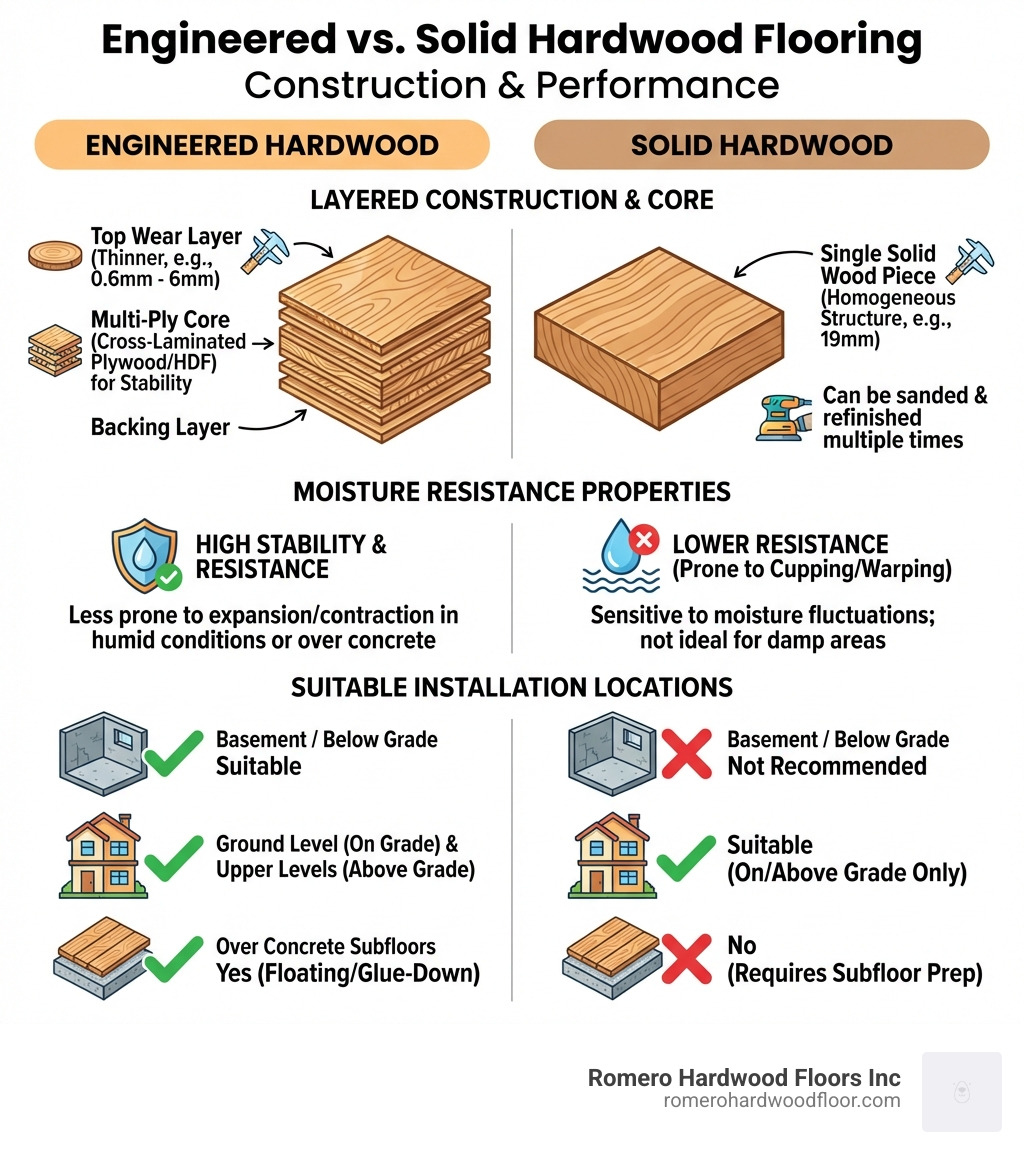
When choosing Hardwood Flooring for a commercial space, the first decision is between solid and engineered construction. Both offer the beauty of real wood, but their performance characteristics suit different applications.
Solid hardwood is crafted from a single piece of wood, creating a robust floor that can last for generations. Its main advantage is the ability to be sanded and refinished multiple times, allowing for updates as styles change or wear occurs.
Engineered hardwood features a top layer of real wood bonded to a core of plywood or HDF. This layered construction provides remarkable stability against changes in temperature and humidity, making it a great choice for areas with potential moisture fluctuations.
Here’s a quick comparison to help clarify the differences:
| Feature | Solid Hardwood | Engineered Hardwood |
|---|---|---|
| Durability | Very durable, can last for generations | Highly stable, resists warping and gapping |
| Construction | Single piece of real wood | Real wood veneer over layered core |
| Installation | Nail-down, stapled | Floating, glue-down, nail-down (more versatile) |
| Installation Areas | Above-grade, not for high-moisture areas | Above, on, or below-grade; suitable for basements, concrete |
| Refinishing | Multiple times (many times over its lifespan) | Limited (1-3 times, depending on wear layer thickness) |
| Moisture Resistance | Susceptible to moisture and humidity | Much more stable, some options are 100% waterproof |
| Cost | Often higher upfront cost | Can be lower upfront, especially for thinner veneers |
For more detailed information about this versatile option, you can explore our page on engineered hardwood flooring.
Pros and Cons of Solid Hardwood Flooring
Choosing solid Hardwood Flooring for your commercial space brings a unique set of advantages and a few considerations.
Pros of Solid Hardwood Flooring:
- Exceptional Longevity: Solid hardwood can last for generations. Its key advantage is the ability to be sanded and refinished multiple times, allowing you to restore its look or change its color for a fraction of the cost of replacement.
- Timeless Appeal: The natural beauty and warmth of solid wood provide a classic, sophisticated look that synthetic materials cannot replicate, enhancing the ambiance of any commercial space.
- Increased Property Value: As a highly desirable feature, solid hardwood can increase a property’s resale value by up to 2.5%. A report from the National Association of Realtors suggests new hardwood flooring can yield a 118% return on investment.
Cons of Solid Hardwood Flooring:
- Moisture Vulnerability: Solid hardwood is susceptible to water damage, which can cause warping, cupping, or gapping. It is not recommended for moisture-prone areas like commercial kitchens, bathrooms, or basements.
- Limited Installation Areas: Due to its moisture sensitivity, solid hardwood is best for above-grade installations over a wooden subfloor. It is not ideal for direct installation over concrete or with most radiant heating systems.
- Prone to Dents and Scratches: While durable, solid hardwood can be scratched or dented by heavy equipment or high foot traffic. These marks can be repaired during refinishing but require proper maintenance to manage.
For more information on how we can bring new life to existing solid hardwood floors, visit our guide to refinishing floors.
Pros and Cons of Engineered Hardwood Flooring
Engineered Hardwood Flooring has emerged as a powerhouse in the commercial sector, offering solutions to many of the challenges posed by solid hardwood.
Pros of Engineered Hardwood Flooring:
- Superior Stability: The layered construction of engineered hardwood makes it highly resistant to warping from changes in humidity and temperature. This is a key advantage in the climate of Massachusetts, from Beverly to Chelsea.
- Versatile Installation: It can be installed above, on, or below-grade, making it suitable for basements, concrete subfloors, and over radiant heating systems. This versatility opens up more design possibilities for commercial applications.
- Waterproof Options: Modern advancements have led to 100% waterproof engineered hardwood. Some brands offer products that provide a genuine wood look with total protection from spills, perfect for commercial kitchens or breakrooms.
- Easier Installation: Many engineered products feature click-lock systems, allowing for faster installation and less business disruption.
Cons of Engineered Hardwood Flooring:
- Limited Refinishing: The ability to refinish engineered hardwood depends on the thickness of its real wood veneer. Thinner layers may only allow for one or two refinishes, unlike the multiple refinishes possible with solid wood.
- Perceived Authenticity: Although the top layer is real wood, some may feel it lacks the “heirloom” quality of solid hardwood.
- Varying Quality: Performance and longevity depend heavily on the manufacturer and core materials. Choosing a reputable, high-quality product is essential.
Selecting the Best Hardwood Flooring for High-Traffic Commercial Spaces
Selecting Hardwood Flooring for a high-traffic commercial space requires balancing aesthetics with durability. The goal is a floor that looks stunning and withstands daily business operations.
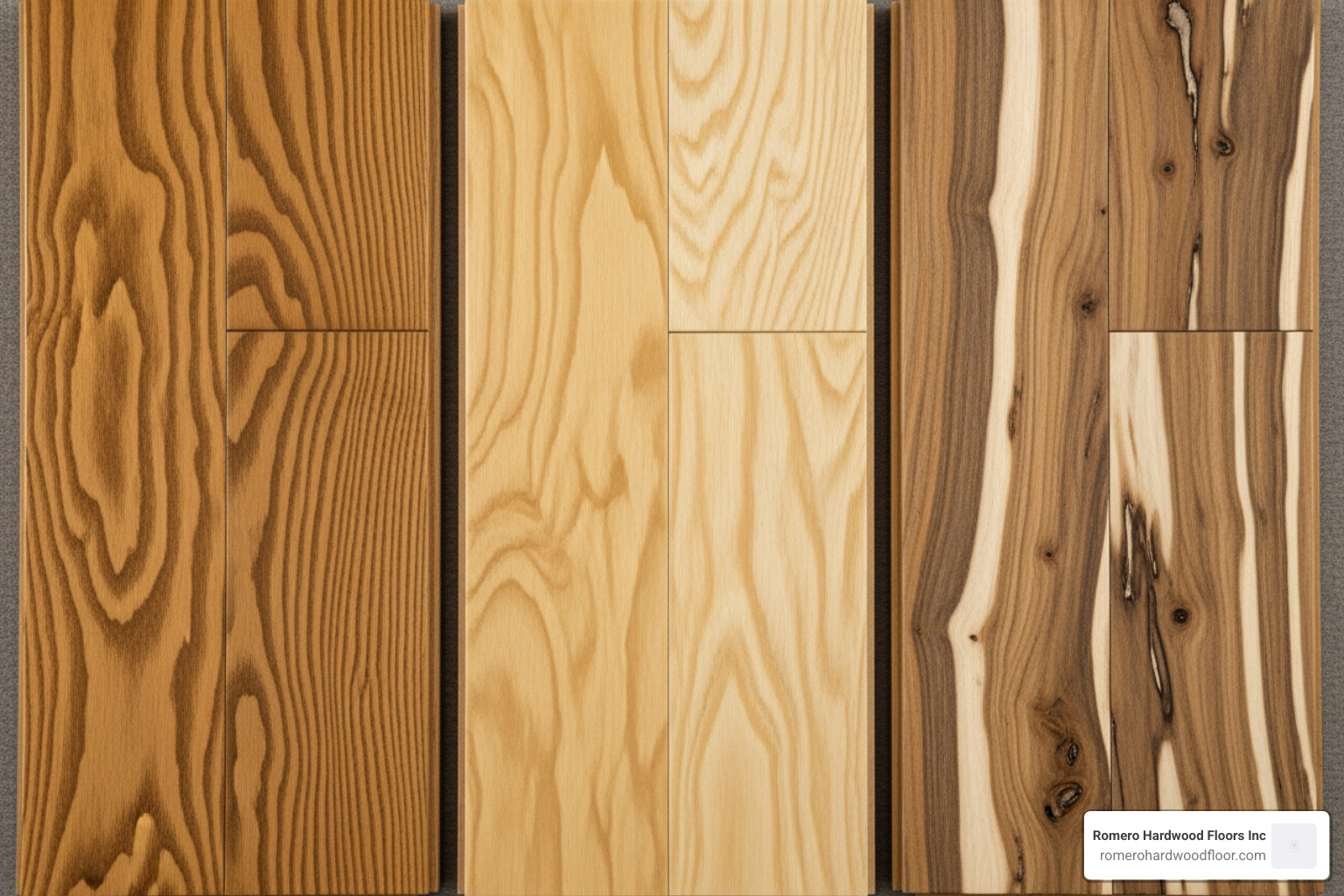
Key factors for high-traffic areas include:
- Janka Hardness Scale: A higher rating indicates better resistance to dents and wear, crucial for busy spaces.
- Wear Layer Thickness (for Engineered): A thicker real wood veneer allows for more refinishes and a longer lifespan. We recommend thicker wear layers for commercial use.
- Finish Quality: A high-quality, commercial-grade finish is the first line of defense against scratches and spills. Advanced finishes are available that offer significantly increased scratch and dent resistance.
- Texture: The surface texture can help hide minor wear and tear.
For a deeper dive into what makes a floor truly resilient, explore our durable wood flooring ultimate guide.
Comparing Popular Wood Species
The species of wood you choose for your commercial Hardwood Flooring will profoundly influence its hardness, durability, and aesthetic. Here’s a look at some of the most popular choices we recommend:
- Oak (Red and White): The most popular choice, Oak offers a great balance of hardness, durability, and cost. White Oak is slightly harder with a subtle grain, while Red Oak has a more pronounced grain and reddish tones. Both are excellent for high-traffic areas.
- Maple: Harder than oak, Maple has a fine, uniform grain for a smooth, contemporary look. Its durability and light color make it a top contender for commercial spaces that need a bright, expansive feel.
- Hickory: As one of the hardest domestic woods, Hickory is exceptionally resistant to dents and impact, making it ideal for extreme-traffic zones. Its varied grain and color add robust, rustic character.
- Walnut: Prized for its rich, luxurious chocolate-brown color, Walnut is softer than other options. It’s best suited for areas where aesthetics are paramount, like executive offices or upscale boutiques, rather than high-traffic corridors.
Understanding the unique properties of each species is key to making the right choice. You can learn more about finding the perfect wood for your needs on our best wood for floors page.
The Impact of Texture and Pattern
Beyond the wood species and finish color, the texture and pattern of your Hardwood Flooring play a crucial role in both its aesthetic appeal and its ability to withstand and conceal wear in a commercial setting.
Textures:
- Wire-brushed: This texture is created by removing soft wood to improve the grain. It’s excellent for hiding minor scratches and scuffs in high-traffic areas, offering a rustic or contemporary feel.
- Hand-scraped: Mimicking aged, handcrafted floors, this texture’s unique scrapes and undulations are great at disguising dents and wear, adding artisanal charm.
- Smooth Finish: This classic finish offers a sleek, formal look but shows scratches more readily. It’s best for lighter-traffic commercial areas where a polished aesthetic is key.
Patterns:
- Linear (Plank): The most common pattern, creating a clean, classic look suitable for any space.
- Herringbone: A staggered zigzag design that adds sophistication and a sense of movement, often used in upscale lobbies.
- Chevron: Planks are cut at an angle to form a continuous “V” shape, offering a chic, modern aesthetic.
- Parquet: Intricate geometric arrangements that can add a grand, historical feel to specific areas.
The choice of texture and pattern can significantly influence the overall feel and practicality of your commercial Hardwood Flooring. For inspiration on how different layouts can transform a space, explore our guide to hardwood floor installation patterns.
Design & Aesthetics: Choosing the Right Look for Your Business
The aesthetic of your Hardwood Flooring is crucial in a commercial space. It sets the tone, influences customer perception, and contributes to your brand identity. The color and finish you choose can create anything from an expansive, modern ambiance to a dramatic, luxurious one. We help clients in Danvers, Peabody, and Lynn, MA, select finishes that align with their brand and functional needs. For more guidance, see our insights on choosing hardwood floor color.
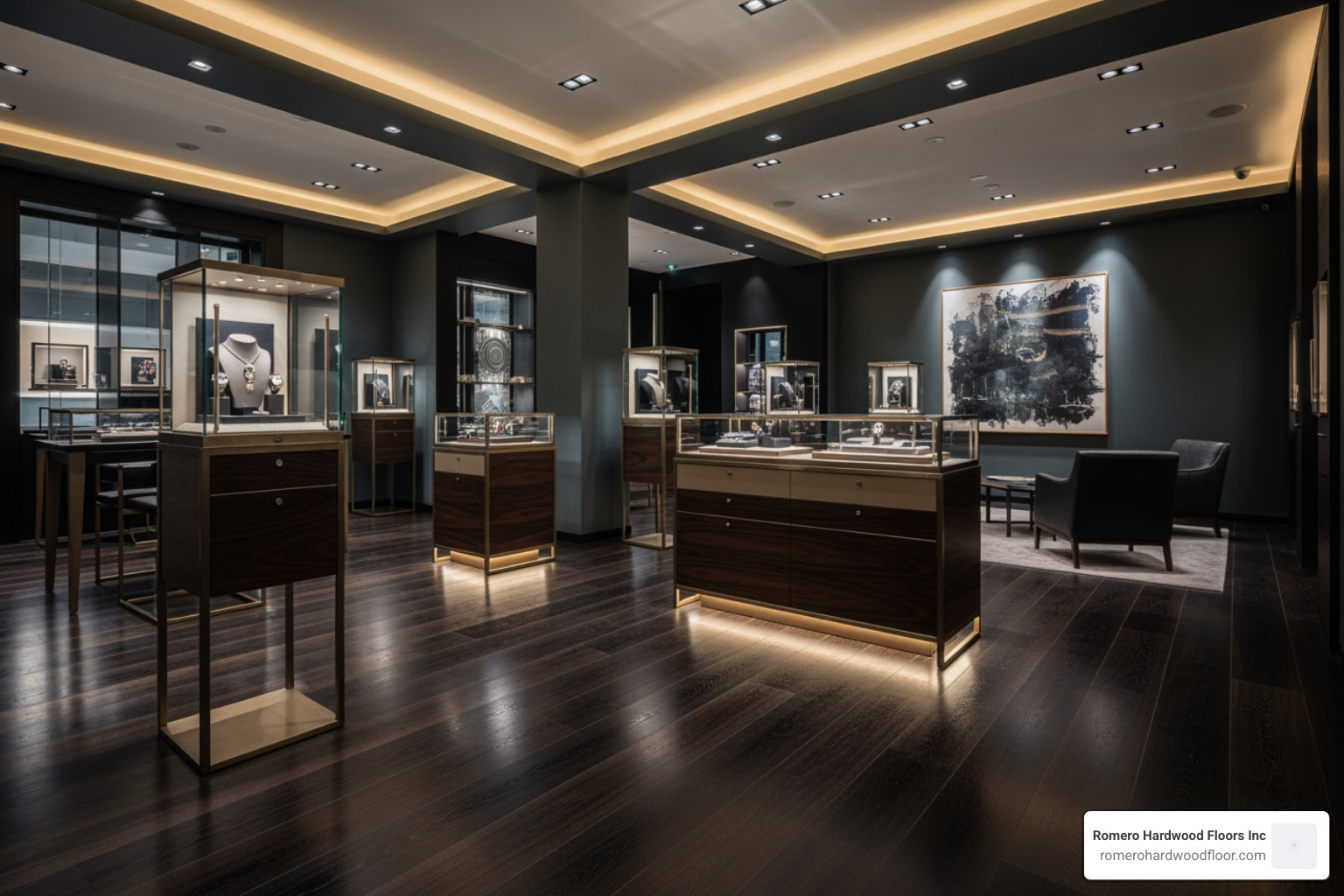
How Finish Color Impacts Your Space
The color of your Hardwood Flooring is a powerful design tool, capable of changing the perception of space, light, and mood within your commercial property.
- Light Floors for an Expansive Feel: Light tones (natural, white-washed, light grey) create an open, airy atmosphere. They make spaces feel larger and more contemporary and are great at hiding dust. This is an excellent choice for smaller offices or retail stores.
- Medium Tones for Versatility: Classic and warm, medium-toned hardwoods complement a wide range of designs. They are highly practical for commercial use because they effectively hide minor scratches and scuffs.
- Dark Floors for Sophistication: Dark stains add drama and a sense of luxury, perfect for high-end boutiques or executive lounges. However, they show dust and scratches more easily and require more frequent cleaning.
- White-washed and Grey Tones: These modern finishes offer a contemporary or coastal vibe. White-washed floors brighten a space, while grey tones provide a minimalist or industrial aesthetic popular in urban offices.
Sustainability and Eco-Friendly Hardwood Flooring
Choosing eco-friendly Hardwood Flooring reflects well on your business and supports a healthier environment. As a natural, renewable resource, hardwood is an inherently sustainable choice.
What to look for in sustainable hardwood:
- FSC Certification: The Forest Stewardship Council (FSC) certifies that wood comes from responsibly managed forests that protect biodiversity and support local communities.
- Renewable Resource: Many hardwoods, particularly from North America, are harvested from sustainably managed forests where growth outpaces removal.
- Low Carbon Footprint: Wood stores carbon, and choosing low-VOC (Volatile Organic Compound) finishes improves indoor air quality for employees and customers.
- Longevity: The long lifespan of hardwood, especially solid wood that can be refinished, reduces waste in landfills by minimizing the need for replacement.
For more information on making environmentally conscious choices for your flooring, visit our page on eco-friendly hardwood flooring. You can also find broader insights into sustainable hardwoods from industry resources.
Installation, Maintenance, and Long-Term Value
Investing in commercial Hardwood Flooring is a significant decision, and its long-term value is directly tied to proper installation and diligent maintenance. At Romero Hardwood Floors Inc., we understand that the quality of the installation is just as important as the quality of the materials.
DIY vs. Professional Installation
While some engineered floors are marketed as DIY-friendly, commercial Hardwood Flooring projects require professional installation for several reasons:
- Expertise: Professionals in areas like Revere and Medford, MA, can handle complex commercial subfloors, moisture issues, and traffic demands to ensure a durable installation.
- Warranty Compliance: Most manufacturer warranties require professional installation to remain valid, protecting your investment.
- Efficiency: Experienced teams work efficiently to minimize business downtime during installation.
- Long-Term Performance: Proper acclimation, precise laying, and secure fastening by a pro prevent future issues like gapping, buckling, or squeaking.
Installation Methods
The chosen installation method significantly affects the performance and longevity of your Hardwood Flooring:
- Nail-Down/Staple-Down: The traditional method for solid hardwood over a wooden subfloor, creating a highly stable floor.
- Glue-Down: Used for engineered hardwood, planks are adhered directly to the subfloor. This is effective over concrete and provides a solid feel.
- Floating: Primarily for engineered hardwood, planks are interlocked and “floats” over an underlayment. This versatile method works over various subfloors.
An acclimation period is essential for all methods. The wood must adjust to the site’s temperature and humidity for several days before installation to prevent future gapping or warping. For a complete guide on the process, refer to our hardwood installation guide.
Best Practices for Cleaning and Protection
Maintaining the beauty and longevity of your commercial Hardwood Flooring requires a consistent cleaning and protection regimen. This is especially true in high-traffic environments.
Cleaning and Maintenance:
- Daily Sweeping/Vacuuming: Regularly remove grit and dirt with a soft-bristle broom or a vacuum’s hard floor attachment (no beater bar) to prevent scratches.
- Prompt Spill Cleanup: Blot spills immediately with a clean, dry cloth.
- Approved Cleaners: Use only manufacturer-approved hardwood cleaners. Avoid harsh chemicals, oil soaps, or excessive water from wet or steam mops. Our hardwood floor care guide offers more detailed instructions.
Protection from Damage:
- Use Felt Pads: Apply felt pads to the legs of all furniture and equipment.
- Lift, Don’t Drag: Always lift heavy items instead of dragging them across the floor.
- Place Entrance Mats: Use high-quality mats at all entrances to trap dirt and moisture.
- Protect from Sunlight: Use window treatments to prevent fading from direct sunlight and rearrange furniture periodically.
- Manage Pet Damage: In pet-friendly spaces, keep nails trimmed. Consider highly durable, scratch-resistant options.
- Repair Scratches: Address minor scratches with touch-up kits or professional services. For more on this, see our guide to hardwood floor scratch repair.
Maximizing Your Return on Investment
Choosing Hardwood Flooring for your commercial property is not just about aesthetics; it’s a strategic investment that can significantly improve its long-term value and appeal.
- Increased Property Value: Hardwood is a sought-after feature that can increase a commercial property’s resale value by up to 2.5%. The National Association of Realtors reports that new hardwood can deliver a 118% return on investment.
- Longevity and Durability: With proper care, solid hardwood can last for generations, and high-quality engineered wood provides decades of service. This durability reduces long-term replacement costs.
- Refinishing vs. Replacing: The ability to refinish a floor is a major cost advantage. Instead of a full replacement, we can sand and refinish the wood to make it look new again. Based on internet data, average refinishing costs can range from $2 to $8 per square foot, with complex projects reaching up to $24 per square foot. This is significantly cheaper than a full replacement. For a detailed breakdown, explore our page on how much to refinish wood floors.
Frequently Asked Questions about Commercial Hardwood
How does hardwood compare to other flooring options for commercial use?
Hardwood offers advantages over other commercial flooring. It’s easier to clean than carpet and improves air quality. Compared to vinyl or laminate, real hardwood provides authentic character and warmth. While synthetics may be cheaper upfront, they can’t be refinished and have a shorter lifespan. Hardwood’s ability to be refinished adds significant long-term value and is seen as a premium feature.
What are the best hardwood options for different commercial areas?
The best option depends on the area’s use:
- Lobbies and Hallways: Use durable species like Hickory or Oak with a commercial-grade, textured finish to hide wear.
- Offices and Conference Rooms: Aesthetics can be a priority. Walnut or unique patterns like herringbone add a sophisticated touch.
- Breakrooms and Kitchens: Waterproof engineered hardwood provides a genuine wood look with protection against spills and moisture.
- Retail Spaces: Choose hard species with textured finishes for durability. The color can define the space’s feel—light and open or dark and high-end.
What are the latest trends in commercial hardwood flooring?
Several exciting trends are shaping commercial Hardwood Flooring designs:
- Wider and Longer Planks: Creates a modern, expansive look that makes rooms feel larger.
- Lighter and Natural Finishes: Light, natural, and grey tones are popular for creating bright, contemporary interiors.
- Textured Surfaces: Wire-brushed and hand-scraped finishes add character and are excellent at hiding wear in high-traffic areas.
- Unique Installation Patterns: Herringbone and chevron patterns are making a comeback, adding a custom, upscale feel to commercial spaces.
- Matte and Low-Sheen Finishes: These are replacing high-gloss for a more natural look that better conceals minor imperfections.
Conclusion
Choosing the right Hardwood Flooring for your commercial property is a pivotal decision, representing a significant investment in both your business’s aesthetic and its long-term value. As we’ve explored, understanding the nuances between solid and engineered hardwood, selecting the appropriate wood species for high-traffic areas, and considering the impact of finishes and textures are all crucial steps.
Remember to prioritize durability, especially in commercial settings, opting for hard species like Oak, Maple, or Hickory, and robust, commercial-grade finishes. The right choice will not only withstand the daily rigors but also improve your brand’s image and potentially increase your property’s value.
For optimal performance and longevity, professional installation is key. Our team at Romero Hardwood Floors Inc. has been providing expert guidance and installation for commercial projects throughout Revere, MA, and the surrounding North Shore Massachusetts areas since 2006. We are dedicated to delivering competitive pricing, punctuality, and guaranteed workmanship to ensure your commercial Hardwood Flooring project is a success.
Ready to transform your commercial space with beautiful, durable Hardwood Flooring? Contact a professional hardwood flooring contractor today to discuss your project and find the perfect solution for your business.
