
Hardwood Floors for Bedrooms: Top 5 Pros & Cons 2024
Hardwood floors for bedrooms offer a mix of elegance, durability, and comfort that few other options can match. With their attractive aesthetic and the ability to coordinate with various decor styles, hardwood floors bring a warm and welcoming vibe to any bedroom. They’re also easy to keep clean and dust-free, making them a top choice for allergy sufferers. However, choosing the right hardwood floor involves several decisions, from selecting the type of wood to considering the finish and grain pattern.
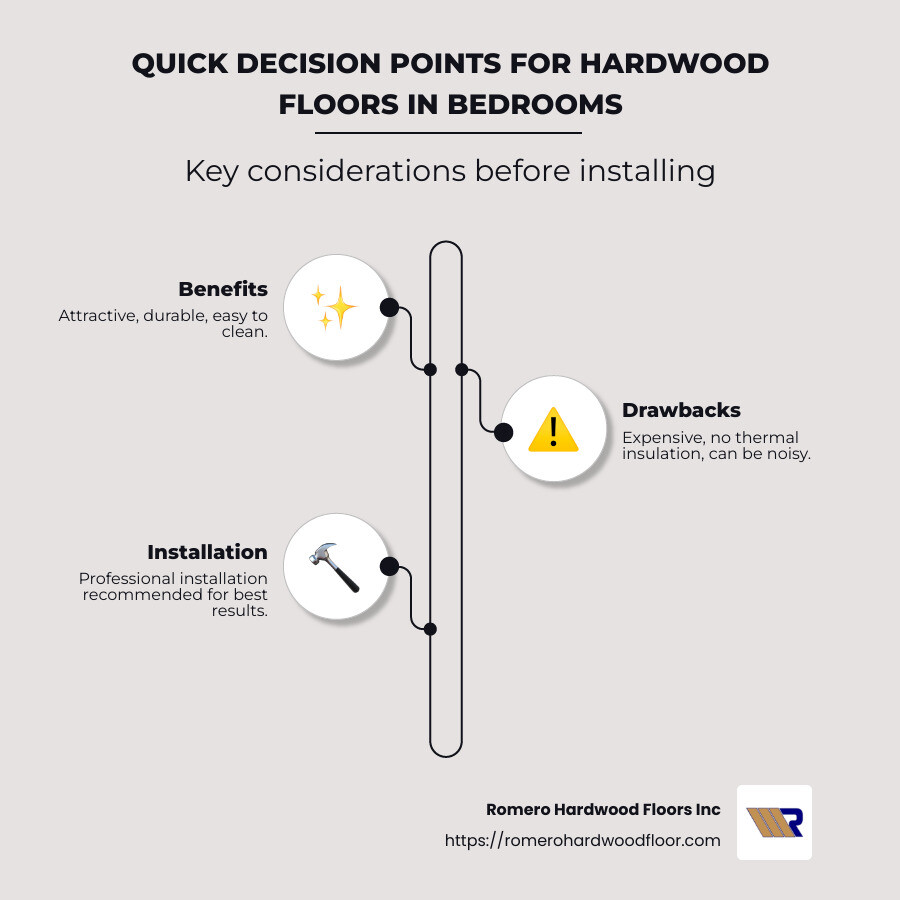
Quick Decision Points:
– Benefits: Attractive, durable, easy to clean
– Drawbacks: Expensive, no thermal insulation, can be noisy
– Installation: Professional installation recommended for best results
My name is Francisco Romero, owner of Romero Hardwood Floors Inc. With over 15 years in the flooring industry, I specialize in the installation and maintenance of hardwood floors for bedrooms. My expertise is in tailoring solutions that add value and beauty to homes and commercial properties. In the next section, I’ll explore the many benefits of choosing hardwood floors for bedrooms.
Hardwood floors for bedrooms terms at a glance:
– Benefits of hardwood floors
– Best hardwood flooring options
– Hardwood floors design ideas
Benefits of Hardwood Floors in Bedrooms
Hardwood floors are a popular choice for bedrooms, offering a variety of benefits that improve both the aesthetic and functional aspects of your space. Let’s explore why hardwood floors might be the perfect fit for your bedroom.
Attractive and Natural
Hardwood floors are undeniably beautiful. They bring a natural warmth and elegance that can transform any bedroom into a cozy retreat. The variety of wood types, finishes, and grain patterns available allows for endless decor coordination. Whether you prefer a rustic oak or a sleek maple, hardwood floors can match your style effortlessly.
Comfortable Underfoot
While hardwood isn’t as soft as carpet, it’s certainly more comfortable than harder alternatives like laminate. Adding area rugs can improve this comfort, providing softness underfoot and extra warmth. For those with joint pain, the slight give of a hardwood floor, compared to tile or stone, can make a noticeable difference.
Hygienic and Easy to Clean
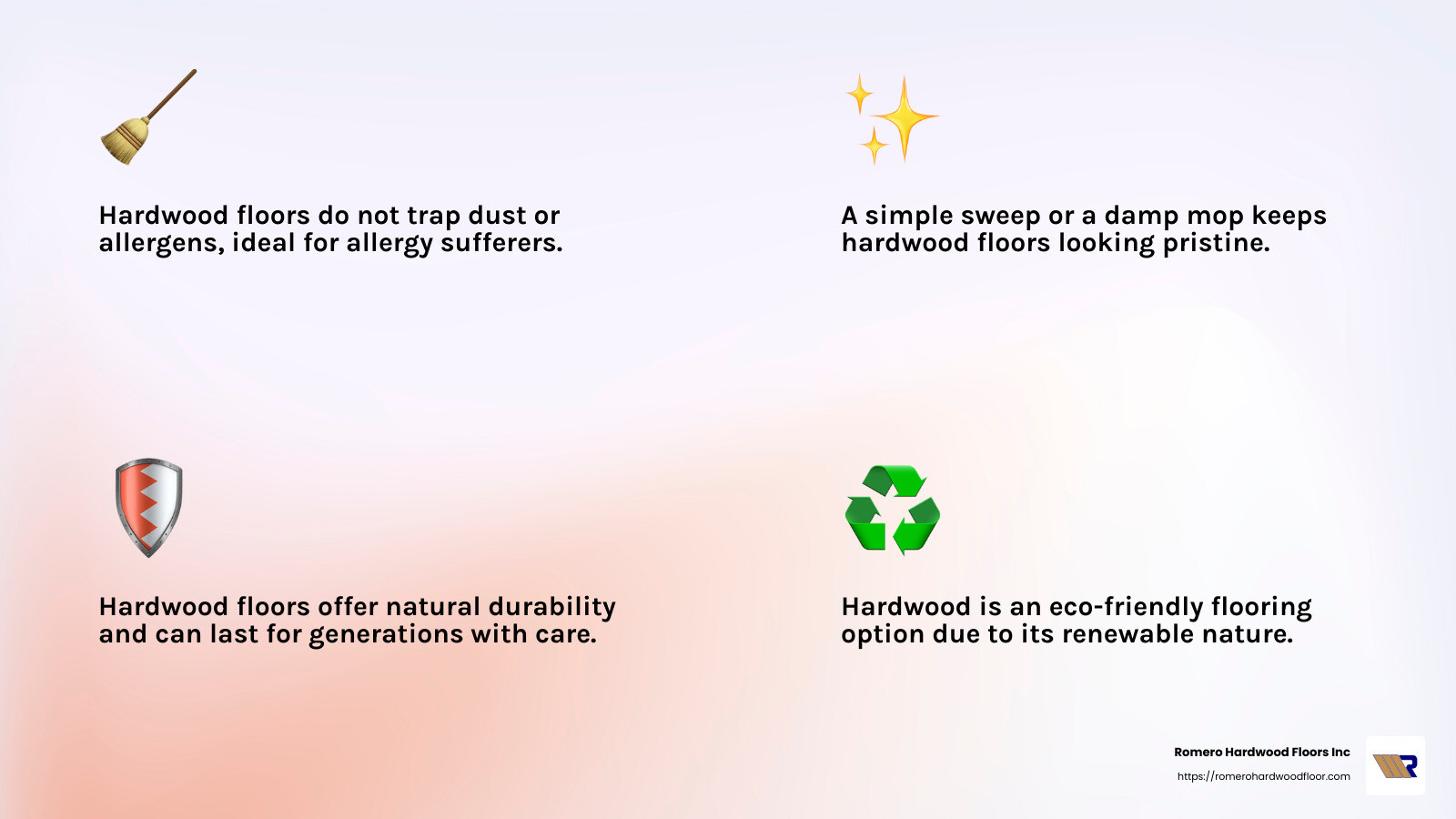
Hardwood floors are a dream for those who value cleanliness. They don’t trap dust or allergens, making them ideal for allergy sufferers. A simple sweep or a wipe with a damp mop is usually all it takes to keep them looking pristine. This ease of maintenance is a significant advantage over carpets, which can harbor dust and require regular deep cleaning.
Long-lasting and Durable
Investing in hardwood floors is a decision that pays off over time. With proper care, these floors can last for decades. Regular maintenance, like refinishing, can keep them looking new and extend their lifespan even further. This durability makes hardwood a wise investment for those planning to stay in their home long-term.
Resale Value
Homebuyers often prioritize hardwood floors when searching for a new home. Their timeless appeal and durability can increase your property’s value, making it more attractive on the market. In many cases, the initial investment in hardwood floors can yield a return when it’s time to sell.
Environmentally Friendly
Hardwood floors are a sustainable choice. They are made from a renewable resource and can be recycled at the end of their life, unlike some synthetic flooring options. Choosing hardwood not only improves your bedroom but also aligns with environmentally conscious living.
In summary, hardwood floors for bedrooms offer a blend of beauty, comfort, and practicality. They improve your space while providing long-term benefits that make them a worthwhile investment. Next, we’ll explore some potential drawbacks to consider before making your final decision.
Drawbacks of Hardwood Floors in Bedrooms
While hardwood floors for bedrooms offer many benefits, there are a few drawbacks to consider. Understanding these can help you make an informed decision that suits your needs and budget.
Expensive
Initial and Installation Costs:
Hardwood floors can be a significant investment. They often come with a higher price tag compared to alternatives like laminate or carpet. The cost of materials is just the beginning. You’ll also need to factor in installation costs, which can add up quickly. Professional installation is recommended for the best results, but it can be pricey.
Long-term Value:
Despite the initial expense, hardwood floors can offer long-term value. They are durable and can last for decades with proper care. This longevity can offset the upfront costs over time, but it’s important to consider your budget and financial plans before committing.
No Thermal or Sound Insulation
Cold Surface:
Hardwood floors can feel cold, especially during the winter months. Unlike carpet, they don’t provide any insulation against chilly temperatures. This can be uncomfortable, particularly if you enjoy walking barefoot in your bedroom.
Noise Issues:
Hardwood floors are known for their noise. Footsteps can echo, and moving furniture can be loud. This lack of sound insulation can be a concern, especially in multi-story homes where noise travels easily between floors.
Underlay Solutions:
To combat these issues, consider using an underlay. A good underlay can provide some thermal insulation and help reduce noise. Products like Tarkofoam II or Tarkoflex II are designed for this purpose and can make a noticeable difference.
Vulnerable to Scratches and Dents
Pets and Furniture:
Hardwood floors can be susceptible to scratches and dents. Pets, especially dogs with long nails, can easily scratch the surface. Moving furniture or dropping heavy objects can also cause damage.
Maintenance Tips:
To minimize scratches, use furniture pads and keep pet nails trimmed. Regular maintenance, such as refinishing, can help repair minor scratches and keep your floors looking their best. However, it’s important to note that refinishing is an additional expense and can be a hassle.
Understanding these drawbacks can help you weigh the pros and cons of hardwood floors in bedrooms. While they offer many benefits, it’s crucial to consider the potential challenges and solutions before making your final decision. Next, we’ll compare hardwood floors to other popular bedroom flooring options.
Comparing Hardwood Floors to Other Bedroom Flooring Options
Choosing the right flooring for your bedroom can be a tough decision. Each option has its own set of benefits and drawbacks. Let’s compare hardwood floors to other popular choices like carpet, laminate, luxury vinyl, and engineered wood to help you make an informed decision.
Hardwood vs. Carpet
Comfort and Warmth:
Carpet is often chosen for bedrooms because it’s soft and warm underfoot. It provides excellent sound and thermal insulation, making rooms cozier and quieter. However, hardwood floors can also offer comfort when paired with area rugs, which add warmth and style without the full commitment to carpet.
Maintenance and Allergies:
Carpet can be challenging to clean and may trap allergens like dust and pet dander. In contrast, hardwood floors are easy to sweep and mop, making them a better choice for allergy sufferers. Regular maintenance of hardwood is simple, whereas carpets may require professional cleaning to stay fresh.
Lifespan:
While carpet might need replacement every 5 to 10 years, hardwood floors can last for decades with proper care. This long lifespan can make hardwood a more cost-effective choice over time, despite the higher initial investment.
Hardwood vs. Laminate
Appearance and Durability:
Hardwood floors offer a natural and neat look that laminate floors try to mimic. However, laminate is more resistant to scratches and dents, which makes it a good option for households with pets or young children.
Cost and Installation:
Laminate is generally more budget-friendly than hardwood. It’s also easier to install, often as a DIY project, which can save on labor costs. Hardwood requires professional installation to ensure durability and longevity.
Hardwood vs. Luxury Vinyl
Water Resistance and Maintenance:
Luxury vinyl flooring is highly water-resistant and easy to maintain, making it ideal for areas prone to spills. While hardwood can handle some moisture, it is not recommended for wet environments. Hardwood floors need careful cleaning to avoid water damage.
Cost and Appearance:
Luxury vinyl is usually less expensive than hardwood and can imitate the look of wood or stone. However, it doesn’t have the same natural beauty and timeless appeal as genuine hardwood.
Hardwood vs. Engineered Wood
Durability and Appearance:
Both hardwood and engineered wood offer a similar aesthetic, but engineered wood is more stable in humid conditions. It has a plywood core that reduces the risk of warping, making it a good option for areas with fluctuating temperatures.
Cost and Installation:
Engineered wood is often cheaper than solid hardwood and easier to install, sometimes suitable for DIY projects. However, it cannot be refinished as many times as hardwood, which may affect its long-term durability.
Each flooring option has its own strengths and weaknesses. When choosing between them, consider factors like comfort, maintenance, cost, and the specific needs of your bedroom. Next, we’ll explore how to choose the right type of hardwood for your bedroom to ensure you make the best choice for your home.
Choosing the Right Hardwood for Your Bedroom
Selecting the perfect hardwood for your bedroom involves considering the type of wood, its finish, grain pattern, and plank width. Each of these factors plays a role in the overall look and feel of your room. Let’s break them down:
Types of Wood
Different types of wood offer unique characteristics and aesthetics. Here are some popular choices:
- Oak: Known for its durability and classic appearance, oak is a popular choice for bedrooms. It comes in both red and white varieties, each offering a distinct look. Oak’s grain pattern helps hide scratches, making it ideal for high-traffic areas.
- Maple: Maple is slightly harder than oak and has a lighter, more uniform appearance. Its tight grain pattern makes it challenging to stain, so it’s often left in its natural color. This makes maple a great choice for those who prefer a clean, minimalist look.
- Walnut: Walnut offers a rich, dark color and a smooth grain, adding a touch of luxury to any bedroom. Although it’s softer than oak and maple, walnut’s unique appearance makes it a desirable option for those seeking elegance.
- Ash: Ash is similar to oak in terms of durability and grain pattern but often features a lighter color. It offers a versatile look that can complement various design styles.
Finishes and Grain Patterns
The finish and grain pattern of your hardwood floor can significantly impact the room’s aesthetic:
- Matte Finish: A matte finish provides a more natural, understated look. It’s great for creating a cozy, rustic feel in your bedroom.
- Glossy Finish: A glossy finish adds shine and elegance, perfect for modern or sophisticated spaces. However, it can show scratches more easily.
- Natural Grain: Emphasizing the natural grain of the wood can add warmth and texture to your room. This is particularly appealing for those who love a rustic or traditional look.
- Rustic Grain: A rustic grain pattern adds character and charm, ideal for creating a cozy, country-style bedroom.
Plank Width
The width of the planks you choose will influence the room’s overall appearance:
- Strip (Narrow) Planks: These are typically less than 3 inches wide and can make a room appear larger due to the increased number of seams. They’re great for small bedrooms.
- Plank (Standard) Width: Ranging from 3 to 5 inches, standard planks offer a balanced look suitable for most bedrooms.
- Wide Planks: Wide planks, over 5 inches, create a more open and spacious feel. They highlight the wood’s natural beauty and are perfect for larger bedrooms.
Choosing the right hardwood involves balancing these factors with your personal style and the specific needs of your bedroom. Consider how each element will work with your existing decor and the atmosphere you aim to create.
Frequently Asked Questions about Hardwood Floors for Bedrooms
What is the best wood flooring for a bedroom?
Choosing the best wood flooring for your bedroom depends on your personal style, budget, and practical needs. Oak is a popular choice due to its durability and classic look. It comes in both red and white varieties, offering versatility in design. Maple is another excellent option for those who prefer a lighter, more uniform appearance. It’s slightly harder than oak, making it a durable choice.
For a touch of luxury, walnut provides a rich, dark color with a smooth grain. Although it’s softer than oak and maple, its unique appearance can add elegance to any bedroom. Ash offers a lighter color and a versatile look, similar to oak but with its own distinct charm.
The best wood flooring for your bedroom is one that complements your decor and meets your lifestyle needs.
Should I put hardwood floors in my bedroom?
Yes, you should consider putting hardwood floors in your bedroom if you value aesthetics, durability, and a clean, natural look. Hardwood floors for bedrooms offer a stylish and timeless appeal that can improve any decor. They’re also easy to clean and maintain, making them an ideal choice for allergy sufferers.
However, keep in mind that hardwood floors can be cold and noisy without proper insulation. You might want to add area rugs for warmth and soundproofing. If you’re concerned about the initial cost, hardwood floors are a long-term investment that can increase your home’s resale value.
Do people prefer hardwood or carpet in bedrooms?
Preferences for hardwood or carpet in bedrooms vary based on individual needs and tastes. Hardwood floors are favored for their durability, timeless style, and ease of cleaning. They also add value to your home and are less likely to trigger allergies.
On the other hand, carpet is appreciated for its softness and warmth, making it a cozy option for bedrooms. It provides better sound insulation and can be more comfortable for walking barefoot.
According to many homebuyers, hardwood floors are often preferred due to their long-lasting nature and potential to boost property value. However, the choice ultimately depends on whether you prioritize comfort and insulation or aesthetics and durability.
Conclusion
In conclusion, when it comes to choosing flooring for your bedroom, hardwood floors offer a blend of aesthetics, durability, and value that is hard to beat. They provide a timeless elegance and are easy to clean, making them a practical choice for those who suffer from allergies. While they might be more expensive upfront, the long-term benefits such as increased home resale value and the potential to last a lifetime make them a worthwhile investment.
When making your decision, consider your personal style, budget, and the specific needs of your household. Hardwood floors can be complemented with area rugs to add warmth and soundproofing, addressing some of the common concerns such as noise and cold surfaces.
At Romero Hardwood Floors Inc, we understand the importance of making the right flooring choice for your home. Our expertise in hardwood floor installation ensures that you receive high-quality service custom to your unique preferences. We are committed to enhancing the beauty and functionality of your home with expert craftsmanship and competitive pricing.
Whether you’re renovating or building new, trust us to provide a beautiful and lasting foundation for your bedroom. Choose hardwood floors for a blend of style, durability, and value that will transform your space for years to come.
