Hardwood floors versus carpet: Top 6 Winning Features
Hardwood floors versus carpet is a decision that significantly affects your home’s comfort, style, and market value. Both options have their pros and cons, which we’ll explore to help you choose what suits your space best.
- Hardwood floors are durable, increase home value, offer a modern and clean look, and are low-maintenance.
- Carpet provides a cozy feel, insulates noise, and is budget-friendly but may require frequent cleaning and replacement.
The right flooring improves aesthetics and ensures long-term satisfaction. Choosing the right type can lift your property value, as hardwood floors, for instance, tend to attract potential buyers.
I’m Francisco Romero, with over 15 years of experience at Romero Hardwood Floors Inc. Specializing in hardwood floor installation, I’ve seen the benefits and drawbacks of both hardwood floors versus carpet. With this knowledge, let’s dig deeper into making the right flooring choice for your home.
Find more about Hardwood floors versus carpet:
– Benefits of hardwood floors
– Hardwood floors home value
– Hardwood floors scratch resistant
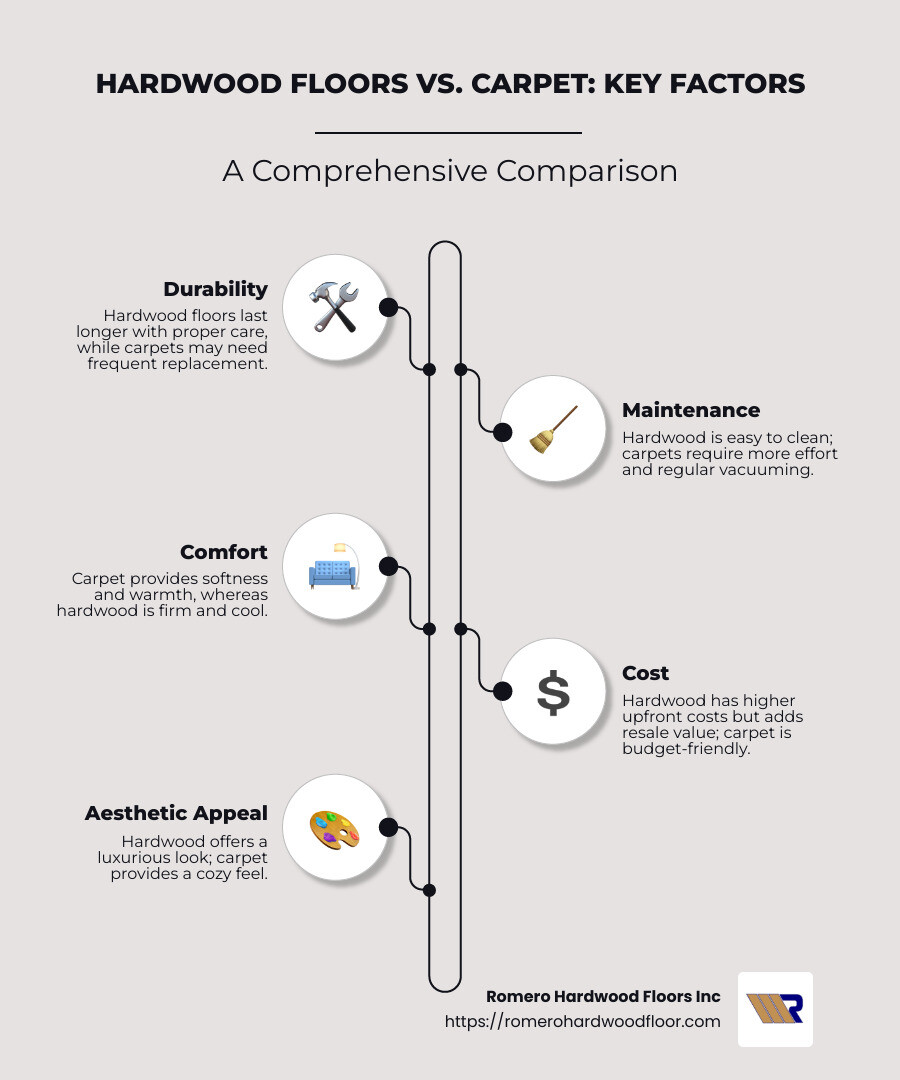
Hardwood Floors vs. Carpet: Key Differences
When it comes to hardwood floors versus carpet, understanding the key differences can help you make the best choice for your home. Let’s break down the essential aspects: material composition, cost, durability, maintenance, and installation.
Material Composition
Carpet is made from synthetic fibers like nylon or polyester, though some natural options like wool exist. It’s woven into a soft texture, providing comfort underfoot. However, these fibers can trap dust and allergens, which might be an issue for allergy sufferers.
Hardwood floors, on the other hand, are crafted from natural wood like oak, maple, or birch. They offer a timeless look and can be solid or engineered. Engineered hardwood combines a thin layer of real wood with a core of high-quality plywood, adding stability and reducing the impact of humidity changes.
Cost Comparison
Carpet is generally more budget-friendly upfront, costing between $3 to $11 per square foot. However, it may need more frequent replacement, particularly in high-traffic areas, making it a potentially more expensive choice in the long run.
Hardwood floors have a higher initial cost, ranging from $6 to $12 per square foot. Despite this, they are a long-term investment, often lasting a lifetime with proper care. Homes with hardwood flooring can also see an increase in real estate value, a factor that might offset the initial expense.
Durability
Carpet typically lasts up to 10 years, depending on its quality and the amount of foot traffic it endures. It is prone to stains and wear, which might necessitate frequent replacements.
Hardwood floors are incredibly durable, with a lifespan that can exceed 100 years. They can be refinished multiple times to remove scratches and restore their original luster, making them a sustainable choice.
Maintenance
Carpet requires regular vacuuming and is susceptible to stains, which can be difficult to remove. It also tends to trap allergens like dust and pollen, potentially affecting indoor air quality.
Hardwood floors are easier to clean, needing only regular sweeping and occasional mopping. They do not trap allergens, making them an excellent option for those with allergies. However, they can scratch, so care is needed to prevent damage from furniture and pets.
Installation Process
Carpet installation is generally simpler and can be a DIY project for those with some experience. It involves laying down padding and securing the carpet with staples or adhesive.
Hardwood floor installation is more complex, often requiring professional expertise. Solid hardwood is typically nailed down, while engineered hardwood might be glued or clicked into place. Despite the higher cost of installation, the results are often well worth it, providing a beautiful and durable floor.
In summary, the choice between hardwood floors versus carpet depends on your priorities: budget, durability, maintenance, and aesthetic preferences. Both have distinct advantages, and understanding these key differences can guide you to the best decision for your home.
Next, we’ll explore how these flooring types impact the appearance and aesthetic appeal of your space.
Appearance and Aesthetic Appeal
When it comes to the appearance and aesthetic appeal of your home, the choice between carpet and hardwood floors can make a significant difference. Both options offer unique visual impacts and design versatility, but they cater to different tastes and functional needs.
Carpet Appearance
Carpet offers a soft and cozy look that can transform any space into a warm and inviting environment. With a vast array of colors, patterns, and textures, carpet provides homeowners with the flexibility to match any interior design scheme. Whether you prefer a plush, luxurious feel or a more understated, textured finish, there’s a carpet style to suit every preference.
Carpet’s ability to dampen sound and provide a comfortable surface underfoot makes it an ideal choice for bedrooms and living areas where comfort is paramount. However, it’s important to note that carpets can show wear over time, particularly in high-traffic areas. Regular maintenance is key to preserving its appearance and softness.
Hardwood Appearance
Hardwood floors are renowned for their natural wood tones and grain patterns, which add a touch of elegance and timeless beauty to any room. The variety of wood species, such as oak, maple, and cherry, offers a range of colors and textures that can complement both traditional and modern decor styles.
The neat and luxurious look of hardwood is best, providing a sophisticated backdrop that improves the overall aesthetic of your space. Unlike carpet, hardwood floors can be refinished to restore their original beauty, ensuring they remain a stunning feature in your home for decades.
Hardwood floors also offer design versatility, allowing you to change the look of your space with different stains and finishes. This adaptability makes hardwood a long-lasting and valuable investment, appealing to homeowners who appreciate both style and functionality.
In summary, the choice between carpet and hardwood floors significantly influences the visual impact and design versatility of your home. While carpet offers a warm and cozy feel, hardwood provides a refined and neat appearance. Your decision will depend on your personal style preferences and the functional needs of each room.
Next, we’ll dive into how these flooring options affect comfort and sound in your living space.
Comfort and Sound
When choosing flooring, comfort and sound are essential factors to consider. Hardwood floors versus carpet offer distinct experiences in these areas, and understanding these differences can help you make the right choice for your home.
Comfort
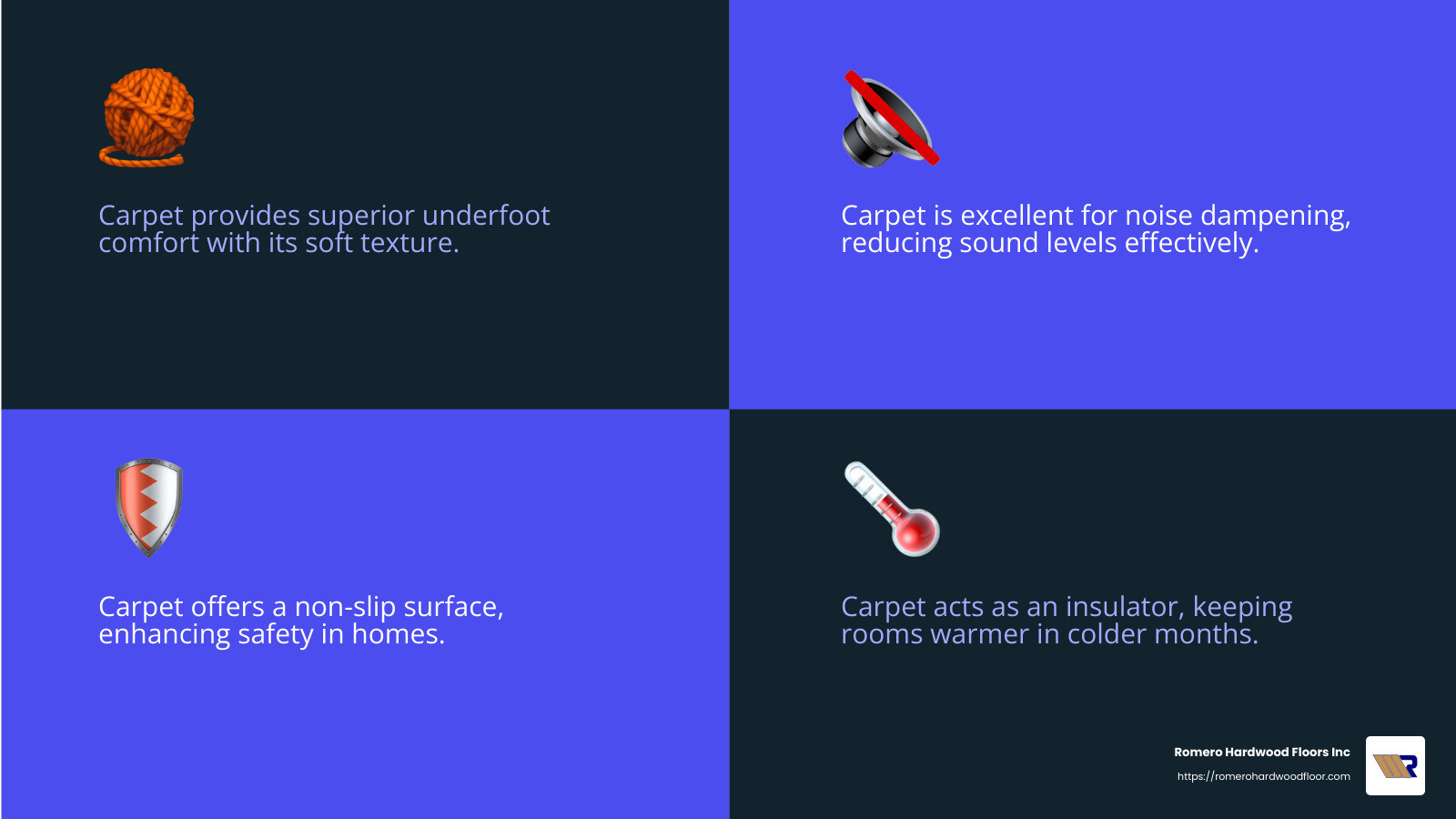
Carpet is the winner when it comes to underfoot comfort. Its soft texture provides a plush surface that feels warm and inviting. This makes it a popular choice for bedrooms and living rooms, where comfort and coziness are top priorities. The thick fibers of carpet also act as an insulator, keeping rooms warmer during colder months.
In contrast, hardwood floors are known for their firmness. While they bring a sleek and polished look to a home, they can feel cold and hard underfoot. This can be a drawback for those who prefer walking barefoot. However, the addition of area rugs can mitigate this, offering a balance between the elegance of hardwood and the comfort of carpet.
Sound Insulation
Carpet excels in noise dampening. Its soft fibers absorb sound, reducing noise levels and creating a quieter environment. This characteristic makes carpet ideal for multi-story homes or apartments, where minimizing sound transmission between floors is important.
Hardwood floors, on the other hand, can amplify sounds. Walking on hardwood can produce echoes, especially in rooms without much furniture or soft furnishings. This might not be an issue for everyone, but it’s something to keep in mind if you value a quieter home environment. Adding rugs or mats can help muffle the sound, providing a simple solution to this potential downside.
Safety
Safety is another important consideration. Carpet offers a non-slip surface, reducing the risk of slips and falls. Its cushioning effect also provides a softer landing, which can be beneficial in homes with young children or elderly residents.
Hardwood floors, while beautiful, can be slippery, especially when wet. They also offer less cushioning, which means falls can be more painful. If safety is a concern, particularly on stairs or in high-traffic areas, carpet might be the safer option.
In conclusion, both flooring types have their pros and cons regarding comfort, sound, and safety. Carpet provides warmth, sound insulation, and added safety, while hardwood offers a stylish, durable option that can be softened with rugs. Your choice between hardwood floors versus carpet will depend on your personal preferences and the specific needs of your home.
Next, we’ll explore the health and environmental impacts of these flooring options.
Health and Environmental Impact
When it comes to flooring, health and environmental impact are critical aspects to consider. Let’s dig into how hardwood floors versus carpet differ in these areas.
Allergen Retention
Carpet fibers can trap dust, pollen, pet dander, and other allergens, making them a less ideal choice for allergy sufferers. According to the National Center for Biotechnology Information, carpets can harbor more allergens than hard flooring. This can lead to poor indoor air quality and exacerbate allergy symptoms.
In contrast, hardwood floors offer a cleaner environment for those with allergies. Their smooth surface makes it easy to wipe away dust and allergens, reducing the risk of buildup. This ease of cleaning is a significant advantage for maintaining a healthier home.
Eco-Friendliness
Hardwood floors are often considered more eco-friendly than carpets. They are made from natural materials and can be sourced from renewable resources. The Forest Stewardship Council (FSC) ensures responsible tree harvesting, making it possible to choose sustainable wood options.
On the other hand, carpets are typically made from synthetic fibers and often involve chemical treatments to resist stains. These chemicals can emit volatile organic compounds (VOCs), which may irritate some individuals. For those concerned about the environmental impact, hardwood floors are the greener choice.
Sustainability
In terms of sustainability, hardwood floors have the upper hand. They are known for their longevity, often lasting decades with proper care. Hardwood can be refinished multiple times, extending its lifespan and maintaining its appearance. This durability makes hardwood a long-term investment that can save money over time.
Carpets, however, tend to wear out more quickly and may need replacing every 5 to 15 years, depending on quality and use. This frequent replacement contributes to waste and makes carpet a less sustainable option compared to hardwood.
In conclusion, when considering health and environmental factors, hardwood floors offer a cleaner, more sustainable option compared to carpet. They provide a hypoallergenic environment, are made from natural materials, and boast impressive longevity. As you weigh your flooring choices, these factors might guide you toward selecting hardwood for a healthier and more eco-friendly home.
Next, we’ll look into how these flooring options affect resale value and market preferences.
Resale Value and Market Preferences
When it comes to resale value, the choice between hardwood floors and carpet can significantly impact your home’s market appeal. Let’s explore how these flooring options stack up.
Resale Value
Hardwood floors are renowned for their ability to boost home value. According to the National Wood Flooring Association, 80% of U.S. homeowners believe that wood floors add the most value to a home. In fact, homes with hardwood floors can sell faster and for more money, with an average increase in value of about 10%. This makes hardwood a smart investment for homeowners looking to improve their property’s worth.
On the flip side, carpet tends to offer short-term appeal. While it can add a cozy touch to certain rooms, like bedrooms or basements, it generally doesn’t lift the resale value like hardwood does. Buyers often see carpet as a temporary solution, one that might need replacing soon after purchase.
Buyer Preferences
In today’s market, many homebuyers lean towards hardwood flooring. This preference is often driven by the desire for a modern, clean aesthetic and the ease of maintenance that hardwood provides. While some buyers might appreciate carpet in specific areas for its comfort and warmth, the overall trend shows a stronger inclination towards hardwood.
Regional differences do play a role in buyer preferences. For example, in colder climates, buyers might favor carpet in bedrooms for added warmth. However, in general, hardwood remains the preferred choice across various regions.
Market Trends
Current flooring trends indicate a growing interest in sustainable and low-maintenance options. Hardwood floors fit this trend perfectly due to their durability and eco-friendliness. As the market moves towards more sustainable living solutions, the demand for hardwood is expected to rise.
Looking ahead, future predictions suggest that while carpet will continue to have its place in specific rooms, hardwood will dominate the broader market. Its timeless appeal and ability to adapt to changing design trends make it a perennial favorite.
In summary, when considering hardwood floors versus carpet for resale value and market preferences, hardwood clearly stands out. Its added value, broad buyer appeal, and alignment with current and future trends make it the go-to choice for many homeowners.
Next, we’ll dig into commonly asked questions about these flooring options.
Frequently Asked Questions about Hardwood Floors vs. Carpet
Is it better to have carpet or hardwood floors?
When choosing between carpet and hardwood floors, durability and lifespan are key considerations. Hardwood floors are known for their long-lasting nature. With proper care, they can last for decades or even a century. They can be refinished multiple times, which helps in maintaining their appearance and extending their life.
Carpet, on the other hand, typically needs to be replaced every 10 to 15 years. It’s more prone to stains and wear, requiring frequent maintenance. Stains can be particularly challenging to remove and often necessitate professional cleaning.
In terms of maintenance, hardwood floors are easier to clean. A simple sweep or mop can keep them looking fresh. Carpet requires regular vacuuming and occasional deep cleaning to manage dust and allergens. For those with allergies, hardwood is a better option as it doesn’t trap allergens like carpet does.
Do buyers prefer carpet or hardwood?
When it comes to buyer preferences, hardwood flooring often takes the lead. It’s viewed as a timeless, stylish choice that improves home value. A study involving real estate professionals found that homes with wood floors sell faster and often for more money than those without. This preference is reflected in the market, where hardwood floors are a top choice for many buyers.
Carpet can still appeal to buyers in specific settings, such as bedrooms, where its warmth and comfort are appreciated. However, the overall trend leans towards hardwood due to its modern appeal and the ease of combination with various decor styles.
What type of flooring adds the most value to a home?
In the quest to add value to a home, hardwood flooring is a top contender. Its ability to boost home value by an average of 10% makes it a worthwhile investment. Buyers recognize the long-term benefits and aesthetic appeal of hardwood, making it a popular choice.
While laminate and luxury vinyl plank (LVP) flooring are also popular due to their cost-effectiveness and ease of installation, they don’t typically add as much value as hardwood. Laminate offers a budget-friendly alternative with a variety of design options, but it lacks the longevity of hardwood. LVP is praised for its water resistance and durability in high-moisture areas like kitchens and bathrooms, but it still doesn’t match the resale value of authentic wood floors.
In conclusion, if your goal is to maximize home value, hardwood floors are the clear winner. They offer a blend of durability, aesthetic appeal, and increased resale value that other flooring types strive to match.
Next, we’ll explore the health and environmental impacts of these flooring choices, diving into allergen retention and eco-friendliness.
Conclusion
As we wrap up this discussion on hardwood floors versus carpet, it’s clear that the choice is more than just a matter of aesthetics. It involves weighing factors like durability, maintenance, comfort, and resale value.
Key Takeaways:
- Durability and Maintenance: Hardwood floors stand out for their long lifespan and ease of maintenance. They can be refinished to maintain their beauty, making them a long-term investment. Carpets, while cozy, often need replacement every decade and require more frequent cleaning.
- Aesthetic Appeal: Hardwood floors offer a timeless elegance that appeals to many homeowners and potential buyers. They improve the value of a home and are versatile enough to match various decor styles. Carpets, on the other hand, provide warmth and comfort, especially in bedrooms.
- Resale Value: When it comes to increasing your home’s resale value, hardwood flooring is the top choice. It’s a preferred option among buyers and can boost your home’s value significantly.
- Health and Environmental Impact: Hardwood floors are easier to clean and better for those with allergies, as they don’t trap dust and allergens like carpets do. They also contribute to a more sustainable home environment when sourced responsibly.
Final Recommendations:
For homeowners aiming for long-term value and elegance, hardwood flooring is the way to go. It’s a durable, stylish choice that improves your home’s appeal and resale value. If comfort and warmth are your priorities, especially in private spaces like bedrooms, consider carpets for those areas.
At Romero Hardwood Floors Inc, we specialize in providing expert hardwood flooring solutions that align with your needs. Our commitment to excellence ensures that you receive high-quality installation and service, enhancing the beauty and value of your home. Whether you’re renovating or building anew, our team is here to help you make the best choice for your flooring needs.
Thank you for considering Romero Hardwood Floors Inc for your flooring project. We look forward to helping you create a beautiful, lasting foundation in your home.