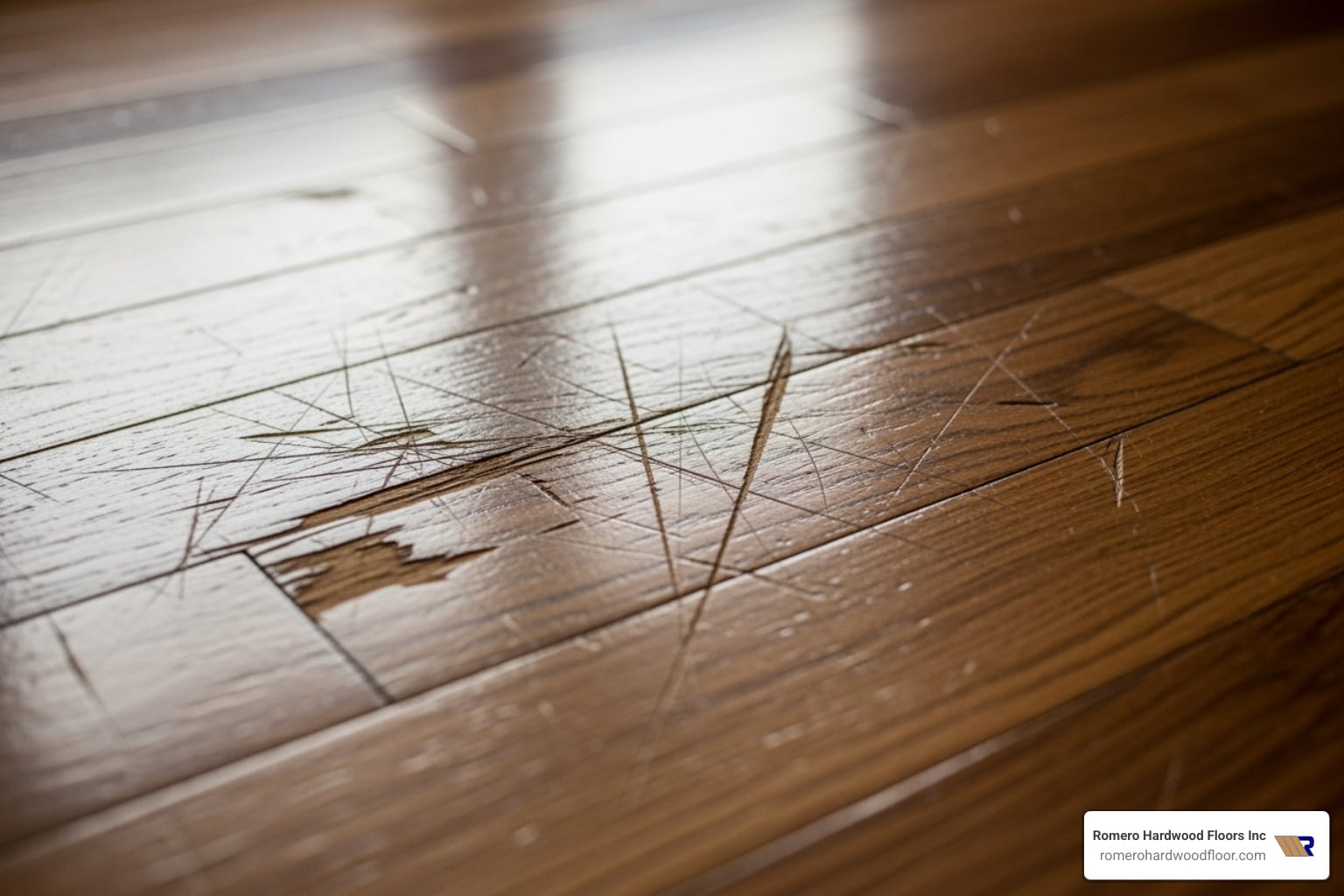
How to fill hardwood floor scratches: Easy Fixes 2025
Why Your Beautiful Hardwood Floors Deserve Better Than Scratches
How to fill hardwood floor scratches depends on the depth of damage, but most scratches can be repaired with simple DIY methods:
For Light Scratches (less than 1/16-inch deep):
- Clean the area thoroughly
- Use wood floor markers or stain pens to color-match
- Buff gently with #0000 steel wool along the grain
- Try natural remedies like walnut oil for very minor scuffs
For Deep Scratches (over 1/16-inch deep):
- Clean and prep the damaged area
- Apply wood filler with a plastic putty knife
- Let dry completely (2+ hours)
- Sand smooth with 180-grit sandpaper
- Stain to match and seal the repair
Your hardwood floors add real value to your home – they’re an investment worth protecting. But life happens. Pet claws leave their mark. Furniture gets moved. Kids drag toys across the room.
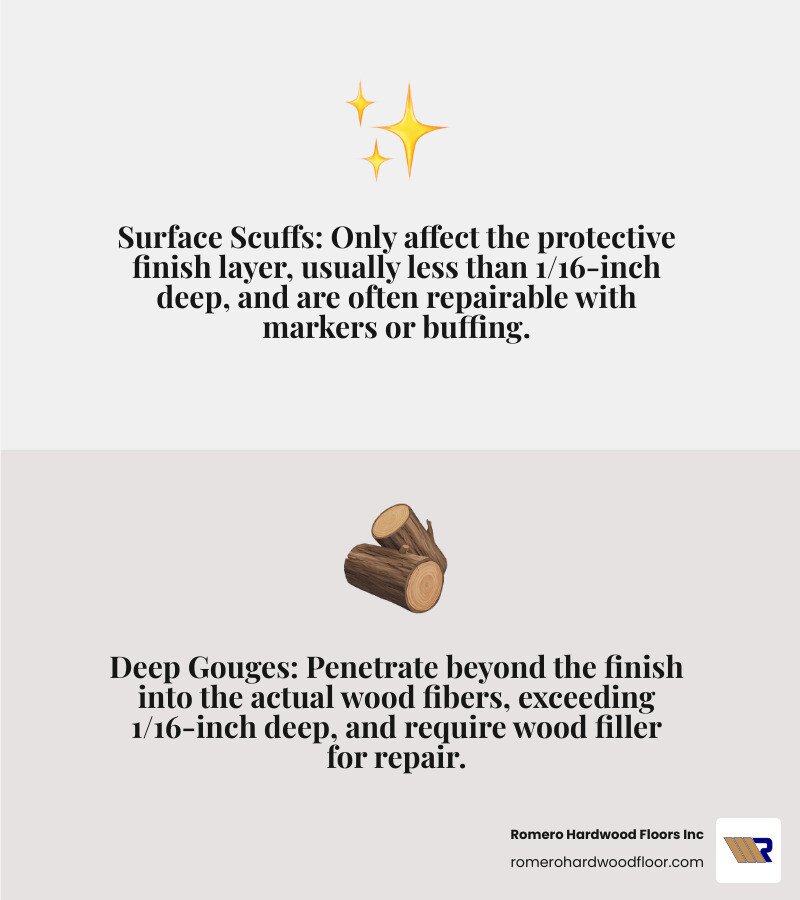
The good news? Most scratches aren’t permanent damage. Fine scratches (less than 1/16-inch deep) only affect the protective finish. Deep scratches (over 1/16-inch) reach into the wood itself but are still very repairable.
Understanding the difference between these scratch types – and knowing your floor’s finish – makes all the difference in choosing the right repair method.
I’m Francisco Romero, and I’ve been helping homeowners restore their hardwood floors for over 15 years through my company, Romero Hardwood Floors Inc. Whether you’re learning how to fill hardwood floor scratches yourself or need professional help, the right approach can make those scratches disappear completely.
First, Assess the Damage and Your Floor Type
To successfully learn how to fill hardwood floor scratches, you first need to assess the damage. Most scratches look worse than they are, but rushing into a repair without understanding the problem can lead to bigger issues.
First, clean the floor thoroughly. Sweep away debris, then clean the scratch with a gentle soap and water solution. Avoid wax-based cleaners or products that leave a shine, as they can interfere with repair materials.
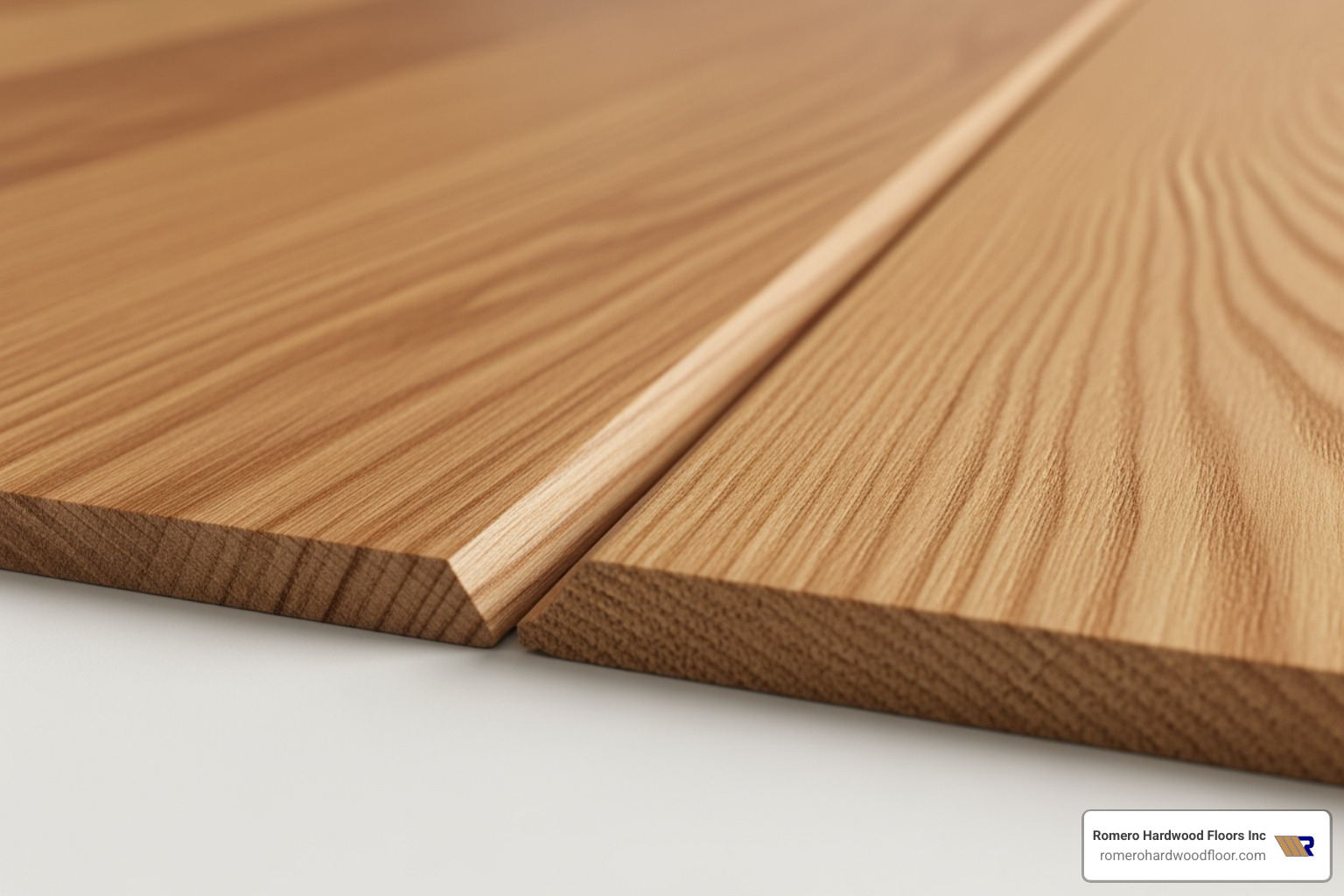
Identifying Light vs. Deep Scratches
The depth of the scratch determines your repair strategy.
Fine scratches are less than 1/16-inch deep, appearing as white or hazy lines. These surface-level marks only affect the protective finish, not the wood itself. Common causes include pet claws, shoes with grit, or sliding lightweight furniture. Since the wood isn’t damaged, the repair involves touching up the finish. Our Hardwood Floor Scratch Repair guide offers more detail.
Deep scratches and gouges are over 1/16-inch deep, cutting through the finish and into the wood. You can often see the exposed wood and feel the groove. These are caused by more significant impacts like dropping heavy items, dragging furniture, or major pet damage. The broken wood fibers must be filled to make the repair invisible.
Understanding Your Floor’s Finish
Your floor’s finish determines the best repair method. Most modern floors have a polyurethane finish, but it’s crucial to be sure.
Use the water bead test in a hidden spot to identify your finish. Place a few drops of water on the floor. If the water beads up, you likely have a polyurethane finish, which is common and easier to repair. If it soaks in quickly, the finish is likely wax or penetrating oil, requiring different techniques. A white ring suggests varnish or shellac.
Site-finished floors were installed as raw wood and then sanded and sealed in your home, making repairs easier to blend. Prefinished floors are finished at the factory and often have super-tough coatings and beveled edges.
Prefinished floors are durable, but their factory-applied finish and beveled edges can make spot repairs harder to match perfectly compared to site-finished floors.
Here’s a crucial warning about engineered wood floors: If you have engineered hardwood, be extra careful about sanding. These floors have a thin layer of real hardwood (usually 2-6mm) over a plywood base. Aggressive sanding can damage this thin wear layer, turning a simple scratch repair into a board replacement project.
If you’re unsure about your floor type or the damage, our team at Romero Hardwood Floors Inc. has the experience to help. We understand various Hardwood Floor Repair Techniques and can guide you to the best approach.
How to Fill Hardwood Floor Scratches: A Guide for Light Damage
Light scratches (less than 1/16-inch deep) are the easiest to fix, as they only affect the surface finish. You can get great results with simple tools.
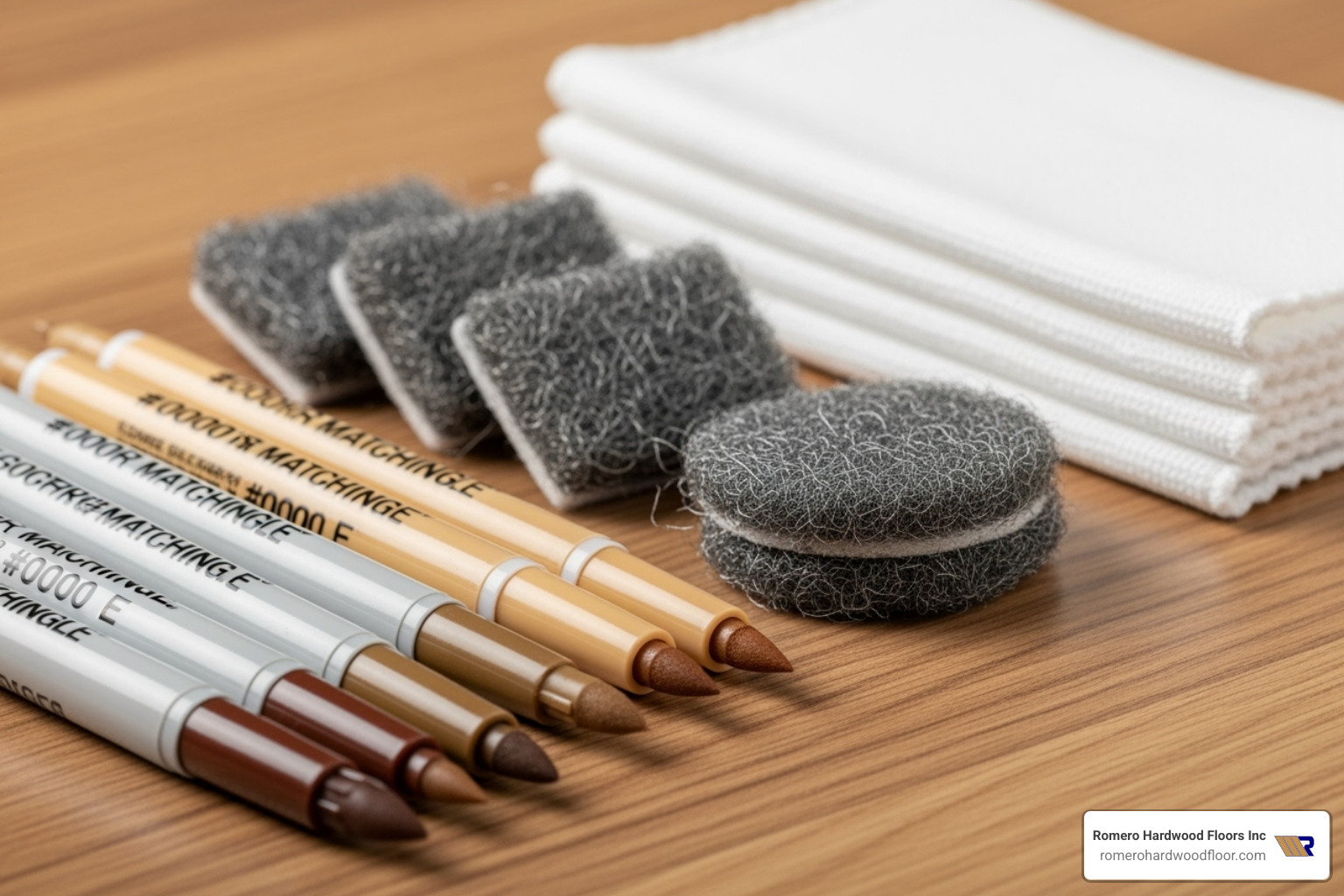
For a successful repair, you’ll need soft cloths, floor markers or stain pens, and #0000 steel wool. These gentle tools will help you blend away marks without damaging the finish.
Step-by-Step Repair for Light Scratches
Step 1: Clean thoroughly. Sweep away debris and wipe the scratched area with a damp cloth. Avoid cleaners that leave a residue, as they can interfere with repairs.
Step 2: Test in an inconspicuous area. Always test your repair method first in a hidden spot, like under furniture or in a closet, to avoid a noticeable mistake.
Step 3: Apply color carefully. For scratches showing lighter wood, use floor markers. Choose a matching color and gently brush it along the scratch, following the grain. Apply in thin layers.
Step 4: Buff gently with the grain. Use #0000 steel wool to lightly rub along the wood grain, smoothing the scratch and blending the repair. This ultra-fine steel wool won’t damage the finish if used correctly. Always work with the grain for a seamless look.
After buffing, clean away any steel wool particles. For more detailed techniques, check out our guide on how to Buff Hardwood Floor Scratches.
Natural and DIY Alternatives for Minor Scuffs
For very minor scuffs, some natural remedies can help camouflage the damage, though they are not permanent repairs.
The walnut method is a classic trick. Rub a fresh walnut (the nutmeat) along the scratch. Its natural oils can help darken and blend the mark, though results vary by wood type.
An olive oil and vinegar solution (equal parts) can also help. Dab it on the scratch, let it sit overnight, then buff it out.
Coconut oil buffing is another gentle option. Apply a thin layer over minor scratches and buff with a soft cloth.
It’s important to understand the limitations of home remedies. They offer a quick fix for superficial marks but don’t fill scratches or provide lasting results. The marks may still be visible, and reapplication is often needed. For durable repairs, commercial products or professional help are better options. These natural methods are temporary solutions for how to fill hardwood floor scratches permanently.
Tackling Deeper Scratches and Gouges
For deep scratches and gouges that penetrate the wood, a more serious repair is needed. This involves rebuilding the damaged wood, not just fixing the finish. With the right approach and patience, even significant gouges can be made to virtually disappear.
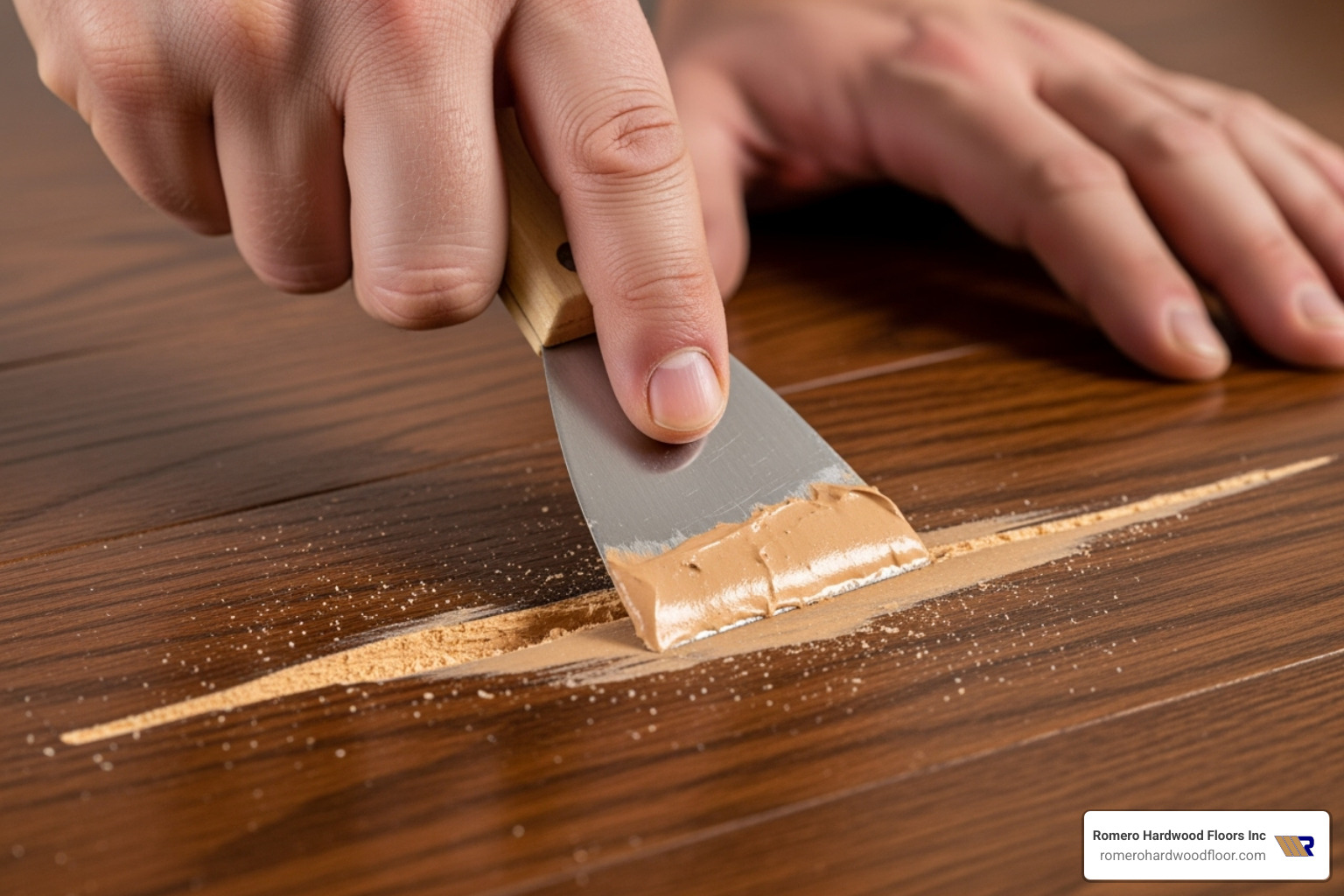
For damage over 1/16-inch deep, wood filler is the best solution. It rebuilds the missing wood before you restore the finish.
How to Fill Hardwood Floor Scratches with Wood Filler
Step 1: Clean and prep the gouge. Clean the area and use tweezers to remove any loose wood chips or splinters from inside the gouge.
Step 2: Apply filler. Use a plastic putty knife (never metal, which can scratch the floor) to press wood filler firmly into the gouge. Overfill slightly; you will scrape the excess off later.
Step 3: Scrape excess flat. While the filler is still workable, use the putty knife to scrape away excess, leaving the surface flush with the floor. Clean any residue from the surrounding area with a damp cloth.
Step 4: Dry and cure. Patience is key here. Most fillers need at least two hours to dry, but this can vary with humidity. Rushing this step will compromise the repair, so when in doubt, wait longer.
Step 5: Sand smooth. Once the filler is hard, gently sand it level with 180-grit sandpaper. The goal is to make the filled area flush without scratching the surrounding finish.
Step 6: Stain and seal. Color matching is the trickiest but most crucial step for an invisible repair. Test stains in a hidden spot to find the perfect match. Apply the stain to the sanded filler. The final step is sealing with a clear topcoat like polyurethane to protect the repair and blend the sheen.
Our Hardwood Floor Gouge Repair and Hardwood Floor Filler Repair resources dive deeper into these techniques.
Common Mistakes to Avoid with Deep Repairs
Many well-intentioned DIY repairs fail due to a few common mistakes.
Using the wrong filler type: Wood filler hardens and is used before finishing. Wood putty stays flexible and is used after finishing. Using the wrong one will cause the repair to fail.
Over-sanding the surrounding floor: Be careful not to sand too aggressively, which can create a dull spot in your existing finish.
Poor color matching: Rushing this step makes the repair obvious. Take time to test stains.
Forgetting to seal the repair: Without a protective topcoat, the stain can rub off and the filler can be damaged.
Rushing drying times: Each layer—filler, stain, and topcoat—needs its full curing time.
For extensive damage like large chips or multiple gouges, professional board replacement may be a better option. Our guide on Fixing a Chip in a Wooden Floor can help you decide.
Prevention and When to Call a Professional
Now that you know how to fill hardwood floor scratches, the best strategy is prevention. A little proactive care goes a long way in avoiding future repairs.
Proactive Care to Prevent Future Scratches
With proper care, hardwood floors can last 100 years. The secret is creating barriers between your floors and potential sources of scratches.
Furniture pads are essential. Place felt pads under all furniture, especially chairs, and replace them when they wear down.
Doormats at entries catch the grit and dirt from shoes that act like sandpaper on your floors. Place them inside and outside every door.
Regular sweeping with a soft broom or dust mop is crucial. Abrasive dust and particles can grind into the finish. When vacuuming, use a model designed for hardwood floors, as beater bars can cause damage.
Pet nail trimming is vital for preventing the hundreds of tiny scratches that claws can create over time.
Avoiding high heels on hardwood, especially softer woods, can prevent small punctures. A “shoes off” policy is even better.
Wipe spills immediately to prevent water damage, and maintain humidity levels between 35-55% to keep the wood stable.
Knowing When to Hire a Flooring Expert
Sometimes, a DIY repair isn’t enough, and it’s time to call a professional. Knowing your limits can save you time and money in the long run.
Call an expert for:
- Widespread scratches: A professional can sand and refinish the entire area for a uniform look, which is better than dozens of patchy spot repairs.
- Deep gouges or structural damage: Experts have specialized tools for seamless, durable repairs.
- Water damage, warping, or cupping: These indicate underlying issues that need professional assessment.
- Board replacement: This is definitely a job for a professional to ensure a perfect match and fit.
- If you’re unsure about your floor type or finish: Get professional advice to avoid costly mistakes, especially with engineered wood.
- When you want a flawless finish: Professional tools and experience make the difference between a good repair and an invisible one.
Professional repair costs vary based on damage, wood type, and location. Based on general industry data, repairs typically range from $450 to over $4,800 for extensive work. These are average costs based on internet data and not actual costs for Romero Hardwood Floors Inc. We provide transparent pricing after assessing your specific situation.
Our team at Romero Hardwood Floors Inc. serves Revere, MA, and surrounding communities including Beverly, Chelsea, Danvers, East Boston, Gloucester, Lynnfield, Malden, Manchester by the Sea, Marblehead, Medford, Melrose, Nahant, Peabody, Reading, Rockport, Salem, Saugus, Somerville, Stoneham, Swampscott, Wakefield, Winchester, Winthrop, and Woburn.
For complex damage, explore our professional Fixing Scratched Floors and How to Repair Damaged Hardwood Floors services.
Frequently Asked Questions about Hardwood Floor Scratches
Over the years, I’ve heard the same questions come up again and again when homeowners find scratches on their beautiful hardwood floors. Let me share the answers to the most common concerns that cross my desk.
Is it cheaper to repair or replace a scratched hardwood floor?
This is hands down the most frequent question I get, and I’m happy to say that repair almost always wins when it comes to cost.
Based on internet data, repairing scratched hardwood floors typically costs between $450 and $4,800, depending on the extent of damage and whether you hire professionals. Compare that to full hardwood replacement, which can run anywhere from $2,500 to over $15,000 for larger areas.
For minor scratches, your DIY repair might cost just $10-20 for some wood markers or filler. Even when you call in professionals like our team for more complex repairs, you’re still looking at a fraction of replacement costs.
The long-term value of repair goes beyond just the immediate savings. Your existing hardwood has character and patina that new floors simply can’t replicate. Plus, well-maintained original hardwood floors often add more value to your home than brand-new installations.
Replacement only makes sense when you’re dealing with widespread water damage, structural issues, or floors that are beyond their useful life. For scratches – even deep ones – repair is almost always the smarter financial choice.
Can you refinish just one part of a hardwood floor?
I get this question from homeowners who want to save money by spot-refinishing just the damaged area. While I appreciate the thinking, spot refinishing is tricky business that rarely gives the results people hope for.
The main challenge is achieving a seamless blend between old and new finish. Even using the exact same polyurethane product, you’ll likely notice differences in sheen, color, and texture. Your existing floor has aged, been exposed to UV light, and developed its own character over time.
Mismatched appearance is almost inevitable with DIY spot refinishing. You might end up with a patch that looks newer or shinier than the surrounding area – which can actually make the repair more noticeable than the original scratch.
Professional blending techniques can sometimes help, but even we approach spot refinishing with caution. Most of the time, we recommend refinishing the entire room or at least large sections to ensure that uniform, beautiful appearance you’re after.
The uneven aging of finish over time means that what looks like a perfect match today might look obviously different in six months as the new finish cures and settles.
What’s the difference between wood putty and wood filler?
This confusion trips up a lot of DIYers, and choosing the right product makes all the difference in your repair results.
Wood filler is your go-to for deep scratches and gouges. It’s typically made from wood dust or cellulose mixed with a binder, and it hardens completely when dry. Think of it as creating new “wood” to fill the void. Because it hardens, you can sand it smooth and stain it to match your floor. Wood filler works best on raw, unfinished wood or when you’re planning to refinish the entire area.
Wood putty, on the other hand, stays slightly flexible even after drying. It’s usually oil-based or made with epoxy, and it’s designed for finished surfaces. Wood putty often comes pre-colored to match common wood tones, making it perfect for small touch-ups on floors that already have their finish intact.
Choosing the right product depends on your specific situation. If you’re learning how to fill hardwood floor scratches that go deep into the wood, wood filler is usually your best bet. For minor surface scratches on finished floors, wood putty might be the simpler solution.
The key difference to remember: wood filler is for bigger jobs that you’ll sand and finish, while wood putty is for quick touch-ups on already-finished surfaces.
Restore Your Floors to Their Former Glory
Learning how to fill hardwood floor scratches doesn’t have to feel overwhelming. With the right knowledge and a bit of patience, most homeowners can tackle these repairs successfully and restore their floors to their original beauty.
We’ve covered everything from identifying whether you’re dealing with light surface scratches or deeper gouges, to choosing the right repair method for your specific floor type. Light scratches often just need a simple marker or gentle buffing, while deeper damage requires wood filler and a more methodical approach.
The key takeaways? Always start by cleaning the area thoroughly. Test your repair products in an inconspicuous spot first. Work with the grain of the wood, not against it. And don’t rush the drying process – good repairs take time.
Prevention really is your best friend here. Those simple furniture pads, regular sweeping, and keeping pet nails trimmed can save you hours of repair work down the road. Your floors will thank you for it.
At Romero Hardwood Floors Inc., we’ve been helping Massachusetts homeowners protect their flooring investments since 2006. From our home base in Revere, we’ve seen every type of scratch, gouge, and floor challenge you can imagine across communities from Beverly to Woburn.
Sometimes, despite your best DIY efforts, the damage is just too extensive or complex for a home repair. Maybe you’re dealing with widespread scratches that need professional blending techniques. Or perhaps you have deep gouges that require board replacement and seamless integration with your existing floor.
That’s where our expertise makes all the difference. We bring professional-grade tools, years of experience in color matching, and the skills needed to make repairs truly invisible. Plus, we understand the long-term health of your floors – not just fixing today’s problem, but ensuring your floors continue to add value to your home for years to come.
For a flawless finish or complex damage that requires an expert eye, explore our professional Hardwood Floor Filler Repair services. We’re here to help you protect your investment and keep your hardwood floors looking their absolute best.
Your beautiful hardwood floors deserve care that matches their quality. Whether you tackle the repairs yourself or trust them to our experienced team, the goal is the same – floors that look stunning and last for generations.