
How to get rid of scratches on hardwood floors: 1 Easy Fix
Why Learning How to Get Rid of Scratches on Hardwood Floors Matters
How to get rid of scratches on hardwood floors is a top concern for homeowners. The good news is that most scratches, from minor scuffs to deep gouges, can be fixed with either simple DIY methods or professional techniques.
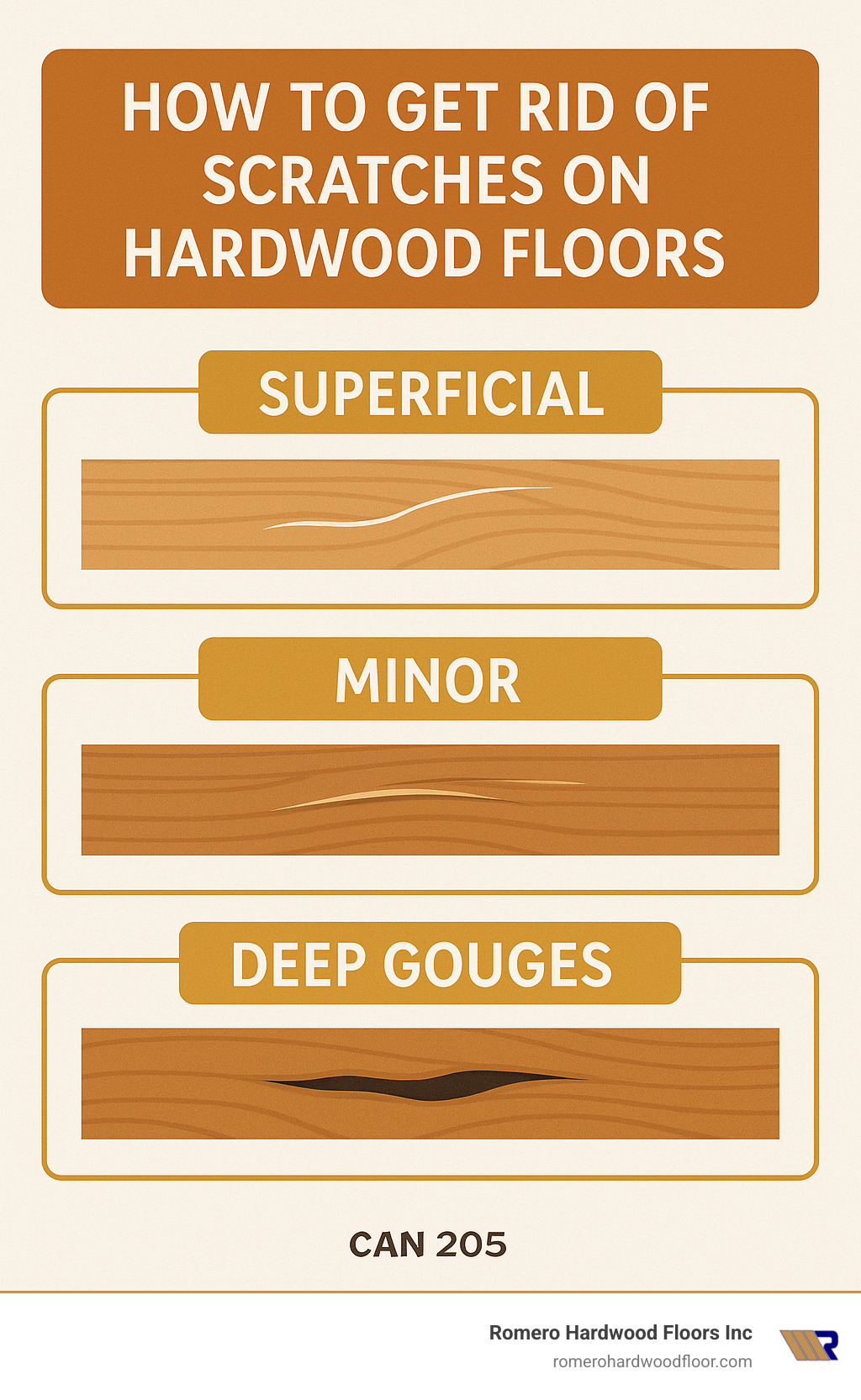
Quick Answer – Scratch Repair Methods by Type:
- Superficial scratches: Rub with a walnut, apply coconut oil, or use a vinegar and olive oil mixture.
- Minor scratches: Use stain markers, blending pencils, or wax sticks to fill and color the damage.
- Deep scratches: Apply wood filler, sand smooth, then stain and seal to match your floor.
- Extensive damage: Professional buffing, screening, or full refinishing may be needed.
Hardwood floors add significant value to a home, but daily life inevitably leaves marks. The severity of the scratch determines the repair approach. Surface scratches in the finish are easy to fix, while deeper gouges that expose raw wood require more work.
Understanding the type of damage is crucial for choosing the right method and avoiding bigger problems. I’m Francisco Romero, owner of Romero Hardwood Floors Inc. With over 15 years of experience restoring floors in Revere, MA, I’ve perfected techniques for every type of scratch.
Glossary for how to get rid of scratches on hardwood floors:
First, Assess the Scratch: Is It a Minor Scuff or a Major Gouge?
Before you begin a repair, you must assess the damage. The right method for a minor scuff can make a deep gouge look worse. A simple and effective professional trick is the “fingernail test.”
Run your fingernail across the scratch. If it glides over smoothly, it’s a superficial scratch. If it catches slightly, it’s a minor to medium scratch. If your nail dips into a groove, you have a deep scratch or gouge.
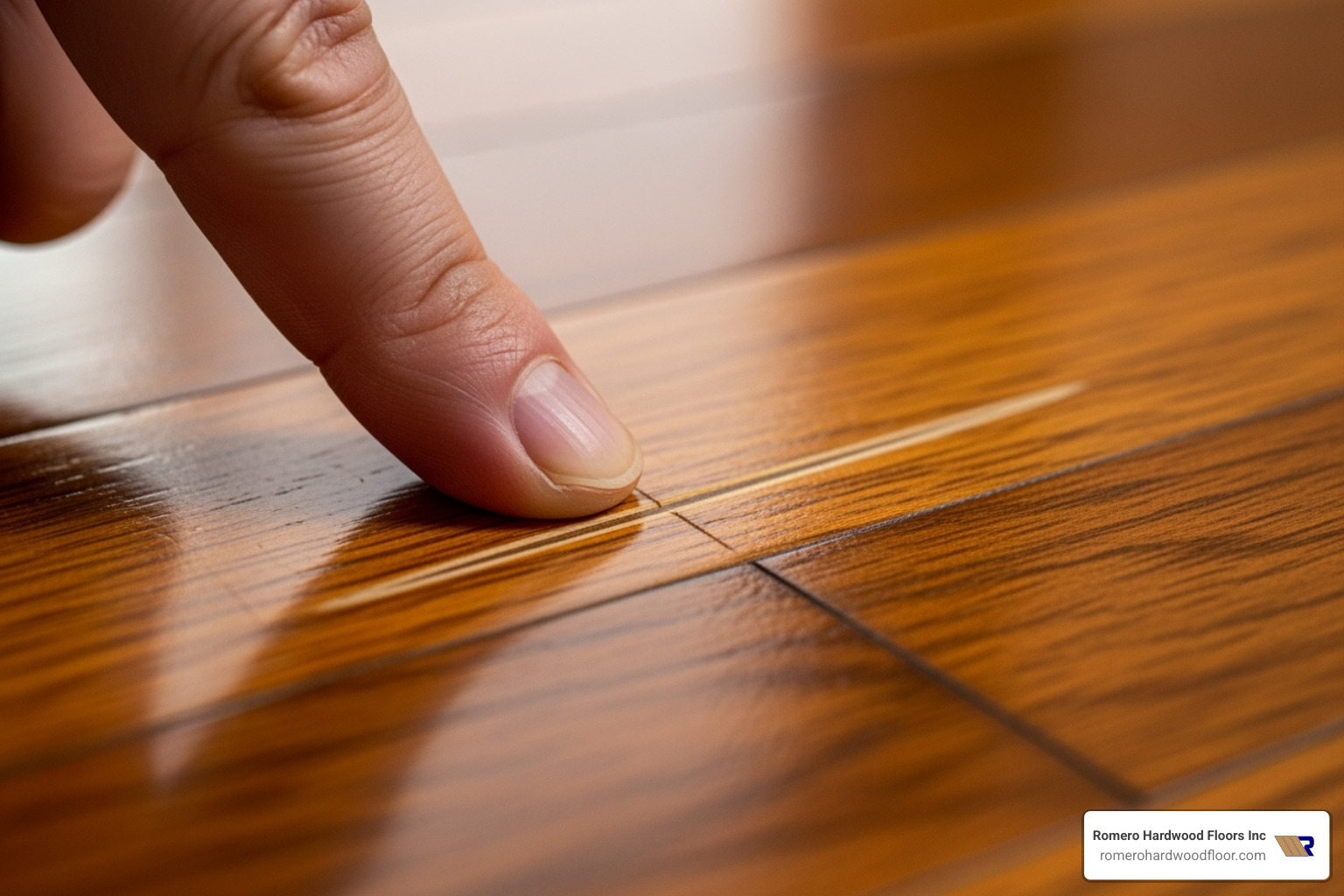
Correctly identifying the scratch type saves time and ensures you choose the right repair, from a quick fix to a more involved project. For more on serious damage, see our guide on hardwood floor gouge repair.
How to Identify Superficial Scratches
These are minor cosmetic scratches that only affect the top polyurethane finish, not the wood or stain below. They often look like a dull or cloudy line when light hits them, but there is no color change in the wood. The surface will feel smooth to the touch.
How to Identify Minor to Medium Scratches
These scratches have broken through the finish and may have lightly damaged the wood stain. Your fingernail will catch slightly when you run it across the mark. You’ll also see a slight color difference where the finish is gone. Common causes include pet claws, furniture scuffs, and daily wear.
How to Identify Deep Scratches and Gouges
Deep scratches and gouges are severe, penetrating through the finish and stain to expose the raw wood underneath. You will feel an obvious groove, and the exposed wood will be much lighter than the surrounding floor. You might even see splintered wood fibers. These are often caused by dropping heavy objects or dragging furniture. This type of damage, including a chip in wooden floor, requires a more intensive repair, but it is fixable.
Simple DIY Fixes for Superficial & Minor Scratches
Many common scratches can be fixed with inexpensive products or even items from your kitchen pantry. These DIY solutions are perfect for superficial scuffs and minor scratches that haven’t penetrated deep into the wood.
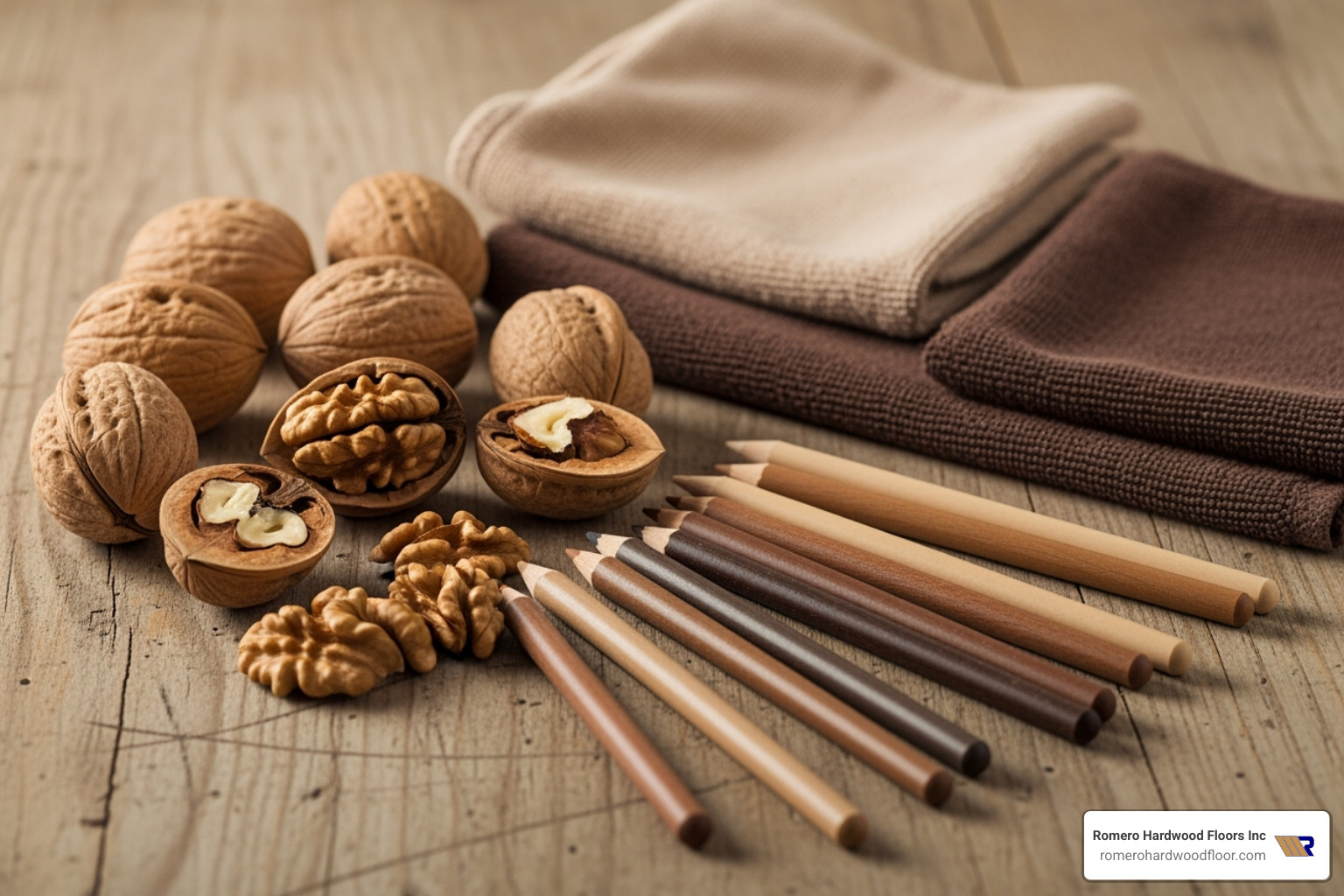
These methods are appealing because they are cost-effective, accessible, and require no special skills or tools.
Natural Remedies to Make Scratches Disappear
Natural remedies can be surprisingly effective, working by filling the scratch with oils or darkening the wood to blend with the finish.
- The Walnut Trick: For light scratches, crack open a fresh walnut and rub the meat directly over the scratch. The natural oils seep into the wood. Buff with a soft cloth, and the scratch often seems to disappear.
- Coconut Oil: Apply a thin layer of coconut oil to a superficial scratch and work it in with a soft cloth. The oil moisturizes the wood and helps the scratch fade, especially on darker floors.
- Vinegar and Olive Oil: Mix equal parts apple cider vinegar and olive oil. Dab the mixture onto minor scratches, let it sit for a day, then wipe clean and buff. The vinegar cleans while the oil moisturizes.
These oils work because they penetrate the wood fibers, helping to fill and darken the scratched area. Many homeowners find that these natural solutions can be very effective.
Using Touch-Up Products for a Quick Fix
For more reliable results, commercial touch-up products are designed specifically for scratch repair on minor scratches that have broken the finish.
- Blending Pencils: These are like crayons for your floor. Rub the pencil over the scratch to fill the void with colored wax, helping it blend in.
- Stain Markers: These contain actual wood stain and are great for coloring in scratches to match your floor’s shade. Apply to the scratch and quickly wipe away any excess to prevent over-darkening the surrounding area.
- Wax Sticks: These provide both filling and finishing power. Rub the stick over the scratch, then buff the area to smooth it out and restore shine.
The key to using these products is careful color matching. If an exact match isn’t available, choose a slightly lighter shade and build the color gradually. Always test in an inconspicuous area first. For more DIY tips, see our DIY guide to hardwood floor scratch repair.
How to Get Rid of Scratches on Hardwood Floors When They’re Deep
Deep scratches and gouges that expose raw wood require a more involved repair. Unlike superficial scuffs, this damage needs to be filled and rebuilt to match the surrounding floor. With the right approach, you can make these scratches disappear.
Step-by-Step Guide to Using Wood Filler and Stain
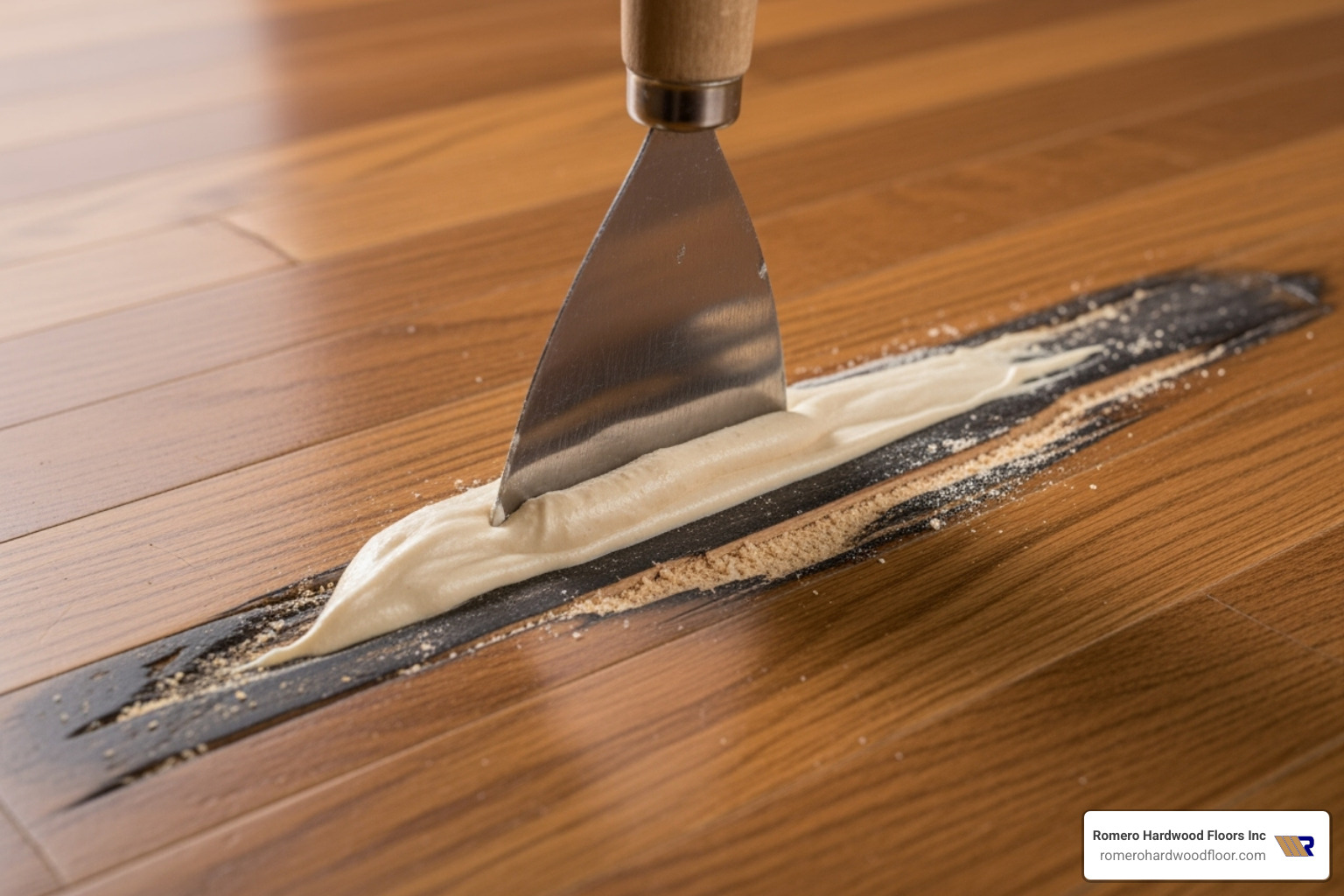
For deep grooves, wood filler is the best solution. It reconstructs the damaged area, creating a solid base that can be stained and sealed to blend in. You will need a putty knife, sandpaper (120 and 220-grit), clean cloths, matching wood stain, and polyurethane finish.
- Clean the Area: Vacuum any loose debris from the scratch. Wipe it with a damp cloth and let it dry completely.
- Apply Wood Filler: Press wood filler firmly into the scratch with a putty knife. Overfill slightly to account for shrinkage. Smooth the surface and wipe away any excess from the surrounding floor.
- Dry Completely: Allow the filler to dry according to the manufacturer’s instructions. This can take several hours.
- Sand Smooth: Start with 120-grit sandpaper to level the filler with the floor, always sanding with the wood grain. Finish with 220-grit sandpaper for a perfectly smooth surface. Clean away all dust.
- Apply Stain: Using a cloth or small brush, apply a matching wood stain to the repaired area. Work in light coats, wiping off excess, until the color matches your floor.
- Seal the Repair: Once the stain is dry, apply a thin layer of polyurethane with a small brush, feathering the edges to blend with the existing finish.
For more guidance, see our guide on hardwood floor putty repair.
For Widespread Damage: When to Consider Buffing or Refinishing
If your floor has widespread scratches, dullness, or wear, spot repairs may not be enough. In these cases, consider a full-floor solution.
Buffing and Recoating (Screening): This process lightly abrades the top finish layer to remove superficial scratches and dullness, followed by a fresh coat of polyurethane over the entire floor. It’s a great way to refresh a floor with light, scattered damage and restore its luster. However, buffing will not fix deep gouges or damage that has penetrated the wood.
Full Floor Refinishing: This is the ultimate solution for heavily damaged floors. The entire floor is sanded down to bare wood, removing all scratches, stains, and imperfections. After sanding, a new stain (optional) and multiple coats of protective finish are applied. Refinishing is ideal for floors with extensive deep scratches, gouges, or significant discoloration. Explore our insights on hardwood floor refinishing to learn more about this transformative process.
Prevention Is the Best Medicine: Keeping Your Floors Scratch-Free
While it’s useful to know how to get rid of scratches on hardwood floors, preventing them is the smarter approach. Protecting your floors is key to maintaining your home’s value, as well-maintained floors add considerable value to any home. A few simple, preventative habits can save you from costly repairs down the line.
Daily Habits and Protective Measures
Create barriers between your hardwood and potential sources of damage with these simple habits:
- Use Furniture Pads: Attach felt pads or glides to the bottom of all furniture legs, including chairs, tables, and sofas. Check and replace them periodically as they wear down.
- Place Area Rugs: Use rugs and runners in high-traffic areas like hallways, entryways, and under dining tables to absorb impact and trap grit.
- Implement a No-Shoes Policy: Outdoor shoes track in dirt, sand, and small stones that act like sandpaper on your floors.
- Trim Pet Nails: Keep your pets’ nails trimmed to prevent scratches from their daily activity. Provide scratching posts for cats.
- Lift, Don’t Drag: Always lift heavy furniture when moving it to avoid creating deep gouges.
Best Practices for Cleaning and Maintenance
Proper cleaning removes the tiny abrasive particles that cause scratches over time.
- Sweep or Vacuum Regularly: Use a soft-bristle broom, microfiber dust mop, or a vacuum with a soft brush attachment to remove dust and grit.
- Use pH-Neutral Cleaners: For deeper cleaning, use products specifically formulated for hardwood floors that won’t damage the protective finish.
- Avoid Harsh Products: Never use harsh chemicals, ammonia, oil soap, wax, silicone, or acetone (nail polish remover) on your floors, as they can strip the finish or leave a residue.
- Limit Water Exposure: Use a damp, not soaking, mop for cleaning and wipe up spills immediately. Avoid steam cleaners, as the excess moisture can cause wood to warp.
- Maintain Humidity: Keep indoor humidity levels between 30% and 50% to prevent the wood from cracking (too dry) or swelling (too humid).
DIY vs. Professional Repair: Making the Right Choice
Deciding whether to fix a scratch yourself or call a professional depends on your comfort with DIY projects, your available time, your budget, and the results you expect. Both approaches have their merits.
When Should You Call a Professional for Hardwood Floor Scratch Repair?
Some damage is best left to the experts to avoid making the problem worse. Consider calling a professional if you encounter:
- Widespread Damage: Numerous deep scratches, gouges, or wear patterns across multiple boards require specialized equipment for a uniform finish.
- Deep Gouges: While a single gouge can be a DIY project, multiple areas of exposed raw wood are vulnerable to moisture and need professional sealing.
- Water Damage: Any signs of buckling, cupping, or discoloration alongside scratches should be handled by a pro to prevent potential mold issues.
- Lack of Time or Tools: Deeper repairs can be time-consuming and require specific tools. A professional can handle the job efficiently.
- Desire for a Flawless Finish: For a truly seamless repair that is virtually invisible, professional expertise is best.
For more on advanced methods, see our page on professional hardwood floor repair techniques.
Understanding the Cost: How to Get Rid of Scratches on Hardwood Floors on a Budget
Cost is a major factor in deciding between DIY and professional repair. Here’s a general breakdown of what to expect.
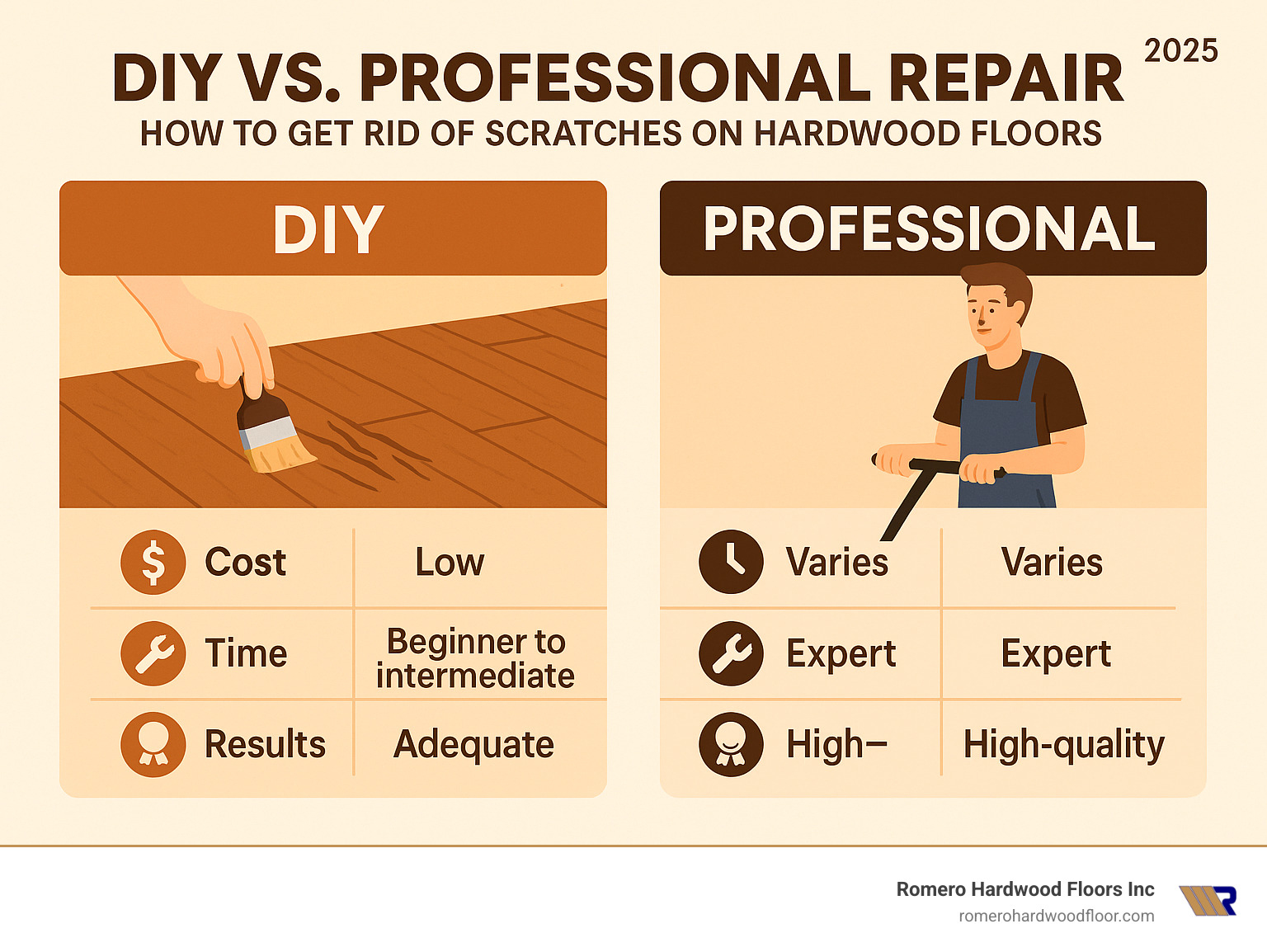
| Factor | DIY Repair | Professional Repair |
|---|---|---|
| Cost | Low ($10-$150) | Moderate to High ($100-$500+ for minor, $2-$8+ per sq. ft. for refinishing) |
| Time | Varies (hours to days, depending on severity) | Varies (hours for minor, days for full refinishing) |
| Skill Level | Beginner to Intermediate | Expert |
| Results | Good (for minor repairs), potentially visible | Excellent, seamless (especially for extensive damage) |
- DIY Repair Costs: Supplies like stain markers, wood filler, and sandpaper typically cost $10 to $150.
- Professional Repair Costs: For minor spot repairs, expect to pay between $100 and $500+. For full refinishing, costs generally range from $2 to $8+ per square foot.
Important Cost Disclaimer: These are average costs based on general internet data and not actual costs for Romero Hardwood Floors Inc. Every floor is unique. For an accurate estimate custom to your needs, please contact us directly. We offer competitive pricing and guaranteed workmanship.
Frequently Asked Questions about Fixing Floor Scratches
Here are answers to some of the most common questions about how to get rid of scratches on hardwood floors.
Can you really use a walnut to fix a scratch?
Yes, for light, superficial scratches, the walnut trick works surprisingly well. When you rub a fresh walnut on the scratch, its natural oils seep in, darkening the area and making the scratch less visible. However, this is a cosmetic fix, not a permanent repair. It won’t fix deep gouges or restore the protective finish, but it can effectively camouflage minor damage.
Will these methods work on engineered hardwood floors?
Mostly, yes. Natural remedies and touch-up products like stain markers are safe and effective for surface scratches on engineered hardwood. The main caution is with sanding. Engineered floors have a thin top layer of real wood. Aggressive sanding can wear through this layer, causing irreparable damage. For deep scratches on engineered floors, use wood filler and only gentle hand sanding, or consult a professional.
How do I perfectly match the stain for a scratch repair?
Achieving a perfect color match can be tricky, but these strategies will help:
- Test First: Always test your stain or marker in an inconspicuous area, like inside a closet or under furniture, to see how it looks when dry.
- Start Lighter: It’s easier to darken a repair than to lighten it. Choose a stain that’s slightly lighter than your floor and build the color in thin layers.
- Blend Colors: Don’t be afraid to blend multiple stain marker colors to mimic the natural variations in your wood grain. This can create a more authentic-looking repair.
For example, sometimes a slightly darker shade that blends with the wood’s natural grain works better than an exact match. Aim for a repair that is 95% invisible rather than absolute perfection.
Restore Your Floors to Their Former Glory
Learning how to get rid of scratches on hardwood floors is about preserving one of your home’s most valuable assets. From a simple walnut rub to a full refinish, there is a solution for every type of damage.
Remember these key takeaways:
- Assess First: Use the fingernail test to determine the scratch depth.
- Match the Method: Use simple DIY fixes for superficial scratches and more involved methods like wood filler for deep gouges.
- Prevent Future Damage: Simple habits like using furniture pads and a proper cleaning routine are your best defense.
While many repairs can be done yourself, some projects are best left to professionals. For widespread damage, deep gouges, or when you want a flawless, seamless finish, professional expertise makes all the difference.
At Romero Hardwood Floors Inc., we have been helping homeowners in Revere, MA, and surrounding areas restore their floors since 2006. We’ve perfected repair and refinishing processes for every type of scratch and are committed to competitive pricing, punctuality, and guaranteed workmanship.
Don’t let scratches diminish the beauty of your home. Contact us for a professional hardwood floor repair estimate today, and let us help you bring back that stunning, like-new appearance. For more information, visit Romero Hardwood Floors.
Like us on Facebook!
