
How to Stain and Varnish Hardwood Floors: 6 Flawless Steps
Open up the Beauty of Your Hardwood Floors
Learning how to stain and varnish hardwood floors can transform your home, breathing new life into worn surfaces and adding significant value. This rewarding DIY project improves the wood’s natural beauty and gives your space a fresh look.
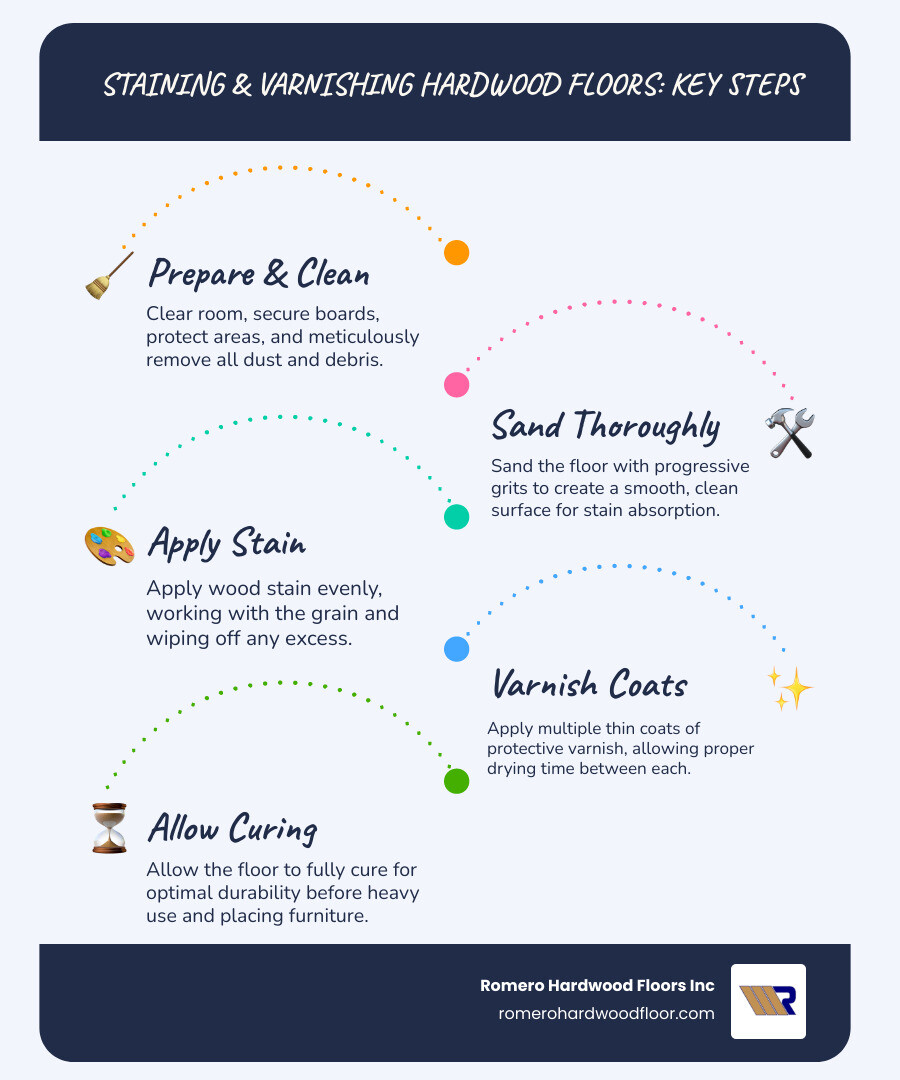
To stain and varnish hardwood floors, follow these essential steps:
- Preparation: Clear the room, secure loose boards, and protect surrounding areas.
- Sanding: Thoroughly sand the floor with progressive grits to create a smooth, clean surface.
- Cleaning: Carefully remove all dust and debris from the sanded floor.
- Staining: Apply wood stain evenly, working with the grain and wiping off excess.
- Varnishing: Apply multiple thin coats of a protective finish, allowing proper drying time between coats.
- Curing: Allow the floor to fully cure before heavy use and placing furniture.
This guide will walk you through each stage with confidence. I’m Francisco Romero, owner of Romero Hardwood Floors Inc. With over 15 years of experience, my team and I specialize in how to stain and varnish hardwood floors, ensuring beautiful, lasting results. Let’s get started.
Find more about how to stain and varnish hardwood floors:
Gearing Up: Essential Tools and Materials
Proper preparation is the first step toward a stunning, professional-quality finish. This section covers gathering your ingredients for a successful project.
Choosing Your Stain and Varnish
Selecting the right products is crucial for achieving your desired look.
- Oil-based stains penetrate deeply for a rich, classic color. Their slow drying time is forgiving for beginners but they have strong fumes and require longer to dry (24+ hours).
- Water-based stains dry quickly (2-4 hours), have low odor, and are easy to clean. They may not penetrate as deeply and can sometimes raise the wood grain.
- Gel stains are thick and sit on the wood’s surface, making them ideal for preventing blotchiness on woods like maple or pine.
After staining, you’ll need a protective topcoat. Polyurethane varnish is a top choice for its durability. Like stains, it comes in oil-based and water-based versions.
- Oil-based polyurethane offers excellent durability and gives floors a warm, amber glow over time.
- Water-based polyurethane dries quickly, has low odor, and provides a clear, non-yellowing finish.
Finally, choose your sheen:
- Satin: A popular choice with a soft glow that hides minor imperfections.
- Semi-gloss: Offers more shine for a touch of elegance.
- Gloss: A bold, highly reflective finish that shows dust and imperfections more easily.
Here’s a quick comparison:
| Type | Pros | Cons | Drying Time | Odor/VOCs | Best For |
|---|---|---|---|---|---|
| Oil-Based Stain | Rich, deep penetration; Longer working time; Improves wood grain. | Longer drying time (24+ hrs); Strong fumes; Harder cleanup. | 24+ hours | High | Achieving classic, rich wood tones; Beginners who need more working time; High-traffic areas where durability is key (when paired with appropriate finish). |
| Water-Based Stain | Faster drying (2-4 hrs); Low odor/VOCs; Easy cleanup; More eco-friendly. | Shorter working time; May raise wood grain; Less deep penetration; Can appear less rich on some woods. | 2-4 hours | Low | Quick projects; Homes with children or pets; Those sensitive to fumes; Achieving modern, cool tones; As a base for water-based polyurethane. |
| Gel Stain | Excellent for blotch-prone woods (maple, pine); More uniform color; Less messy application. | Sits on surface (less penetration); Limited color range compared to liquid stains; Can be harder to spread evenly on large areas. | Varies by product, often 8-24 hours | Moderate | Problematic wood species; Achieving a very uniform, opaque color; Smaller projects or intricate details where control is key. |
| Oil-Based Poly | Highly durable; Rich, ambering effect; Excellent scratch and abrasion resistance. | Longer drying/curing times; Strong fumes; Yellows over time; Harder to clean up. | 8-24 hours per coat | High | High-traffic areas; Achieving a warm, traditional look; Over oil-based stains for maximum compatibility and durability. |
| Water-Based Poly | Fast drying/recoat (3-4 hrs); Low odor/VOCs; Non-yellowing; Easy cleanup. | Less durable than oil-based in single coats (often requires more coats); Can be prone to bubbles if over-agitated. | 2-4 hours per coat | Low | Quick projects; Preserving natural wood color; Over water-based stains; For those sensitive to fumes; Where a clear, non-yellowing finish is desired. |
For more on selecting a topcoat, explore our guide on the More info about the best floor finish.
Gathering Your Supplies
Having all your supplies ready will make the project run smoothly. You will need:
- Sanding Equipment: Drum sander, floor edger, random orbital buffer, and sandpaper in multiple grits (e.g., 36, 60, 100, 220).
- Cleaning Supplies: A heavy-duty shop vac, tack cloths, Mineral Spirits, and clean rags.
- Application Tools: Your chosen wood stain and varnish, a stain applicator (lambswool or foam pad), quality paint brushes, paint trays, and stir sticks.
- Protection & Safety Gear: Plastic sheeting, painter’s tape, drop cloths, a respirator with VOC filters, safety glasses, disposable gloves, shoe covers, and knee pads.
The Foundation: Preparing and Sanding Your Floors
Thorough preparation is non-negotiable for a flawless finish. This phase involves clearing the space and creating a perfectly smooth surface that’s ready for stain.
Step 1: Room and Floor Preparation
First, create a clean, dust-free environment for your new finish.
- Empty the room of all furniture, rugs, and decor.
- Gently remove baseboards and shoe moldings, numbering them for easy reinstallation.
- Contain dust by sealing all vents, doorways, and other openings with plastic sheeting and painter’s tape.
- Inspect the floor. Hammer down any protruding nails and secure loose floorboards by screwing them into the subfloor.
- Finish by thoroughly sweeping and vacuuming the floor to remove all loose debris.
Step 2: The Correct Sanding Process
Sanding is the most crucial step for achieving an even, professional-looking stain, especially when changing the floor’s color. Improper sanding leads to a blotchy, uneven result. For a deep dive, see our guide on Hardwood Floor Sanding.
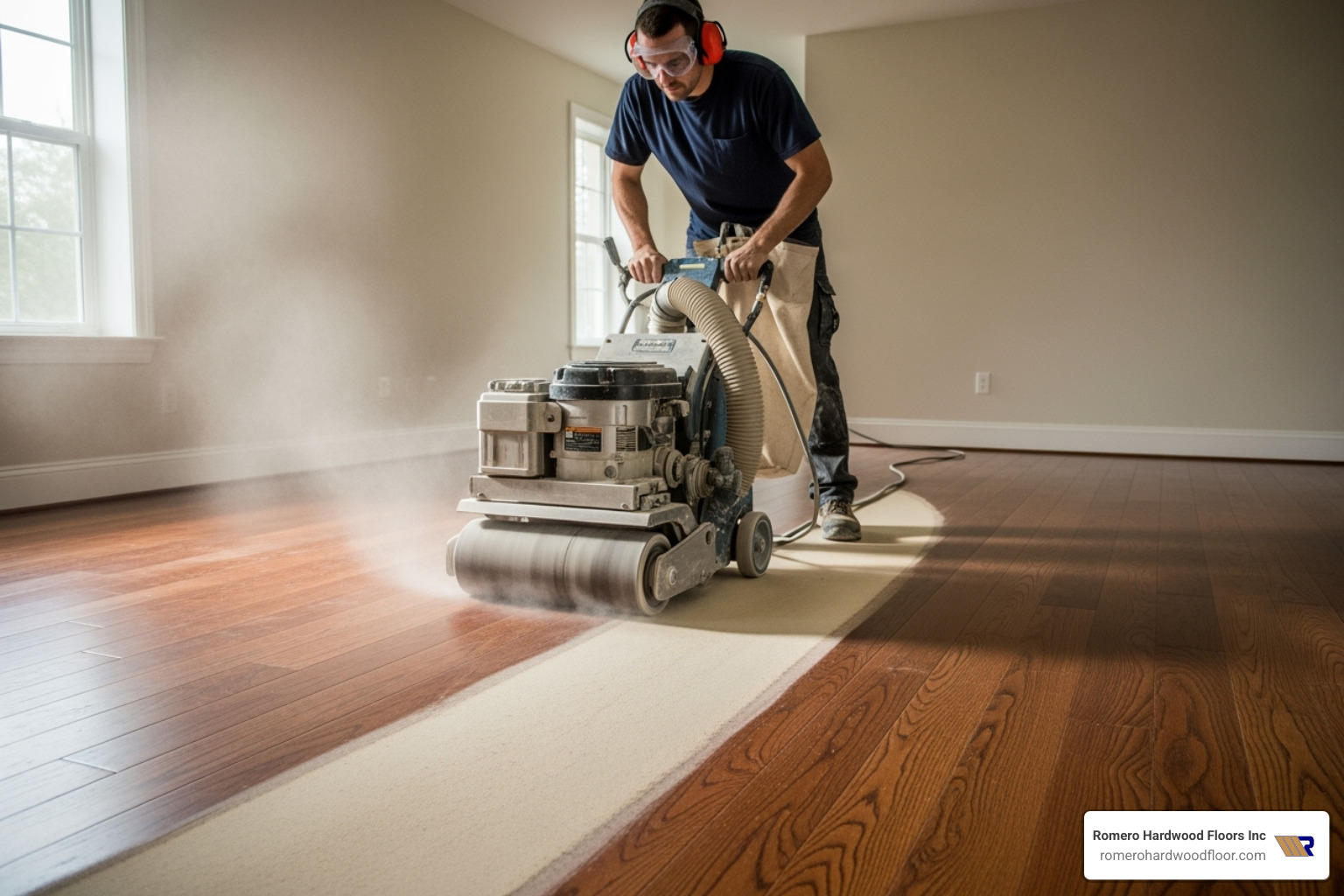
We recommend a three-pass sanding method with progressively finer grits. Always sand with the grain of the wood.
- First Pass (Coarse Grit: 36-40): Use a drum sander to remove the old finish and level the floor.
- Second Pass (Medium Grit: 60-80): This pass removes scratches from the first pass and further smooths the wood.
- Third Pass (Fine Grit: 100-120): This final pass prepares the wood for optimal stain absorption.
Use a floor edger with the same grit progression for areas near walls and in corners. For tight spots, a detail sander or hand-sanding may be necessary.
After sanding, consider screen sanding (buffing) with a fine-grit screen (120-150) on a random orbital buffer. This blends any inconsistencies and creates a perfectly smooth surface.
Finally, perform meticulous dust removal. Vacuum thoroughly after each sanding pass. Before staining, wipe the entire floor with tack cloths to pick up any remaining fine dust. A final wipe with mineral spirits on a clean rag (for oil-based products) ensures the surface is pristine.
The Main Event: How to Stain and Varnish Hardwood Floors
With a perfectly prepped surface, it’s time to add color and protection. Follow these steps carefully to achieve a beautiful and durable result.
Step 3: How to Properly Apply Wood Stain for an Even Color
Applying stain correctly is key to a rich, even color.
- Test your stain in a hidden area (like a closet) to ensure you like the color.
- Stir the stain gently but thoroughly. Do not shake, as this can create bubbles.
- Cut in the edges along baseboards and in corners with a brush.
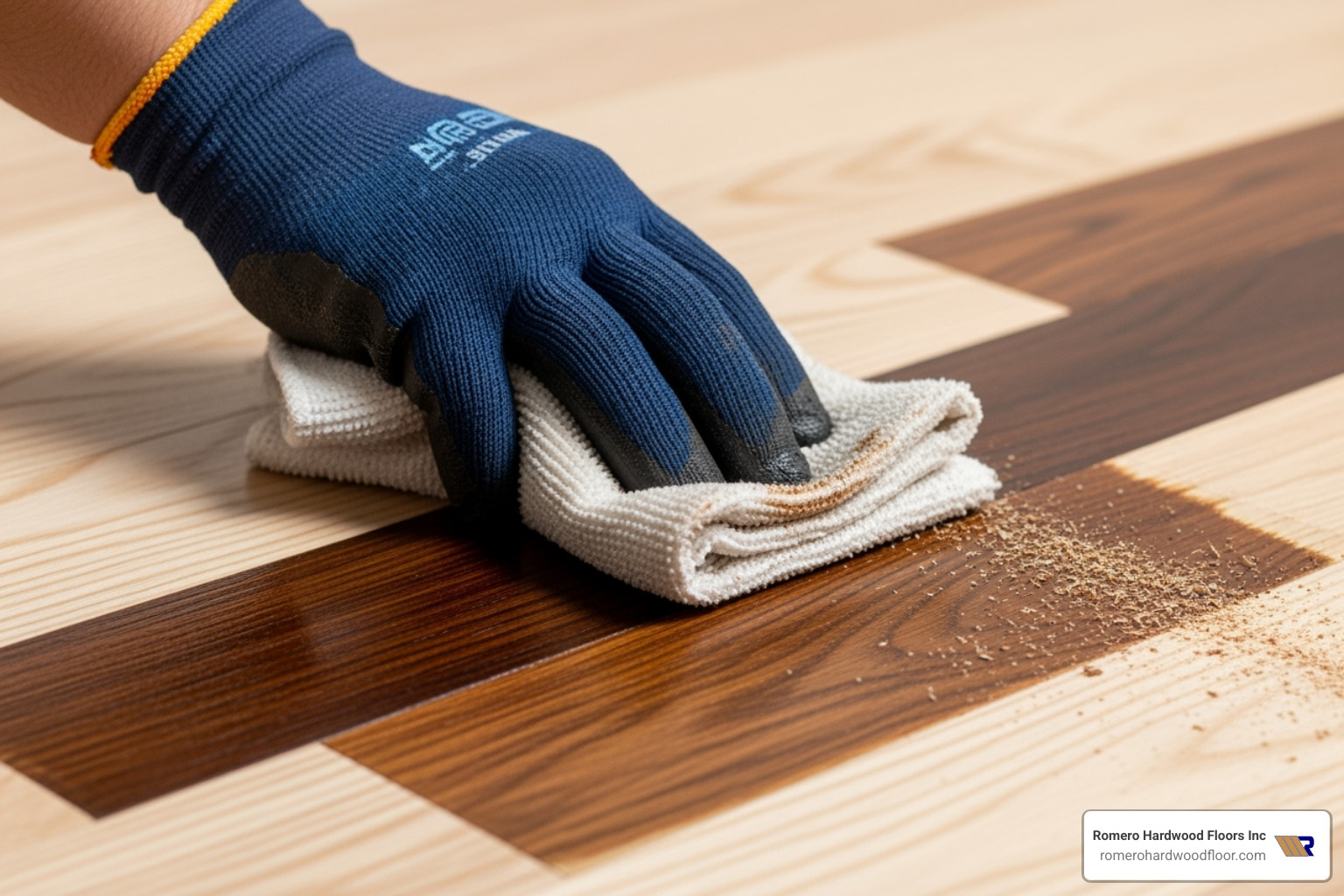
- Apply the stain in small, manageable sections (e.g., 4×4 feet) with an applicator pad, always moving with the wood grain.
- Maintain a “wet edge” by blending each new section into the previous wet one to avoid lap marks.
- Let the stain penetrate for 5-15 minutes (check product instructions), then wipe off the excess with a clean, lint-free rag. For a darker color, you can apply a second coat after the first is completely dry.
- For blotch-prone woods like maple or pine, consider “water-popping”—lightly misting the floor with distilled water and letting it dry before staining. This opens the wood pores for deeper, more even absorption. Oil-based polyurethane is not recommended over a water-popped floor.
Allow the stain to dry for at least 48-72 hours before applying varnish. This is crucial for proper adhesion of the topcoat.
Step 4: Best Practices for Applying Varnish (Polyurethane)
This step locks in the color and provides durable protection.

- Confirm you have your desired finish sheen (satin, semi-gloss, or high gloss). For more tips, see our guide on More info about finishing hardwood floors.
- Apply thin, even coats using a lambswool applicator, T-bar, or microfiber roller, always working with the grain.
- Start in the corner farthest from your exit and work your way out, maintaining a wet edge.
- Lightly sand between coats with a very fine-grit sandpaper (220-grit) after the previous coat is dry. This promotes adhesion and smooths imperfections.
- After sanding, vacuum and wipe with a tack cloth to remove all dust before the next coat.
- We recommend three coats of oil-based finish or four coats of water-based finish for optimal durability.
Step 5: Understanding Drying and Curing Times
Patience in this final stage is essential. Rushing can cause problems.
- Stain Dry Time: Allow 48-72 hours for the stain to fully cure before varnishing.
- Varnish Recoat Time: This varies by product. Water-based poly usually takes 3-4 hours, while oil-based poly needs 8-24 hours between coats. Always check the can.
- Light Foot Traffic: You can typically walk on the floor in socks after 24 hours.
- Furniture and Rugs: Wait at least 72 hours for furniture (use felt pads!) and a full 7 days for rugs.
- Full Cure Time: Most finishes take up to 30 days to reach maximum hardness. Be gentle with your floors during this period.
Factors like high humidity, low temperature, and poor ventilation can significantly slow drying and curing times.
Special Considerations and Aftercare
Certain woods require a unique approach, and all newly finished floors need proper care to maintain their beauty for years to come.
Staining Different Wood Species
Not all woods accept stain the same way. Understanding your floor’s species is key.
- Oak: Stains beautifully and evenly due to its pronounced grain, making it versatile for any color.
- Maple: Can be tricky to stain, often appearing blotchy. A pre-stain conditioner or gel stain is highly recommended. Often, maple looks best with a clear or lightly tinted finish.
- Cherry: Has a rich, reddish hue that darkens naturally over time. It takes stain well, but remember the color will continue to deepen with age.
- Pine: Prone to blotching due to its varying density. A pre-stain conditioner is essential for an even finish. Other woods like birch and fir also benefit from conditioning.
Essential Safety Precautions
Your safety is paramount when working with chemical products.
- Ventilation: Always work in a well-ventilated area. Open windows and use fans to exhaust fumes outdoors.
- Respiratory Protection: Wear a respirator with VOC filters. A standard dust mask is not sufficient protection against chemical fumes.
- Skin and Eye Protection: Wear safety glasses or goggles and disposable gloves. Long sleeves and pants are also recommended.
- Safe Rag Disposal: This is a critical fire safety step. Oil-soaked rags can spontaneously combust. Lay them flat in a single layer outdoors, away from structures, to dry completely until stiff. Once fully dry, they can be disposed of in a metal container with a lid. Never leave them in a wadded pile.
How to Maintain Your Newly Stained and Varnished Floors
Consistent maintenance will keep your floors looking their best for years.
- Sweep or vacuum regularly with a soft brush attachment to remove abrasive dirt and grit.
- Clean spills immediately with a clean, dry cloth to prevent damage.
- For deeper cleaning, use a damp mop with a pH-neutral cleaner made for hardwood floors. Never use a soaking wet mop, as excessive water can damage the wood and finish.
- Use felt pads on all furniture to prevent scratches and scuffs.
- Place mats at all entryways to trap dirt and moisture before they are tracked onto your floors.
Frequently Asked Questions about How to Stain and Varnish Hardwood Floors
Can you apply water-based polyurethane over an oil-based stain?
Yes, but it is critical that the oil-based stain is 100% cured first. You must wait a minimum of 48 to 72 hours, and potentially longer in humid or cool conditions. Applying a water-based finish too soon will cause adhesion failure, leading to peeling and discoloration. To be safe, always test in a small, inconspicuous area first.
How much does it cost to refinish hardwood floors?
The cost to stain and varnish hardwood floors varies based on whether it’s a DIY project or you hire professionals.
- DIY Cost: Expect to spend roughly $1.50 to $5.00 per square foot. This includes tool rentals, sandpaper, stain, and varnish.
- Professional Cost: Hiring a professional typically runs $4 to $15 per square foot or more. The final price depends on your floor’s condition, wood type, location, and product choices.
Please note, these are average costs based on internet data and do not reflect the pricing of any specific company. For an accurate quote for your project, it’s best to request an estimate from a local professional.
Can I stay in my house while the floors are being refinished?
We strongly recommend vacating your home during the project, especially when using products with high VOCs (Volatile Organic Compounds).
Sanding creates a massive amount of fine dust, and the fumes from stains and varnishes can be hazardous to your health. If leaving is not possible, you must seal off the work area completely with heavy-duty plastic sheeting and ensure robust, separate ventilation that exhausts fumes directly outside.
Even with precautions, expect significant disruption from dust, odors, and noise. For the health of your family and pets, arranging to stay elsewhere for a few days is the wisest choice.
Conclusion
Learning how to stain and varnish hardwood floors is a rewarding project that adds significant beauty and value to your home. It requires patience and attention to detail, but the result is a stunning change you can be proud of.
While a DIY approach is fulfilling, sometimes a project is too large to tackle alone, or you may prefer a guaranteed professional result. If you’re in the Revere, MA area – or nearby towns like Beverly, Chelsea, Danvers, East Boston, Gloucester, Lynnfield, Malden, Manchester by the Sea, Marblehead, Medford, Melrose, Nahant, Peabody, Reading, Rockport, Salem, Saugus, Somerville, Stoneham, Swampscott, Wakefield, Winchester, Winthrop, and Woburn – we’re here to help!
The expert team at Romero Hardwood Floors Inc. has over 15 years of dedicated experience. We live and breathe hardwood floors, and we’re ready to make yours shine with a flawless finish you’ll love for years to come.
To explore professional options and ensure your floors are finished to perfection, learn more about our hardwood floor refinishing services. We’re always happy to help you achieve the floor of your dreams!
Like us on Facebook!
