
Is Hardwood Flooring Eco Friendly? Top 3 Benefits 2025

Is hardwood flooring eco friendly? Absolutely, hardwood flooring represents a sustainable and environmentally conscious choice for many homeowners. Here’s why:
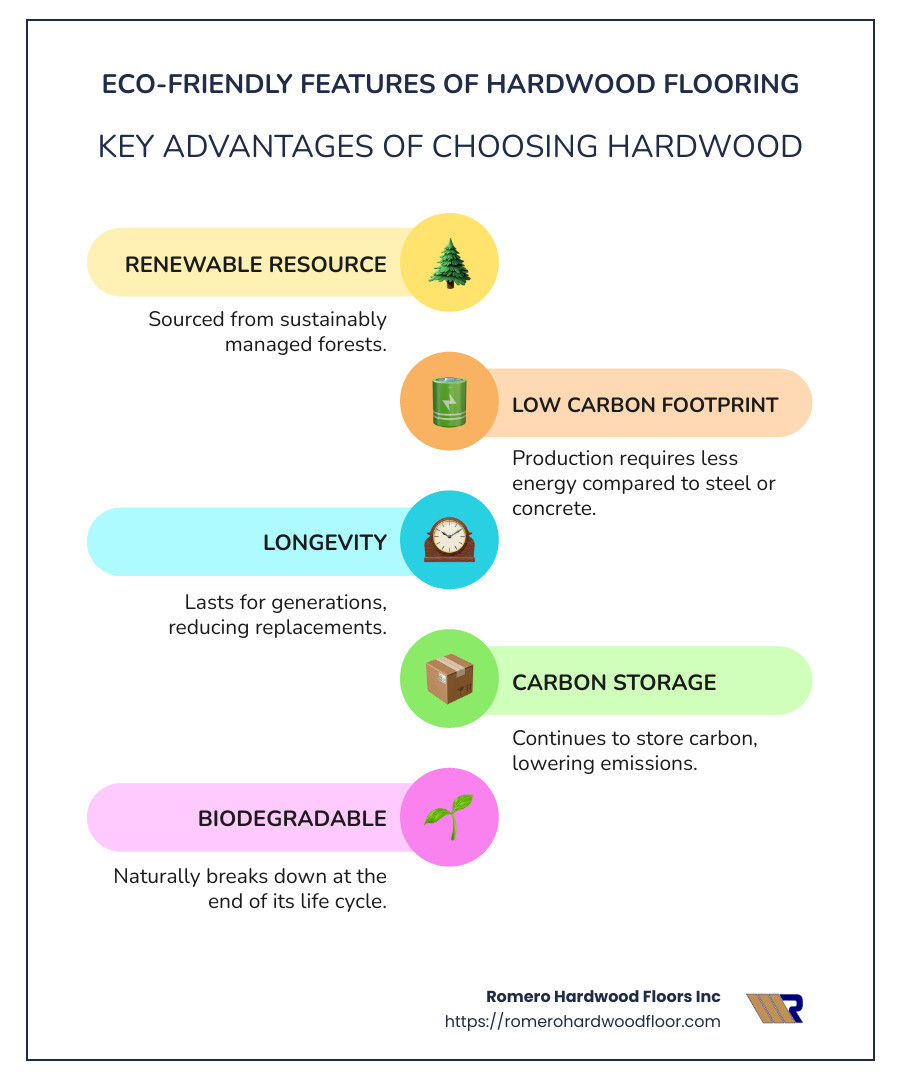
- Renewable Resource: Hardwood is sourced from trees, a renewable source if managed sustainably.
- Low Carbon Footprint: Its production requires less energy, resulting in fewer carbon emissions compared to alternatives like steel or concrete.
- Longevity: Properly maintained hardwood floors can last for generations, reducing the need for frequent replacements.
- Carbon Storage: Wood continues to store carbon throughout its life, even after being made into flooring.
- Biodegradable: At the end of its life cycle, wood is naturally biodegradable.
When considering sustainability, wood stands out. According to Rene Castro-Salazar, FAO assistant director-general for forestry, responsibly produced wood products replace more CO2-intensive materials, proving it’s a better environmental choice.
My name is Francisco Romero, owner of Romero Hardwood Floors Inc., with over 15 years of experience in hardwood flooring installation. I am committed to offering eco-friendly solutions by emphasizing sustainable sourcing and practices in our projects, constantly addressing the query is hardwood flooring eco friendly.
Essential is hardwood flooring eco friendly terms:
– eco friendly wood flooring
– most eco friendly wood flooring
– sustainable wood flooring
Is Hardwood Flooring Eco Friendly?
Hardwood flooring isn’t just a beautiful addition to your home; it’s also a green choice. Here’s what makes it environmentally friendly:
Environmental Benefits of Hardwood
- Renewable Resource: Hardwood comes from trees, which are a renewable resource. With sustainable forest management, more trees are planted than harvested, ensuring a continuous supply without depleting natural resources. In the U.S., there is nearly twice as much new wood growth compared to the amount harvested.
- Carbon Neutral: Wood products, including flooring, continue to store carbon even after installation. This helps offset the carbon footprint associated with their production. The U.N. Food and Agriculture Organization (FAO) highlights that wood furniture and flooring store carbon for years, balancing out the emissions from their creation.
- Low Energy Production: Compared to materials like concrete and steel, producing hardwood flooring requires significantly less energy. This results in a carbon footprint that is 75% less than that of concrete or steel.
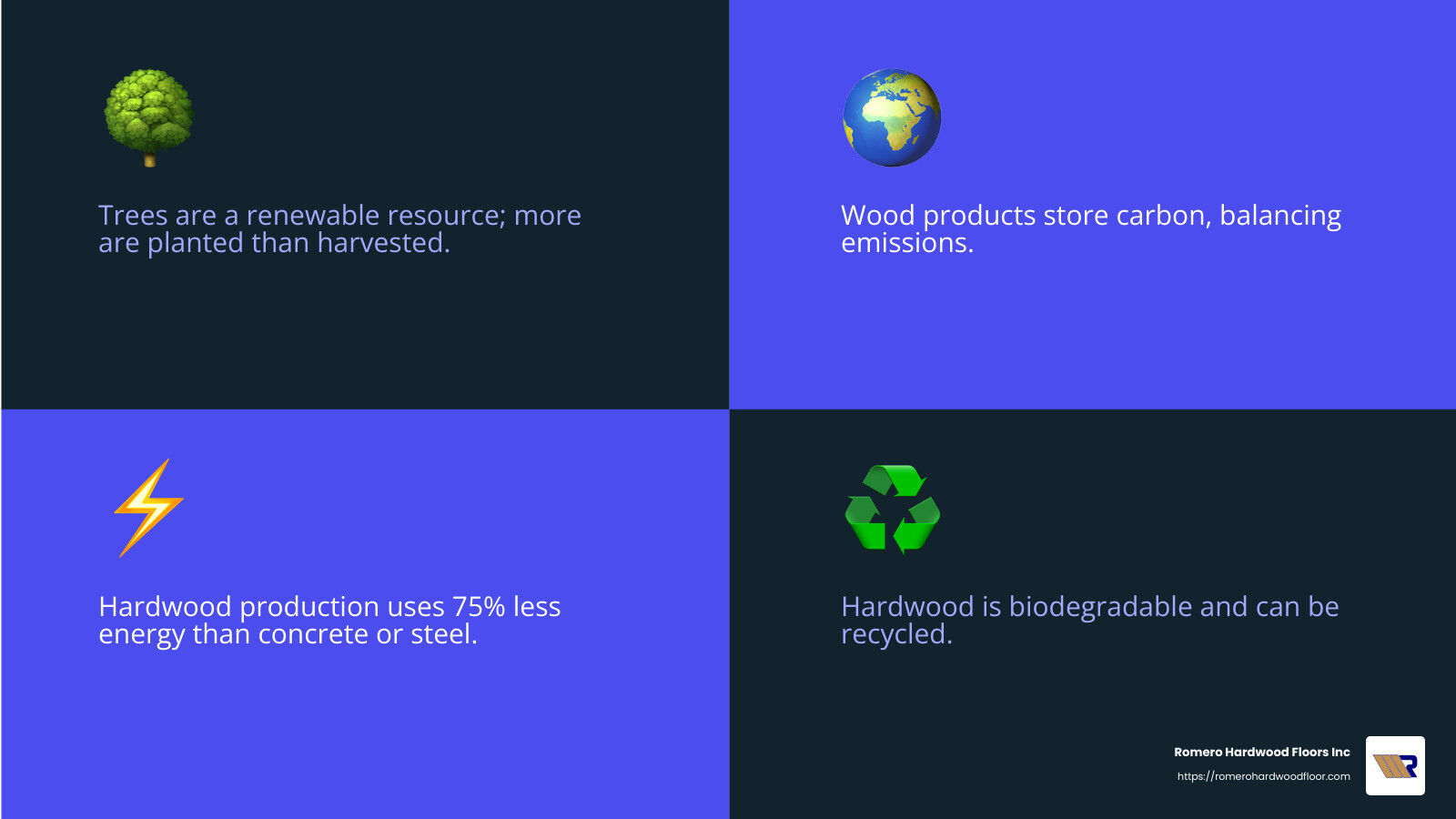
- Biodegradable and Recyclable: At the end of its life, hardwood is biodegradable, meaning it breaks down naturally without harming the environment. Additionally, wood scraps can be recycled into new products, reducing waste and promoting a circular economy.
Sustainable Harvesting Practices
- Replenished Forests: Companies like Romero Hardwood Floors Inc. are committed to sustainable harvesting practices. This means selecting only the strongest logs and replanting trees to replace those that are cut down. As a result, forests are maintained and even expanded over time.
- Government Regulations and FSC Certification: Sustainable forestry is often guided by government regulations and certifications like the Forest Stewardship Council (FSC). The FSC ensures that wood is sourced responsibly, promoting reforestation and wildlife protection. This certification is a benchmark for eco-friendly practices, ensuring that your hardwood floor is both beautiful and ethically sourced.
By choosing hardwood flooring, you are opting for a product that not only improves your home’s aesthetic but also supports environmental sustainability. From its renewable nature to its low energy production and recyclability, hardwood flooring exemplifies a responsible choice for eco-conscious homeowners.
Alternatives to Traditional Hardwood
While hardwood flooring is a sustainable choice, there are other eco-friendly options for those looking to diversify their flooring materials. Reclaimed wood is a fantastic alternative that offers unique environmental benefits and aesthetic qualities.
Reclaimed Wood
Reclaimed wood is an excellent choice for those wanting a mix of sustainability and historical charm:
- Eco-Conscious: By using reclaimed wood, you’re giving new life to materials that might otherwise be discarded. This reduces the demand for new lumber and minimizes waste.
- Historical Charm: Reclaimed wood often comes from old barns, factories, or even riverbeds. Each piece carries a unique history and character, adding a distinct and timeless appeal to your home.
- Recycling and Sustainability: The use of reclaimed wood promotes recycling and reduces the need for new trees to be cut down. It supports a circular economy, where materials are reused and repurposed, further minimizing environmental impact.
Choosing alternatives like reclaimed wood not only enriches your home’s aesthetic but also aligns with sustainable living practices. These materials offer innovative solutions for eco-conscious homeowners seeking to reduce their environmental footprint while maintaining style and durability.
Longevity and Durability of Hardwood
When considering flooring options, hardwood stands out for its exceptional longevity and durability. Unlike many other materials, hardwood floors can last well over 100 years with proper care. This long lifespan means fewer replacements and less waste over time, making hardwood a sustainable choice for homeowners.
Comparing Lifespan with Other Materials
1. Hardwood vs. Carpet and Linoleum
- Carpet typically has a lifespan of 8 to 10 years. It wears out quickly, especially in high-traffic areas, and often ends up in landfills. Linoleum fares slightly better, with a lifespan of 15 to 25 years, but it still pales in comparison to hardwood.
- Hardwood floors, on the other hand, can be refinished multiple times. This not only extends their lifespan but also refreshes their appearance, eliminating the need for replacement. This ability to refinish adds decades to their usability, making them a more sustainable option.
2. Hardwood vs. Stone and Tile
- Stone and tile are known for their durability and can last upwards of 100 years. However, these materials are prone to cracking and staining. Once damaged, they can’t be refinished like hardwood, often requiring costly replacements.
- Hardwood is not only durable but also forgiving. Scratches and dents can be sanded out, and floors can be restained to match changing design preferences. This adaptability contributes to their long lifespan and reduces the need for new materials.
Minimal Waste in Hardwood Production
The production of hardwood flooring is remarkably efficient. Manufacturers use nearly 99% of each tree, repurposing wood chips and sawdust into paper and composite products. This approach minimizes waste and maximizes resource use.
- Energy Efficiency: Producing wood flooring requires less energy compared to carpet, linoleum, or tile. This lower energy consumption further reduces the environmental impact.
- Sustainable Practices: Hardwood floors are often made from FSC-certified wood, ensuring they come from responsibly managed forests. This certification guarantees sustainable harvesting practices, supporting long-term forest health.
In conclusion, the long lifespan and refinishing ability of hardwood make it an eco-friendly choice. It stands out against other materials like carpet, linoleum, stone, and tile, which either wear out quickly or can’t be restored once damaged. By choosing hardwood, you’re investing in a durable, sustainable flooring solution that reduces waste and supports environmental conservation.
Next, we will explore some common questions about the sustainability of hardwood flooring and how it impacts indoor air quality.
Frequently Asked Questions about Eco-Friendly Hardwood
Is hardwood flooring sustainable for future generations?
Yes, hardwood flooring is sustainable for future generations if sourced responsibly. Hardwood is a renewable resource. American hardwood forests are growing more trees than they harvest, ensuring a constant supply. According to research, there is nearly twice as much new wood growth as there is wood removed during harvest in these forests.
Sustainable harvesting practices, such as those certified by the Forest Stewardship Council (FSC), ensure that wood comes from responsibly managed forests. These practices help maintain biodiversity, protect ecosystems, and support the livelihoods of local communities.
What makes hardwood flooring a low environmental impact choice?
Hardwood flooring is considered a low environmental impact choice for several reasons:
- Low Energy Production: The production of hardwood flooring requires significantly less energy compared to materials like concrete or steel. This results in a carbon footprint that is 75% less than these other materials.
- Carbon Neutral: Trees absorb carbon dioxide as they grow, and this carbon remains stored in the wood even after it is harvested and used in products like flooring. This means hardwood flooring can be considered a carbon-neutral product.
- Recyclability: Hardwood is biodegradable and can be recycled into other products, further reducing its environmental impact.
How does hardwood flooring improve indoor air quality?
Hardwood flooring can significantly improve indoor air quality. It is hypoallergenic, meaning it does not trap dust, pollen, or other allergens like carpet does. This makes it an excellent choice for people with allergies or respiratory issues.
Moreover, hardwood flooring has low emissions. It does not emit volatile organic compounds (VOCs) that can harm indoor air quality. In fact, the Environment Protection Agency states that wood flooring can actually improve indoor air quality.
In summary, hardwood flooring is a sustainable and eco-friendly choice. Its renewable nature, low environmental impact, and ability to improve indoor air quality make it an ideal option for environmentally conscious homeowners.
Next, we will dig into some alternatives to traditional hardwood flooring, such as bamboo and cork, and explore their environmental benefits.
Conclusion
At Romero Hardwood Floors Inc, we believe in providing flooring solutions that are not only beautiful but also kind to our planet. Is hardwood flooring eco friendly? Absolutely, when sourced and installed responsibly.
Our commitment to sustainability is evident in every aspect of our work. From selecting FSC-certified wood to employing methods that minimize waste, we ensure that our hardwood flooring options are a truly eco-friendly choice. Our dedication to sustainable flooring practices means you can enjoy the natural beauty of hardwood without compromising the environment.
Choosing hardwood flooring from Romero Hardwood Floors Inc means investing in a product that is both durable and environmentally responsible. Hardwood is a renewable resource with a low carbon footprint, and it can last for decades with proper care, reducing the need for frequent replacements.
We take pride in offering sustainable flooring solutions that improve the aesthetic and value of your home while supporting the health of our planet. If you’re considering hardwood flooring, we invite you to explore our range of eco-friendly options that align with your values and lifestyle.
For more information and to see how we can help you make a sustainable choice, visit our Eco-Friendly Hardwood Flooring page. Let’s work together to create a beautiful and sustainable future, one floor at a time.
