
Laminate flooring color choices: 7 Powerful Picks for 2025
Why Laminate Flooring Color Choices Shape Your Home’s Entire Feel
Laminate flooring color choices can make or break your space—and with over 60% of homeowners choosing wood-look finishes, picking the right shade affects everything from room size perception to resale value.
Quick Color Selection Guide:
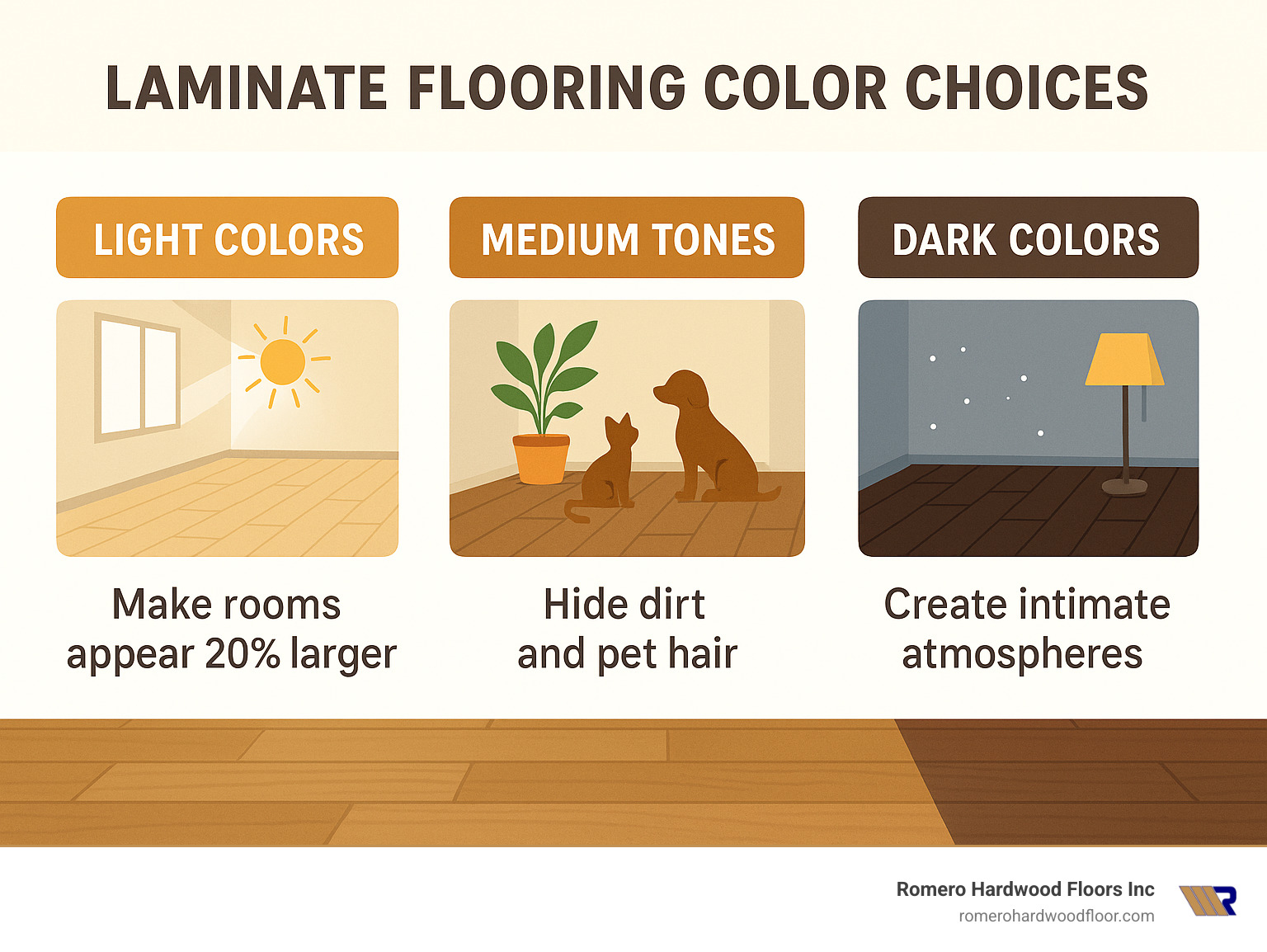
– Light colors (white oak, honey blonde) – Make small rooms feel 20% larger, show dirt easily
– Medium tones (greige, natural oak) – Hide pet hair and dust best, most versatile
– Dark colors (walnut, charcoal) – Create cozy atmosphere, require more light, show scratches
– Gray tones – Still popular but declining; brown and natural wood lead 2025 trends
– Waterproof options – Essential for kitchens/bathrooms, available in all color families
Gray and brown dominate approximately 30% of laminate sales, but warm neutrals and nature-inspired tones are taking over in 2025. Light-colored floors can visually expand spaces by up to 20%, while medium tones offer the sweet spot for busy households with children or pets.
As Francisco Romero, owner of Romero Hardwood Floors Inc. with over 15 years of flooring experience in Revere, MA, I’ve guided countless clients through laminate flooring color choices that transform their spaces. My expertise helps homeowners avoid costly mistakes by matching colors to their specific room conditions and long-term goals.
Laminate flooring color choices basics:
– Laminate floor design ideas
– Laminate floor installation tips
– Laminate floor repair specialists
How Color Alters Space: Room Size & Lighting
Laminate flooring color choices can literally change how big your rooms feel. I’ve watched clients walk into the same space after installation and swear the room grew by several feet—all because we chose the right shade.

Light-colored floors work like magic mirrors. They bounce natural light around your room, creating visual expansion up to 20% larger—perfect for cozy Boston-area homes where every square foot counts. Whitewashed oak or honey blonde laminate can transform a cramped bedroom into what feels like a spacious retreat.
Dark floors tell a different story. They absorb light instead of reflecting it, creating intimate, cozy feelings. If you have a large living room with big windows, dark walnut or charcoal laminate makes the space feel more welcoming. But in small, dimly lit rooms, you’ll feel like you’re living in a cave.
Window direction makes a huge difference. North-facing rooms get cooler, softer light that can make spaces feel chilly. I recommend warmer floor tones like natural oak for these rooms. South-facing rooms get intense, warm sunlight that can handle cooler gray tones without feeling cold.
Your artificial lighting matters just as much. Warm LED bulbs make natural wood laminates look rich and inviting. Cool white bulbs complement modern gray finishes but can make warm wood tones look muddy.
Open-concept homes benefit from light floors that create seamless flow, making your entire main level feel connected and spacious. You can use the same light or medium-tone laminate throughout to maintain that airy feeling.
For more inspiration on how different colors work in various layouts, check out our laminate floor design ideas.
Lighting Checklist for Sampling
Before you commit to any laminate flooring color choices, test samples in your actual space:
Test samples during daylight hours first. Place them near your biggest window mid-morning when natural light is strongest. Does the color make your room feel brighter and more open?
Evening testing is equally important. View those same samples under your regular artificial lighting after sunset. You might be shocked how dramatically the color changes.
Consider your window direction. North-facing rooms need warmer floor colors to compensate for cooler natural light. South-facing spaces can handle almost any color.
I always tell clients to live with samples for at least 48 hours. Your floors will be part of your daily life for decades—make sure you love them in every lighting condition.
Laminate flooring color choices: The 3-Step Selection Framework
After helping hundreds of homeowners in the Greater Boston area steer their flooring decisions, I’ve learned that the biggest challenge isn’t finding beautiful colors—it’s choosing the right one for your specific situation. That’s why we developed this straightforward framework that takes the guesswork out of laminate flooring color choices.
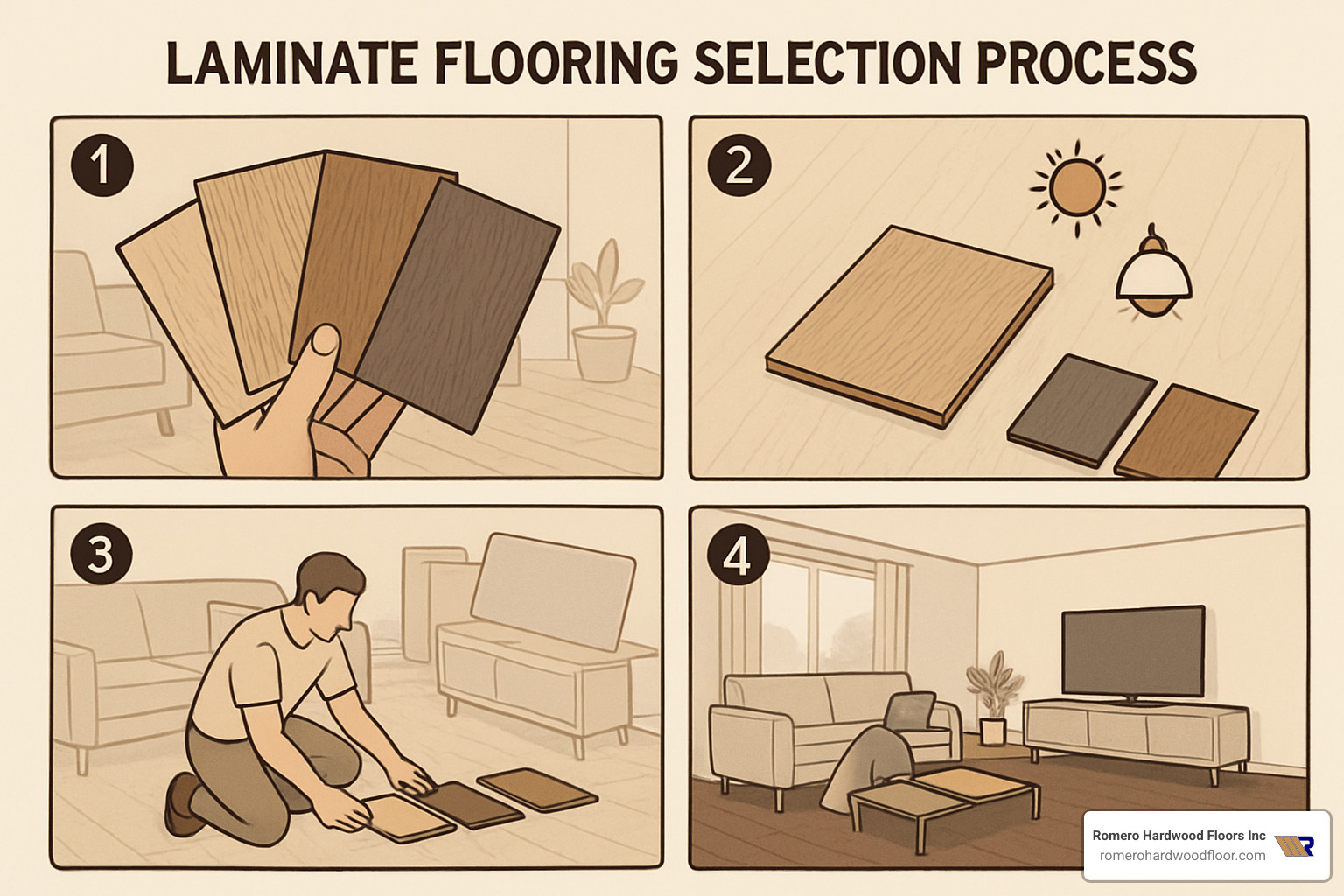
Think of this as your decision roadmap. Instead of feeling overwhelmed by endless options, you’ll work through three focused steps that build on each other. By the end, you’ll have a clear shortlist and confidence in your choice.
This framework prevents you from falling in love with a gorgeous color that won’t work in your home. This systematic approach keeps you grounded in what actually matters for your space.
For the technical side of bringing your color choice to life, our Laminate Floor Installation Tips guide covers everything you need to know about the installation process.
Step 1 – Match Architecture & Room Function
Your home’s bones tell you what colors will work best. High ceilings give you permission to go bold with rich walnut or dramatic charcoal floors. But with standard 8-foot ceilings like most Boston-area homes, lighter tones will keep your rooms feeling open and airy.
Traffic level is where practicality meets beauty. High-traffic zones need colors that hide the evidence—think natural oak with varied grain patterns or medium greige that camouflages scuff marks. Save pristine white oak for peaceful bedrooms where it won’t get beaten up.
Don’t let moisture concerns scare you away from colors you love. Modern waterproof laminate cores come in every shade imaginable. Your kitchen can have that beautiful honey blonde look, as long as you choose the right product.
Step 2 – Sync With Decor & Palette
This is where your laminate flooring color choices either sing in harmony with your space or create visual chaos. Start by looking at what you already have—your wall colors, kitchen cabinets, and that big sectional sofa you’re not replacing anytime soon.
Undertone harmony is your secret weapon. If your walls have warm undertones (subtle yellow, peach, or red hints), they’ll love honey oak, natural walnut, or warm greige floors. Cool undertones in your paint (blue, green, or gray hints) pair beautifully with whitewashed finishes or contemporary charcoal options.
Notice your metal finishes. Brass cabinet pulls, gold light fixtures, and copper accents want warm floor tones. Chrome faucets, brushed nickel hardware, and stainless appliances vote for cooler floor colors.
The contrast strategy can make or break your design. If your walls and furniture are mostly neutral, a rich floor color becomes a stunning focal point. But if you love bold wall colors or dramatic furniture, a neutral floor provides the perfect calm foundation.
Step 3 – Fit Lifestyle & Maintenance Goals
How you actually live in your space should drive your laminate flooring color choices more than any design magazine photo.
Pet owners consistently tell us that medium-toned floors are lifesavers. Natural oak and greige hide dog hair, muddy paw prints, and pet messes. Light floors show every single pet hair, while dark floors turn your space into a daily cleaning marathon.
Families with kids face different challenges. Crayon marks, juice spills, and toy scratches are part of the territory. Medium tones prove their worth by camouflaging the evidence of family life.
Your cleaning routine matters more than you might think. If you enjoy daily tidying and don’t mind seeing every speck of dust, light floors give you that fresh, spa-like feeling. But if you’re more of a “clean thoroughly once a week” person, darker floors will show every dust bunny between cleanings.
The medium tones sweet spot exists for good reason. Colors like natural oak, warm greige, and light walnut give you visual interest while being forgiving about daily life’s inevitable messes.
Trend Watch 2025 & Timeless Palettes
The flooring world is experiencing a major shift right now! After a decade of gray dominating everything, we’re seeing homeowners accept warm neutrals and nature-inspired tones that feel more authentic and welcoming.
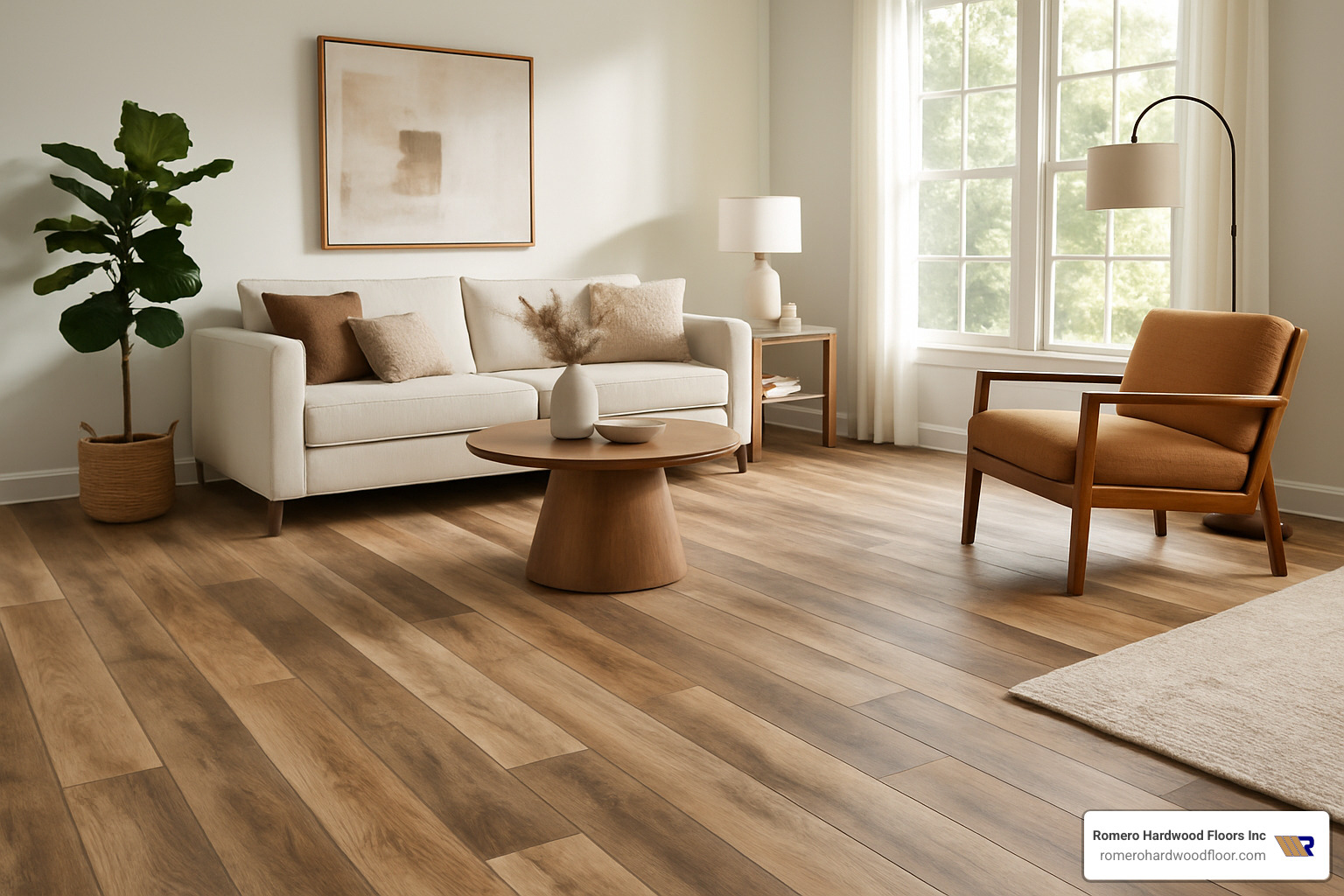
Greige has become the reigning champion of laminate flooring color choices, blending the sophistication of gray with the warmth of beige. This color works beautifully whether you’re decorating a colonial in Salem or a modern condo in Boston.
Honey blonde tones are having a major moment too. These warm, golden shades bring sunshine into New England homes, especially during our long winters. They’re particularly popular with families who want floors that feel cheerful and inviting.
The technology behind today’s laminate is amazing. High-variation planks now mimic real hardwood so well that guests often can’t tell the difference. Wide boards continue gaining popularity—planks that are 8 inches or wider make rooms look larger and create fewer seam lines.
Waterproof cores have changed the game completely. This technology means you can use your dream color in kitchens, bathrooms, and basements without worry. Sales have jumped over 25% as homeowners realize they don’t have to compromise on style for moisture protection.
More homeowners are thinking about sustainability and asking, “Will I still love this in ten years?” This shift toward longevity over trends is refreshing—and better for both your wallet and the environment.
Resale value remains key in our competitive Greater Boston market. Neutral tones in natural wood families consistently appeal to the widest range of buyers, making them safer investments if you’re planning to sell within the next decade.
For broader design inspiration that complements flooring choices, Houzz design insights offers valuable perspective on how different colors work with overall home aesthetics.
Emerging 2025 Laminate flooring color choices
Nature-inspired colors are absolutely dominating 2025 trends. After years of cold grays, people are craving colors that feel connected to the outdoors.
Earthy browns are making a sophisticated comeback. These new versions have subtle gray undertones that feel contemporary and refined—think mushroom and taupe rather than traditional brown.
Coastal whitewashed finishes appeal to homeowners who love that beachy, Scandinavian vibe. These work particularly well in Cape Cod-style homes throughout our region.
Bold black floors are making statements in high-end homes. Charcoal and ebony laminates create stunning contrast with white walls and light furnishings. However, they need abundant natural light and daily cleaning to look their best.
Evergreen Classics That Outlive Fads
While trends come and go, some laminate flooring color choices have proven their staying power across multiple design cycles.
Natural oak remains our most popular choice. Its balanced tone works beautifully with both warm and cool color schemes. Whether you’re decorating with traditional furniture or modern pieces, natural oak provides the perfect foundation.
Dark walnut offers timeless elegance for homeowners who prefer dramatic floors. This rich, chocolate-brown color creates sophistication in formal dining rooms, home libraries, and master bedrooms.
Light maple provides that clean, contemporary look without the stark appearance of pure white floors. Its subtle grain and warm undertones work beautifully in kitchens and bathrooms.
Balanced taupe represents the perfect middle ground—not too light, not too dark, with neutral undertones that complement any color scheme. This choice gives you maximum flexibility for changing your decor over the years.
These classic colors have survived multiple design cycles because they focus on natural wood tones rather than following fashion trends.
Light vs. Medium vs. Dark: Pros, Cons & Care
When it comes to laminate flooring color choices, understanding how different shades perform in real life makes all the difference. After installing hundreds of floors across the Greater Boston area, I’ve seen how color impacts both daily living and long-term satisfaction.
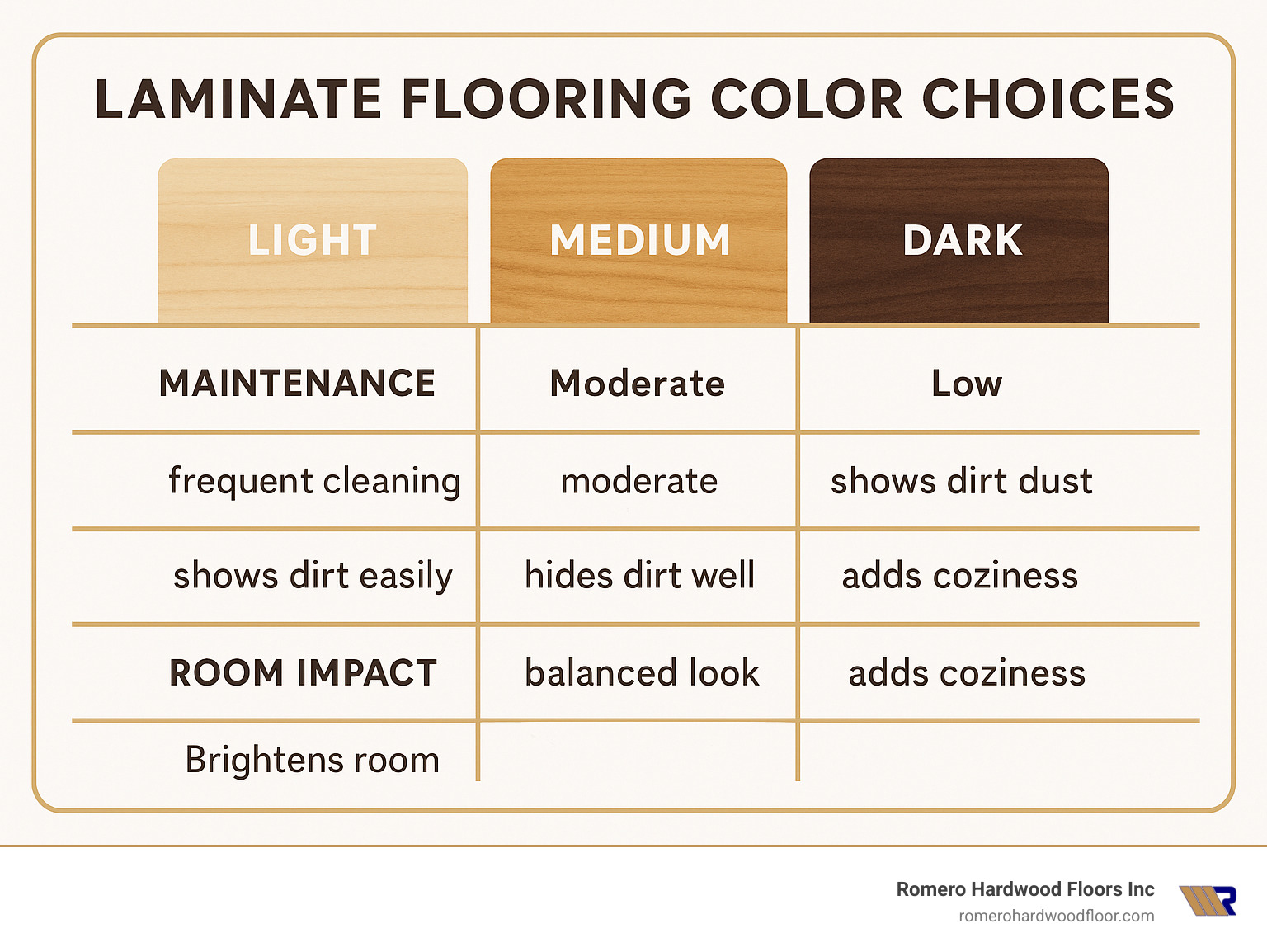
Light laminate floors create that bright, airy feeling everyone loves, but they come with a reality check. Light colors make rooms appear larger and hide scratches beautifully—great if you have kids dragging toys across the floor. However, every muddy paw print and coffee spill shows up like a spotlight. If you enjoy daily maintenance, light floors reward you with that fresh, spacious atmosphere.
Medium-toned floors are the workhorses of the laminate world. Colors like natural oak and warm greige hide both the dirt your dog tracks in and the dust bunnies that multiply overnight. These shades give you the best of both worlds—they’re forgiving enough for busy family life but still attractive enough to make your home feel polished.
Dark floors create drama and luxury that can transform an ordinary room into something special. Dark laminate floors make a statement, especially in large rooms with plenty of natural light. But every speck of dust shows up, and pet hair becomes a daily battle. If you love the look and don’t mind frequent cleaning, dark floors can be absolutely stunning.
Pet hair visibility creates interesting challenges many homeowners don’t consider until after installation. Light floors highlight every dark hair from your German Shepherd, while dark floors showcase every white whisker from your Persian cat. Medium brown and greige tones tend to camouflage most pet hair colors.
UV fade resistance varies significantly by color depth. Darker colors show fading more dramatically than lighter tones, especially in south-facing rooms that get intense afternoon sun. This doesn’t mean you can’t choose dark floors—just invest in UV-resistant finishes and consider window treatments.
Room mood changes dramatically with floor color. Light floors create an energetic, fresh feeling that works beautifully in kitchens and home offices. Dark floors establish a cozy, intimate atmosphere perfect for bedrooms and formal dining rooms. Medium tones provide that comfortable, balanced feeling that works anywhere.
For comprehensive guidance on maintaining your chosen color and ensuring long-lasting beauty, explore our High Quality Laminate Flooring resources.
Maintenance Hacks by Shade
Light floors demand daily attention but reward you with easier deep cleaning. Microfiber mops capture fine dust without scratching, while immediate spill cleanup prevents staining. Matte finishes hide minor scuffs better than high-gloss options.
Medium floors offer the most forgiving maintenance routine. Weekly vacuuming with soft brush attachments prevents buildup, while furniture felt pads prevent scratching from chair legs. pH-neutral cleaners preserve the finish without dulling the natural beauty.
Dark floors require strategic maintenance to look their best. Daily dust mopping prevents visible buildup that shows dramatically on dark surfaces. Strategic lighting placement minimizes dust visibility, while daylight-filtering curtains reduce UV exposure.
All laminate floors benefit from consistent humidity levels between 30-50% and prompt attention to spills. The key is honestly assessing your cleaning habits and choosing a color that matches your lifestyle.
Frequently Asked Questions about Laminate Flooring Color Choices
When we meet with homeowners in Revere, Salem, and throughout Greater Boston, the same questions about laminate flooring color choices come up repeatedly. After installing thousands of square feet of laminate flooring since 2006, we’ve learned that these concerns reflect real-world challenges that affect your daily life and long-term satisfaction.
How do laminate flooring color choices influence home value?
Neutral colors in natural wood tones consistently provide the best return on investment because they appeal to the widest range of potential buyers. In our Greater Boston market experience, classic oak finishes, natural walnut tones, and warm greige receive overwhelmingly positive feedback from real estate professionals and prospective buyers.
Trendy colors can actually hurt resale value if they’re too tied to specific fads. The gray floors that dominated the last decade are now being viewed as dated in some markets, while natural wood tones remain timelessly appealing.
Quality matters more than color for home value. High-grade laminate with realistic wood grain and professional installation adds significantly more value than cheap laminate in any color. We always recommend focusing on durability ratings—AC3 or higher for residential use—and realistic textures.
Regional preferences play a huge role in value retention. In our New England market, colors that complement traditional colonial and Victorian architecture tend to hold value better than ultra-contemporary options that clash with historic home styles.
Can I run the same color throughout the house or mix per room?
Using the same laminate color throughout your home creates beautiful visual continuity and makes spaces feel larger and more cohesive. This approach works particularly well in open-concept homes and smaller properties where you want maximum flow between rooms.
The practical benefits often surprise homeowners. You only need to stock one type of replacement plank for future repairs, and any touch-ups or room additions will match perfectly. This simplicity becomes especially valuable years down the road.
However, varying colors by room can help define different spaces and create unique atmospheres custom to each room’s function. We’ve installed lighter tones in bedrooms to create serene retreats and darker tones in home offices to promote focus.
If you choose to vary colors, maintain consistency in undertones and quality levels. All your floors should feature either warm or cool undertones to prevent jarring transitions between spaces.
Are gray laminate floors still stylish or fading fast?
Gray laminate floors remain stylish and modern, but they’re no longer the dominant trend they were throughout the last decade. While gray peaked around 2018-2020, it’s now being overtaken by warm neutrals and authentic wood tones that feel more inviting.
The key is choosing the right shade of gray. Cool, stark grays are feeling dated, while warm grays with beige undertones—what designers call “greige”—continue to be popular and versatile. These warmer grays successfully bridge the gap between trendy and timeless.
Gray floors work best when balanced with warmer elements throughout your space. Avoid creating an all-gray palette that can feel cold and institutional. Instead, use gray floors as a sophisticated neutral foundation for warmer wall colors, natural wood furniture, and cozy textiles.
If you love gray but worry about trends, consider it a classic neutral like navy blue or charcoal—colors that may not be the “hot” trend but never truly go out of style.
Conclusion
Choosing the perfect laminate flooring color choices becomes straightforward when you understand how color affects your space and daily life. The journey from overwhelming options to confident decision-making happens when you match your floor color to your room’s architecture, existing decor, and honest lifestyle needs.
Remember the fundamentals: light colors expand spaces but demand more cleaning attention, medium tones hide daily messes while offering decorating flexibility, and dark colors create luxurious drama at the cost of higher maintenance. There’s no universally “best” choice—only the right choice for your specific situation.
The shift toward warm, nature-inspired colors reflects homeowners craving authenticity after years of stark, cold finishes. However, if you love gray or contemporary looks, don’t abandon them entirely. Quality matters more than following every trend, and a well-chosen gray can be just as timeless as natural oak.
Your lifestyle deserves honest consideration in this decision. If you’re constantly cleaning up after kids and pets, that gorgeous dark walnut might become a source of daily frustration. Conversely, if you’re meticulous about home maintenance and crave dramatic beauty, don’t settle for “practical” medium tones that leave you uninspired.
One-color continuity throughout your home creates the most spacious, cohesive feeling—especially valuable in New England’s traditionally smaller homes. This approach also simplifies future maintenance and repairs.
At Romero Hardwood Floors Inc., we’ve watched hundreds of homeowners transform their spaces across Beverly, Chelsea, Danvers, East Boston, Gloucester, Lynnfield, Malden, Manchester by the Sea, Marblehead, Medford, Melrose, Nahant, Peabody, Reading, Revere, Rockport, Salem, Saugus, Somerville, Stoneham, Swampscott, Wakefield, Winchester, Winthrop, and Woburn. The most satisfied clients are those who balanced their aesthetic dreams with practical realities.
Don’t let analysis paralysis rob you of beautiful new floors. Trust the sampling process, live with your top choices for a few days, and remember that any quality laminate in a neutral wood tone will serve you well for decades. The “perfect” choice is the one that makes you smile when you walk into your room each morning.
With over 15 years of experience helping Greater Boston homeowners make these important decisions, we’re here to guide you toward laminate flooring color choices that will bring you joy for years to come.
Ready to move forward with confidence? Our Laminate Flooring Installation Services team is here to help you transform your vision into reality, one beautiful room at a time.
