
Latex wood floor filler: Flawless guide 2025
Why Choosing the Right Wood Filler Matters for Your Hardwood Floors
Latex wood floor filler is a water-based compound designed to repair gaps, cracks, and gouges in hardwood flooring while maintaining flexibility to move with your wood’s natural expansion and contraction.
Quick Comparison: Wood Filler Types
- Latex Filler: Flexible, stainable, easy cleanup, low odor, ideal for interior floors
- Solvent-Based Filler: Strong adhesion, longer drying time, strong fumes, best for heavy-duty repairs
- Epoxy Filler: Extremely hard, waterproof, not flexible, suited for structural gaps
- Wood Putty: Oil-based, best between finish coats, not suitable under water-based finishes
Every hardwood floor develops imperfections over time. Temperature changes cause wood to expand and contract, creating gaps between boards. Daily wear leaves scratches and gouges. Furniture legs create dents. Even brand-new prefinished flooring often comes with visible filler marks straight from the factory.
The right filler makes these repairs invisible while ensuring they last. Latex wood floor filler stands out because it stays flexible after drying. This means it won’t crack when your floors naturally move with seasonal humidity changes – a common problem with rigid fillers that can make repairs look worse over time.
As Francisco Romero, owner of Romero Hardwood Floors Inc. with over 15 years of experience, I’ve seen countless DIY repairs fail because homeowners chose the wrong latex wood floor filler or applied it incorrectly. The good news is that with the right knowledge and technique, you can achieve professional-looking results that blend seamlessly with your existing floors.

Understanding Latex Wood Filler: Properties and Benefits
Think of latex wood floor filler as the Swiss Army knife of wood repair products. At its heart, it’s a water-based compound that typically combines real wood fibers with clay, calcium carbonate, and specialized binders. This might sound technical, but what it really means is that you’re getting a product designed to work with your floors, not against them.
The water-based formula is what makes latex wood floor filler so user-friendly. No harsh solvents means no overwhelming fumes filling your home during repairs. When you accidentally get some on your hands or tools, it cleans up easily with just soap and water – no special solvents required.
But here’s where latex filler really shines: flexibility. Your hardwood floors are constantly moving, expanding in humid summer months and contracting during dry winters. A rigid filler would crack under this stress, leaving you with repairs that look worse than the original damage. Latex filler moves right along with your wood, maintaining that seamless appearance year after year.
The ease of application makes latex filler perfect for DIY projects. It spreads smoothly without fighting you, and when it’s time to sand, it responds predictably. There’s no guesswork or wrestling with stubborn material. Plus, with lower VOC emissions compared to solvent-based alternatives, you’re choosing a more sustainable option that’s better for your family’s health and the environment.
If you’re exploring different flooring options and want to understand how various materials behave, check out our comprehensive guide on different kinds of flooring.
Why It’s Ideal for Hardwood Floors
Hardwood floors have personality – they’re living materials that breathe and shift with the seasons. This natural wood movement is exactly why latex wood floor filler is such a perfect match. When winter’s dry air causes your floorboards to shrink and gaps appear, a flexible filler accommodates this movement. Come spring’s humidity, when those boards expand again, the filler flexes right along with them.
In high-traffic areas where your family walks daily, latex filler proves its worth through sheer durability. The constant foot traffic that would cause rigid fillers to crack and fail barely fazes a quality latex product. Its strong bond means once it’s properly applied and cured, it becomes part of the floor itself.
What really impresses us after years in the flooring business is the minimal shrinkage you get with latex fillers. Some products shrink significantly as they dry, leaving you with sunken repairs that need multiple applications. Quality latex fillers maintain their volume, giving you professional results in fewer steps.
The seasonal changes that make New England homes so charming can wreak havoc on floors, but latex filler handles these temperature and humidity swings like a champ. Your repairs stay intact whether it’s a humid July day or a bone-dry February morning.
Finishing Capabilities: Staining and Painting
Here’s where latex wood floor filler really earns its keep – you can make it virtually disappear into your existing floor. Most latex fillers are stainable and paintable, which means you’re not stuck with a repair that screams “look at me!” The secret lies in those real wood fibers mixed into quality products.
These wood fibers allow the filler to absorb stain much like your actual floorboards do. For color matching, you can often custom tint the filler before application, or mix in fine sawdust from your own floors for an incredibly accurate match. This technique works especially well with unique wood species or custom stain colors that might be tricky to replicate otherwise.
The key to professional results is testing first. Apply your chosen stain or paint to a small, hidden area or scrap piece to see how the filler responds. This simple step prevents surprises and lets you adjust your approach for that perfect blend.
Once the filler is dry and sanded smooth, it takes finish just like natural wood. Whether you’re planning to stain, paint, or apply a clear protective coating, latex filler provides the perfect foundation. For more insights into achieving beautiful floor colors and finishes, explore our detailed guide on floor staining.
Latex vs. Other Wood Fillers: Making the Right Choice
Choosing the right wood filler can make or break your flooring repair project. While latex wood floor filler is incredibly versatile, understanding how it stacks up against other options will help you make the smartest choice for your specific situation.
When comparing filler types, latex wood filler shines with its high flexibility that expands and contracts with your wood, preventing those frustrating cracks that can appear months after a repair. It dries relatively fast – usually within 15 minutes to 2 hours for lighter repairs – and cleanup is a breeze with just soap and water. The low odor and minimal VOCs make it perfect for indoor projects, and its excellent stainability means you can achieve that seamless color match you’re after.
Solvent-based fillers pack more punch for heavy-duty repairs but come with trade-offs. They’re less flexible than latex options, which can lead to cracking over time as your floors naturally move. The drying time stretches to several hours or overnight, and you’ll need mineral spirits for cleanup. The strong fumes and higher VOCs also make them less pleasant to work with indoors.
Epoxy fillers are the heavyweight champions of the filler world, offering incredible hardness and waterproof properties. However, they’re completely rigid – no flexibility whatsoever – which makes them unsuitable for most hardwood floor applications where natural wood movement is expected. They also don’t accept stain, so color matching becomes nearly impossible.
Wood putty deserves a special mention because it’s often confused with wood filler. Unlike latex wood floor filler that hardens and can be sanded, wood putty stays pliable and is meant for filling small nail holes after your floor is already finished. It won’t accept stain well and isn’t suitable for the structural repairs that latex filler handles beautifully.
The key distinction? Wood filler prepares surfaces before finishing, while wood putty touches up after finishing. For hardwood floor repairs, you almost always want a true filler like latex.
When to Choose Latex Filler
Latex wood floor filler is our go-to recommendation for the vast majority of hardwood floor repairs we encounter. Its forgiving nature and excellent results make it perfect for several common scenarios.
Small to medium gaps and cracks are where latex filler truly excels. Whether you’re dealing with hairline cracks or gaps up to about 1/4 inch wide, the flexible formula provides a durable solution that moves with your wood instead of fighting against it. We’ve seen countless repairs hold up beautifully for years because the filler adapts to seasonal changes.
Scratches and gouges from daily life – furniture legs, pet claws, dropped objects – respond wonderfully to latex filler treatment. The smooth application and excellent sandability mean you can achieve professional-looking results even on your first attempt.
Interior applications are where latex filler’s low VOC content and easy cleanup really shine. You won’t need to evacuate the house or worry about lingering chemical odors. The pleasant working environment makes the repair process much more enjoyable.
DIY projects benefit enormously from latex filler’s user-friendly characteristics. Its forgiving nature means small application mistakes won’t ruin your repair, and the straightforward cleanup process reduces the intimidation factor for first-time users.
Projects requiring staining showcase one of latex filler’s greatest strengths. The excellent stain acceptance ensures your repairs blend seamlessly with the surrounding wood, creating that invisible finish that makes people wonder if there was ever damage at all.
When to Consider Alternatives
While latex wood floor filler handles most situations beautifully, there are times when other solutions make more sense – or when it’s wise to call in the professionals.
Large structural repairs go beyond what any filler can reasonably handle. When you’re looking at deeply rotted sections, large missing chunks, or damage that affects the board’s structural integrity, even the best latex filler won’t provide adequate strength. These situations often require wood replacement or specialized epoxy systems that only experienced professionals should attempt.
Exterior applications with extreme moisture exposure can challenge latex fillers. While some are rated for exterior use, areas that face constant water exposure without proper sealing might benefit from more aggressive waterproof solutions. However, most interior hardwood floors – even in kitchens and bathrooms with proper ventilation – work perfectly with latex fillers.
Areas requiring extreme hardness represent another specialty situation. If your repair needs to withstand unusual impact or abrasion – think commercial spaces with heavy equipment – a harder filler might seem logical. But remember, that rigidity comes at the cost of flexibility, which can lead to cracking as the wood naturally moves.
For complex repairs or situations where you’re unsure which approach works best, professional consultation saves time, money, and frustration. Our team at Romero Hardwood Floors Inc. has tackled every type of hardwood floor challenge imaginable. Explore our comprehensive professional hardwood floor repair techniques to see how we approach various repair scenarios and determine when DIY solutions work versus when professional intervention delivers better results.
Your Step-by-Step Guide to Applying Latex Wood Floor Filler
Ready to transform those unsightly gaps and scratches into invisible repairs? Applying latex wood floor filler is surprisingly straightforward once you know the tricks. After years of perfecting our technique at Romero Hardwood Floors Inc., I can tell you that the secret to professional-looking results lies in proper preparation and patience.
Let’s start by gathering everything you’ll need for a successful repair:
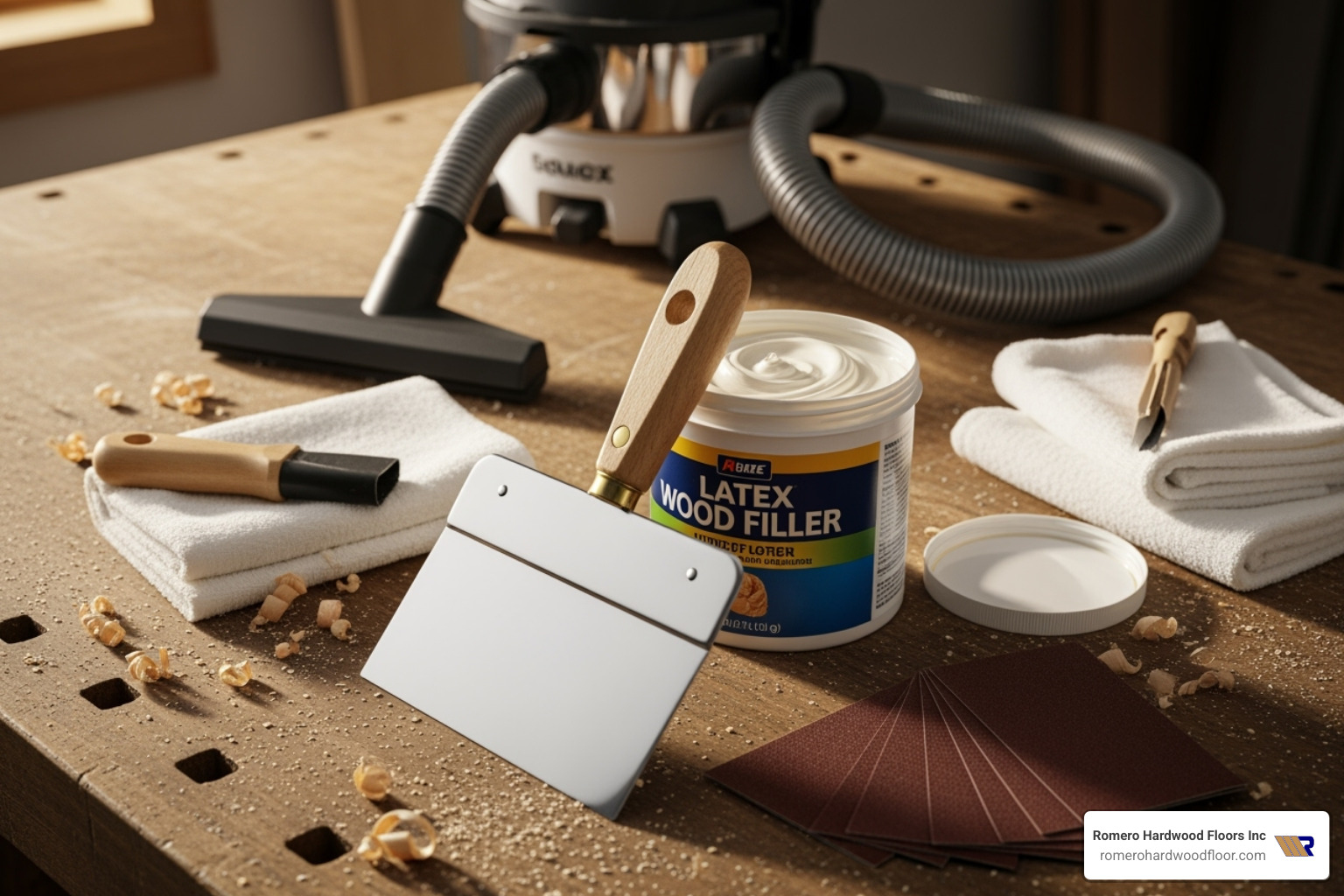
You’ll want to have your latex wood floor filler on hand, of course, along with both flexible and stiff putty knives for different applications. Fine-grit sandpaper in the 120-150 range works perfectly for smoothing. A shop vacuum helps keep things clean, and you’ll appreciate having clean cloths nearby for quick cleanup. Don’t forget safety glasses and gloves – your eyes and hands will thank you later. Masking tape isn’t essential, but it’s a lifesaver for creating clean, professional edges.
Step 1: Prepare the Wood Surface
Think of surface preparation as laying the foundation for your repair. Skip this step, and even the best latex wood floor filler won’t give you lasting results. I’ve seen too many DIY repairs fail simply because someone rushed through the prep work.
Start by thoroughly cleaning the damaged area. Use your shop vacuum or a stiff brush to remove every speck of dirt, dust, and debris from gaps and cracks. For stubborn grime hiding in deep cracks, a thin scraper or old chisel works wonders. The goal is to expose clean, bare wood that the filler can properly bond with.
Moisture is the enemy of good adhesion, so make sure your wood surface is completely dry. Both the wood and your workspace should be above 40°F for optimal results. If you’ve recently cleaned the area with water, give it plenty of time to dry completely.
For very smooth or previously finished surfaces, light sanding with fine-grit sandpaper creates the perfect “tooth” for your filler to grip. Think of it as giving the filler something to hold onto. After sanding, vacuum up every bit of dust – even tiny particles can interfere with adhesion.
Here’s a pro tip: apply masking tape along the edges of your repair area if you want razor-sharp lines. It might seem like extra work, but it makes cleanup so much easier and gives you that professional finish. For more detailed preparation techniques, check out our DIY Guide to Hardwood Floor Scratch Repair.
Step 2: Apply the Filler
Now comes the satisfying part – watching those imperfections disappear before your eyes. The key to success here is working methodically and not rushing the process.
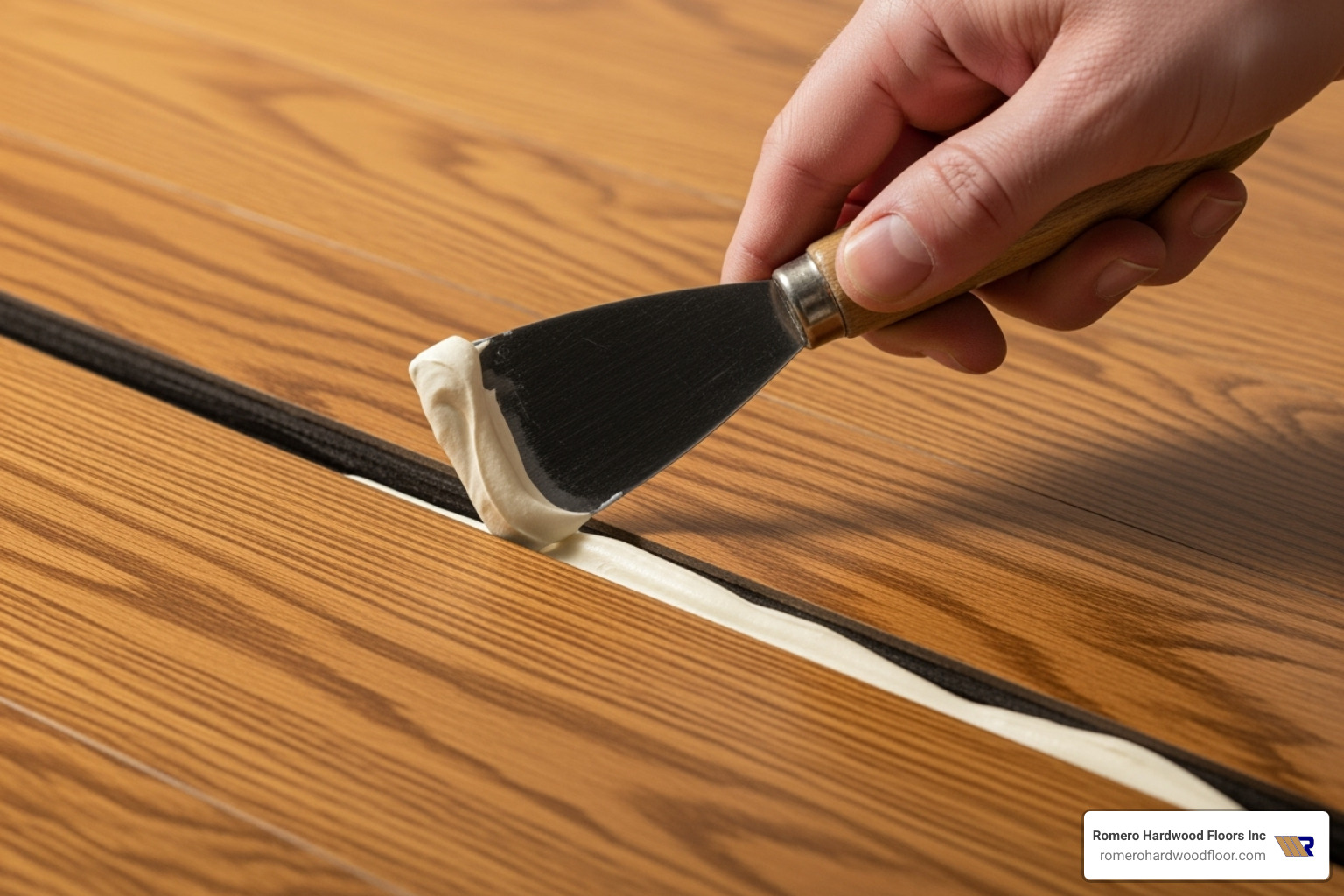
Scoop a small, manageable amount of latex wood floor filler onto your putty knife. Less is definitely more here – you can always add another layer, but removing excess filler is much harder. Press the filler firmly into the damaged area, using the edge of your putty knife to really work it down into every crevice. You’re essentially forcing out any air pockets that could cause problems later.
Don’t worry about being too neat at this stage. Slightly overfilling the area is actually what you want – this accounts for any minor shrinkage during drying and gives you material to sand down later for a perfectly flush finish.
For deeper holes or wider gaps, resist the temptation to fill everything in one go. Apply thin layers no thicker than about 1/4 inch, allowing each layer to dry completely before adding the next. This prevents cracking and ensures the filler cures properly all the way through. Trust me, taking the time for multiple thin coats will give you much better results than trying to fill a deep void in one pass.
Step 3: Drying, Curing, and Sanding
This is where patience becomes your best friend. Rushing this stage is probably the most common mistake I see in DIY repairs, and it almost always leads to disappointing results.
Latex wood floor filler drying times vary quite a bit depending on several factors. Thin applications might be dry to the touch in just 15 minutes, while thicker repairs can take anywhere from 30 minutes to 2 hours. Really substantial repairs might need up to 6 hours or even overnight to fully cure. Temperature and humidity play huge roles here – high humidity will slow everything down significantly.
Here’s something many people don’t realize: there’s a difference between dry to the touch and fully cured. Even when the surface feels dry, the filler might still be hardening underneath. Sanding too early can clog your sandpaper and create a mess that’s frustrating to fix.
We always recommend keeping your home’s relative humidity between 30% and 50% during repairs. This not only helps the filler cure properly but also prevents future wood movement issues that could compromise your repair.
Once the filler is completely cured, it’s time for the final magic – sanding. Start with medium-grit sandpaper around 120-grit to level any overfilled areas. Use a sanding block for even pressure and consistent results. Then switch to fine-grit paper in the 120-150 range for that perfectly smooth finish.
Work in circular motions and feather the edges to blend your repair seamlessly into the surrounding wood. If you used masking tape, peel it off gently while the filler is still slightly soft to avoid any chipping. Finally, vacuum up all sanding dust thoroughly before moving on to any finishing steps.
For more insights into achieving that perfect smooth surface, explore our comprehensive guide on floor sanding and repair.
Troubleshooting Common Filler Problems
Even with the best intentions and careful technique, latex wood floor filler repairs don’t always turn out perfect on the first try. Don’t worry – we’ve been there! After years of working with these products, we’ve learned that most issues are completely fixable with a little patience and know-how.
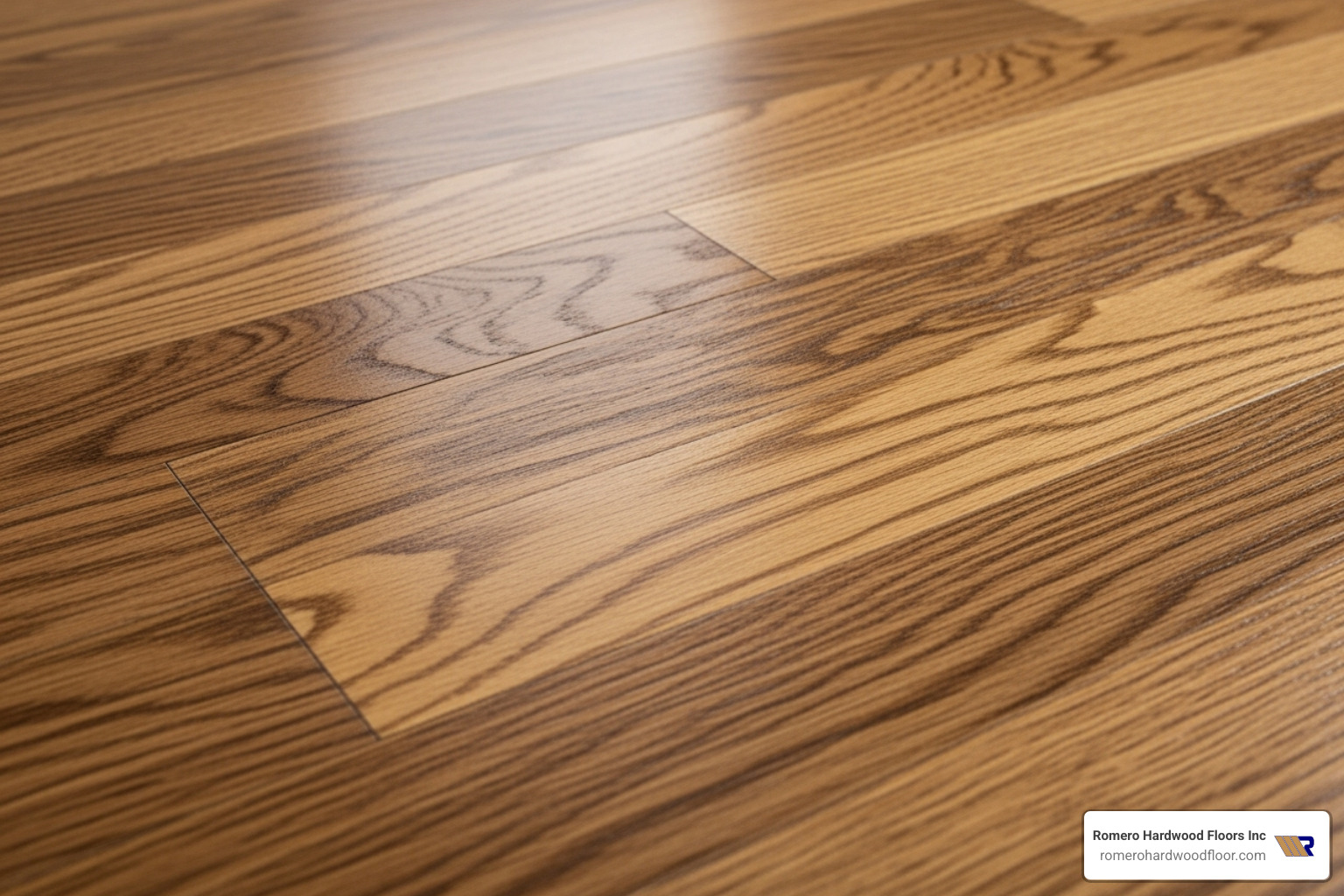
The good news is that achieving a professional finish is absolutely within reach for DIY enthusiasts. Most common mistakes we see are easily preventable once you know what to look for. And if something does go wrong, there’s usually a straightforward fix that won’t require starting over from scratch.
Resolving Color Mismatch
Nothing’s more frustrating than a repair that sticks out like a guide against your beautiful hardwood floors. Color matching can be tricky, but it’s definitely doable with the right approach.
Testing is your best friend when it comes to color matching. We always tell our clients to try their filler on a scrap piece of the same wood species first, or in a hidden corner like under a radiator or behind a door. Apply the latex wood floor filler, let it dry completely, sand it smooth, and then apply whatever stain or finish you’re planning to use. This test run will save you from unpleasant surprises later.
Mixing custom colors is where things get interesting. Many latex filler brands offer several wood-tone shades that you can blend together to create the perfect match. Start with small amounts – a little goes a long way! Some products even accept universal colorants, though we recommend sticking with products specifically designed for wood fillers to avoid any compatibility issues.
Using actual wood dust from your floors is our favorite trick for achieving an invisible repair. When you’re sanding the area before filling, save that fine dust in a small container. Mix it with a clear or natural-toned latex wood floor filler to create a custom blend that perfectly matches your floor’s unique color and grain pattern. It’s like having a fingerprint match for your wood!
If your repair dried lighter than expected, don’t panic. You can often darken it slightly with careful stain application. Use a small artist’s brush or cotton swab to apply stain just to the filled area, then wipe away any excess immediately. Work in thin layers until you achieve the right shade. For more guidance on color selection and matching, check out our comprehensive guide on choosing hardwood floor color.
How to Fix Shrinking or Cracking
Shrinkage and cracking are the most common issues we see with latex wood floor filler repairs, but they’re usually caused by rushing the process or applying the product incorrectly.
Understanding why shrinkage happens is key to preventing it. When you apply filler too thick in one application, the water content needs time to evaporate evenly. If the top surface dries faster than the deeper layers, you’ll get shrinkage and sometimes cracking. Extreme temperature changes or humidity fluctuations during the drying process can make this worse.
The thin layer technique is your best defense against shrinkage problems. For any repair deeper than about 1/4 inch, build it up gradually with multiple thin applications. Each layer should be completely dry before adding the next one. Yes, this takes more time, but it virtually eliminates shrinkage issues and creates a much stronger repair.
Proper drying time can’t be rushed, no matter how eager you are to finish the project. If you try to sand latex wood floor filler before it’s fully cured, it will gum up your sandpaper and create a mess. The filler should feel completely hard and shouldn’t give at all when you press on it with your fingernail.
Fixing sunken repairs is straightforward once you know the technique. If a repair has shrunk and sits below the surrounding wood surface, simply apply another thin layer of filler over the entire sunken area. Let it dry completely, then sand it flush with the surrounding floor. Sometimes you might need to repeat this process two or three times for deep repairs, but each application will get you closer to that perfect, invisible finish.
For more complex repair situations or persistent problems, our detailed guide on fixing damaged hardwood floors offers additional techniques and professional insights that can help you tackle even challenging repairs with confidence.
Conclusion
After exploring the ins and outs of latex wood floor filler, you’re now equipped with everything you need to tackle those annoying gaps, scratches, and gouges that make your beautiful hardwood floors look less than perfect. The flexibility that lets it move with your wood, the easy water-based cleanup, and the ability to stain it to match your floors perfectly – these are the reasons why we reach for latex wood floor filler time and time again.
You’ve learned how to prepare your surface properly, apply the filler like a pro, and troubleshoot any hiccups along the way. Whether you’re dealing with seasonal gaps that appear every winter or deeper gouges from moving furniture, you now have the confidence to make those imperfections disappear. There’s something incredibly satisfying about stepping back and seeing a repair that blends so seamlessly you can’t even tell where the damage used to be.
Latex wood floor filler truly shines for most DIY projects. Its forgiving nature means you don’t need decades of experience to get great results – just patience and attention to detail. We’ve seen countless homeowners transform their floors with nothing more than a putty knife and the right filler.
That said, we know that sometimes life gets in the way, or the damage is more extensive than a simple filler can handle. Maybe you’ve finded widespread gaps throughout your home, or perhaps you’re dealing with water damage that requires professional assessment. For these larger projects or when you simply want the peace of mind that comes with expert craftsmanship, our team at Romero Hardwood Floors Inc. is here to help.
With over 15 years of experience serving homeowners throughout the greater Boston area, we’ve perfected the art of making hardwood floor repairs invisible. We use the same principles we’ve shared with you, but with the efficiency and expertise that comes from doing this work day in and day out. Our guaranteed workmanship means you can trust that the repair will not only look perfect but will stand up to years of daily use.
When you’re ready for a professional touch or need help with a project that’s beyond the scope of DIY repair, don’t hesitate to reach out. Get a professional assessment with our Hardwood Floor Filler Repair services and let us restore your floors to their original beauty. After all, your floors are an investment – shouldn’t they look their absolute best?
Like us on Facebook!
