
Melamine Floor Tile: Top Choice 2025!
Understanding Melamine Floor Tile: A Modern Flooring Solution
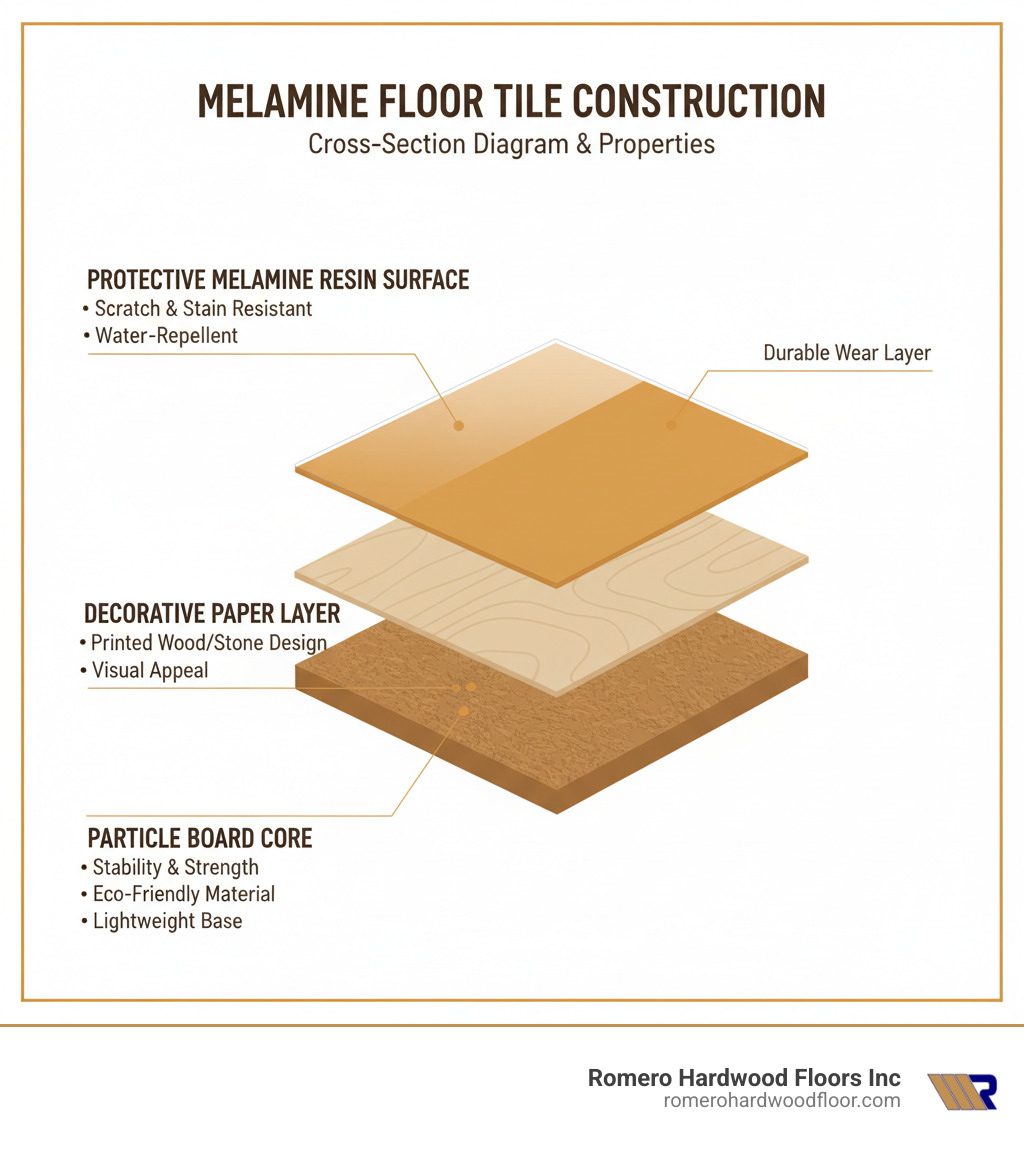
Melamine floor tile is a type of laminate flooring made by saturating layers of paper with melamine resin through thermal fusion, then attaching the melamine panels to a particle board core. This durable flooring combines the strength of melamine decorative boards with ease of installation, offering a cost-effective and durable flooring solution.
Key Features of Melamine Floor Tile:
- Surface Material: Melamine resin wear layer for durability
- Core: High-density fiberboard (HDF) or particle board
- Weight: Lightweight for easier installation
- Water Resistance: 24-hour water resistant (varies by product)
- Maintenance: No-wax surface, easy to clean
- Installation: Click-lock or glue-down systems
- Durability: High scratch and stain resistance
The growing popularity of melamine floor tiles stems from their ability to reproduce realistic wood and stone textures while maintaining the practical benefits of synthetic materials.
My name is Francisco Romero, and I’ve been installing and servicing flooring for over 15 years through my company, Romero Hardwood Floors Inc. While we specialize in traditional hardwood solutions, I’ve seen increasing interest in melamine floor tile as homeowners seek durable, cost-effective alternatives that don’t compromise on style.
What is Melamine Flooring and How Is It Made?
Melamine flooring might sound like something from a chemistry lab, but it’s actually one of the smartest flooring innovations to hit the market. At its core, it’s a type of laminate flooring that uses melamine resin as its secret weapon for durability and beauty.
Think of melamine floor tile as the overachiever of the flooring world. It takes the best parts of natural materials like wood and stone, captures their beauty through high-quality printing, then wraps it all in a protective shield of melamine resin. The result? A floor that looks gorgeous but can handle whatever life throws at it.
The magic happens through a process called thermal fusion, where layers of paper are saturated with melamine resin and then fused to a stable core under intense heat and pressure. This creates what’s known as high-pressure laminate (HPL) – a single, incredibly tough flooring product that’s ready for action.
What makes this different from your grandmother’s old laminate? The melamine resin creates a wear layer that’s remarkably resistant to scratches, stains, and everyday wear. For a deeper understanding of what melamine brings to the table, you can explore this Wikipedia article on Melamine resin.
The Manufacturing Process Explained
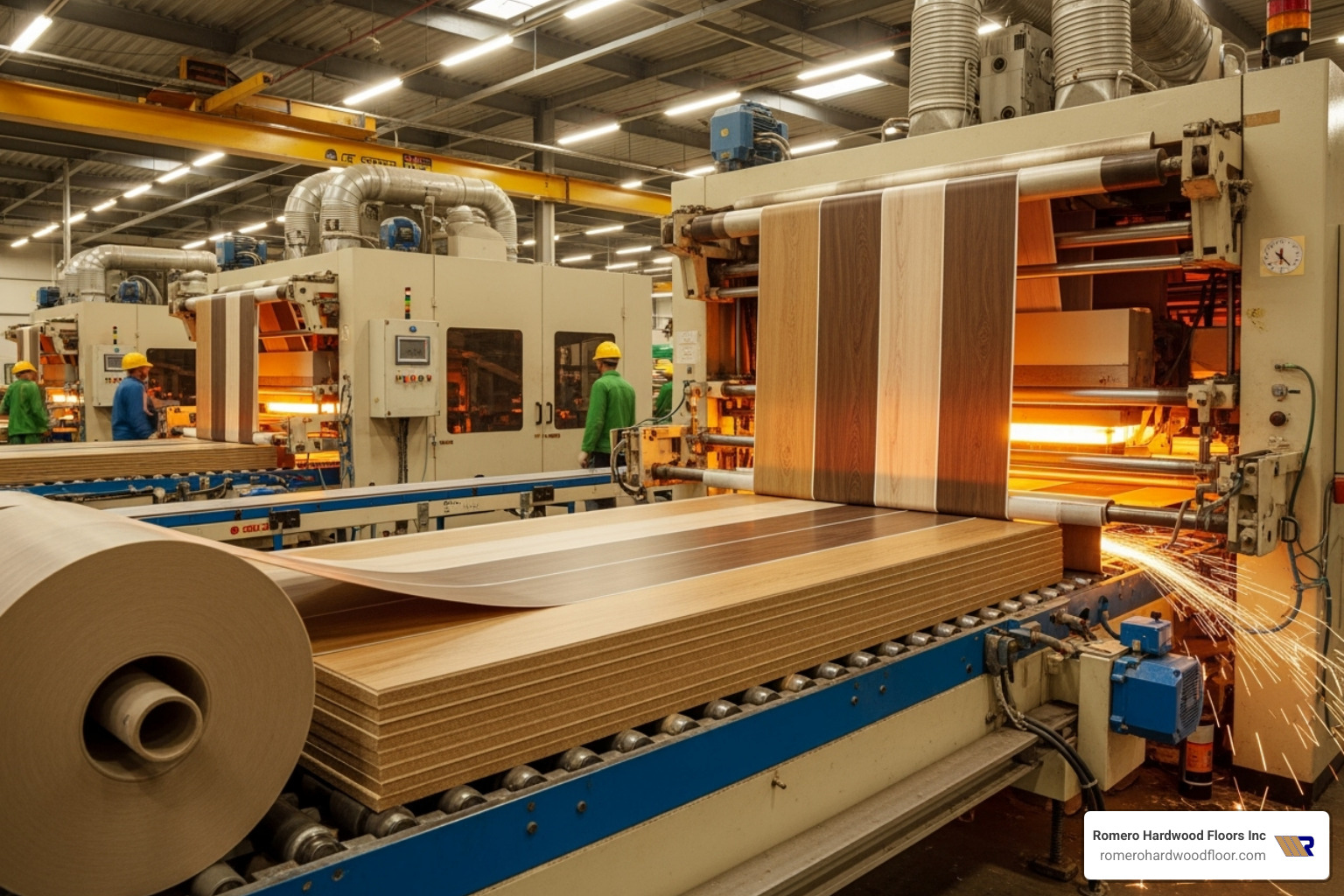
Creating melamine floor tile is like building the perfect sandwich – every layer matters, and the order is crucial. The process starts with selecting the right core material. Most manufacturers choose between MDF, HDF, or particleboard. These engineered wood products provide the stability and structure that keeps your floor flat and solid underfoot.
Next comes the star of the show: the image layer. This is where high-quality printing works its magic, creating incredibly detailed reproductions of wood grain, stone textures, or tile patterns. Modern printing technology has come so far that you might do a double-take when you see how realistic these patterns look.
But printing is just the beginning. The real change happens during melamine resin saturation. Those decorative paper layers get thoroughly soaked with melamine resin, which will eventually become the super-tough surface that protects your floor from daily life.
The final step is where everything comes together through high pressure and heat. Picture a giant press applying tons of pressure while heating everything to precise temperatures. This thermal fusion permanently bonds all the layers together, creating that incredibly durable wear layer that makes melamine flooring so practical.
The entire process of fusing layers together creates a product that’s stronger than the sum of its parts – kind of like how a good team works better together than individuals working alone.
Styles, Colors, and Finishes
Here’s where melamine floor tile really shines – the variety is absolutely mind-boggling. Thanks to advanced printing technology, you can get almost any look you want without breaking the bank.
Wood-look options are incredibly popular, and for good reason. Whether you’re dreaming of classic oak, rich walnut, or trendy gray-washed planks, there’s probably a melamine tile that nails the look perfectly. The detail is so good that guests might not realize it’s not real wood until you tell them.
Stone-look tiles bring elegance without the headaches. You can get the sophisticated appearance of marble, granite, or slate without worrying about sealing, cold surfaces, or the weight issues that come with real stone.
Tile patterns offer even more creative possibilities. Some melamine tiles perfectly mimic classic tile designs, complete with realistic grout lines that make you wonder if someone actually laid individual tiles.
The finish options are just as impressive. Glossy finishes naturally occur in melamine tiles, creating bright, neat spaces that reflect light beautifully. If that’s too shiny for your taste, matte finishes provide a more understated, contemporary look.
Textured surfaces take realism to the next level through a technique called embossed in register (EIR). This means you can actually feel the wood grain or stone texture under your fingers – the texture perfectly aligns with the printed image below.
The wide range of colors available means you’re not limited by what nature provides. Want a purple wood grain or a bright blue stone pattern? With melamine flooring, if you can imagine it, someone has probably made it.
The Pros and Cons of Melamine Floor Tile
Like most things in life, melamine floor tile isn’t perfect – but it comes pretty close for many homeowners. After installing floors for over 15 years, I’ve learned that every material has its sweet spots and its quirks. Let’s explore what makes melamine flooring shine and where it might leave you wanting more.
What Are the Key Benefits of Melamine Floor Tile?
The first thing that strikes most people about melamine floor tile is just how tough it is. I’ve watched kids drag toy trucks across these floors, dogs scramble around corners, and high heels click across the surface – and the floors just keep looking great. That’s because the melamine resin surface creates a uniform, incredibly durable layer with impressive strength.
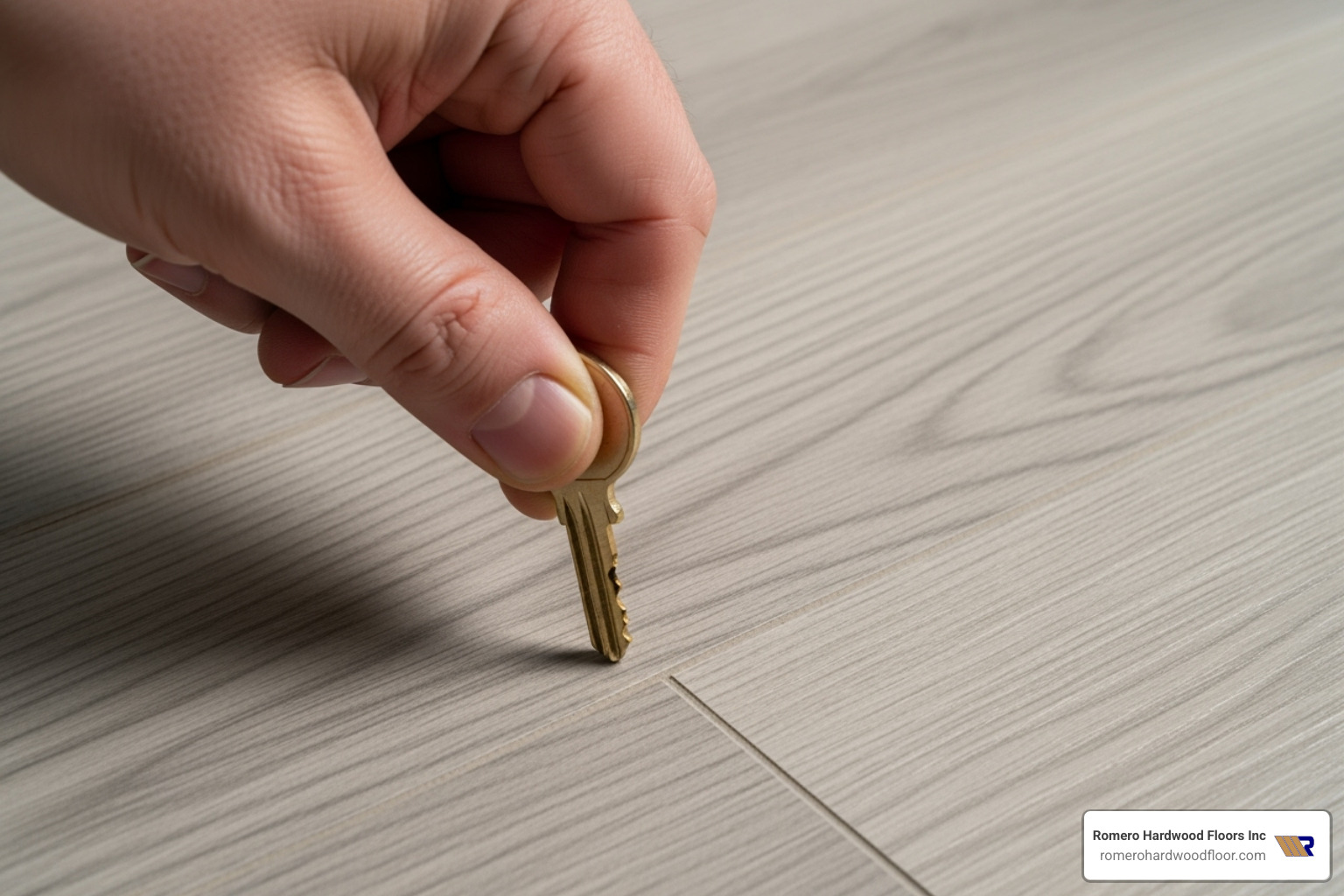
Scratch resistance is where melamine really flexes its muscles. While I wouldn’t recommend using your floor as a cutting board, the reality is that normal household activities – moving furniture, pet claws, dropped keys – barely leave a mark. This makes it a godsend for busy families who want beautiful floors without the constant worry.
Spills happen, and that’s where the stain resistance of melamine becomes your best friend. Coffee, wine, muddy paw prints – most of these wipe away without leaving a trace. The melamine surface doesn’t absorb stains like some materials do, which means less scrubbing and more time enjoying your space.
Here’s something that might surprise you: melamine floor tile offers impressive heat and fire resistance. While I don’t recommend testing this, it adds a layer of safety that gives many homeowners peace of mind, especially in kitchen areas where hot pans might accidentally meet the floor.
The water resistance is another major win, though it’s important to understand the limits. These floors can handle everyday spills and even standing water for short periods – some products boast 24-hour water resistance. Just don’t expect them to survive a basement flood without consequences.
From a practical standpoint, the easy maintenance is what sells many of my clients. No waxing, no special cleaners, just soap and water. It’s the kind of low-maintenance solution that busy homeowners dream about.
Let’s talk money – melamine floor tile delivers a high-end look without the high-end price tag. You get the beauty of hardwood or stone at a fraction of the cost, which means more money left over for that kitchen renovation or family vacation.
The design variety is honestly overwhelming in the best way possible. Want the look of reclaimed barn wood? Check. Neat marble? You got it. The high-pressure manufacturing process creates textures so realistic, I’ve had clients’ friends ask which quarry their “stone” came from.
One practical benefit that contractors love is the lightweight nature of these tiles. Being significantly lighter than many traditional flooring materials, they’re easier to handle, faster to install, and put less stress on your subfloor. Your installer’s back will thank you, and you might even save on labor costs.
What Are the Limitations of Melamine Floor Tile?
Now for the reality check – melamine floor tile does have some limitations you should know about upfront. The biggest concern I see is warping under heavy loads. While these floors handle normal furniture just fine, that massive antique armoire or industrial equipment might cause problems over time. The core material can bend under sustained pressure, which is something to consider during your planning phase.
Water resistance is great, but it’s not waterproof. This is a crucial distinction that I always explain to clients. A spilled glass of water? No problem. A burst pipe that sits for hours? That’s trouble. The core material – typically MDF or particleboard – will swell and warp if water gets underneath and stays there. For wet areas like bathrooms, you’ll need a product specifically rated for high moisture environments.
Chipping can happen, especially at edges and corners where sharp objects might make contact. While the surface is incredibly scratch-resistant, a hard impact in just the wrong spot can chip the melamine layer. It’s not common with normal use, but it’s worth mentioning.
Here’s the tough part about damage – melamine floor tile is difficult to repair. Unlike solid hardwood that we can sand and refinish at Romero Hardwood Floors, damaged melamine typically means replacing the entire plank or tile. This is why I always recommend ordering a few extra pieces for future repairs, especially if you’re choosing a unique pattern or color.
Health and Environmental Considerations
As someone who works with flooring materials daily, I pay attention to what we’re putting in people’s homes. The good news is that modern melamine floor tile has come a long way in terms of health and environmental impact.
Low TVOC emissions are now standard with quality products, often below 10 µg/m³. This means better indoor air quality for your family – something that’s especially important if anyone has allergies or respiratory sensitivities.
Look for products with the Blue Angel certification or similar environmental certifications. These aren’t just marketing badges; they represent real testing and standards that ensure the product meets strict ecological requirements.
Many manufacturers are incorporating recycled content into their products, turning production waste into new flooring. Some products are also phthalate-free, addressing concerns about certain chemical compounds that health-conscious consumers want to avoid.
The formaldehyde concerns that once plagued engineered wood products have largely been addressed through better manufacturing and stricter regulations. Modern products meeting E0 or CARB Phase 2 standards have ultra-low formaldehyde emissions, with some being completely formaldehyde-free.
When selecting your flooring, don’t hesitate to ask about specific certifications and material compositions. A reputable manufacturer should be transparent about what goes into their products and how they impact your indoor environment.
Melamine Flooring Compared to Other Romero Hardwood Floors Solutions
When our clients come to us at Romero Hardwood Floors Inc., they’re often weighing various flooring options. While we specialize in traditional hardwood solutions, I believe in helping you find the perfect fit for your needs and budget. So, how does melamine floor tile stack up against other popular choices?
Let me break down the key differences to help you make an informed decision:
| Feature | Melamine Floor Tile | Engineered Hardwood | Solid Hardwood |
|---|---|---|---|
| Cost | $1.50-$6.00/sq ft | $4.00-$15.00+/sq ft | $6.00-$20.00+/sq ft |
| Durability | High (AC3-AC5 rating) | High to Very High | Very High |
| Water Resistance | Good (24-hour resistant) | Moderate | Low |
| Installation | DIY-friendly click-lock | Professional recommended | Professional required |
| Maintenance | Low (no wax needed) | Moderate | High |
Cost Comparison
Melamine floor tile offers one of the most budget-friendly options in today’s flooring market. You’ll typically find prices ranging from $1.50 to $6.00 per square foot for the material itself, making it significantly more affordable than our traditional hardwood offerings.
Please note that any prices mentioned are based on general industry data and do not represent a quote from Romero Hardwood Floors. Costs can vary significantly based on product quality, location, and project complexity.
In comparison, engineered hardwood typically runs from $4.00 to $15.00+ per square foot, while solid hardwood can range from $6.00 to $20.00+ per square foot. When you factor in installation costs, the savings with melamine become even more apparent, especially if you’re comfortable with a DIY installation.
The lightweight nature of melamine floor tile also means reduced transportation and handling costs, which can add up to meaningful savings on larger projects.
Durability and Lifespan
Here’s where things get interesting. Melamine floor tile punches above its weight class in terms of durability. The AC rating system helps you understand what to expect – most quality melamine tiles carry an AC3 to AC5 rating, meaning they can handle moderate to heavy commercial traffic.
The wear layer thickness in melamine flooring is specifically engineered to resist scratches, scuffs, and daily wear. In high-traffic areas like busy hallways or commercial spaces, melamine can rival some engineered hardwood products for durability.
While solid hardwood can potentially last generations with proper care and refinishing, melamine floor tile offers a solid 10-20 year lifespan with minimal maintenance. For many of our clients, especially those in commercial flooring applications, this represents excellent value.
Maintenance and Care
This is where melamine floor tile really shines. The no-wax surface means you can forget about the periodic refinishing that traditional hardwood requires. Daily cleaning is as simple as sweeping and occasional damp mopping.
Unlike our hardwood installations that may need professional refinishing every 7-10 years, melamine’s protective surface maintains its appearance with basic care. You’ll want to avoid harsh chemicals and excessive moisture, but overall maintenance is refreshingly straightforward.
Steam mopping suitability varies by manufacturer, so always check your specific product guidelines. The reduced maintenance downtime makes melamine particularly attractive for busy households and commercial settings.
When you’re weighing your options, consider not just the upfront cost, but the long-term maintenance requirements and your lifestyle needs. While we at Romero Hardwood Floors love working with traditional hardwood, I’m always honest about which solution might work best for your specific situation and budget.
