
Most Eco Friendly Wood Flooring: Top 5 Stunning Picks
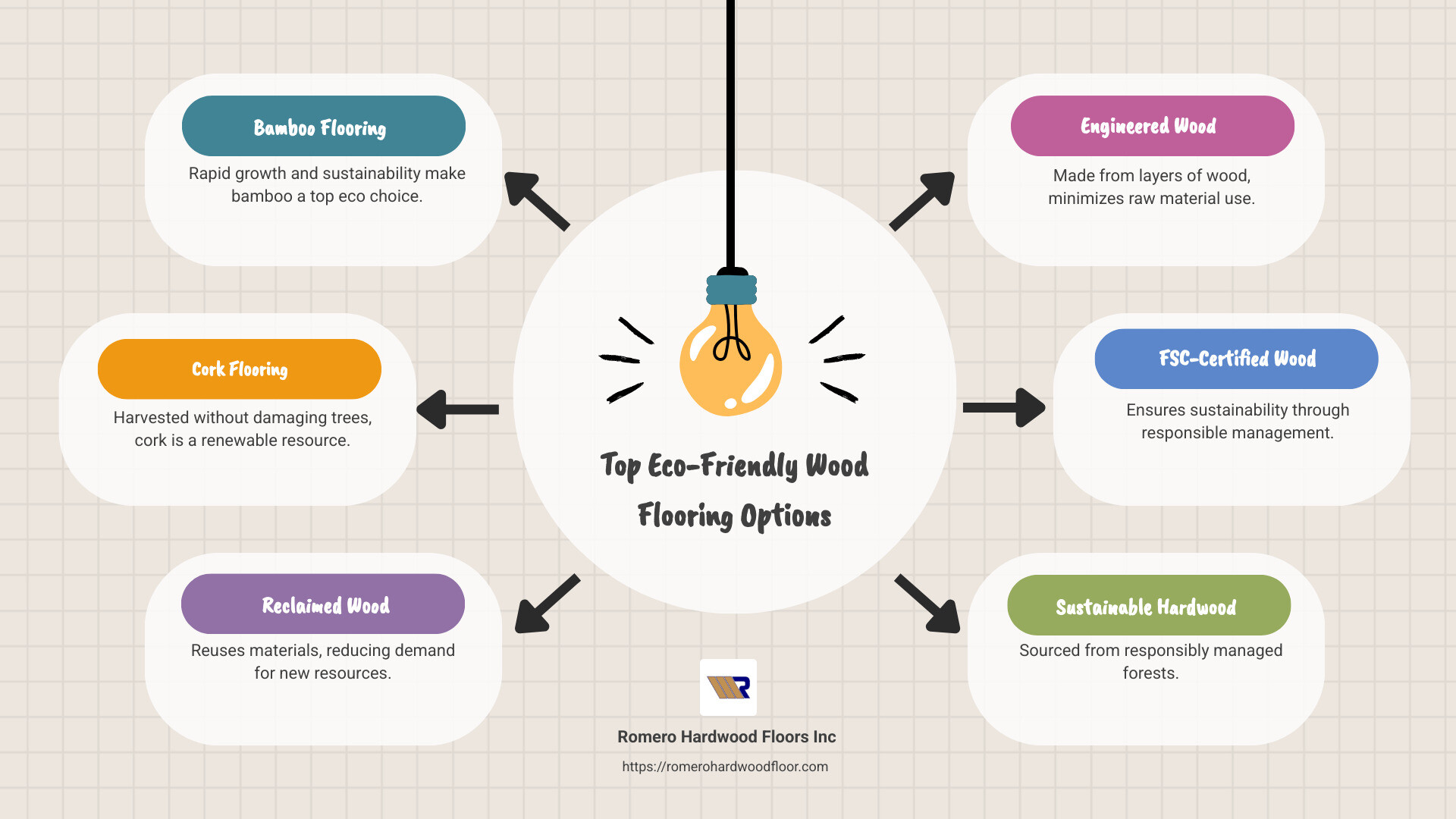
When considering most eco friendly wood flooring options for your home or commercial property, the focus is on sustainability and minimizing environmental impact. The top picks are:
- Bamboo Flooring: Known for its rapid growth and sustainability.
- Cork Flooring: Harvested without damaging the tree, providing a renewable resource.
- Reclaimed Wood: Reuses existing materials, reducing demand on new resources.
- Engineered Wood: Made from layers of wood, using less raw material.
Each option offers a unique combination of durability, style, and eco-consciousness, making them excellent choices for those looking to incorporate sustainability into their flooring needs.
My name is Francisco Romero, a seasoned expert in the flooring industry with over 15 years of experience. At Romero Hardwood Floors Inc., I have dedicated my career to providing clients with most eco friendly wood flooring solutions that meet their aesthetic and environmental expectations.
Understanding Eco-Friendly Wood Flooring
When it comes to choosing eco-friendly wood flooring, understanding the key elements of sustainability is crucial. Let’s explore the three main aspects: sustainable hardwood, FSC certification, and reclaimed wood.
Sustainable Hardwood
Sustainable hardwood is harvested from forests managed in ways that maintain biodiversity, productivity, and ecological processes. This means the trees are grown and harvested with minimal impact on the environment, ensuring that forests can regenerate and continue to thrive for future generations. Hardwood flooring, when sourced sustainably, can last for decades, making it a solid choice for eco-conscious homeowners. This durability also means fewer replacements over time, reducing the overall environmental footprint.
FSC Certification
The Forest Stewardship Council (FSC) certification is the gold standard in sustainable forest management. Products with this certification come from responsibly managed forests that provide environmental, social, and economic benefits. To achieve FSC certification, forest operations must meet 57 rigorous criteria, including protecting local wildlife and minimizing chemical usage.
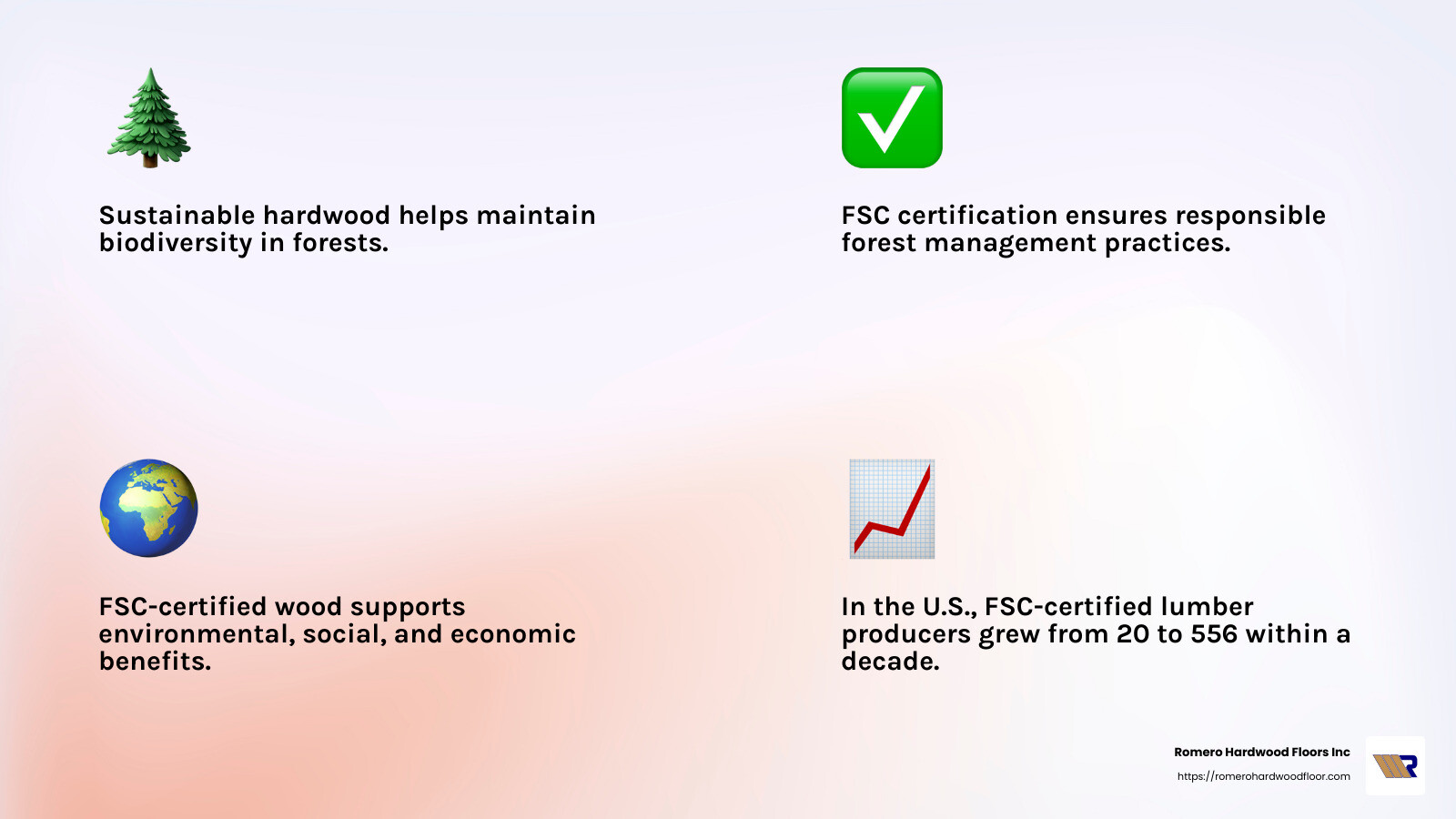
By choosing FSC-certified wood, you’re not only getting a high-quality product but also supporting practices that protect our planet. In 2005, the U.S. had 556 companies producing FSC-certified lumber, a significant increase from just 20 a decade earlier. This growth reflects a rising consumer demand for responsible products and a positive impact on global forests.
Reclaimed Wood
Reclaimed wood is an excellent option for those looking to minimize their environmental impact. This wood is sourced from old structures, such as barns or factories, and repurposed for new projects. By using reclaimed wood, you’re giving new life to existing materials and reducing the demand for newly harvested wood.
While some forms of reclaimed wood, like underwater logs, may disrupt ecosystems, other sources, such as salvaged timbers, are more environmentally friendly. Reclaimed wood often features unique textures and histories, adding character and charm to any space.
By understanding these elements of eco-friendly wood flooring, you can make informed decisions that align with both your aesthetic preferences and environmental values. Transitioning to sustainable flooring options not only improves your space but also contributes to a healthier planet for future generations.
Top Eco-Friendly Wood Flooring Options
When it comes to the most eco-friendly wood flooring, several options stand out for their sustainability and minimal environmental impact. Let’s explore four top choices: bamboo flooring, cork flooring, reclaimed hardwood, and engineered wood.
Bamboo Flooring
Bamboo is a superstar in sustainable flooring. Unlike traditional hardwoods, bamboo is a fast-growing grass that can reach maturity in just three to five years. This rapid growth makes it a renewable resource that can be harvested without causing long-term damage to ecosystems.
Moreover, bamboo flooring is incredibly durable, often harder than maple or oak, making it suitable for high-traffic areas. However, it’s important to select bamboo products with a Forest Stewardship Council (FSC) certification to ensure they’re sourced responsibly. Some bamboo is manufactured overseas, so consider the carbon footprint of shipping when making your decision.
Cork Flooring
Cork flooring offers a unique blend of comfort and sustainability. Harvested from the bark of cork oak trees, cork can be collected every nine years without harming the tree, allowing it to continue growing and absorbing carbon dioxide.
Cork floors are not only renewable but also hypoallergenic, fire-resistant, and provide excellent thermal and acoustic insulation. Their natural elasticity makes them comfortable underfoot, reducing strain on joints. With its versatility and eco-friendly attributes, cork is a fantastic choice for eco-conscious homeowners.
Reclaimed Hardwood
Reclaimed hardwood is an excellent option for those who want the classic look of wood without the environmental impact of new harvesting. This wood is salvaged from old buildings, barns, or even wine barrels, giving it a unique character and history.
Using reclaimed wood reduces the demand for new lumber, helps preserve forests, and minimizes waste. Each piece tells a story, adding a distinctive charm to your home. While some sources of reclaimed wood may have environmental drawbacks, such as underwater logs, salvaged timbers offer a more sustainable alternative.
Engineered Wood
Engineered wood is another sustainable flooring choice, particularly when made from FSC-certified materials. Unlike solid hardwood, engineered wood consists of a thin veneer of real wood on top of a plywood or high-density fiberboard core. This construction uses less hardwood per plank, making it a more resource-efficient option.
Engineered wood is also known for its stability and resistance to moisture, making it suitable for areas where solid hardwood might not be ideal. It’s available in a wide range of styles and finishes, allowing you to achieve the look you desire with a lower environmental impact.
By choosing these eco-friendly wood flooring options, you can enjoy beautiful, durable floors that align with your commitment to sustainability. Each choice offers unique benefits, ensuring there’s an option to suit every taste and space.
The Most Eco-Friendly Wood Flooring
When considering the most eco-friendly wood flooring, look for materials that are both sustainable and responsibly sourced. Here are some of the top contenders:
FSC-Certified Wood
The Forest Stewardship Council (FSC) certification is the gold standard for sustainable wood products. FSC-certified wood ensures that the wood comes from forests managed with strict environmental and social standards. This certification considers factors like protecting local wildlife, minimizing pesticide use, and ensuring fair labor practices.
In 2005, the number of FSC-certified U.S. companies skyrocketed from 20 to 556, reflecting a growing demand for sustainable wood products. This trend is crucial for promoting responsible forest management and reducing the environmental impact of wood flooring.
Sustainable Alternatives
In addition to FSC-certified wood, several sustainable alternatives are gaining popularity:
- Reclaimed Wood: This option involves repurposing wood from old structures, reducing the need for new lumber. Each piece of reclaimed wood has a unique history and character, making it a distinctive choice for homeowners seeking a rustic or vintage look.
- Bamboo Flooring: As a rapidly renewable resource, bamboo grows much faster than traditional hardwoods, reaching maturity in just a few years. It offers durability comparable to hardwood and is available in a variety of styles. However, ensure that the bamboo is responsibly sourced to avoid environmental harm.
- Cork Flooring: Harvested from the bark of cork oak trees, cork is a renewable resource that can be collected without damaging the tree. Cork flooring is not only sustainable but also provides excellent insulation and comfort.
- Engineered Wood: This type of flooring uses a thin layer of hardwood on top of a plywood or fiberboard base, making it more resource-efficient than solid hardwood. Look for engineered wood made from FSC-certified materials to ensure sustainability.
By choosing these most eco-friendly wood flooring options, you contribute to environmental conservation while enjoying beautiful and durable floors. Each option offers unique benefits, allowing you to align your flooring choice with your sustainability goals.
Benefits of Eco-Friendly Wood Flooring
Eco-friendly wood flooring is more than just a green choice; it offers several practical benefits that make it a smart investment for your home. Let’s explore the advantages of choosing sustainable flooring options.
Durability
Eco-friendly wood floors are known for their exceptional durability. For instance, bamboo flooring, with its high strength-to-weight ratio, can withstand heavy use and maintain its beauty over time. Similarly, engineered wood offers improved stability, resisting moisture-related expansion and contraction better than solid wood. This durability means less frequent replacement, saving resources and reducing waste.
Indoor Air Quality
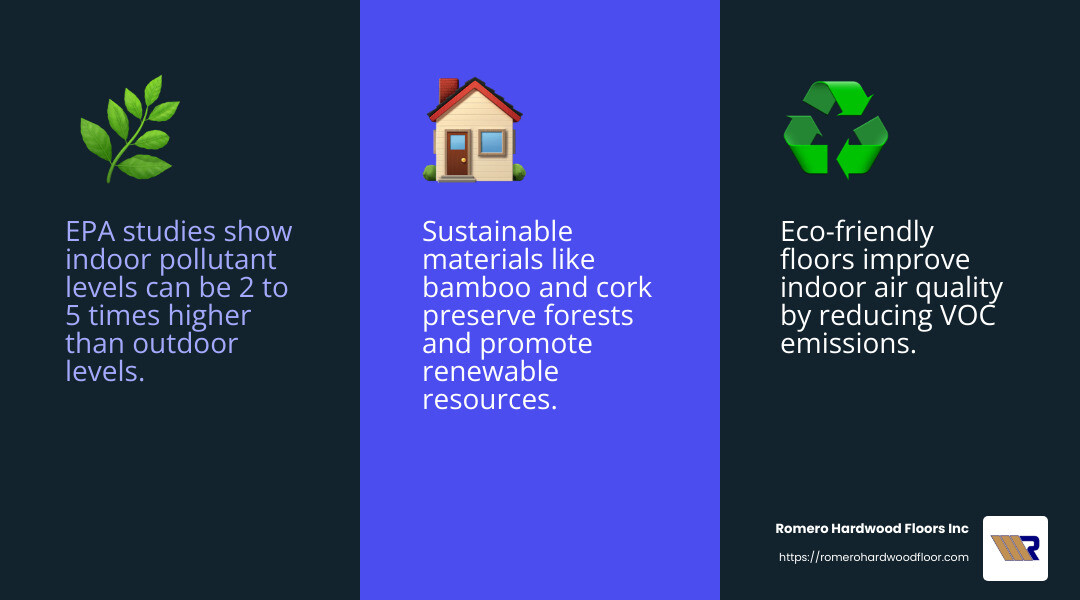
One of the lesser-known benefits of eco-friendly flooring is its positive impact on indoor air quality. Many traditional flooring options release volatile organic compounds (VOCs) that can harm your health. However, eco-friendly options like FSC-certified wood and cork flooring use low-VOC finishes and adhesives. This results in a cleaner, healthier indoor environment.
Renewable Resources
Eco-friendly wood flooring often comes from renewable resources, making it a sustainable choice for environmentally conscious homeowners. Cork, for example, is harvested from the bark of cork oak trees, which can be stripped without harming the tree. Similarly, bamboo is a rapidly renewable resource, reaching maturity in just a few years. Using these materials helps preserve forests and reduce the environmental impact of flooring production.
By opting for eco-friendly wood flooring, you not only improve the aesthetics and functionality of your home but also contribute to a healthier planet. It’s a win-win choice that combines style, sustainability, and long-term value.
Frequently Asked Questions about Eco-Friendly Wood Flooring
What is the most eco-friendly hardwood flooring?
The most eco-friendly wood flooring often comes from FSC-certified sources. The Forest Stewardship Council ensures that the wood is harvested responsibly, protecting wildlife and supporting forest communities. For example, American cherry and long-leaf pine are popular FSC-certified options that blend sustainability with beauty.
Reclaimed wood is another excellent choice. It repurposes wood from old buildings or fallen trees, giving it new life without further impacting forests. This not only saves resources but also adds unique character to any space.
What wood is the most eco-friendly?
When it comes to eco-friendly wood, bamboo and pine species are top contenders. Bamboo is technically a grass, but it’s often included in wood flooring due to its rapid growth and strength. Some species of bamboo can grow up to three feet in just 24 hours, making it a highly renewable resource.
Pine, particularly from sustainably managed plantations, is another eco-friendly option. It grows relatively quickly compared to hardwoods and is often used in engineered wood flooring, maximizing yield and minimizing waste.
What flooring has the lowest environmental impact?
Engineered wood and cork flooring are among the flooring options with the lowest environmental impact. Engineered wood uses multiple layers, allowing for more efficient use of raw materials. This type of flooring is also more stable and less prone to warping, extending its lifespan.
Cork flooring, on the other hand, is made from the bark of cork oak trees. The bark regenerates, allowing for repeated harvesting without harming the tree. This makes cork a renewable and sustainable choice that also offers excellent sound and thermal insulation properties.
By choosing these eco-friendly flooring options, you not only make a positive impact on the environment but also bring natural beauty and resilience into your home.
Conclusion
At Romero Hardwood Floors Inc, we believe that making sustainable choices in flooring is not just about keeping up with trends—it’s about ensuring a healthier planet for future generations. Our commitment to offering the most eco-friendly wood flooring options is central to our mission. We understand that the right flooring can improve your property’s value while minimizing environmental impact.
Choosing eco-friendly flooring, like FSC-certified wood or reclaimed hardwood, not only supports sustainable forestry practices but also adds a unique charm and durability to your home. These options reduce waste and lower carbon footprints, aligning with environmentally responsible living.
Our dedication to sustainability doesn’t stop at product selection. We offer expert installation services that ensure your flooring lasts, providing long-term value and beauty. With locations across Massachusetts, including Revere, Beverly, and Salem, we are ready to help you make the best choice for your home or business.
For more information on how Romero Hardwood Floors Inc can help you make sustainable flooring choices, visit our Eco-Friendly Hardwood Flooring page. Let’s work together to improve your space with beautiful, eco-friendly floors that stand the test of time.
