
Why Hardwood Floor Repair Putty Matters for Your Floors
Hardwood floor repair putty is a quick, cost-effective solution for fixing minor imperfections like scratches, nail holes, and small gouges in your finished hardwood floors. Here’s what you need to know when choosing the right repair putty:
Quick Guide to Choosing Hardwood Floor Repair Putty:
- For finished floors: Use non-hardening wood putty (applies after staining/topcoating)
- For unfinished floors: Use wood filler instead (hardens, can be sanded and stained)
- Color matching: Select pre-mixed colors or blend custom shades to match your floor
- Application: Simply press putty into the defect, wipe excess with a damp cloth—no sanding needed
- Popular types: Water-based (easy cleanup), wax sticks (rub-on), or solvent-based (oil finishes)
If you’ve got beautiful hardwood floors with a few battle scars—nail holes from old furniture, scratches from moving day, or small dents from dropped items—you don’t need to refinish the entire floor. That’s where repair putty comes in. It’s designed to fill those little imperfections quickly, without the hassle or cost of major repairs.
The key is understanding what type of putty works for your specific situation. Non-hardening putty is perfect for floors that are already finished, while hardening fillers are better suited for bare wood that still needs staining. Choose the wrong product, and you’ll end up with repairs that stand out instead of blend in.
I’m Francisco Romero, owner of Romero Hardwood Floors Inc., and over the past 15+ years, I’ve seen countless floors transformed with the right hardwood floor repair putty application—from minor touch-ups to helping homeowners avoid costly refinishing projects. Whether you’re tackling a DIY fix or considering professional help, understanding how putty works is the first step to maintaining floors that look flawless for years to come.
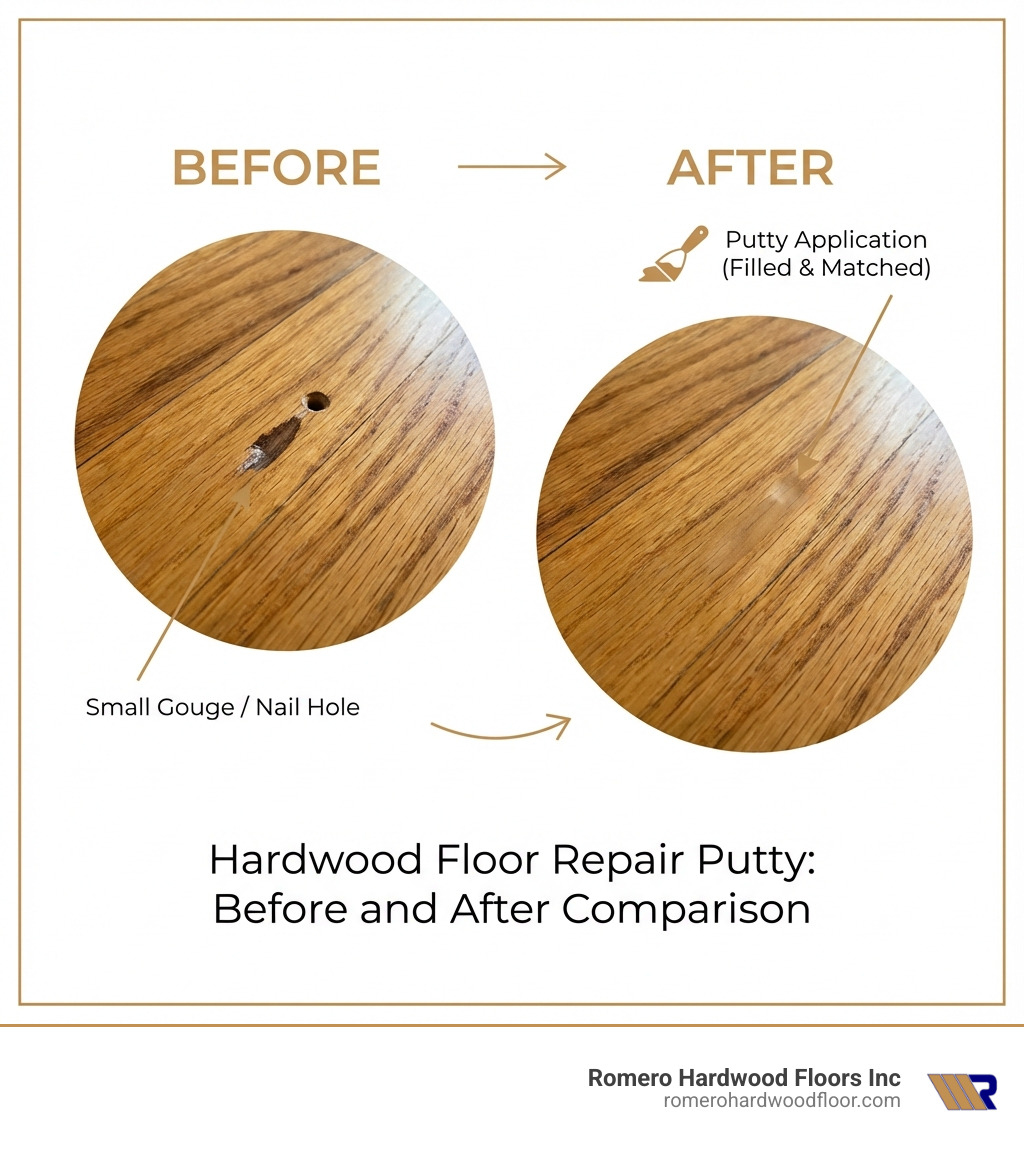
Simple guide to hardwood floor repair putty terms:
Wood Putty vs. Wood Filler: What’s the Difference?
The terms “wood putty” and “wood filler” are often used interchangeably, but they are fundamentally different products. Understanding their distinct uses is crucial for a successful hardwood floor repair.
Wood putty is a non-hardening, pre-mixed compound designed for finished floors. Its flexibility allows it to accommodate wood movement, making it ideal for cosmetic repairs after staining and topcoating. Since it doesn’t harden, it cannot be sanded or stained; its purpose is to fill minor scratches, gouges, and nail holes by matching the existing finish.
Conversely, wood filler is a hardening substance, often containing wood fibers. Once dry, it creates a solid, sandable surface perfect for larger repairs on unfinished wood. It’s applied before staining and finishing, becoming an integral part of the wood that can be sanded and stained to match. You can read more general background on these materials in the wood filler article on Wikipedia.
Here’s a quick comparison to clarify:
| Characteristic | Wood Putty | Wood Filler |
|---|---|---|
| Hardening | Non-hardening; remains flexible | Hardens to a solid, rigid state |
| Best Use Case | Minor cosmetic flaws on finished wood (scratches, small nail holes) | Larger gaps, structural repairs, imperfections on unfinished wood |
| Application Stage | After staining and topcoating | Before staining and finishing |
| Sandable? | No | Yes |
| Stainable? | No (color-matched to stains) | Yes (accepts stain) |
| Flexibility | High | Low (once cured) |
| Cleanup | Water (for water-based types) | Water or mineral spirits (depending on type) |
When to Use Wood Putty for Floors
When we talk about hardwood floor repair putty, we’re typically referring to non-hardening putties. These are specifically formulated for minor cosmetic imperfections on already finished hardwood floors in our service areas like Beverly or Lynn.
We recommend using wood putty for:
- Minor scratches: Light surface marks that haven’t penetrated deep into the wood.
- Small gouges: Shallow indentations that don’t compromise the floor’s structure.
- Nail holes: From previous installations or where trim was attached.
- Tiny gaps or chips: Where boards meet imperfectly or at the edges.
The beauty of these putties is their flexibility and non-hardening nature. They are designed to be applied after your floor has been stained and topcoated. You simply press it into the imperfection and wipe away the excess, making it perfect for quick fixes that keep your floors looking pristine without major effort.
For more comprehensive floor repair needs, including larger damages, explore our floor repair services where our team can assess and address any issue your floors may have.
When Wood Filler is the Better Choice
While hardwood floor repair putty is excellent for cosmetic touch-ups, wood filler is the superior choice for repairs that need to be structurally sound and blend into unfinished wood before staining.
We opt for wood filler when dealing with:
- Unfinished wood: When installing new floors in Chelsea or Medford, or after sanding floors down to bare wood, filler is essential for surface preparation.
- Large gaps and cracks: A hardening filler provides a more stable and lasting repair for deeper or wider imperfections.
- Structural repairs: For significant chips or voids, a wood filler creates a solid foundation that can withstand foot traffic.
- Pre-stain application: Since wood fillers harden and can be sanded, they are perfect for filling defects before you apply stain, allowing for a uniform color.
Many wood fillers are formulated to be paintable, stainable, and sandable. For very strong, permanent repairs, especially for rot-damaged wood, two-component epoxy fillers offer excellent durability and waterproof qualities. These fillers become part of the wood itself, ready for sanding and finishing.
If your floors require more than just a quick touch-up, our floor sanding and refinishing services are designed to bring them back to life.
Choosing the Perfect Putty for Your Hardwood Floors
Choosing the right hardwood floor repair putty is like choosing the right shade of paint – it needs to match, or it will stick out like a sore thumb. The goal is a repair that’s virtually invisible. This involves considering the color, putty type, project size, and your floor’s finish.
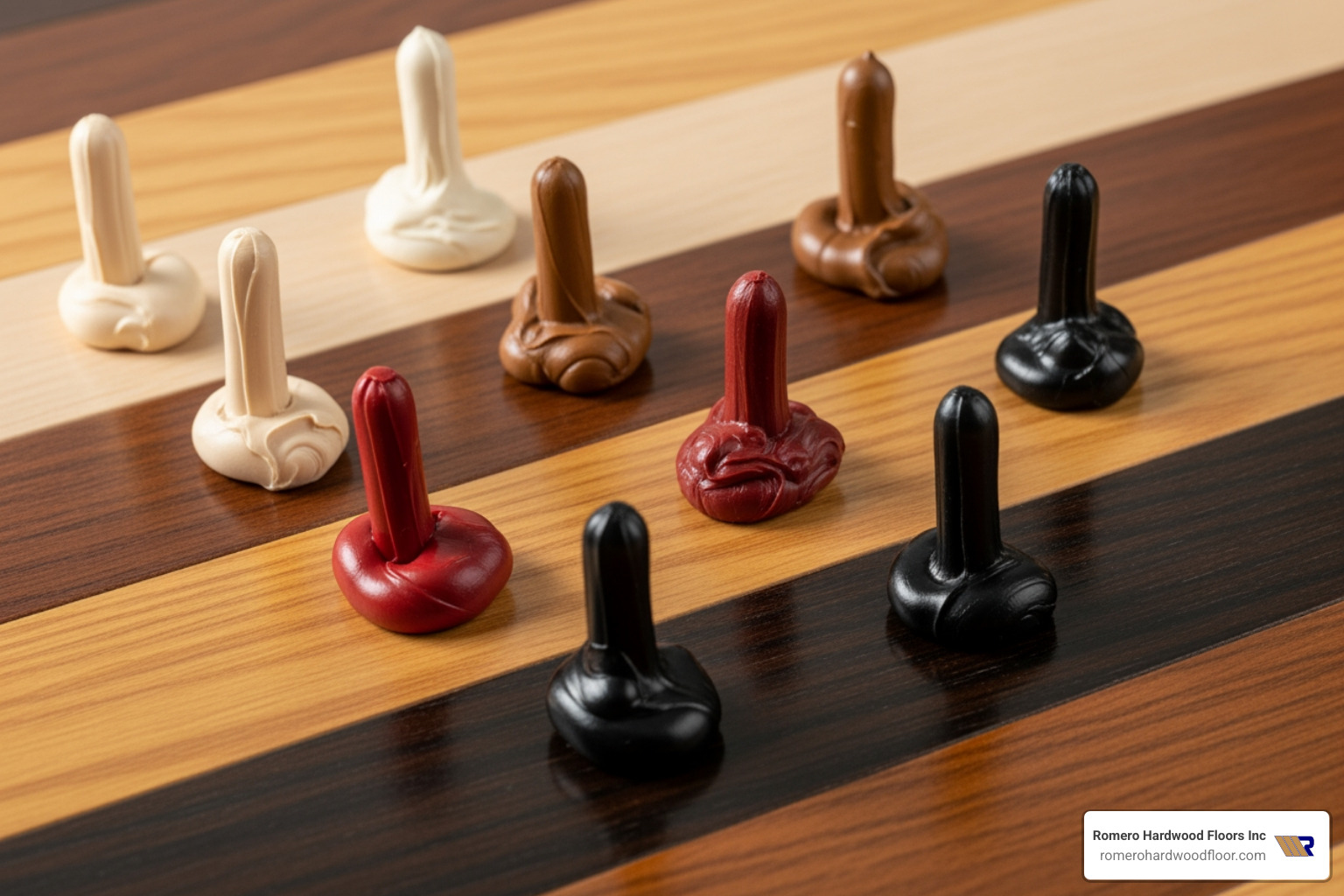
When we help clients in places like Peabody or Woburn select repair materials, we always emphasize these factors. A light pine floor requires a vastly different putty than a dark walnut. Taking the time to select the perfect putty ensures that your repair improves, rather than detracts from, the beauty of your hardwood floors.
Selecting the Right Color
Color matching is the most critical step when using hardwood floor repair putty. A perfectly executed repair can be ruined by a poorly matched color. Our aim is always to make the repair disappear.
Many putties come pre-mixed in a variety of wood tones, designed to match popular stain colors. For example, many brands offer their putty in a range of on-trend colors to match various flooring types.
Here are our tips for successful color selection:
- Match your stain: If you know your floor’s stain color, look for a putty designed to match it.
- Consider custom blending: For unique floor colors, some kits offer tints that allow you to mix a precise custom shade.
- Test in an inconspicuous area: Always test a small amount in a hidden spot (like under a rug) to see how it blends before applying it to a prominent area.
- Choose slightly darker if unsure: Wood often darkens with age. If you’re between two shades, the slightly darker one can sometimes blend better than a lighter one.
Achieving a seamless color match can be tricky, but with patience and the right product, it’s entirely possible. For more about achieving the perfect shade for your floors, explore our floor staining options.
Types of Hardwood Floor Repair Putty
The world of hardwood floor repair putty isn’t one-size-fits-all. Understanding these types will help you pick the best product for your specific repair in places like Somerville or Winchester.
- Water-Based Putty: Popular for easy, low-odor indoor use and water cleanup. These putties are typically non-hardening and flexible, ideal for minor flaws on finished floors.
- Solvent-Based Putty: These may offer better adhesion and durability. They typically require mineral spirits for cleanup and might have a stronger odor. If they are true wood fillers, they can be sanded and stained.
- Wax Sticks: These are semi-soft, rub-on fillers ideal for very minor scratches and nicks on finished surfaces. You simply rub the stick over the imperfection. They are great for quick, on-the-spot touch-ups.
- Epoxy Putty: For serious repairs requiring strength, water resistance, or filling large voids, epoxy putties are an excellent choice. These two-component systems harden to form a very durable, waterproof bond and are typically sandable and paintable.
- Non-Hardening Putty: As discussed, this type is designed to remain flexible. It’s applied after staining and topcoating and is not intended for sanding. It’s purely for cosmetic repair of minor surface flaws.
Each type offers different benefits, so choosing the right one depends on the nature of the damage and whether your floor is finished or unfinished. Our professional-grade wood repair kits can address a wide range of these issues, ensuring a proper repair for your hardwood floors.
How to Apply Hardwood Floor Repair Putty: A Step-by-Step Guide
Applying hardwood floor repair putty is a straightforward process, but precision and patience are key. Whether you’re in Saugus or Stoneham, following these steps will help you achieve a professional-looking repair.
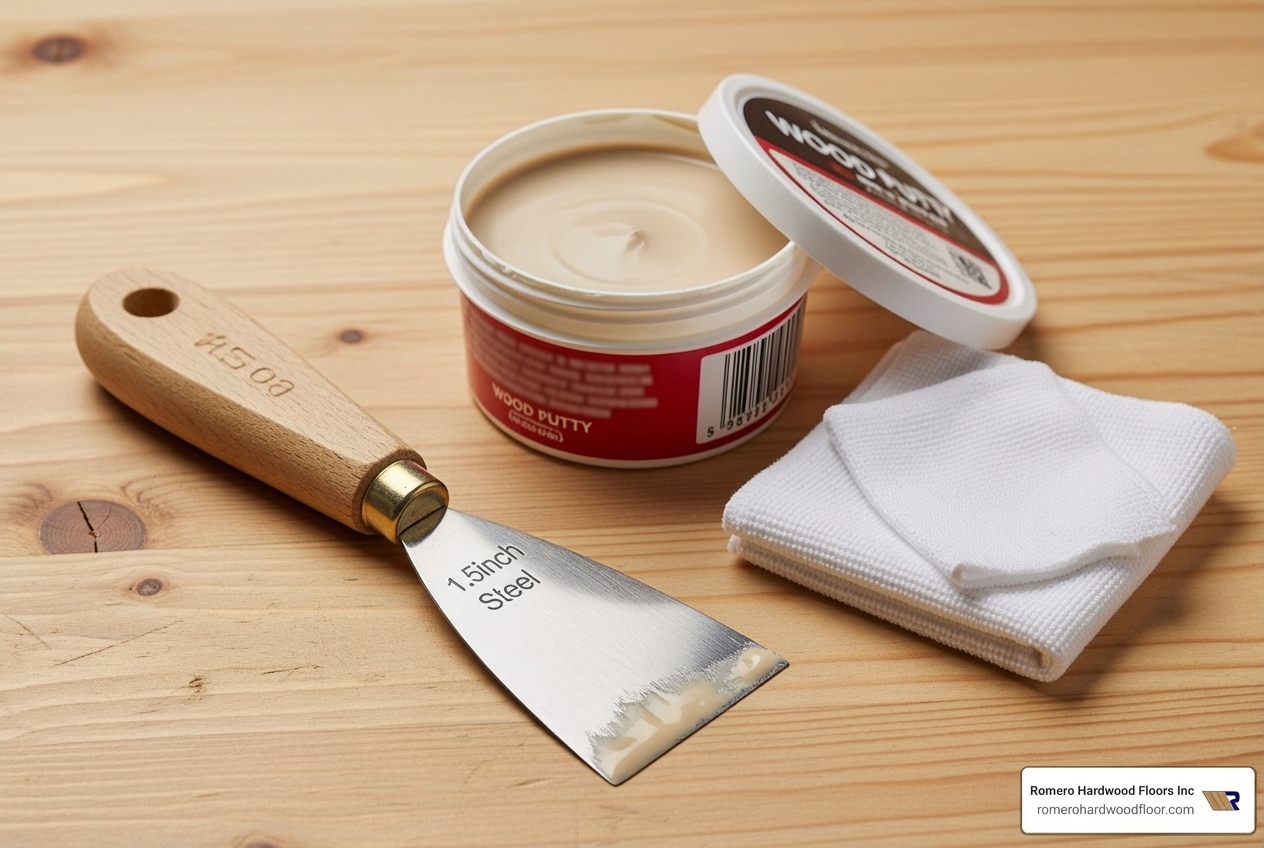
The goal is to make the imperfection disappear, not to draw more attention to it!
Step 1: Prepare the Damaged Area
Preparation is key to a successful repair. A clean, dry surface ensures the hardwood floor repair putty adheres properly.
- Clean the surface: Use a mild wood cleaner to remove all dirt, dust, and wax from the damaged area to ensure proper bonding.
- Remove loose debris: For gouges or chips, use a utility knife to carefully remove any loose splinters or wood fragments.
- Ensure the area is dry: Moisture is the enemy of wood repair products. Allow the cleaned area to dry completely before applying putty.
For most wood putty products, the instructions specifically state to ensure the surface is clean and dry. This step is even more critical for hardening wood fillers.
Step 2: Apply the Putty
With the surface prepped, it’s time to apply the hardwood floor repair putty. The technique varies slightly based on the product.
- For non-hardening putties: Using a putty knife or your finger, press the putty firmly into the defect. Overfill the area slightly to ensure it’s completely packed.
- For wax sticks: Rub the stick over the scratch or gouge until the imperfection is filled. Use a plastic scraper to gently remove any excess wax.
- For hardening wood fillers (on unfinished wood): Apply the filler with a putty knife, pressing it deep into the repair site. Overfill slightly, as some fillers shrink as they dry. Smooth the surface with the putty knife.
- For epoxy or urethane repair kits: These involve more specific steps, often requiring drilling a small hole and injecting the product. Always follow the manufacturer’s instructions carefully.
Always ensure you’re working the putty into the defect, not just skimming it over the top. This ensures a full and lasting fill.
Step 3: Clean Up and Final Touches
The final step is crucial for making your hardwood floor repair putty job look professional.
- Wipe away excess immediately: For non-hardening putties, wipe excess from the surrounding area with a damp cloth immediately after application. This prevents a residue from forming.
- For wax sticks: After scraping, gently buff the area with a soft, clean cloth to blend the repair and restore the sheen.
- For hardening wood fillers: Once the filler is completely dry (check manufacturer’s instructions), sand the repaired area flush with the surrounding wood using fine-grit sandpaper. Clean off any dust before staining and topcoating.
- No sanding for non-hardening putty: This is a key distinction. Because non-hardening putties remain flexible and are applied after the finish, they are not meant to be sanded.
By following these steps, you can effectively repair minor imperfections and keep your hardwood floors looking their best in any of our Massachusetts locations, from Gloucester to Rockport.
Benefits and Common Mistakes
Maintaining the beauty of hardwood floors doesn’t always require extensive work. Often, a small tub of hardwood floor repair putty can be your secret weapon. However, it must be used correctly to yield the best results.
When done right, you get seamless repairs and cost savings. When done wrong, you might be calling us for a more involved repair!
Key Benefits of Using Putty
For minor damage on finished hardwood floors, hardwood floor repair putty offers compelling advantages for homeowners and professionals.
- Quick Fix: Application is fast, with many putties requiring little to no dry time. This makes for an almost instant repair, perfect for busy households in areas like Malden or Melrose.
- Inexpensive: Compared to professional refinishing or board replacement, a container of repair putty is incredibly budget-friendly.
- Protects from Further Damage: Filling a scratch or gouge prevents moisture and dirt from penetrating the wood, which could lead to more extensive damage over time.
- Improves Appearance: The most obvious benefit is aesthetic. Unsightly marks disappear, restoring the smooth, uniform look of your hardwood floors.
- DIY-Friendly: Most hardwood floor repair putty products are designed for easy application, requiring minimal tools and expertise.
These benefits make wood putty an indispensable part of hardwood floor maintenance.
Common Mistakes to Avoid
While using hardwood floor repair putty is generally straightforward, several common pitfalls can turn a simple repair into a noticeable flaw. We’ve seen these mistakes in areas from Danvers to Swampscott, and we want to help you avoid them.
- Using the Wrong Product: The most common error is confusing putty and filler. Use non-hardening putty for finished floors and hardening filler for unfinished wood that needs sanding and staining.
- Poor Color Matching: An improperly matched color will make the repair stand out. Always test the putty in an inconspicuous area first.
- Applying to Unfinished Wood (for non-hardening putty): Non-hardening putties won’t accept stain or finish like bare wood, resulting in an obvious patch if used before finishing.
- Not Cleaning the Surface: Dirt, grease, or debris will prevent the putty from adhering properly, leading to a weak repair.
- Using Too Much Putty or Not Wiping Excess: Failing to wipe away excess putty immediately can leave a visible smudge or film on the surrounding finished wood.
- Sanding Non-Hardening Putty: Attempting to sand flexible, non-hardening putty will only create a mess, not a smooth surface. It is applied after the final finish for this reason.
By being mindful of these common errors, you can ensure your hardwood floor repair putty efforts result in a seamless, professional-looking fix every time.
Frequently Asked Questions about Hardwood Floor Putty
We often get questions from homeowners in places like Reading and Winthrop about the best way to care for their hardwood floors. Here are some of the most common inquiries we receive about hardwood floor repair putty.
How long does hardwood floor repair putty last?
The longevity of a hardwood floor repair putty repair depends on the product, the repair’s location, and foot traffic.
- Non-hardening putties: In low-traffic spots, these cosmetic fixes can last for years, but may require reapplication in high-traffic areas as they can wear down over time.
- Wax sticks: Similar to non-hardening putties, these are durable for cosmetic fixes but can wear down and are easy to reapply as needed.
- Hardening wood fillers: When properly applied to unfinished wood and then finished, these repairs are very durable and can last as long as the surrounding finish.
- Epoxy putties: These are the most durable and permanent options, creating waterproof, strong repairs that can last for decades.
Regular cleaning and proper floor maintenance will help extend the life of any putty repair.
Can hardwood floor repair putty be used on other wood surfaces?
Absolutely! While our focus is on floors, most hardwood floor repair putty products are versatile enough for other interior wood surfaces like furniture, paneling, molding, trim, and doors. Epoxy-based putties can even be used for more significant repairs on window sills or railings.
The key considerations remain the same: match the product to the type of wood (finished vs. unfinished) and the nature of the damage, and ensure proper color matching. So, whether it’s a nick on your baseboards in East Boston or a scratch on a wooden cabinet, there’s likely a suitable putty product for the job.
Can you sand and stain hardwood floor repair putty?
This is a critical question that highlights the fundamental difference between wood putty and wood filler.
- Non-hardening hardwood floor repair putty: No, you cannot sand or stain this type of putty. It is designed to be applied after your floor has been stained and topcoated. These putties are already color-matched to blend with the existing finish. Attempting to sand them will create a sticky mess, and they won’t absorb stain.
- Hardening wood fillers: Yes, if the product is a true wood filler that hardens, it is designed to be sandable and stainable. These are applied to unfinished wood, allowed to dry, then sanded smooth before being stained or painted to match the surrounding wood.
Therefore, always check the product specifications. If you intend to sand and stain your repair, you need to choose a hardening wood filler, not a non-hardening hardwood floor repair putty.
Conclusion: Maintaining Your Flawless Floors
Using hardwood floor repair putty is a simple, effective way to handle minor imperfections on your floors. As we’ve covered, success depends on choosing the right product—putty for finished floors, filler for unfinished—and matching the color carefully. Avoiding common mistakes will ensure your repairs are truly seamless.
For long-term care, regular cleaning and prompt attention to any new damage will keep your floors looking their best. While hardwood floor repair putty is excellent for DIY touch-ups, there are times when professional help is invaluable. For larger repairs, extensive damage, or if you’re considering a full floor refinishing to restore your floors to their original glory, our team at Romero Hardwood Floors Inc. is here to help.
We proudly serve homeowners and businesses across Eastern Massachusetts, including Beverly, Chelsea, East Boston, Gloucester, Lynnfield, Manchester by the Sea, Marblehead, Medford, Melrose, Nahant, Peabody, Reading, Revere, Rockport, Salem, Saugus, Somerville, Stoneham, Swampscott, Wakefield, Winchester, Winthrop, and Woburn. With our competitive pricing, punctuality, and guaranteed workmanship, we’re dedicated to enhancing the value and beauty of your property with expert flooring solutions.
Don’t let minor flaws detract from the elegance of your hardwood floors. With the right knowledge and tools, you can keep them looking flawless for years to come. For any repair beyond the scope of a simple putty fix, or for expert advice, please explore our professional hardwood floor repair services.
