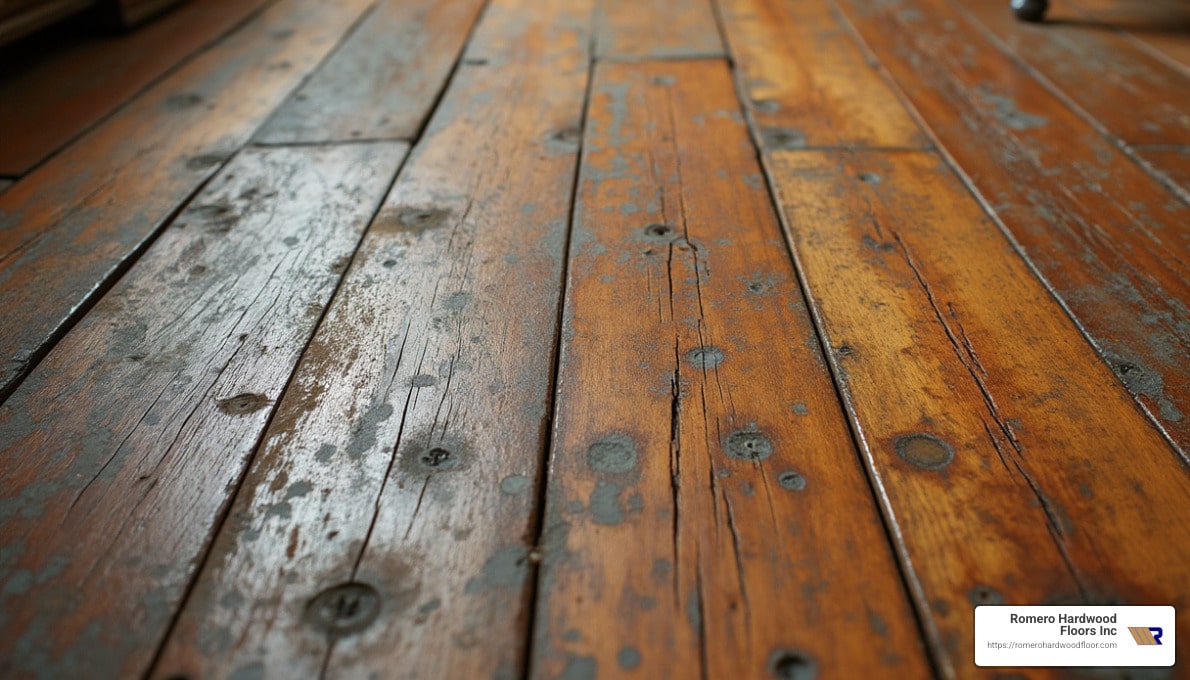
Removing Old Varnish from Wood Floors: 5 Proven Tips
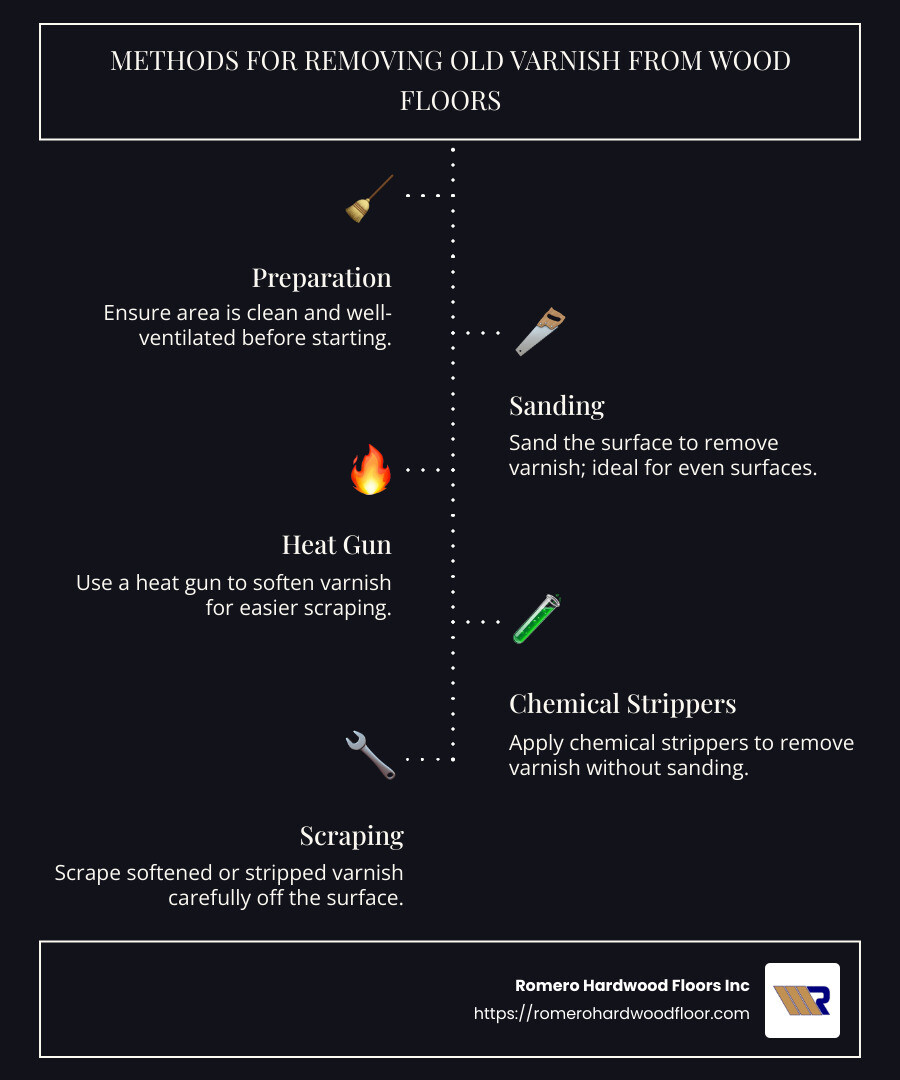
Removing old varnish from wood floors is a crucial task for homeowners and property managers looking to restore their wood flooring’s natural beauty and extend its life. Whether you’re using sanding, heat guns, or chemical varnish removers, each method is aimed at gently stripping away the old varnish without damaging the underlying wood. Here’s a quick guide to get you started:
- Sanding: Offers a fresh start for your wood, but creates dust.
- Heat Gun: Softens the varnish for easy scraping; be cautious.
- Chemical Varnish Remover: Ideal for intricate areas; follow safety guidelines.
I’m Francisco Romero, with over 15 years of experience in flooring solutions. My expertise in removing old varnish from wood floors has helped numerous clients breathe new life into their wood surfaces. Let’s dive deep into the nuances of these methods and see how you can transform your flooring effectively.
Removing old varnish from wood floors definitions:
– grey varnish for wooden floors
– wood floor varnish
Understanding Wood Varnish
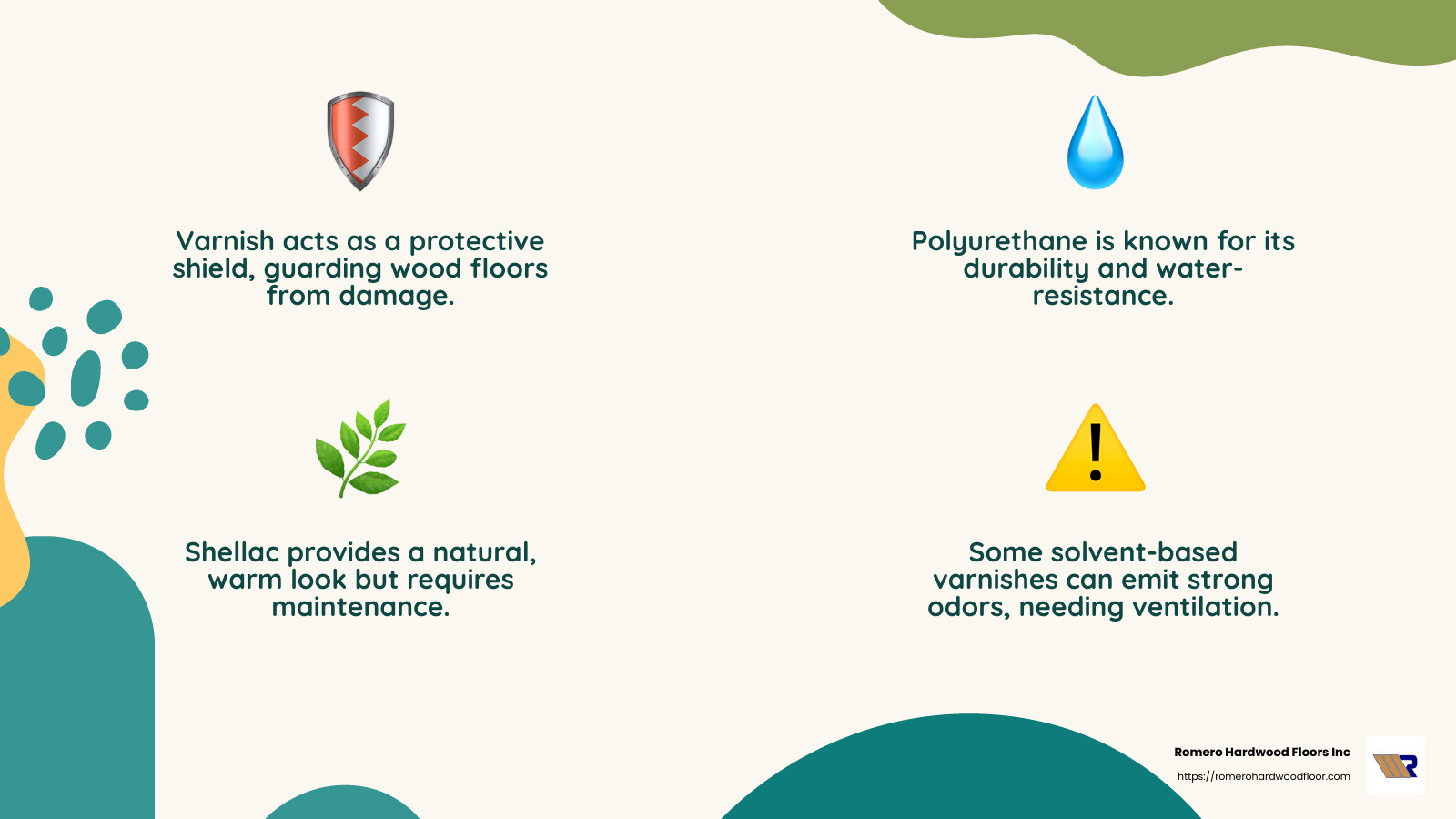
Wood varnish is like a protective shield for your floors. It adds a clear coat that guards against scratches, stains, and everyday wear. But not all varnishes are the same. Let’s break down the types and weigh their pros and cons.
Types of Wood Varnish
- Lacquer
Quick to dry and highly protective, lacquer is a popular choice for those who need a fast finish. It leaves a glossy, durable coat that stands up to heavy use. - Shellac
If you want a soft, natural look, shellac is your go-to. It dries slower than lacquer, giving a warmer finish but requires more maintenance. - Polyurethane
Durability is key with polyurethane. Available in both water-based and oil-based forms, it’s tough and long-lasting. Water-based versions dry quickly and don’t yellow, while oil-based ones deepen the wood’s color.
Benefits and Drawbacks
Benefits:
- Protection: Varnish shields wood from damage and wear.
- Aesthetic Appeal: It improves the wood’s natural beauty, adding shine and depth.
- Variety: Choose from gloss, matte, or satin finishes to match your style.
Drawbacks:
- Application Complexity: Some varnishes, like shellac, need careful application.
- Maintenance: Over time, varnishes may need reapplication or removal as they age.
- Environmental Concerns: Solvent-based varnishes can emit strong odors and require ventilation.
Choosing the right varnish depends on your needs and the look you want for your floors. Whether it’s the quick-drying lacquer or the robust polyurethane, each type offers its own set of advantages. Stay tuned as we dig into the methods for removing old varnish from wood floors, ensuring your wood surfaces remain as stunning as ever.
Methods for Removing Old Varnish from Wood Floors
Removing old varnish from wood floors can be a tricky task, but with the right approach, you can reveal the beautiful wood beneath. Here are the most effective methods:
1. Sanding
Sanding is a common technique for stripping old varnish. It involves using abrasive materials to wear down the varnish layer by layer. Here’s how it works:
- Start with Coarse Grit: Begin with a 36-grit sandpaper to tackle the tough varnish. This helps to break through the thick layers.
- Progress to Finer Grit: Gradually move to 60, then 120-grit sandpaper to achieve a smooth finish. This ensures the wood is ready for a new coat of varnish.
- Tools: A drum sander is ideal for large areas, while a hand sander is perfect for edges and corners.
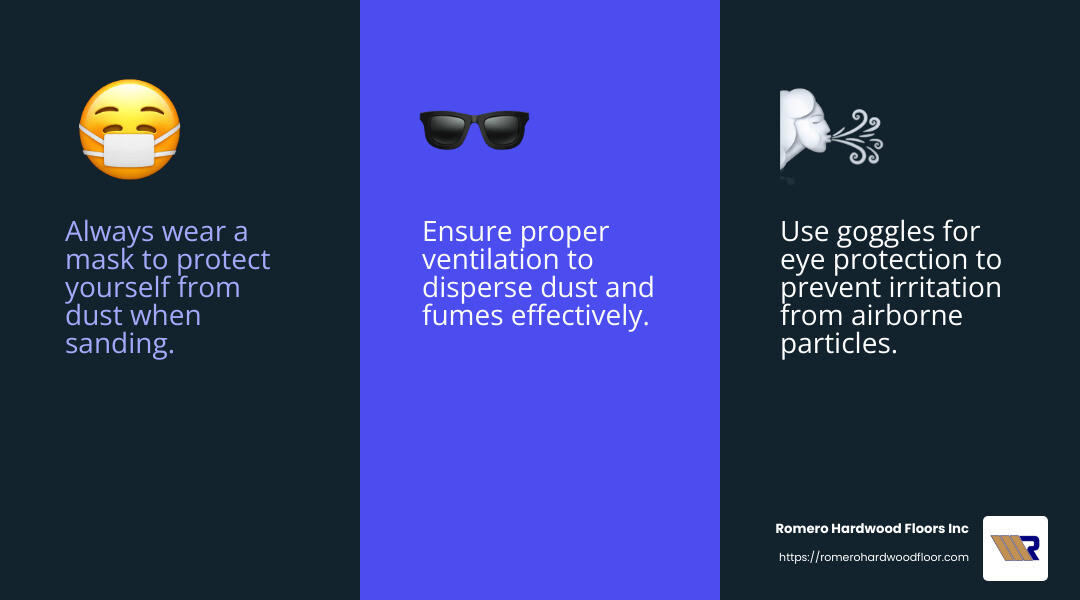
Sanding is effective but can be labor-intensive and dusty. It’s crucial to wear protective gear and ensure proper ventilation.
2. Heat Gun
Using a heat gun is another way to remove old varnish. This method involves applying heat to soften the varnish, making it easier to scrape off.
- How to Use: Hold the heat gun a few inches from the floor and move it slowly to avoid scorching the wood.
- Scraping: Once the varnish bubbles and softens, use a scraper to gently remove it.
- Advantages: This method is great for detailed woodwork and stubborn finishes.
Remember to be cautious with heat guns to prevent burns or damage to the wood.
3. Varnish Remover
Varnish removers are chemical solutions designed to dissolve varnish, making it easier to wipe away.
- Application: Apply the remover with a brush and let it sit for the recommended time (usually 15-30 minutes).
- Removal: Once the varnish softens, use a scraper to lift it off. Follow up with a clean cloth to remove any residue.
- Safety Precautions: Always work in a well-ventilated area and wear gloves and goggles to protect yourself from fumes and chemicals.
Chemical removers are effective but require careful handling due to their potent nature.
Each method for removing old varnish from wood floors has its own benefits and considerations. Whether you opt for sanding, a heat gun, or a varnish remover, the goal is to prepare the floor for a fresh new finish. Next, we’ll explore how to remove varnish without sanding, perfect for those in occupied locations or seeking a less dusty solution.
Step-by-Step Guide to Removing Old Varnish
Removing old varnish from wood floors requires careful preparation and execution. Follow these steps to ensure a smooth and effective process.
Prepare the Area
Before you begin, it’s important to get the area ready:
- Clear the Room: Remove all furniture, rugs, and any items that could get in the way. This ensures you have full access to the floor and prevents damage to your belongings.
- Protect Yourself: Wear gloves, safety goggles, and a dust mask. This protects you from dust, fumes, and potential splinters.
- Ventilation: Open windows and doors to ensure proper airflow. Good ventilation helps disperse fumes from varnish removers and keeps the work area safe.
Apply Varnish Remover
Once the area is prepared, it’s time to apply the varnish remover:
- Choose the Right Remover: Opt for a low-odor, biodegradable stripper for safety and ease. These are effective and less harmful to the environment.
- Application: Use a paintbrush to apply the remover generously over the varnished surface. Follow the manufacturer’s instructions for the waiting period, usually about 15 to 30 minutes.
- Wait and Observe: Allow the remover to work its magic. You’ll notice the varnish starting to bubble and soften, indicating it’s ready for removal.
Scrape Varnish
With the varnish softened, you can now proceed to scrape it off:
- Scraping Tools: Use a plastic scraper or putty knife to gently remove the loosened varnish. Always scrape in the direction of the wood grain to avoid damaging the surface.
- Detailed Areas: For intricate or detailed sections, use a stiff-bristle brush or steel wool to reach into grooves and corners.
- Clean Up: After scraping, wipe the area with a clean cloth and a mixture of water and vinegar to neutralize any remaining stripper. Rinse thoroughly with water and let the wood dry completely.
By following these steps, you’ll effectively remove old varnish from your wood floors, revealing their natural beauty. In the next section, we’ll explore how to tackle varnish removal without sanding, ideal for those seeking a less invasive method.
Removing Old Varnish from Wood Floors Without Sanding
Sanding isn’t always the best option when it comes to removing old varnish from wood floors. Sometimes, you need a method that’s less invasive or suitable for occupied spaces. That’s where chemical strippers come into play.
Chemical Strippers
Chemical strippers are powerful solutions designed to break down old varnish without the need for sanding. They are especially useful for intricate or hard-to-reach areas. Here’s how to use them effectively:
- Select the Right Stripper: Choose a low-odor, biodegradable chemical stripper. These are not only safer for you and the environment but also effective in breaking down varnish layers.
- Application Process: Apply the chemical stripper with a brush or roller. Ensure you cover the entire surface evenly. Let it sit for the recommended time, usually between 15 minutes to a few hours, depending on the product.
- Scraping: Once the varnish has softened, use a plastic scraper to gently remove it. For detailed areas, a stiff brush or steel wool can help.
Safety Precautions
Using chemical strippers requires careful attention to safety:
- Personal Protection: Always wear gloves, safety goggles, and a mask to protect yourself from fumes and skin contact.
- Read Instructions: Follow the manufacturer’s guidelines closely. They provide specific safety measures and application techniques for best results.
- Dispose of Materials Safely: After use, dispose of any contaminated cloths, brushes, or leftover stripper according to local regulations.
Ventilation
Proper ventilation is crucial when working with chemical strippers:
- Airflow: Open windows and doors to create a cross-breeze. This helps disperse fumes and reduces inhalation risks.
- Use Fans: Place fans strategically to improve airflow and push fumes out of the working area.
By opting for chemical strippers, you can effectively remove old varnish without the dust and hassle of sanding. This method is ideal for occupied spaces or when you want to preserve the integrity of your floors. In the next section, we’ll answer frequently asked questions about varnish removal, offering more insights and tips.
Frequently Asked Questions about Removing Old Varnish from Wood Floors
What is the easiest way to remove old varnish from wood?
The easiest way to remove old varnish from wood is by using a chemical stripper. This method requires minimal effort compared to sanding or using a heat gun. Simply apply the stripper to the varnished surface, wait for it to soften the varnish, and then scrape it off. Choose a low-odor, biodegradable stripper for safety and ease of use. This process is effective and less labor-intensive, making it an ideal choice for those looking for a straightforward solution.
Can you remove varnish from wood without sanding?
Yes, you can remove varnish from wood without sanding by using a chemical stripping method. This approach is particularly useful in occupied locations where sanding might create too much dust and disruption. Chemical strippers break down the varnish, allowing you to scrape it off easily. This method ensures that your environment remains clean and the integrity of the wood is preserved. Always ensure proper ventilation and follow safety precautions when using chemical strippers.
How to remove old varnish from hardwood floors?
To effectively remove old varnish from hardwood floors, you can use solvents like mineral spirits or denatured alcohol. These substances help dissolve the varnish, making it easier to wipe away. Start by applying the solvent with a cloth, allowing it to sit and penetrate the varnish. Then, gently scrub the area with steel wool or a soft brush. This method is ideal for spot treatments or when dealing with stubborn varnish spots. Remember to work in a well-ventilated area and wear protective gear to ensure safety.
By choosing the right method and tools, you can efficiently tackle the task of removing old varnish from your wood floors, keeping them ready for a fresh new finish.
Conclusion
At Romero Hardwood Floors Inc, we pride ourselves on delivering expert flooring solutions that not only improve the beauty of your home but also significantly improve property value. Removing old varnish from wood floors is a crucial step in revitalizing your space, and our team is here to ensure the process is as smooth and effective as possible.
Our years of experience in the industry have taught us the best techniques for removing varnish, whether through sanding, chemical strippers, or other methods. We understand that each project is unique, and we tailor our approach to meet your specific needs, ensuring that the integrity and beauty of your hardwood floors are preserved.
Investing in professional flooring services like ours not only improves the aesthetic appeal of your home but also increases its market value. Well-maintained hardwood floors are a desirable feature for potential buyers, offering a timeless elegance that never goes out of style.
If you’re ready to transform your floors and improve your home’s value, contact Romero Hardwood Floors Inc today for a consultation. Our team is committed to providing exceptional service and results that you can enjoy for years to come.