
Resurfacing Engineered Wood Floors: Top 3 Expert Tips
Resurfacing engineered wood floors is a smart and cost-effective way to refresh your living and commercial spaces. Engineered wood flooring combines the beauty of hardwood with improved durability, but over time, even these robust floors can lose their shine and show signs of wear. Instead of replacing your entire floor, resurfacing provides a practical solution to restore its original luster and charm.
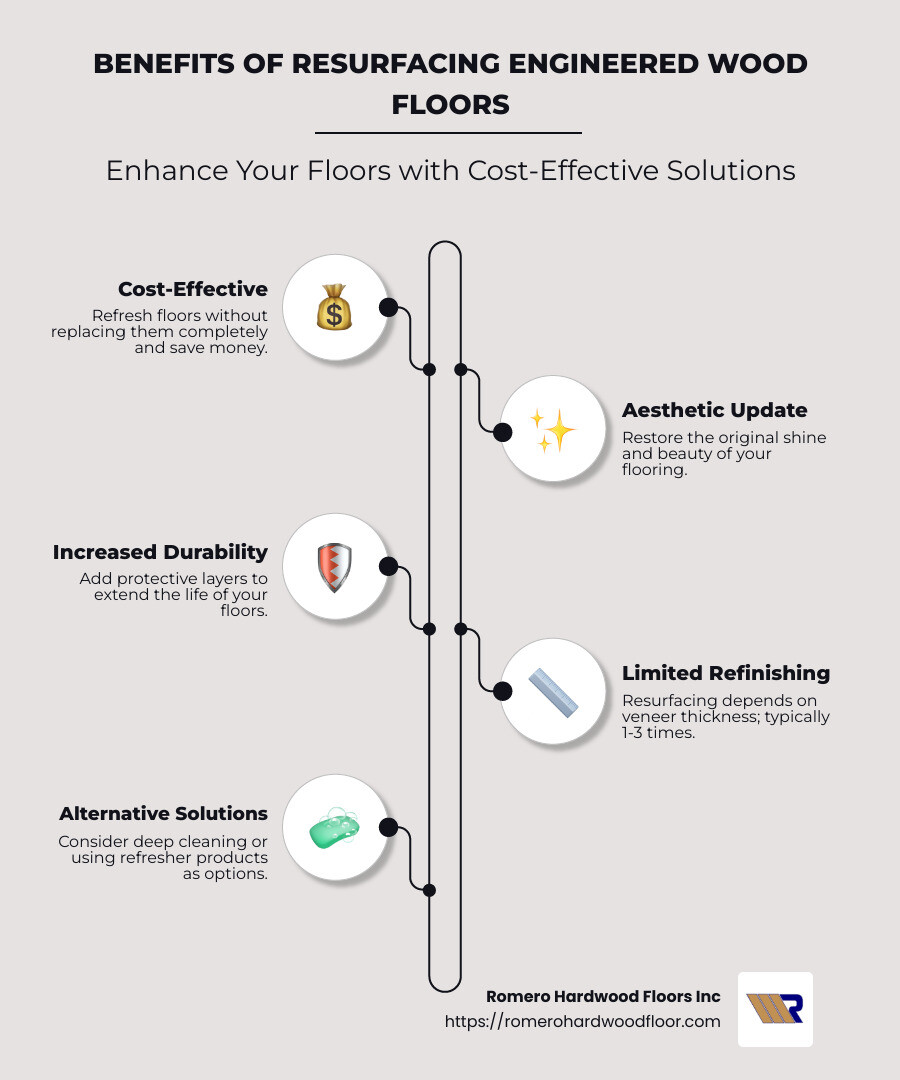
Here’s a quick summary of key points about resurfacing engineered wood floors:
- Cost-effective solution: Refresh your floors without the expense of total replacement.
- Preserve beauty: Bring back the original shine and aesthetics of your floor.
- Extended durability: Add protective layers to prolong the life of your flooring.
- Limited refinishing potential: The number of times you can resurface depends on veneer thickness.
I’m Francisco Romero, founder of Romero Hardwood Floors Inc., and with over 15 years of experience in the flooring industry, I specialize in changing spaces with expert flooring solutions, including resurfacing engineered wood floors. My extensive experience guides homeowners and businesses in making informed decisions for beautiful, long-lasting floors.
Key terms for resurfacing engineered wood floors:
– floor resurfacing cost
– new hardwood flooring
– solid wood floor restoration
Understanding Engineered Wood Floors
Engineered wood floors are a popular choice for many homeowners, offering the beauty of real wood with added durability. The secret to their success lies in their layered construction.
Layered Construction
At the heart of engineered wood flooring is a multi-layered design. This design typically includes:
- Top Veneer Layer: This is a thin slice of real wood, available in various species like oak, walnut, or maple. It provides the authentic look and feel of hardwood.
- Core Layers: Beneath the veneer, you’ll find several layers of high-quality plywood or fiberboard. These layers are arranged in a crisscross pattern, which adds stability and makes the flooring more resistant to warping and changes in humidity.
- Bottom Layer: The base layer is usually made of wood or plywood. It acts as a foundation, providing additional support and balance to the floor.
Real Wood Veneer
The real wood veneer is what gives engineered wood floors their charm. It showcases the natural beauty and grain of wood, making each floor unique. However, the thickness of this veneer is crucial when it comes to resurfacing. Thicker veneers (around 2mm) can withstand light sanding, while thinner ones might not hold up well to refinishing.
Plywood Core
The core layers of plywood are what set engineered wood apart from solid hardwood. This plywood core offers several advantages:
- Stability: The crisscross arrangement reduces the floor’s expansion and contraction, making it less prone to warping.
- Durability: Engineered wood is built to last, standing up to everyday wear and tear better than some solid wood floors.
- Cost-Effectiveness: The use of plywood makes these floors more affordable than solid hardwood, without sacrificing quality or appearance.
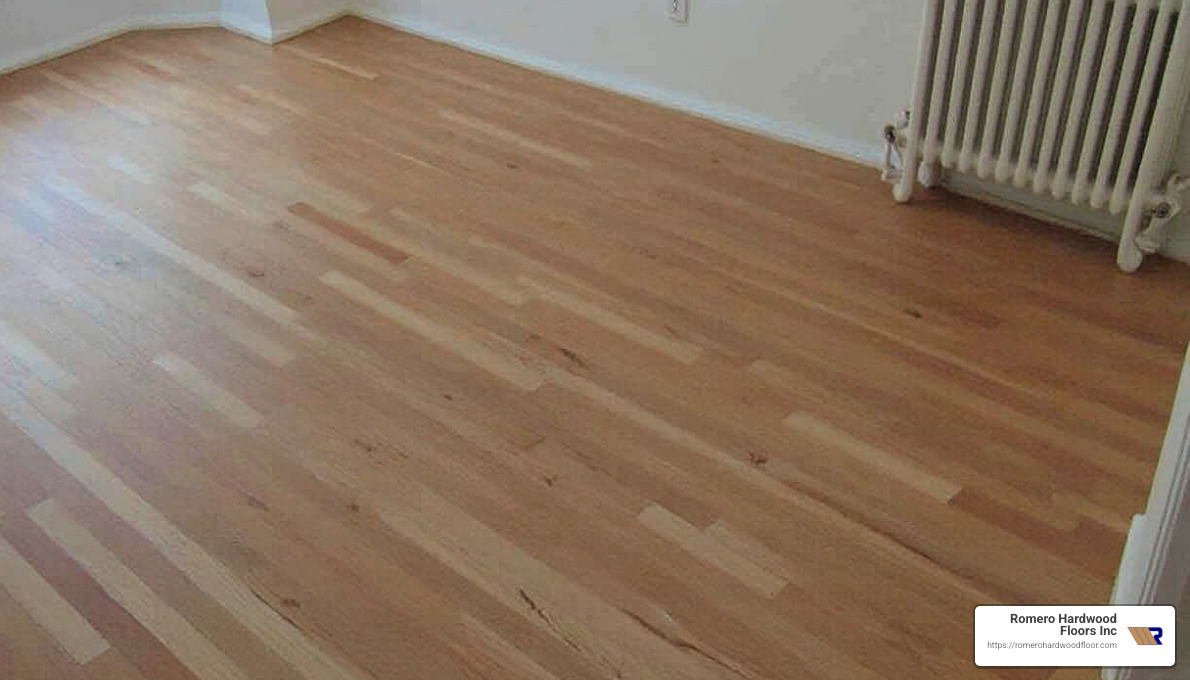
In summary, engineered wood floors combine the elegance of real wood with the practicality of modern engineering. Their unique construction makes them a versatile and durable choice for any home.
The Process of Resurfacing Engineered Wood Floors
Resurfacing engineered wood floors can breathe new life into your home without the need for a complete flooring overhaul. This process involves three main steps: sanding, staining, and finishing. Each step is crucial to achieving a beautiful and durable floor.
Sanding Techniques
Sanding is the first step in resurfacing. It removes the old finish and smooths out any imperfections. However, sanding engineered wood requires a delicate touch due to the veneer layer.
- Veneer Thickness: Before sanding, check the thickness of the veneer. If it’s too thin, sanding could damage the floor. Veneers that are around 2mm thick can usually handle light sanding.
- Orbital Sander: An orbital sander is often the tool of choice. It’s gentle enough to avoid sanding through the veneer but effective at removing the existing finish. Always sand with the grain of the wood to prevent scratches.
Staining Options
Once sanding is complete, it’s time to consider staining options. Staining can transform the look of your floors and highlight the natural wood grain.
- Color Change: Want a new look? Staining allows you to change your floor’s color. Whether you prefer a darker shade or a lighter hue, there’s a stain for every preference.
- Wood Grain Improvement: Stains can also improve the wood grain, making it more pronounced and adding depth to your flooring.
Before applying stain, test it on a small, inconspicuous area to ensure you like the color.
Finishing Touches
The final step in resurfacing is applying a finish. This step seals the wood and protects it from future damage.
- Polyurethane Finish: A polyurethane finish is a popular choice for its durability and ease of application. It creates a strong, protective layer that shields the floor from scratches, moisture, and wear.
- Protective Layer: The finish also adds a sheen to the floor, enhancing its appearance. Apply the finish in thin, even coats, allowing each layer to dry completely before adding the next.
By following these steps, you can successfully resurface your engineered wood floors, restoring their beauty and extending their lifespan. This process not only improves the aesthetic appeal but also improves the durability of your floors, making them a wise investment for any homeowner.
Benefits of Resurfacing Engineered Wood Floors
Resurfacing engineered wood floors offers several compelling benefits that make it an attractive option for homeowners looking to refresh their living spaces without breaking the bank.
Cost-Effective Solution
One of the biggest advantages of resurfacing is its cost-effectiveness. Compared to completely replacing your floors, resurfacing can save you a significant amount of money. The process involves sanding, staining, and finishing, which are generally less expensive than buying and installing new flooring. This means you can achieve a “like-new” appearance for a fraction of the cost of replacement.
Aesthetic Update
Resurfacing isn’t just about fixing wear and tear—it’s also an opportunity for an aesthetic update. By choosing a new stain, you can alter the color of your floors to match new decor or simply refresh the look of your home. Whether you opt for a rich, dark tone or a bright, light hue, resurfacing can dramatically change the ambiance of your space.
Enhancing the wood grain is another aesthetic benefit. Stains can highlight the natural patterns and textures of the wood, adding depth and character to your floors. This can make your home feel more inviting and stylish.
Improved Durability
Beyond looks, resurfacing engineered wood floors also boosts their durability. The finishing step in the resurfacing process involves applying a protective layer, typically a polyurethane finish. This finish guards against scratches, moisture, and general wear, extending the life of your floors.
With the right care, resurfaced floors can last for many years, making this investment not only visually appealing but also practical in terms of long-term use. Romero Hardwood Floors Inc provides expert solutions to ensure your floors are both beautiful and resilient.
By resurfacing your engineered wood floors, you are investing in a solution that is cost-effective, aesthetically pleasing, and durable—making it a smart choice for enhancing your home’s value and comfort.
Next, we’ll explore alternatives to resurfacing for those times when a full refinishing isn’t possible or necessary.
Alternatives to Resurfacing
When it comes to resurfacing engineered wood floors, sometimes a full refinishing isn’t necessary or even possible. Maybe your floor’s veneer is too thin, or you’re simply looking for a quicker, less invasive option. Fortunately, there are several alternatives to consider that can revive your floors’ appearance without the need for extensive work.
Deep Cleaning
A thorough deep cleaning can often work wonders on tired-looking floors. This process involves more than just a simple sweep and mop. It requires specialized wood cleaners that can remove built-up dirt, grime, and residues that dull the floor’s shine.
Benefits of Deep Cleaning:
- Restores Shine: By removing layers of dirt, your floors can regain their natural luster.
- Prevents Damage: Regular deep cleaning can prevent scratches and other damage caused by dirt particles.
- Cost-Effective: It’s a budget-friendly way to improve your floor’s appearance.
Refresher Products
If you’re looking for a subtle color boost, refresher products might be the solution. These are floor finishing products that can add a slight tint over the existing stain, providing a fresh look without the need for sanding.
Advantages of Refresher Products:
- Easy Application: They can be applied without professional help, making them perfect for DIY enthusiasts.
- Quick Results: You can see noticeable improvements in a short amount of time.
- Versatile: Available in various shades to match your existing decor.
Glazes and Finishes
For those who want a more noticeable change, glazes and tinted finishes offer a way to alter the color and improve the wood grain. These products are semi-transparent, allowing the original wood character to show through while adding depth and richness.
Why Choose Glazes and Finishes?
- Aesthetic Update: They provide a significant color shift, perfect for a bold new look.
- Improve Wood Grain: These products highlight the natural patterns of the wood, adding visual interest.
- Protective Layer: Like other finishes, they also offer some level of protection against wear and tear.
While these alternatives don’t offer the full change that resurfacing does, they provide flexibility for updating your floor’s aesthetic when a complete refinishing isn’t feasible. They are practical options for maintaining and enhancing the beauty of your engineered wood floors, ensuring they remain a standout feature in your home.
Frequently Asked Questions about Resurfacing Engineered Wood Floors
Can all engineered wood floors be resurfaced?
Not all engineered wood floors are suitable for resurfacing. The key factor here is the veneer thickness. Engineered wood flooring consists of a top veneer layer of real wood, and this layer can vary in thickness. If the veneer is too thin, typically less than 2mm, it cannot withstand the sanding process necessary for resurfacing.
If your floor has a thicker veneer, it might be possible to refinish it. However, always check the manufacturer’s guidelines or consult a professional to assess the refinishing potential of your specific flooring.
How often can engineered wood floors be resurfaced?
The number of times you can resurface engineered wood floors is limited by the thickness of the veneer. Generally, these floors can be resurfaced 1-3 times. Each sanding process removes a small amount of the veneer, so the thicker the veneer, the more times it can be refinished.
Every time you sand and refinish, you lose some of the veneer. This means that even if you can refinish your floors, it’s important to do so only when necessary to preserve the veneer for future refinishing.
Is professional help necessary for resurfacing?
While DIY resurfacing might seem appealing, there are significant risks involved. Without the right tools and expertise, you could easily sand through the veneer, rendering the floor unusable. This is especially true for engineered wood floors with thinner veneers.
Professional expertise is invaluable in this process. Professionals have the right equipment and experience to assess the veneer thickness and determine the best approach for resurfacing. They can ensure the job is done correctly, preserving the integrity and appearance of your floors.
In summary, if you’re considering resurfacing your engineered wood floors, it’s often best to seek professional help to avoid costly mistakes and achieve the best results.
Conclusion
At Romero Hardwood Floors Inc, we pride ourselves on delivering expert solutions for all your flooring needs. With over 15 years of experience, our team specializes in resurfacing engineered wood floors, ensuring your home not only looks stunning but also retains its value.
Resurfacing engineered wood floors is a cost-effective way to improve your home’s aesthetics and durability. By choosing professional services like ours, you ensure that your floors are treated with the utmost care and precision. Our skilled team understands the intricacies of veneer thickness and the delicate balance required to preserve the beauty of your floors.
When you invest in professional resurfacing, you’re also investing in your property’s long-term value. A well-maintained floor can significantly boost your home’s market appeal. With our competitive pricing and guaranteed workmanship, you get peace of mind knowing your floors are in expert hands.
Whether you’re in Revere, MA, or any of the surrounding areas, let us help you transform your space with flooring solutions that speak to quality and style. For more information on our services, visit our hardwood floor refinishing page and find how we can improve your home’s charm and value.
Choose Romero Hardwood Floors Inc for a seamless and rewarding flooring experience. Your satisfaction is our top priority, and we are here to ensure your floors reflect the beauty and elegance you desire.
