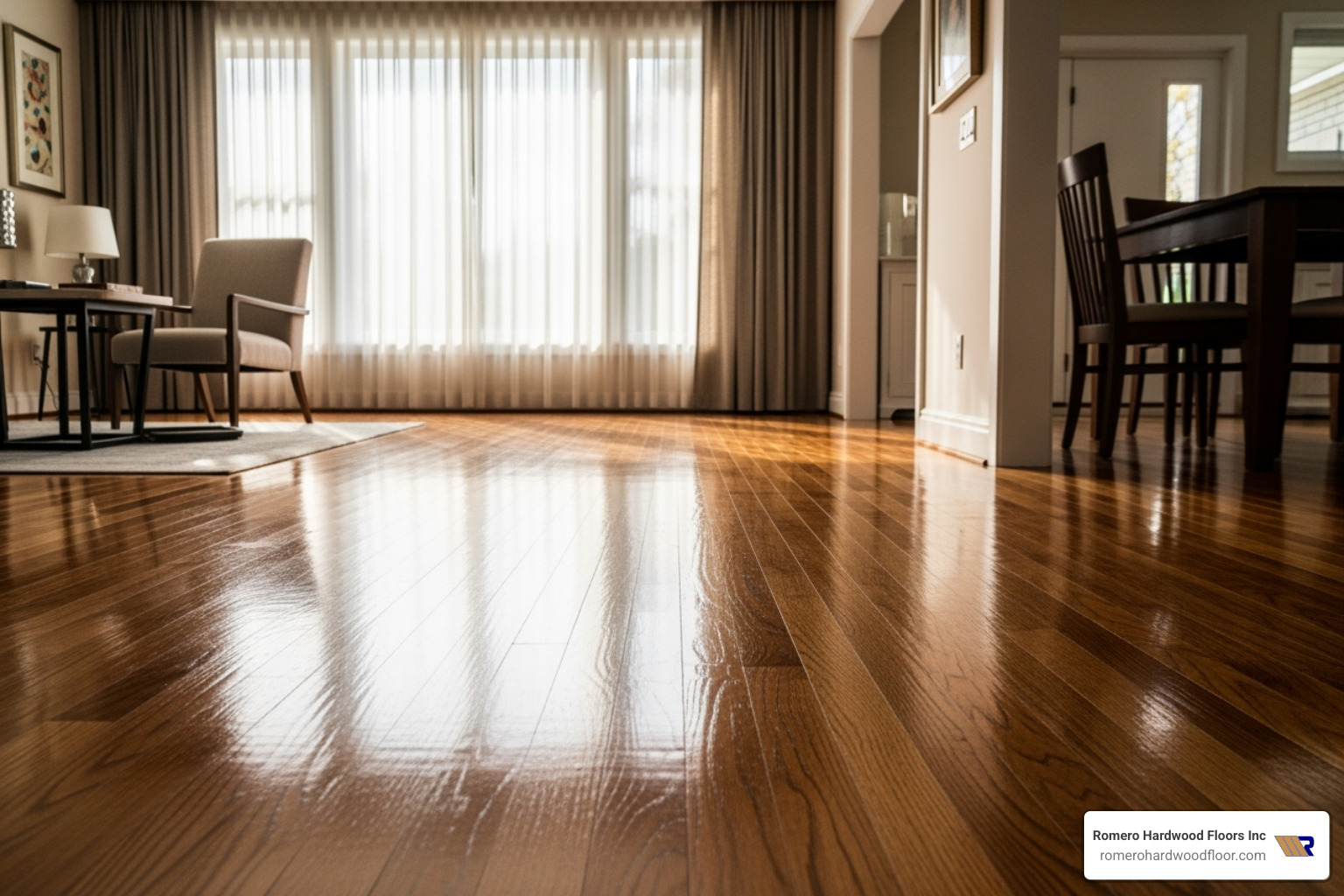
Sandless Floor Finishing: Skip the Sand 2025
Why Sandless Floor Finishing is Gaining Popularity
Sandless floor finishing offers a quick, dust-free alternative to traditional floor refinishing that can transform your worn hardwood floors in just one day. This innovative method uses chemical solutions and specialized equipment to refresh your floors without the mess and disruption of heavy sanding.
Quick Answer: What is Sandless Floor Finishing?
- Process: Chemical etching and buffing to remove surface wear, followed by new protective coating
- Best for: Minor scratches, dull finish, and light surface damage
- Time: Typically completed in 1-2 days vs. 3-5 days for traditional sanding
- Cost: Usually $1.50-$4.00 per sq ft vs. $3-$8 per sq ft for full sanding
- Durability: Results last 1-5 years depending on foot traffic
- Limitations: Cannot fix deep damage, gouges, or change floor color
Think of it like getting a deep clean and protective wax for your car versus a complete paint job. Sandless refinishing works on the surface level, while traditional sanding strips everything down to bare wood.
The appeal is obvious: no dust clouds, no need to move out of your home, and significantly less disruption to your daily routine. Homeowners often praise the convenience, with many projects completed in a single day, allowing them to enjoy their refreshed floors almost immediately without the mess or odor of traditional methods.
But like any flooring solution, sandless refinishing has its sweet spot. It’s perfect for floors with minor wear that just need a refresh, but it won’t work miracles on deeply damaged wood.
I’m Francisco Romero, owner of Romero Hardwood Floors Inc. with over 15 years of experience in hardwood flooring installation and refinishing services. Throughout my career, I’ve seen sandless floor finishing become an increasingly popular option for homeowners who want to revitalize their floors without the extensive disruption of traditional methods.
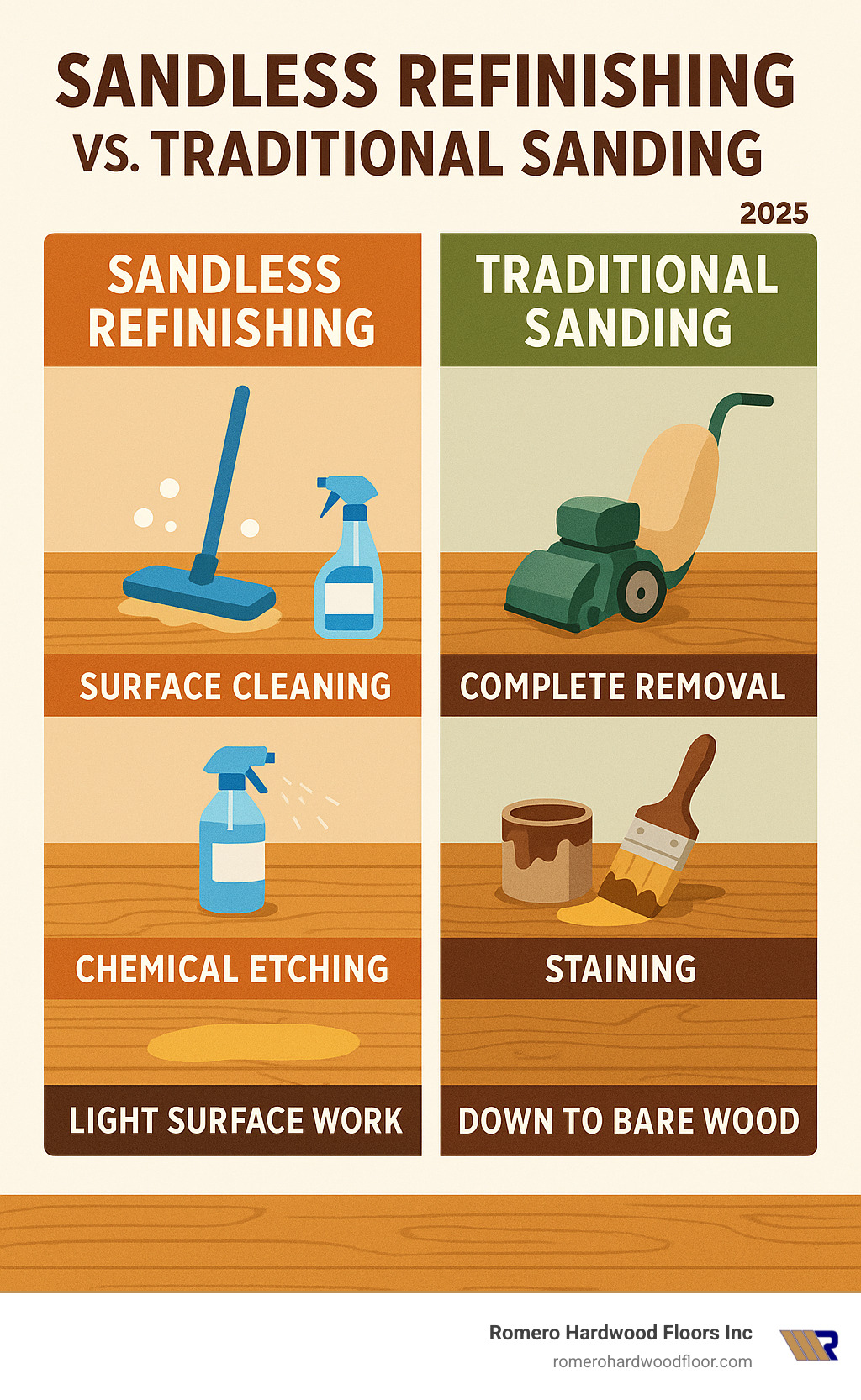
Sandless floor finishing word roundup:
What Is Sandless Floor Refinishing and How Does It Work?
Sandless floor finishing takes a different approach to bringing hardwood floors back to life. Instead of grinding away wood with heavy sanders, this gentler method uses chemical abrasion to refresh the floor’s surface. You might also hear it called a buff and recoat or screen and recoat process.
Think of it this way: traditional sanding is like stripping a wall to start fresh, while sandless refinishing is like giving that wall a deep clean and a new coat of paint over the existing finish.
The beauty of this process is its efficiency. We can typically complete the job in just one day, making it ideal for busy homeowners. The process focuses on preparing your existing finish to accept a new protective topcoat—usually a high-quality polyurethane—without creating dust or requiring you to leave your home.
At Romero Hardwood Floors Inc., we’ve seen this method transform tired-looking floors into something nearly new again. It’s particularly effective when floors aren’t severely damaged but have lost their luster. For more details, check out our Hardwood Floor Resurfacing services.
The Process of Sandless Floor Finishing
The sandless floor finishing process involves a few key steps to clean, prepare, and protect your floors:
Deep cleaning is the first, critical step. We use professional solutions to remove years of accumulated dirt, grime, and old polishes. A perfectly clean surface is essential for the new finish to adhere properly.
Next is chemical etching. We apply a specialized liquid solution and use a floor buffer with abrasive pads to gently abrade the surface. This achieves minor scuff removal and creates a profile for the new finish to bond to, achieving the goal of sanding but without the dust storm.
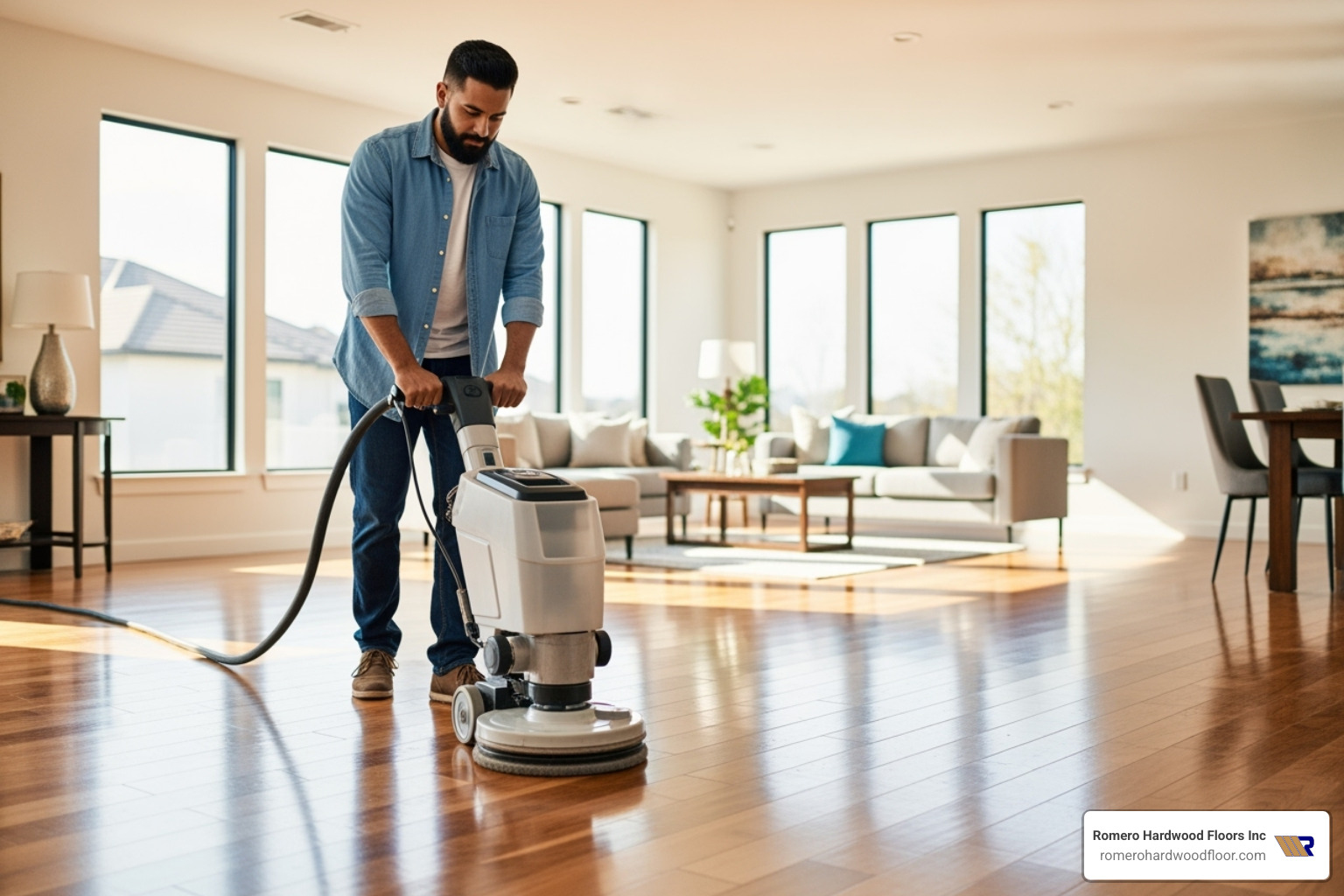
The final step is the new finish application. We typically use a quick-drying polyurethane that restores shine and provides excellent protection. The finish we choose depends on your needs, but we always prioritize options that offer both beauty and durability. You can learn more in our durable floor finish guide.
What makes this process so appealing is its speed. While traditional refinishing can keep rooms off-limits for days, sandless refinishing often allows you to walk on your floors within hours.
What Types of Floors Are Suitable?
Sandless floor finishing works beautifully on a surprising variety of flooring types, making it a versatile solution. Solid hardwood floors with minor, surface-level wear are perfect candidates.
Engineered hardwood floors are ideal for this process. Since they have a thin top layer of real wood, traditional sanding can be risky. Sandless refinishing restores them without that risk.
Prefinished floors also work well, since we’re improving the existing factory finish rather than removing it. Our guide on Refinishing Prefinished Hardwood Floors has more details.
Floors with thin wear layers are another sweet spot. If your floors have been sanded multiple times, they may not have enough wood left for another traditional sanding. This gentler approach can extend their life.
Antique floors with character marks and patina you want to preserve are great candidates. Sandless refinishing maintains that charm while adding fresh protection.
The process even works on bamboo and cork flooring, which are often too sensitive for aggressive sanding.
The key is that this method excels at refreshing floors rather than performing major restoration. It’s perfect for bringing back shine and protection without the drama of a full refinishing project.
The Pros and Cons: Is Sandless Floor Finishing Right for You?
Choosing the right refinishing method isn’t a one-size-fits-all decision. Sandless floor finishing offers fantastic advantages, but it has limitations. Think of it as a tune-up for your car versus a complete engine rebuild; the right choice depends on your situation.
At Romero Hardwood Floors Inc., we help homeowners make this decision by clarifying what sandless floor finishing can and can’t do. Our Hardwood Floor Care Guide can help you maintain your floors post-refinishing, regardless of the method chosen.
Key Benefits: When to Choose Sandless
Sandless floor finishing shines when your floors need a refresh rather than a complete makeover. If your hardwood has minor wear and tear—light scratches, a dull finish, or old wax buildup—this method works beautifully.
The budget-friendly aspect is a major draw. Most homeowners find sandless refinishing more affordable than traditional sanding, making it great for sprucing up a home without breaking the bank.
What truly wins people over are the time constraints and minimal disruption. The process typically wraps up in one day. You can often stay in your home because there’s so much less mess compared to traditional sanding.
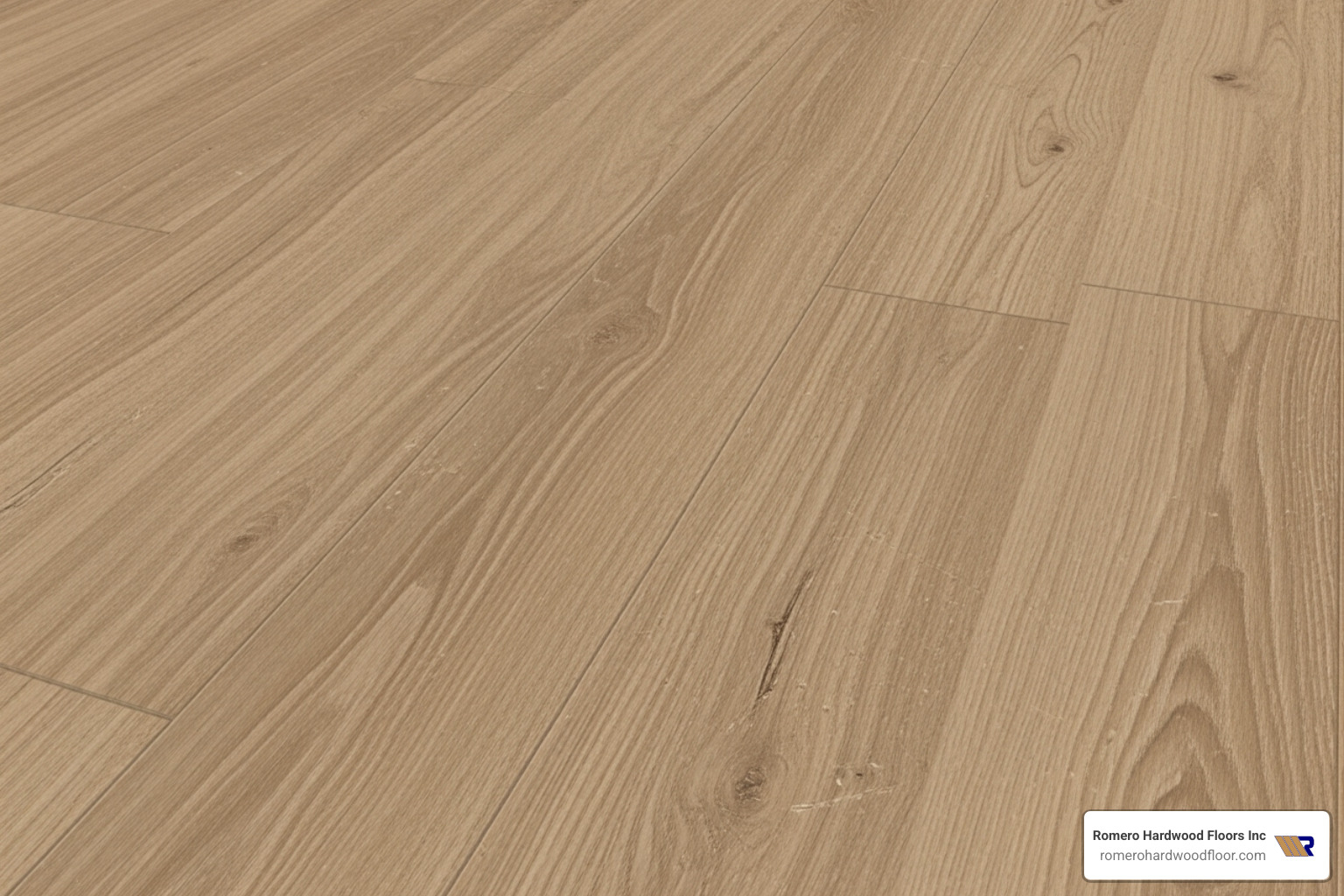
For homeowners with vintage floors, sandless refinishing offers something special: preserving character. The charming dings and dents that tell your home’s story remain intact, unlike with traditional sanding which would erase them.
If your floors are getting thin from previous sandings or are a delicate wood species, the gentle nature of sandless refinishing is a real advantage, giving them new life without removing more precious wood.
Major Limitations: When to Avoid It
Now, let’s be honest about when sandless floor finishing isn’t the right choice to avoid disappointment.
The biggest limitation is deep damage. Sandless methods cannot fix deep scratches you can feel with a fingernail, gouges, dents, or warping. The same goes for water damage that has penetrated the wood. These issues require the deep restoration that only traditional sanding can provide.
Sun fading and deep stains are another challenge. Grayed-out areas from sunlight or dark pet stains that have soaked into the wood fibers will remain visible, as sandless refinishing only treats the surface.
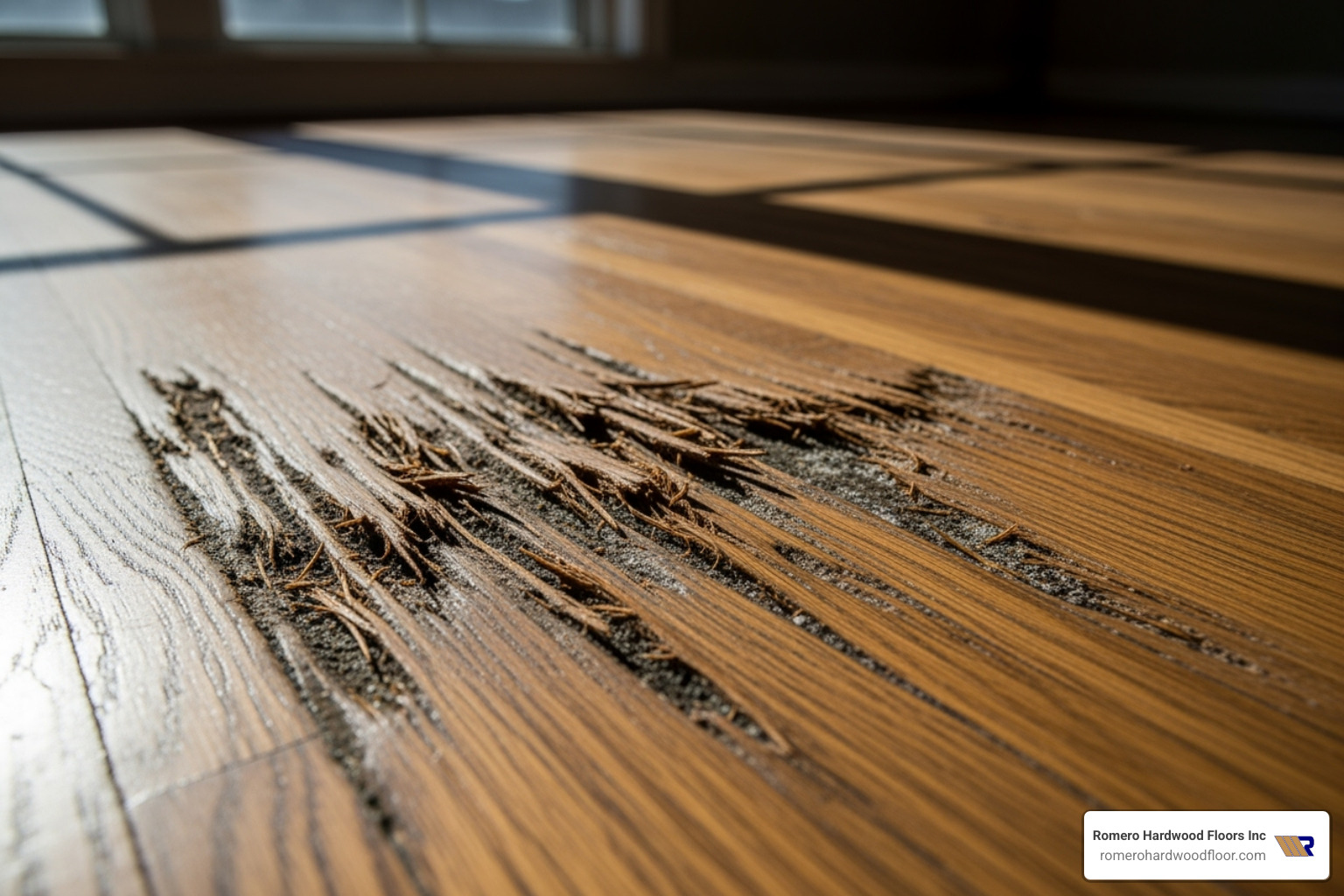
A key limitation is that you can’t change the color of your floors. The process applies a clear protective topcoat over the existing finish, so the current color is preserved. If you want to change your honey oak floors to a rich espresso, you’ll need traditional sanding and staining. Our guide on How to Stain Hardwood Floors explains more about color changes.
Finally, sandless floor finishing is a short-term solution. The results look great but typically last 1-5 years, depending on foot traffic and maintenance. It’s a refresh, not a deep restoration. For a solution that will last a decade or more, traditional sanding and refinishing is the better long-term investment.
The bottom line? Sandless floor finishing is fantastic for the right situation, but it’s not a miracle cure. Understanding these pros and cons will help you make the best decision for your home and budget.
Sandless vs. Traditional: A Clear Comparison
Choosing between sandless floor finishing and traditional sanding can feel overwhelming, but it doesn’t have to be. Think of it this way: sandless refinishing is like giving your floors a really good facial, while traditional sanding is more like plastic surgery. Both have their place, but they solve different problems.
At Romero Hardwood Floors Inc., we’ve helped countless homeowners steer this decision over the years. The key is understanding what each method can realistically accomplish for your specific situation. Our Flooring Restoration and Refinishing services include both options, and we’re always happy to help you figure out which approach makes the most sense.
The biggest difference? Sandless floor finishing works with what you already have, while traditional sanding gives you a complete do-over. Let’s break down exactly what that means for your floors, your wallet, and your daily life.
The Two Methods at a Glance
| Feature | Sandless Floor Finishing | Traditional Sanding & Refinishing |
|---|---|---|
| Process | Chemical etching, buffing, and recoating existing finish | Stripping to bare wood with heavy sanders, then staining and sealing |
| Best For | Minor wear, dullness, light surface scratches | Deep scratches, gouges, water damage, color change |
| Dust Level | Minimal to none | Significant (though dustless systems capture up to 99%) |
| Time | Typically 1 day | 3-5 days (or more, depending on size) |
| Cost | Lower (see next section for details) | Higher (see next section for details) |
| Durability | 1-5 years | 7-10+ years |
Traditional Sanding and Refinishing
Traditional sanding and refinishing is the heavyweight champion of floor restoration. When your floors need serious help – we’re talking deep scratches, water damage, or a complete color makeover – this is your go-to solution.
The process involves using heavy-duty sanders to strip everything down to bare wood. It’s thorough, it’s transformative, and yes, it’s messy. But here’s what you get in return:
Deep restoration that can fix problems sandless floor finishing simply can’t touch. Those deep gouges from moving furniture? Gone. Water stains that have penetrated the wood? History. Floors that have been neglected for years? They’ll look brand new.
Color change options are another huge advantage. Once we’ve sanded down to bare wood, you can completely transform your floors with stain application. Want to go from honey oak to rich espresso? Traditional sanding makes it possible.
Long-lasting results are perhaps the biggest selling point. A properly executed traditional refinishing job typically lasts 7-10 years or even longer. It’s an investment that pays dividends in both beauty and durability.
The trade-off? You’ll need to plan for more disruption. Even with modern dust containment systems, traditional sanding takes 3-5 days and requires more preparation. But for floors that need serious restoration, it’s worth every bit of the extra effort.
Want to learn more about timing? Check out our detailed guide on Hardwood Floor Sanding Process and Time to help you plan your project.
The Financial Breakdown: Cost Analysis and DIY Considerations
When considering sandless floor finishing, understanding the financial picture is crucial. At Romero Hardwood Floors Inc., we believe transparency about costs helps you plan effectively. The investment in quality flooring can significantly impact your return on investment, and choosing the Best Hardwood Floor Finish is part of that equation.
Professional Refinishing Costs
Disclaimer: The following prices are based on national averages from online sources and do not represent a quote from Romero Hardwood Floors. Costs can vary significantly based on location, floor condition, and project scope.
The good news about sandless floor finishing is that it’s generally more budget-friendly than traditional sanding. Based on HomeGuide and other online sources, most sandless refinishing projects fall between $1.50 and $9 per square foot. However, some projects may reach $12 or more per square foot, especially for complex jobs or in high-cost areas.
Factors driving price variations include floor condition, location, and specific products used. Some contractors include furniture moving, while others charge separately.
Traditional sanding and refinishing typically costs $3 to $15 per square foot, with some projects reaching $20 or more per square foot. The lower cost of sandless refinishing comes from reduced labor time—often one day instead of three to five—and minimal cleanup.
For a 200-square-foot room, you might pay $300 to $1,800 for sandless refinishing versus $600 to $3,000 for traditional sanding. The time savings alone can make sandless refinishing an attractive option.
DIY Sandless Floor Finishing: A Step-by-Step Overview
For those who are handy, DIY sandless floor finishing is possible. This “scuff-sanding and recoating” approach can be a weekend project that saves money.
The cost savings are substantial, with a typical DIY project costing around $200 for materials and equipment rental. You also have complete control over timing. However, there are important trade-offs. You won’t have professional-grade equipment, and there’s a risk of mistakes like an uneven finish that can cost more to fix later. The process is also quite labor-intensive.
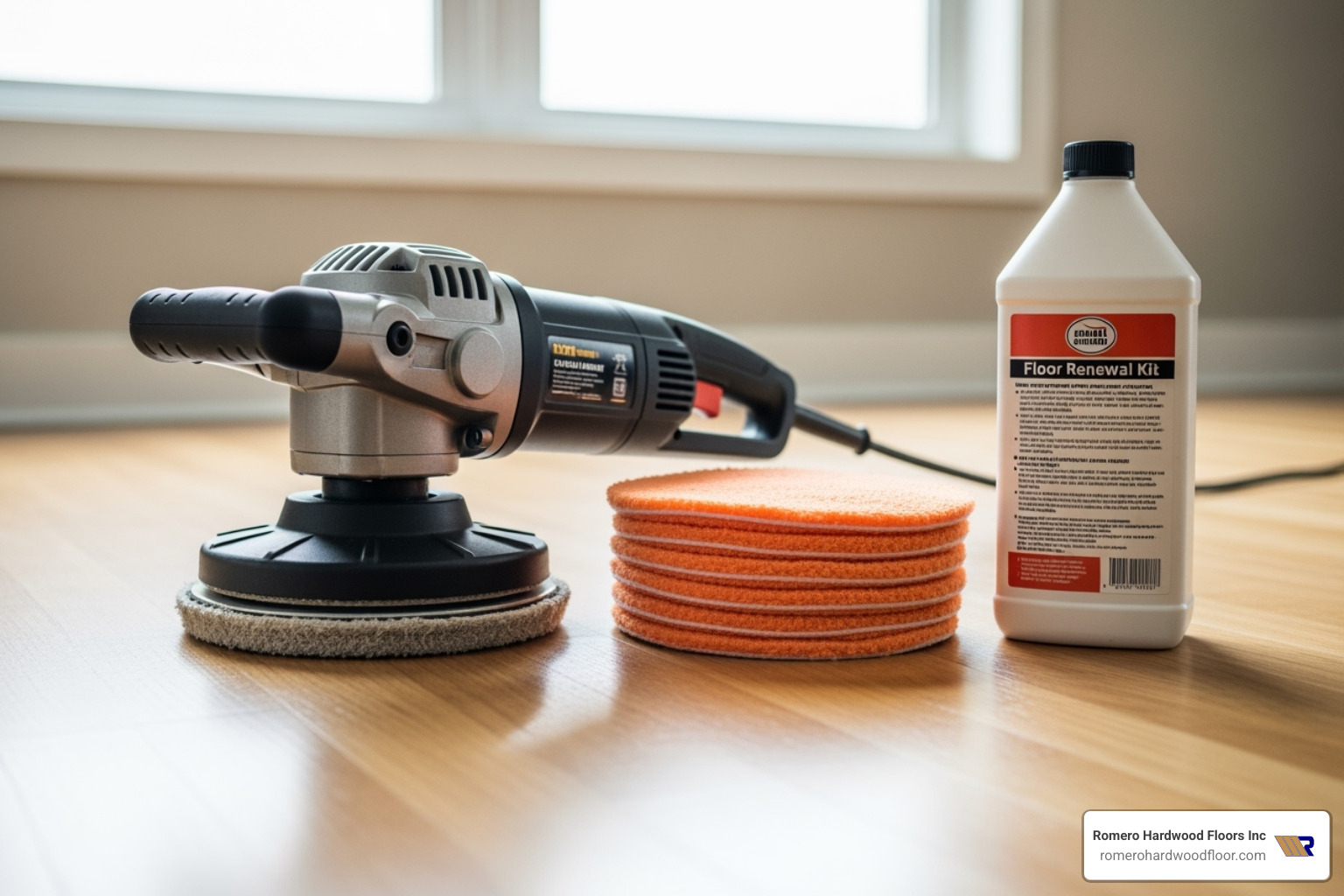
A DIY sandless project generally involves these steps:
- Thorough Cleaning: The floor must be carefully cleaned to remove all dirt, grime, and old polish.
- Perimeter Sanding: Areas near baseboards that a buffer can’t reach must be scuffed by hand.
- Scuff-Sanding: Rent a floor buffer to lightly abrade the entire floor surface, creating a profile for the new coat to stick to.
- Dust Removal: Vacuum and tack the floor until it is completely free of dust.
- Finish Application: Carefully apply a new polyurethane topcoat, usually with a brush for edges and a roller for the main area. Multiple coats are typically needed for a durable finish.
While DIY can save money, the results often don’t match professional quality. At Romero Hardwood Floors Inc., we’ve seen many DIY projects that needed professional correction, which can end up costing more than hiring professionals initially. Consider your skill level honestly before deciding which route to take.
Frequently Asked Questions about Sandless Refinishing
Homeowners often have plenty of questions about sandless floor finishing – and for good reason! This efficient method sounds almost too good to be true. Let me address the most common concerns we hear at Romero Hardwood Floors Inc.
How long do the results of sandless floor finishing last?
The honest answer? Sandless floor finishing typically lasts anywhere from 1 to 5 years, depending on how your floors are used and cared for.
High-traffic areas like hallways, living rooms, and kitchens will show wear much faster than quiet bedrooms or guest rooms. Think about it – your entryway gets hit with shoes, dirt, and constant foot traffic, while your spare bedroom might see action only when guests visit.
Proper maintenance makes a huge difference in durability. Regular cleaning with appropriate products, using furniture pads, and wiping up spills immediately can significantly extend your finish’s life. Skip the harsh chemicals and treat your floors with care – they’ll reward you with longer-lasting beauty.
The quality of application matters too. Professional application using high-grade materials typically outlasts DIY efforts. We often recommend a recoating schedule, refreshing the finish every few years before major wear appears. This proactive approach prevents the need for more expensive traditional sanding later.
For deeper insights into floor finishes and maintenance, check out our guide on Understanding Wood Floor Varnish.
Can sandless refinishing remove pet stains or deep scratches?
Unfortunately, no – and this is one of the biggest misconceptions about sandless floor finishing. As a surface-level treatment, it simply cannot fix damage that has penetrated into the wood itself.
Deep scratches and gouges that go through the existing finish and into the wood won’t disappear with sandless methods. You might notice them slightly less after a new topcoat is applied, but those indentations will still be there, lurking under the surface.
Pet urine stains are particularly tricky because they penetrate deep into the wood fibers, causing both discoloration and odor. Since sandless refinishing only works on the surface, it cannot extract these deep-set stains or eliminate the smell. It’s like trying to cover a permanent marker stain with a clear coat – the mark will still show through.
For these types of deep damage, traditional sanding that strips the floor down to bare wood is necessary. This more intensive process can effectively remove imperfections and stains. Learn more about this process in our guide on Removing Old Varnish from Wood Floors.
Can I change the color of my floor with a sandless process?
No, you cannot change your floor’s color with sandless refinishing. This method applies a clear topcoat over your existing floor finish and its current color. Think of it like putting a new clear coat on your car – it makes the existing paint look better and protects it, but it doesn’t change the color.
The clear topcoat used in sandless refinishing is designed to protect and improve what’s already there, not transform it. If your floors are honey oak and you want them to be espresso brown, sandless refinishing won’t get you there.
If you’re dreaming of a different color for your hardwood floors – whether darker, lighter, or completely different – traditional sanding is required. This process removes the old finish and exposes the raw wood, allowing for stain application before the protective clear coats go on.
For those considering a color change, our guide on How to Stain Hardwood Floors covers the traditional process. And if you’re exploring finish options, Choosing the Best Lacquer for Wood Floors offers valuable insights into different protective coatings.
Revitalize Your Floors with Confidence
Choosing the right refinishing method is key to making your hardwood floors look their best. Sandless floor finishing is a brilliant solution for a quick refresh without the disruption of traditional sanding. It’s ideal for busy families, budget-conscious homeowners, or those looking to preserve the character of vintage floors.
The beauty of this method lies in its efficiency—you can transform tired floors in a day. No dust clouds, no need to relocate, and no week-long project timeline. It’s home improvement that fits into real life.
But let’s be honest about what sandless floor finishing can and cannot do. It’s fantastic for surface-level wear and minor scratches. However, if your floors have deep gouges, water damage, or you’re dreaming of a new color, traditional sanding remains your best bet.
At Romero Hardwood Floors Inc., we’ve been helping homeowners in Revere, MA and surrounding communities make these exact decisions since 2006. We’ve seen how the right flooring choice can transform a home. Whether you’re in Beverly, Chelsea, Danvers, East Boston, Gloucester, Lynnfield, Malden, Manchester by the Sea, Marblehead, Medford, Melrose, Nahant, Peabody, Reading, Rockport, Salem, Saugus, Somerville, Stoneham, Swampscott, Wakefield, Winchester, Winthrop, or Woburn, we understand the unique needs of New England homes.
Our commitment goes beyond just applying finish. We pride ourselves on competitive pricing, punctuality, and guaranteed workmanship that improves your property value. We believe in helping you understand your options to make the right choice for your home.
There’s no one-size-fits-all solution. Some floors need a gentle refresh, while others require a complete makeover. The important thing is working with professionals who can guide you toward the best outcome.
Ready to see what your floors can become? For a professional assessment and a flawless finish, connect with our trusted Hardwood Flooring Refinishing Contractors. Explore our hardwood floor refinishing services near you and let us help you revitalize your home with confidence.