What is Best to Clean Hardwood Floors: Top 7 Tips
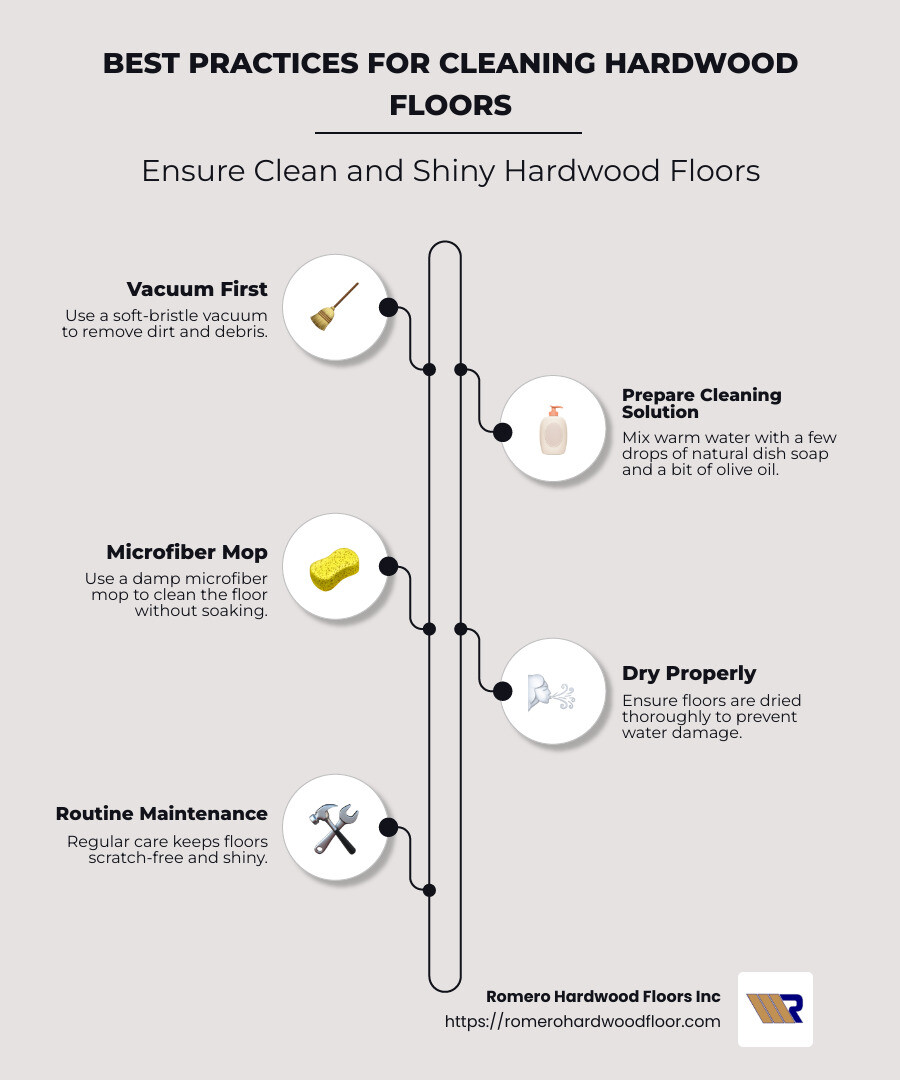
What is best to clean hardwood floors often comes down to using simple tools and techniques that keep them sparkling and scratch-free. Here’s a quick list to guide you on the right path:
- Use a soft-bristle vacuum before any wet cleaning.
- Mix warm water with a few drops of natural dish soap—consider adding a bit of olive oil for extra shine.
- Employ a microfiber mop, ensuring it is damp, not wet, to prevent water damage.
Maintaining the beauty of hardwood floors demands regular care, proper cleaning techniques, and avoiding harsh products that could strip their natural allure. We’ll share expert tips to help you keep your hardwood floors pristine.
I’m Francisco Romero, owner of Romero Hardwood Floors Inc., with over 15 years in the hardwood flooring industry. My experience helps guide homeowners on what is best to clean hardwood floors, ensuring they remain a timeless feature in any home. Up next, let’s dig deeper into choosing the ideal cleaning methods for your flooring needs.
What is best to clean hardwood floors terms to learn:
– different kinds of flooring
– different types of wood
– what are the best chair glides for hardwood floors
What is Best to Clean Hardwood Floors
When it comes to what is best to clean hardwood floors, using the right products and tools is key to preserving their natural beauty and durability. Let’s explore the essentials.
Choose a pH-Balanced Cleaner
A pH-balanced cleaner is gentle on hardwood floors, ensuring they stay vibrant without stripping away their finish. These cleaners effectively remove dirt and grime while maintaining the floor’s natural sheen. Avoid harsh chemicals that can dull the surface or cause damage over time.
Microfiber Mop for Gentle Cleaning
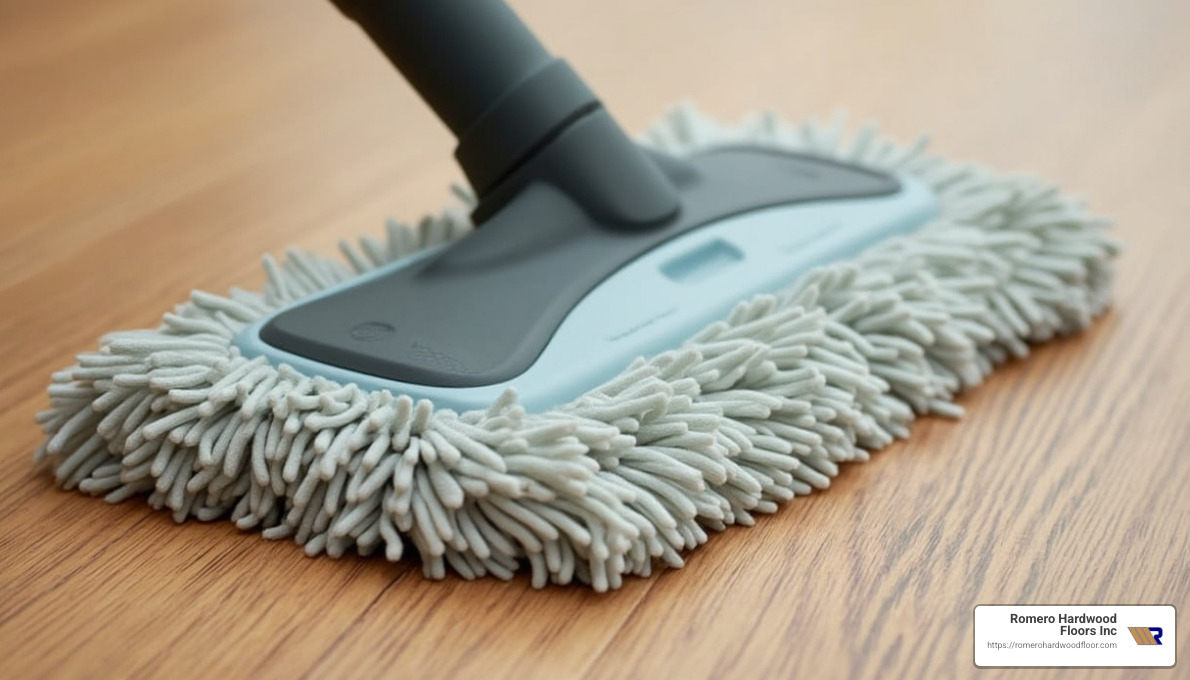
The microfiber mop is a game-changer for hardwood floor maintenance. Its soft fibers trap dust and dirt without scratching the surface. Plus, it requires only a small amount of moisture, reducing the risk of water damage. Always ensure the mop is damp, not soaking wet, to protect your floors.
Gentle Cleaning Techniques
- Dust First: Begin with a dry microfiber mop to pick up loose dust and debris. Regular dusting prevents scratches from dirt particles.
- Damp Mop with Care: Lightly dampen your microfiber mop with a pH-balanced cleaner. Wring it out well to avoid excess water.
- Spot Clean Stains: For stubborn spots, apply a small amount of cleaner directly to the stain and gently rub with the mop.
By adopting these gentle cleaning methods, your hardwood floors can maintain their elegance and longevity. Up next, we’ll discuss the essential tools and materials you’ll need to keep your floors in top shape.
Essential Tools and Materials
To keep your hardwood floors looking their best, having the right tools and materials is crucial. Here’s what you’ll need:
Vacuum
A vacuum is a must-have for hardwood floors. But not just any vacuum will do. Opt for one with a floor-brush attachment to avoid scratches. Make sure it doesn’t have a beater bar, as that can damage the surface. Vacuuming regularly helps remove dirt, dust, and pet hair, which could otherwise scratch your floors.
Microfiber Mop
The microfiber mop is your floor’s best friend. Its soft, tiny fibers effectively trap dust and dirt without scratching. Use it dry for dusting and slightly damp for mopping. The key is to keep it damp, not wet. Excess water can seep into the wood and cause damage.
Natural Dish Soap
For a safe and effective cleaner, look no further than natural dish soap. It’s gentle yet effective at cutting through grime. Mix a few drops with warm water for a simple, DIY cleaning solution. This mild approach helps maintain the floor’s finish without harsh chemicals.
Olive Oil
Believe it or not, olive oil can be a great addition to your cleaning routine. It helps in polishing and maintaining the shine of your hardwood floors. Mix it with vinegar and water for a natural polish. Just a small amount will do; too much can make your floors slippery.
By equipping yourself with these tools and materials, you can ensure your hardwood floors remain beautiful and durable for years to come. Next, we’ll guide you through a step-by-step cleaning process to keep them in pristine condition.
Step-by-Step Cleaning Guide
Cleaning your hardwood floors doesn’t have to be a daunting task. Follow these simple steps to keep them looking pristine:
1. Vacuuming
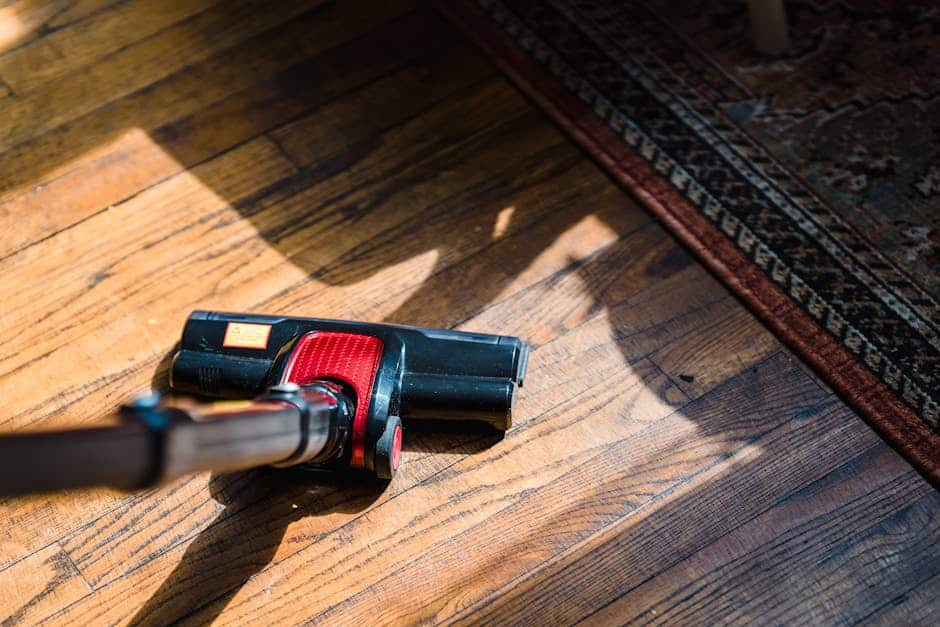
Start by vacuuming your floors to remove dust, dirt, and pet hair. Use a vacuum with a floor-brush attachment to prevent scratches. Avoid vacuums with a beater bar, as they can damage the wood’s surface. Regular vacuuming, at least once a week, is vital to prevent abrasive particles from scratching your floors.
2. Damp Mopping
After vacuuming, it’s time to mop. Use a microfiber mop slightly dampened with a gentle cleaning solution. Mix a few drops of natural dish soap with warm water for an effective cleaner. The mop should be damp, not soaking wet. Excess water can seep into the wood, causing warping or damage.
- Pro Tip: Work in small sections and mop in the direction of the wood grain. This helps prevent streaks and ensures a thorough clean.
3. Drying Techniques
After mopping, ensure your floors are completely dry. Use a clean, dry towel or cloth to wipe up any remaining moisture. This step is crucial because standing water can damage the wood.
- Quick Tip: Open windows or use a fan to speed up the drying process and improve air circulation.
By following this step-by-step guide, you can maintain your hardwood floors’ beauty and extend their lifespan. Next, we’ll explore natural cleaning solutions to keep your floors clean without harsh chemicals.
Natural Cleaning Solutions
When it comes to cleaning hardwood floors naturally, it’s all about using the right products that are gentle yet effective. Let’s explore some eco-friendly options!
Biodegradable Soap
Biodegradable soap is a fantastic choice for cleaning hardwood floors. These soaps break down naturally, reducing their environmental impact. A few drops mixed with warm water can create a gentle cleaning solution that’s perfect for regular maintenance. Pro Tip: Always ensure the soap is pH-balanced to avoid dulling the floor’s finish.
Castile Soap
Castile soap is a versatile and natural cleaner that works wonders on hardwood floors. Made from plant oils, it’s both gentle and effective. To use, mix a small amount of castile soap with water and lightly mop your floors. This soap won’t leave behind any residue, keeping your floors looking shiny and new.
Vinegar Caution
While vinegar is often praised for its cleaning power, it can be too harsh for hardwood floors. The acidity in vinegar can break down the finish over time, leading to dull and damaged surfaces. If you decide to use vinegar, always dilute it heavily with water and test it on a small, inconspicuous area first. This will help ensure it doesn’t cause any unwanted effects.
By choosing natural cleaning solutions like biodegradable and castile soaps, you can keep your hardwood floors clean without resorting to harsh chemicals. These options are not only effective but also environmentally friendly, making them a win-win for your home and the planet.
Next, we’ll cover how to prevent damage and maintain the shine of your beautiful hardwood floors.
How to Prevent Damage and Maintain Shine
Keeping your hardwood floors looking their best involves more than just cleaning. Let’s explore some simple strategies to prevent damage and maintain shine.
Entryway Mats
One of the easiest ways to protect your hardwood floors is by using entryway mats. Place mats both inside and outside your doors. This helps catch dirt, grime, and moisture before they reach your floors. By reducing the amount of debris tracked indoors, you can prevent scratches and other damage.
Rubber Pads
Furniture can be a major culprit when it comes to floor scratches. To avoid this, attach rubber pads to the legs of your furniture. These pads act as a buffer, preventing scuffs and scratches when you move items around. They’re inexpensive, easy to apply, and can save you from costly repairs down the line.
Immediate Spill Cleanup
Accidents happen, but quick action can minimize their impact. Wipe up spills immediately to prevent stains and water damage. Use a soft, absorbent cloth to blot the spill, rather than rubbing it in. This simple step can keep your floors looking pristine and avoid long-term issues.
By incorporating these preventive measures, you can extend the life and luster of your hardwood floors. Next, we’ll address some common questions about cleaning hardwood floors, including what to avoid and how often to clean.
Frequently Asked Questions about Cleaning Hardwood Floors
What should you not use on hardwood floors?
When it comes to cleaning hardwood floors, harsh chemicals are a big no-no. Products like ammonia, bleach, or anything labeled as a “restorer” can damage the finish of your floors. Instead, opt for a pH-balanced cleaner specifically designed for wood surfaces.
Excessive water is another enemy of hardwood floors. Water can seep into the wood, causing it to warp or stain. Always use a damp, not wet, mop to clean. And remember, steam mops are off-limits. They can force moisture into the wood, leading to long-term damage.
How often should you clean hardwood floors?
The frequency of cleaning your hardwood floors depends on several factors, such as foot traffic and the presence of pets. For most homes, a weekly cleaning routine is ideal. In high traffic areas, like entryways or kitchens, you might need to vacuum or dust mop more frequently to keep dirt and grime at bay.
A regular schedule helps maintain the appearance of your floors and prevents scratches from dirt particles. Use a vacuum with a floor-brush attachment to avoid damaging the surface.
Can vinegar be used on hardwood floors?
Vinegar is often touted as a natural cleaner, but it requires caution when used on hardwood floors. While it can cut through grime, vinegar is acidic and can dull the floor’s finish over time. If you decide to use vinegar, always dilute it with water and test it on a small, inconspicuous spot first.
For safer alternatives, consider using a cleaner that is specifically formulated for hardwood floors to ensure they remain shiny and damage-free.
By following these guidelines, you can keep your hardwood floors looking their best. Next, we’ll dive into the essential tools and materials you need for effective cleaning.
Conclusion
At Romero Hardwood Floors Inc, we know that well-maintained hardwood floors can significantly improve the beauty and value of your home. Our expert flooring solutions are designed to ensure that your investment in hardwood flooring stands the test of time.
Proper cleaning and maintenance are crucial to preserving the natural elegance of hardwood floors. By using the right tools and techniques, you can keep your floors in top shape, ensuring they remain a stunning feature of your home. Regular upkeep not only maintains the aesthetic appeal but also prevents costly repairs down the line.
Our team at Romero Hardwood Floors Inc specializes in providing custom flooring solutions that match your unique needs. Whether you’re looking to install new hardwood floors or need advice on maintaining your existing ones, our expertise can help you make informed decisions.
Investing in quality hardwood flooring not only lifts the look of your home but also adds to its long-term value. With our commitment to excellence, competitive pricing, and guaranteed workmanship, Romero Hardwood Floors Inc is the partner you can trust for all your hardwood flooring needs.
For more information on our services and how we can help improve the value of your property, visit our hardwood floor installation page. Let us help you create a beautiful and lasting foundation in your home.