
Wood Floor Cleaner: Ultimate Guide 2025
Why Choosing the Right Wood Floor Cleaner Matters
Wood Floor Cleaner is essential for maintaining the beauty and longevity of your hardwood floors. Here’s what you need to know:
Quick Answer: Best Practices for Wood Floor Cleaners
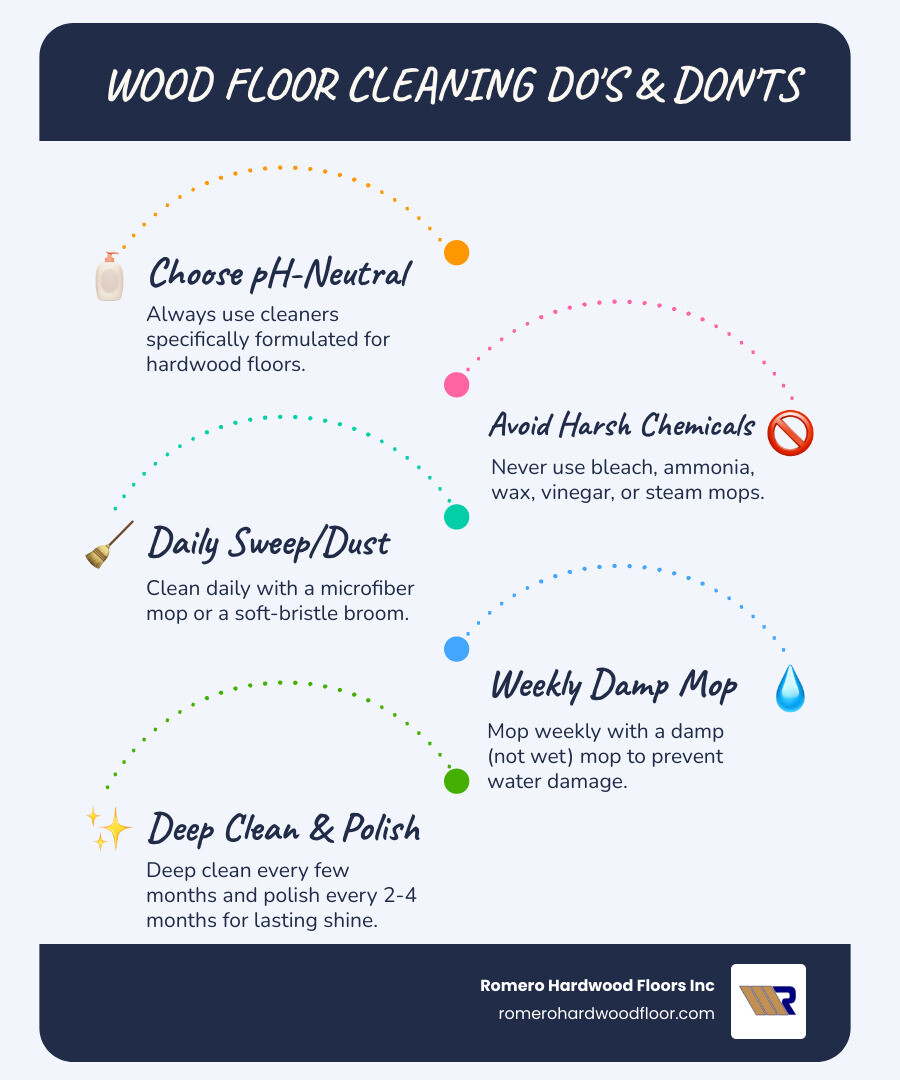
- Use pH-neutral cleaners specifically formulated for hardwood
- Avoid bleach, ammonia, wax, vinegar, and steam mops
- Clean daily with a microfiber mop or soft-bristle broom
- Mop weekly with a damp (not wet) mop
- Deep clean every few months with specialized products
- Polish every 2-4 months to protect and restore shine
Hardwood floors are a beautiful investment, but without proper care, they can lose their luster or suffer permanent damage. Many common cleaning products can actually harm your floors by stripping protective coatings, leaving dulling residue, or causing warping. Using the wrong Wood Floor Cleaner can void warranties and lead to costly repairs, making it crucial to know which products are safe.
I’m Francisco Romero, owner of Romero Hardwood Floors Inc. For over 15 years, I’ve helped homeowners and property managers in Revere, MA maintain stunning hardwood floors. In this guide, I’ll share the right products and professional techniques to keep your floors looking pristine for decades.
Choosing the Right Wood Floor Cleaner and Tools
When it comes to hardwood floors, many cleaning products can do more harm than good. Choosing the right Wood Floor Cleaner and tools isn’t just about a temporary shine—it’s about protecting your floors for decades. The wrong product can strip finishes, leave stubborn residue, or cause permanent damage. After fifteen years in this business, I’ve seen beautiful floors ruined by well-meaning homeowners who simply didn’t know what to avoid. The good news is that caring for your hardwood is simple once you know what works.
Understanding Different Types of Cleaners
Not all cleaners are safe for your hardwood investment. Here’s what actually works.
pH-neutral and water-based cleaners are your best friends. Specially formulated for hardwood, they clean effectively without stripping your floor’s protective finish or leaving residue. They are designed to dry quickly, which is crucial for minimizing moisture exposure that can lead to warping. When choosing a Wood Floor Cleaner, a water-based, pH-neutral formula is the safest and most effective option.
For pet owners, enzymatic cleaners can be a lifesaver for eliminating odors and stains from accidents. They break down urine molecules without harming your floor’s finish. However, for severe or persistent issues, I recommend consulting a professional, as the damage may have penetrated deep into the wood.
Professional-grade hardwood floor cleaners are always your safest bet. For more guidance, explore our guide on What is Best to Clean Hardwood Floors?.
Products and Chemicals to Avoid on Hardwood
Knowing what to avoid is as important as knowing what to use. I’ve restored too many floors damaged by products that seemed harmless.
- Bleach and ammonia: These harsh chemicals strip protective finishes, leaving wood vulnerable to discoloration and damage.
- Wax-based products and oil soaps: These promise shine but leave a sticky, cloudy residue that attracts dirt and is difficult to remove.
- Vinegar: Often touted as a “natural” cleaner, vinegar is acidic and slowly etches your floor’s finish, causing irreversible dulling.
- Harsh multi-surface cleaners: Many contain chemicals too strong for wood. If you must use one, ensure the label explicitly states it’s safe for hardwood. When in doubt, stick with a dedicated Wood Floor Cleaner.
The risk of residue buildup and damaged finishes is real. For safe solutions, refer to our page on Hardwood Floor Cleaning Products.
Selecting the Best Tools for Hardwood Floors
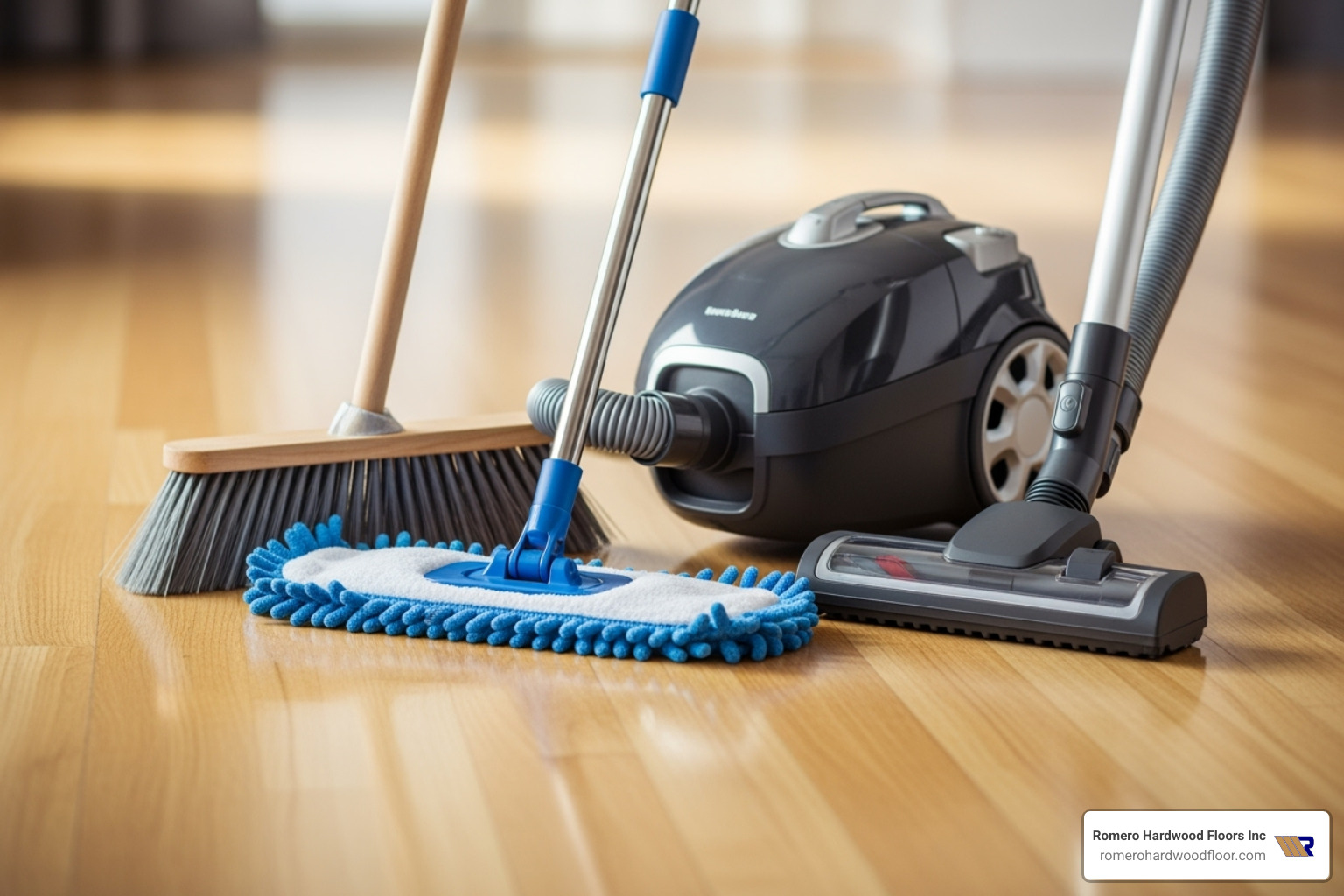
Even the best cleaner needs the right tools. Microfiber mops are fantastic for trapping dust and applying cleaner with a damp—never wet—touch. Soft-bristle brooms are perfect for daily sweeping without scratching the surface. If you prefer vacuuming, use a vacuum with a soft brush head and turn off the beater bar, as its rotating brushes can damage hardwood finishes. Also, be mindful of hard plastic wheels that can dent softer woods.
When choosing between reusable and disposable pads, reusable microfiber pads are cost-effective and eco-friendly, while disposable pads offer convenience.
Your Step-by-Step Guide to Cleaning Hardwood Floors
A beautiful hardwood floor needs a consistent, proper cleaning routine. Once you establish the right habits, keeping your hardwood pristine becomes second nature. This is about protecting your investment and preserving its natural beauty.
Daily and Weekly Cleaning Routines
The secret to gorgeous hardwood is consistency. Daily sweeping or dusting with a soft-bristle broom or microfiber dust mop is your first line of defense against scratches. This simple habit removes the dirt and grit that acts like sandpaper underfoot, wearing down the finish.
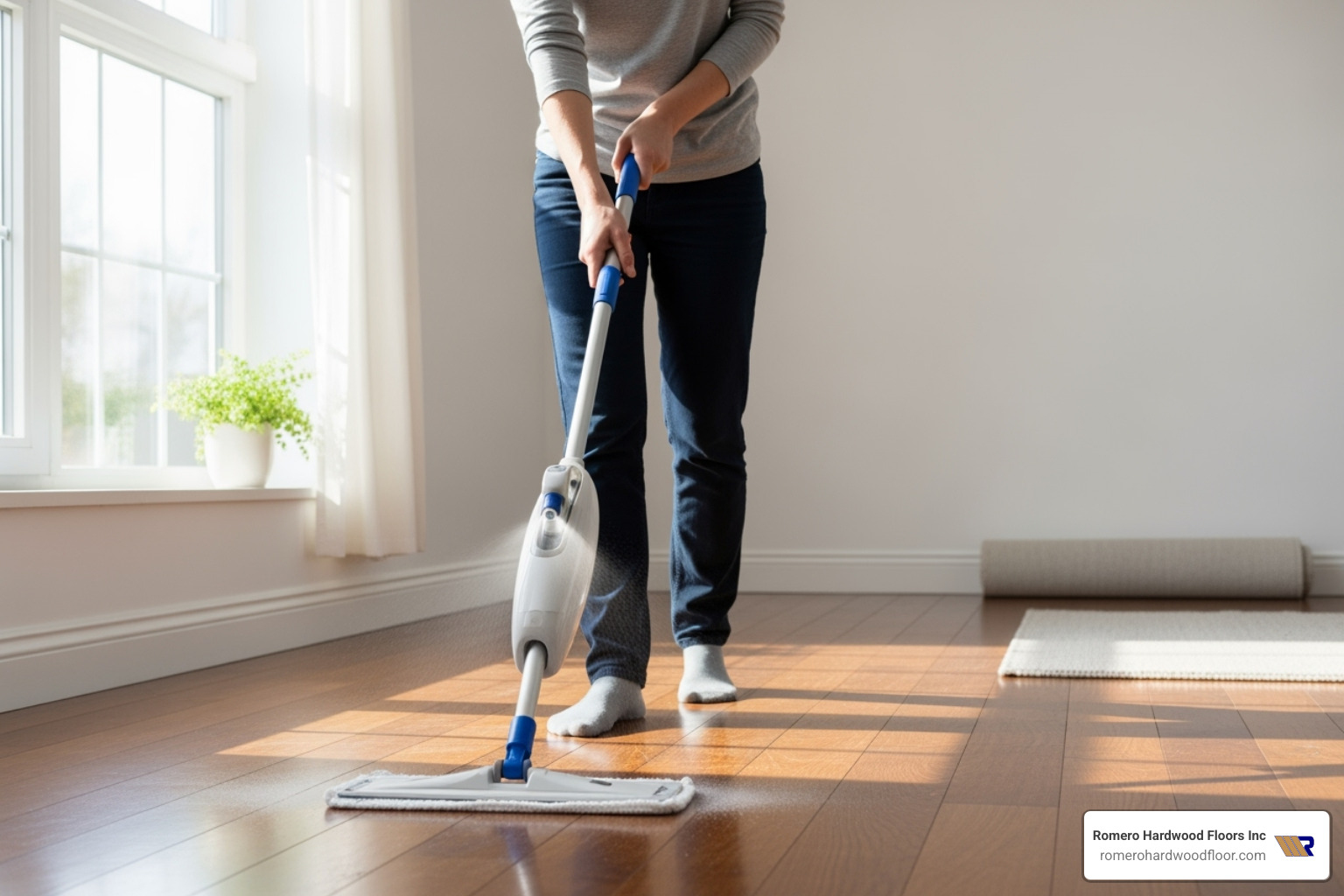
Weekly mopping provides a deeper clean. Use a pH-neutral Wood Floor Cleaner and follow the golden rule: damp, not wet. Excess water is hardwood’s worst enemy, leading to warping and permanent damage. Lightly mist the cleaner onto a small section of the floor and immediately wipe with your damp microfiber mop. Work in manageable sections to ensure no liquid sits on the surface.
This routine protects your floors and extends the time between professional cleanings. For more tips, check out our Wooden Floor Maintenance Tips.
How to Deep Clean Your Wood Floors
Even with diligent care, floors occasionally need a deep clean to tackle stubborn dirt and buildup. We recommend this every few months, or more often in homes with high traffic, kids, or pets. If your floors look dull even after regular cleaning, it’s time.
Use a dedicated Wood Floor Cleaner formulated for deep cleaning. These products break down tough grime without harming the finish. For tough, dried-on stains, apply the cleaner directly, let it sit for a moment, then gently scrub with a microfiber cloth. For very stubborn spots, a paste of baking soda and water can act as a mild abrasive, but use a light touch.
Always test new cleaners in an inconspicuous area (like a closet) to ensure they won’t damage or discolor your finish. If you encounter extensive stains, heavy residue, or damage to the finish itself, it’s time to call a professional. Our team at Romero Hardwood Floors Inc. can assess the situation and recommend the best course of action. Our Hardwood Floor Care Guide offers more insights.
The Truth About Homemade Wood Floor Cleaner Solutions
DIY recipes for Wood Floor Cleaner, often featuring vinegar or Castile soap, are popular online but pose significant risks to your hardwood floors.
Vinegar is acidic and, with repeated use, it etches and dulls your floor’s protective finish. This slowly breaks down the coating that guards your wood against moisture, stains, and wear. Soap-based solutions leave behind a sticky residue that attracts dirt, creating a grimy film that is very difficult to remove without professional help.
While these homemade options seem inexpensive, the potential for dulling or damaging the finish can lead to costly repairs. Professional formulas are safer because they are pH-neutral, residue-free, and specifically tested for hardwood floors. They protect your investment in the long run. If you’re ever unsure about a product, consult a flooring expert. A quick call can save you from an expensive mistake.
Advanced Hardwood Floor Care and Maintenance
Beyond regular cleaning, advanced care will help your floors thrive for decades. This means understanding when to polish, when to call for professional refinishing, and how to protect your floor’s crucial topcoat.

Maintaining Shine: Polish vs. Refinishing
Keeping your floors gleaming involves knowing the difference between a refresh and a restoration.
Floor polish is your secret weapon for maintaining shine. It fills in microscopic scratches that accumulate from daily life, restoring luster and adding a layer of protection. We recommend polishing every 2-4 months, especially in high-traffic areas. You can find quality polishes and all-in-one care kits at most home improvement or specialty flooring stores.
However, polish has its limits. It’s time for professional refinishing when you see:
- Deep scratches that penetrate the finish into the wood.
- Areas where the coating has worn away, leaving bare wood exposed.
- Significant water damage or dark stains.
- A pervasive dullness that cleaning and polishing can’t fix.
Hardwood floors typically benefit from refinishing every 7-10 years. When you notice these signs, call us at Romero Hardwood Floors Inc. Our team specializes in bringing tired floors back to life. Explore our Refinish Hardwood Floors and Hardwood Floor Refinishing services to see our work.
Average costs for professional refinishing range from $3 to $8 per square foot, with high-end services reaching $15 or more per square foot, based on internet data. These are not actual costs for Romero Hardwood Floors Inc.
How to Protect Your Floor’s Protective Coating
Your floor’s protective coating—polyurethane or aluminum oxide—is its primary defense. Protecting this layer is essential for longevity.
The biggest enemy is moisture. We can’t stress this enough: never use steam mops or excess water. Steam introduces high heat and moisture that cause warping, cupping, and irreversible damage. Furthermore, many flooring manufacturers explicitly state that using steam mops will void your floor’s warranty.
Improper cleaning with products containing bleach, ammonia, or acid also strips this protective layer. To maintain it, stick with a pH-neutral Wood Floor Cleaner, wipe up spills immediately, use furniture pads, and place mats in high-traffic areas. An EPA Safer Choice product, such as some Wood Floor Cleaner options found on EWG’s cleaner ratings, can offer both effective cleaning and peace of mind. Gentle, consistent care is the secret to a long-lasting finish.
Frequently Asked Questions about Cleaning Hardwood
Over the years, we’ve heard just about every question imaginable when it comes to caring for hardwood floors. Let’s clear up some of the most common concerns.
How often should I clean my hardwood floors?
The ideal frequency depends on your lifestyle and household traffic.
- For high-traffic areas like kitchens and entryways, a quick daily sweep with a soft-bristle broom or microfiber dust mop is recommended to prevent grit from scratching the finish.
- Weekly light mopping with a pH-neutral Wood Floor Cleaner and a damp (not wet) mop will handle surface grime.
- Deep cleaning every few months is necessary to tackle buildup. If your floors look dull despite regular cleaning, it’s time for a deeper clean.
Can I use a multi-surface cleaner on my hardwood floors?
We advise against it. Most multi-surface cleaners are not formulated for wood and can cause problems. They often leave a dulling residue that attracts more dirt and can contain harsh chemicals that strip the protective finish, leaving your floor vulnerable to damage. Always choose a product specifically made for hardwood floors to protect your investment.
Are steam mops safe for hardwood floors?
In a word: No. Steam mops are not safe for hardwood floors and we strongly advise against using them. The combination of high heat and moisture forces water deep into the wood planks, causing permanent damage like warping, cupping, and discoloration. This process also degrades the protective finish. Crucially, using a steam mop will void most flooring warranties, leaving you responsible for costly repairs. Stick with a damp microfiber mop and an approved Wood Floor Cleaner.
Conclusion: A Lifetime of Beautiful Floors
Your hardwood floors are an investment in your home’s beauty and value. Keeping them gorgeous for decades is achievable with the right approach and consistent care.
Throughout this guide, we’ve walked through the essentials: choosing a pH-neutral Wood Floor Cleaner that protects rather than damages, selecting gentle tools like microfiber mops and soft-bristle brooms, and establishing a cleaning routine that fits your lifestyle. We’ve also covered what to avoid—those tempting but harmful products like vinegar, steam mops, and harsh chemicals that can strip your floor’s protective finish and void your warranty.
The key to beautiful hardwood floors is consistency. Daily sweeping removes the grit that causes scratches. Weekly mopping with a damp (never wet) mop keeps surfaces fresh. And periodic deep cleaning, along with polishing every few months, maintains that showroom shine. When you notice deep scratches, worn finishes, or water damage that cleaning can’t fix, that’s when professional refinishing comes into play.
Your floors’ protective coating—whether polyurethane or aluminum oxide—is their armor against daily wear. By using the right Wood Floor Cleaner and avoiding excess moisture, you’re protecting that crucial layer and extending your floor’s lifespan by years, even decades.
At Romero Hardwood Floors Inc., we’ve been helping homeowners and businesses throughout Revere, MA and surrounding communities maintain stunning hardwood floors since 2006. Whether you need expert advice on a stubborn stain, professional deep cleaning, or complete refinishing services, our experienced team is here to help. We serve Beverly, Chelsea, Danvers, East Boston, Gloucester, Lynnfield, Malden, Manchester by the Sea, Marblehead, Medford, Melrose, Nahant, Peabody, Reading, Revere, Rockport, Salem, Saugus, Somerville, Stoneham, Swampscott, Wakefield, Winchester, Winthrop, and Woburn, MA.
Your floors have given you years of beauty—now give them the care they deserve. With the knowledge from this guide and our professional support when you need it, you can enjoy a lifetime of beautiful hardwood floors.
Explore our professional hardwood floor installation and refinishing services
