
Floor Resurfacing Cost: Top Factors & Savings Tips 2025
Floor resurfacing cost can vary greatly, but most projects fall within a price range depending on several key factors. Whether you need a quick refinish or a complete overhaul, here’s what you need to know in a nutshell:
- Average Cost: Expect to pay about $3 to $8 per square foot.
- Factors Influencing Cost: Type of wood, room size, and local labor rates.
Hardwood floors are prized for their beauty and durability, yet over time, even the best-maintained floors can show signs of wear. Understanding the cost of refinishing these surfaces helps you make informed decisions to keep your spaces attractive and functional. From the choice of wood—like the hard-wearing maple to the more affordable pine—to labor costs, each factor impacts your budget differently.
I’m Francisco Romero, owner of Romero Hardwood Floors Inc. With over 15 years of experience in hardwood flooring installation and refinishing, I have overseen numerous projects, focusing on providing cost-effective solutions that improve both aesthetics and property value. As we dig deeper into the details of floor resurfacing cost, you’ll gain valuable insights to help you plan your next flooring project effectively.
Floor resurfacing cost definitions:
– new hardwood flooring
– sanding new hardwood floors
– solid wood floor restoration
Understanding Floor Resurfacing Costs
When you’re considering resurfacing your hardwood floors, understanding the costs involved can help you plan your budget effectively. Let’s break down the floor resurfacing cost into manageable parts, so you know what to expect.
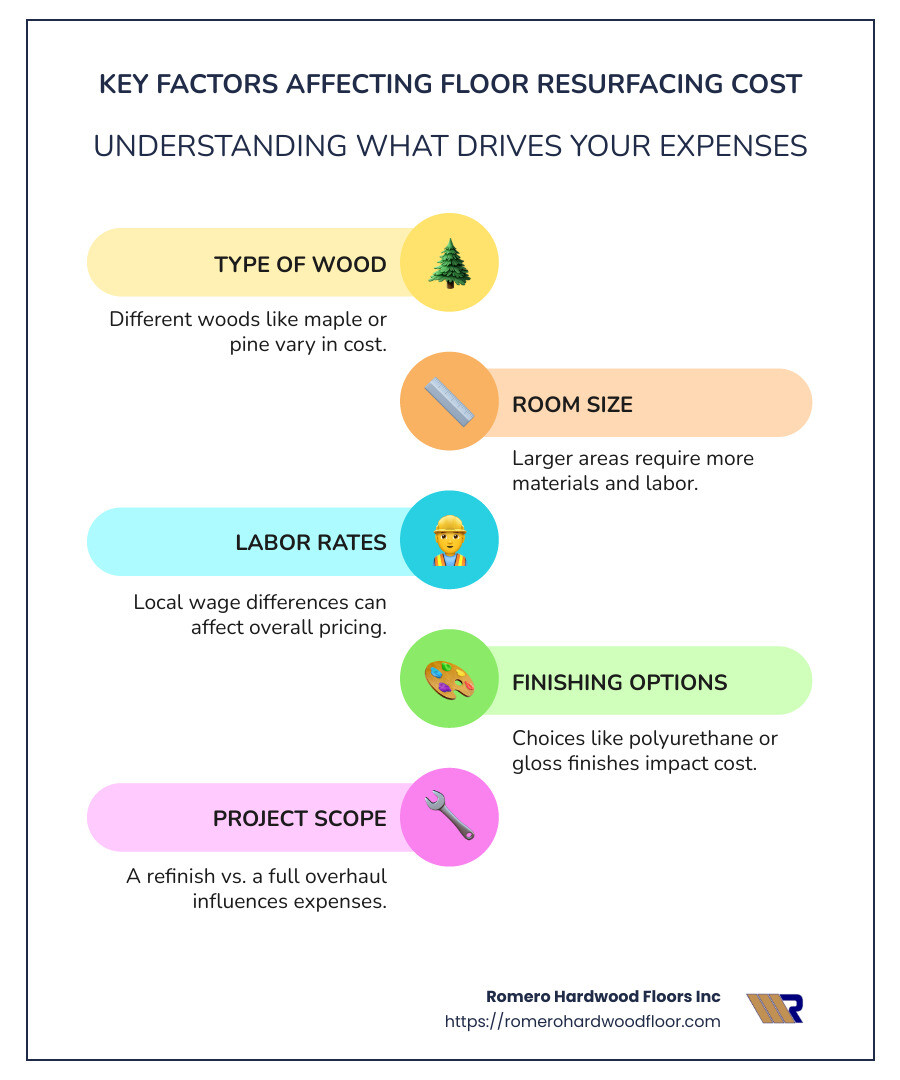
Factors Affecting Floor Resurfacing Cost
Average Cost and Cost per Square Foot
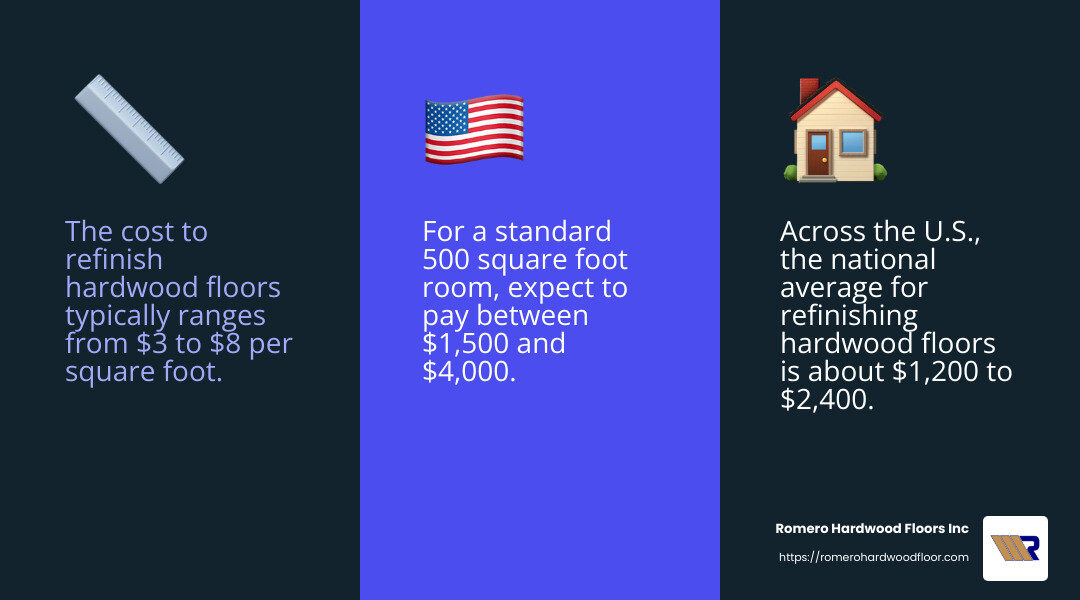
The cost to refinish hardwood floors typically ranges from $3 to $8 per square foot. This wide range accounts for different factors like the type of wood and the extent of the work needed. For a standard 500 square foot room, you might expect to pay between $1,500 and $4,000.
National Average
Across the U.S., the national average for refinishing hardwood floors is about $1,200 to $2,400. However, this can vary based on your location, the condition of your floors, and the specific services you choose.
Room Size
Larger rooms require more materials and labor, which can increase the overall cost. However, some contractors may offer a slight discount per square foot for bigger projects. It’s a good idea to ask about potential savings for larger areas.
Hardwood Types
The type of wood you’re working with can significantly impact the cost. For example, maple and mahogany are more expensive to refinish due to their hardness and the skill required to work with them. In contrast, pine is more affordable but may require more frequent refinishing due to its softer nature.
Local Labor Costs
Labor costs can vary greatly depending on where you live. In areas with a high cost of living, expect to pay more for professional services. In Massachusetts, for instance, labor costs might be higher than the national average. Always ask for multiple quotes to find a fair price.
Additional Factors
- Condition of Existing Floors: Floors with significant damage or deep scratches may require more intensive work, raising the cost.
- Accessibility: If your home is difficult to access or requires special considerations (like a high-rise apartment), this could add to the cost.
- Finish Type: The type of finish you choose—whether a simple satin or a high-gloss polyurethane—can also affect the overall price.
Understanding these factors will help you make informed decisions about your flooring project, ensuring you get the best results within your budget. In the next section, we’ll dive deeper into the specific costs associated with each step of the resurfacing process.
Floor Resurfacing Cost Breakdown
When it comes to floor resurfacing costs, understanding each component can help you budget effectively. Let’s explore the costs associated with sanding, staining, and top coating.
Sanding Costs
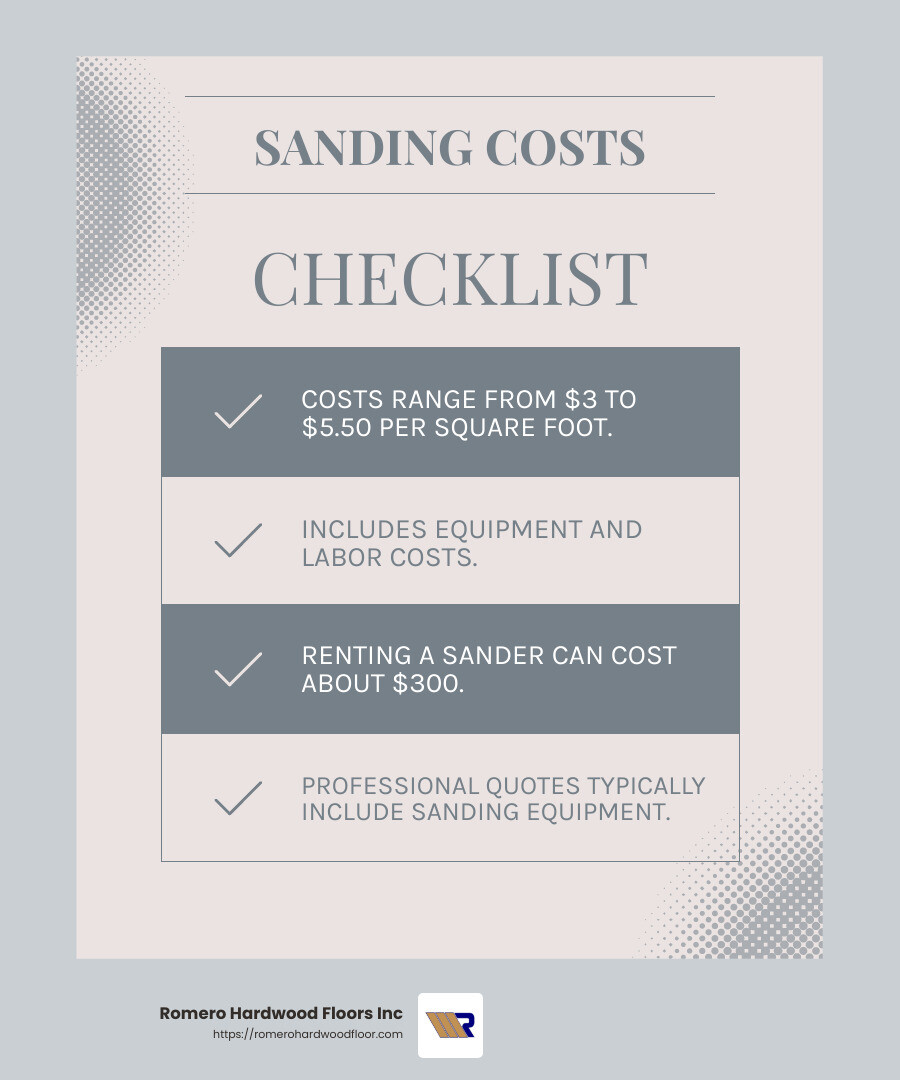
Sanding is the first critical step in floor resurfacing. It involves removing the old finish and smoothing the surface. The cost for sanding typically ranges from $3 to $5.50 per square foot. This price covers the use of sanding equipment and labor.
- Sanding Equipment: Renting a floor sander can cost about $300 for a few days. This includes the sander and edger, along with sandpaper. If you’re hiring professionals, this cost is usually included in their quote.
Staining Costs
Staining is an optional step, but it can dramatically change the look of your floors. The cost for staining runs between $1 and $3 per square foot. This cost varies based on the type of stain and the application method.
- Stain Types: There are various stains to choose from, such as oil-based or water-based. Oil-based stains are durable and add a warm tint, while water-based stains dry quickly and are less odorous.
- Application Methods: Staining requires careful application to ensure an even finish. This can involve multiple coats, depending on the desired color depth.
Top Coating Costs
The top coat is what protects your floors from wear and tear. Polyurethane is a popular choice for its durability and finish options.
- Polyurethane: Costs range from $20 to $55 per gallon. Oil-based polyurethane offers a rich finish but takes longer to dry. Water-based polyurethane dries faster and is clear, highlighting the wood’s natural beauty.
- Gloss Finishes: The choice of finish—satin, semi-gloss, or high-gloss—can affect the cost. High-gloss finishes are often more expensive due to their reflective quality and the precision required for application.
Each step in the resurfacing process plays a crucial role in the final appearance and durability of your floors. By understanding these costs, you can make informed decisions that align with your budget and aesthetic preferences. Next, we’ll compare the costs and benefits of refinishing versus replacing hardwood floors.
Refinishing vs. Replacing Hardwood Floors
When deciding between refinishing and replacing hardwood floors, cost is a major factor. Refinishing is typically more affordable and can offer several benefits over replacement.
Cost Comparison
Refinishing Costs: Refinishing your hardwood floors generally costs between $3 to $8 per square foot. This covers sanding, staining, and applying a topcoat. The process is labor-intensive, but it is far less expensive than tearing out old floors and installing new ones.
Replacement Costs: Installing new hardwood floors can be a hefty investment, costing on average around $4,200 for a typical project. This includes the cost of materials, labor, and removal of the old flooring. Depending on the type of wood you choose, costs can escalate quickly.
Refinishing Benefits
Refinishing hardwood floors offers several advantages:
- Cost-Effective: Refinishing is often at least half the cost of replacing floors. It’s an economical choice for those wanting to restore their floors without breaking the bank.
- Value Addition: Well-maintained or newly refinished hardwood floors can significantly increase your home’s market value. Homes with polished floors often sell faster and at higher prices in competitive markets.
- Aesthetic Appeal: Refinishing can update the look of your floors without the need for a full replacement. You can choose different stains and finishes to match your current decor or try something new.
Replacement Costs
While replacing hardwood floors is more expensive, it may be necessary if:
- Structural Damage: Floors have deep structural damage, such as warping or extensive water damage, which refinishing can’t fix.
- Wear and Tear: The floors have been sanded too many times in the past, leaving them too thin for another refinishing.
- Style Change: You’re looking for a complete style change, such as switching from oak to mahogany.
In summary, refinishing is usually the smarter financial decision unless your floors are beyond repair or you desire a completely new look. Understanding these options helps you make an informed choice that aligns with your budget and style preferences. Up next, we’ll explore the pros and cons of tackling floor resurfacing as a DIY project versus hiring professional services.
DIY vs. Professional Floor Resurfacing
When it comes to resurfacing your hardwood floors, you have two main options: doing it yourself or hiring professionals. Each approach has its own costs and potential savings, so let’s break it down.
DIY Costs
Taking on a DIY floor resurfacing project can seem appealing if you’re looking to save money. Here’s a quick rundown of what you might spend:
- Equipment Rental: You’ll need to rent a floor sander, which can cost around $300 for a weekend. This includes the sander and edger, but remember, you’ll also need sandpaper.
- Materials: Expect to spend about $250 on materials like wood filler, stain, and polyurethane for top coating.
- Time: DIY projects can be time-consuming. Even small rooms can take several days to complete, especially if you’re new to the process.
While DIY can save you labor costs, the risk of mistakes is higher. If not done correctly, you could end up with uneven surfaces or damage that might cost more to fix.
Professional Services
Hiring professionals like Romero Hardwood Floors Inc can ensure a smoother, more polished finish. Here’s what you can expect when opting for professional services:
- Expertise and Efficiency: Professionals bring experience and skill, which means they can complete the job faster and more effectively.
- Quality Results: With professional-grade equipment and materials, you get a high-quality finish that can improve your home’s value.
- Insurance and Guarantees: Most professional services offer warranties and are insured, providing peace of mind in case of any mishaps.
Potential Savings
DIY Savings: If you have the skills and time, DIY can save you on labor costs. But consider the potential costs of mistakes or additional repairs if things don’t go as planned.
Professional Savings: While initially more expensive, hiring professionals can save money in the long run by avoiding costly errors. Plus, a well-refinished floor can boost your home’s resale value.
In conclusion, whether you choose DIY or professional services depends on your budget, skill level, and time availability. Weighing these factors carefully will help you make the best decision for your floor resurfacing project. Next, we’ll dive into some frequently asked questions about floor resurfacing costs and what you need to know before getting started.
Frequently Asked Questions about Floor Resurfacing Cost
Is it cheaper to refinish or replace hardwood floors?
When considering floor resurfacing cost, many homeowners wonder whether it’s more affordable to refinish or replace their hardwood floors. Refinishing is generally the more cost-effective option. It typically costs between $2 to $7 per square foot, while replacing hardwood floors can range from $6 to $15 per square foot.
Refinishing not only saves money but also preserves the existing wood, maintaining the character of your home. It’s an eco-friendly choice that reduces material waste. Unless your floors are severely damaged, refinishing is usually the smarter financial decision.
Can I stay in my house while floors are refinished?
Staying in your house during the refinishing process is possible, but there are some safety precautions to consider. The process creates dust and fumes that can be bothersome. Oil-based stains produce strong fumes, while water-based stains are less pungent. If you decide to stay, ensure your home is well-ventilated with open windows and fans.
Be prepared for some inconvenience, as certain areas of your home will be off-limits during the process. Consider staying with friends or family if you have allergies or respiratory issues.
How long do you have to stay off hardwood floors after refinishing?
After refinishing, it’s crucial to adhere to safety guidelines regarding drying times to protect your floors from damage. Generally, you should stay off the floors for about six hours. Walking with socks is safe after this period, but avoid wearing shoes for 24 hours.
For oil-based finishes, it’s advisable to wait 72 hours before moving furniture back or allowing pets on the floor. This ensures the finish is fully cured and reduces the risk of damage. Following these guidelines will help maintain the quality and appearance of your newly refinished floors.
With these insights, you can make informed decisions about your floor resurfacing project. Up next, we’ll dig into the expert solutions offered by Romero Hardwood Floors Inc and how they can improve your property’s value.
Conclusion
At Romero Hardwood Floors Inc, we understand that your floors are more than just a surface; they are a vital part of your home’s character and value. With our expert solutions, we aim to transform your hardwood floors into a stunning centerpiece that lifts the entire aesthetic of your living space.
Our team, with over 15 years of experience, is dedicated to providing high-quality refinishing services. We pride ourselves on our meticulous attention to detail and commitment to using environmentally-friendly products that ensure your floors not only look beautiful but are also safe for your family and the environment.
Refinishing your hardwood floors with us is a smart investment. It not only improves the visual appeal of your home but also significantly improves its market value. A well-maintained floor can be a major selling point if you ever decide to put your home on the market.
We offer competitive pricing and guarantee our workmanship, ensuring you receive the best value for your investment. Our punctual and professional service means your project will be completed on time, minimizing any disruption to your daily life.
Whether you’re in Revere, MA, or any of the surrounding areas, our team is ready to help you achieve the perfect look for your home. Interested in learning more about how we can help you with your floor resurfacing needs? Contact us today for a free estimate and let us show you why Romero Hardwood Floors Inc is the trusted choice for homeowners seeking expert flooring solutions.
