
Floor Sanding and Repair: Flawless Floors 2025
Reviving the Beauty Beneath Your Feet
When your beloved hardwood floors start showing signs of wear, such as scratches, scuffs, or a dull appearance, floor sanding and repair can bring them back to life. This process involves stripping away the old finish and a thin layer of wood to reveal fresh, untouched timber beneath, followed by repairs and application of new protective coatings.
Here’s why it’s so important:
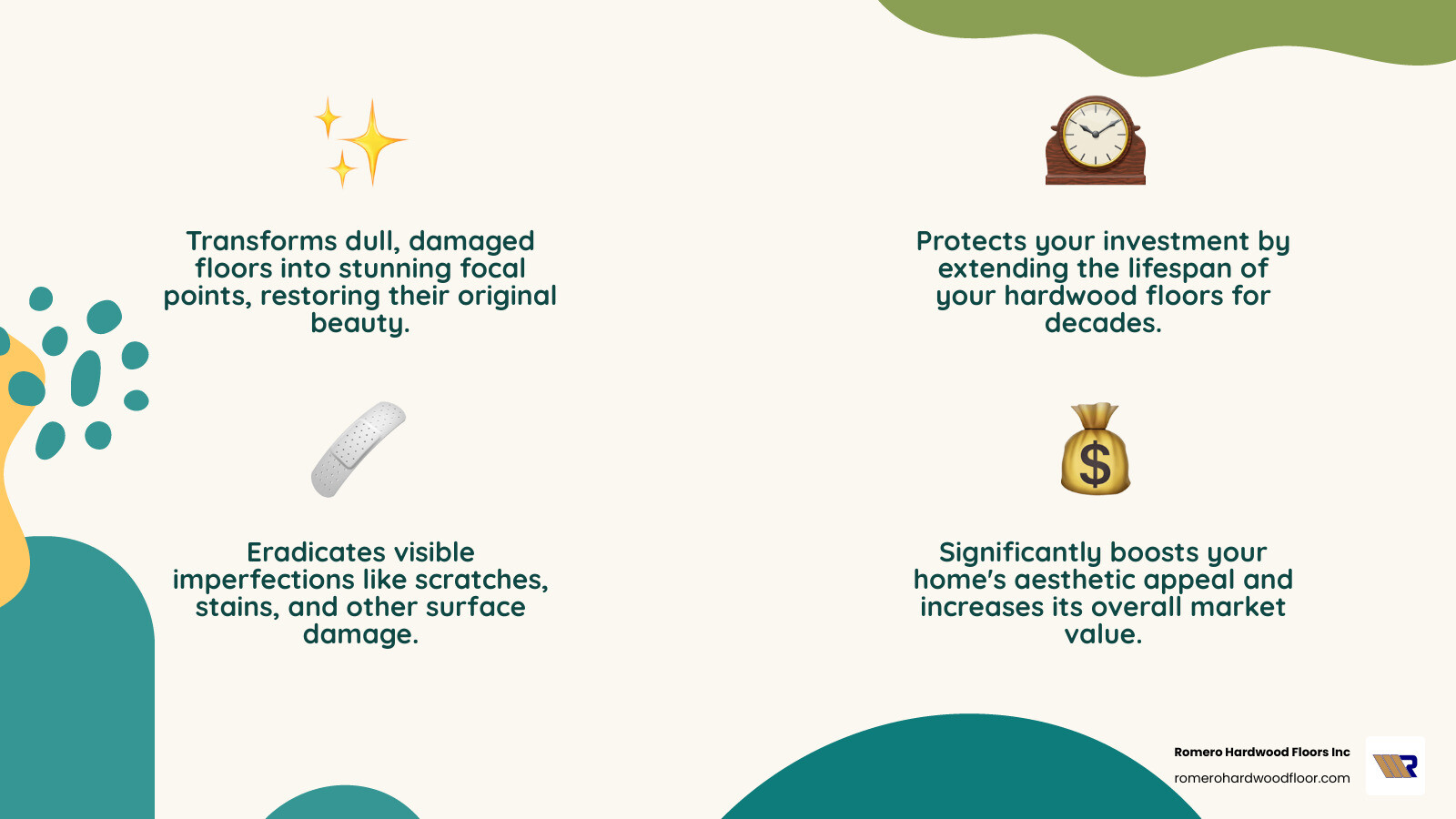
- Restores Beauty: Transforms dull, damaged floors into stunning focal points.
- Extends Lifespan: Protects your investment and makes floors last decades longer.
- Removes Damage: Eradicates scratches, stains, and other imperfections.
- Improves Value: Boosts your home’s aesthetic appeal and market value.
- Improves Safety: Eliminates splinters and evens out warped areas.
Hardwood floors add timeless elegance and warmth to any space. But daily life—foot traffic, spills, and furniture movement—takes its toll. Over time, these floors might look worn, scratched, or discolored. The good news is, unlike other flooring types, wood can often be restored to its original glory. This restoration not only makes your home more beautiful but also protects its structural integrity and value.
I’m Francisco Romero, owner of Romero Hardwood Floors Inc., based right here in Revere, MA. With over 15 years of dedicated experience since 2006, my team and I specialize in high-quality hardwood floor installation and comprehensive floor sanding and repair services, ensuring every project delivers outstanding results for both residential and commercial clients. We’re passionate about changing spaces and setting the standard for lasting beauty.
Floor sanding and repair terms to learn:
First Steps: Assessing Your Floors and the Damage
Before sanding, a thorough floor assessment is crucial. We examine the specific wood type, its overall structural integrity, and conduct moisture testing to identify underlying issues and tailor a precise floor sanding and repair plan.

What Types of Flooring Can Be Sanded and Repaired?
Many wood flooring types can be restored. Solid hardwood is ideal, as its 3/4-inch thickness allows for multiple sandings over a century or more, making it a long-term investment.
Engineered hardwood floors can often be sanded if their ‘wear layer’ (top wood veneer) is thick enough (typically 1/8 inch or more). A thin wear layer means sanding through to the core, which we avoid. We assess this carefully. Learn more: Can You Refinish Prefinished Hardwood Floors.
Parquet floors, bamboo, and cork floors can also be sanded and repaired, depending on their construction and wear.
However, there are some floors that simply aren’t meant for sanding. For instance, laminate flooring can’t be sanded because it’s essentially a photographic image on top of a composite board, not real wood. It’s important to know the difference!
Common Issues Addressed by Floor Sanding and Repair
Our floor sanding and repair services address nearly any common problem, restoring your floor’s shine.
We tackle common issues like scratches and scuffs from daily wear, expertly smoothing them away. For deeper gouges and dents, we use specialized wood filler or carefully replace individual boards for a seamless surface.
Stubborn stains and discoloration from spills or water rings are removed by sanding the affected layer. New finishes protect against future marks. For serious water damage, see our guide: Fix Wood Floor Water Damage.
Buckling or warping often indicates moisture issues; once resolved and boards are stable, we sand and repair for an even surface. We re-secure squeaky boards before sanding for a solid, silent foundation.
Natural wood expansion and contraction cause gaps between boards, which we fill for a uniform look. Age-related discoloration from sunlight is removed by sanding, allowing us to either restore the wood’s natural hue or apply a fresh, beautiful stain.
We can often repair and refinish floors with previous DIY mishaps, correcting uneven sanding or deep marks. Professional expertise is crucial for success. For general filler repairs, our guide on Hardwood Floor Filler Repair has more info.
The Professional Floor Sanding and Repair Process: A Step-by-Step Guide
Floor sanding and repair is a meticulous craft. Our efficient process, using precision and expertise, transforms worn floors into vibrant, beautiful surfaces, minimizing disruption and improving your home.
Before sanding, we thoroughly prepare the room: removing furniture, sealing off areas with plastic to contain dust, and setting all nails and staples below the surface to protect equipment and ensure a smooth finish.
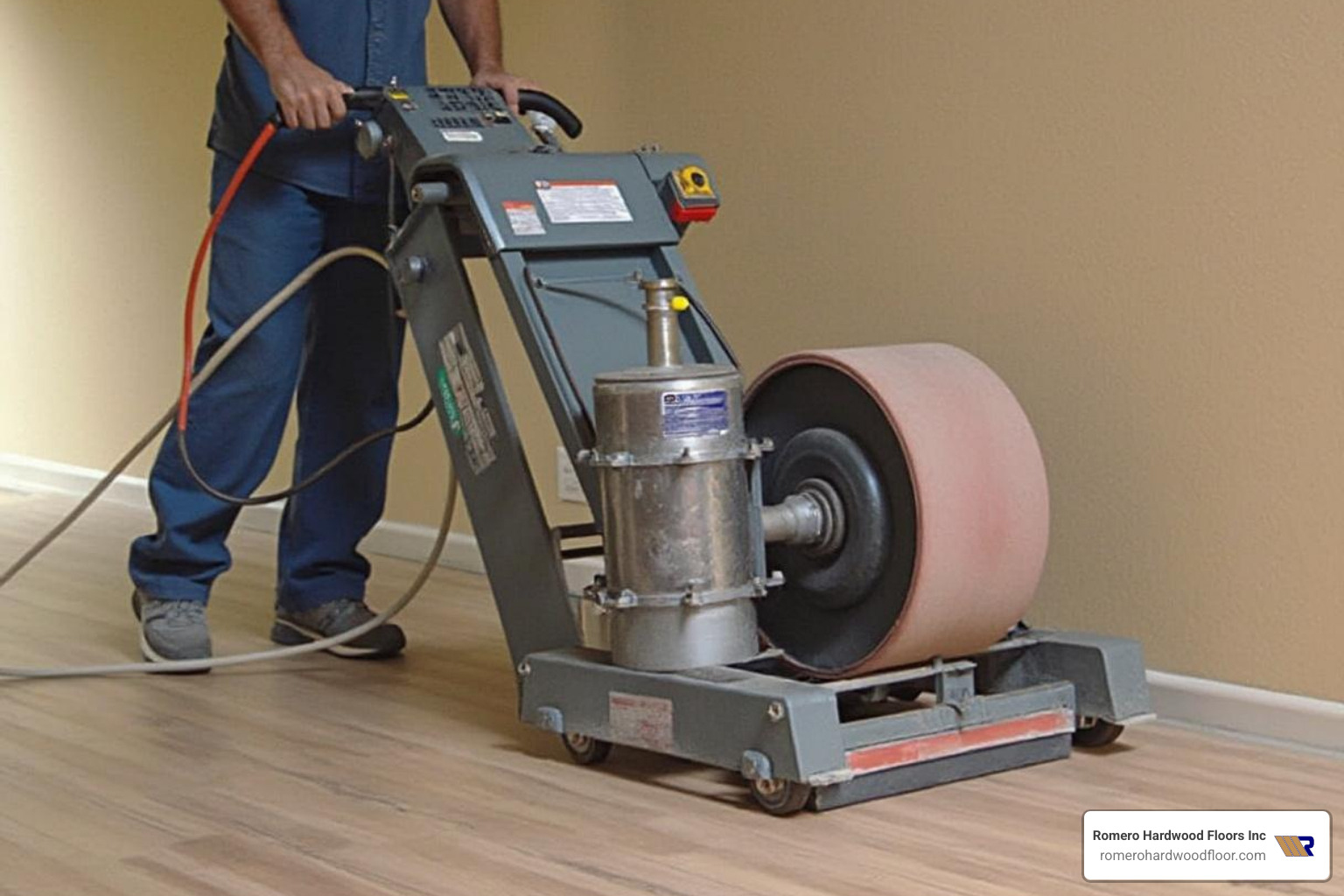
Here’s a detailed look at our step-by-step process for professional floor sanding and repair:
Step 1: Repair and Preparation
The “repair” in floor sanding and repair is crucial. Before sanding, we address all existing damages to ensure a flawless finish and restore structural integrity.
- Board Replacement: For severely damaged, warped, or missing boards, we carefully remove and replace them with new, matching wood, sourcing timber that blends seamlessly, including reclaimed options for heritage homes.
- Gap Filling: We fill gaps caused by wood expansion/contraction using appropriate fillers or putty, creating a uniform, insulated surface and preventing debris collection.
- Putty Application: For smaller imperfections like nail holes or minor surface defects, we apply wood putty, ensuring it matches the wood’s color as closely as possible.
- Subfloor Checks: We assess and address any issues with the subfloor, such as loose or squeaky sections, before laying new boards or proceeding with sanding. This is crucial for the long-term stability and silence of your floors.
- Acclimatizing Wood: If new wood is introduced, we ensure it has sufficient time to acclimatize to the room’s humidity and temperature. This prevents future warping or gapping after installation and finishing.
You can learn more about specific repair techniques in our detailed guide on Repairing Timber Floors. We also have a helpful video that demonstrates some of these techniques: How to repair a damaged hardwood floor.
Step 2: The Sanding Sequence
After repairs and preparation, the sanding sequence begins, stripping away the worn surface to reveal raw wood. We use professional drum sanders for main areas and edger sanders for perimeters and tight spots.
Our sanding process follows a precise grit progression, starting with coarse grit sandpaper and gradually moving to finer grits. This multi-stage approach ensures a perfectly smooth surface:
- Coarse Grit: The first pass uses coarse sandpaper (e.g., 36 or 40 grit) to remove the old finish, deep scratches, stains, and any unevenness. This is the most aggressive step, and it effectively “resets” the floor.
- Medium Grit: Next, we use a medium grit (e.g., 60 or 80 grit) to smooth out the marks left by the coarse paper and further refine the surface.
- Fine Grit: Finally, we make a pass with a fine grit (e.g., 100 or 120 grit) to achieve a silky-smooth finish, preparing the wood for staining and sealing.
We sand with the wood’s grain to prevent cross-grain scratches and ensure an even finish. Skilled technicians carefully overlap passes, keeping sanders in motion to avoid marks, creating a perfectly flat surface ready for finishing. More details: How To Sand Hardwood Floors.
Step 3: Staining and Finishing
After sanding, staining and finishing protect the wood and define its final look, from natural glow to rich hues.
First, thorough dust removal is crucial. Despite advanced dust containment, we vacuum and tack-cloth every inch to ensure a pristine surface, as any remaining dust compromises the finish.
Next, if desired, we apply the stain. We offer a variety of custom staining options to match your personal style and home décor. Our experts can even provide stain-matching services to achieve the perfect color every time. This step allows us to transform the wood’s appearance, making it lighter, darker, or giving it a specific undertone.
Finally, we apply multiple coats of high-quality protective finishes, such as durable polyurethane, to protect against scratches and wear. We ensure proper drying time (typically 3-8 hours) between coats, varying by product and conditions.
Final curing takes a few days to a week before heavy furniture can return, allowing the finish to fully harden for maximum durability. This ensures a long-lasting, beautiful finish. Explore staining options: Floor Staining.
Modern Methods and Finishes
The world of floor sanding and repair has come a long way. Gone are the days of dust clouds and lingering fumes that turn your home into a hazardous zone. Modern methods and advanced finishes have revolutionized the process, making it cleaner, healthier, and more efficient. We accept these innovations to provide you with superior results. Our commitment to using the latest technology means healthier homes, faster results, increased durability, and products with low VOCs (Volatile Organic Compounds), ensuring a safer environment for your family and pets.
Innovations in Sanding Technology
One of the most significant advancements in floor sanding and repair is the rise of dustless sanding. Traditional sanding methods create a substantial amount of hazardous dust and harmful fumes, which can settle everywhere and be difficult to clean. This dust can also be a health concern.
Our approach uses state-of-the-art dust containment systems, often equipped with HEPA filtration, which work to capture nearly all airborne dust. For example, some advanced systems can reduce dust by an incredible 99.8% compared to traditional sanding. This means a much cleaner and healthier environment during and after the process, allowing you to stay in your home with minimal disruption.
While traditional drum sanders can sometimes leave marks or waves if not handled expertly, specialized sanders can provide an extremely even finish without these imperfections. These can even be used on floors with as little as 1/8 inch of wood, making it possible to sand and refinish many engineered hardwood floors that might otherwise be deemed unsandable.
There’s also the concept of “sandless” floor finishing, which involves a wet process and chemical abrasion rather than mechanical sanding. While this can be a quick and dust-free option for floors with minimal damage, it doesn’t remove deep scratches or unevenness. For a true restoration and to address significant damage, traditional sanding (with modern dust containment) remains the gold standard. We weigh the pros and cons of each method to recommend the best solution for your unique floors. You can learn more about sandless options here: Sandless Floor Finishing.
Choosing Your Finish: From Oil to Water-Based
The finish you choose is just as important as the sanding itself in floor sanding and repair. It’s the protective layer that will withstand daily wear and tear, and it defines the final look and sheen of your floors. We offer a variety of high-quality finishes, each with its own benefits:
- Water-Based Polyurethane: This is a popular choice for its fast drying times (allowing traffic within an hour in some cases), low VOC content, and clear, non-yellowing appearance. It’s an environmentally friendly option that provides excellent durability.
- Oil-Based Polyurethane: Known for its extreme durability and a rich, amber glow that deepens over time. While it has a stronger odor and longer drying times, it offers robust protection, especially for high-traffic areas.
- Hardwax Oils: These penetrate the wood to protect from within, creating a natural, matte finish that highlights the wood’s natural grain. They are easy to repair in small sections without re-sanding the entire floor.
- UV-Cured Finishes: These finishes are instantly cured using ultraviolet light technology, allowing for immediate use of the floor. This minimizes downtime significantly, making it an excellent choice for commercial spaces or busy households.
- Sheen Levels: Beyond the type of finish, you also get to choose the sheen level:
- Matte: Offers a very natural, low-luster look that hides imperfections well.
- Satin: The most popular choice, providing a subtle sheen that’s not too dull and not too shiny, offering a good balance of elegance and practicality.
- Semi-Gloss: A shinier finish that reflects more light, creating a more formal or polished appearance.
- Gloss: The highest sheen, providing a highly reflective, mirror-like surface that makes a dramatic statement but can show imperfections more easily.
Our team will guide you through the options, considering your lifestyle, aesthetic preferences, and the specific characteristics of your wood, to help you select the perfect finish for your newly restored floors. Dive deeper into finish options: Finishing Hardwood Floors.
DIY vs. Hiring a Professional: Making the Right Choice
When your floors need help, you really have two options: rent the equipment and try it yourself, or call in an experienced crew like Romero Hardwood Floors Inc. Below is a streamlined look at what each path involves.
The DIY Route
- Saves some labor cost (often only 10-20 % overall).
- Requires heavy-duty sander and edger rentals, safety gear, finishing products, and plenty of practice time.
- Any slip of the drum can leave permanent grooves, thin spots, or burn marks.
- Expect the project to take several long weekends and create more dust unless you rent additional containment equipment.
- No warranty—if things go wrong you may face board replacement or even a full re-installation.
The Professional Advantage
- Skilled crews finish most residential projects in 2-5 days and keep disruption low.
- Commercial-grade, dust-containment systems capture up to 99.8 % of airborne dust.
- Expert repairs, precise sanding sequences, and premium finishes produce flawless, long-lasting results.
- Workmanship and finish are backed by written guarantees for peace of mind.
- In the long run, avoiding costly mistakes usually saves money and preserves your investment.
Understanding Typical Costs
Below are wide, internet-sourced averages—not Romero Hardwood Floors’ prices. After an on-site assessment we provide a custom, itemized quote.
| Service level | Average DIY out-of-pocket* | Average pro service* |
|---|---|---|
| Light buff & re-coat | $0.75 – $1.50 / sq ft | $2.00 – $4.00 / sq ft |
| Full sand, no major repairs | $1.50 – $3.00 / sq ft | $4.00 – $8.00 / sq ft |
| Sand + board replacement / staining | $2.50 – $4.00 / sq ft | $6.00 – $12.00 / sq ft |
*Ranges are drawn from national cost guides. High-end professional work in historic or high-traffic settings can exceed the top of these ranges by 3× or more.
For a deeper look at pricing factors, see our guide: Cost To Sand And Restain Hardwood Floors.
Bottom Line
If you have the time, skill, and appetite for risk, a DIY refinish can work—just be prepared for a steep learning curve. Most homeowners, however, choose professional floor sanding and repair for the guaranteed quality, speed, and protection of their hardwood investment.
Frequently Asked Questions about Floor Restoration
It’s natural to have questions about floor sanding and repair. We provide clear answers to ensure you feel fully informed and confident about the process.
How long does the floor sanding and repair process take?
The timeline for a floor sanding and repair project varies, but we aim for efficiency. A typical residential project (a few rooms/small apartment) usually takes 2 to 5 days.
What makes that timeline flexible? Well, a few key things:
- Room Size: It’s probably no surprise, but larger areas simply need more time for our team to work their magic with sanding and finishing.
- Extent of Repairs: Extensive board replacements or gap filling require detailed repair work to be completed and dry before sanding, crucial for a lasting result.
- Number of Coats and Drying Time: Multiple finish coats are needed for protection. Each requires proper drying time; water-based finishes dry quickly, while oil-based options need several hours or overnight between coats.
- Curing Time: After drying, the finish needs a few days to a week to fully “cure” for maximum durability. We recommend waiting before moving heavy furniture or rugs to ensure longevity.
During consultation, Romero Hardwood Floors Inc. provides a personalized timeline estimate. For more details on project duration, visit: How Long Does It Take To Sand Hardwood Floors.
Will there be a lot of dust in my home?
This is hands-down the most common concern we hear, and we’ve got fantastic news for you: Not with our modern methods!
Traditional floor sanding and repair was very dusty, spreading fine wood dust everywhere and posing health concerns.
Now, state-of-the-art dustless sanding systems with HEPA filters capture nearly all dust at the source, preventing airborne spread. These systems can reduce airborne dust by an incredible 99.8% compared to older methods!
To minimize mess, we seal off the work area with plastic, containing residual dust. The result is a cleaner, healthier, and far less disruptive floor sanding and repair process with minimal cleanup. See a dustless system in action: Bona dustless hepa system we use..
How do I choose a reputable floor sanding service?
Choosing the right professional for your floor sanding and repair project is crucial. Romero Hardwood Floors Inc. recommends the following to ensure you pick a reputable and experienced service:
First, check reviews and testimonials on platforms like Google or Yelp for positive feedback on reliability and quality. Also, ask for references; a reputable company will gladly connect you with past clients.
Next, it’s super important to verify insurance and licensing. Make sure the company you’re considering is fully licensed, bonded, and insured. This isn’t just a formality; it protects you in case of any accidents or unforeseen damage during the project. We’re always transparent and happy to provide proof of our credentials.
Always get multiple quotes. Obtain detailed, written quotes from at least three companies. Compare what’s included: finish types, dust containment, repair methods, and warranty. Be cautious of significantly cheaper quotes, which may indicate cut corners or lower-quality materials.
Experience truly matters in floor sanding and repair. Companies with many years in business, like Romero Hardwood Floors Inc. (since 2006), have the expertise to handle unique wood types and challenges, leading to superior results and best practices.
Finally, inquire about their equipment and technology, especially dust containment. Investment in modern, dustless systems shows commitment to results and health. Also, note clear communication; a good company is responsive and keeps you informed.
By following these simple steps, you can confidently choose a professional floor sanding and repair service that will deliver beautiful, long-lasting results for your home, adding value and warmth for years to come. For more details about choosing the best contractors, you can check out: Flooring Repair Contractors Near Me.
Conclusion: A Beautiful Foundation for Your Home
Well, we’ve journeyed through the entire process of floor sanding and repair, from understanding what makes your floors candidates for revival to the meticulous steps professionals like us take. It’s clear that investing in this service isn’t just about making your floors look pretty again; it’s one of the smartest decisions you can make for your home and your peace of mind.
Think about it: beneath those years of scuffs, scratches, and everyday wear, lies the stunning, natural beauty of your hardwood. Our meticulous process breathes new life into your living spaces, revealing that hidden elegance. It’s a comprehensive restoration that truly transforms your home, offering not just an immediate visual upgrade, but also significant long-term benefits that boost your property’s overall value.
With modern, dust-free technologies and an array of durable finishes, the entire floor sanding and repair process is now cleaner, faster, and far more convenient than you might imagine. Choosing an experienced professional means you get a flawless finish that stands the test of time, protection against future damage, and perhaps most importantly, invaluable peace of mind knowing your beautiful foundation is in expert hands.
Here at Romero Hardwood Floors Inc., we’re truly passionate about turning worn-out floors into stunning focal points. Based in Revere, MA, we proudly serve homeowners and businesses across Beverly, Chelsea, Danvers, East Boston, Gloucester, Lynnfield, Malden, Manchester by the Sea, Marblehead, Medford, Melrose, Nahant, Peabody, Reading, Rockport, Salem, Saugus, Somerville, Stoneham, Swampscott, Wakefield, Winchester, Winthrop, Woburn, and all the surrounding areas. Our commitment to competitive pricing, punctuality, and guaranteed workmanship means we don’t just meet expectations—we absolutely exceed them.
So, if your hardwood floors are whispering tales of yesteryear and longing for a fresh start, let us help you refind their timeless elegance and warmth. After all, they are truly the beautiful foundation of your cherished home.
Ready to see the difference we can make? Contact us for your hardwood floor repair needs today!
