Why Choosing the Best Floor Varnish for Hardwood Floors Matters
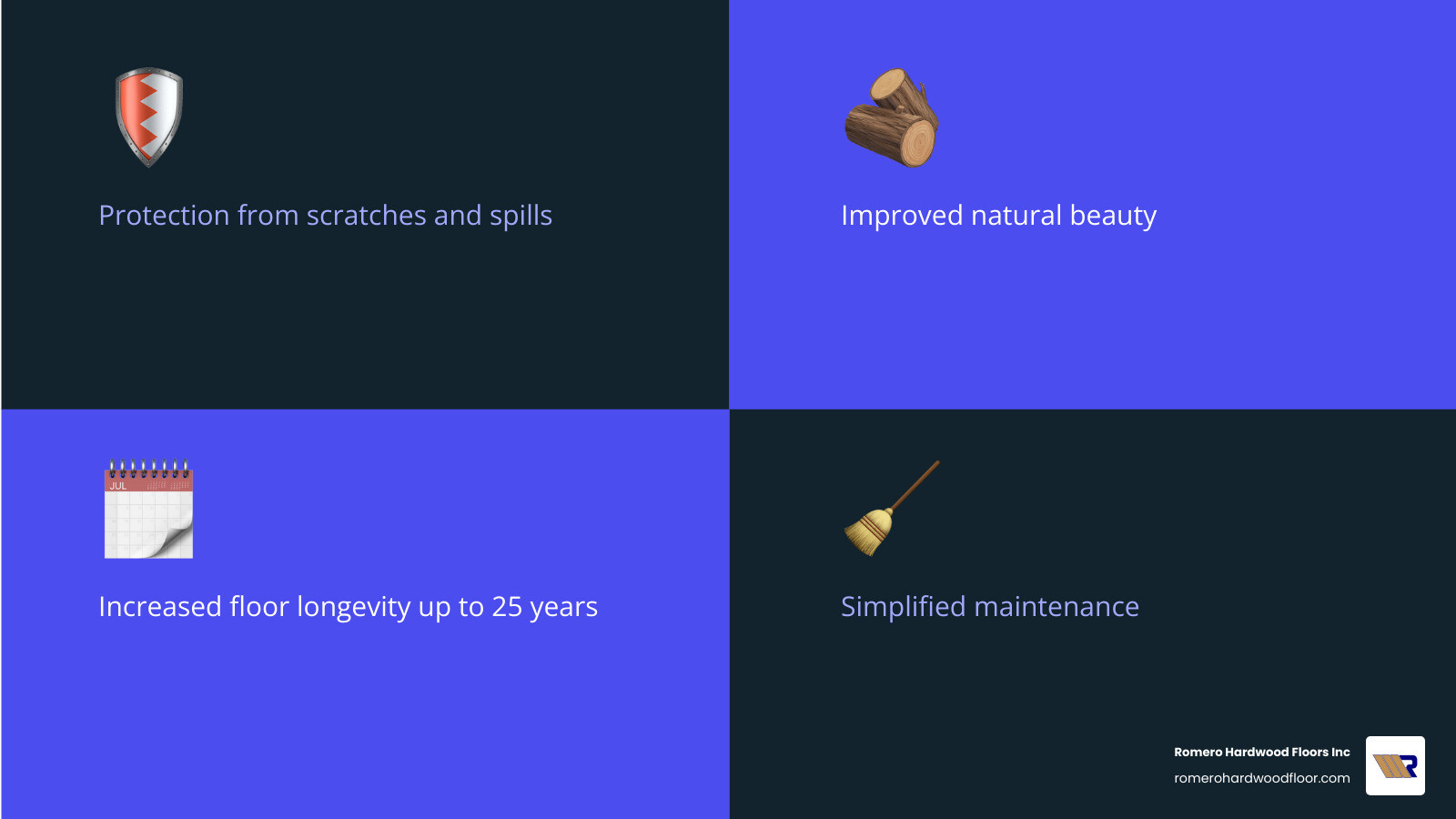
When it comes to hardwood flooring, choosing the best floor varnish hardwood floor options can make or break your investment. The finish you select protects your floors from scratches, stains, and everyday wear while enhancing the wood’s natural beauty and deepening its color.
Quick Answer: Top Floor Varnish Types for Hardwood Floors
| Varnish Type | Best For | Key Benefits |
|---|---|---|
| Water-Based Polyurethane | Light-colored woods, quick projects, low-odor needs | Fast drying (2-4 hours), clear finish, low VOCs |
| Oil-Based Polyurethane | High-traffic areas, traditional look, maximum durability | Fewer coats needed, warm amber tone, 7-10 year lifespan |
| Hardwax Oil | Natural appearance, easy repairs, eco-conscious homes | Zero VOCs, matte finish, simple spot repairs |
The right hardwood floor finish does three critical things:
- Protects against scratches, dents, water damage, and everyday foot traffic
- Improves the wood’s natural grain, color, and overall appearance
- Extends the life of your flooring investment significantly
However, navigating the options can feel overwhelming. Water-based or oil-based? Surface finish or penetrating oil? Gloss, satin, or matte? Each choice impacts how your floors look, how long they last, and how much maintenance they require.
As Francisco Romero, owner of Romero Hardwood Floors Inc. with over 15 years of experience installing and refinishing hardwood floors throughout Revere, MA, I’ve guided countless homeowners through selecting the best floor varnish hardwood floor solutions for their specific needs. This guide breaks down your options so you can make an informed decision that protects your investment and matches your lifestyle.
Glossary for best floor varnish hardwood floor:
- best lacquer for wood floors
- how to stain and varnish hardwood floors
- removing old varnish from wood floors
Understanding the World of Hardwood Floor Finishes
Choosing the best floor varnish hardwood floor isn’t just about picking a can off a shelf; it’s about understanding the science behind wood protection. Modern formulas offer incredible durability and beauty, but they vary significantly. Let’s dig into the fundamental distinctions that will help us choose the perfect shield for your beautiful hardwood.
Whether you’re exploring options for a new installation or considering refinishing your existing floors, understanding these differences is key to achieving a lasting and stunning result. For a deeper dive into all things hardwood floor finishes, check out our comprehensive guide on finishing hardwood floors.
Varnish vs. Polyurethane: What’s the Difference?
The terms “varnish” and “polyurethane” are often used interchangeably, but they refer to distinct types of finishes. Historically, varnish was a broad term for a transparent, hard protective finish made from resins, oils, and solvents. It was the go-to for wood floors before more advanced options arrived.
Then came polyurethane, a plastic resin that forms a highly durable, flexible film with superior resistance to scratches and moisture. Available in water-based or oil-based formulas, polyurethane is the modern champion for interior hardwood floors. While traditional varnish is better for outdoor use due to its UV protection, polyurethane’s robust protection is ideal for homes and businesses in Massachusetts communities like Beverly, Peabody, and Somerville.
Surface Finishes vs. Penetrating Finishes
Hardwood floor finishes generally fall into two main categories: surface finishes and penetrating finishes. Each offers a different look and level of protection.
Surface finishes create a protective film or “shell” on top of the wood. They are the most common choice for hardwood floors today, prized for their durability and ease of cleaning. Examples include:
- Polyurethane (water-based and oil-based): As discussed, these form a resilient layer that guards against wear and tear.
- Acid-cured (or Swedish finishes): Extremely durable and transparent, but have very high VOCs and require professional application. They can take up to 60 days to fully cure.
- Aluminum oxide: This incredibly hard finish is typically factory-applied to pre-finished planks and offers exceptional abrasion resistance, with a lifespan of up to 25 years. However, scratches are difficult to repair.
Penetrating finishes, on the other hand, soak into the wood’s pores and harden within the wood fibers, rather than forming a layer on top. They offer a more natural, matte appearance that highlights the wood’s texture. Examples include:
- Hardwax oils: These are a blend of natural oils and waxes that penetrate and protect the wood from within. They are often low or zero-VOC and offer easy spot repairs.
- Penetrating oil sealers: Natural oils like tung oil or linseed oil seep into the wood, creating a durable seal with a mellow sheen. They are excellent for antique flooring but require longer drying times (24-48 hours between coats).
The key difference lies in repairability: penetrating finishes are generally easier to repair in specific spots than surface finishes, which often require full re-sanding and refinishing if damaged. For options that offer exceptional protection and longevity, explore our hard-wearing wood floor varnish services.
A Roundup of the Best Floor Varnish for Hardwood Floor Types
Choosing the best floor varnish hardwood floor means weighing durability, appearance, and maintenance. We’ve put together a quick comparison of the most popular and effective options for homeowners throughout the North Shore of Massachusetts.
| Feature | Water-Based Polyurethane | Oil-Based Polyurethane | Hardwax Oil |
|---|---|---|---|
| Durability | Good, generally requires more coats than oil-based for comparable hardness. | Excellent, very durable, superior protection against heat and moisture. | Good, protects from within, but surface can scuff more easily than poly. |
| Drying Time | Fast (2-4 hours between coats, 12 hours light traffic, 24 hours to 21 days full cure). | Long (8-10 hours between coats, 48 hours light traffic, 4-7 days full cure). | Long (24-48 hours between coats, similar full cure to oil-based poly). |
| Odor/VOCs | Low odor, low VOCs, better for indoor air quality. | Strong odor, high VOCs, requires significant ventilation. | Very low to zero VOCs, mildest odor. |
| Appearance | Clear, non-yellowing, maintains natural wood color, wide range of sheens. | Amber tone, darkens wood over time, improves grain, can yellow. | Matte, natural, highlights wood texture, breathable finish. |
| Maintenance | Easy to clean, requires recoating every 3-5 years. | Easy to clean, recoating every 7-10 years. | Easy spot repairs, periodic re-oiling (every 1-5 years depending on traffic). |
Water-Based Polyurethane: The Clear & Quick Choice
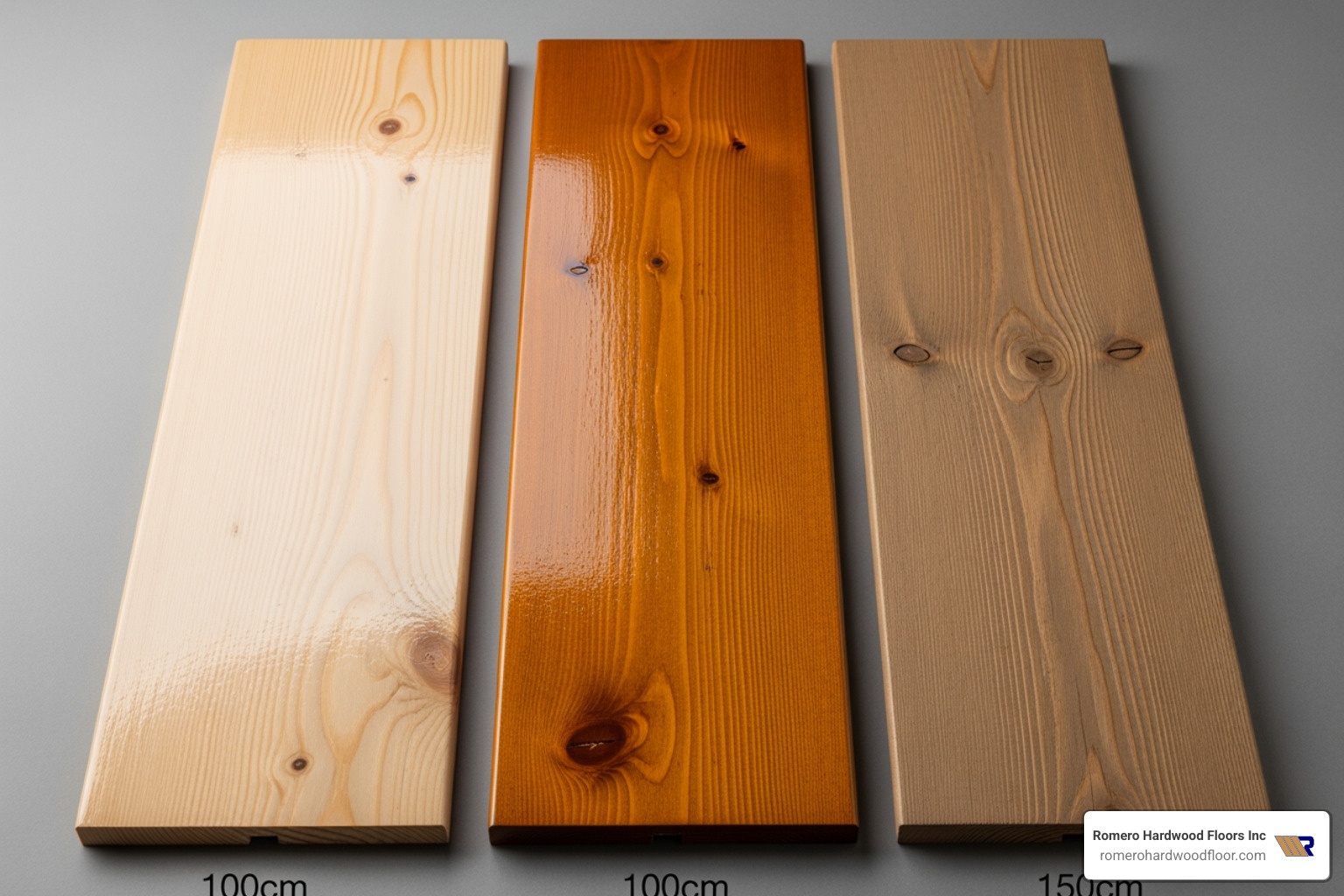
For a clean look and quick turnaround, water-based polyurethane is an excellent choice. It’s celebrated for its low odor and low VOC (Volatile Organic Compound) levels, making it better for indoor air quality and a great option for families in areas like Chelsea or Lynn.
One of its biggest advantages is its fast drying time – typically just 2 to 4 hours between coats. This means we can often apply multiple coats in a single day, significantly reducing the overall project time. Water-based polyurethanes dry clear and do not amber or yellow over time, preserving the natural color of your wood. This makes them ideal for lighter wood species like maple, birch, or natural oak, where you want to maintain a bright, airy aesthetic.
The trade-off? Water-based poly usually requires more coats than oil-based finishes to achieve a comparable level of durability. However, advancements in formulas, such as those that are oil-modified, are closing this gap, offering increased resilience with the same user-friendly characteristics. For those concerned about toxins, we also offer specialized non-toxic floor finishes that prioritize health and safety.
Oil-Based Polyurethane: The Durable & Traditional Option
For superior durability and a rich, traditional look, oil-based polyurethane is a top choice. It offers robust protection against heavy traffic, moisture, and heat, making it perfect for busy households in areas like Peabody or Danvers.
Oil-based polyurethanes require fewer coats than water-based options, contributing to their reputation for toughness. They impart a warm, amber hue to the wood, deepening its color and enhancing its natural grain. This effect is particularly striking on darker woods like walnut, cherry, or red oak, giving them a classic, luxurious appearance that can also yellow gracefully with age.
However, there are considerations. Oil-based polyurethane comes with a strong odor and high VOC content, necessitating excellent ventilation during and after application. The drying time is also considerably longer, typically 8 to 10 hours between coats, and a full cure can take anywhere from 4 to 7 days. This means a longer wait before you can fully resume normal activities on your newly finished floors.
Hardwax & Penetrating Oils: The Natural & Repairable Finish
If you dream of a natural, breathable finish that truly highlights the wood’s texture and offers easy maintenance, hardwax and penetrating oils might be the best floor varnish hardwood floor option for you. These finishes soak into the wood rather than forming a film on top, creating a beautiful, matte, and organic look.
A key benefit is their very low to zero-VOC content and mild odor, ideal for chemically sensitive or eco-conscious homeowners in places like Gloucester or Rockport. They allow the wood to breathe, helping prevent warping while still resisting water.
One of their most appealing features is the ease of spot repair. Unlike surface finishes that often require full re-sanding if damaged, hardwax and penetrating oils can be spot-repaired by lightly sanding the affected area and applying a topical coat of oil. This makes maintenance incredibly flexible. The trade-off is that they are generally less resistant to heavy scuffs and require periodic re-oiling (typically every 1-5 years, depending on traffic) to maintain their protection and appearance. For more on environmentally conscious choices, explore our eco-friendly hardwood flooring solutions.
How to Choose the Right Varnish for Your Home
Choosing the best floor varnish hardwood floor for your home involves a thoughtful assessment of several factors unique to your lifestyle and environment. It’s about finding the perfect balance between aesthetics, durability, and practical considerations.
Factor 1: Your Room’s Traffic Level
This is arguably one of the most critical factors when selecting your floor finish. The amount of foot traffic a room receives directly dictates the level of durability your finish needs.
- High-traffic areas: For spaces like kitchens, hallways, entryways, and living rooms in busy households (think of those active homes in Wakefield or Stoneham), you’ll need the toughest finish available. Oil-based polyurethanes or even factory-applied aluminum oxide are excellent choices here, offering maximum durability and scratch resistance. They form a resilient barrier against constant wear and tear.
- Low-traffic areas: In bedrooms, formal dining rooms, or home offices, where foot traffic is minimal, you have more flexibility. You might opt for a water-based polyurethane for its clear finish or a hardwax oil for its natural look, even if they offer slightly less extreme durability than their heavy-duty counterparts.
Factor 2: Sheen & Gloss Level
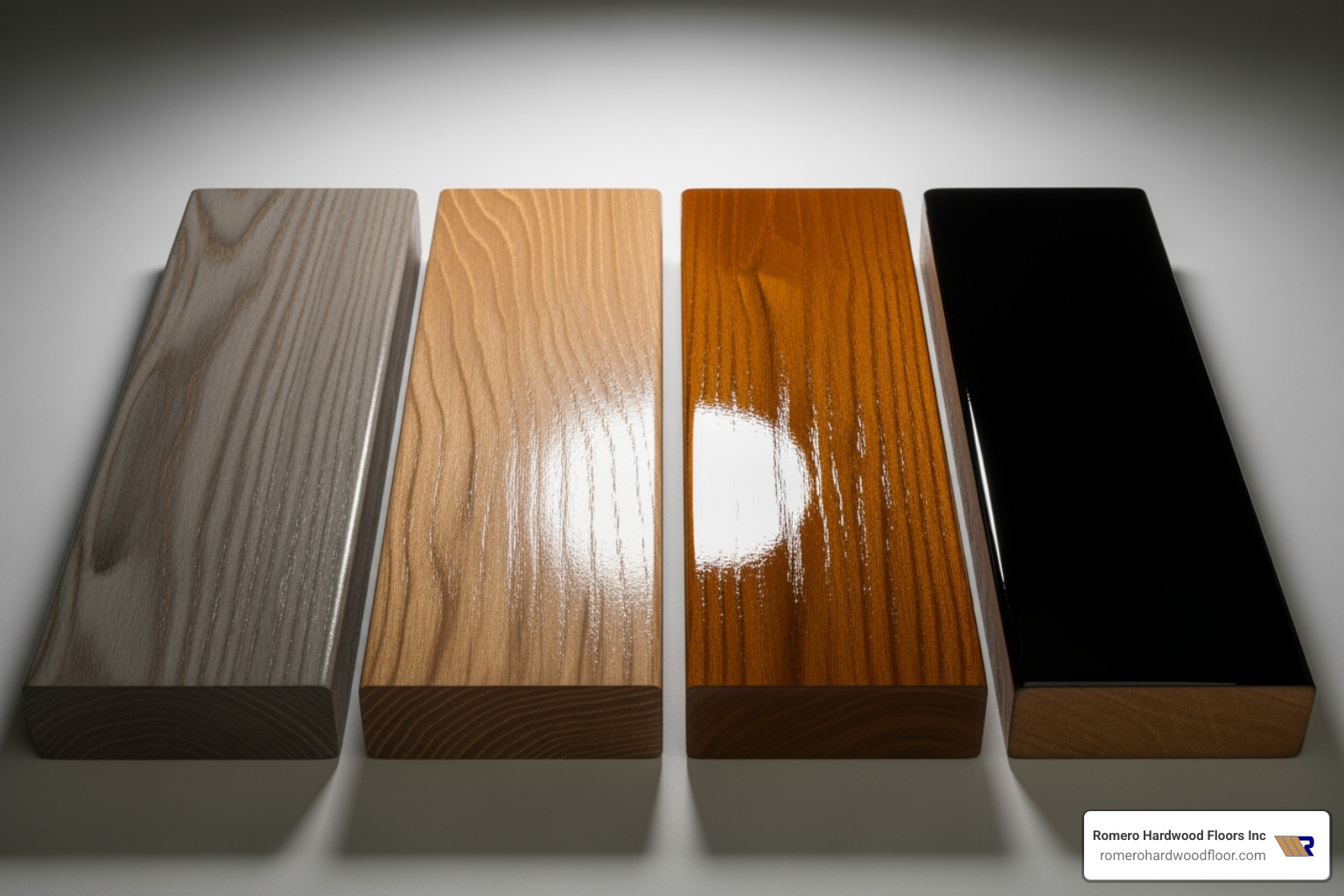
The sheen level of your finish significantly impacts the appearance and maintenance of your hardwood floors. It’s purely aesthetic, right? Not entirely!
- Matte finish: Offers a very natural, almost unfinished look. It’s excellent for hiding minor imperfections and dirt, giving your floors a subtle elegance.
- Satin finish: The most popular choice, providing a soft luster that’s not too shiny and not too dull. It balances elegance with practicality, making it a versatile option for many homes. However, some sources suggest scratches might be slightly more visible on satin than high-gloss.
- Semi-gloss: Provides a noticeable shine, adding a touch of formality and brightness to a room.
- High-gloss: Delivers a mirror-like, highly reflective surface that makes a bold statement. While stunning, it tends to show dust, scratches, and imperfections more readily. Interestingly, in high-traffic areas, a gloss sheen can actually help protect the wood floor more and, surprisingly, might hide imperfections better than a satin finish, which can make scratches more apparent.
The choice really comes down to your desired aesthetic and how much maintenance you’re willing to commit to. For those looking to redefine their floor’s appearance, including exploring different sheen levels, our color refinishing hardwood floors services can help.
Factor 3: Health & Environment (VOCs)
The health impact of finishes is a major concern for homeowners, especially families in communities like Winthrop or Marblehead. This brings us to Volatile Organic Compounds (VOCs).
Volatile Organic Compounds (VOCs) are chemicals released into the air from many products, including floor finishes. According to the EPA, they can contribute to indoor air pollution and may cause various health effects.
- High-VOC options: Traditional oil-based, acid-cured, and moisture-cured finishes have high VOC content and strong fumes, requiring extensive ventilation and protective equipment during application.
- Low-VOC and non-toxic options: Water-based polyurethanes and hardwax oils are excellent low-VOC alternatives with milder odors. Many brands now offer specially formulated non-toxic options, making them ideal for chemically sensitive individuals. These options prioritize safety and air quality without sacrificing durability.
When considering the best floor varnish hardwood floor, we always discuss your preferences for VOC levels and ensure proper ventilation procedures are in place for any chosen finish.
The Finishing Touch: Application and Maintenance
Even the best floor varnish hardwood floor won’t perform optimally without proper application and diligent long-term care. This stage is where expertise truly shines, changing raw wood into a gleaming, protected surface.
Preparing for the best floor varnish hardwood floor application
Proper preparation is the most critical part of any floor finishing project. Skipping steps guarantees a poor result that won’t last.
- Sanding: This is the most crucial step. We sand the floor carefully, starting with coarser grits to remove old finishes and imperfections, then progressively moving to finer grits to achieve a smooth, even surface. This process ensures proper adhesion of the new finish.
- Cleaning & Dust Removal: After sanding, the room will be dusty. We thoroughly vacuum all surfaces, including walls, windowsills, and baseboards, and then use tack cloths to pick up any remaining fine dust particles. Even tiny dust specs can mar the final finish.
- Sealer Application: The role of a sealer is paramount. Applied after sanding and cleaning, a floor sealer offers several benefits:
- It builds a foundation for topcoats, promotes a uniform finish, and prevents issues like tannin bleed and side bonding.
- A sealer also increases durability, reduces reactions between the wood and finish, and can help customize or preserve the floor’s color.
- Wood Filler for Repairs: Before applying the finish, any minor imperfections like small gaps, cracks, or nail holes are addressed with appropriate wood filler, ensuring a flawless surface.
For professional-grade preparation that sets the stage for a perfect finish, explore our floor sanding and varnishing services.
Common Mistakes to Avoid When Applying the best floor varnish hardwood floor
Avoiding these common pitfalls will save you headaches and money:
- Skipping preparation: As mentioned, trying to cut corners on sanding and cleaning is a recipe for disaster. The finish won’t adhere properly, leading to peeling, unevenness, and a generally poor result.
- Applying too thick a coat: More isn’t always better! Thick coats dry unevenly, can trap air bubbles, and are prone to cracking or peeling. Multiple thin coats are always superior for durability and appearance.
- Ignoring drying times: Patience is a virtue in floor finishing. Rushing between coats or putting furniture back too soon can ruin the finish, leaving marks, stickiness, or an incomplete cure. Always follow manufacturer instructions diligently.
- Poor ventilation: Especially with oil-based or moisture-cured finishes, inadequate ventilation can lead to strong, lingering odors, health hazards from VOCs, and improper curing.
- Using the wrong tools: Different finishes require different applicators. Using a foam roller for an oil-based finish, for example, might result in bubbles, while a lambswool applicator for water-based poly could lead to streaks.
- Not stirring the can: Varnish and polyurethane components can separate. Gently stirring (never shaking, which creates bubbles!) ensures consistent product quality and an even finish.
Long-Term Care for Your Varnished Floors
Proper maintenance is key to preserving the beauty and extending the life of your newly varnished floors.
- Regular cleaning methods: Sweep or vacuum regularly (using a soft brush attachment) to remove grit and dirt that can scratch the finish. For deeper cleaning, damp mop with a pH-neutral wood floor cleaner. Always avoid excessive water, as it can damage wood floors.
- Avoiding harsh chemicals: Never use abrasive cleaners, ammonia-based products, or steam mops on your varnished floors, as these can strip or dull the finish.
- Using furniture pads: Place felt pads under all furniture legs to prevent scratches and dents.
- Immediate spill cleanup: Wipe up spills promptly to prevent moisture from penetrating the finish and damaging the wood.
- Recoating schedule: While oil-based polyurethane can last 7-10 years and water-based 3-5 years, this is an average. High-traffic areas may need recoating sooner. Penetrating oils require periodic re-oiling, typically every 1-5 years. Look for signs of wear, dullness, or minor scratches, especially in pathways, as an indicator that it might be time for a fresh coat.
For detailed advice on keeping your floors pristine, check out our wooden floor maintenance tips.
Frequently Asked Questions about Hardwood Floor Varnish
We often get asked similar questions by homeowners in Revere, Medford, and other surrounding towns. Here are some of the most common ones we encounter when discussing the best floor varnish hardwood floor options:
How many coats of varnish do hardwood floors need?
For optimal durability, we recommend at least three coats of finish.
- Water-based polyurethanes typically need three to four coats.
- Oil-based polyurethanes often provide excellent protection in two to three coats.
A sealer coat may reduce the number of topcoats needed. Always follow the manufacturer’s instructions, as recommendations vary. A professional can assess your floor to provide the best recommendation.
Can I apply a new type of varnish over an old one?
Applying a new type of varnish over an old one can be tricky due to compatibility issues that cause peeling or poor adhesion.
- Water-based over oil-based: This is generally not recommended without completely sanding off the old finish. Some specialty products may work, but require meticulous prep and testing.
- Oil-based over water-based: This is less problematic but still requires thorough cleaning and light sanding (screening) for good adhesion.
Proper preparation is always key and involves cleaning, screening the surface for grip, and performing an adhesion test in a small area. When in doubt, sanding down to bare wood is the safest method.
How long does it take for floor varnish to fully cure?
It’s important to know the difference between “dry time” and “cure time.” Dry time is when a finish is dry to the touch, while cure time is when it reaches maximum hardness.
- Dry Times (for recoating): Water-based poly takes 2-4 hours; oil-based poly takes 8-10 hours.
- Cure Times (for maximum durability): Water-based poly can take up to 21 days; oil-based poly takes 4-7 days. Acid-cured finishes can take up to 60 days.
You can usually walk on floors with socks in 24-48 hours, but wait at least 72 hours before moving furniture. Full cure time is affected by humidity, temperature, and ventilation. Higher humidity and colder temperatures will slow the process.
Conclusion: Achieve a Flawless Finish with Expert Help
Choosing the best floor varnish hardwood floor for your home is a significant decision that impacts both the beauty and longevity of your valuable investment. We’ve explored the diverse world of finishes, from the clear and quick water-based polyurethanes to the durable, amber tones of oil-based options, and the natural, repairable appeal of hardwax oils. Each choice comes with its own set of benefits and considerations, from durability and drying time to environmental impact and maintenance.
The ideal finish for your hardwood floors depends on a careful balance of factors: the type of wood, the traffic levels in your home, your desired aesthetic (sheen), and your preferences regarding VOCs and maintenance. Proper preparation and application are just as crucial as the product itself, ensuring that your chosen finish performs to its full potential.
For a guaranteed professional result that not only improves your home’s value but also brings lasting beauty to your living spaces, trust the experts at Romero Hardwood Floors Inc. With over 15 years of experience serving communities like Revere, Beverly, and all across the North Shore of Massachusetts, we are dedicated to providing competitive pricing, punctuality, and guaranteed workmanship. Let us help you select and apply the perfect finish, ensuring your hardwood floors look stunning for years to come.
Ready to transform your floors? Contact us today for a consultation or explore our comprehensive hardwood floor refinishing services.
