
Classic wood floor designs: 5 Timeless Styles
A Closer Look at Classic Wood Floor Designs
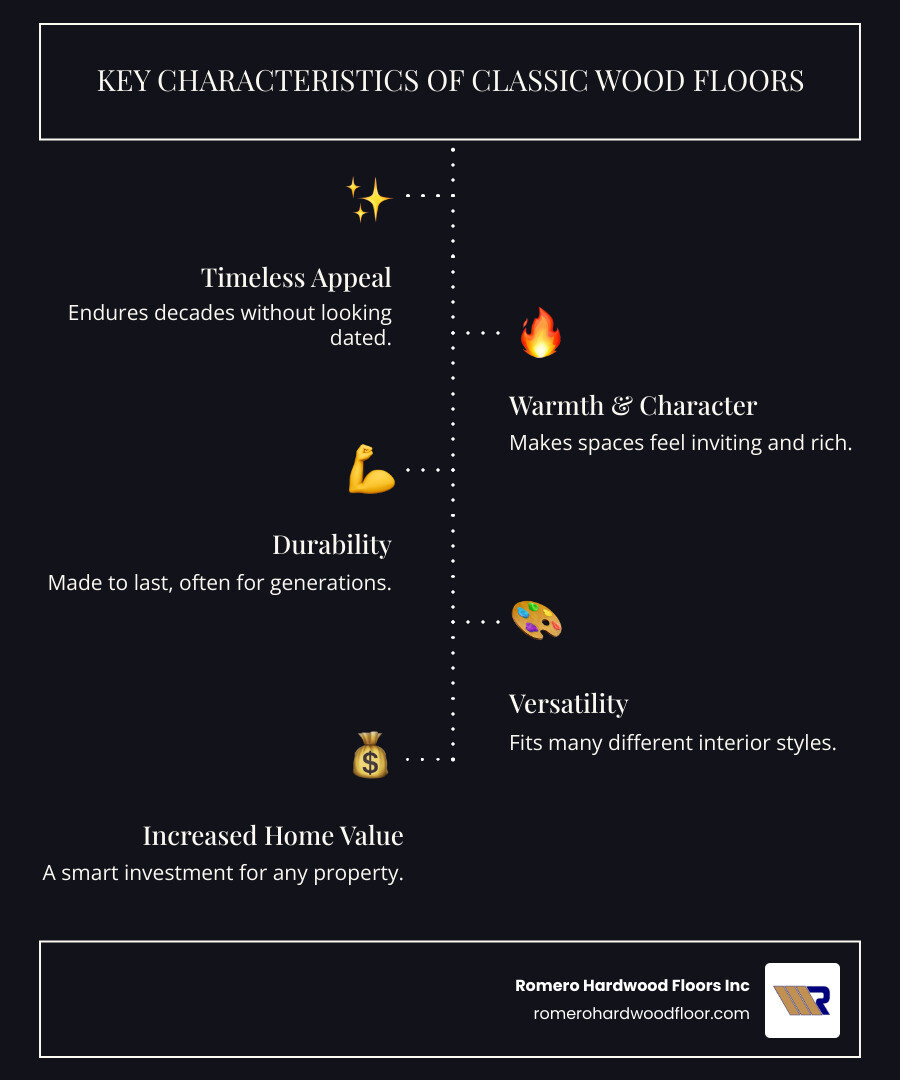
Classic wood floor designs are a timeless investment, bringing warmth and character that never goes out of style. If you’re wondering what makes a wood floor “classic” or which patterns fit the bill, here’s a quick look:
- Defining Features of Classic Wood Floors:
- Timeless Appeal: They endure decades without looking dated.
- Warmth & Character: They make spaces feel inviting and rich.
- Durability: Made to last, often for generations.
- Versatility: They fit many different interior styles, from traditional to modern.
- Increased Home Value: A smart choice for any property.
- Popular Classic Wood Floor Patterns:
- Straight Pattern: Simple, clean, and adaptable.
- Herringbone: A sophisticated zig-zag that adds movement.
- Chevron: A sharp, continuous V-shape for a bold look.
- Parquet: Intricate geometric designs like Basketweave or Versailles.
- Random Width: Planks of varied widths for an authentic, rustic feel.
Wood floors have been admired for centuries, from grand palaces to cozy homes, offering a foundation of enduring quality and beauty.
With over 15 years of experience, I, Francisco Romero, owner of Romero Hardwood Floors Inc., transform spaces with premium Classic wood floor designs. My passion for excellence ensures each project improves your property’s beauty and value.
Glossary for Classic wood floor designs:
- Chevron pattern hardwood floors
- Parquet flooring installation guide
- Hardwood Floor Installation Patterns
Here at Romero Hardwood Floors Inc., we believe choosing the right wood floor pattern can transform your home. This section will detail the most popular patterns, exploring what makes each unique and where it shines best.
Straight Lay: The Foundation of Classic Style
The straight pattern is the champion of versatility. As the most common way to lay hardwood, its clean lines and adaptable nature blend with any decor, from modern to traditional.
What makes it classic? It creates an illusion of space. Laying planks parallel to the longest wall makes rooms feel larger, which is ideal for compact spaces or hallways.
Advantages:
- Simplicity and Adaptability: A clean canvas that lets your decor take center stage.
- Cost-Effective: The least expensive option due to less waste and simpler installation.
- Easy Installation: Requires less intricate cutting and labor.
Disadvantages:
- Less Visual Drama: Doesn’t offer the bold impact of more intricate patterns.
Best Applications:
Works well in any room. It’s particularly effective in small or narrow rooms where it can make the space feel larger.
For more on installation patterns, visit our guide on Hardwood Floor Installation Patterns.
Herringbone: Timeless Elegance and Movement
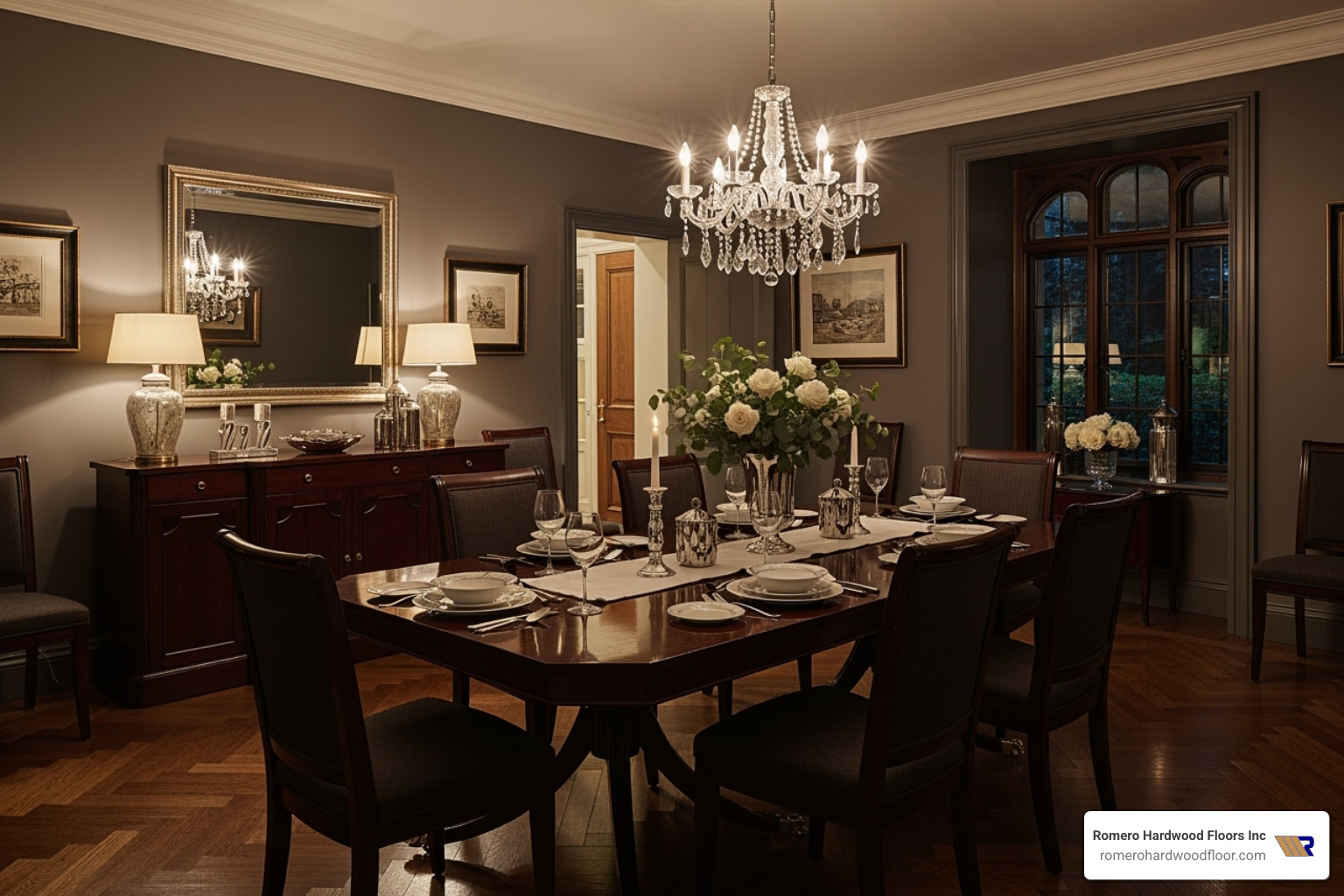
The herringbone pattern adds sophistication and dynamic visual interest. This design arranges rectangular planks in a staggered V-shape, where the end of one plank meets the side of another. The resulting broken zig-zag creates movement and depth, making a room feel more luxurious.
What makes it classic? With a rich history in grand European estates, herringbone is a design staple. It balances tradition and modern appeal, adding character and architectural interest.
Advantages:
- Sophistication: Creates a refined, captivating visual texture.
- Movement and Depth: The staggered V-shape makes rooms feel bigger and more dynamic.
- Versatility: Adapts to contemporary, rustic, and eclectic styles.
Disadvantages:
- Higher Installation Cost: More expensive per square foot than a straight lay.
- Material Waste: Cutting the pattern results in more wasted wood.
- Best for Larger Rooms: Its intricate design is best appreciated in larger spaces.
Best Applications:
Perfect for larger rooms, formal living rooms, dining rooms, master bedrooms, and entryways where you want to make a grand statement.
For inspiration, find More info about Floor Pattern Design Ideas.
Chevron: A Modern Take on Classic Wood Floor Designs
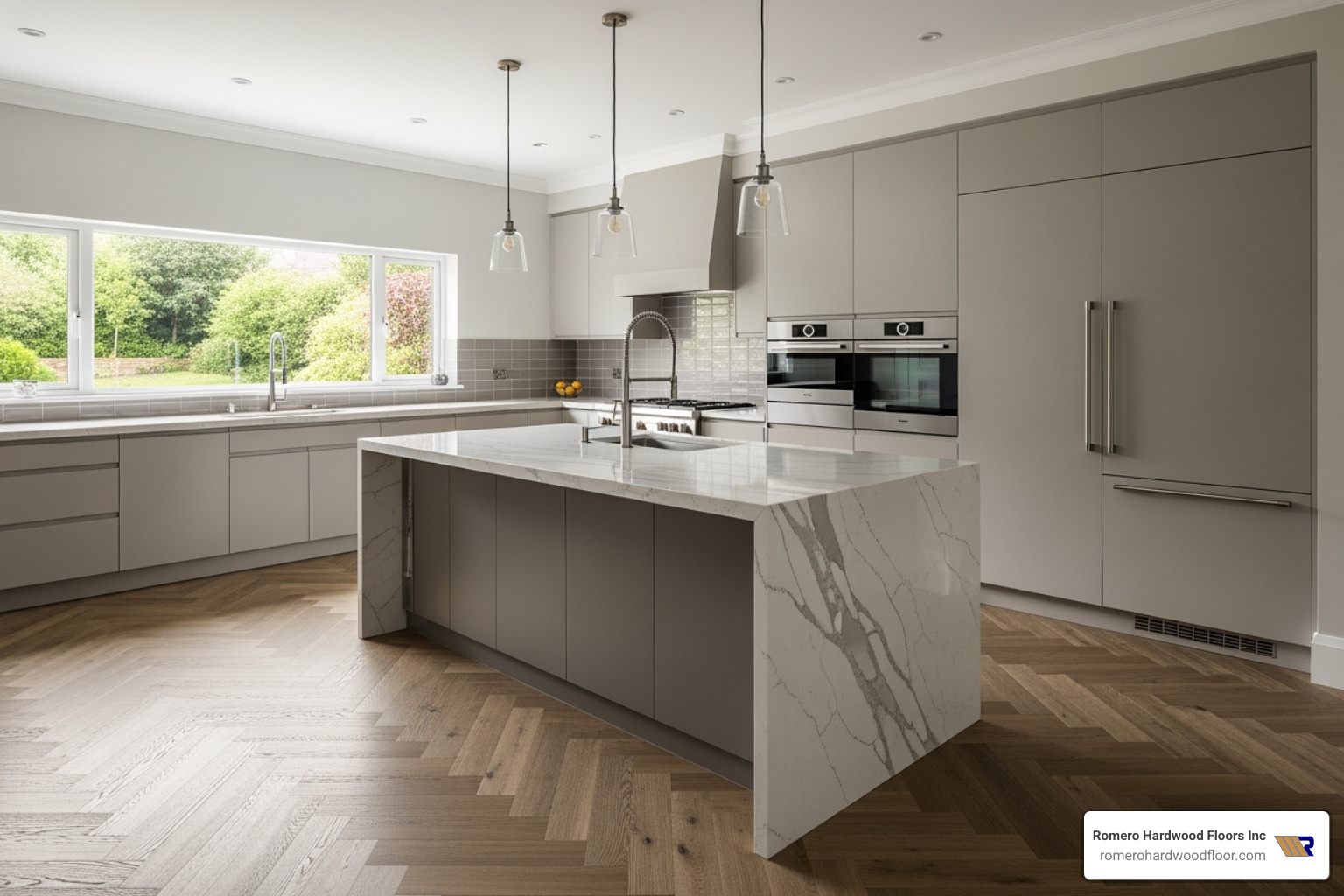
Often confused with herringbone, the chevron pattern offers a distinct, crisp aesthetic. The key difference is how the planks meet: chevron boards are cut at an angle (usually 45 degrees) to form a perfect, continuous ‘V’ shape, creating a sharp, unbroken zig-zag.
What makes it classic? With a history in French chateaus, chevron’s clean lines and precise angles create a bold look that feels both traditional and contemporary. It makes a statement without overwhelming a space.
Advantages:
- Bold and Clean Aesthetic: The continuous V-shape creates a strong, dynamic visual.
- Sense of Direction: Can draw the eye towards a focal point.
- Versatility: Blends old-world charm with contemporary flair.
Disadvantages:
- Most Expensive Pattern: Precise cuts and complex installation make it the most expensive option.
- Material Waste: Intricate cuts lead to higher material waste.
- Can Feel Intense in Smaller Rooms: The strong pattern might feel too busy in small rooms.
Best Applications:
Ideal for living rooms, dining rooms, and entryways in modern or contemporary designs, especially in larger rooms.
Find more about this pattern at Chevron Pattern Hardwood Floors.
Basket Weave & Parquet: Intricate Artistry
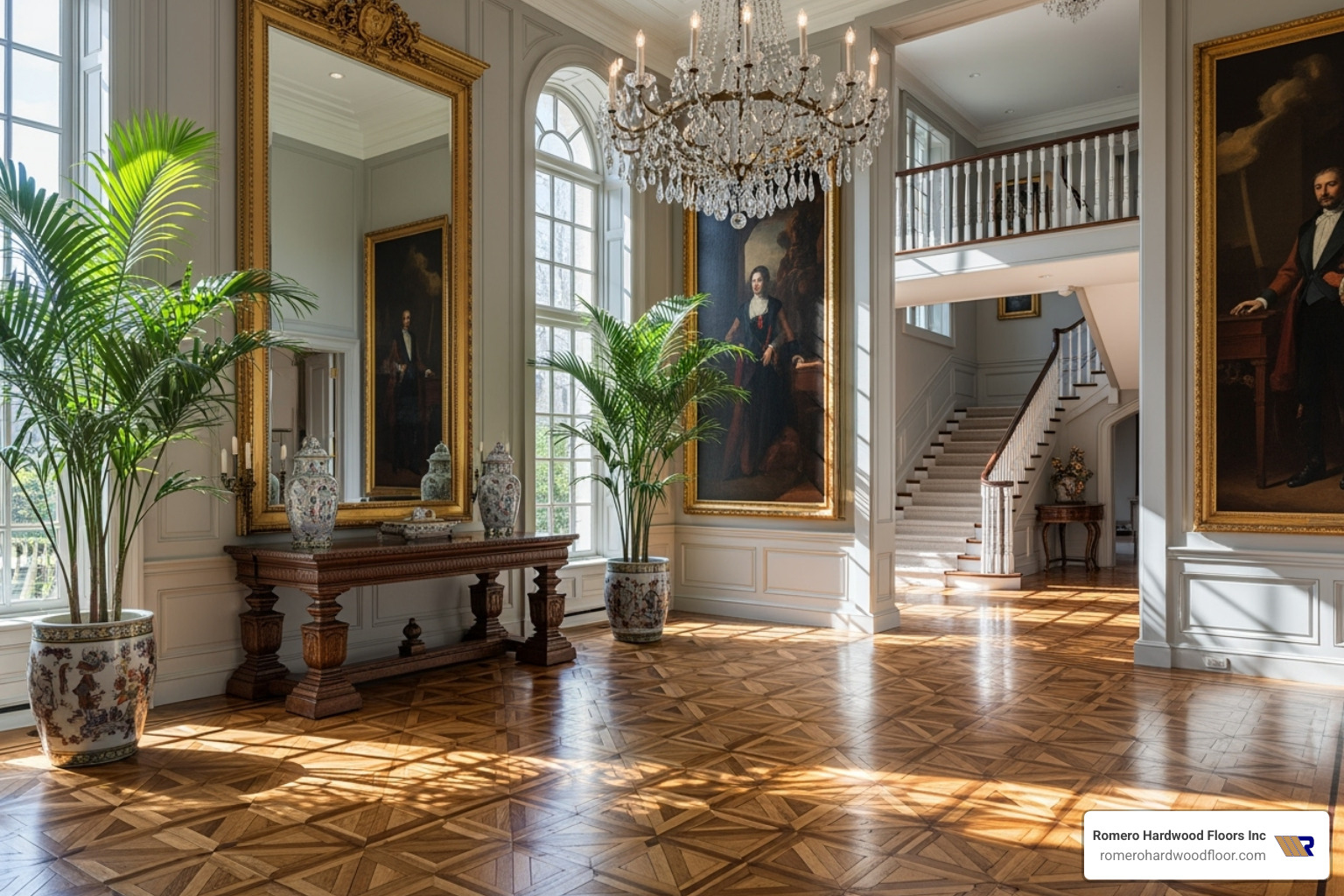
Parquet flooring, including styles like basketweave and Versailles, embodies intricate artistry and historical luxury. Parquet consists of small, geometrically arranged wood pieces, creating a mosaic-like effect.
What makes it classic? Parquet is associated with luxury, with designs like Versailles once found only in grand estates. These patterns bring a regal and formal feel to a space.
Basketweave: This pattern features interlocking squares resembling a woven basket, offering a subtle yet stylish textured look. It adapts well to traditional and vintage interiors.
Versailles: This is the epitome of luxury. It’s an elaborate, interwoven geometric pattern that becomes a focal point. Paired with modern decor, it creates a rich, layered contrast.
Advantages:
- Unparalleled Elegance: Adds significant character, depth, and a bespoke feel.
- Historical Significance: Connects your home to centuries of grand design.
- Customization: Offers immense possibilities for unique designs.
Disadvantages:
- Complex Installation: Highly labor-intensive and expensive.
- Refinishing Challenges: Requires specialized equipment to avoid cross-grain scratches.
- Not Ideal for High-Traffic Areas: The intricate nature may not be suited for heavy wear.
Best Applications:
Ideal for formal living rooms, dining rooms, grand entryways, and libraries. Basketweave is perfect for subtle pattern, while Versailles makes an undeniable statement.
For more on unique designs, see More info about Custom Hardwood Floor Designs.
Random Width: Rustic and Authentic Charm
For an organic, authentic feel, the random width pattern is a beloved classic. This style uses planks of varying widths (e.g., 3, 5, and 7-inch boards) laid together.
What makes it classic? Before standardized milling, floors were laid with available planks, leading to natural width variations. This gives random width flooring a charming, old-world aesthetic perfect for rustic, farmhouse, or vintage interiors.
Advantages:
- Organic and Authentic Feel: Creates a natural, less uniform look.
- Hides Imperfections: The varied pattern can subtly disguise minor scratches or dents.
- Unique, Custom Look: No two random width floors are exactly alike.
- Visual Interest: Adds subtle visual texture without being overly ornate.
Disadvantages:
- May Not Suit Formal Spaces: The informal feel might not be ideal for highly structured settings.
- Slower Installation: Planning the layout of different widths can take more time.
Best Applications:
Works wonderfully in larger rooms, open-concept spaces, and interiors aiming for a rustic, farmhouse, or vintage-inspired look.
Learn more about this charming style at Random Width Wood Flooring.
Comparing Classic Patterns: Cost, Complexity, and Best Fit
Choosing the right classic wood floor design involves balancing aesthetics with practical factors like budget and installation complexity.
We cannot provide exact pricing without seeing your space, as costs depend on wood species, subfloor condition, and area size. The costs mentioned here are average estimates from general internet data, not quotes from Romero Hardwood Floors Inc. We offer custom solutions and competitive pricing for our clients in areas like Beverly, Chelsea, Danvers, East Boston, Gloucester, Lynnfield, Malden, Manchester by the Sea, Marblehead, Medford, Melrose, Nahant, Peabody, Reading, Revere, Rockport, Salem, Saugus, Somerville, Stoneham, Swampscott, Wakefield, Winchester, Winthrop, and Woburn, MA.
The more intricate a pattern, the more time and skill it requires, which impacts labor cost. Here’s a breakdown of what to expect:
Straight Lay
- Cost: The most budget-friendly option, with average installation costs from $3 to $9 per square foot.
- Complexity: The most DIY-friendly pattern for those with some experience.
- Best For: Any room size or decor style. It’s versatile and can make smaller spaces feel more open.
Herringbone
- Cost: Higher complexity means higher costs, typically ranging from $8 to $25+ per square foot.
- Complexity: Professional installation is recommended due to the intricate, staggered design.
- Best For: Larger rooms, formal dining areas, and grand entryways where its sophistication can shine.
Chevron
- Cost: One of the more expensive choices, with average costs between $10 and $30+ per square foot.
- Complexity: Professional installation is essential due to the precise angle cuts required.
- Best For: Larger rooms in contemporary and modern spaces to create a striking look.
Basket Weave & Parquet
- Cost: The most luxurious option, with costs typically from $15 to $40+ per square foot.
- Complexity: Professional installation is absolutely essential due to the extreme complexity.
- Best For: Formal living rooms, dining rooms, and grand entryways where their artistry can be appreciated.
Random Width
- Cost: Average installation costs usually fall between $5 and $15 per square foot.
- Complexity: More DIY-friendly (with planning) than intricate patterns, but requires careful layout.
- Best For: Larger rooms or open-concept spaces with rustic, farmhouse, or vintage styles.
These figures are general averages. For an accurate, personalized estimate, please contact us for a consultation. We’re here to help you find the perfect floor that fits your vision and budget.
For more insights into choosing the best flooring, explore our guide on More info about the Best Solid Hardwood Flooring.
Key Factors for Choosing Your Perfect Floor
Beyond the pattern, other elements play a crucial role in the final look and longevity of your classic wood floor design. At Romero Hardwood Floors Inc., we guide clients through these decisions to ensure their new floor is beautiful and suited to their lifestyle.
Wood Species and Durability
The wood species you choose defines your floor’s personality and durability. Beyond looks, consider how it will hold up to daily life. The Janka hardness scale measures a wood’s resistance to dents and wear; a higher number means a tougher floor.
- Oak: The gold standard for its classic, prominent grain. White oak is slightly more durable and has a subtler grain that takes stain well, making it a reliable choice for any home.
- Maple: Incredibly hard and dense with a fine, clean grain. Its light color gives rooms a bright, contemporary feel, but its density makes it resistant to dark stains.
- Walnut: Known for its rich chocolate tones and flowing grain that add instant sophistication. It’s softer than oak but its dark color helps hide minor scratches.
- Hickory: One of the hardest domestic hardwoods, with dramatic grain variations and color streaks. It offers serious character and durability for high-traffic homes.
When choosing, be honest about your lifestyle. Homes with active kids or pets benefit from harder woods like hickory or oak.
For detailed comparisons of wood types, explore our guide on Best Wood For Floors.
Finish, Stain, and Texture
The finish, stain, and texture you choose personalize your floor’s look and daily performance.
Finish choices affect beauty and practicality. A matte finish has an understated look that’s great for hiding dust and wear. Satin finish offers a subtle glow with easy maintenance. Glossy finishes create a bold, mirror-like surface but show every scratch and speck of dust.
Stain selection sets the mood. Light stains make rooms feel airy and spacious. Dark stains bring drama and formality, making large rooms feel cozier. Natural or clear finishes showcase the wood’s inherent beauty.
Texture adds personality. Smooth finishes are traditional and refined. Wire-brushed textures create subtle ridges that highlight the wood’s character and hide wear. Hand-scraped surfaces offer an aged, undulating look that is very forgiving.
A smart combination, like a wire-brushed texture with a matte finish, will hide far more daily wear than a smooth, high-gloss surface.
Find more about textured options at Hand Scraped Hardwood Floors.
Room Size and Architectural Style
Your home’s space and architectural style should guide your classic wood floor design choice. The right pattern can alter a room’s perceived size and formality.
To make rooms feel larger, straight-lay patterns are effective, especially when planks run parallel to the longest wall. Diagonal patterns can also open up cramped areas by adding visual interest without being overwhelming.
Your home’s architectural style is a key guide. Traditional homes shine with classic patterns like herringbone or parquet. Modern and contemporary spaces favor the clean lines of chevron or simple straight lays. Farmhouse and rustic homes are perfect for random width planks with distressed textures. Transitional spaces are versatile and can handle almost any pattern.
Open-concept spaces offer the most freedom. Large areas can handle intricate patterns like herringbone or chevron without feeling busy. You can even use different patterns to define zones.
Our team considers everything from natural light to furniture placement to ensure your choice improves your home’s unique character.
For more design inspiration and ideas, visit More info about Hardwood Floors Design Ideas.
Frequently Asked Questions about Classic Wood Floors
We often get asked common questions about classic wood floor designs. Here are some of the most frequent questions we hear at Romero Hardwood Floors Inc., along with our insights:
What is the difference between Chevron and Herringbone patterns?
Chevron and herringbone are often confused as both create a “V” shape, but a key difference in plank cuts and layout gives them distinct looks.
- Herringbone uses rectangular planks. The end of one plank meets the side of another at a 90-degree angle. This creates a staggered, broken zigzag with a classic, textured feel.
- Chevron planks are cut at an angle (usually 45 degrees) on the short ends. These angled cuts meet perfectly to form a crisp, continuous “V” shape. This creates a clean, sharp look that is often more expensive to install.
What is the most timeless wood floor design?
While all classic wood floor designs have lasting charm, the straight-lay pattern is arguably the most timeless and versatile. Its simplicity allows it to blend seamlessly with any decor style, from modern to traditional, so it never looks dated.
The herringbone pattern is a very close second. It has graced grand homes for centuries and remains a symbol of luxury and sophistication. Its rich history and elegance ensure it never fades from style. Both are excellent choices for a floor that will always look good.
Which classic wood floor designs are best for small rooms?
For smaller rooms, the goal is to make the space feel more open. The right classic wood floor design can help achieve this.
- The straight pattern is your best choice. Laying planks parallel to the longest wall draws the eye and makes the room feel longer and wider. Its clean look won’t overwhelm a compact space.
- A diagonal pattern is another great option. Laying planks at a 45-degree angle to the walls can make a space feel larger and more dynamic without being too busy.
Intricate patterns like herringbone or detailed parquet can sometimes make small rooms feel more enclosed due to their strong visual impact. For compact spaces, simplicity often works best.
Let Your Floors Tell a Timeless Story
Classic wood floor designs are the foundation of your home’s character, infusing it with enduring style and warmth. More than just a surface, the right pattern—from a simple straight lay to intricate parquet—sets the tone for your interior and improves your property’s value for years to come.
Here at Romero Hardwood Floors Inc., we believe in the transformative power of these beautiful floors. With over 15 years of dedicated experience, we’ve had the privilege of changing countless homes and businesses, bringing guaranteed workmanship and competitive pricing to every project.
Our roots are in Revere, MA, but our passion for beautiful hardwood floors extends to the surrounding communities we proudly serve: Beverly, Chelsea, Danvers, East Boston, Gloucester, Lynnfield, Malden, Manchester by the Sea, Marblehead, Medford, Melrose, Nahant, Peabody, Reading, Rockport, Salem, Saugus, Somerville, Stoneham, Swampscott, Wakefield, Winchester, Winthrop, and Woburn, MA.
Choosing your perfect floor is an exciting journey. By considering your home’s style, your family’s lifestyle, and your budget, you can select a floor you’ll cherish for decades. We’re here to guide you through every step, ensuring your new hardwood floor is a lasting investment that perfectly reflects your vision.
Ready to bring your vision to life? Explore our hardwood floor installation patterns and get started on your project today!
Like us on Facebook!
