
Furniture Coasters: Top 3 Ultimate Floor Protection!
Why Furniture Protection Matters for Your Floors
Furniture coasters are small protective pads or discs placed under furniture legs to prevent scratches, dents, and indentations on your flooring. They work by distributing weight evenly across a larger surface area and providing a barrier between furniture and floors.
Quick Guide to Furniture Coasters:
- What they do: Protect floors from damage, stabilize furniture, and make moving heavy items easier
- Best for hardwood: Felt coasters (prevent scratches while allowing smooth movement)
- Best for carpet: Plastic sliders or wide-base coasters (prevent indentations)
- Best for tile/vinyl: Rubber or felt pads (prevent scuffs and provide grip)
- How to size: Measure furniture leg diameter and choose coasters slightly larger
- Average cost: $3 to $40+ per set, depending on material and quantity
Whether you have beautiful hardwood floors, durable tile, or plush carpet, furniture coasters are essential for preventing costly damage. Without them, chair legs create scratches, table legs leave permanent dents, and heavy sofas cause indentations that never fully recover.
The research shows that felt coasters are highly effective for hardwood floors because they provide a soft cushion that prevents scratches and dents while allowing furniture to slide smoothly. Rubber coasters offer a strong grip to prevent furniture from slipping or shifting on smooth surfaces. For heavier furniture items, larger or thicker coasters provide better weight distribution and stability.
Think of coasters as insurance for your floors. They cost a few dollars but can save you hundreds or thousands in floor repairs. They also make cleaning easier, reduce noise when moving chairs, and help stabilize wobbly furniture.
I’m Francisco Romero, owner of Romero Hardwood Floors Inc., and I’ve spent over 15 years installing and repairing hardwood floors in the Revere, MA area—which means I’ve seen what happens when homeowners skip simple protection like furniture coasters. In this guide, I’ll share everything you need to know about choosing, installing, and maintaining coasters to protect your flooring investment for years to come.
The Unsung Heroes of Home Care: Benefits of Using Furniture Coasters
You’ve probably walked past them a hundred times without giving them a second thought. Those little discs under your dining chairs, the felt pads beneath your sofa legs—they’re easy to overlook. But furniture coasters are quietly doing some of the most important work in your home, protecting your floors from damage that can cost hundreds or even thousands of dollars to repair.
Think of furniture coasters as tiny bodyguards for your floors. They stand between your furniture and your flooring, taking the hits so your beautiful surfaces don’t have to. Whether you have gleaming hardwood, pristine tile, or plush carpet, these simple protectors work around the clock to prevent scratches, dents, and indentations that can permanently damage your floors.
The beauty of coasters is that they’re incredibly simple, yet they solve multiple problems at once. They prevent damage, yes, but they also stabilize furniture, reduce noise, and make your home safer for kids and pets. For such a small investment—often just a few dollars—the protection they offer is remarkable.
Protecting Your Investment
Let’s talk about what matters most: keeping your floors looking gorgeous. Your flooring represents a major investment in your home, and furniture coasters are one of the easiest ways to protect that investment from daily wear and tear.
Scratch prevention is the most obvious benefit. Every time you pull out a dining chair or nudge a side table, you’re risking a scratch if there’s no coaster protecting your floor. The bare leg of a chair dragging across hardwood can leave a mark that catches the light—and your eye—every time you walk past. Felt coasters create a soft, smooth barrier that lets furniture glide without ever making direct contact with your floor. It’s like giving your furniture soft shoes instead of letting it walk around in cleats.
Heavy furniture brings its own set of challenges. A fully loaded bookshelf or a solid wood dining table concentrates tremendous weight on just four small points of contact. Without coasters, that pressure can create dents and indentations that are nearly impossible to remove, especially on softer woods or vinyl flooring. Furniture coasters work by spreading that weight across a larger surface area—it’s basic physics, but it makes all the difference. Instead of hundreds of pounds pressing on a dime-sized spot, the weight gets distributed across a quarter-sized area or larger, dramatically reducing the pressure on any single point.
If you have carpet, you’ve probably noticed how heavy furniture leaves those stubborn indentations that refuse to bounce back. Some carpet fibers eventually recover, but many don’t—leaving permanent marks that announce exactly where your sofa used to sit. Wide-based coasters help prevent these marks by spreading the load and giving your carpet fibers a fighting chance.
Here’s something many people don’t consider: coasters also protect against water marks and heat damage. While we usually think of coasters on coffee tables, the ones under your furniture legs do similar work. They create a barrier that prevents moisture from wet furniture legs (after mopping) from seeping into wood floors and causing water stains or warping.
By preventing all these types of damage, furniture coasters help preserve both the value and the appearance of your floors. If you’ve ever had to deal with floor scratches, you know how frustrating and expensive repairs can be. For comprehensive protection strategies, check out our Hardwood Floor Care Guide. And if damage has already occurred, our guide on how to Repair Hardwood Floor Scratches can help you understand your options.
Enhancing Stability and Safety
Furniture coasters do more than just protect your floors—they make your entire home more stable and safer for everyone who lives there.
Have you ever sat down at a table only to have your chair slide backward unexpectedly? Or tried to lean against a counter-height stool that skated away at just the wrong moment? Preventing sliding furniture isn’t just about convenience; it’s a genuine safety concern. Rubber coasters grip smooth surfaces like hardwood and tile, creating a non-slip base that keeps furniture exactly where you put it. This strong grip means chairs stay put when you sit down, tables don’t shift during meals, and bar stools remain stable when you lean on them.
The difference is especially noticeable with dining chairs. Without coasters, you might find yourself constantly repositioning your chair throughout a meal as it gradually slides away from the table. With proper coasters providing grip, your chair stays firmly planted, making every meal more comfortable and eliminating that annoying mid-dinner shuffle.
Stabilizing wobbly furniture is another unexpected benefit. Sometimes furniture legs aren’t perfectly even, or your floor has slight dips and rises that throw everything off balance. A strategically placed coaster can level out these imperfections, stopping that irritating rocking motion that makes tables wobble and chairs feel unstable.
Noise reduction might sound like a minor benefit until you live without it. The harsh scraping sound of a wooden chair leg dragging across hardwood can set your teeth on edge—and probably annoys your downstairs neighbors if you live in an apartment. Felt coasters absorb and muffle these sounds, creating a quieter, more peaceful home environment. You can pull out chairs, rearrange furniture, and go about your daily life without the soundtrack of scraping and screeching.
For families with children and pets, stable furniture becomes even more important. Kids climb on chairs, lean on tables, and generally test the stability of everything in reach. Pets jump on and off furniture, push against table legs, and create their own chaos. Coasters help ensure that furniture stays put even under these daily assaults, reducing the risk of accidents. When furniture doesn’t slide easily, it’s less likely to tip or shift unexpectedly—providing peace of mind for parents and pet owners alike.
The even weight distribution that coasters provide also contributes to furniture stability. When weight is spread evenly across a larger surface area, furniture sits more firmly on the floor, reducing wobbling and shifting. This creates a more stable base for everything from dining chairs to entertainment centers.
A Coaster for Every Surface: Matching Protectors to Your Floors
Here’s the thing about furniture coasters: they’re not universal. What protects your gorgeous hardwood floors might actually damage your plush carpet. The key is matching the right coaster type to your specific flooring material.
Think about it this way—different floors have different needs. Hardwood fears scratches. Carpet dreads indentations. Tile worries about scuffs and grout damage. Your coasters need to address these specific concerns.
Choosing the Best Furniture Coasters for Hardwood Floors
After fifteen years of installing and repairing hardwood floors, I can tell you that the right furniture coasters make all the difference. Hardwood is beautiful but vulnerable—one wrong move and you’ve got a scratch that haunts you every time you walk by.
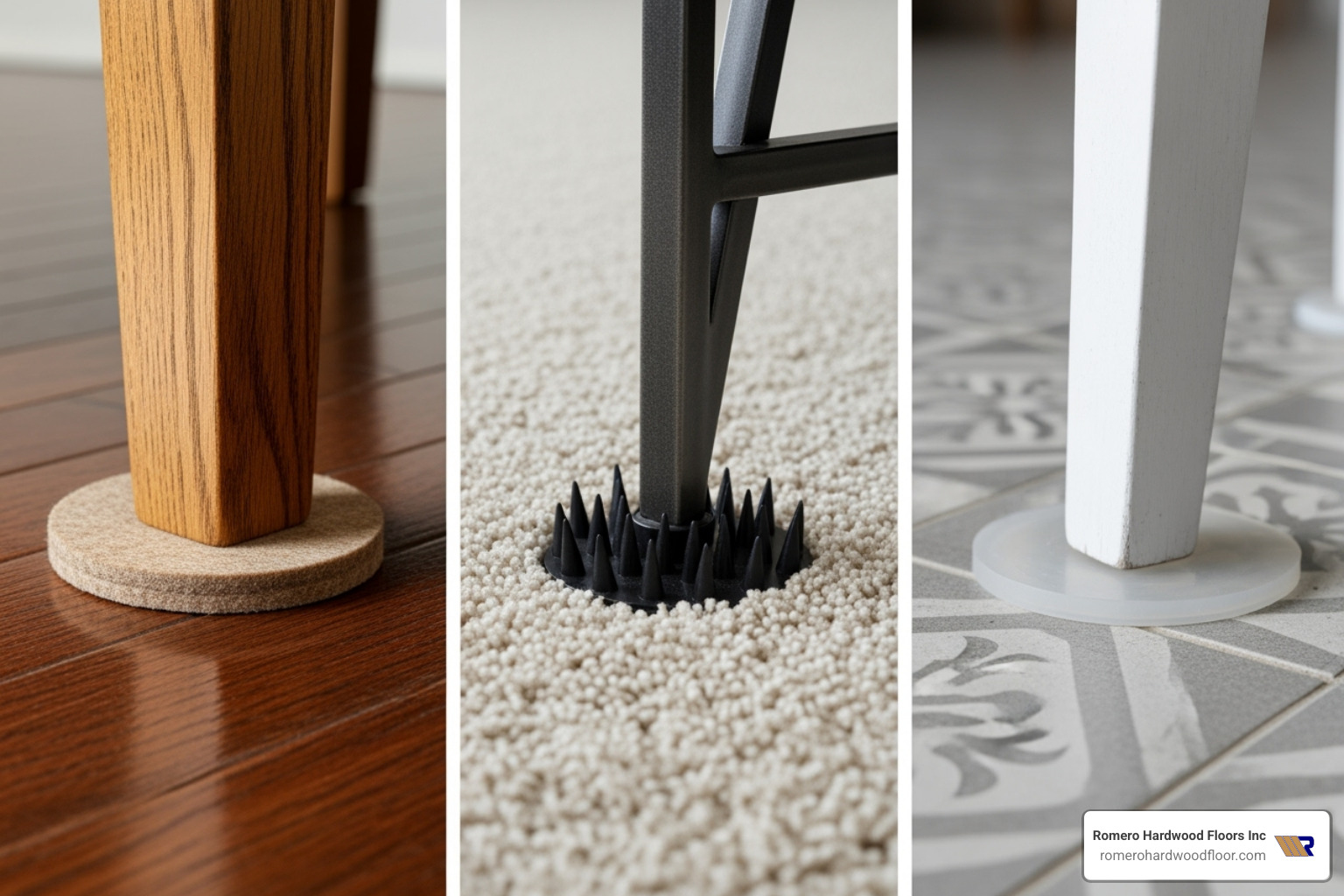
Felt coasters are your best friend for hardwood. They provide a soft, protective cushion between furniture legs and your floor, preventing those dreaded scratches while letting chairs glide smoothly when you pull them out for dinner. The smooth sliding action is perfect for dining chairs that get moved multiple times a day. Just remember to check them every few months and replace them when they start looking worn—a worn-out coaster won’t protect much.
For furniture that needs to stay put, rubber coasters offer a strong grip that prevents slipping and shifting. I recommend these for heavier pieces like entertainment centers or bookshelves that you want firmly anchored in place.
Combination coasters give you the best of both worlds—typically a felt bottom for smooth movement with rubber edges for stability. These work wonderfully for pieces you occasionally move but generally keep stationary.
Whatever material you choose, make sure your coasters have a strong adhesive backing so they stay attached to your furniture legs. Nothing’s more frustrating than a coaster that keeps falling off. If you’re looking for more specialized protection for dining chairs, check out our guide on What are the Best Chair Glides for Hardwood Floors.
Best Coasters for Carpet
Carpet faces a completely different enemy: indentations. You know those permanent-looking dents your couch leaves behind when you finally move it? That’s what we’re trying to prevent.
Plastic sliders work beautifully on carpet because their smooth, hard surface reduces friction dramatically. This makes moving heavy furniture much easier while distributing weight to prevent those deep, stubborn indentations that never quite bounce back.
Spiked coasters feature small, blunt teeth on the bottom that grip carpet fibers. This prevents furniture from shifting around while still spreading the weight over a larger area. They’re particularly useful for furniture that tends to “walk” across the room over time.
For your heaviest pieces—that massive sectional or solid wood armoire—look for wide base coasters. The larger surface area distributes weight more effectively, which means shallower indentations that are easier for carpet fibers to recover from.
Best Coasters for Tile, Laminate, and Vinyl
These surfaces are tougher than hardwood, but they’re not invincible. Tile can chip, laminate can scratch, and vinyl can scuff or stain. Plus, with tile, you’ve got grout lines to worry about.
Rubber coasters excel on these surfaces because they provide excellent grip to prevent sliding while offering cushioning against scratches and scuffs. They’re especially helpful on tile, where furniture can otherwise slide around dangerously.
Felt pads also work well here, giving you smooth, quiet movement while protecting against scratches. The key is keeping them clean—dirt and grit trapped in felt can actually scratch these surfaces, so give them a quick wipe-down when you’re cleaning.
Always choose non-staining materials for your coasters, especially if you have lighter-colored vinyl or laminate. Some cheaper rubber coasters can leave permanent discoloration marks that are impossible to remove. It’s worth spending a bit more for quality materials that won’t stain.
For tile floors specifically, coasters help lift furniture legs slightly off the surface, which protects your grout lines from being ground down by heavy furniture weight. This is particularly important in kitchens and dining areas where furniture gets moved frequently. For keeping these floors looking their best, you might find our guide on the Easiest Way to Clean Hardwood Floors helpful—many of the same principles apply to other hard surfaces.
The Perfect Fit: How to Choose the Right Material, Size, and Shape
Choosing the right furniture coasters goes beyond just matching them to your floor type. You also need to consider the material of the coaster itself, its size, and its shape to ensure maximum protection and functionality. This decision often balances aesthetic choices with practical, functional needs.
| Material | Pros | Cons |
|---|---|---|
| Felt | Soft, non-abrasive, and allows for easy sliding. Ideal for hardwood, laminate, and tile floors. | Can collect dust and debris, which may scratch floors if not cleaned regularly. May not be suitable for very heavy furniture. |
| Rubber | Provides excellent grip, preventing furniture from sliding. Good for chairs and tables on smooth surfaces. | Can leave marks on some types of flooring, especially vinyl. Not ideal for furniture that needs to be moved often. |
| Plastic/PTFE | Durable and allows for easy sliding on carpeted surfaces. | Can be too slippery on hard floors, potentially causing furniture to move unintentionally. |
- Cork: Eco-friendly, lightweight, and provides good grip. However, it may not be durable enough for very heavy furniture and can crumble over time.
- Silicone: Offers a strong grip and is waterproof, but can sometimes stick to certain floor finishes.
Sizing and Shaping Your Furniture Coasters
Getting the size and shape right is crucial for effective protection.
- Measure the Bottom of Your Furniture Legs: Use a ruler or measuring tape to find the diameter (for round legs) or width and length (for square/rectangular legs).
- Choose a Slightly Larger Coaster: The coaster should be slightly larger than the base of the furniture leg to ensure the weight is distributed evenly and the leg doesn’t slip off.
- Consider the Weight: For heavier items like sofas or bookcases, opt for larger, more durable coasters that can handle the pressure without cracking or compressing.
- For Irregular Shapes: If you have furniture with unusually shaped legs, you can buy felt or rubber pads in sheets and cut them to the exact size and shape you need.
Where to Buy and What to Expect
You can find furniture coasters at most home improvement stores, hardware stores, and online retailers. They come in a wide range of styles, from simple, functional felt pads to more decorative options that can complement your home’s aesthetic. Prices can vary, but you can typically find a good set for anywhere from $5 to $40, depending on the material, quantity, and brand.
Like us on Facebook!
